2023 BMW 7 Series Reviews, Pricing & Specs



Pros & cons
What we like
Comfortable
Great ride quality
Great handling
What to consider
Unintuitive technology
Potentially polarizing design
The CarGurus verdict
The 7 Series gets luxury right, but its technology and style are challenging.
The all-new BMW 7 Series masterfully blends comfort, luxury, and performance, but the new styling has limited appeal and the technology interface can be a source of frustration. There are a lot of cool-looking new features, but some come with significant compromises.
out of 10 expert review
Look & feel
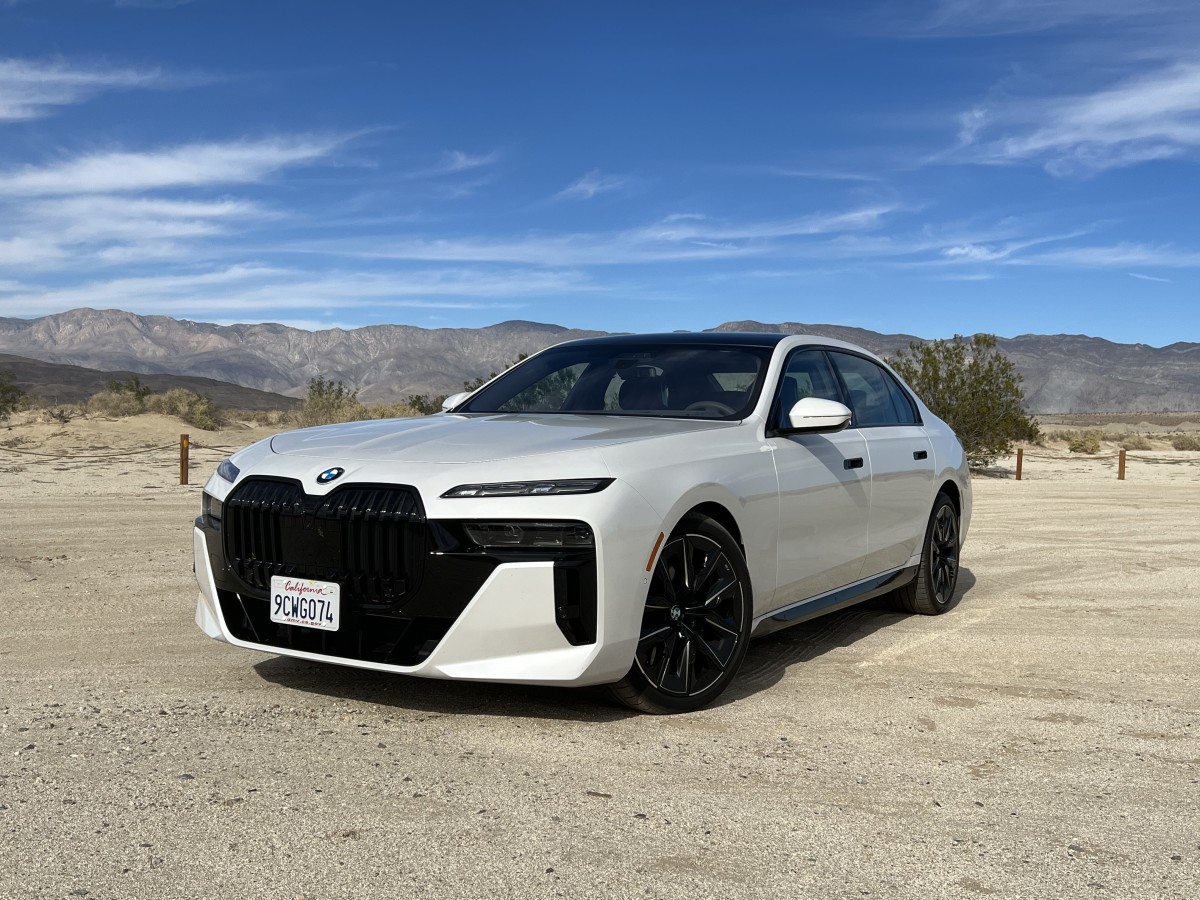
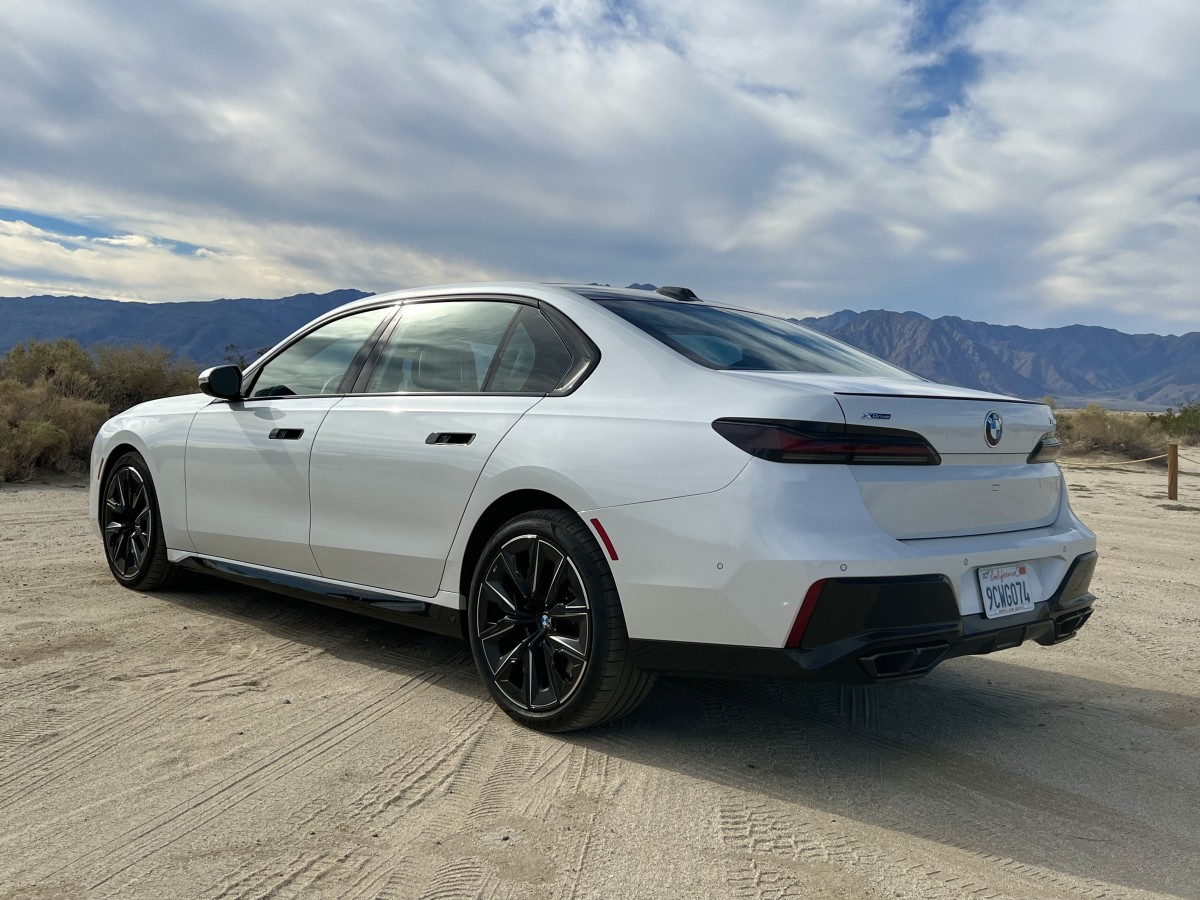
The fully redesigned 2023 BMW 7 Series introduces a new design language for the iconic German brand's top-tier luxury car line, which now includes the all-electric i7 and X7 SUV. The 7 Series' most obvious departure from other BMW vehicles is its front-end styling that features an oversized beveled grille and split lighting elements. Thin lines of LED accent lights are placed where the headlights normally go, giving the face a focused squint (as described by BMW). Underneath are the actual headlights in a recessed section that joins an air inlet and improves aerodynamic efficiency around the front wheels. Our initial reaction isn't very positive, but with some time to get used to it, we can see the front-end-styling becoming less jarring.
Paint color can greatly affect the impact of the front fascia style, and there are even some new two-tone choices that radically change the 7 Series' character. To the same degree, two style themes can also change the impact. The standard M Sport theme has some chrome grille accents while the M Sport Professional theme blacks out the chrome for a more sinister and aggressive look.
The profile is much less controversial, keeping the familiar 7 Series silhouette with a long hood, extended wheelbase, and short rear deck. Black plastic recessed door handles look out of place on lighter paint choices, though. The rear end is also conventional and benefits from distinctive horizontal taillights and a more cohesive design. Whether you like the nose of the new 7 Series or not, there's no arguing that this big sedan has presence.
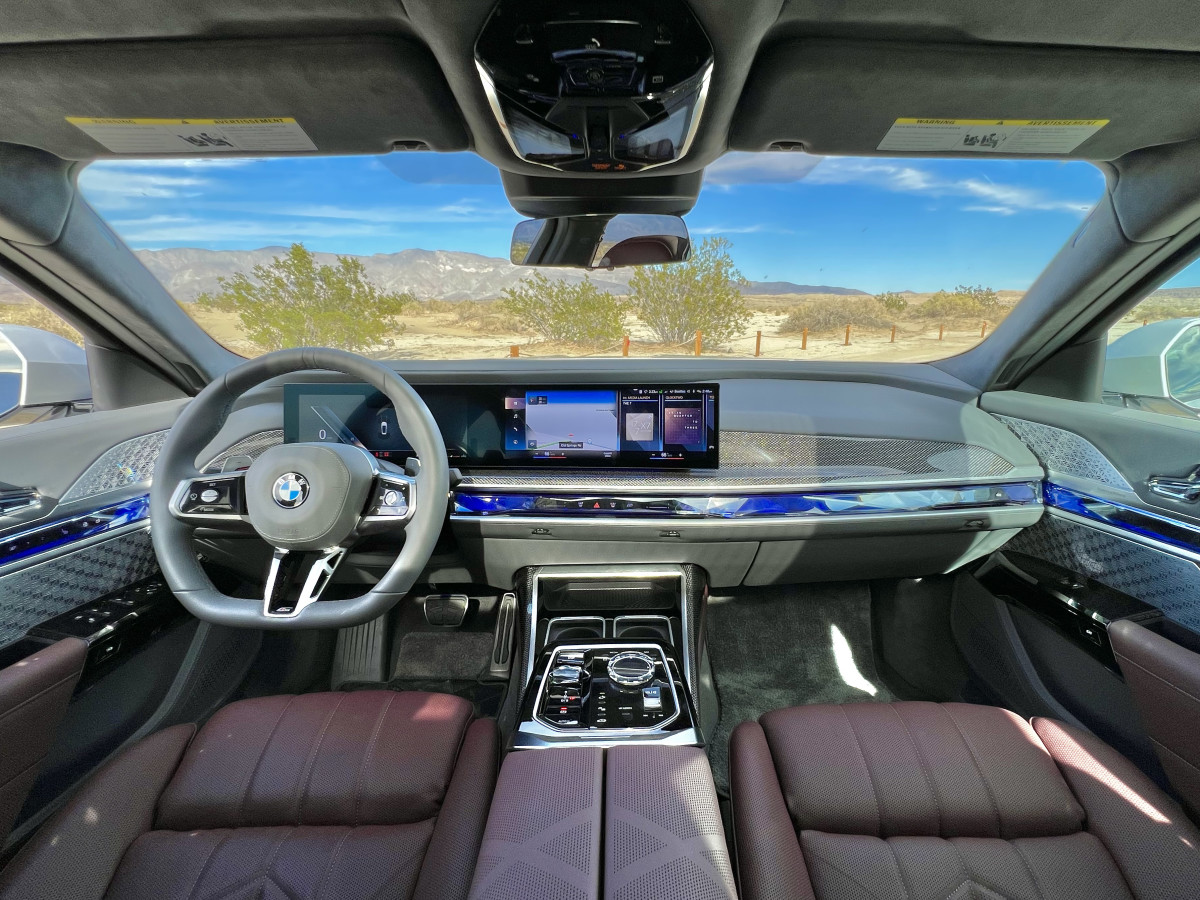
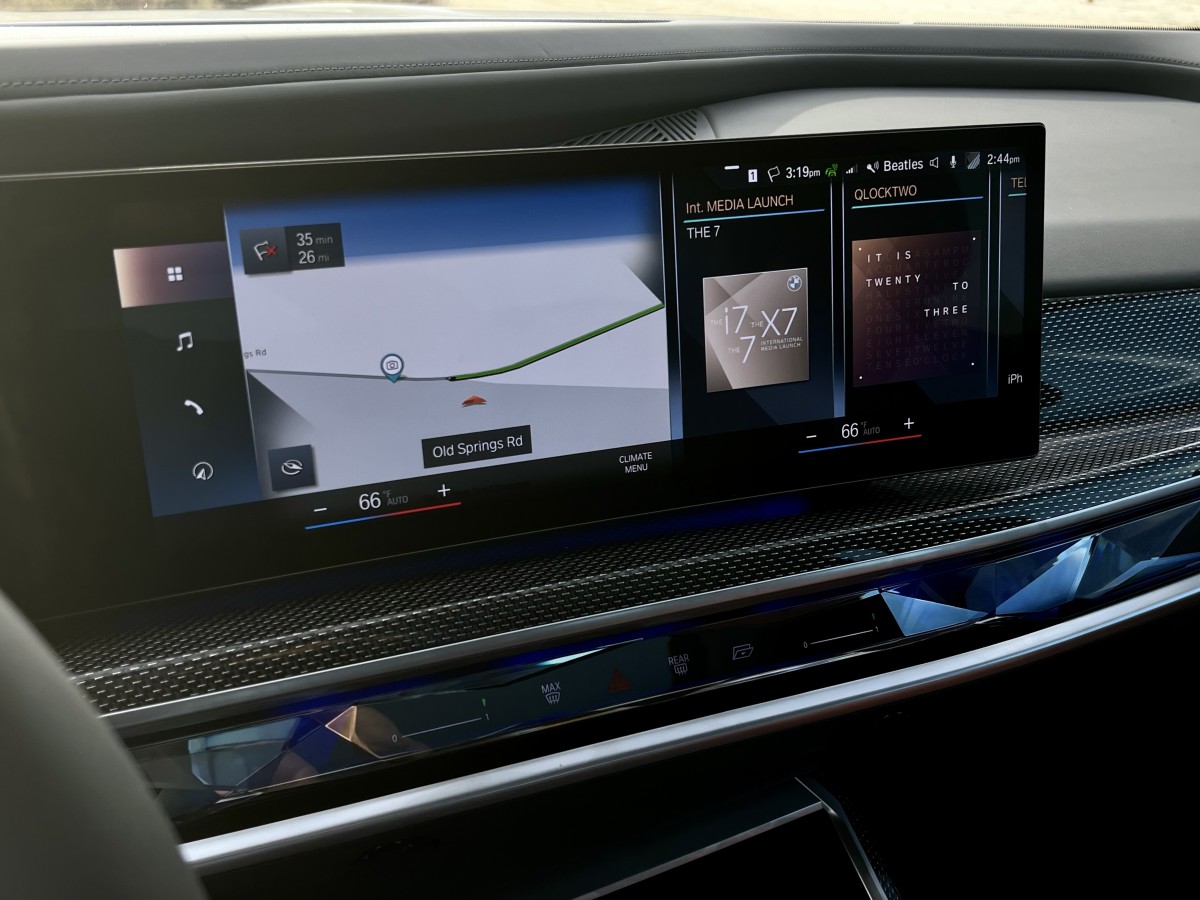
We're more attracted to the 7's modern and minimal interior, which features a broad horizontal layout accentuated by a faceted crystal-like accent strip that illuminates in conjunction with the ambient lighting. A curved pane of dark glass adds a distinct futuristic flavor and houses the instrument panel and central infotainment touchscreen. Materials quality is excellent and appropriate for a premium luxury vehicle, but we'd avoid the high-gloss trim elements as they tend to cause harsh reflections on sunny days. The open pore wood trim choices have a matte surface and don't suffer with glare issues.
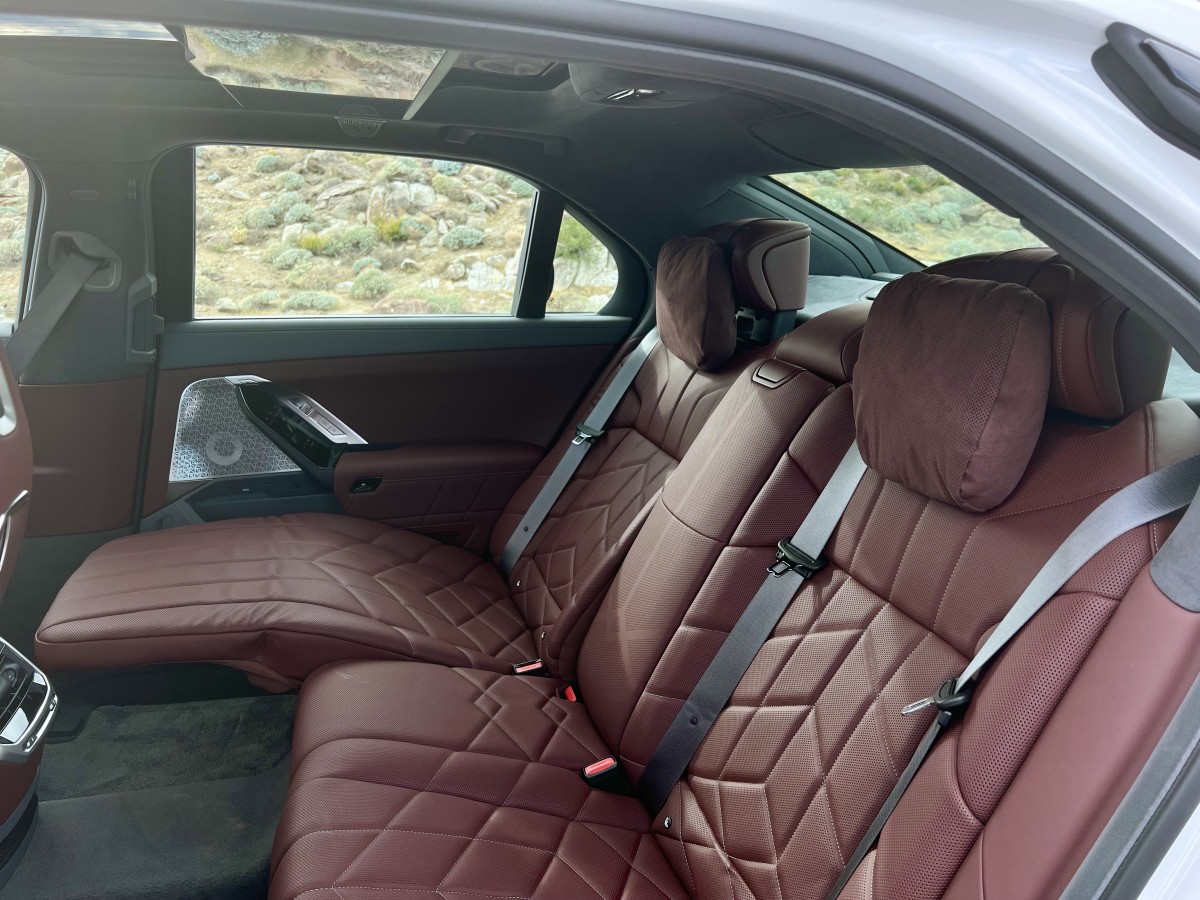
The leather seat upholstery mimics the faceted design motif and adds plenty of visual interest. We're particularly fond of the available light gray cashmere wool-blend upholstery, which adds a warmer and cozy home look and feel. The rear seats have a similar premium luxury aura, especially of you opt for the optional Rear Executive Lounge Seating package. It adds a reclining passenger-side seat that's akin to an airline's business class along with a striking theater screen that folds down from the panoramic sunroof.
Performance
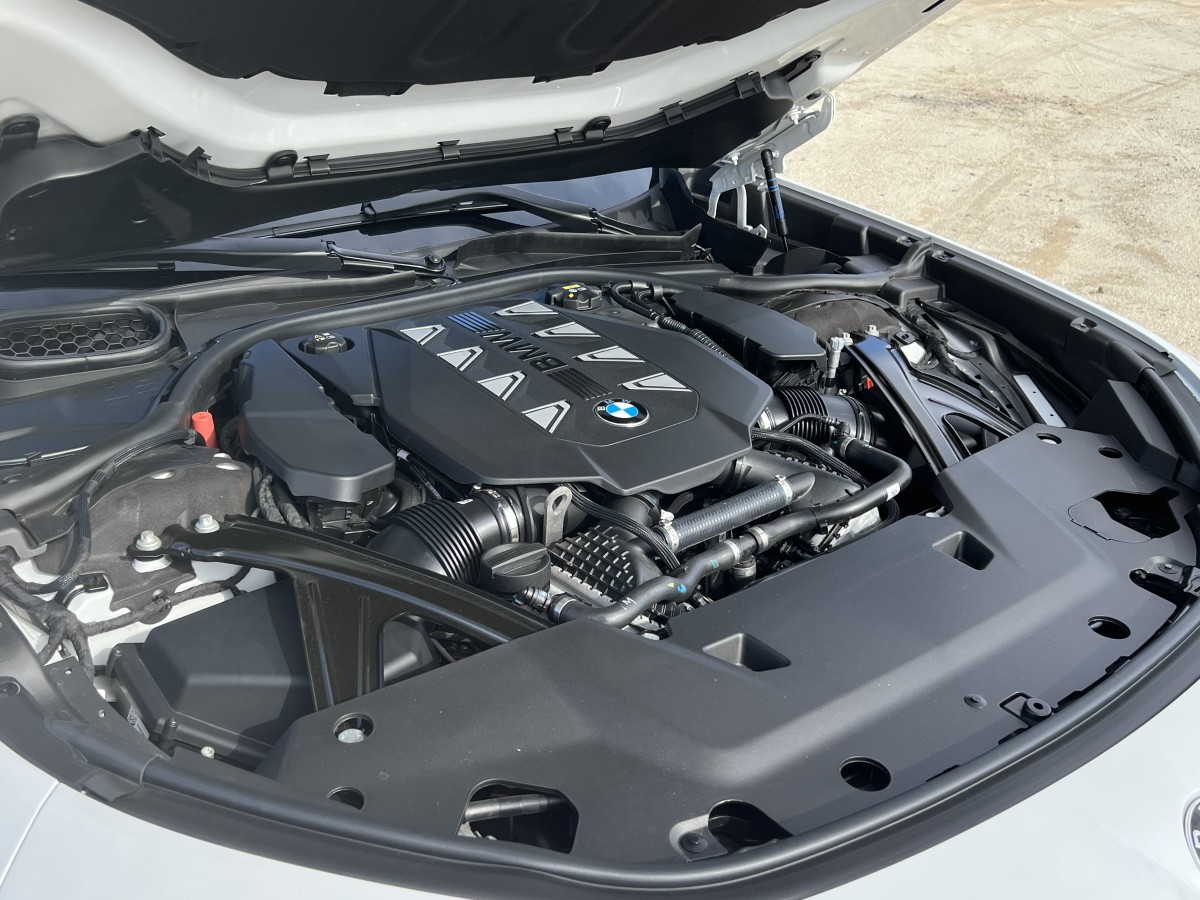
The 2023 BMW 7 Series is initially available with the choice of two powertrains. The base 740i has a 3.0-liter turbocharged six-cylinder paired with a 48-volt mild hybrid system. It produces 375 horsepower and 383 pound-feet of torque, routed to the rear wheels through an eight-speed automatic transmission. BMW estimates the rear-wheel drive (RWD) 740i will accelerate to 60 mph in 5.2 seconds.
The all-wheel-drive (AWD) 760i xDrive upgrades to a 4.4-liter twin-turbo V8 that increases output to 536 horsepower and 553 pound-feet of torque. It should reach 60 mph in 4.1 seconds. Debuting alongside these gasoline-powered models is the all-electric i7, covered in a separate review. Later in 2023, a plug-in hybrid variant will also join the lineup.
For this review, we drove the V8-powered 760i xDrive, which gets up to speed with powerful determination. Response is quick, fluid, and should easily exceed most drivers' expectations for a large premium luxury sedan. When driven conservatively, you'll hear gear changes but not feel them as the 7 Series glides away from a stop. The brake pedal is appropriately soft and easy to modulate for smooth stops, yet it inspires confidence when more urgent deceleration is called upon.
Handling is sportier than the rival Mercedes-Benz S-Class and can be reasonably entertaining on a challenging winding road. As a result, the ride quality is slightly stiffer and you'll hear and feel bumps in the road more than you would in the Benz, but it's not at all intrusive or harsh. Selecting Sport mode firms up the air suspension for sharper cornering and also makes the steering feel more responsive and lively. It's an excellent choice for drivers that appreciate performance as much as comfort.
Form & function
As well as the BMW 7 Series drives and rides, some new features can be a source of frustration, starting before you even get inside. Power-operated doors are available, but we suggest skipping this option because it requires you to stand well behind the doors to open them. If sensors detect anything close to the door, it will only open partially, forcing you to pull it open against an undesirable amount of effort. Once inside, the doors will close with a touch of a button at the ends of the dashboard. We could see this feature being somewhat useful if you're regularly shuttling multiple passengers as you could selectively operate individual doors or open all of them at once. Otherwise, it seems like a solution to a nonexistent problem.
The front seats are generously padded for compliance and comfort over long distances. There are plenty of power adjustments to ensure you find your optimal position, and standard heating and ventilation further enhance comfort. The rear seats are remarkably spacious and can accommodate unusually tall passengers with ease. We're particularly pleased with the lounge seating option that adds a reclining passenger-side rear seat with massage functions. Seat adjustments, temperature, audio, and sunshades are controlled via a small touchscreen in the door but strangely, there's no navigation control from the back seats.
One of the most striking additions is a new 31.3-inch rear entertainment screen that fold down from the panoramic sunroof. While it certainly has a wow factor about it, the screen's central placement means you'll need to turn your head slightly to view it. After a short time, that can result in some uncomfortable neck strain. We prefer individual tablets mounted on the seatbacks instead, and thankfully there are anchor points and charge ports already included. Unfortunately, if you want the lounge seating option, you'll also have to get the theater screen.
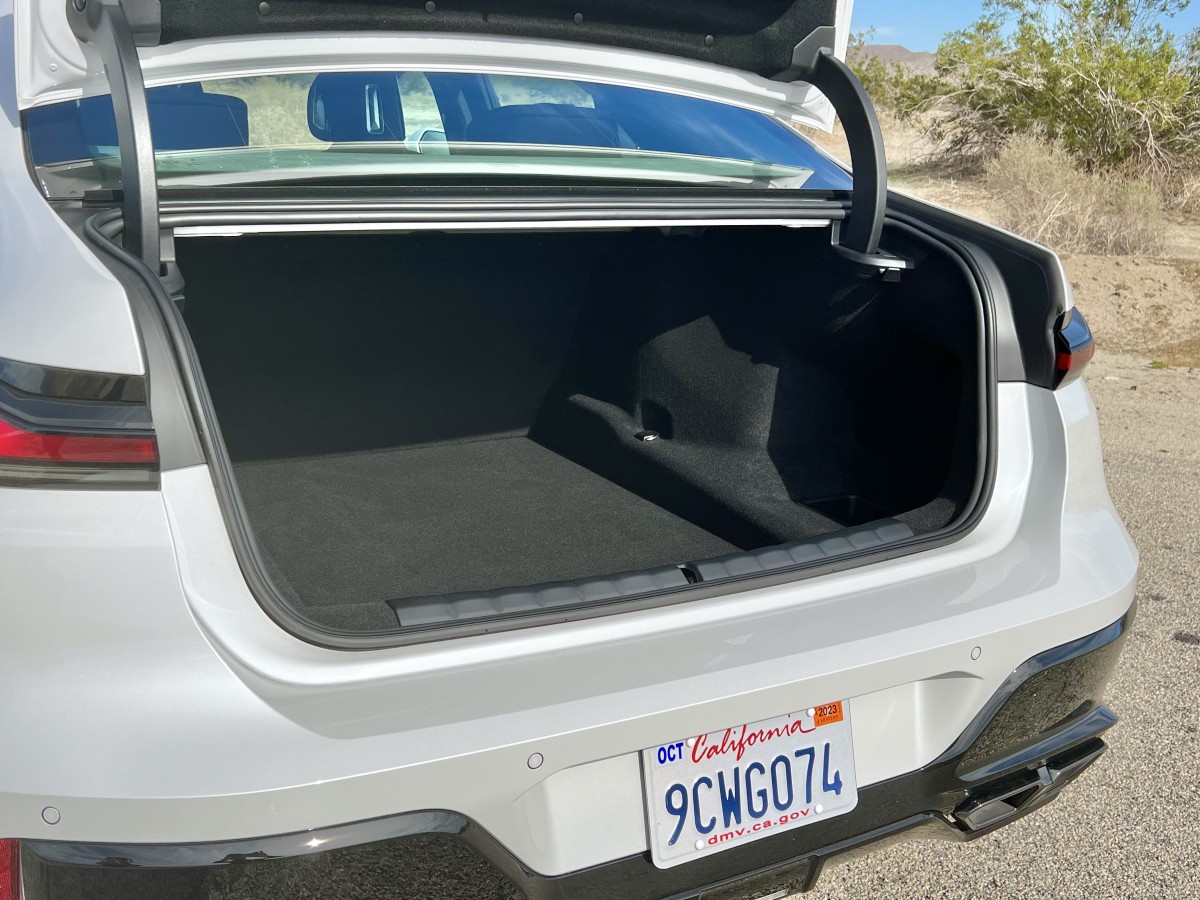
Behind the rear seats, the trunk can hold up to 13.7 cubic-feet of cargo, which is marginally larger than the Mercedes-Benz S-Class, Audi A8 and Genesis G90. The space is wide and deep to easily fit larger objects, and the low liftover height reduces the effort needed for heavy items. Interior storage for personal effects is adequate but not generous. Up front, you get a wireless charging pad for your phone, two moderately sized cupholders, a shallow center armrest bin, and small door pockets. Rear-seat passengers can fold the center seatback to reveal an armrest with another shallow bin, cupholders, and USB ports.
The rear window sunshade is unusually opaque and completely blocks the rearview in order to prevent the theater screen from distracing other motorists. While it doesn't run afoul of any regulations, we question is safety. A camera-based virtual rear-view mirror could address this problem but is oddly not available.
Technology
The new 7 Series comes with iDrive 8, the latest version of BMW's iDrive infotainment system, which is packed with features. It can be operated via touchscreen, a central dial on the console, or via voice commands. For most basic functions, the system is easy to use, but things get complicated the deeper you dig. For example, to activate passenger seat heating or ventilation, you need to select the climate menu at the bottom of the screen, then swipe the menu to the side to access those on-screen controls. Adjusting other seat functions such as lumbar support require even more digging through menus.
BMW combats the overcomplicated menu structure with voice controls, as do Tesla and Mercedes-Benz. Rather than hunt through several screens for a specific feature, you could simply say, "Hey BMW, turn on the driver seat massage," and it will execute the command in a few seconds. This method reduces some of the on-screen frustrations, but it also interrupts your music or podcasts and takes longer than a simple tap of a button on the door. Speaking of music, an 18-speaker Bowers & Wilkins Surround Sound System is standard.
There are some shortcut buttons on the center console for drive-related functions, but they're capacitive touch that require taking your eyes off the road to use. We're at least pleased that it takes a deliberate press to activate, which reduces the possibility of accidental activation.
The optional theater screen also has some challenges. The display responds to touchscreen inputs but it's not consistent from app to app. If you're watching YouTube, you can't simply tap a title card to select it. Instead, you have to use an on-screen overlay that mimics a remote with directional and a select buttons. We're confident the handheld remote control is easier, but it was missing in our vehicle.
iDrive used to be one of the more favored infotainment systems, but this latest iteration is bloated with a dizzying array of settings and menus to dig through. It's not nearly as intuitive as it once was or when compared to rival carmakers' systems. To us, it feels like a step backwards.
Safety
Neither the National Highway Traffic Safety Administration (NHTSA) nor the Insurance Institute for Highway Safety (IIHS) have performed crash tests on the 2023 BMW 7 Series yet. That's not unusual for premium luxury vehicles.
Standard safety features include frontal collision warning with automatic emergency braking, adaptive cruise control, a blind-spot monitor, lane-keep assist, a traffic-sign reader, adaptive headlights, parking sensors, and safe exit warnings. Some of these features can be enhanced with the optional Driving Assistance Professional package that also adds a hands-free automated driving system for highways.
In our time with the 7 Series, we did not experience any false alarms or unpredictable system reactions. The adaptive cruise control is commendable for its smooth acceleration and braking, and the optional highway driving assistant only requires the driver to keep their eyes on the road. Braking, acceleration, and steering are all automated at speeds up to 85 mph. It's one of the better semi-automated driving systems available and greatly reduces driver fatigue on long road trips.
In German and Chinese markets, BMW will be rolling out a level 3 automated driving system that will further reduce demands on the driver. It's possible that option will come to the U.S., but it is not a feature that can be activated with an over-the-air (OTA) software update as it requires additional sensors and equipment.
Cost-effectiveness
The 2023 BMW 7 Series has a starting price of $94,295 (including a $995 destination fee) for the base 740i with the six-cylinder engine. The 760i xDrive we drove starts at $114,595. We're confident that the vast majority of drivers will be perfectly happy with the 740i, plus it's estimated to return 31 mpg in combined city and highway driving. The 760i is estimated to return 26 mpg. At this level, the all-electric i7 may be a more sensible choice as it starts at $120,295 and you get three years of free unlimited changing on the Electrify America network.
The 7 Series' most direct rival is the Mercedes-Benz S-Class, which is priced similarly to the 740i and 760i. It's design is more graceful and places greater emphasis on comfort and refinement than performance. The all-electric EQS sedan however, starts at "only" $103,360. The Audi A8 finds a middle ground between the BMW and Benz in regard to luxury and performance. It represents a relative bargain with a starting price of $87,595. The all-new Genesis G90 is priced within a few hundred dollars of the Audi A8 and its interior quality is almost on par with the German marques.
What owners say
No matter how much I wanted to love my BMW 7, it is a disaster. One repair after another, one large expense after another. Find a different and better car.
January 25, 2023Trims & specs
Base MSRP $95,700 | Seating 5 |
Engine 3.0L 375 hp I6 | Cargo Capacity 19.1 cu ft |
Combined MPG 28 | Drivetrain RWD |
Base MSRP $116,400 | Seating 5 |
Engine 4.4L 536 hp V8 | Cargo Capacity 19.1 cu ft |
Combined MPG 22 | Drivetrain AWD |


Pricing trends
MSRP range
$95,700 - $116,400
Current avg. market price
$59,674
Trending down by 2.3% this month
May 2026 - November 2026


