2014 Ford Focus Reviews, Pricing & Specs
Write a review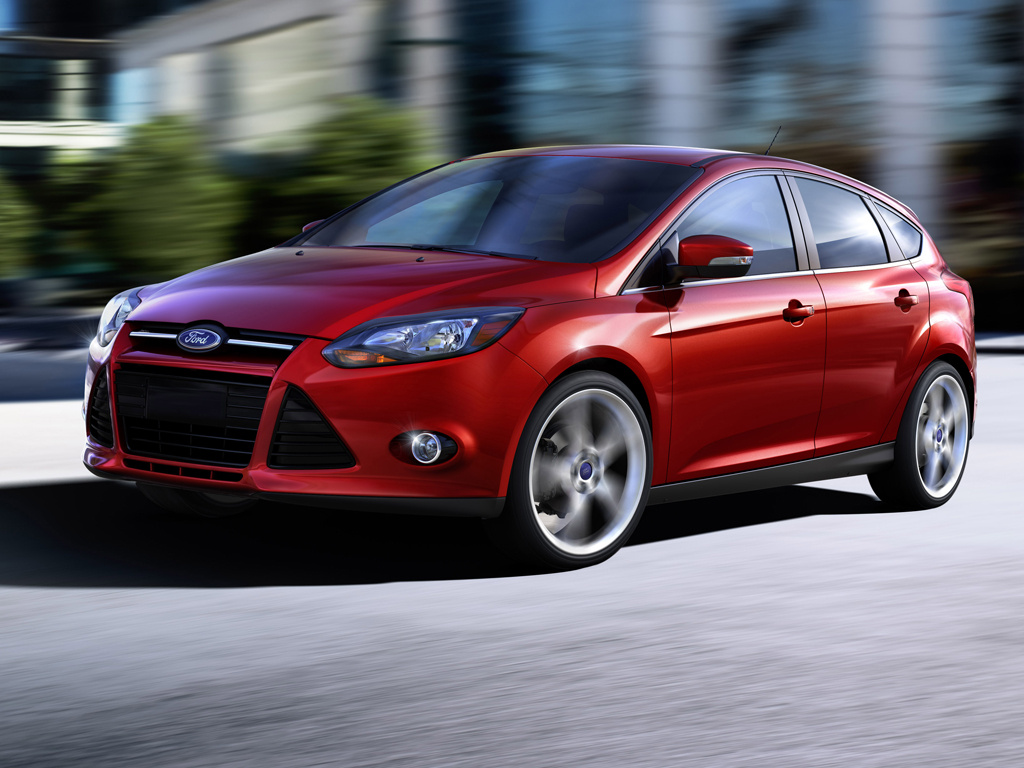
With a solid chassis, responsive suspension and still-fresh look, the Focus is anything but an economy car.

The days of dual design, depending on whether you were looking domestically or on foreign shores, are over, and it feels good to have caught up to the rest of the world. Being the world's best-selling car means you'll be passing yourself quite often, but there's good reason for this. While parking I had a gentleman stop traffic in an identical Focus to tell me it was "the best car [he'd] ever owned," and that's something I've experienced only when driving classic or cult cars previously.
Sporty lines hide the fact that this is still an economy car, and while the Focus won’t be winning any races against its rivals, it can certainly keep up in both a straight line and in the curves. While it likes to put forth a faster image than it can back up, there’s still a lot of fun to be had with the Focus, especially when you start packing on some of the options.
For this week-long test drive, we were given a Titanium 5-door hatchback in Sterling Gray Metallic with the Handling Package ($595), which added a sport suspension and 18-inch alloys. This particular vehicle also had the navigation system ($795) for a total cost of $26,300, including delivery.

While the Focus can be had in full-electric and turbocharged flavors, here we’re dealing with a 2.0-liter, direct-injection, naturally aspirated inline 4-cylinder (I4). It utilizes Ford’s Twin Independent Variable Camshaft Timing (Ti-VCT), which allows the engine to advance or retard the timing of both intake and exhaust camshafts for increased power and efficiency, especially at low rpms, where an inline 4 needs the most help. In this configuration, it delivers 160 hp and 146 lb-ft of torque to the front wheels via a dual-clutch 6-speed PowerShift automatic.
While the engine produces enough power for this 3,000-pound hatchback to hit 60 mph in 8.7 seconds, the PowerShift transmission takes some getting used to. Most consumers won’t have any experience with a dual clutch, and the experience tends to bring up some dissatisfaction at first. Besides adding a cog with which to swap, a dual-clutch transmission tends to switch gears at the drop of a hat in an attempt to always provide the best fuel economy. That's good on paper, but if you try to drive it like a traditional automatic, you’ll find it hunting and shuddering as it tries to react to your input. A dual-clutch needs to be driven with a confident foot, which can be hard in city traffic, where you often find yourself letting off the accelerator to avoid inconvenient occurrences like rear-ending someone. Stabbing at the accelerator again when traffic lets up might find you in the wrong gear, meaning a downshift is suddenly necessary, and you’ll be greeted with the accompanying delay. After a couple of days you’ll get used to the operational character of the system, but many give up before they get to that point, wondering what’s wrong with their transmission. Owner reviews (and complaints) are proof of this, but it’s merely part of the growing pains of a new piece of tech.
Dropping into the transmission's Sport Mode forces it to hold onto gears a bit longer and mitigates some of the issues, but the only real way to combat the quirkiness is through the SelectShift system—the manual part of this automated manual. Rather than using a manual shift gate or paddle shifters, here a toggle switch is situated on the side of the gear knob, allowing you to choose which gear you’d like to operate in. It works, but it’s awkward in operation. Never thought I’d say it, but I much prefer the paddles.
There’s an optional 5-speed manual with the traditional 3-pedal setup as well, and while some reviewers have criticized it for being too sloppy, it also drops the 60 sprint an impressive 0.4 seconds. However, you’ll drop 1 mpg on both ends from the 27 mpg city/37 highway you get with the PowerShift.
What won’t give you any headaches are the Focus's immensely satisfying chassis and suspension. It’s rare to drive a car that feels this stout, especially at this size and price point, and the suspension gave enough confidence to remind me that it’s more fun to drive a slow car fast than a fast car slow. The electric steering exhibits none of the vagueness I’ve experienced with other systems, although some additional feedback would’ve been nice.
With the Titanium Handling package this example was fitted with, things just started to butt up against “too stiff,” although I suspect that’s much more due to the 18-inch wheels and performance tires than the suspension. Even on the usually smooth roads of the Bay Area there were times when the harshness got a little tiring, and potholes were no fun at all. But with the standard setup, I can’t imagine having any complaints at all, and even with this suspension and wheel package, I could still manage to drive for several hours with no fatigue.

The Focus is one of the more aggressive examples of Ford’s “Kinetic Design” style, with its big trapezoidal grille up front, swept-back headlights and angular lines cutting through its bodywork. Despite its economy size, there’s plenty of room up front even for long-leggers such as myself, and while I wouldn’t attempt to cross any continents in the back seat, it still offers plenty of room for short trips, even for larger adults. The Titanium comes with a 6-way power driver’s seat and a 4-way passenger, here in heated leather buckets with contrast stitching. There’s some nice bolstering on the side, but I found the seat itself to be a little flatter than I prefer. Still, it’s a nice change to not have to push the seat all the way back, and with the tilt-and-telescoping steering wheel, I even had my choice of preferred arrangement, rather than merely having to make due with the only acceptable option.
The leather-wrapped steering wheel was nice and chunky, and offered a perfect view of the dual gauges. Controls were damped pleasantly, and the soft-touch, textured surfaces were better than you’d expect at this level. Faux metal trim even looked nice, although I wonder how well it will wear over the years. Hard plastics were definitely abundant, but not obtrusive in their application.
Another pleasant surprise was the amount of storage available, as I never found myself lacking for a place to cram my belongings. Even large water bottles and tablets found a home easily and were kept from rattling about even while diving through California corners. However, a small disappointment was a sticking passenger door, which led some occupants to think they were stuck. Too much of a push was required to get it open, almost as though this 9,000-mile veteran had been in an accident. Curious.

Tech is definitely abundant in this Titanium, with everything from dual-zone automatic climate controls, Ford Sync and MyFord Touch, a rear-view camera, power heated mirrors, keyless entry and start, and the navigation system. Much criticism of the Sync and Touch systems has been printed already, and I’m reluctant to repeat it here, but it must be said that both systems are far too clunky to be considered safe for use while driving. There’s definitely been improvement over the years, but too many sub-menus and missed inputs mean a lot of attention is taken away from the road, even after extensive acclimation to both systems. It’s still a better option to simply use your phone for most navigational duties, likely a more up-to-date technology that you’ll be more familiar with anyway.
The upgraded Sony sound system was a delight, however, providing clear audio regardless of volume or application. It’s a 10-speaker system that comes standard with the Titanium but otherwise is part of the MyFord Touch package that also includes the 8-inch touchscreen display, navigation and dual-zone automatic climate controls. The rear-view camera works well but seems wholly unnecessary on a vehicle of this size, even with the high rear window. One small complaint—the digital compass is an illustrated representation of those floating, round gas-station jobs you buy for $3.99. Seems a cheap bit of reality to recreate, but if you’re going to go for that, at least make it actually spin. This example just switches abruptly through the different directions with no transition.

Be careful which Focus you pick, as its relative safety can vary quite a bit. S and SE trims get rear drum brakes, while all other trims enjoy 4-wheel discs. The Titanium trim, with summer tires and the discs at all 4 corners, can stop from 60 mph in just 110 feet, and does so with impressive confidence. Lose the rear discs and the performance tires and you’ll have to add an extra 20 feet to that feat, which puts it at the low end of the competitive spectrum.
Seven airbags come standard with every Focus, however, including a driver’s knee bag added in 2013, allowing it to achieve a full 5-star overall score from the National Highway Traffic Safety Administration. In fact, the Focus achieved a 5-star rating in all NHTSA tests, save for a 4-star rating in frontal crashes for the passenger and the rollover test. The Insurance Institute for Highway Safety awarded the Focus its highest rating of Good in all tests.


User reviews for 2014 Ford Focus
Write a review2014 Ford Focus Pricing
Trims & specs
Air Conditioning
Single front air conditioning zones
Airbags
Dual front airbags · Driver knee airbags · Passenger airbag deactivation: occupant sensing deactivation · Front side airbags · Rear side curtain airbags
Audio System
Antenna Type: mast · Single disc in-Dash CD · MP3 player: CD MP3 Playback · AM/FM radio · Total Number of Speakers: 4
Brakes
ABS: 4-wheel · Front brake diameter: 10.9 · Front brake width: 0.98 · Front brakes: ventilated disc · Rear brake diameter: 8.9 · Rear brakes: drum
Comfort Features
Floor Material: carpet · Shift knob trim: urethane · Steering wheel trim: urethane
Convenience Features
Center console: front console with storage · Cupholders: front · Multi-function remote: keyless entry · One-touch windows: 1 · Power outlet(s): 12V front · Power steering: electric · Reading lights: front · Steering wheel: tilt and telescopic · Storage: door pockets
Driver Seat
Manual adjustments: 6
Drivetrain
Axle ratio: 3.82
Exterior Features
Door handle color: black · Front bumper color: body-color · Grille color: black with chrome accents · Mirror color: black · Rear bumper color: body-color · Rocker panel color: black · Window trim: black
Headrests
Front headrests: adjustable · Number of front headrests: 2 · Number of rear headrests: 3
Instrumentation
Warnings and reminders: lamp failure
Lights
Headlights: Halogen
Mirrors
Exterior mirrors: manual folding · Inside rearview mirror: manual day/night
Passenger Seat
Manual Adjustments: 4
Rear Seats
Type: 60-40 split bench
Safety
Child seat anchors: LATCH system · Impact sensor: post-collision safety system
Seatbelts
Front seatbelts: 3-point · Seatbelt pretensioners: front · Seatbelt warning sensor: driver and passenger · Second row seatbelts: 3-point
Seats
Driver seat manual adjustments: height · Front seat type: bucket · Passenger seat manual adjustments: reclining · Rear headrests: adjustable · Upholstery: cloth
Spare Tire
Mount Location: inside · Size: temporary
Spare Wheel
Rim Type: steel
Steering
Steering ratio: 14.7 · Turns lock-to-lock: 2.6
Suspension
Front Arm Type: lower control arms · Front Shock Type: gas shock absorbers · Front Spring Type: coil springs · Front Stabilizer Bar: diameter 24 mm · Front Suspension Classification: independent · Front Suspension Type: MacPherson struts · Rear Shock Type: gas shock absorbers · Rear Spring Type: coil springs · Rear Stabilizer Bar: diameter 19 mm · Rear Suspension Classification: independent · Rear Suspension Type: multi-link
Tires
Type: all season
Tires and Rims
Wheels: steel
Wheels
Wheel covers: full
Windows
Front wipers: variable intermittent · Power windows: front
Air Conditioning
Single front air conditioning zones
Airbags
Dual front airbags · Driver knee airbags · Passenger airbag deactivation: occupant sensing deactivation · Front side airbags · Rear side curtain airbags
Audio System
Antenna Type: mast · Voice recognition audio system · Auxiliary audio input: jack · Single disc in-Dash CD · MP3 player: CD MP3 Playback · AM/FM radio · Total Number of Speakers: 6
Brakes
ABS: 4-wheel · Front brake diameter: 10.9 · Front brake width: 0.98 · Front brakes: ventilated disc · Rear brake diameter: 8.9 · Rear brakes: drum
Comfort Features
Floor Mat Material: carpet · Floor Material: carpet · Floor Mats: front · Shift knob trim: urethane · Steering wheel trim: urethane
Convenience Features
Center console: front console with armrest and storage · Cupholders: front · Multi-function remote: keyless entry · One-touch windows: 1 · Power outlet(s): 12V front · Power steering: electric · Reading lights: rear · Rear power outlet: 12V · Steering wheel: tilt and telescopic · Steering wheel mounted controls: cruise controls · Storage: front seatback · Vanity mirrors: dual illuminating
Driver Seat
Manual adjustments: 6
Drivetrain
Axle ratio: 3.82
Exterior Features
Door handle color: body-color · Front bumper color: body-color · Grille color: black with chrome accents · Mirror color: body-color · Rear bumper color: body-color · Rocker panel color: black · Window trim: black
Headrests
Front headrests: adjustable · Number of front headrests: 2 · Number of rear headrests: 3
In Car Entertainment
Infotainment: SYNC · Infotainment screen size: 4.2 in.
Instrumentation
Warnings and reminders: coolant temperature warning
Lights
Headlights: Auto on/off
Mirrors
Exterior mirrors: integrated turn signals · Inside rearview mirror: manual day/night
Passenger Seat
Manual Adjustments: 4
Rear Seats
Type: 60-40 split bench
Safety
Child seat anchors: LATCH system · Impact sensor: post-collision safety system · Programmable safety key: MyKey
Seatbelts
Front seatbelts: 3-point · Seatbelt pretensioners: front · Seatbelt warning sensor: driver and passenger · Second row seatbelts: 3-point
Seats
Driver seat manual adjustments: reclining · Front seat type: bucket · Passenger seat manual adjustments: reclining · Rear headrests: adjustable · Upholstery: cloth
Spare Tire
Mount Location: inside · Size: temporary
Spare Wheel
Rim Type: steel
Steering
Steering ratio: 14.7 · Turns lock-to-lock: 2.6
Suspension
Front Arm Type: lower control arms · Front Shock Type: gas shock absorbers · Front Spring Type: coil springs · Front Stabilizer Bar: diameter 24 mm · Front Suspension Classification: independent · Front Suspension Type: MacPherson struts · Rear Shock Type: gas shock absorbers · Rear Spring Type: coil springs · Rear Stabilizer Bar: diameter 19 mm · Rear Suspension Classification: independent · Rear Suspension Type: multi-link
Telematics
Phone wireless data link: Bluetooth
Tires
Type: all season
Tires and Rims
Wheels: painted aluminum
Windows
Front wipers: variable intermittent
Air Conditioning
Single front air conditioning zones
Airbags
Dual front airbags · Driver knee airbags · Passenger airbag deactivation: occupant sensing deactivation · Front side airbags · Front side curtain airbags
Audio System
Antenna Type: mast · Voice recognition audio system · USB auxiliary audio input · Single disc in-Dash CD · MP3 player: CD MP3 Playback · AM/FM radio · Total Number of Speakers: 6
Brakes
ABS: 4-wheel · Front brake diameter: 10.9 · Front brake width: 0.98 · Front brakes: ventilated disc · Rear brake diameter: 8.9 · Rear brakes: drum
Comfort Features
Cargo area floor mat: rubber/vinyl · Floor Mat Material: carpet · Floor Material: carpet · Floor Mats: front · Shift knob trim: urethane · Steering wheel trim: urethane
Convenience Features
Center console: front console with armrest and storage · Cupholders: front · Multi-function remote: keyless entry · One-touch windows: 1 · Power outlet(s): 12V front · Power steering: electric · Reading lights: front · Rear power outlet: 12V · Steering wheel: tilt and telescopic · Steering wheel mounted controls: cruise controls · Storage: door pockets · Vanity mirrors: dual illuminating
Driver Seat
Manual adjustments: 6
Drivetrain
Axle ratio: 3.82
Exterior Features
Door handle color: body-color · Front bumper color: body-color · Grille color: black with chrome accents · Mirror color: body-color · Rear bumper color: body-color · Rear spoiler: roofline spoiler · Rear spoiler color: body-color · Rear trunk/liftgate: liftgate · Rocker panel color: black · Window trim: black
Headrests
Front headrests: adjustable · Number of front headrests: 2 · Number of rear headrests: 3
In Car Entertainment
Infotainment: SYNC · Infotainment screen size: 4.2 in.
Instrumentation
Warnings and reminders: low fuel level
Lights
Headlights: Halogen
Mirrors
Exterior mirrors: power · Inside rearview mirror: manual day/night
Passenger Seat
Manual Adjustments: 4
Rear Seats
Type: 60-40 split bench
Safety
Child seat anchors: LATCH system · Impact sensor: post-collision safety system · Programmable safety key: MyKey
Seatbelts
Front seatbelts: 3-point · Seatbelt pretensioners: front · Seatbelt warning sensor: driver and passenger · Second row seatbelts: 3-point
Seats
Driver seat manual adjustments: reclining · Front seat type: bucket · Passenger seat manual adjustments: reclining · Rear headrests: adjustable · Upholstery: cloth
Spare Tire
Mount Location: inside · Size: temporary
Spare Wheel
Rim Type: steel
Steering
Steering ratio: 14.7 · Turns lock-to-lock: 2.6
Suspension
Front Arm Type: lower control arms · Front Shock Type: gas shock absorbers · Front Spring Type: coil springs · Front Stabilizer Bar: diameter 24 mm · Front Suspension Classification: independent · Front Suspension Type: MacPherson struts · Rear Shock Type: gas shock absorbers · Rear Spring Type: coil springs · Rear Stabilizer Bar: diameter 19 mm · Rear Suspension Classification: independent · Rear Suspension Type: multi-link
Telematics
Phone wireless data link: Bluetooth
Tires
Type: all season
Tires and Rims
Wheels: painted aluminum
Windows
Front wipers: variable intermittent · Liftgate window: fixed · Rear wiper: with washer
Air Conditioning
Automatic climate control front air conditioning · Dual front air conditioning zones
Airbags
Dual front airbags · Driver knee airbags · Passenger airbag deactivation: occupant sensing deactivation · Front side airbags · Rear side curtain airbags
Audio System
Antenna Type: diversity · Voice recognition audio system · Memory card slot auxiliary audio input · Single disc in-Dash CD · MP3 player: CD MP3 Playback · Premium Brand: Sony · AM/FM radio · Satellite Radio: SiriusXM · Total Number of Speakers: 10
Brakes
ABS: 4-wheel · Front brake diameter: 10.9 · Front brake width: 0.98 · Front brakes: ventilated disc · Rear brake diameter: 8.9 · Rear brakes: drum
Comfort Features
Floor Mat Material: carpet · Floor Material: carpet · Floor Mats: front · Shift knob trim: leather · Steering wheel trim: leather
Convenience Features
Ambient lighting: color-adjustable · Center console: front console with armrest and storage · Cupholders: front · Multi-function remote: keyless entry · One-touch windows: 4 · Power outlet(s): 12V front · Power steering: electric · Reading lights: rear · Rear power outlet: 12V · Steering wheel: tilt and telescopic · Steering wheel mounted controls: audio · Storage: door pockets · Vanity mirrors: dual illuminating
Driver Seat
Power adjustments: 6
Drivetrain
Axle ratio: 3.85
Exterior Features
Door handle color: body-color · Front bumper color: body-color · Grille color: black · Mirror color: body-color · Rear bumper color: body-color · Rocker panel color: black · Window trim: chrome
Headrests
Front headrests: adjustable · Number of front headrests: 2 · Number of rear headrests: 3
In Car Entertainment
Infotainment: SYNC · Infotainment screen size: 8 in.
Instrumentation
Warnings and reminders: low fuel level
Lights
Exterior entry lights: puddle lamps · Headlights: Halogen
Mirrors
Exterior mirrors: manual folding · Inside rearview mirror: manual day/night
Passenger Seat
Manual Adjustments: 4
Rear Seats
Type: 60-40 split bench
Safety
Camera system: rearview · Child seat anchors: LATCH system · Impact sensor: post-collision safety system · Parking sensors: rear · Programmable safety key: MyKey · Rearview monitor: in dash
Seatbelts
Front seatbelts: 3-point · Seatbelt pretensioners: front · Seatbelt warning sensor: driver and passenger · Second row seatbelts: 3-point
Seats
Driver seat power adjustments: height · Front seat type: bucket · Passenger seat manual adjustments: reclining · Rear headrests: adjustable · Upholstery: leather
Spare Tire
Mount Location: inside · Size: temporary
Spare Wheel
Rim Type: steel
Steering
Steering ratio: 14.7 · Turns lock-to-lock: 2.6
Suspension
Front Arm Type: lower control arms · Front Shock Type: gas shock absorbers · Front Spring Type: coil springs · Front Stabilizer Bar: diameter 24 mm · Front Suspension Classification: independent · Front Suspension Type: MacPherson struts · Rear Shock Type: gas shock absorbers · Rear Spring Type: coil springs · Rear Stabilizer Bar: diameter 19 mm · Rear Suspension Classification: independent · Rear Suspension Type: multi-link
Telematics
Electronic messaging assistance: with read function · Phone: voice activated · Phone wireless data link: Bluetooth
Tires
Type: all season
Tires and Rims
Wheels: painted aluminum
Windows
Front wipers: variable intermittent
Air Conditioning
Automatic climate control front air conditioning · Dual front air conditioning zones
Airbags
Dual front airbags · Driver knee airbags · Passenger airbag deactivation: occupant sensing deactivation · Front side airbags · Rear side curtain airbags
Audio System
Antenna Type: diversity · Voice recognition audio system · Auxiliary audio input: jack · Single disc in-Dash CD · MP3 player: CD MP3 Playback · Premium Brand: Sony · Touch screen display radio · Satellite Radio: SiriusXM · Total Number of Speakers: 10
Brakes
ABS: 4-wheel · Front brake diameter: 10.9 · Front brake width: 0.98 · Front brakes: ventilated disc · Rear brake diameter: 8.9 · Rear brakes: drum
Comfort Features
Cargo area floor mat: rubber/vinyl · Floor Mat Material: carpet · Floor Material: carpet · Floor Mats: front · Shift knob trim: leather · Steering wheel trim: leather
Convenience Features
Ambient lighting: color-adjustable · Center console: front console with armrest and storage · Cupholders: front · Multi-function remote: trunk release · One-touch windows: 4 · Power outlet(s): 12V front · Power steering: electric · Reading lights: front · Rear power outlet: 12V · Steering wheel: tilt and telescopic · Steering wheel mounted controls: audio · Storage: door pockets · Vanity mirrors: dual illuminating
Driver Seat
Power adjustments: 6
Drivetrain
Axle ratio: 3.85
Exterior Features
Door handle color: body-color · Front bumper color: body-color · Grille color: black · Mirror color: body-color · Rear bumper color: body-color · Rear spoiler: roofline spoiler · Rear spoiler color: body-color · Rear trunk/liftgate: liftgate · Rocker panel color: black · Window trim: chrome
Headrests
Front headrests: adjustable · Number of front headrests: 2 · Number of rear headrests: 3
In Car Entertainment
Infotainment: SYNC · Infotainment screen size: 8 in.
Instrumentation
Warnings and reminders: maintenance reminder
Lights
Exterior entry lights: puddle lamps · Headlights: Halogen
Mirrors
Exterior mirrors: heated · Inside rearview mirror: manual day/night
Passenger Seat
Manual Adjustments: 4
Rear Seats
Type: 60-40 split bench
Safety
Camera system: rearview · Child seat anchors: LATCH system · Impact sensor: post-collision safety system · Parking sensors: rear · Programmable safety key: MyKey · Rearview monitor: in dash
Seatbelts
Front seatbelts: 3-point · Seatbelt pretensioners: front · Seatbelt warning sensor: driver and passenger · Second row seatbelts: 3-point
Seats
Driver seat power adjustments: reclining · Front seat type: bucket · Passenger seat manual adjustments: reclining · Rear headrests: adjustable · Upholstery: leather
Spare Tire
Mount Location: inside · Size: temporary
Spare Wheel
Rim Type: steel
Steering
Steering ratio: 14.7 · Turns lock-to-lock: 2.6
Suspension
Front Arm Type: lower control arms · Front Shock Type: gas shock absorbers · Front Spring Type: coil springs · Front Stabilizer Bar: diameter 24 mm · Front Suspension Classification: independent · Front Suspension Type: MacPherson struts · Rear Shock Type: gas shock absorbers · Rear Spring Type: coil springs · Rear Stabilizer Bar: diameter 19 mm · Rear Suspension Classification: independent · Rear Suspension Type: multi-link
Telematics
Electronic messaging assistance: with read function · Phone: voice activated · Phone wireless data link: Bluetooth
Tires
Type: all season
Tires and Rims
Wheels: painted aluminum
Windows
Front wipers: variable intermittent · Liftgate window: fixed · Rear wiper: intermittent
Air Conditioning
Single front air conditioning zones
Airbags
Dual front airbags · Driver knee airbags · Passenger airbag deactivation: occupant sensing deactivation · Front side airbags · Rear side curtain airbags
Audio System
Antenna Type: mast · Voice recognition audio system · Bluetooth auxiliary audio input · Single disc in-Dash CD · MP3 player: CD MP3 Playback · AM/FM radio · Total Number of Speakers: 6 · 100 watts
Brakes
ABS: 4-wheel · Front brake diameter: 12.6 · Front brake width: 0.98 · Front brakes: ventilated disc · Rear brake diameter: 10.6 · Rear brake width: .43 · Rear brakes: disc
Comfort Features
Door sill trim: scuff plate · Floor Mat Material: carpet · Floor Material: carpet · Floor Mats: front · Foot pedal trim: aluminum · Shift knob trim: leather · Steering wheel trim: leather
Convenience Features
Center console: front console with armrest and storage · Cupholders: front · Multi-function remote: keyless entry · One-touch windows: 4 · Power outlet(s): 12V front · Power steering: speed-proportional · Reading lights: rear · Steering wheel: tilt and telescopic · Steering wheel mounted controls: cruise controls · Storage: door pockets · Vanity mirrors: dual illuminating
Driver Seat
Manual adjustments: 6
Drivetrain
Axle ratio: 4.06
Exterior Features
Door handle color: body-color · Exhaust: dual exhaust tips · Exhaust tip color: stainless-steel · Front bumper color: body-color · Grille color: black · Headlamp bezel color: black · Mirror color: body-color · Rear bumper color: body-color · Rear spoiler: roofline spoiler · Rear spoiler color: body-color · Rear trunk/liftgate: liftgate · Rocker panel color: body-color · Window trim: black
Headrests
Front headrests: adjustable · Number of front headrests: 2 · Number of rear headrests: 3
In Car Entertainment
Infotainment: SYNC · Infotainment screen size: 4.2 in.
Instrumentation
Warnings and reminders: maintenance reminder
Lights
Exterior entry lights: puddle lamps · Headlights: Halogen
Mirrors
Exterior mirrors: manual folding · Inside rearview mirror: manual day/night
Passenger Seat
Manual Adjustments: 4
Rear Seats
Type: 60-40 split bench
Safety
Child seat anchors: LATCH system · Impact sensor: post-collision safety system · Programmable safety key: MyKey
Seatbelts
Front seatbelts: 3-point · Seatbelt pretensioners: front · Seatbelt warning sensor: driver and passenger · Second row seatbelts: 3-point
Seats
Driver seat manual adjustments: reclining · Front seat type: sport bucket · Passenger seat manual adjustments: reclining · Rear headrests: adjustable · Upholstery: cloth
Spare Tire
Mount Location: inside · Size: full-size
Spare Wheel
Rim Type: steel
Suspension
Front Arm Type: lower control arms · Front Shock Type: gas shock absorbers · Front Spring Type: coil springs · Front Stabilizer Bar: diameter 25 mm · Front Suspension Classification: independent · Front Suspension Type: MacPherson struts · Rear Shock Type: gas shock absorbers · Rear Spring Type: coil springs · Rear Stabilizer Bar: diameter 22 mm · Rear Suspension Classification: independent · Rear Suspension Type: multi-link
Telematics
Phone wireless data link: Bluetooth
Tires
Type: summer performance
Tires and Rims
Wheel type: aluminum alloy
Wheels
Wheel spokes: multi-spoke
Windows
Front wipers: variable intermittent · Liftgate window: fixed · Rear wiper: with washer

