Used BMW 5 Series for Sale nearMercer, PA
Shop with transparent pricing.
Only show listings that include dealer fees- Year:
- 2014
- Make:
- BMW
- Model:
- 5 Series
- Body type:
- Sedan
- Doors:
- 4 doors
- Drivetrain:
- All-Wheel Drive
- Engine:
- 445 hp 4.4L V8
- Exterior color:
- White Metallic
- Combined gas mileage:
- 20 MPG
- Fuel type:
- Gasoline
- Interior color:
- Brown (Beige)
- Transmission:
- 8-Speed Automatic
- Mileage:
- 81,103
- Stock #:
- D2366
- VIN:
- WBAKP9C52EDZ35209


Sponsored by R21 Motorsports
2014 BMW 5 Series
550i xDrive Sedan AWD
81,103 mi
$16,245
- Year:
- 2013
- Make:
- BMW
- Model:
- 5 Series
- Body type:
- Sedan
- Doors:
- 4 doors
- Drivetrain:
- All-Wheel Drive
- Engine:
- 240 hp 2L I4
- Exterior color:
- Black Sapphire Metallic
- Combined gas mileage:
- 27 MPG
- Fuel type:
- Gasoline
- Interior color:
- Black
- Transmission:
- 8-Speed Automatic
- Mileage:
- 130,951
- VIN:
- WBAXH5C51DD110563

Sponsored Listing
2013 BMW 5 Series
528i xDrive Sedan AWD
130,951 mi
$7,397
- Year:
- 2023
- Make:
- BMW
- Model:
- 5 Series
- Body type:
- Sedan
- Doors:
- 4 doors
- Drivetrain:
- All-Wheel Drive
- Engine:
- 248 hp 2L I4
- Exterior color:
- Alpine White
- Combined gas mileage:
- 27 MPG
- Fuel type:
- Gasoline
- Interior color:
- Brown (Canberra Beige)
- Transmission:
- 8-Speed Automatic
- Mileage:
- 29,458
- Stock #:
- 10272P
- VIN:
- WBA13BJ01PWY15074

Sponsored Listing
2023 BMW 5 Series
530i xDrive AWD
29,458 mi
$36,018
- Year:
- 2021
- Make:
- BMW
- Model:
- 5 Series
- Body type:
- Sedan
- Doors:
- 4 doors
- Drivetrain:
- All-Wheel Drive
- Engine:
- 248 hp 2L I4
- Exterior color:
- Blue
- Combined gas mileage:
- 27 MPG
- Fuel type:
- Gasoline
- Interior color:
- Brown (TAN)
- Transmission:
- Automatic
- Mileage:
- 51,543
- Stock #:
- 28802206
- VIN:
- WBA13BJ04MCF77978

2021 BMW 5 Series
530i xDrive AWD
51,543 mi
$29,497
- Year:
- 2013
- Make:
- BMW
- Model:
- 5 Series
- Body type:
- Sedan
- Doors:
- 4 doors
- Drivetrain:
- All-Wheel Drive
- Engine:
- 300 hp 3L I6
- Exterior color:
- PEWTER
- Combined gas mileage:
- 25 MPG
- Fuel type:
- Gasoline
- Interior color:
- Brown (TAN)
- Transmission:
- Automatic
- Mileage:
- 128,092
- Stock #:
- 6631
- VIN:
- WBAFU7C56DDU70088

2013 BMW 5 Series
535i xDrive Sedan AWD
128,092 mi
$7,390
- Year:
- 2023
- Make:
- BMW
- Model:
- 5 Series
- Body type:
- Sedan
- Doors:
- 4 doors
- Drivetrain:
- All-Wheel Drive
- Engine:
- 2L I4 Hybrid
- Exterior color:
- Blue
- Combined gas mileage:
- 63 MPG
- Fuel type:
- Hybrid
- Interior color:
- Black
- Transmission:
- Automatic
- Mileage:
- 19,303
- Stock #:
- 29006499
- VIN:
- WBA33AG06PCL18842

2023 BMW 5 Series
530e xDrive Hybrid Plug-in AWD
19,303 mi
$39,397
- Year:
- 2019
- Make:
- BMW
- Model:
- 5 Series
- Body type:
- Sedan
- Doors:
- 4 doors
- Drivetrain:
- All-Wheel Drive
- Engine:
- 456 hp 4.4L V8
- Exterior color:
- Black
- Combined gas mileage:
- 21 MPG
- Fuel type:
- Gasoline
- Interior color:
- Black
- Transmission:
- Automatic
- Mileage:
- 38,307
- Stock #:
- 10363
- VIN:
- WBAJB9C52KB464597

2019 BMW 5 Series
M550i xDrive Sedan AWD
38,307 mi
$32,960
- Year:
- 2023
- Make:
- BMW
- Model:
- 5 Series
- Body type:
- Sedan
- Doors:
- 4 doors
- Drivetrain:
- All-Wheel Drive
- Engine:
- 248 hp 2L I4
- Exterior color:
- Blue
- Combined gas mileage:
- 27 MPG
- Fuel type:
- Gasoline
- Interior color:
- Black
- Transmission:
- Automatic
- Mileage:
- 28,312
- Stock #:
- 70249650
- VIN:
- WBA13BJ0XPWY19768

2023 BMW 5 Series
530i xDrive AWD
28,312 mi
$35,797
- Year:
- 2017
- Make:
- BMW
- Model:
- 5 Series
- Body type:
- Sedan
- Doors:
- 4 doors
- Drivetrain:
- Rear-Wheel Drive
- Engine:
- 335 hp 3L I6
- Exterior color:
- Cashmere Silver Metallic
- Combined gas mileage:
- 25 MPG
- Fuel type:
- Gasoline
- Interior color:
- Black
- Transmission:
- Automatic
- Mileage:
- 76,877
- Stock #:
- 916112
- VIN:
- WBAJE5C38HG916112

2017 BMW 5 Series
540i Sedan RWD
76,877 mi
$22,090
- Year:
- 2026
- Make:
- BMW
- Model:
- 5 Series
- Body type:
- Sedan
- Doors:
- 4 doors
- Drivetrain:
- All-Wheel Drive
- Engine:
- 255 hp 2L I4
- Exterior color:
- Black
- Combined gas mileage:
- 31 MPG
- Fuel type:
- Gasoline
- Interior color:
- Brown
- Transmission:
- Automatic
- Mileage:
- 17,759
- Stock #:
- 29056542
- VIN:
- WBA53FJ0XTCW33703

2026 BMW 5 Series
530i xDrive
17,759 mi
$46,697
- Year:
- 2023
- Make:
- BMW
- Model:
- 5 Series
- Body type:
- Sedan
- Doors:
- 4 doors
- Drivetrain:
- All-Wheel Drive
- Engine:
- 2L I4 Hybrid
- Exterior color:
- Mineral White Metallic
- Combined gas mileage:
- 63 MPG
- Fuel type:
- Hybrid
- Interior color:
- Cognac
- Transmission:
- 8-Speed Automatic
- Mileage:
- 48,169
- Stock #:
- AM48944PD
- VIN:
- WBA33AG06PCM48944

2023 BMW 5 Series
530e xDrive Hybrid Plug-in AWD
48,169 mi
$30,232
- Year:
- 2014
- Make:
- BMW
- Model:
- 5 Series
- Body type:
- Sedan
- Doors:
- 4 doors
- Drivetrain:
- All-Wheel Drive
- Engine:
- 445 hp 4.4L V8
- Exterior color:
- Carbon Black Metallic
- Combined gas mileage:
- 20 MPG
- Fuel type:
- Gasoline
- Interior color:
- Black
- Transmission:
- 8-Speed Automatic
- Mileage:
- 108,437
- Stock #:
- 1314
- VIN:
- WBAKP9C59ED692417

2014 BMW 5 Series
550i xDrive Sedan AWD
108,437 mi
$13,592
- Year:
- 2016
- Make:
- BMW
- Model:
- 5 Series
- Body type:
- Sedan
- Doors:
- 4 doors
- Drivetrain:
- All-Wheel Drive
- Engine:
- 300 hp 3L I6
- Exterior color:
- Black
- Combined gas mileage:
- 24 MPG
- Fuel type:
- Gasoline
- Interior color:
- Black
- Transmission:
- 8-Speed Automatic
- Mileage:
- 93,225
- Stock #:
- 252989
- VIN:
- WBA5B3C5XGG252989

2016 BMW 5 Series
535i xDrive Sedan AWD
93,225 mi
$13,178
Recommended model year:
2018 BMW 5 Series
Shop 2018 BMW 5 Series »With 1,375 currently listed for sale and an average price of $18,301, 34.0% of 2018 BMW 5 Series listings on CarGurus are rated as good or great deals.
Favorably reviewed: Owners rated the 2018 BMW 5 Series 4.95 / 5 stars and CarGurus experts gave it an 8.33 / 10.
59.4% of 2018 BMW 5 Series listings on CarGurus are accident free.
- Year:
- 2023
- Make:
- BMW
- Model:
- 5 Series
- Body type:
- Sedan
- Doors:
- 4 doors
- Drivetrain:
- All-Wheel Drive
- Engine:
- 2L I4 Hybrid
- Exterior color:
- Skyscraper Gray Metallic
- Combined gas mileage:
- 63 MPG
- Fuel type:
- Hybrid
- Interior color:
- Black
- Transmission:
- 8-Speed Automatic
- Mileage:
- 56,794
- Stock #:
- 26952NCX
- VIN:
- WBA33AG03PCL75659

2023 BMW 5 Series
530e xDrive Hybrid Plug-in AWD
56,794 mi
$28,055
- Year:
- 2019
- Make:
- BMW
- Model:
- 5 Series
- Body type:
- Sedan
- Doors:
- 4 doors
- Drivetrain:
- All-Wheel Drive
- Engine:
- 248 hp 2L I4 Hybrid
- Exterior color:
- Silver
- Combined gas mileage:
- 67 MPG
- Fuel type:
- Hybrid
- Interior color:
- Brown
- Transmission:
- Automatic
- Mileage:
- 68,287
- Stock #:
- 70286575
- VIN:
- WBAJB1C57KB375741

2019 BMW 5 Series
530e xDrive iPerformance Sedan AWD
68,287 mi
$21,247
- Year:
- 2018
- Make:
- BMW
- Model:
- 5 Series
- Body type:
- Sedan
- Doors:
- 4 doors
- Drivetrain:
- Rear-Wheel Drive
- Engine:
- 335 hp 3L I6
- Exterior color:
- Alpine White
- Combined gas mileage:
- 25 MPG
- Fuel type:
- Gasoline
- Interior color:
- Black
- Transmission:
- 8-Speed Automatic
- Mileage:
- 103,551
- Stock #:
- 12262A
- VIN:
- WBAJE5C55JWA95096

2018 BMW 5 Series
540i Sedan RWD
103,551 mi
$16,375
- Year:
- 2019
- Make:
- BMW
- Model:
- 5 Series
- Body type:
- Sedan
- Doors:
- 4 doors
- Drivetrain:
- All-Wheel Drive
- Engine:
- 335 hp 3L I6
- Exterior color:
- Alpine White
- Combined gas mileage:
- 25 MPG
- Fuel type:
- Gasoline
- Interior color:
- Brown (Canberra Beige/Black)
- Transmission:
- 8-Speed Automatic
- Mileage:
- 70,724
- Stock #:
- 25944PB
- VIN:
- WBAJE7C56KWD55731
2019 BMW 5 Series
540i xDrive Sedan AWD
70,724 mi
$25,294
- Year:
- 2018
- Make:
- BMW
- Model:
- 5 Series
- Body type:
- Sedan
- Doors:
- 4 doors
- Drivetrain:
- All-Wheel Drive
- Engine:
- 456 hp 4.4L V8
- Combined gas mileage:
- 20 MPG
- Fuel type:
- Gasoline
- Transmission:
- 8-Speed Automatic
- Mileage:
- 56,050
- Stock #:
- 10494A
- VIN:
- WBAJB9C56JB035624

2018 BMW 5 Series
M550i xDrive Sedan AWD
56,050 mi
$30,102
- Year:
- 2018
- Make:
- BMW
- Model:
- 5 Series
- Body type:
- Sedan
- Doors:
- 4 doors
- Drivetrain:
- All-Wheel Drive
- Engine:
- 248 hp 2L I4 Hybrid
- Exterior color:
- Black
- Combined gas mileage:
- 67 MPG
- Fuel type:
- Hybrid
- Interior color:
- Black
- Transmission:
- 8-Speed Automatic
- Mileage:
- 104,267
- Stock #:
- B374310
- VIN:
- WBAJB1C5XJB374310

2018 BMW 5 Series
530e xDrive iPerformance Sedan AWD
104,267 mi
$15,331
- Year:
- 2018
- Make:
- BMW
- Model:
- 5 Series
- Body type:
- Sedan
- Doors:
- 4 doors
- Drivetrain:
- All-Wheel Drive
- Engine:
- 456 hp 4.4L V8
- Exterior color:
- Carbon Black Metallic
- Combined gas mileage:
- 20 MPG
- Fuel type:
- Gasoline
- Interior color:
- Mocha
- Transmission:
- 8-Speed Automatic
- Mileage:
- 47,274
- Stock #:
- C28998C
- VIN:
- WBAJB9C53JB036908

2018 BMW 5 Series
M550i xDrive Sedan AWD
47,274 mi
$34,812
- Year:
- 2019
- Make:
- BMW
- Model:
- 5 Series
- Body type:
- Sedan
- Doors:
- 4 doors
- Drivetrain:
- All-Wheel Drive
- Engine:
- 335 hp 3L I6
- Combined gas mileage:
- 25 MPG
- Fuel type:
- Gasoline
- Transmission:
- Automatic
- Mileage:
- 80,662
- Stock #:
- KWW19614
- VIN:
- WBAJE7C51KWW19614

2019 BMW 5 Series
540i xDrive Sedan AWD
80,662 mi
$24,200
- Year:
- 2022
- Make:
- BMW
- Model:
- 5 Series
- Body type:
- Sedan
- Doors:
- 4 doors
- Drivetrain:
- Rear-Wheel Drive
- Engine:
- 335 hp 3L I6
- Exterior color:
- Alpine White
- Combined gas mileage:
- 28 MPG
- Fuel type:
- Gasoline
- Interior color:
- Cognac
- Transmission:
- 8-Speed Automatic
- Mileage:
- 59,737
- Stock #:
- A15496
- VIN:
- WBA53BJ00NWX59935

2022 BMW 5 Series
540i RWD
59,737 mi
$35,134
- Year:
- 2021
- Make:
- BMW
- Model:
- 5 Series
- Body type:
- Sedan
- Doors:
- 4 doors
- Drivetrain:
- All-Wheel Drive
- Engine:
- 248 hp 2L I4
- Exterior color:
- Black
- Combined gas mileage:
- 27 MPG
- Fuel type:
- Gasoline
- Interior color:
- Brown (Beige)
- Transmission:
- Automatic
- Mileage:
- 68,931
- Stock #:
- 21B53068
- VIN:
- WBA13BJ07MCF76386

Sponsored Listing
2021 BMW 5 Series
530i xDrive AWD
68,931 mi
$25,877
How much does the BMW 5 Series cost in today's market?
Used BMW 5 Series prices span a wide range depending on model year. Here's what the market looks like right now:
| Model Year | Current Avg. Price | Year-Round Range |
|---|---|---|
| 2026 | $57,955 | $57,941 – $66,046 |
| 2025 | $48,380 | $48,380 – $55,629 |
| 2024 | $43,598 | $43,598 – $46,748 |
| 2023 | $37,408 | $37,408 – $40,514 |
| 2022 | $33,188 | $33,188 – $36,482 |
| 2021 | $28,678 | $28,578 – $31,114 |
| 2020 | $25,144 | $24,755 – $27,421 |
| 2019 | $20,287 | $20,287 – $22,360 |
| 2018 | $18,345 | $18,149 – $20,505 |
| 2017 | $16,859 | $16,721 – $18,016 |
| 2016 | $12,160 | $12,158 – $13,316 |
| 2015 | $11,115 | $11,115 – $11,895 |
| 2014 | $10,687 | $10,675 – $11,322 |
The BMW 5 Series's current nationwide average price is $27,532, and its lowest point over the past year was $25,719. Recently, prices have come down for the 2024, 2025, and 2026 models, making now a good time to shop recent model years.
Is the BMW 5 Series a good car?
Yes — the BMW 5 Series is a strong choice if you want a luxury sedan that blends performance, comfort, and technology.
The all-generations owner rating is 4.58/5 across every model year in the data.
Owners consistently praise the 5 Series for its powerful performance, luxurious interior, and smooth handling. They also value the comfortable, well-equipped cabins and the advanced technology that makes the car feel modern and refined. Across the model years, the 5 Series keeps earning praise for being enjoyable on daily drives and longer trips alike.
Expert reviews rate the 2018 and 2026 models among the highest across all years.
The main tradeoffs are the complexity of the technology, the high ownership costs, and the fact that some recent versions lean more toward comfort than sharpness. Some recent expert reviews also point to styling that may divide opinions and cargo space that feels limited.
34.2% of listings are priced as good or great deals.
Are BMW 5 Series models reliable?
Owners consistently rate the BMW 5 Series highly, and the strongest feedback centers on its smooth driving character, strong performance, and upscale cabin. Expert reviews also repeatedly highlight the model’s comfort, refinement, and broad feature content.
- Owners rate the BMW 5 Series between 4.0 and 5.0 out of 5 stars across all model years in the data.
For used buyers, long-term ownership risk is worth weighing carefully because some model years bring more complex systems and higher maintenance exposure than others.
What should I look for when buying a used BMW 5 Series?
Across all model years, at 73.9% accident-free, a meaningful share of listings has prior incidents — history verification is especially important.
| Model Year | Accident-Free % |
|---|---|
| 2026 | 97.2% |
| 2025 | 95% |
| 2024 | 89.9% |
| 2023 | 88.4% |
| 2022 | 84.6% |
| 2021 | 75.8% |
| 2020 | 68.1% |
| 2019 | 61.8% |
| 2018 | 59.4% |
| 2017 | 58.3% |
| 2016 | 60.4% |
| 2015 | 60.6% |
| 2014 | 59.3% |
Older model years carry meaningfully higher accident rates, so always verify the vehicle history report on pre-2021 models.
Key things to evaluate:
- Safety package: 2026 540i xDrive includes adaptive cruise control with lane-centering assistance as part of an Assisted Driving system, and the Driving Assistance Professional package adds steering-related lane-change support, evasive-maneuver support, an emergency stop system, and Highway Assistant.
- Infotainment: 2026 BMW Curved Display with a 12.3-inch configurable driver display and a 14.9-inch touchscreen infotainment display, powered by BMW Operating System 8.5, with wireless Apple CarPlay and Android Auto.
- Fuel efficiency: The EPA says it should return 28 mpg in combined driving, and we averaged 26.5 mpg on our Southern California testing loop.
Which BMW 5 Series trim should I buy?
The 2026 BMW 5 Series offers these trims:
- 530i: The entry model uses rear-wheel drive and mild-hybrid technology, and it suits you if you want the most accessible way into the lineup.
- 540i: This is the best-value trim, adding the turbocharged 3.0-liter inline six, standard xDrive all-wheel drive, and a stronger mix of refinement and effortless speed.
- 550e: This plug-in hybrid broadens the lineup for shoppers who want electrified power.
- i5: This all-electric model expands the range for buyers who want a battery-powered 5 Series.
- i5 M60: This performance-focused electric trim adds a more athletic character.
- M5: This high-performance model brings the most serious performance hardware in the lineup.
- M5 Touring: This wagon body style adds extra versatility to the M5 formula.
What BMW 5 Series do most buyers choose?
The BMW 5 Series years with the most listings are 2022, 2023, and 2019.
| Model Year | Total Listings | Good + Great Deals % |
|---|---|---|
| 2022 | 1,501 | 37.8% |
| 2023 | 1,399 | 38% |
| 2019 | 1,362 | 37.8% |
| 2018 | 1,362 | 37.6% |
| 2024 | 1,251 | 38.6% |
| 2020 | 1,150 | 37.7% |
These higher-volume years tend to be popular because they give you a wider selection of trims, prices, and equipment combinations. They also sit in the sweet spot where newer features and broader availability overlap.
What is the BMW 5 Series's resale value?
| Model Year | Current Avg. Price | Year-Over-Year Change |
|---|---|---|
| 2025 | $48,380 | −13.0% |
| 2026 | $57,955 | −11.99% |
| 2018 | $18,345 | −10.53% |
| 2019 | $20,287 | −9.28% |
| 2022 | $33,188 | −9.03% |
| 2016 | $12,160 | −8.07% |
| 2021 | $28,678 | −7.79% |
| 2023 | $37,408 | −7.68% |
| 2020 | $25,144 | −7.05% |
| 2024 | $43,598 | −6.75% |
| 2015 | $11,115 | −5.79% |
| 2014 | $10,687 | −5.65% |
| 2017 | $16,859 | −4.81% |
Most model years are down year over year, which creates more room for used buyers to find value. The steepest drops are concentrated in the newer models, while the older years show smaller declines. That pattern suggests you can often get more car for the money if you shop the used market carefully.
The 2017, 2014, and 2015 model years have held their value best, with the smallest year-over-year price changes.
Is the BMW 5 Series safe?
- 2026: 9/10
- 2024: 6/10
- 2021: 9/10
- 2018: 9/10
- 2017: 9/10
The 2026 model includes adaptive cruise control with lane-centering assistance as part of an Assisted Driving system.
For the safest used buy, the 2017, 2018, 2021 and 2026 models all post the highest confirmed score of 9/10.
Should I buy a used BMW 5 Series now or wait for the next model?
Buy now if:
- Price trend: The 2026 model is at −11.99% versus a year ago, and the 2025 model is at −13.0%.
- Sweet-spot year: The 2022 model has the most listings at a current average price of $33,188. The BMW 5 Series offers a refined cabin, strong road manners, and a balanced mix of performance and luxury that has long defined the nameplate.
Consider waiting if:
- Powertrain/efficiency: Fortified with a turbocharged 3.0-liter inline six-cylinder engine, the 540i xDrive is effortlessly smooth, swift, and civilized, and the engine makes 375 horsepower and 384 pound-feet of torque, bumping to 398 lb-ft when the eBoost 48-volt mild-hybrid system’s electric motor offers assistance.
- Tech: It houses a 12.3-inch configurable driver display and a 14.9-inch touchscreen infotainment display, and in addition, the 5 Series includes wireless Apple CarPlay and Android Auto, wireless smartphone charging, SiriusXM 360L satellite radio, and a Harman Kardon premium sound system.
- Safety: This version of the 5 Series has adaptive cruise control with lane-centering assistance, and our test car had the Driving Assistance Professional option package, which adds steering-related driver assistance features governing lane changes and supporting evasive maneuvers, an emergency stop system, and Highway Assistant.
- Starting price: The 2026 BMW 5 Series models range from $59,875 to $125,275, including the destination charge and, in the case of the M5 models, a gas-guzzler tax.
If you're buying used today, the 2022 model year offers the best mix of value and availability. If you want the latest tech and features, it may be worth waiting for the next model year's inventory to build up.
These recommendations are based on CarGurus' proprietary market data from October 13, 2026, CarGurus experts' opinions, and generative AI.
*CarGurus meticulously monitors the prices of millions of pre-owned vehicle listings, offering users precise and up-to-date market insights. Historical pricing data excludes any additional dealer fees as of May 3, 2026.
4.6 Overall rating
Customers say
The BMW 5 Series is highly regarded for its powerful performance, luxurious interior, and smooth handling across all model years. Owners appreciate the sporty yet refined driving experience, making it enjoyable for both daily use and longer trips. Many praise the comfortable and well-equipped interiors, along with advanced technology features. However, some drivers express concerns about high maintenance costs, limited rear seat space in some models, and the complexity of the iDrive system, which can be confusing. Overall, it remains a favorite among those seeking a blend of luxury and performance.
AI generated from the text of customer reviews.
Filter by year
Filter by rating
What people say
Joseph G
Reviewed a 2018 BMW 540i xDrive Sedan AWD on Mar 16, 2025
Fun and enjoyable car to drive! Couldn’t have asked for a better car.
Joel B
Reviewed a 2018 BMW 5 Series on Oct 27, 2024
Excellent vehicle, comfortable and easy to drive. Great features
Joe K
Reviewed a 2022 BMW 540i xDrive AWD on Jan 4, 2026
Nice car, lots of tech, can't think of anything to change about it
Travis D
Reviewed a 2013 BMW 5 Series on Mar 6, 2025
Great features, very comfortable, plenty of power. Just a solid vehicle for the price point all the way around, I love it and I don’t understand why they don’t cost more for what you get. Way under valued
Compare 2027 BMW 5 Series Trims
The 2027 BMW 5 Series offers a range of trims from the budget-friendly 530i RWD to the powerful 550e xDrive, catering to various preferences and needs.
- Starting at $66,584
- Best MPG/MPGe: 29 city / 35 hwy
- Most Popular: 530i RWD
Trim Overview
Prices updated weekly from CarGurus listings.
| 530i RWD (Most Popular) | 530i xDrive | 540i xDrive | 550e xDrive | |
|---|---|---|---|---|
| Starting MSRP | $60,500 | $62,800 | $67,700 | $75,500 |
| Avg. Market Price | $66,584 | $69,802 | $70,530 | $88,211 |
| Positioning | Best value | AWD for less | Sport + AWD | Trail-ready |
| Standout Features | Navigation, heated seats | Navigation, AWD | Navigation, sport features | Navigation, hybrid power |
| Drivetrain | RWD | AWD | AWD | AWD |
| Listings Available | 828 | 408 | 107 | 56 |
Quick Compare Table
Listing prices sourced from CarGurus — updated weekly. OEM specs from manufacturer data.
| 530i RWD | 530i xDrive | 540i xDrive | 550e xDrive | |
|---|---|---|---|---|
| AI Summary | Best value with great fuel efficiency | AWD option at a reasonable price | Sporty performance with AWD | Powerful hybrid with luxury features |
| Avg. Market Price | $66,584 | $69,802 | $70,530 | $88,211 |
| MSRP | $60,500 | $62,800 | $67,700 | $75,500 |
| Engine | 2.0L 255 hp I4 | 2.0L 255 hp I4 | 3.0L 375 hp I6 | 3.0L 483 hp I6 Hybrid |
| Drivetrain | RWD | AWD | AWD | AWD |
| MPG/MPGe (City/Hwy) | 29/35 | 26/34 | 26/32 | — |
| Navigation System | ✓ | ✓ | ✓ | ✓ |
| Backup Camera | ✓ | ✓ | ✓ | ✓ |
| Heated Seats | ✓ | ✓ | ✓ | ✓ |
| Bluetooth | ✓ | ✓ | ✓ | ✓ |
| Blind Spot Monitoring | ✓ | ✓ | ✓ | ✓ |
| Remote Start | ✓ | ✓ | ✓ | — |
| CarPlay | ✓ | ✓ | ✓ | ✓ |
| Android Auto | ✓ | ✓ | ✓ | ✓ |
| Active Listings | 828 | 408 | 107 | 56 |
Missing data displayed as "—".
Trim Deep Dives
530i RWD — "Who It's For"
The 530i RWD is the pick for shoppers who want a luxury sedan with excellent fuel efficiency without stepping up to a higher price point.
- Avg. market price: $66,584 (updated weekly)
- MPG/MPGe: 29 city / 35 hwy
- Inventory: 828 listings
- View 530i RWD listings
530i xDrive — "Who It's For"
The 530i xDrive is the pick for shoppers who want all-wheel drive capability without paying for the higher-performance trims.
- Avg. market price: $69,802 (updated weekly)
- MPG/MPGe: 26 city / 34 hwy
- Inventory: 408 listings
- View 530i xDrive listings
540i xDrive — "Who It's For"
The 540i xDrive is the pick for shoppers who want a sportier driving experience with the added benefit of all-wheel drive.
- Avg. market price: $70,530 (updated weekly)
- MPG/MPGe: 26 city / 32 hwy
- Inventory: 107 listings — lower availability; may limit negotiating room
- View 540i xDrive listings
550e xDrive — "Who It's For"
The 550e xDrive is the pick for shoppers who want a powerful hybrid with luxury features and all-wheel drive capability.
- Avg. market price: $88,211 (updated weekly)
- Inventory: 56 listings — lower availability; may limit negotiating room
- View 550e xDrive listings
Trim Recommendations
Most Popular — 530i RWD
With 828 active listings, the 530i RWD is the clear volume leader in the lineup.
Best Budget Option — 530i RWD
At $66,584 avg market price — below the lineup median of $70,166 — it's the most accessible entry point.
Best for Fuel Economy — 530i RWD
With 29 MPG/MPGe, the 530i RWD leads the lineup in fuel efficiency.
These recommendations are based on CarGurus' proprietary market data from October 15, 2026, CarGurus experts' opinions, and generative AI.
*CarGurus meticulously monitors the prices of millions of pre-owned vehicle listings, offering users precise and up-to-date market insights. Historical pricing data excludes any additional dealer fees as of May 3, 2026.
BMW 5 Series Price Trends
CarGurus tracks the prices of millions of used car listings every year. See how the average price of BMW 5 Series prices has changed over time.
See more price trendsBMW 5 Series Pricing Analysis
Pricing Analysis by Model Year
Key Insights
- New-Car Premium: The 2027 model year shows an average price of $71,189, indicating a 17.7% premium over its starting MSRP.
- Steepest Depreciation: The 2016 model year has experienced the steepest depreciation at -75.0%, highlighting significant value loss over time.
- Years Priced Above Starting MSRP: Only the 2027 model year is priced above its starting MSRP, suggesting limited new inventory availability.
Model Year Pricing
| Model Year | Starting MSRP | Avg Price | Avg Price vs Starting MSRP |
|---|---|---|---|
| 2027 | $60,500 | $71,189 | +17.7% |
| 2026 | $60,500 | $58,064 | -4.0% |
| 2025 | $58,700 | $47,081 | -19.8% |
| 2024 | $57,900 | $42,341 | -26.9% |
| 2023 | $56,000 | $36,662 | -34.5% |
| 2022 | $54,200 | $33,099 | -38.9% |
| 2021 | $54,200 | $28,807 | -46.9% |
| 2020 | $53,900 | $26,313 | -51.2% |
| 2019 | $53,400 | $20,370 | -61.9% |
| 2018 | $52,650 | $19,179 | -63.6% |
| 2017 | $51,200 | $17,487 | -65.8% |
| 2016 | $50,200 | $12,533 | -75.0% |
Pricing by Popular US Cities
Market Area: Nationwide
Key Insights
- Highest-Price Market: Philadelphia, PA leads with an average price of $34,187, indicating a premium market for the 5 Series.
- Best Value: Miami, FL offers the lowest average price at $23,108, presenting a more affordable option for shoppers.
- Inventory Drives Stability: New York, NY has the most listings at 574, suggesting a robust market presence and potentially better price stability.
City-Level Pricing
| City | Total Listings | Avg Price |
|---|---|---|
| New York, NY | 574 | $26,905 |
| Los Angeles, CA | 531 | $27,568 |
| Chicago, IL | 348 | $30,801 |
| Washington, DC | 286 | $29,478 |
| Dallas, TX | 282 | $26,876 |
| Atlanta, GA | 277 | $24,669 |
| Boston, MA | 216 | $24,077 |
| Miami, FL | 214 | $23,108 |
| Philadelphia, PA | 206 | $34,187 |
| Houston, TX | 183 | $28,123 |
Pricing by Trim Packages
Key Insights
- Volume Leader: The 530i RWD trim is the most listed with 825 units available, indicating strong demand for this configuration.
- Premium Spread: The 550e xDrive trim has the highest MSRP at $75,500, reflecting the premium features and hybrid technology.
- Drivetrain Effect: All trims with AWD configurations, such as the 530i xDrive and 540i xDrive, command higher prices compared to their RWD counterparts.
Trim-Level Details
| Trim | Listings | MSRP | Drivetrain | Engine |
|---|---|---|---|---|
| 530i RWD | 825 | $60,500 | RWD | 2.0L 255 hp I4 |
| 530i xDrive | 407 | $62,800 | AWD | 2.0L 255 hp I4 |
| 540i xDrive | 109 | $67,700 | AWD | 3.0L 375 hp I6 |
| 550e xDrive | 57 | $75,500 | AWD | 3.0L 483 hp I6 Hybrid |
These recommendations are based on CarGurus' proprietary market data from October 14, 2026, CarGurus experts' opinions, and generative AI.
*CarGurus meticulously monitors the prices of millions of pre-owned vehicle listings, offering users precise and up-to-date market insights. Historical pricing data excludes any additional dealer fees as of May 3, 2026.
CarGurus recommends the 2018 BMW 5 Series
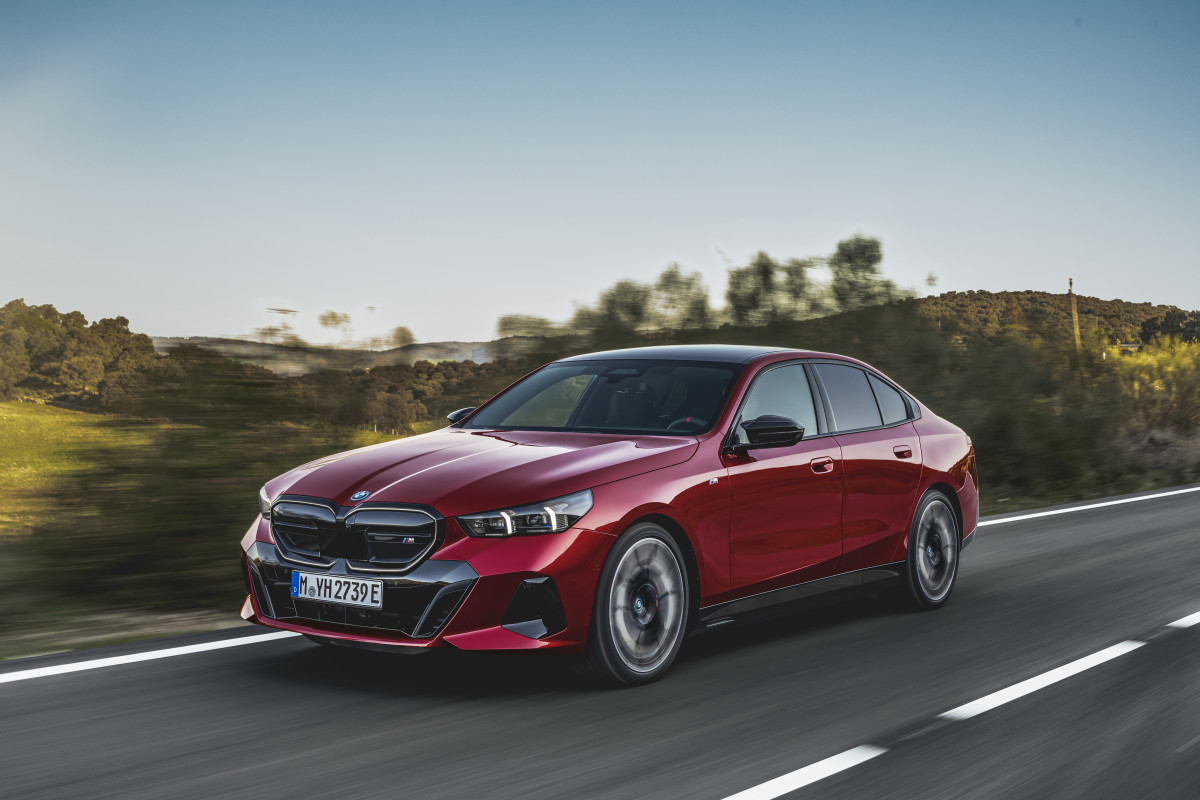
Summary
With 1,375 currently listed for sale and an average price of $18,301, 34.0% of 2018 BMW 5 Series listings on CarGurus are rated as good or great deals.
Favorably reviewed: Owners rated the 2018 BMW 5 Series 4.95 / 5 stars and CarGurus experts gave it an 8.33 / 10.
59.4% of 2018 BMW 5 Series listings on CarGurus are accident free.
Why it stands out
The 2018 BMW 5 Series stands out for adding BMW’s updated hybrid drivetrain to the lineup, bringing a new plug-in trim for the year in the 530e. That makes frugality part of the appeal, since this plug-in hybrid is described as the lowest-priced 5 Series you can get. For buyers who want a midsize luxury sport sedan with a more efficiency-minded option, that combination gives the 2018 model a distinctive place in the range.
Beyond the hybrid addition, BMW’s focus for the 5 Series has shifted more toward luxury than sport. That helps explain why the car is appealing to shoppers looking for a refined, comfortable sedan rather than the sharpest possible performance edge. Owner feedback also points to a smooth ride, powerful performance, and luxurious features, though some drivers note engine noise and possible reliability concerns.
Other model years to consider
- 2022 BMW 5 Series
- Average price: $33,158
- Good/great deal percentage: 33.5%
- User rating: 5 / 5
- Total listings: 1,517
- 2023 BMW 5 Series
- Average price: $37,286
- Good/great deal percentage: 33.6%
- User rating: 5 / 5
- Total listings: 1,413
- 2019 BMW 5 Series
- Average price: $20,189
- Good/great deal percentage: 34.6%
- User rating: 4.89 / 5
- Total listings: 1,371
Similar models to consider
- Mercedes-Benz E-Class
- Average price: $27,617
- Good/great deal percentage: 31.9%
- User rating: 4.61 / 5
- Total listings: 6,183
- Audi A6
- Average price: $26,599
- Good/great deal percentage: 32.9%
- User rating: 4.59 / 5
- Total listings: 2,535
- Genesis G80
- Average price: $32,702
- Good/great deal percentage: 31.3%
- User rating: 4.94 / 5
- Total listings: 952
These recommendations are based on CarGurus' proprietary market data from October 14, 2026, CarGurus experts' opinions, and generative AI.
*CarGurus meticulously monitors the prices of millions of pre-owned vehicle listings, offering users precise and up-to-date market insights. Historical pricing data excludes any additional dealer fees as of May 3, 2026.
Recent expert test drives

Relevant articles
BMW 5 Series Buying Guide: Cost, Reliability, and the Best Years to Buy
Discover the ultimate buying guide for purchasing a used BMW 5 Series, covering every generation since 1982. Whether you're a first-time buyer or a BMW enthusiast, this comprehensive overview will help you research your next pre-owned BMW 5 Series.
2025 BMW 5 Series Pricing, Specs, and Release Date
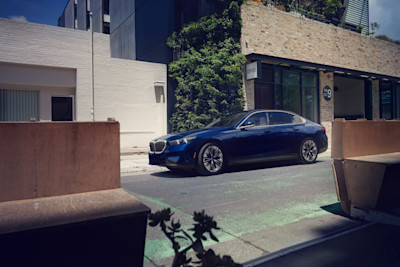
The latest iteration of a favorite among premium sport-sedan shoppers, the 2025 BMW 5 Series builds on last year's updates with the introduction of a new plug-in hybrid variant.
Who Makes BMW Cars?
BMW is a German automaker known for performance luxury vehicles. It builds sport sedans, SUVs, and electric vehicles that deliver cutting-edge technology and engaging driving dynamics.

