Toyota Prius Plug-In Hybrid vs Ford Fusion Energi
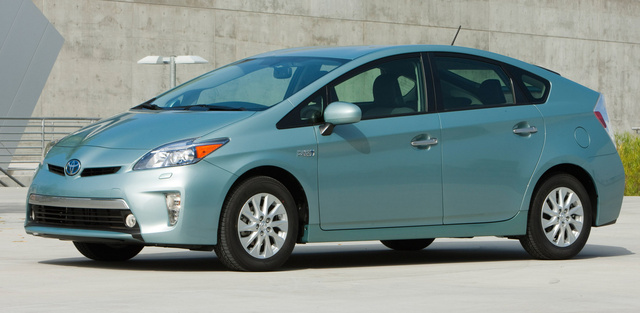
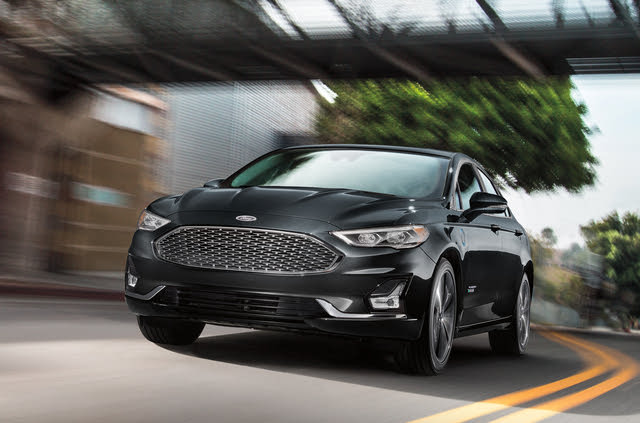
Overview | |
Years produced2012-2015 | Years produced2013-2020 |
MSRP$33,775 | MSRP$35,620 |
Listings56 | Listings27 |
Ratings & Reviews | |
User Reviews | User Reviews |
Expert reviews7.8 out of 10 | Expert reviews6.2 out of 10 |
Pros
Cons
| |
Reviews SummaryThe Prius Plug-In Hybrid is, as the name states, a plug-in hybrid version of the seminal Toyota Prius, further boosting efficiency with up to 44 miles of all-electric driving range. This model was known as the Toyota Prius Prime up to the 2025 model year, and for 2026 a new Nightshade Edition joins the lineup. While other mainstream brands like Hyundai and Kia offer plug-in hybrids, the Prius stands out with svelte styling. Verdict: A stylish alternative to other plug-in hybrids and an efficient commuter car, the Prius Plug-In Hybrid is let down by a chintzy interior. | |
Reviews SummaryThe Fusion may be going away for good, but before it takes its final bow, Ford is doing its best to keep it relevant. This year, the plug-in hybrid version—the Energi—receives increased battery capacity (from 7.6 kWh to 9.0 kWh), thanks to more energy-dense chemistry. In turn, this increases the stated electric range from 21 to 25 miles, putting it right in line with the best-selling plug-in hybrid on the market, the Prius Prime. Additionally, a mild facelift has updated the front and rear, but the real winner for 2019 is Ford’s Co-Pilot360 suite of driver-assistance tech. This addition adds blind-spot monitoring, lane-keeping assist, automatic emergency braking with pedestrian detection, automatic high-beams, and a reversing camera. The Fusion is the first vehicle to get this new package, and in one of the smartest moves Ford has made of late, it comes standard across the range. | |
No video found | |
Popular Features & Specs | |
Engine | Engine2.0L 188 hp I4 Hybrid |
Drive Train | Drive TrainFWD |
Seating Capacity5 | Seating Capacity5 |
EV Battery Capacity13.6 kWh | EV Battery Capacity7.6 kWh |
MPG City | MPG City43 |
MPG Highway | MPG Highway40 |
Battery Charge Time (120V)11 hours | Battery Charge Time (120V) |
Battery Charge Time (240V)4 hours | Battery Charge Time (240V)2.5 hours |
Engine | |
Engine Name2.0L 220 hp I4 Hybrid | Engine Name2.0L 188 hp I4 Hybrid |
Battery Charge Time (120V)11 hours | Battery Charge Time (120V) |
Battery Charge Time (240V)4 hours | Battery Charge Time (240V)2.5 hours |
DrivetrainFWD | DrivetrainFWD |
Fuel Economy | |
EV Battery Capacity13.6 kWh | EV Battery Capacity7.6 kWh |
MPG City | MPG City43 |
MPG Highway | MPG Highway40 |
Interior | |
Seating Capacity5 | Seating Capacity5 |
Key Features | |
Navigation SystemStandard | Navigation System |
Safety | |
Front Crash Overall4 | Front Crash Overall |
Side Crash Overall5 | Side Crash Overall |
Dimensions & Capacity | |
Cargo Space20.3 cu ft | Cargo Space8.2 cu ft |
Curb Weight3461 lbs | Curb Weight |
Height55.9 in | Height58.0 in |
Length181.1 in | Length191.8 in |
Width70.2 in | Width75.2 in |
Wheelbase108.3 in | Wheelbase112.2 in |
Maximum Payload860 lbs | Maximum Payload |
Number of doors4 | Number of doors4 |
Overview | ||
Years produced | 2012-2015 | 2013-2020 |
MSRP | $33,775 | $35,620 |
Listings | ||
Ratings & Reviews | ||
User reviews | ||
Expert reviews | 7.8 out of 10Read full review | 6.2 out of 10Read full review |
Pros & cons | Pros
Cons
| |
Summary | The Prius Plug-In Hybrid is, as the name states, a plug-in hybrid version of the seminal Toyota Prius, further boosting efficiency with up to 44 miles of all-electric driving range. This model was known as the Toyota Prius Prime up to the 2025 model year, and for 2026 a new Nightshade Edition joins the lineup. While other mainstream brands like Hyundai and Kia offer plug-in hybrids, the Prius stands out with svelte styling. Verdict: A stylish alternative to other plug-in hybrids and an efficient commuter car, the Prius Plug-In Hybrid is let down by a chintzy interior. | The Fusion may be going away for good, but before it takes its final bow, Ford is doing its best to keep it relevant. This year, the plug-in hybrid version—the Energi—receives increased battery capacity (from 7.6 kWh to 9.0 kWh), thanks to more energy-dense chemistry. In turn, this increases the stated electric range from 21 to 25 miles, putting it right in line with the best-selling plug-in hybrid on the market, the Prius Prime. Additionally, a mild facelift has updated the front and rear, but the real winner for 2019 is Ford’s Co-Pilot360 suite of driver-assistance tech. This addition adds blind-spot monitoring, lane-keeping assist, automatic emergency braking with pedestrian detection, automatic high-beams, and a reversing camera. The Fusion is the first vehicle to get this new package, and in one of the smartest moves Ford has made of late, it comes standard across the range. |
Video | No video found | |
Popular Features & Specs | ||
Engine | 2.0L 188 hp I4 Hybrid | |
Drive Train | FWD | |
Seating Capacity | 5 | 5 |
EV Battery Capacity | 13.6 kWh | 7.6 kWh |
MPG City | 43 | |
MPG Highway | 40 | |
Battery Charge Time (120V) | 11 hours | |
Battery Charge Time (240V) | 4 hours | 2.5 hours |
Engine | ||
Engine Name | 2.0L 220 hp I4 Hybrid | 2.0L 188 hp I4 Hybrid |
Battery Charge Time (120V) | 11 hours | |
Battery Charge Time (240V) | 4 hours | 2.5 hours |
Drivetrain | FWD | FWD |
Fuel Economy | ||
EV Battery Capacity | 13.6 kWh | 7.6 kWh |
MPG City | 43 | |
MPG Highway | 40 | |
Interior | ||
Seating Capacity | 5 | 5 |
Key Features | ||
Navigation System | Standard | |
Safety | ||
Front Crash Overall | 4 | |
Side Crash Overall | 5 | |
Dimensions & Capacity | ||
Cargo Space | 20.3 cu ft | 8.2 cu ft |
Curb Weight | 3461 lbs | |
Height | 55.9 in | 58.0 in |
Length | 181.1 in | 191.8 in |
Width | 70.2 in | 75.2 in |
Wheelbase | 108.3 in | 112.2 in |
Maximum Payload | 860 lbs | |
Number of doors | 4 | 4 |


By: CarGurus + AI
At CarGurus, our team of experienced automotive writers remain at the heart of our content operation, conducting hands-on car tests and writing insightful guides that are backed by years of industry experience. To complement this, we are harnessing AI to make our content offering more diverse and more helpful to shoppers than ever. To achieve this, our AI systems are based exclusively on CarGurus content, ratings and data, so that what we produce is both unique to CarGurus, and uniquely helpful to car shoppers.

