Who doesn't love the idea of rolling across America's stunning landscapes at the wheel of a home on wheels? Recreational vehicles, or RVs, are a fantastic and enjoyable way to experience everything this great country has to offer. But once your motorhome is parked at your destination, getting around the surrounding area can be a real challenge. That's where "flat-towing" or "dinghy towing" comes in: connecting a smaller vehicle with a tow bar, all four wheels rolling on the pavement. Quite literally, a flat-tow behind your mighty RV.
The trouble is, relatively few new vehicles are actually suited for this kind of duty. Over the years, recreational vehicle owner publications have recommended models that have since swapped their conventional automatic transmissions for continuously variable transmissions (CVTs), or four-wheel-drive (4WD) and all-wheel-drive (AWD) vehicles that no longer offer a Neutral position on the transfer case. Models like the Chevy Spark, Honda CR-V, and the Toyota Tacoma were once solid choices, but are either no longer available or no longer capable in their current form.
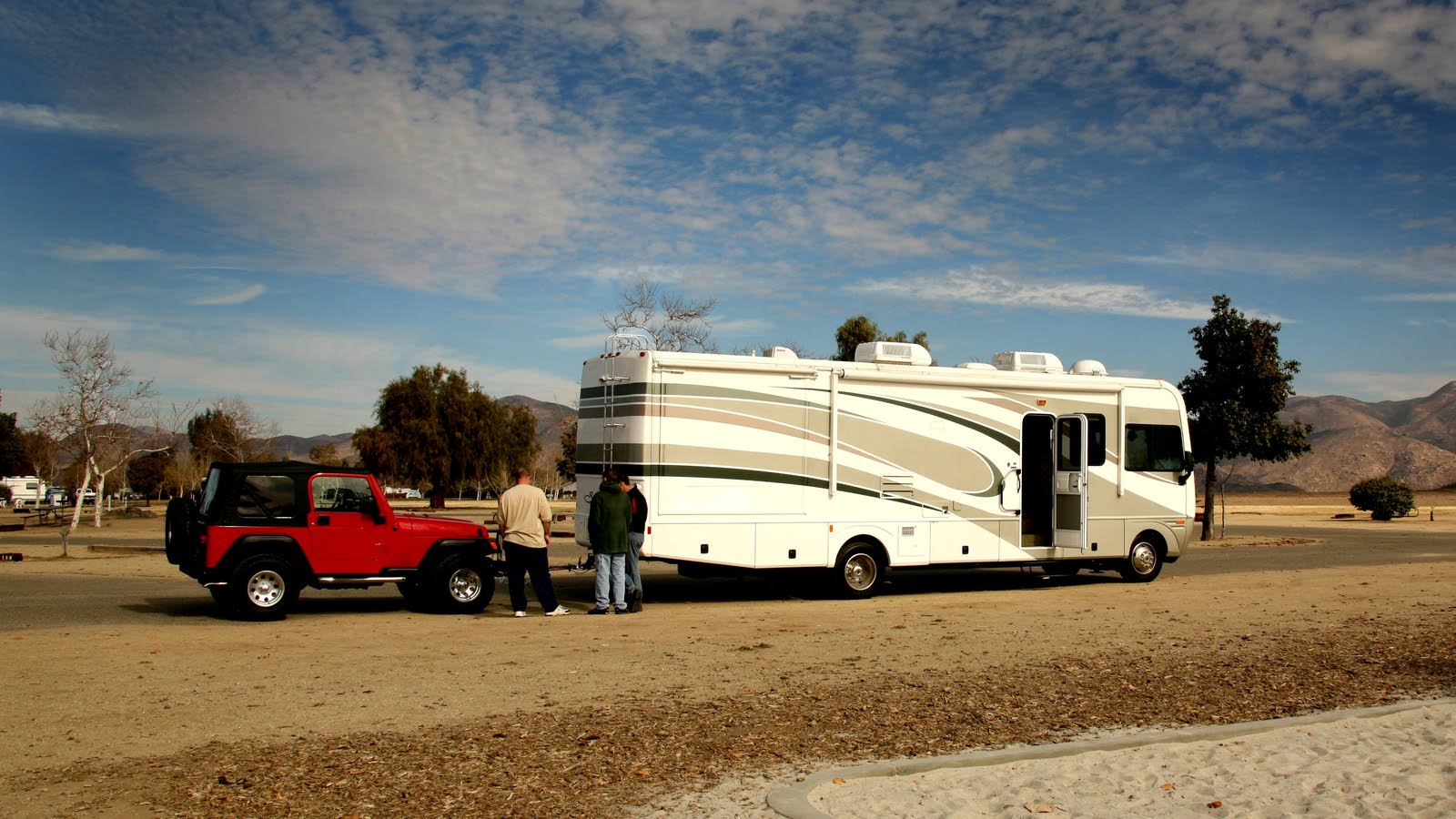
A vehicle can be flat-towed only if it has certain features, such as a Neutral position on both the gearbox and transfer case. Even then, flat towing may be prohibited by the manufacturer for a variety of reasons. You could search for a front-wheel drive (FWD) or rear-wheel drive (RWD) car with a manual transmission, but those are increasingly difficult to find. And even when you do locate one, it may not be safe to tow behind an RV. The Mazda MX-5 Miata, for instance, which is widely available with a manual gearbox, explicitly prohibits flat-towing in its owner's manual.
To help you track down the best flat-tow vehicles for RV travel, we've put together a list of new and used models that are approved for the job according to their owner's manuals. We'll set electric vehicles (EVs) aside for now and cover those in a dedicated guide. Here's a look at some of the top candidates.
What Makes CarGurus Best Cars Guides Different
The Best Cars to Tow Behind an RV in 2026
FAQs
Shopping Tools
Related Topics
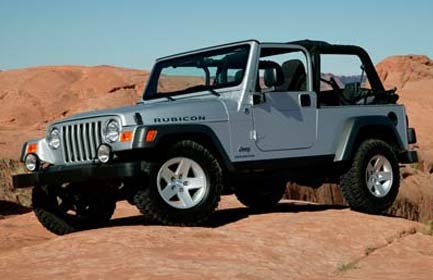
1987–Present Jeep Wrangler
Best for: Off-road adventurers
Priced from: $7,000
No vehicle is more closely identified with flat-towing behind an RV than the Jeep Wrangler, and it's easy to see why. For starters, the Wrangler has been in continuous production long enough that examples turn up across virtually every price point. Shopping on a tight budget? A well-maintained TJ-era Wrangler (1996 to 2006) with 150,000 miles on the odometer can often be found for around $7,000, sometimes even less. Ready to spend more? A current Jeep Wrangler Rubicon will take you just about anywhere you want to go, and do it with genuine style.
Another major draw is the Wrangler's enormous aftermarket ecosystem. There's virtually no ceiling on what you can upgrade, customize, or add to a Wrangler — whether through the thriving third-party aftermarket on older models or the extensive Mopar catalog for newer ones. From rooftop cargo racks to suspension lift kits, the Wrangler is essentially a blank canvas. The larger Gladiator and even the Ford Bronco are worth considering as well, though the Wrangler holds a curb weight advantage over both.
Perhaps most importantly, the Wrangler's drivetrain is purpose-built for flat towing. Regardless of which Wrangler you choose — whether it features the part-time or the Selec-Trac full-time 4WD transfer case — every model includes a Neutral position that allows all four wheels to spin freely while being pulled behind your rig.
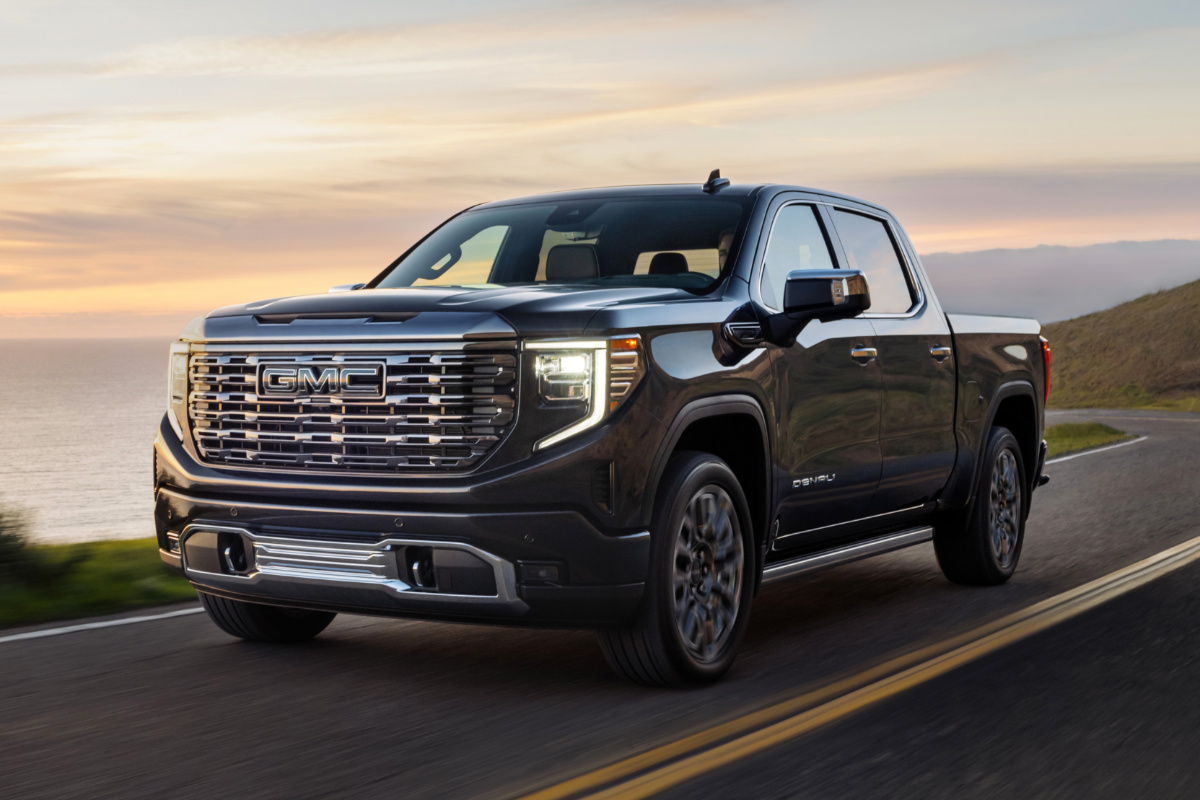
Chevrolet Silverado/GMC Sierra
Best for: Class A motorhomes
Priced from: $38,000 as new
You wouldn't want to hitch a Chevrolet Silverado or a GMC Sierra to the back of a Sprinter-based camper van, but if you're piloting a Class A RV — particularly one pushing the 45-foot limit — you have more than enough towing capacity to haul a full-size pickup without even registering it back there. Just make sure the RV's braking system is in excellent working order first. There is one critical caveat, however: only certain Silverado and Sierra configurations can be flat-towed without causing damage to the truck.
The only Silverado and Sierra trucks approved for flat towing are those fitted with a two-speed transfer case and a "4WD Low" setting. As with the Wrangler, you'll want the transfer case lever positioned in Neutral before towing begins.
What about a RWD Silverado or Sierra? According to the owner's manual, you cannot flat-tow a 2WD or 4WD Silverado or Sierra equipped with a single-speed transfer case, even with the transmission in Neutral. The reason is straightforward: a 2WD transmission has no mechanism to lubricate itself while the engine isn't running, and the single-speed, full-time 4WD transfer case simply doesn't have a Neutral position.
Search for Chevrolet Silverado-1500
See all
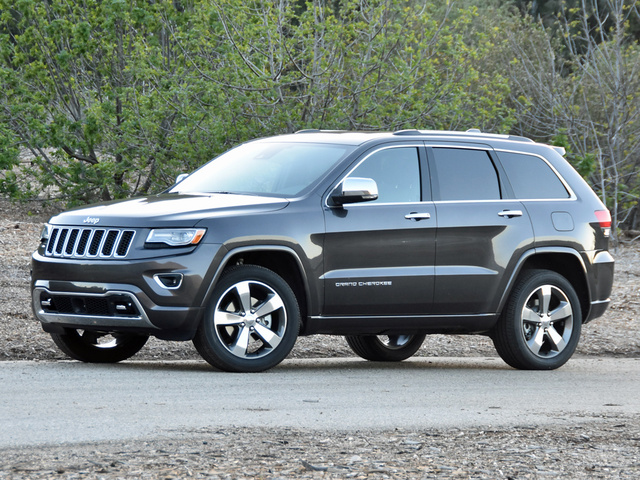
2012–2020 Jeep Grand Cherokee
Best for: Diesel RV owners
Priced from: $20,000
If you're piloting a diesel-powered Class A motorhome, there's a genuine convenience factor in being able to pull into a fuel station and top off both vehicles from the same pump. Diesel also delivers a meaningful fuel economy advantage over gasoline equivalents, and typically offers stronger towing capacity — useful if you plan to use your dinghy vehicle to haul trailers when you're not on an RV trip.
Unfortunately, Jeep dropped the 3.0-liter diesel from the Grand Cherokee lineup after 2021, so you'll need to shop the used market. The reward, however, is a remarkably capable vehicle with an extraordinary 785-mile range between fuel stops. When the Grand Cherokee diesel debuted in mid-2011, we drove one from Boston, Massachusetts, to Detroit, Michigan, without stopping for fuel until we crossed into Michigan.
Beyond the powertrain, the Grand Cherokee is a thoroughly well-equipped vehicle — largely because the diesel engine was only available on Limited, Overland, and Summit trim levels, none of which were entry-level when new. The engine alone added roughly $4,500 to the original sticker price, but the used market has narrowed the price gap considerably between diesel and V8-powered Grand Cherokees.
The Jeep Grand Cherokee owner's manual permits recreational towing only on 4WD models equipped with a "4-LO" range, which means full-time 4WD models are not eligible. The manual also requires that the negative battery cable be disconnected prior to towing.
Search for Jeep Grand-Cherokee
See all
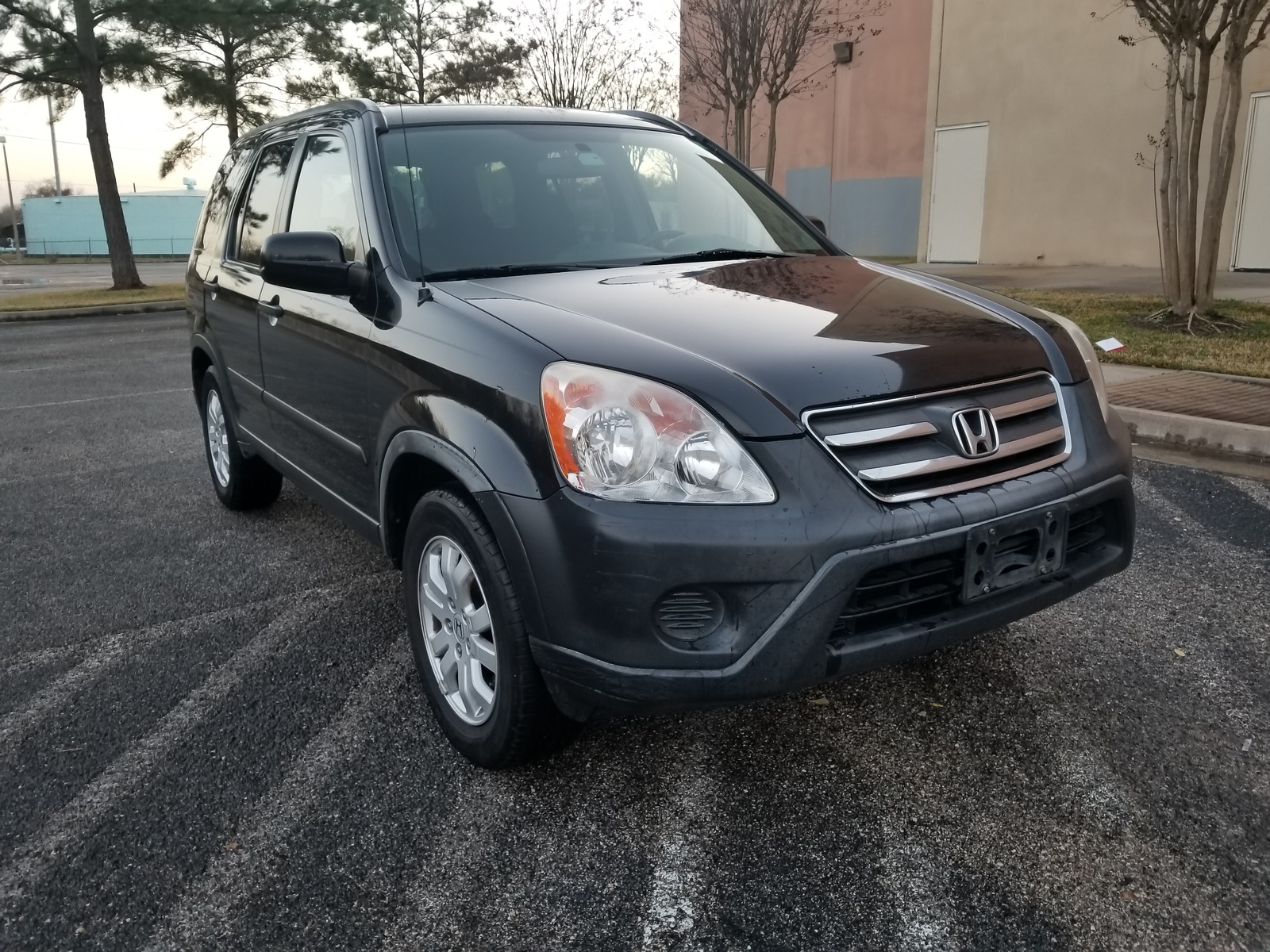
1995–2014 Honda CR-V
Best for: Small families on a budget
Priced from: $4,000
For years, the Honda CR-V was a go-to pick among RVers, and for good reason — safety, practicality, and reliability all made the grade. But for the 2015 model year, Honda refreshed the CR-V and, alongside the styling overhaul, swapped the six-speed automatic transmission for a CVT. From that point forward, flat-towing a CR-V became a reliable way to destroy the transmission.
That said, there are still plenty of reasons to consider an older CR-V. Used examples are significantly more affordable than a new vehicle, and the six-speed automatic is genuinely superior to the early CVT that replaced it.
CR-Vs from this generation came with a very specific flat-towing procedure outlined in the owner's manual, and deviating from it risked causing damage. The manual also noted that these CR-Vs could not be towed at speeds exceeding 65 miles per hour — an inconvenience in states with higher posted speed limits. Additionally, the manual recommended that if you towed more than 300 miles in a single day, you should repeat the prescribed procedure before continuing.
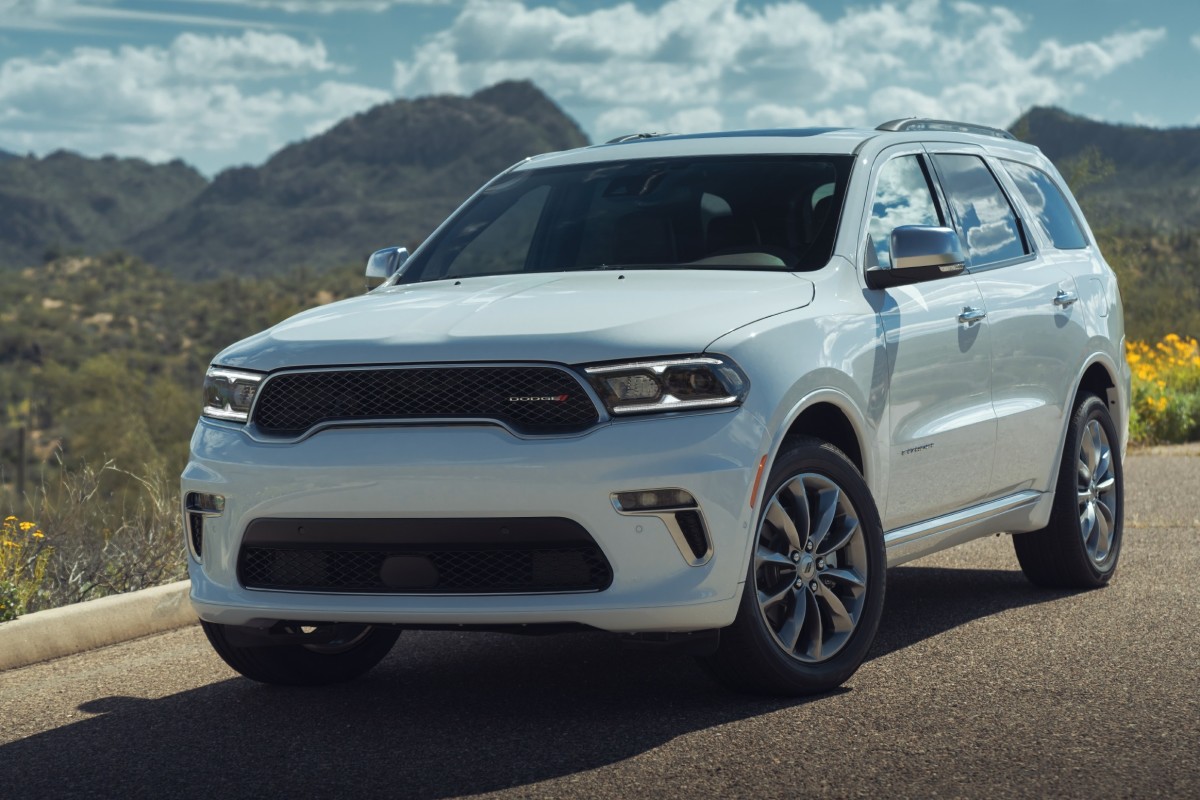
Dodge Durango
Best for: Larger families
Priced from: $34,000 as new
The Dodge Durango has never quite broken through as a high-volume seller, which is a real shame because it's a genuinely excellent SUV. We've personally used one on two separate road trips — in GT and SRT trims — and came away impressed on both occasions. It may simply be a matter of living in the shadow of the Chevy Tahoe when it comes to sales.
Ironically, neither of those trims we drove would qualify for flat towing. According to the late-model Dodge Durango owner's manual, only one of the three available driveline configurations is approved for flat towing. Specifically, you need a 4WD Durango equipped with a two-speed transfer case that has a Neutral position. Flat-towing any other Durango driveline — including the RWD version — will cause serious transmission damage.
That rules out AWD trims like the GT and the SRT. Tracking down a Durango with a two-speed transfer case requires some effort, as most dealer inventory tends to lean toward AWD rather than 4WD configurations.
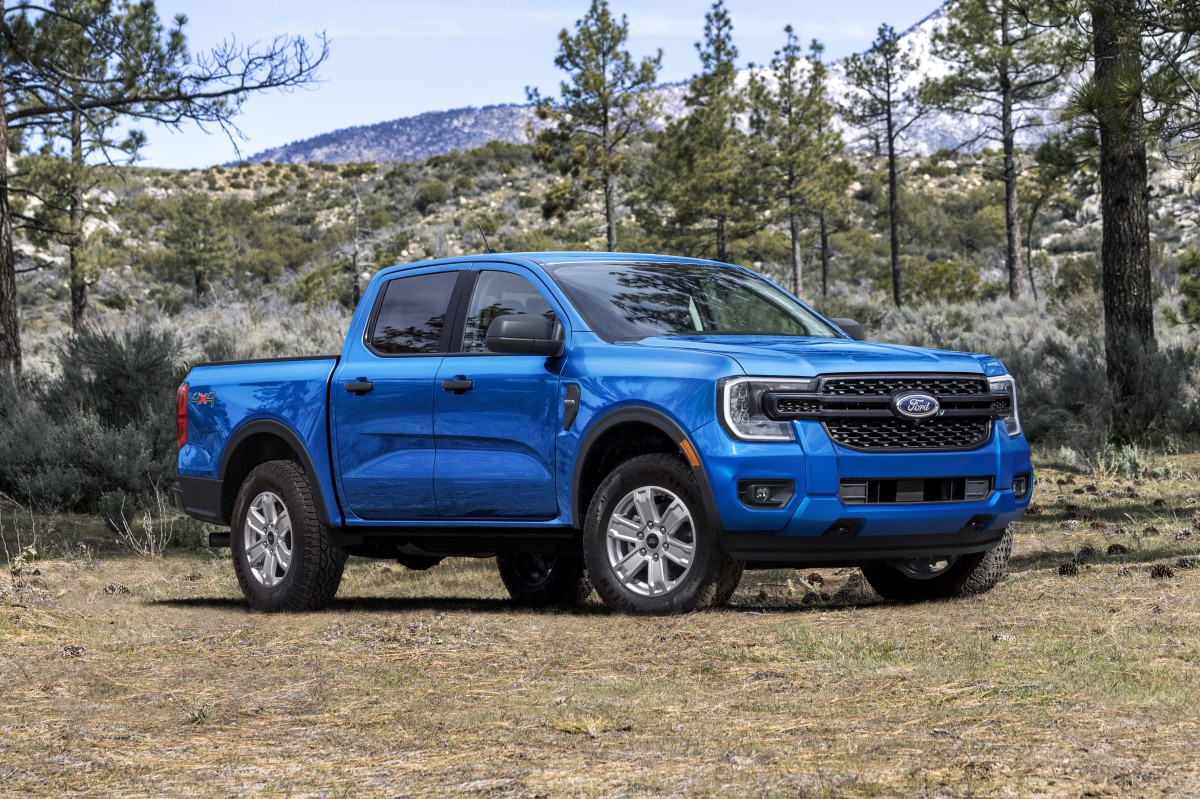
Ford Ranger
Best for: Compact pickup buyers
Priced from: $33,000 as new
The return of the Ford Ranger in 2019 was welcome news for midsize truck enthusiasts who wanted the utility of a pickup in a package that actually fits in a standard garage. These are capable, well-proportioned trucks with respectable interior room even in Super Cab form, though the SuperCrew (crew cab) configuration — with its full rear seat — remains the most popular choice. The 2.3-liter twin-turbo EcoBoost engine is a genuine highlight, and the 10-speed automatic transmission does an excellent job of extracting every bit of available performance.
The Ranger's owner's manual lays out the flat-towing requirements clearly. Although it doesn't say so explicitly, the only Rangers truly suited for flat towing are 4WD models. The 2WD Ranger isn't offered with a manual transmission, and the automatic requires the engine to be running in order to lubricate the transmission. Technically, a 2WD Ranger can be flat-towed, but only at speeds up to 35 mph and for distances under 50 miles — conditions that would turn any cross-country RV trip into a logistical nightmare.
For 4WD Rangers, a dedicated Neutral Tow setting is accessible through the vehicle's information display menu, rather than requiring a physical shift into Neutral on the transfer case as most other vehicles do.
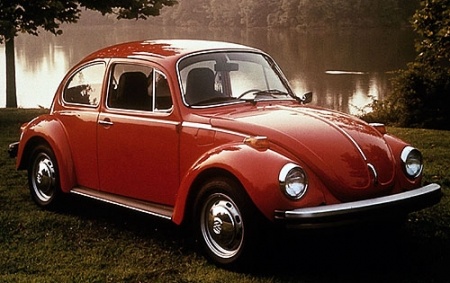
1949–1979 Volkswagen Beetle
Best for: Vintage car enthusiasts
Priced from: $4,000
For decades, the air-cooled Volkswagen Beetle reigned as the quintessential dinghy vehicle for RV travelers, and there are still compelling reasons to choose one today. For a classic car, they remain surprisingly attainable. In 1971, Volkswagen introduced the Super Beetle with a MacPherson strut front suspension, and those tend to be considerably less expensive than the earlier twin-torsion-beam models.
Weight is another significant advantage. Beetles are genuinely lightweight, making them an ideal tow vehicle for Class B or Class C motorhomes that might not be comfortable hauling something heavier. Even a Sprinter or Ford Transit-based RV can manage an 1,850-pound Beetle without breaking a sweat, whereas it might struggle with a current Jeep Wrangler tipping the scales at over two tons.
Aftermarket support for Beetles remains enormous as well, covering everything from novelty accessories to complete engine rebuilds. Within that ecosystem, there are specialists who focus on converting standard road-going Beetles into capable overlanders. Factor in variants like the VW Thing and the countless dune buggy builds that Volkswagen enthusiasts have created over the years, and you have an entire universe of lightweight, towable options to explore.
Search for Volkswagen Beetle
See all
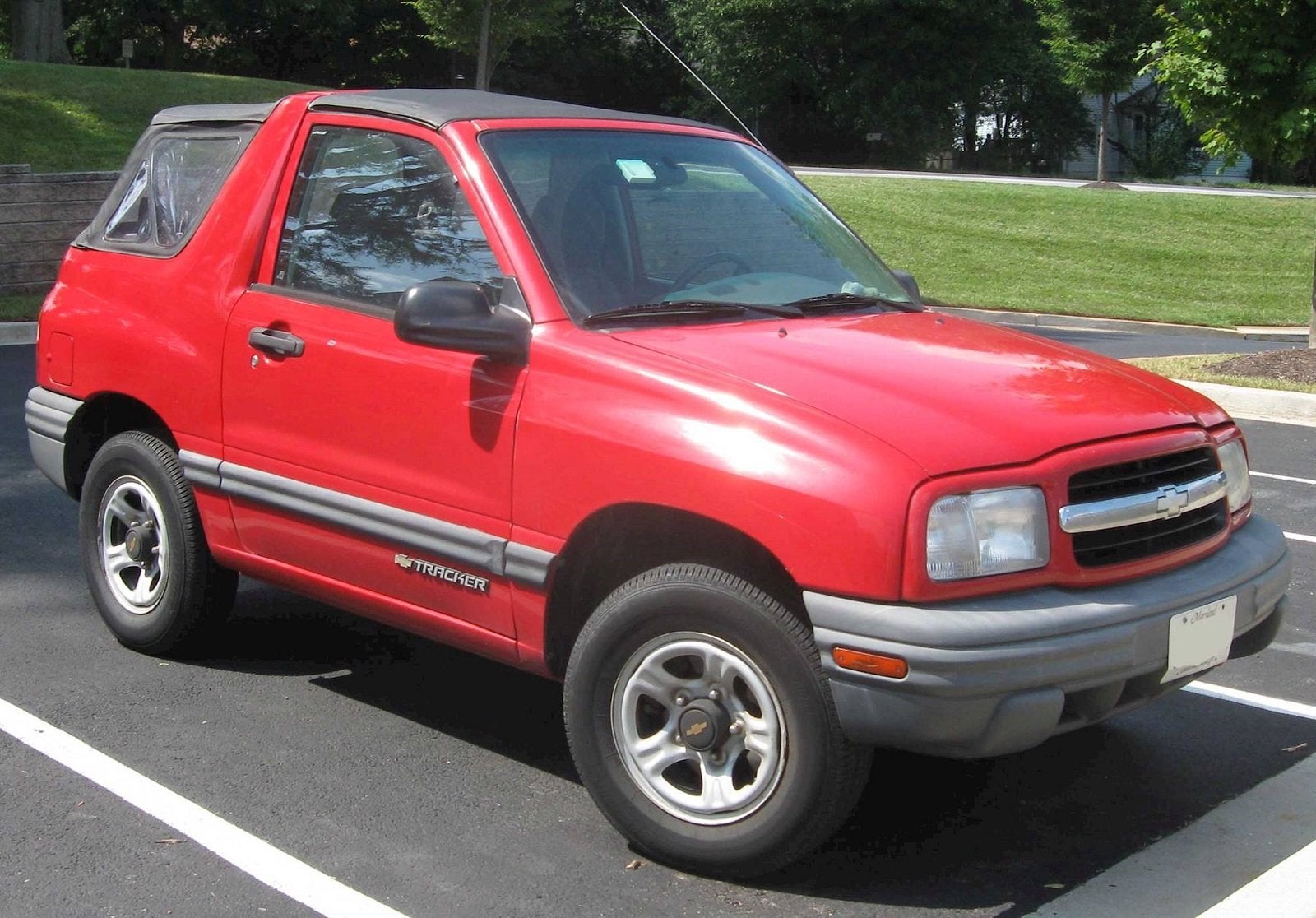
1989–2004 Geo (Chevrolet) Tracker
Best for: Compact SUV fans
Priced from: $2,000
The Geo Tracker was a genuinely multinational vehicle. It was produced by CAMI, a Canadian joint venture between General Motors (GM) and Suzuki. Launched in late 1988 as a 1989 model, the Tracker was assembled in Ingersoll, Ontario, powered by Suzuki's famously durable 1.6-liter, single-overhead-cam four-cylinder engine. The first generation was sold under the Geo banner while GM was still operating that brand. The second generation arrived in 1999 and was retailed through Chevrolet dealerships. For RVers with any interest in off-road exploration, the first-generation Tracker is likely the stronger pick, thanks to its truck-derived recirculating-ball steering system. The second-generation model uses a more car-like rack-and-pinion setup, which makes it less capable on rough terrain.
Either way, both generations are easy to tow behind even a smaller Class B motorhome. The earliest first-generation Trackers tipped the scales at just over 2,200 pounds, while later second-generation models range from roughly 2,850 to 3,000 pounds depending on body configuration.
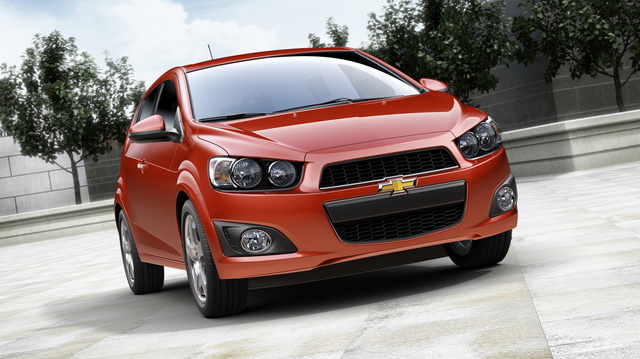
Chevrolet Sonic
Best for: People who aren't afraid to remove fuses
Priced from: $10,000
The now-discontinued Chevrolet Sonic was one of a very small number of flat-towable vehicles produced in the 2020 model year that didn't rely on a two-speed transfer case. Low-mileage examples are still out there, since the newest Sonics are only a few years old.
A look at the owner's manual reveals the flat-towing procedure: run the vehicle for five minutes at the start of each day and at every RV fuel stop. This keeps the transmission fluid circulating properly before and after towing sessions.
Once the Sonic is safely connected to the RV, there's a bit of prep work involved. You'll need to pull the DLIS fuse from the fuse panel to prevent power from reaching the body control module. If your Sonic has keyless entry, you'll also need to remove the BCM1 and BCM2 fuses from the interior fuse panel, along with fuse #7 from the underhood fuse panel.
After that, turn the ignition on, press the brake pedal, shift to Neutral, and turn the ignition to the ACC position. When you arrive at your destination and are ready to drive, simply reinstall all the fuses you removed. If that sounds like more hassle than it's worth, a tow dolly — which lifts the drive wheels off the ground — offers a simpler alternative.
Easy enough, right?
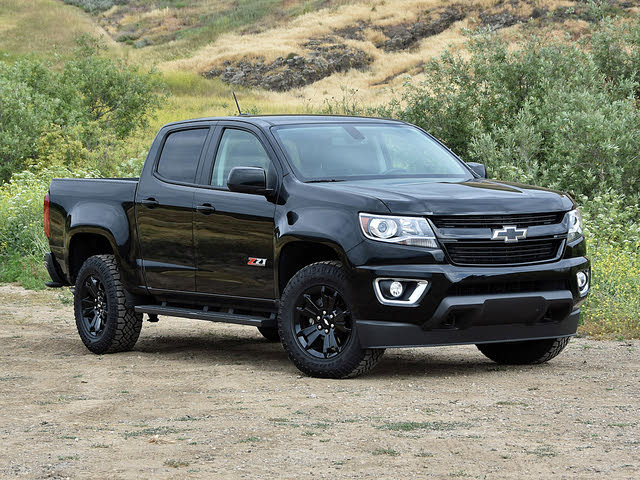
2015-2022 Chevrolet Colorado/GMC Canyon
Best for: Diesel pickup owners
Priced from: $20,000
The second-generation Colorado/Canyon equipped with the available diesel engine and 4WD represents one of the more practical flat-tow options in the used truck segment. They aren't bargains, with used prices starting around $20,000, but if you need a pickup, prefer something lightly used, and have your heart set on a diesel, this pairing is about as close as you'll get without jumping to the considerably higher price of a new full-size truck.
The Colorado and Canyon do have flat-towing limitations tied to their driveline. Neither truck can be flat-towed in rear-wheel drive — attempting it will destroy the transmission, and any remaining factory warranty won't cover the damage. Look specifically for the LT trim with 4WD, as that's the lowest trim level available with the diesel engine.
The flat-towing procedure in the owner's manual is refreshingly straightforward, especially when compared to the Sonic's multi-fuse routine. Place the transfer case in Neutral, set the ignition to the ACC position, and you're ready to roll.
Search for Chevrolet Colorado
See all
The Best Cars to Tow Behind an RV in 2026 FAQs
What does it mean to flat-tow a car behind an RV?
Flat-towing, sometimes called dinghy towing, means connecting a smaller vehicle to the back of your RV with a tow bar and pulling it with all four wheels on the ground. It's a popular setup for RV travelers who want a smaller vehicle available once they've parked at their destination. Not every vehicle can be flat-towed safely — specific drivetrain features, like a Neutral position on the transfer case or gearbox, are required.
What kind of vehicle is best for flat-towing behind an RV?
The Jeep Wrangler is widely considered the gold standard for flat towing, thanks to its transfer case Neutral position, massive aftermarket support, and availability across nearly every price point. Other strong options include the Ford Ranger, Dodge Durango (in specific 4WD configurations), and the Chevrolet Colorado and GMC Canyon with the diesel engine and 4WD. The key is confirming that your specific trim and drivetrain configuration is approved for flat towing in the owner's manual.
Can any car with a manual transmission be flat-towed?
Not necessarily — even vehicles with manual gearboxes may be explicitly prohibited from flat towing by the manufacturer. The Mazda MX-5 Miata, for example, is widely available with a manual transmission but its owner's manual forbids flat towing. Always verify flat-tow approval in the owner's manual for your specific vehicle, regardless of transmission type.
Why can't newer versions of some popular flat-tow vehicles still be used for dinghy towing?
Many vehicles that were once flat-tow favorites have been updated with continuously variable transmissions (CVTs) or AWD systems that lack a true Neutral position, making them incompatible with flat towing. The Honda CR-V is a prime example — models from 1995 to 2014 are approved for flat towing, but the 2015 redesign introduced a CVT that would be destroyed by the process. This is why shopping used and verifying the exact model year is so important when choosing a dinghy vehicle.
What Makes CarGurus Best Cars Guides Different?
Most car-shopping websites publish lists of the best cars across a variety of categories, with recommendations generally driven by editorial expertise. Here's what makes ours different: In addition to the insights and verdicts of our team of car-testing experts, our best cars guides take into account other factors that we know matter to buyers-real owner experiences and current market value.
Our expert reviewers are among this country's most trusted automotive journalists, also writing for publications including US News and World Report, Edmunds, Digital Trends, J.D. Power, and Car & Driver. They put each car through real-world testing and create detailed reviews of performance in a range of categories, from practicality and driving manners to cost-effectiveness and safety.
We also analyze hundreds of thousands of used car listings on CarGurus.com to track which models consistently offer the highest percentage of best deals relative to how many are listed for sale. Then we factor in reviews from owners-people who actually live with these cars every day. Our proprietary Best Cars algorithm then creates a final Overall CarGurus rating combining expert scores, user reviews, and the percentage of listings that have earned the Good or Great Deal rating. This multi-pronged approach reveals not just which cars excel on paper, but which ones deliver satisfaction and value when you're ready to buy.
The CarGurus market data used in this guide was last updated in July 2026. Values were accurate at time of publication and should be used as a guide only.
Shopping Tools
Related Topics