2021 Toyota Prius Prime Reviews, Pricing & Specs



Pros & cons
What we like
Fuel-efficiet
Standard advanced safety features
Impressive electric range
What to consider
Potentially polarizing design
Poor ergonomic design
Expert review
Toyota's plug-in take on the Prius is aging quickly against the competition.
With the 2021 Prius Prime, Toyota does what Toyota does best—packaging. The car comes with a good list of standard equipment and features while maintaining the range and efficiency qualities that plug-in hybrid shoppers are looking for. But a hard-to-use infotainment system and slow acceleration eat into the ownership experience as the market gets increasingly more competitive.
out of 10 expert review
Look & feel
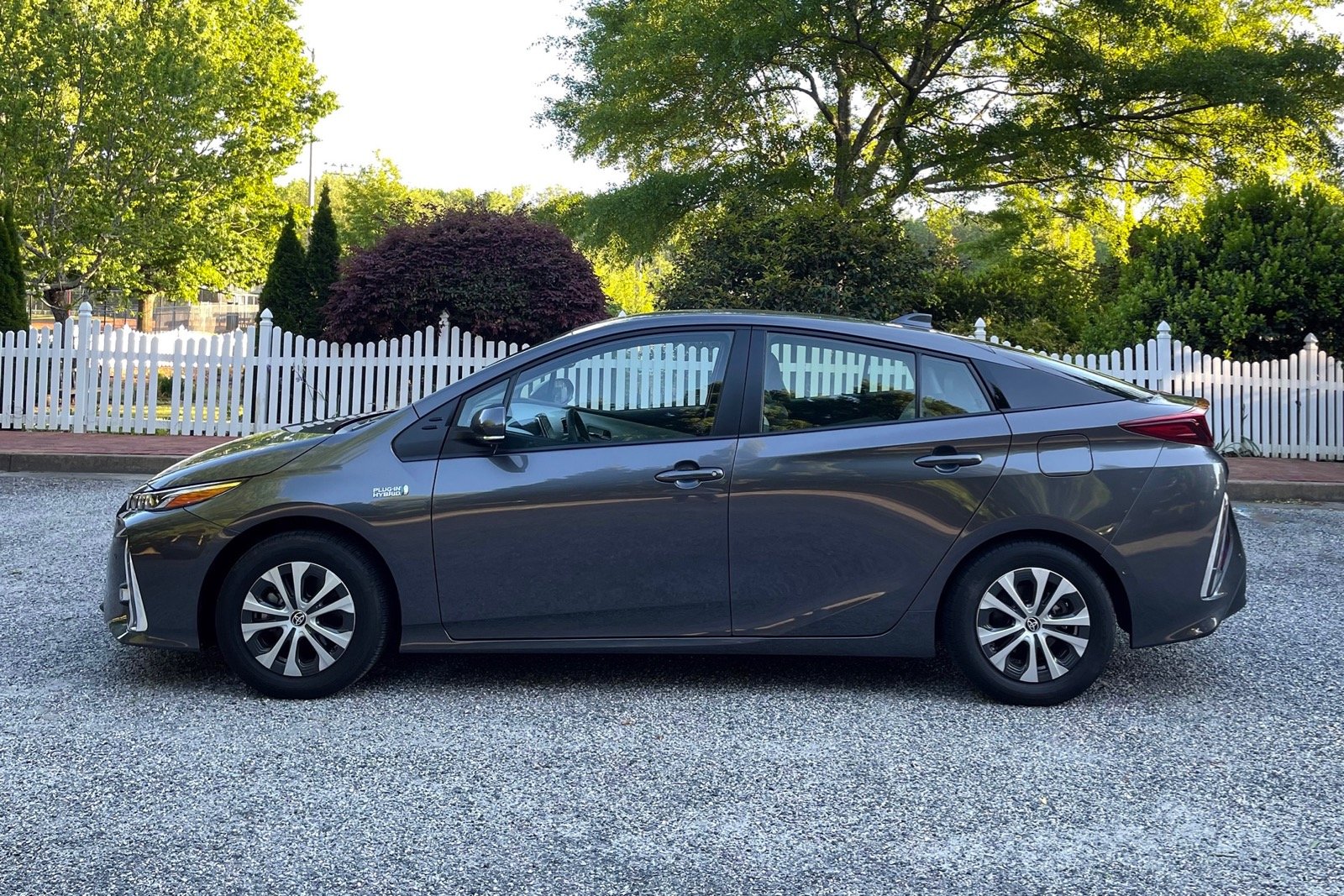
The Toyota Prius Prime is the plug-in version of the Toyota Prius, but it’s not just another grade of the Prius. The Prius Prime is its own vehicle and though it harbors many of the styling and drive traits of Prius—for good or bad—it serves as a bridge to future all-electric cars in the Toyota lineup.
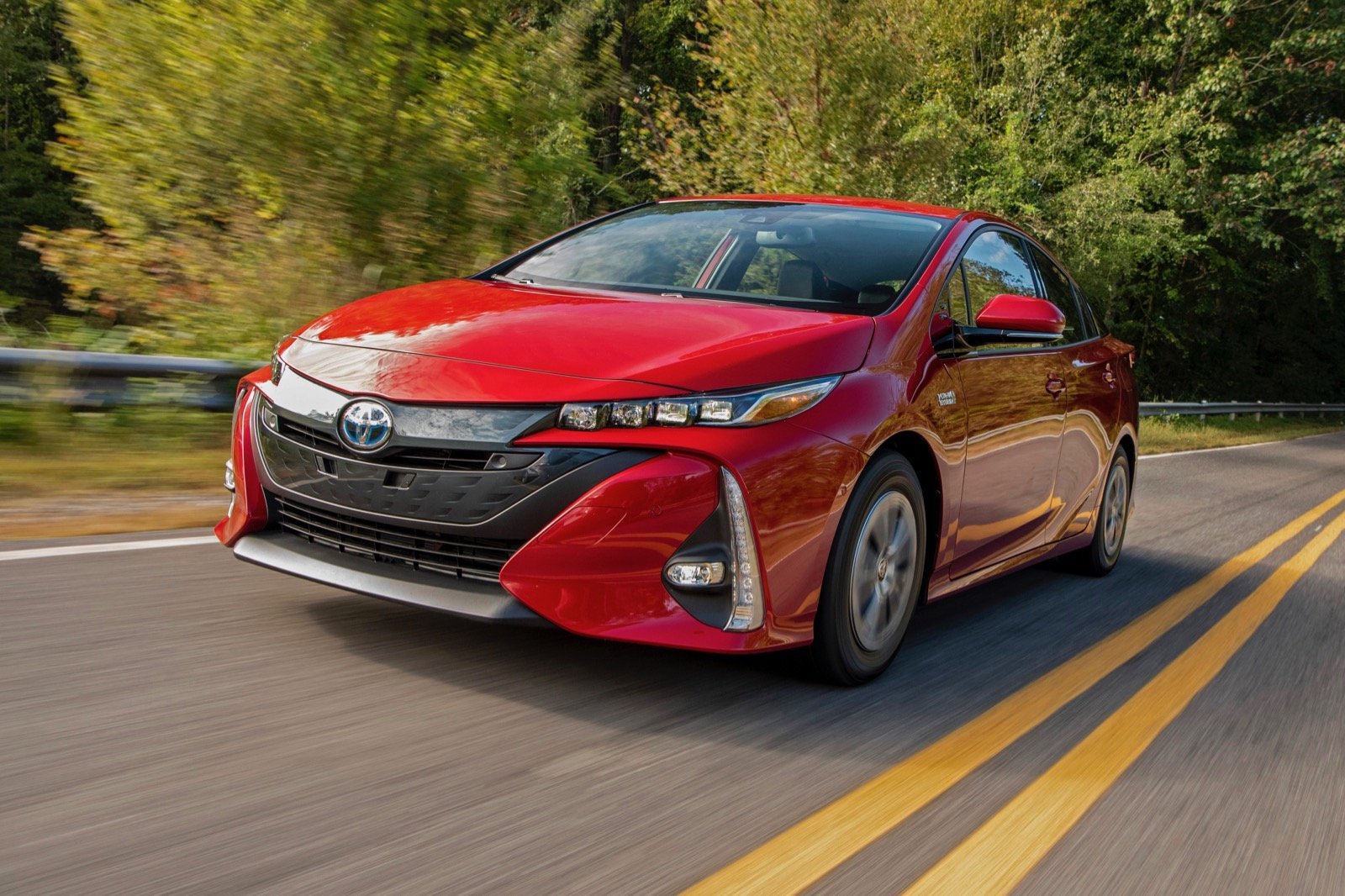
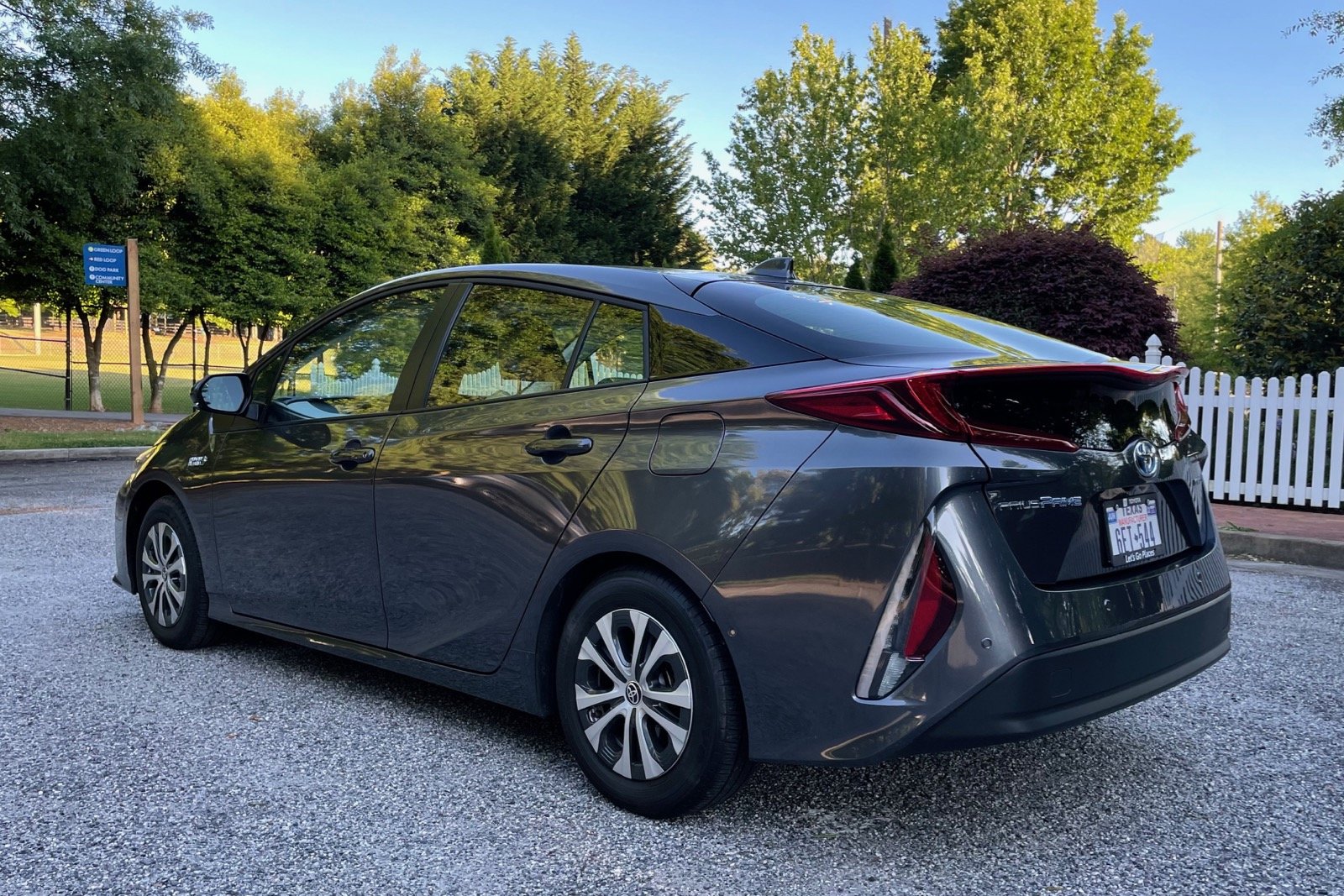
Nowhere is that more apparent than on the outside. Designed for good aerodynamics, the Prius Prime isn’t particularly attractive, nor is it particularly aerodynamic. Its drag coefficient (0.25) makes it far less slippery than the Porsche Taycan, Tesla Model 3, and the upcoming Mercedes EQS.
Toyota has sized the Prius Prime to be nearly the same dimensions as the Corolla Hybrid. They both have a 106.3-inch wheelbase and are around 182 inches long and 70 inches wide. They also wear the same size wheels—15 inches.
The Prius Prime’s front end is adorned with standard LED headlights and daytime running lights. Unlike other vehicles, its grille, mirror color, and 15-inch wheels aren’t changed up depending on which of the car’s three trim levels (LE, XLE, Limited) you choose. It has an undesirable split rear window that proves distracting while driving, causing the eyes to have to refocus each time you look in the rearview mirror.
The Prius Prime’s interior follows suit and is similarly unchanged from trim level to trim level, with the exception of technology add-ons. Its seats are trimmed in standard fabric or available SofTex, a sort of artificial leather that's easier to clean than traditional leather.
Designers gave the Prius Prime a spartan interior that was clearly designed for weight savings, rather than comfort and practicality. That starts front and center where the shifter resides like a skin tag hanging off the center stack halfway to the floor. It sits below the car’s giant, centrally-mounted infotainment touchscreen, but all under similar hard plastics that lend their child-safe appearance to also appearing cheap.
When equipped with the Moonstone SofTex interior (black is the only other option), like the tester was, the car’s dashboard is heavy on glare. Despite being light-colored, the pale color scheme doesn’t stop the car from heating up quickly in even moderate sunlight while parked in a lot.
Above the infotainment display is the car’s fully digital instrument panel, which takes some getting used to, and is just as easy to pay attention to when needed as it is to forget about while driving.
Performance
The 2021 Toyota Prius Prime is clearly from another generation of Toyota. Its origins are from the days when the Prius was by far the most fuel-efficient hybrid sold in the U.S. and all that fuel efficiency meant big output sacrifices. That’s not to say that it’s awful. It’s just a wholly uninspired drive experience from tip to tail.
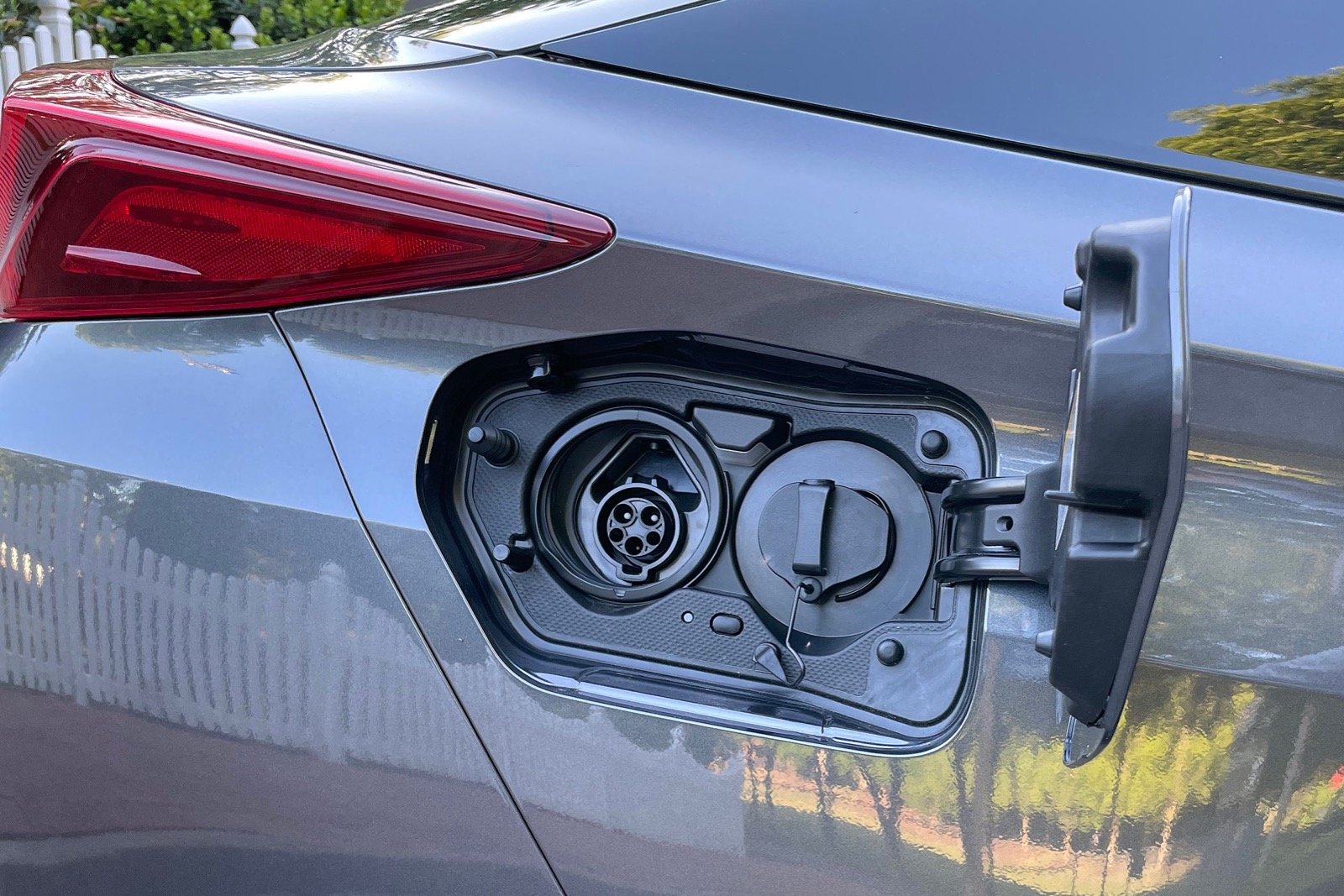
As a plug-in hybrid electric vehicle (PHEV), the Prius Prime has both a gasoline engine and an electric motor. Plugging the car into a 120-volt Level 1 or 240-volt Level 2 power outlet charges its 8.8-kilowatt-hour lithium-ion battery pack, taking between 2.2 hours on Level 1, and 5.5 hours on Level 2, according to Toyota. Note that charging speed can vary based on time of day, condition of the outlet, power usage rates in the area, and various environmental factors.
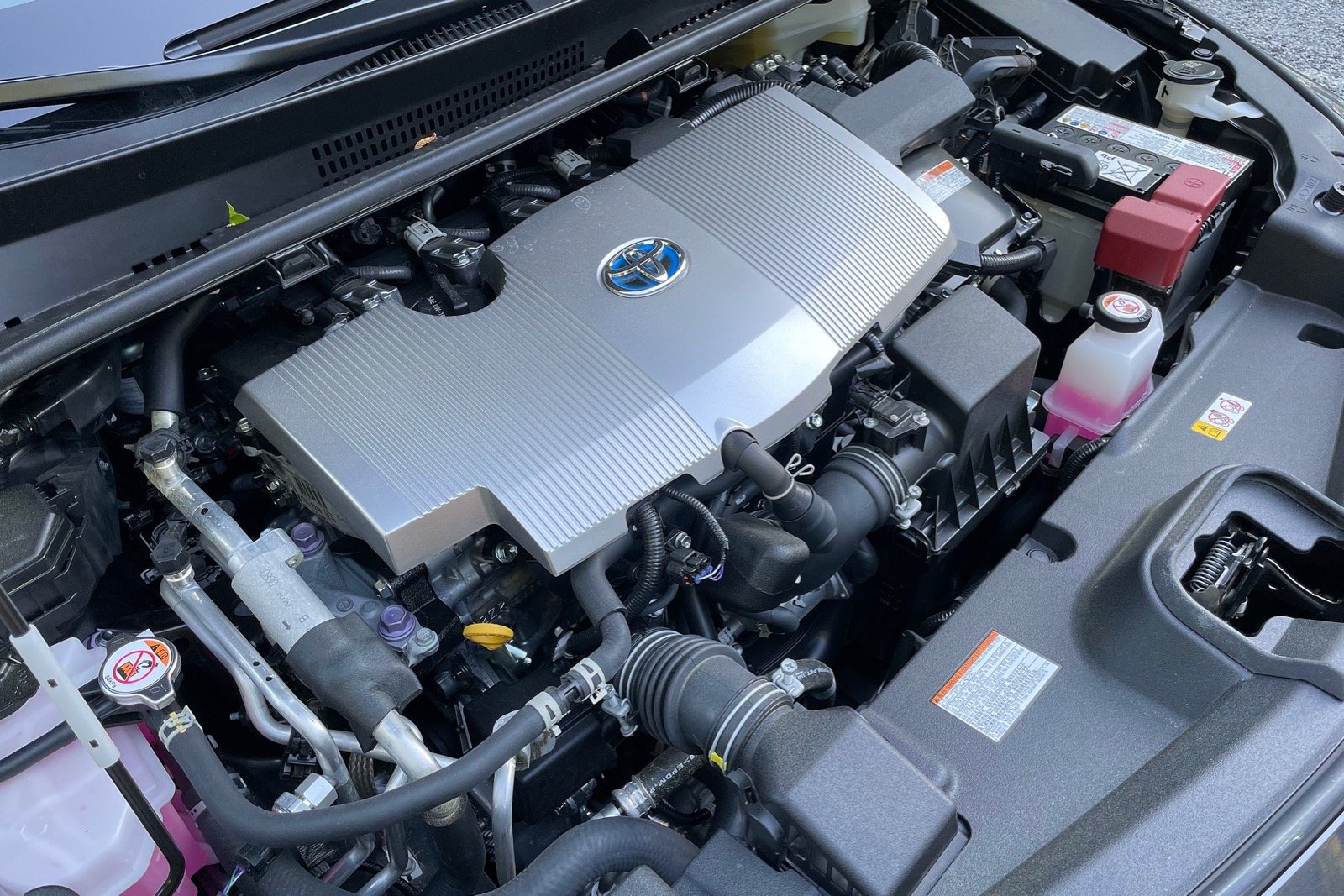
Under the hood of the Prius Prime is the car’s 1.8-liter four-cylinder engine that produces 121 horsepower. The electric motor that moves power from the battery to the wheels gives adds more power giving the total system output of 250 hp. Toyota only engineered the car to have access to 105 pound-feet of torque, which makes its urgency to get up to speed similar to a toddler’s eagerness to go to bed on time each night—practically non-existent. However, it is quicker off the line than the traditional Prius.
The front-wheel-drive (FWD) car's power sources are paired with what Toyota calls an electronically-controlled continuously variable transmission (e-CVT). The car automatically switches between a variety of eco-friendly drive modes (including an Eco mode and EV mode) that run it on all-electric power or as a hybrid. All-wheel drive (AWD) is not available.
Getting up to speed on the highway is not invigorating, but at no time does the Prius Prime feel incompetent. You’ll likely just find yourself sitting inside it wishing it was quicker.
Charging up the car gives it an EPA-estimated 25 miles of all-electric range and can go up to 84 mph in electric mode. Paired with the gasoline engine’s output, the car has an overall range of 640 miles. You can get a similar driving range out of the 2021 Hyundai Sonata Hybrid, a car that is much larger and does not have to be plugged in.
The 2021 Prius Prime has an EPA-estimated 133 MPGe efficiency rating in electric mode. It gets 55 mpg in the city, 53 mpg on the highway, and 54 mpg combined fuel-economy ratings in hybrid mode.
As dull as the power is in the Prius Prime, so is the steering and handling. Sure, it will get you down the road, but it quickly turns drivers lazy with its numb steering, lack of agility, and overall feeling of weightiness.
The good news is that the car’s regenerative braking isn't too sticky or sensitive. Paddle shifters that allow the driver to choose their level of braking regen and enable one-pedal driving would be a great add-on for future generations of the car but they aren’t present as an option on the 2021 version.
Form & function
What it lacks in refinement, the Prius Prime makes up for in practicality. Although it debuted as a four-seater for the 2017 model year, it was changed to a five-passenger car for 2020. It also has a 60-40 split-folding rear seat.
Base-trim Prius Primes get a six-way adjustable driver’s seat and four-way adjustable front-passenger seat. Upgrading to the Prius Prime XLE or Limited nets an eight-way power-adjustable driver's seat with lumbar support. Like the look of the dashboard, it’s obvious that the seats in the Prius Prime were designed for their weight and not their comfort or ergonomics. Still, the front seats are far more comfortable than the ones in the all-electric Chevrolet Bolt EV.
The interior dimensions of the Prius Prime are nearly identical to those of the Corolla Hybrid. The compact car offers a good amount of passenger space. As with any compact, the rear seat is a little cramped if you’re a tall adult and you’ll probably only want to fit three people across the back if you have no other choices. Though the all-electric Nissan Leaf and the Prius Prime have about the same amount of rear-seat headroom, the Prius Prime more easily fits adults.
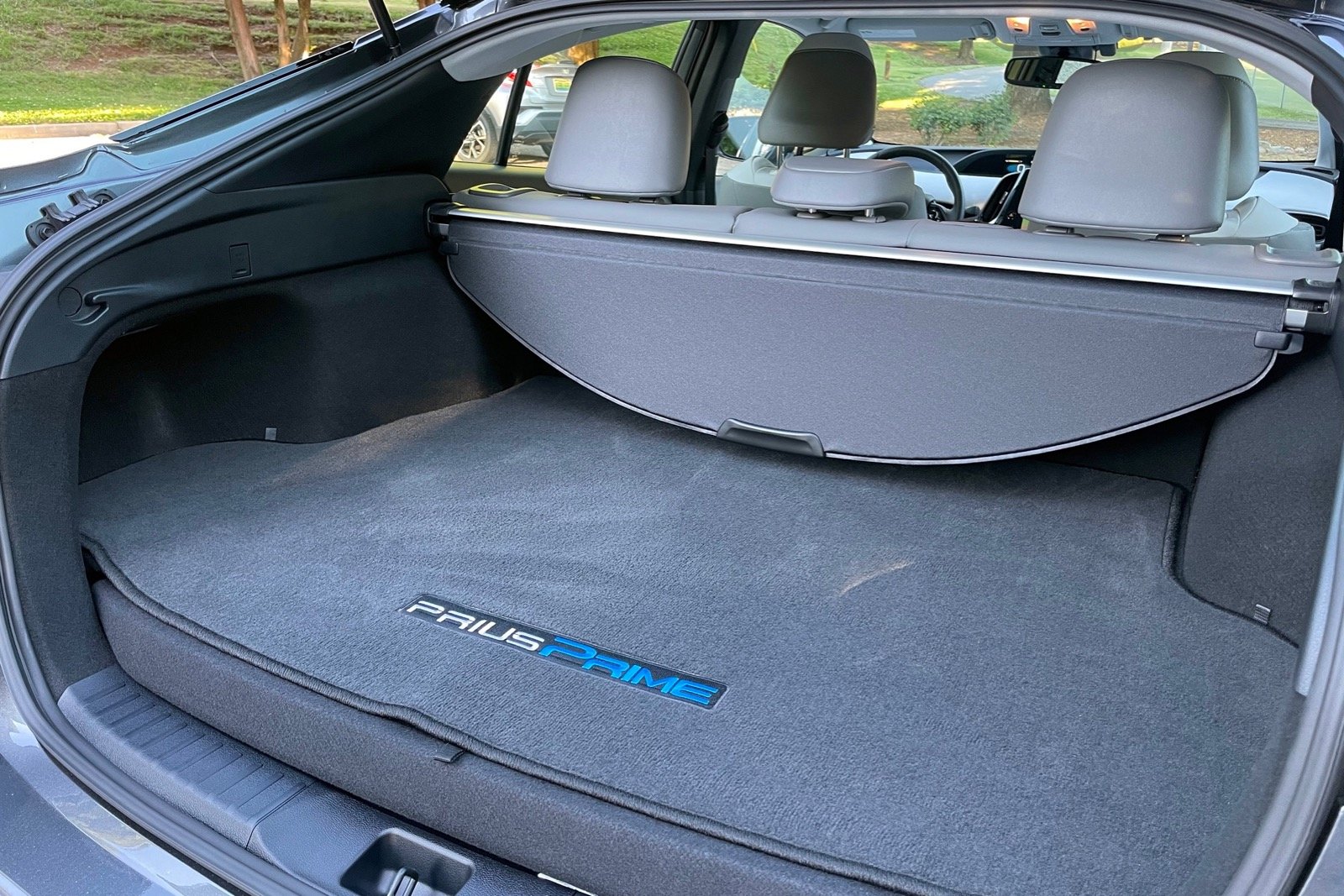
The hatchback Prius Prime has 19.8 cubic feet of cargo space, which sounds good on paper but comes up short in reality. The high load floor of the cargo area (the battery pack is underneath) makes the cargo space far wider than it is deep. For groceries, this isn’t a problem. For luggage, the design is burdensome, disallowing easy configuration and stacking opportunities. Most all-electric vehicles have less cargo space, however.
The new Toyota’s charging cable is secured in a compartment in the trunk that is covered by an L-shaped piece of hard plastic. The plastic piece needs to be removed to store the cable and then replaced. Though the piece itself isn’t flimsy, its operation is. The panel doesn’t lock into place, and it isn’t sized quite right for easy maneuverability in the cargo area if it isn’t put back in place immediately. Still, it does the trick.
The Prius Prime doesn’t come packed with all the standard equipment that you might find in other Toyota models, but its list is solid and includes a tonneau cover and tilting/telescoping steering wheel.
Technology
Toyota has given the Prius a reasonable number of standard features including push-button start, keyless entry, a 120-volt outlet, adaptive cruise control, a 7-inch infotainment touchscreen, six-speaker audio system, a CD player, head-up display (HUD), Apple CarPlay, Android Auto, three USB ports, hands-free phone capability, satellite radio, Bluetooth, and a WiFi hot spot. A wireless smartphone charger, Homelink garage door opener, 11.6-inch touch screen, HD radio, Amazon Alexa, and a 10-speaker JBL audio system are available.
When the Prius Prime was new, few automakers had large infotainment system touchscreens and even fewer had removed climate control and radio buttons completely. Taking a page out of the Tesla playbook, the Prius Prime does just that in the XLE and Limited grades. The results are a near-complete disaster.
Upon startup, the screen goes through a charming welcoming animation sequence that grows less charming and less welcoming when you’re sitting in the hot car eagerly anticipating the opportunity to turn on the air conditioning full blast or turn the radio down. It’s only downhill from there.
The screen is cluttered with information. Though there are few menu options, simple functions are buried deep into the layers of options making it easier to find Waldo in a book than figure out how to turn down the brightness of the screen. In contrast, vehicles from Nissan and Honda have a simple screen brightness and contrast adjustment button next to their infotainment screens.
Additionally, performing functions like adjusting the temperature controls while driving is a function that takes the driver’s eyes off the road for too long both because of lack of touch responsiveness and low control location.
Unlike the large infotainment screen in the Ford Mustang Mach-E, the Prius Prime’s display is cluttered with numerous menus and boldly-colored menu options in gray, purple, green, and blue hues, which is tiring on the eyes.
While some of this clutter can be removed thanks to tap-to-minimize functionality, the chances of having the climate controls and radio settings needing to not be adjusted during a journey are slim so this just gives users another step in the turn up/turn down process.
Utilizing Apple CarPlay somehow makes the screen’s display even worse. The CarPlay display is wedged between a graphic at the top of the screen (which takes away one vertical inch of usable screen space) and the climate and radio controls at the bottom. It appears like it normally does on a screen, but when displayed in addition to everything else it’s a grotesque combination.
Safety
Toyota gives every version of the Prius Prime its Star Safety System, which includes brake assist, smart stop technology, traction control, anti-lock brakes, vehicle dynamics management technology, vehicle stability control, and traction control—pretty standard stuff on modern vehicles. It also comes standard with automatic emergency braking with cyclist and pedestrian detection, lane-departure warning with steering assist, automatic high beams, adaptive cruise control, road-sign assist, and Lane Tracing Assist automated lane centering. That list of safety features is nothing to sneeze at, but also typical for a vehicle in the Prius Prime's class.
The Insurance Institute for Highway Safety (IIHS) has given the Prius Prime models all "Good" crashworthiness ratings except in the small-overlap front-passenger side test, where it earned an "Acceptable" rating. Its headlights also were rated as merely "Acceptable," though its front crash prevention and LATCH ease of use scores were the highest possible.
The 2021 Toyota Prius Prime earned a five-star overall safety rating from the National Highway Traffic Safety Administration (NHTSA). It has not been involved in any recalls to date.
Toyota backs every new Prius Prime with a three-year/36,000-mile comprehensive warranty, a five-year/60,000-mile powertrain warranty, a 10-year/150,000-mile hybrid battery warranty, and an eight-year/100,000-mile hybrid-related components warranty. All other components are covered by a 36-month/36,000-mile warranty.
Cost-effectiveness
If you think you want a Toyota Prius Prime as your next new car, you should consider a Toyota Corolla Hybrid or a Honda Insight instead. While neither comes with a plug, the Corolla Hybrid is more fuel-efficient in real-world driving situations with some able to get around 60 mpg while the Insight has a far nicer interior. Both are priced lower than the Prius Prime, which has a starting MSRP of $28,220. Insight pricing starts at $23,130 and Corolla Hybrid comes in at $23,600. Also, unlike the Prius Prime, both have the drive and ride quality, and comfort, of a traditional vehicle making time behind the wheel far more pleasurable.
Buyers who don’t mind spending a little more to get a fully electric vehicle should cross-shop the Tesla Model 3, Chevrolet Bolt EV, and Chevrolet Bolt EUV. An alternative PHEV option is the Hyundai Ioniq Plug-In Hybrid. You could also cross-shop the regular Prius if you don't absolutely require a plug-in.
The larger Toyota Venza hybrid SUV starts at just $32,570 and offers far more cargo room and though it gets just 40 mpg in the city and 37 on the highway compared to the Prius Prime’s higher numbers, its fuel economy is actually very good for a model its size. The same can be said for the similarly priced Toyota RAV4 Hybrid.

What owners say
Awesome Vehicle Value for money 179 MPGE I am achieving so far 304967 miles on my 2017 TOYOTA PRIUS PRIME ADVANCE. STRONGLY RECOMMENDED.
July 29, 2024The Prius Prime had all of the features we was looking for. We were looking for something that would get really good gas mileage. It is kind of a cross between electric and gas. You can drive 25 miles on electric and then it will switch to gas/electric until you can charge it again. The charging unit is quite compact. The best of both worlds. It has a lifetime guaranty on the battery for as long as you own the car. The safety features has about everything you could ask for. The only thing I could think to improve the car would be a safety feature that would show that you are approaching a stop light or stop sign. I thought the price was great for all of the features it had to offer. We had a 2009 Prius and it is a bit bigger and roomier. It drives smooth and has all of the power we feel we need and is right for us. Love this car.
March 13, 2021Very comfortable seating. Sharp looks. Incredible fuel economy but the extended range and easy refueling of a gas engine. I buy 9 gallons about once every 2 months. Mostly running electric on daily driving. WoW.
June 28, 2021Trims & specs
Base MSRP $34,000 | Seating 5 |
Engine 1.8L 121 hp I4 Hybrid | Cargo Capacity 19.8 cu ft |
Combined MPG 134 | Drivetrain FWD |
Base MSRP $30,000 | Seating 5 |
Engine 1.8L 121 hp I4 Hybrid | Cargo Capacity 19.8 cu ft |
Combined MPG 54 | Drivetrain FWD |
Base MSRP $28,220 | Seating 5 |
Engine 1.8L 121 hp I4 Hybrid | Cargo Capacity 19.8 cu ft |
Combined MPG 54 | Drivetrain FWD |


Pricing trends
MSRP range
$28,220 - $34,000
Current avg. market price
$22,861
Trending down by 2.0% this month
April 2026 - October 2026


