2025 Hyundai Elantra Hybrid Reviews, Pricing & Specs
Write a review$25,530 to $29,700
Original MSRP
6.2
of 10
expert review
avg user rating
(0 reviews)
Pros
Stylish design
Fuel-efficient
Great warranty
Cons
Inconsistent power delivery
Sluggish performance
Interior materials feel cheap
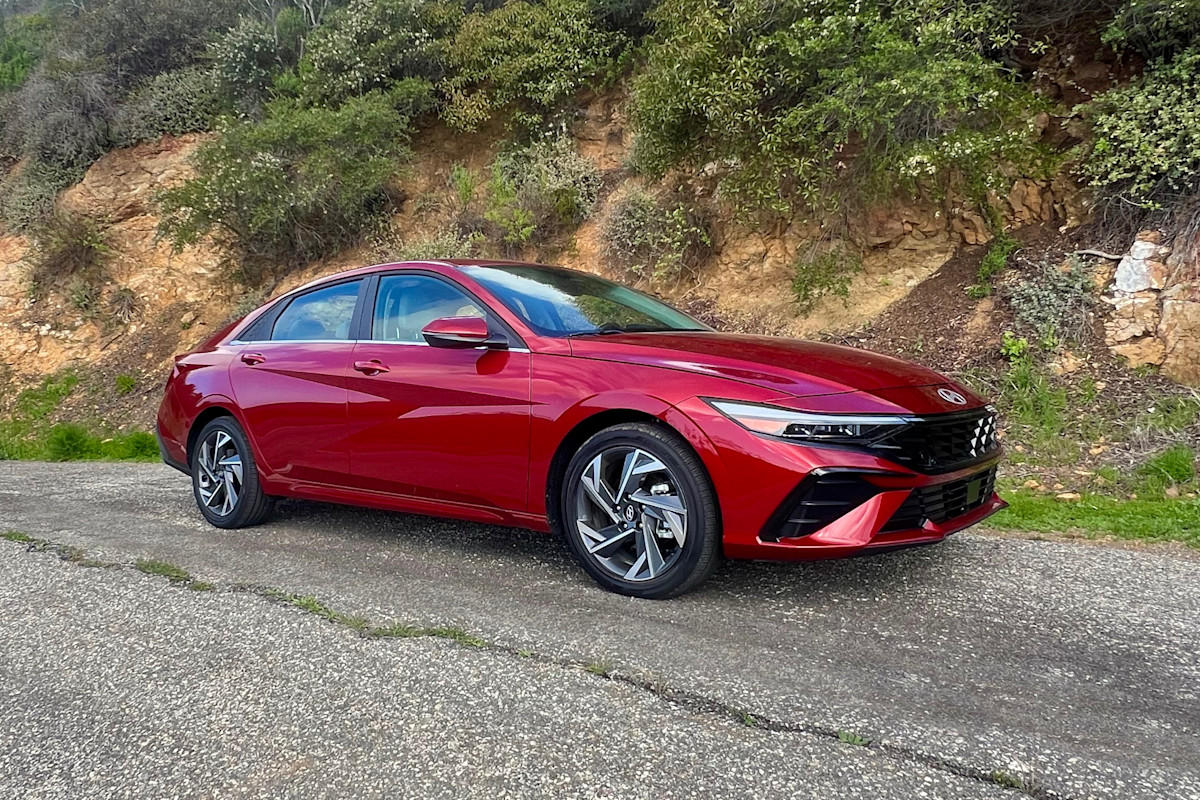
The Elantra Hybrid may look sharp, but it's dull to drive.
The Hyundai Elantra Hybrid is a stylish outlier among fuel-efficient sedans. It also holds an advantage with its accessible pricing and generous warranty, but unfortunately, it's not very appealing to drive. Power and acceleration are on the weak side—even among other hybrids—while inconsistent power surges make it feel as though it's a few generations behind the rest of the class.
Verdict: The Elantra Hybrid is a great value, but its unrefined hybrid powertrain and cheap-feeling interior have it following, rather than leading the class.
For the most part, the compact sedan class isn't known for evocative design, but the Hyundai Elantra didn't seem to get the memo. It's styled to impress, with angular body creases and an overall edginess that sets it apart from rivals. It also benefits from a streamlined silhouette, with a hatchback-like rear roofline that tapers to a sharp tail featuring a deep indent where the taillights reside. From some angles, it appears as though it has a sporty rear spoiler.
Unlike most other carmakers, Hyundai doesn't adhere to an overriding corporate design language. Instead, each model has its own distinct look, and as Hyundai puts it, "they're like individual chess pieces from the same board." The midsize Sonata takes on a more rounded and sleek appearance while the all-electric Ioniq 6 looks overstuffed and bloated by comparison.
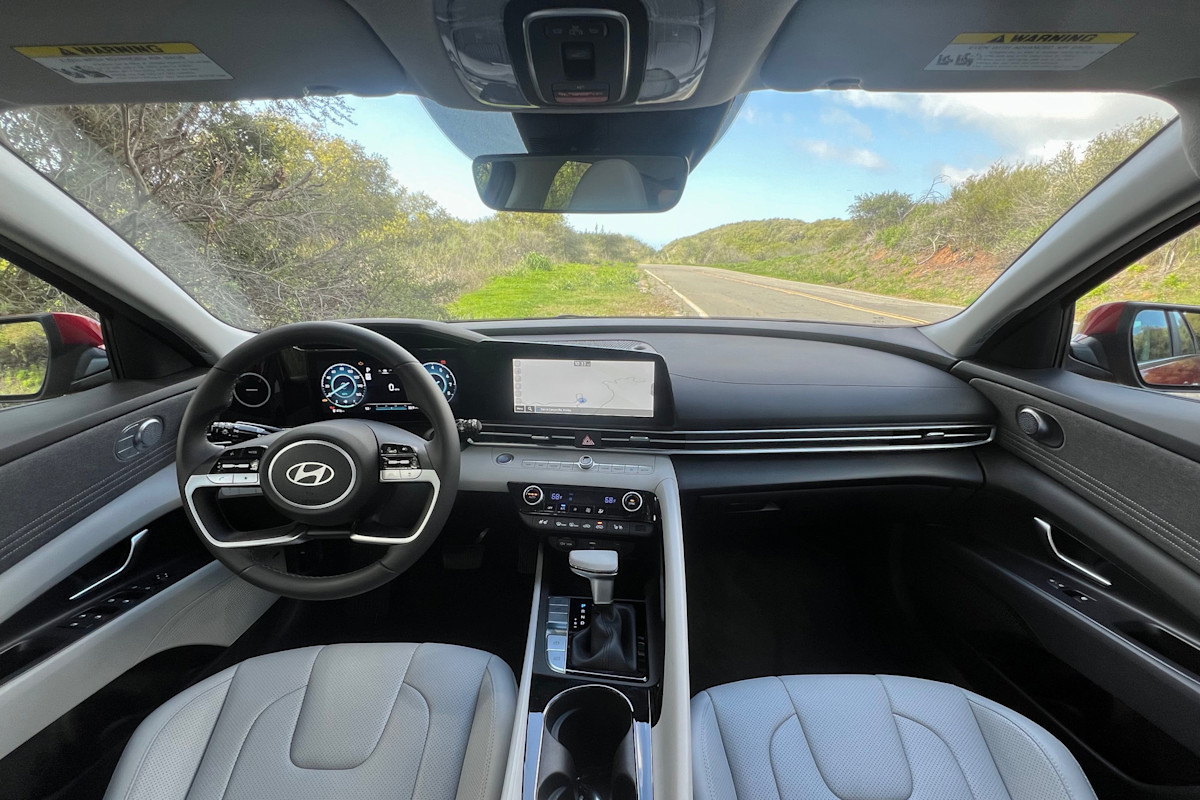
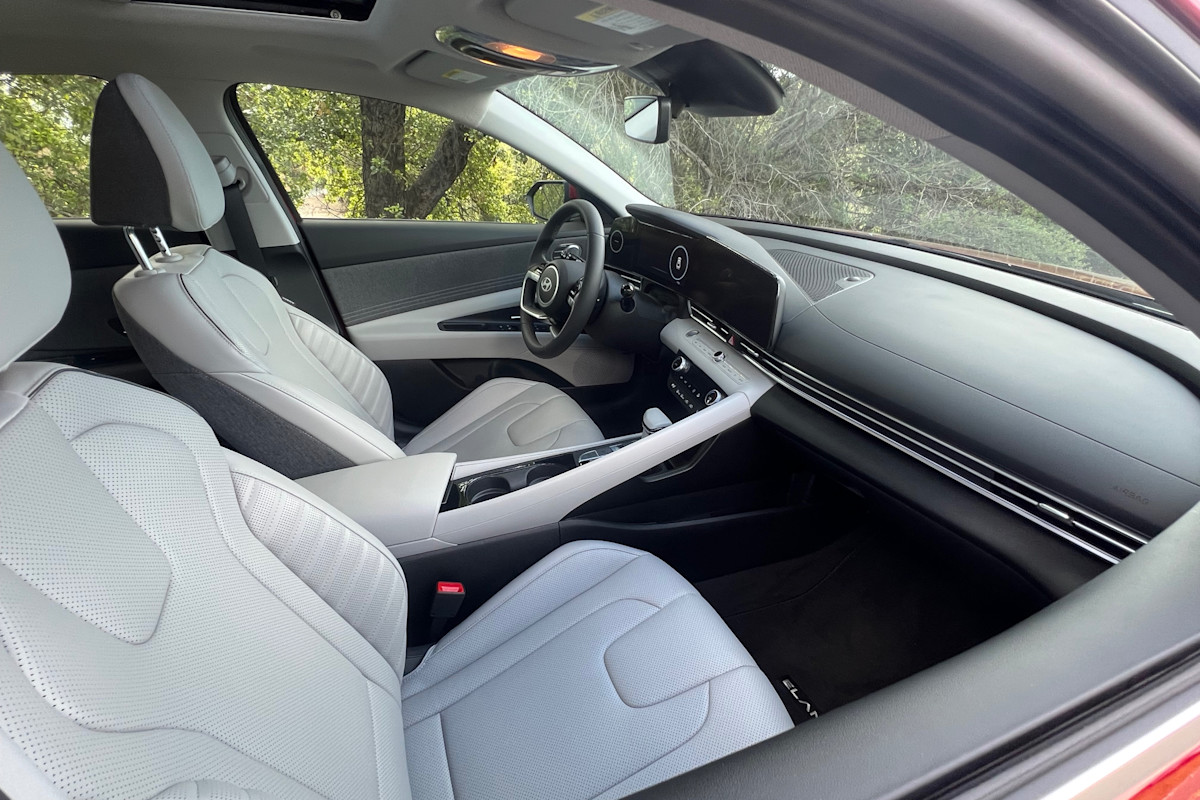
On the inside, the Elantra is equally modern, but without the angularity. A line of three horizontal bars spans most of the dashboard to enhance the sense of space and integrate the air vents within them. A long passenger grab handle, which bridges the center stack and center console, seems a bit out of place in this Hybrid model, though it makes more sense in the performance-focused Elantra N. A traditional gear selector lever and physical climate controls aren't as cutting-edge as some other hybrids, but we'll take usability over fashion any day.
The available digital instrument panel lends the cockpit a tech-forward personality, as does the unique steering-wheel design that looks as good as it feels in your hands. To the left of the instruments is an odd circular graphic on a shiny black panel. It seems like it should serve a purpose, perhaps as a secondary display, but Hyundai confirmed that it's only there as a styling flourish.
First visual impressions of the interior suggest it features plenty of soft-touch materials, but upon closer inspection, many are hard plastic. That's fairly common for the cost-conscious class, but at least they look the part. Our Hyundai Elantra Hybrid Limited, which is the top trim, came with some attractive fabric panels in the doors and seatbacks, making the cabin warmer and more inviting, reminding us of some higher-end Volvo models that also benefit from the use of textiles.
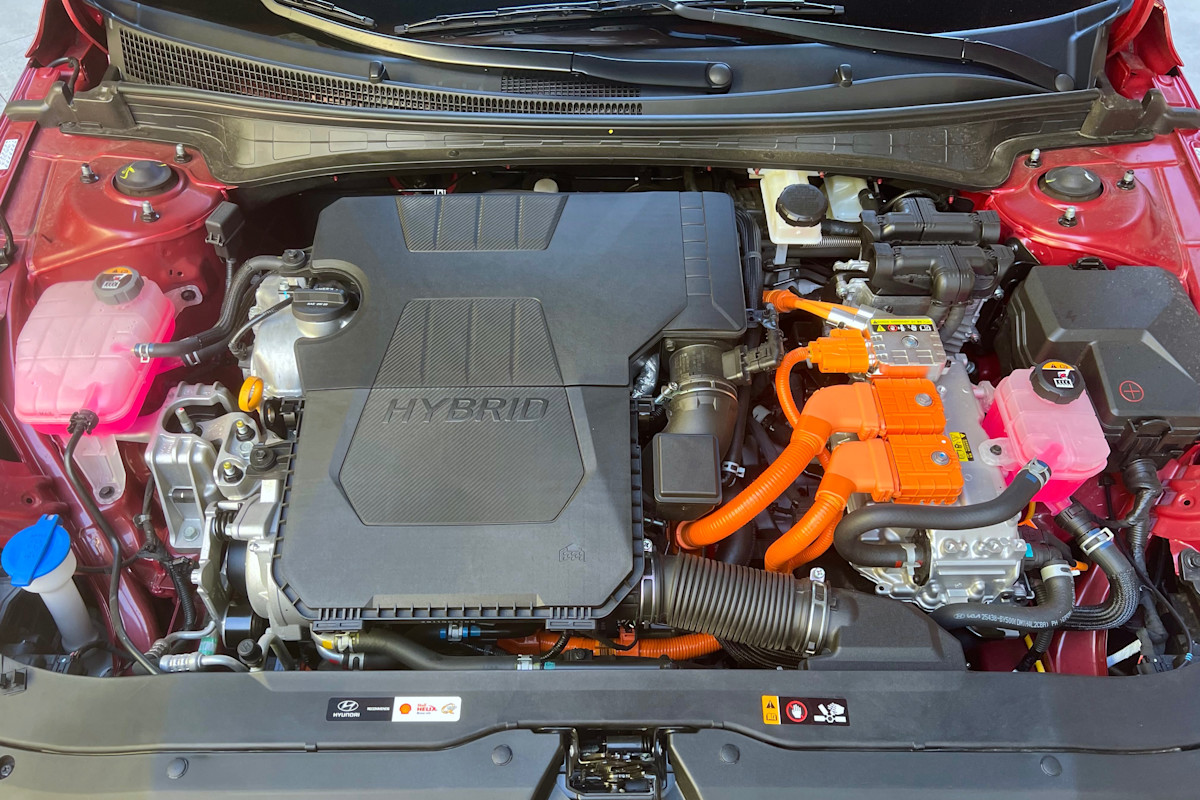
The Elantra Hybrid packs a 1.6-liter four-cylinder engine under the hood, paired with an electric motor. Combined, they produce 139 horsepower, which is routed through a six-speed dual-clutch automatic transmission to the front wheels. All-wheel-drive (AWD) is not available, but most of the Elantra Hybrid’s rivals are front-wheel drive (FWD)-only as well.
That power output is far from impressive, and acceleration is about what you'd expect. The Elantra Hybrid should reach 60 mph in around 8.5 seconds, which is slow, even for a hybrid. By comparison, the Honda Civic Hybrid gets there in only 6.6 seconds, and even the Toyota Prius beats it by a full second. That said, there is adequate power for most drivers, though they'll likely have to floor it on uphill onramps or when passing slower traffic.
Compounding matters is the manner in which the Elantra Hybrid delivers that power. In some ways, it reminds us of some of the earlier hybrids from the 2000s, with a noticeable transition between electric and internal combustion. Initial acceleration is immediate but weak, as it's handled by the electric motor. The gas engine shudders to life shortly thereafter with a surge in power. This wasn't always the case, however, as in some instances the transition was more graceful and seamless. This is a problem because consistency is a benchmark of good engineering.
We're at least pleased that the six-speed dual-clutch gearbox doesn't make the engine drone like the continuously variable transmissions (CVT) found in other compact sedans. Unfortunately, it also give the Elantra Hybrid a tendency to roll forward by an alarming amount when shifted into reverse. If you're pointed downhill, it takes a moment for the transmission to engage, and in the process, you might end up bumping into whatever is in front.
Thankfully, the brakes have no such issues and function much like in a conventional sedan. The brake pedal effort is appropriate for a hybrid, and stopping power is reassuring. The Elantra Hybrid's suspension is likewise appropriate, favoring comfort over handling performance. It still corners with confidence, but it's not what we'd consider sporty by any measure. While the ride quality is acceptably smooth, there is a noticeable amount of road noise that creeps into the cabin. On coarse asphalt, it can be somewhat intrusive.
The Elantra Hybrid gains a usability advantage over some rivals with its traditional physical buttons and knobs, rather than trying to cram all of them into a single touchscreen. With this layout, you can easily make climate control adjustments without ever having to take your eyes off the road. With many of the screen-based systems employed by other brands, the same functions can be overly distracting.
The front seats offer plenty of room for a variety of body types, and the ventilation (standard in the top Limited trim) keeps you cool when things heat up outside. The rear seats can accommodate an average-sized adult, but anyone taller than five-foot-ten might run out of headroom. There's ample legroom, though, and enough space for your feet under the front seats.
From the driver’s seat, there's not as much space for your personal items compared to many rivals. You get large cup holders and a wireless charging tray for your phone, but the center armrest bin and door pockets are on the small side. Rear seat passengers get a fold-down armrest if nobody is occupying the center position, but there are no air vents or separate climate controls offered.
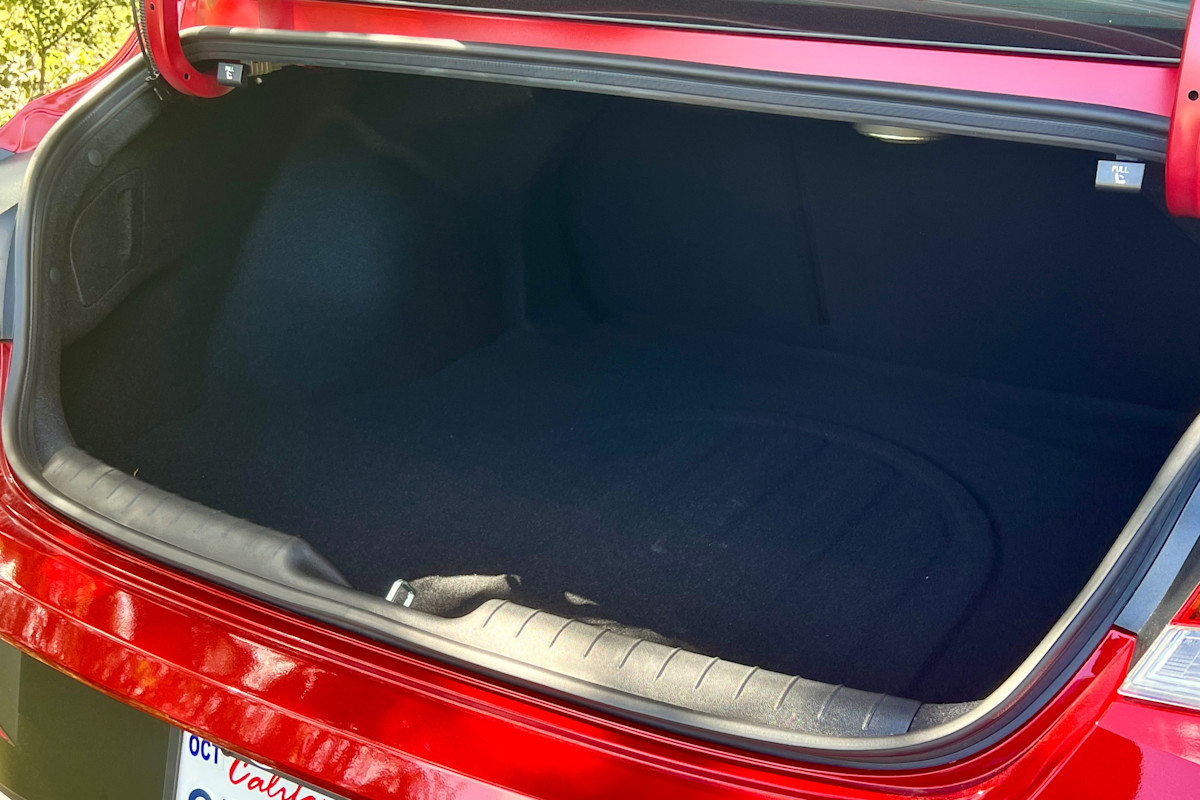
Behind those seats, the trunk can hold up to 14.2 cubic feet of cargo, which is about average for the class. The trunk itself isn't as well finished as competitors', as it's lightly covered in flimsy fibrous materials. The rear seatbacks do fold to provide space for larger objects, but it's important to note that they're only available in the Limited trim. Remote seatback releases help to simplify the process, and the low liftover height makes loading bulkier packages easier.
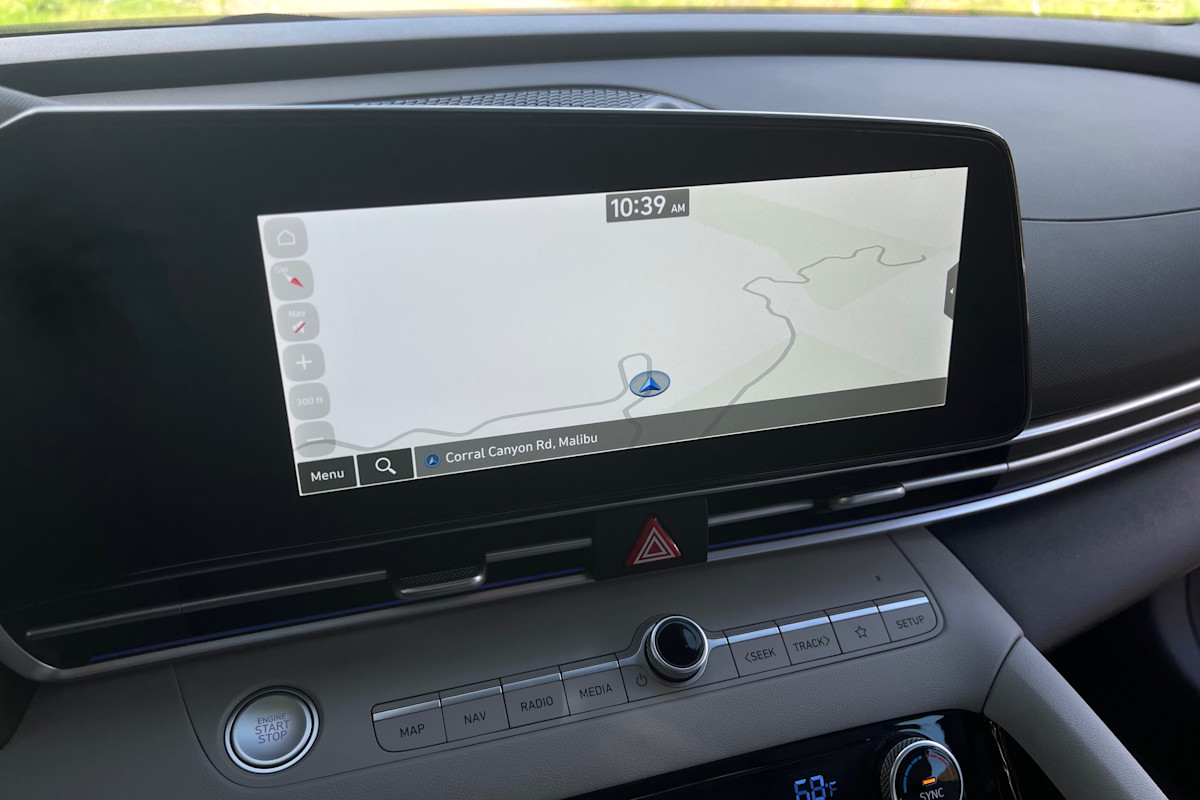
Standard tech features include a 4.2-inch digital instrument panel and an 8-inch infotainment touchscreen, but these are for only the base Blue trim. All others upgrade to a 10.25-inch display for both the instrument panel and touchscreen, the latter with a native navigation system. As with many of the other features, the infotainment system has a row of physical shortcut buttons that greatly simplify operation and reduce distraction. Responses to user inputs are relatively quick, and the menus are easy to navigate.
Wireless Apple CarPlay and Android Auto are included in the base trim, but are absent with the larger infotainment touchscreen. It seems like an odd misstep, especially when these models also come with a standard wireless phone charger. So while you won’t need a cable to charge your phone, you’ll still need one to connect to the infotainment system.
As is the case with most vehicles today, the Elantra can be monitored and controlled remotely through a smartphone app. A Wi-Fi hotspot is standard on the midrange SEL Sport model and higher trim levels. The Limited trim can also use your phone as a digital key, eliminating the need to carry the key fob. The top trim also comes with an eight-speaker Bose audio system, but we weren't all that impressed by its clarity or power.
All Elantra Hybrid models come standard with Hyundai's SmartSense suite of safety and driver-assistance features. These include: forward collision warning with automatic emergency braking, blind-spot monitoring with rear cross-traffic alert, lane-keep assist, driver attention monitoring, safe passenger exit sensors to keep you from opening a door into traffic, automatic high beams, and a rear passenger reminder. Our Limited trim also came with Hyundai's Highway Driving Assist, which combines adaptive cruise control and lane-keep assist to reduce the driver’s workload.
In our time with the vehicle, all of these safety features functioned just as they should, and the adaptive cruise control was smooth on the accelerator and the brakes. It was a bit slow to catch up to vehicles in front, which was an open invitation for other drivers to swoop in. On curvy roads, the lane-keep assist continually tugged at the steering wheel, making it feel as if the system was second-guessing every input. We found it best to disable that feature in those situations.
In tests conducted by the National Highway Traffic Safety Administration (NHTSA), the 2025 Elantra Hybrid earned five-out-of-five stars in overall, side crash protection, and rollover evaluations. It earned four stars for frontal crash protection. The Insurance Institute for Highway Safety (IIHS) awarded the Elantra its highest score of "Good" rating in all crash-test categories except for the new frontal moderate overlap test, where it earned a second-worst score of "Marginal". That was still good enough to name it a Top Safety Pick, the Institute's second-highest honor.
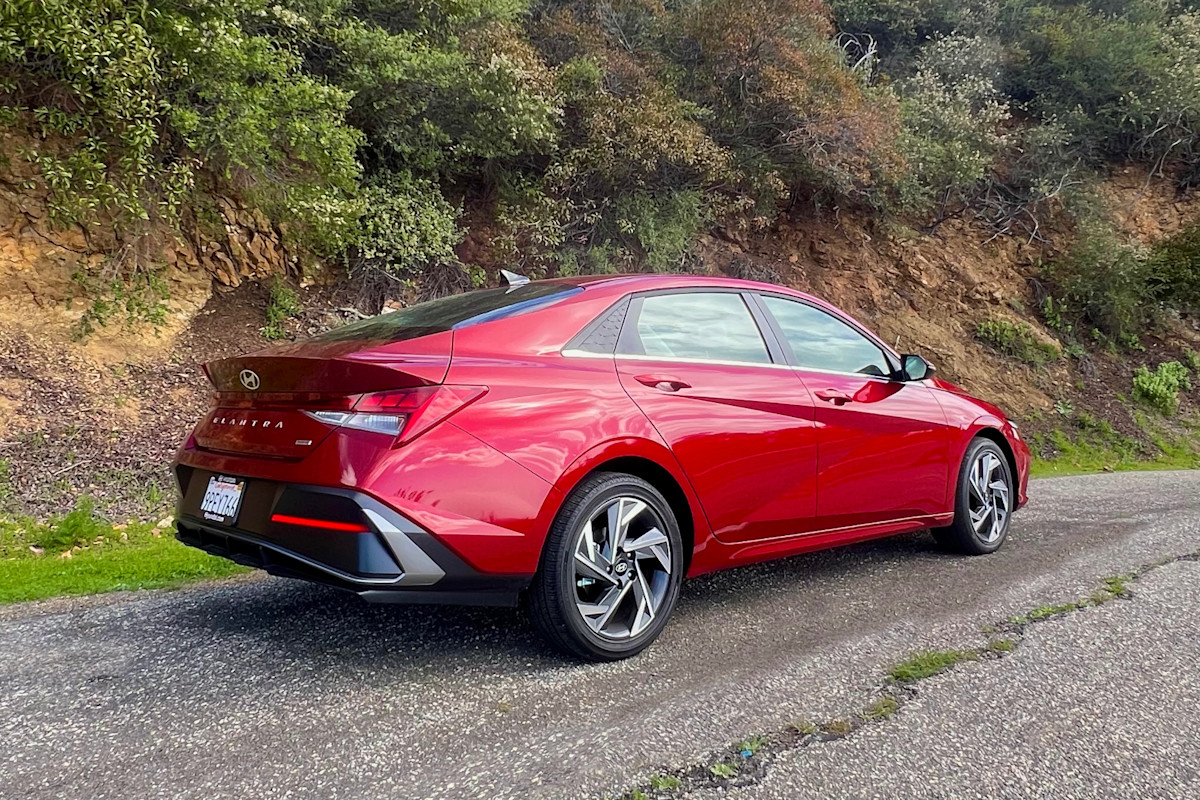
The 2025 Hyundai Elantra Hybrid has a manufacturer’s suggested retail price (MSRP)of $26,645 (including $1,195 in destination charges) for the entry-level Blue trim. Our Limited trim had a starting price of $30,995, and the only real option was the racy Ultimate Red paint job that costs an additional $500. By comparison, the non-hybrid Elantra Limited stickers at $27,970.
The Elantra Hybrid Blue trim is the fuel economy leader of the lineup, with an EPA-estimated 51 mpg city, 58 mpg highway, and 54 mpg in combined driving. All other Elantra Hybrids are rated at 49/52 mpg city/highway and 50 mpg combined. In our time with the Elantra, those figures seemed well within reach without having to try.
The non-hybrid Limited trim is estimated at 34 mpg combined, while the most efficient model is rated at 36 mpg. Crunching the numbers with gas set at $4.00 per gallon and allowing for 15,000 miles driven annually, it would take you about five-and-a-half years to recoup the Limited trim's hybrid price premium. After that, you should save $564 each year in fuel costs.
As with all Hyundais, the Elantra Hybrid comes with a very generous warranty that covers the powertrain for 10 years or 100,000 miles, as well as a new-car warranty good for five years or 60,000 miles. It further benefits from three years or 36,000 miles of free scheduled maintenance.
The Honda Civic Hybrid is slightly more expensive and tops out at 49 mpg combined. The Toyota Corolla Hybrid is more affordable and is estimated at 47 mpg. The Prius is the priciest of the bunch, but rings in with an impressive 57 mpg. All things considered, the Honda Civic Hybrid will likely be the class leader for many shoppers. It drives like its non-hybrid sibling and impresses with its convenience and practicality. For those in weather-prone regions, the only compact hybrid sedans that offer AWD are the Toyota Prius and Corolla.
As it stands, the 2025 Hyundai Elantra Hybrid looks great, offers plenty of space, and comes with a long list of features for the money. But its unrefined hybrid powertrain, slow acceleration, and liberal use of hard interior plastics have it following, rather than leading the class.

User reviews for 2025 Hyundai Elantra Hybrid
Write a review2025 Hyundai Elantra Hybrid Pricing
Trims & specs
Air Conditioning
Automatic climate control front air conditioning · Dual front air conditioning zones
Airbags
Dual front airbags · Passenger airbag deactivation: occupant sensing deactivation · Rear side airbags · Front side curtain airbags
Audio System
Antenna Type: element · Bluetooth auxiliary audio input · Touch screen display radio · Total Number of Speakers: 6
Brakes
ABS: 4-wheel · Braking assist: hill start assist · Front brake diameter: 11.0 · Front brakes: ventilated disc · Rear brake diameter: 10.3 · Rear brakes: disc
Comfort Features
Door sill trim: scuff plate · Floor Material: carpet · Shift knob trim: urethane · Steering wheel trim: urethane
Convenience Features
Assist handle: front · Autonomous lane guidance: lane centering · Center console: front console with armrest and storage · Cupholders: front · Multi-function remote: proximity entry system · One-touch windows: 1 · Power outlet(s): USB front · Power steering: speed-proportional · Power windows: lockout button · Reading lights: front · Steering wheel: tilt and telescopic · Steering wheel mounted controls: phone · Storage: sunglasses holder · Vanity mirrors: dual illuminating
Driver Seat
Manual adjustments: 6
Drivetrain
Axle ratio: 4.44
Engine
Battery: maintenance-free · EV battery capacity: 1.3 kWh · Electric Motor Battery Type: lithium ion · Electric Motor HP: 43 · Electric Motor Power Output (Kilowatts): 32 · Electric Motor Torque: 125 · Hybrid Gas Engine HP: 104 · Hybrid Gas Engine HP@RPM: 5700 · Hybrid Gas Engine Torque: 109 · Hybrid gas Engine Torque@RPM: 4000
Exterior Features
Door handle color: body-color · Exhaust tip color: stainless-steel · Front bumper color: body-color · Grille color: black · Mirror color: body-color · Rear bumper color: body-color · Rear trunk/liftgate: sensor-activated · Rocker panel color: body-color · Window trim: black
Headrests
Front headrests: adjustable · Number of front headrests: 2 · Number of rear headrests: 3
Hybrid
Starter Type: motor/generator
In Car Entertainment
Connected in-car apps: Google POIs · Infotainment screen size: 8 in. · Smartphone integration: wireless Apple CarPlay
Instrumentation
Fuel economy display: MPG · Instrument cluster screen size: 4.2 in. · Warnings and reminders: coolant temperature warning
Lights
Daytime running lights: LED · Headlights: Auto on/off
Mirrors
Exterior mirrors: heated · Inside rearview mirror: manual day/night
Passenger Seat
Manual Adjustments: 6
Rear Seats
Type: bench
Safety
Automatic emergency braking: rear · Camera system: rearview · Child seat anchors: LATCH system · Cross Traffic Alert: rear · Crumple zones: rear · Pre-Collision Warning System: vibrating steering wheel · Pre-collision warning system: pedestrian detection · Rearview monitor: in dash · Traffic sign recognition: adaptive speed limiting
Seatbelts
Emergency locking retractors: front · Front seatbelts: 3-point · Seatbelt force limiters: front · Seatbelt pretensioners: front · Seatbelt warning sensor: driver and passenger · Second row seatbelts: 3-point
Seats
Driver seat manual adjustments: height · Front seat type: bucket · Passenger seat manual adjustments: height · Rear seat folding: one-piece · Upholstery: premium cloth
Security
Power door locks: anti-lockout
Spare Tire
Kit: inflator kit
Steering
Steering ratio: 12.9 · Turns lock-to-lock: 2.5
Suspension
Front Arm Type: lower control arms · Front Shock Type: twin-tube gas shock absorbers · Front Spring Type: coil springs · Front Stabilizer Bar: diameter 23 mm · Front Suspension Classification: independent · Front Suspension Type: MacPherson struts · Rear Spring Type: coil springs · Rear Stabilizer Bar: diameter 18 mm · Rear Suspension Classification: independent · Rear Suspension Type: multi-link · Rear shock type: monotube
Telematics
Electronic messaging assistance: with voice recognition · Phone: voice activated · Phone wireless data link: Bluetooth
Tires
Type: all season
Tires and Rims
Wheel type: aluminum alloy
Windows
Front wipers: variable intermittent
Air Conditioning
Automatic climate control front air conditioning · Dual front air conditioning zones
Airbags
Dual front airbags · Passenger airbag deactivation: occupant sensing deactivation · Front side airbags · Front side curtain airbags
Audio System
Antenna Type: element · Bluetooth auxiliary audio input · AM/FM radio · Satellite Radio: SiriusXM · Total Number of Speakers: 6
Brakes
ABS: 4-wheel · Braking assist: hill start assist · Front brake diameter: 11.0 · Front brakes: ventilated disc · Rear brake diameter: 10.3 · Rear brakes: disc
Comfort Features
Door sill trim: scuff plate · Floor Material: carpet · Foot pedal trim: aluminum · Shift knob trim: leather · Steering wheel trim: leather
Convenience Features
Assist handle: rear · Autonomous lane guidance: lane centering · Center console: front console with armrest and storage · Cupholders: front · Multi-function remote: keyless entry with panic alarm · One-touch windows: 1 · Power outlet(s): USB-C front · Power steering: speed-proportional · Power windows: lockout button · Reading lights: front · Steering wheel: tilt and telescopic · Steering wheel mounted controls: phone · Storage: accessory hook · Vanity mirrors: dual illuminating
Driver Seat
Manual adjustments: 6
Drivetrain
Axle ratio: 4.44
Engine
Battery: maintenance-free · EV battery capacity: 1.3 kWh · Electric Motor Battery Type: lithium ion · Electric Motor HP: 43 · Electric Motor Power Output (Kilowatts): 32 · Electric Motor Torque: 125 · Hybrid Gas Engine HP: 104 · Hybrid Gas Engine HP@RPM: 5700 · Hybrid Gas Engine Torque: 109 · Hybrid gas Engine Torque@RPM: 4000
Exterior Features
Door handle color: body-color · Exhaust tip color: stainless-steel · Front bumper color: body-color · Grille color: black · Mirror color: black · Rear bumper color: body-color · Rear spoiler: lip · Rear spoiler color: body-color · Rear trunk/liftgate: sensor-activated · Rocker panel color: body-color · Window trim: black
Headrests
Front headrests: adjustable · Number of front headrests: 2 · Number of rear headrests: 3
Hybrid
Starter Type: motor/generator
In Car Entertainment
Connected in-car apps: app marketplace integration · Infotainment: Blue Link · Infotainment screen size: 10.25 in.
Instrumentation
Fuel economy display: MPG · Instrument cluster screen size: 10.25 in. · Warnings and reminders: lamp failure
Lights
Daytime running lights: LED · Headlights: automatic high beam dimmer
Mirrors
Exterior mirrors: power · Inside rearview mirror: manual day/night
Passenger Seat
Manual Adjustments: 6
Rear Seats
Type: bench
Safety
Automatic emergency braking: front pedestrian · Camera system: rearview · Child seat anchors: LATCH system · Cross Traffic Alert: rear · Crumple zones: front · Pre-Collision Warning System: visual warning · Pre-collision warning system: pedestrian detection · Rearview monitor: in dash · Traffic sign recognition: adaptive speed limiting
Seatbelts
Emergency locking retractors: front and rear · Front seatbelts: 3-point · Seatbelt force limiters: front · Seatbelt pretensioners: front · Seatbelt warning sensor: driver and passenger · Second row seatbelts: 3-point
Seats
Driver seat manual adjustments: height · Front seat type: bucket · Passenger seat manual adjustments: height · Rear seat folding: one-piece · Upholstery: premium cloth
Security
Power door locks: anti-lockout
Spare Tire
Kit: inflator kit
Steering
Steering ratio: 12.9 · Turns lock-to-lock: 2.5
Suspension
Front Arm Type: lower control arms · Front Shock Type: twin-tube gas shock absorbers · Front Spring Type: coil springs · Front Stabilizer Bar: diameter 23 mm · Front Suspension Classification: independent · Front Suspension Type: MacPherson struts · Rear Spring Type: coil springs · Rear Stabilizer Bar: diameter 18 mm · Rear Suspension Classification: independent · Rear Suspension Type: multi-link · Rear shock type: monotube
Telematics
Driver assistance app: roadside assistance · Electronic messaging assistance: with read function · Navigation system: touch screen display · Phone: voice activated · Phone wireless data link: Bluetooth · Smart device app compatibility: MyHyundai with Blue Link · Smart device app function: lock operation · Wifi: hotspot
Tires
Type: all season
Tires and Rims
Wheel type: aluminum alloy
Windows
Front wipers: variable intermittent
Air Conditioning
Automatic climate control front air conditioning · Dual front air conditioning zones
Airbags
Dual front airbags · Passenger airbag deactivation: occupant sensing deactivation · Front side airbags · Rear side curtain airbags
Audio System
Antenna Type: diversity · Voice recognition audio system · Bluetooth auxiliary audio input · Premium Brand: Bose · HD radio · Satellite Radio: SiriusXM · 1 subwoofer · Total Number of Speakers: 7
Brakes
ABS: 4-wheel · Braking assist: hill start assist · Front brake diameter: 11.0 · Front brakes: ventilated disc · Rear brake diameter: 10.3 · Rear brakes: disc
Comfort Features
Armrests: rear center with cupholders · Center console trim: leatherette · Door sill trim: scuff plate · Door trim: leatherette · Floor Material: carpet · Shift knob trim: leather · Steering wheel trim: leather
Convenience Features
Adaptive stop and go cruise control: semi-automatic · Ambient lighting: color-adjustable · Assist handle: front · Autonomous lane guidance: lane centering · Center console: front console with armrest and storage · Cruise control: adaptive · Cupholders: rear · Dimming rearview mirror: auto-dimming · Footwell lights: color-adjustable · Memorized settings: driver seat · Multi-function remote: proximity entry system · One-touch windows: 1 · Power outlet(s): USB-C rear · Power steering: electric · Power windows: lockout button · Reading lights: front · Steering wheel: tilt and telescopic · Steering wheel mounted controls: phone · Storage: sunglasses holder · Vanity mirrors: dual illuminating
Driver Seat
Adjustable lumbar support: power · Power adjustments: 6
Drivetrain
Axle ratio: 4.44
Engine
Battery: maintenance-free · EV battery capacity: 1.3 kWh · Electric Motor Battery Type: lithium ion · Electric Motor HP: 43 · Electric Motor Power Output (Kilowatts): 32 · Electric Motor Torque: 125 · Hybrid Gas Engine HP: 104 · Hybrid Gas Engine HP@RPM: 5700 · Hybrid Gas Engine Torque: 109 · Hybrid gas Engine Torque@RPM: 4000
Exterior Features
Door handle color: body-color · Exhaust tip color: stainless-steel · Front bumper color: body-color · Grille color: black · Mirror color: body-color · Rear bumper color: body-color · Rear trunk/liftgate: sensor-activated · Rocker panel color: body-color · Window trim: chrome
Headrests
Front headrests: adjustable · Number of front headrests: 2 · Number of rear headrests: 3
Hybrid
Starter Type: motor/generator
In Car Entertainment
Connected in-car apps: app marketplace integration · Infotainment: Blue Link · Infotainment screen size: 10.25 in.
Instrumentation
Fuel economy display: range · Instrument cluster screen size: 10.25 in. · Warnings and reminders: coolant temperature warning
Lights
Daytime running lights: LED · Headlights: LED · Tail and brake lights: LED
Mirrors
Exterior mirrors: manual folding
Passenger Seat
Manual Adjustments: 6
Rear Seats
Type: 60-40 split bench
Roof
Moonroof: power glass
Safety
Automatic emergency braking: rear · Camera system: rearview · Child seat anchors: LATCH system · Cross Traffic Alert: rear · Crumple zones: front · Pre-Collision Warning System: vibrating steering wheel · Pre-collision warning system: pedestrian detection · Rearview monitor: in dash · Traffic sign recognition: adaptive speed limiting
Seatbelts
Emergency locking retractors: front · Front seatbelts: 3-point · Seatbelt force limiters: front · Seatbelt pretensioners: front · Seatbelt warning sensor: driver and passenger · Second row seatbelts: 3-point
Seats
Driver seat power adjustments: reclining · Front seat type: bucket · Passenger seat manual adjustments: height · Rear headrests: adjustable · Rear seat folding: split · Upholstery: leatherette
Security
Power door locks: anti-lockout
Spare Tire
Kit: inflator kit
Steering
Steering ratio: 12.9 · Turns lock-to-lock: 2.5
Suspension
Front Arm Type: lower control arms · Front Shock Type: twin-tube gas shock absorbers · Front Spring Type: coil springs · Front Stabilizer Bar: diameter 23 mm · Front Suspension Classification: independent · Front Suspension Type: MacPherson struts · Rear Spring Type: coil springs · Rear Stabilizer Bar: diameter 18 mm · Rear Suspension Classification: independent · Rear Suspension Type: multi-link · Rear shock type: monotube
Telematics
Driver assistance app: roadside assistance · Electronic messaging assistance: with read function · Navigation system: with voice recognition · Phone: voice activated · Phone wireless data link: Bluetooth · Smart device app compatibility: MyHyundai with Blue Link · Smart device app function: horn/light operation · Wifi: hotspot
Tires
Type: all season
Tires and Rims
Wheel type: aluminum alloy
Windows
Front wipers: variable intermittent

