2013 Toyota Prius Reviews, Pricing & Specs
Write a review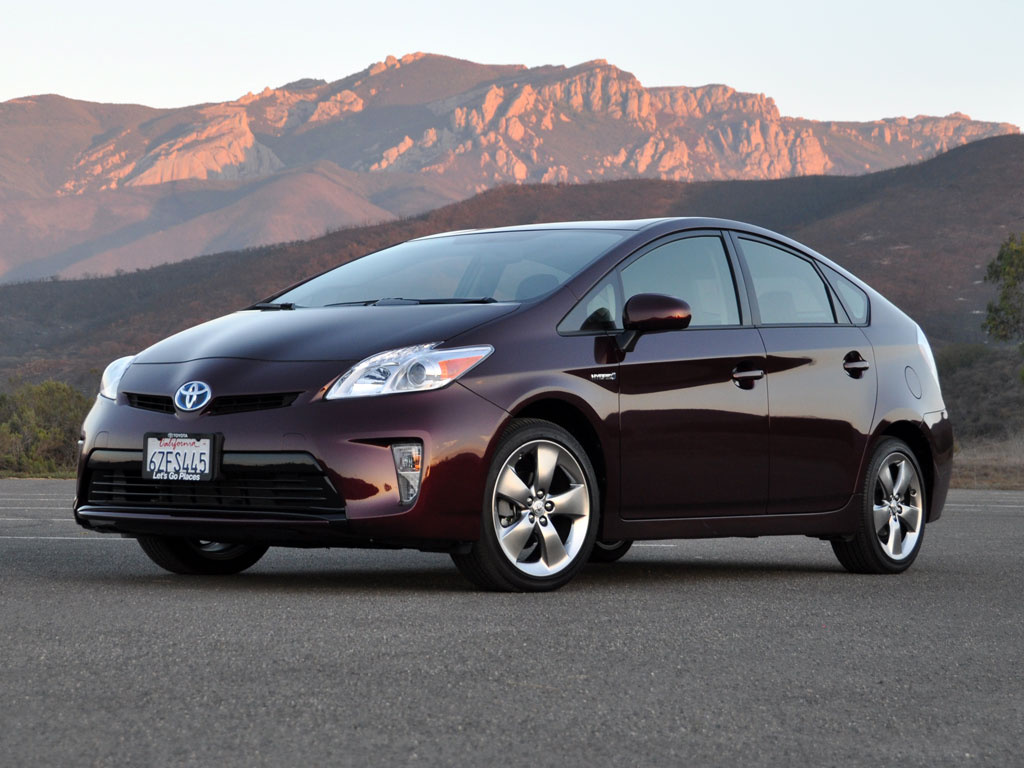
To critique a Prius for its dynamic failings is to miss the point entirely. This is a midsize car with a big cargo area that gets great gas mileage and enjoys a reputation for bulletproof reliability.
It has been nearly 15 years since the first hybrid vehicles went on sale and a decade since Toyota’s now iconic egg-shaped Prius first appeared in showrooms. That the 2013 Toyota Prius is one of the best-selling cars in America serves as an undeniable signpost marking the acceptance of hybrid powertrain technology and pointing toward the future of mobility.
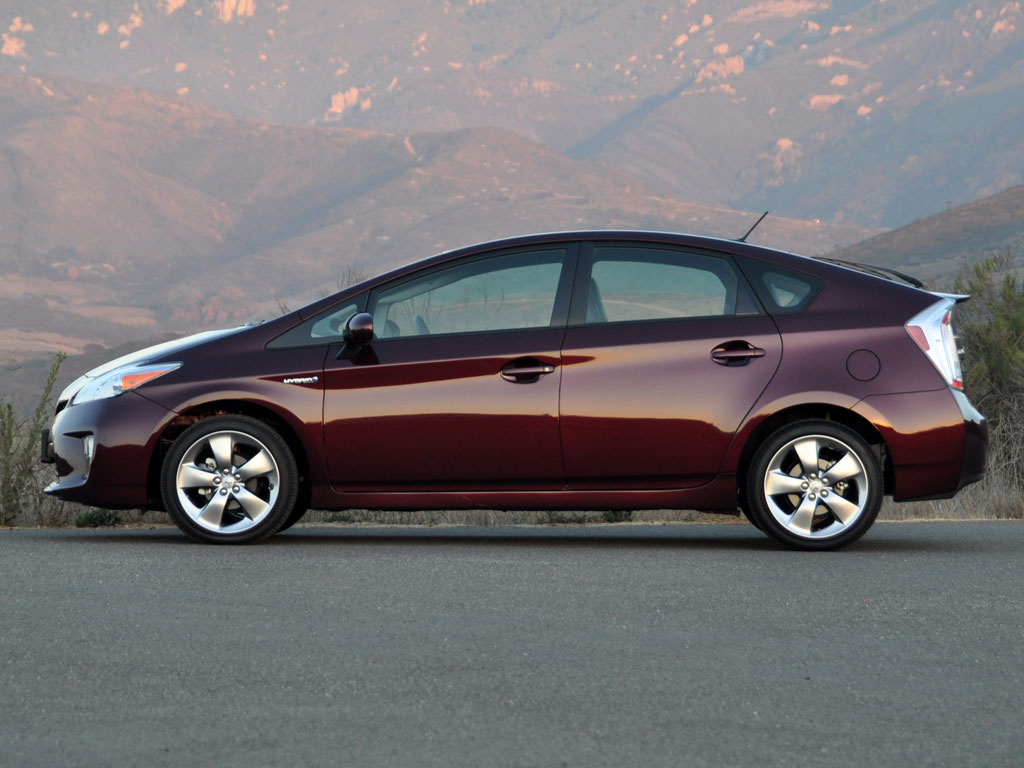
Polarizing when it first debuted with its unusual and aerodynamic look for the 2004 model year, the Prius is commonplace today. This is not a good-looking car in the traditional sense, placing function over form, and if you’ve ever questioned the impact that a nice set of wheels and tires can have on the appearance of a vehicle, look no further than the 2013 Prius.
Toyota sells the Prius in trims named Two, Three, Four and Five, and prices range from $25,010 to $30,815, including a destination charge of $810. All except the Five get small wheels with plain aerodynamic covers and low-rolling-resistance tires. The Prius Five has a set of 17-inch chunky-spoked wheels and 215/45 tires, and thanks to them, this model looks all kinds of better. However, it is also the most expensive version of the Prius.
That’s one reason I like the Prius Persona Series SE trim ($27,940) that I test-drove for this review. The Persona Series SE trim slots into the lineup between the Three and the Four and has the bigger 17-inch wheels, plus unique interior trim including Sof-Tex leatherette for the seats and the steering wheel. You can get one painted black, white or the Black Cherry Pearl color seen in my photos.
Toyota says the Prius has a coefficient of drag measuring 0.25, which is one benefit of the car’s boomerang profile. But here’s the thing: An Audi A6 slices through the atmosphere at 0.26. Is it really necessary, then, for the Prius to look the way it does?
The Prius is also an oddball on the inside. From its sweeping center console and center-mounted digital instrumentation to its wacky joystick gear selector and the way the driver pushes a button to engage Park, the Prius appears to be different for the sake of being different. Plus, I’ve always thought the third-generation Prius, which debuted for the 2010 model year, employed inferior materials compared to the second-generation car.

To critique a Prius for its dynamic failings is to miss the point entirely. This is a midsize car with a big cargo area that gets great gas mileage and enjoys a reputation for bulletproof reliability. It performs as a commuter, an errand-runner and a family hauler without complaint, and because it gets great mileage and is a practical daily driver, my family elected to use the Prius instead of the Charger Daytona that sat in the driveway at the same time.
The Prius is equipped with a 1.8-liter 4-cylinder engine, a 60kW electric motor and a 27kW nickel-metal-hydride battery pack. No longer revolutionary, these proven components are nevertheless durable. Together, they produce a combined 134 horsepower and accelerate the car to 60 mph in 9.8 seconds. There is no denying it: That is slow. But it’s not the whole story. The electric motor develops 153 lb-ft of torque the moment the driver steps on the accelerator pedal, which keeps the Prius from turning into an orange cone in traffic.
The Prius is also what’s considered a “full hybrid,” which means it can operate on battery power alone. In this case, that works only until the car is traveling 25 mph, unless you buy the Prius Plug-in model, which can travel up to 15 miles at speeds as high as 62 mph, thanks to its more sophisticated lithium-ion battery pack.
My Prius Persona Series test car, like other Prius trims, offers EV, Eco, Normal and Power driving modes. In EV mode, the car operates as an electric vehicle at low speeds and for short distances. In Eco mode, the powertrain and other vehicle systems operate to maximize fuel economy. In Power mode, the Prius feels far more lively and responsive when the driver steps on the gas.
Although I sampled each of these modes, the majority of my 500-mile test drive was conducted in Normal mode. With a heavy emphasis on highway driving, I effortlessly averaged 42.7 mpg. That’s well short of the car’s 50-mpg EPA rating, but I wasn’t driving like my grandparents with the Eco mode engaged, either. And don’t forget that my Persona Series test car had the larger and wider 17-inch wheel-and-tire combo on it.
In addition to making the Prius look better, the upgraded rubber makes a big difference in terms of handling. Unlike a Prius Two, Three or Four, which can feel like a sailboat listing in a stiff crosswind when going around sharp corners on a mountain road, these bigger, stickier, lower-profile tires provide something resembling grip in turns. Combined with the car’s Power mode, the Prius is competent on a twisty road, if not in the same universe as entertaining.
Dynamically, the Prius demands that its driver accept certain compromises in the quest for maximum fuel efficiency. The car’s regenerative brake pedal feels rudimentary, with inconsistent response that makes the brakes difficult to modulate in traffic, in city driving and on the highway. The electric steering feels totally artificial and disconnected, like a video-game component. The Prius also feels heavy and softly suspended if pushed to its rather meager limits, even though it weighs barely more than 3,000 pounds.
Still, unlike the last time I took a Prius into the mountains, the Persona Series didn’t inspire me to abort the mission early and return to the urban environment to which the car is better suited. So thank you, tires.
For those inclined to spend more to improve handling, a Toyota dealer can install 17-inch lightweight forged aluminum wheels with performance tires ($2,499), Toyota Racing Development lowering springs ($399) and a TRD rear sway bar kit ($325). Unfortunately, these upgrades don’t fix the steering and braking, but it’s a start.
I also took the Prius on a short road trip, and the Prius motored down the interstate at 80 mph with no complaints, all the while returning gas mileage in the low 40s. While navigating evening traffic in Los Angeles, the Prius creeped along in EV mode, the numbers on the average fuel economy display rising rather than falling. Clearly, these are the environments to which the Prius is best suited.
At the start of this section, I indicated that it is unfair to criticize the Prius for its lack of dynamic performance. That’s true, but the statement does not apply to the car’s lack of dynamic calibration. Many modern hybrid vehicles are tuned so that their regenerative braking systems, electric steering and the added weight of their battery packs aren’t obvious to the driver. Test-drive a Ford Fusion Hybrid to see what I mean.
Comparatively speaking, the Prius is rather primitive, and that’s why I downgraded its performance. The score above has nothing to do with how slow the Prius is or its inability to thrill a driver on a canyon road. Toyota engineers have some work to do here.

Equipped with space for 5 passengers and a roomy 21.6-cubic-foot trunk, the 2013 Toyota Prius offers midsize room with a full-size trunk. Plus, if necessary, the rear seats fold down to expand cargo space. This impressive level of functionality is another reason the Prius is so popular, and it’s why I elected to shuttle my family in this Toyota.
The Prius Persona Series and the Prius Five trims are equipped with Toyota’s Sof-Tex leatherette. Using this material for the steering wheel is fine, but I dislike leatherette on seats. In my experience, leatherette doesn’t breathe well on hot days and tends to stick to clothing, so if you fidget in the seat like I do it restricts movement to some degree. Give me cloth seats, please.
The Prius is equipped with a roomy and comfortable back seat offering plenty of space for feet and legs combined with good thigh support. Hauling kids around in this car is no problem, and parents can easily and snugly cinch child safety seats into place.

Although the Prius is equipped with proven powertrain components, nickel-metal-hydride battery packs are larger and heavier than newer lithium-ion battery packs, and the industry is increasingly adopting the latter, making the former seem like yester-tech. Additionally, while it’s great that a Prius Plug-in model exists, it can’t exceed 62 miles per hour operating in electric vehicle mode, limiting its real-world usefulness.
A Display Audio system is standard for the 2013 Prius, equipped with a 6.1-inch touchscreen surrounded by hard keys used to select menus. Due to the screen’s angle in the Prius, it sometimes suffers from glare and washout, and I find that the touchscreen buttons are frequently insensitive or too sensitive.
The Prius is, however, available with some high-tech upgrades. In addition to an Entune Apps Suite, Safety Connect telematics, a navigation system and a premium audio system with JBL Greenedge speakers, the Prius is offered with LED headlights, a head-up display, Dynamic Radar Cruise Control, a Pre-Collision System and a Lane Keep Assist system. Buyers can also upgrade to a Solar Roof Package that adds solar-powered interior ventilation and a remote air conditioning system that allows the owner to heat or cool the car prior to driving, using nothing but the power of the sun.

The 2013 Toyota Prius has proven itself crashworthy. The car gets a 5-star overall rating from the National Highway Traffic Safety Administration (NHTSA) and a Top Safety Pick rating from the Insurance Institute for Highway Safety (IIHS). Note, however, that the IIHS has not conducted its new small overlap frontal-impact test on the Prius as this review is written.
Because the Prius can operate as an electric vehicle at low speeds, it is equipped with an audible Vehicle Proximity Notification System to make sure pedestrians are aware that a car is moving nearby. The Prius also has Toyota’s Smart Stop technology, which prevents the car from accidentally accelerating as long as the driver is pressing the brake pedal.
Personally, I’d like to see Toyota expand the availability of its Safety Connect services to more than just the pricey Prius Four and Five trims. The optional Safety Connect system is a subscription-based service that includes Automatic Collision Notification, SOS Emergency Assistance and roadside assistance.

In America, the average transaction price for a new vehicle purchase topped $31,000 in June of 2013, which means every version of the 2013 Prius (except the Plug-in, which is a separate model) falls under that value. And that’s at sticker price. Toyota dealers are offering low-rate, long-term financing deals as well as lease specials, indicating that a Prius buyer ought to be able to negotiate an attractive selling price on any Prius trim.
Combine appealing price tags with a roomy interior, a big trunk, free scheduled maintenance for the first two years or 25,000 miles of ownership, and one of the best fuel-economy ratings of any traditional hybrid sold in America, and a Toyota Prius spells V-A-L-U-E loud and clear.
The so-called icing on the cake is that the Prius is bulletproof in terms of reliability. For the past 6 years running, Consumer Reports has given the Prius its highest possible reliability rating, and this model led its class in the most recent J.D. Power Vehicle Dependability Study.
If I could assign the Prius more than 10 points in this category, I would.

User reviews for 2013 Toyota Prius
Write a review2013 Toyota Prius Pricing
Trims & specs
Air Conditioning
Automatic climate control front air conditioning · Single front air conditioning zones
Airbags
Dual front airbags · Driver knee airbags · Passenger airbag deactivation: occupant sensing deactivation · Front side airbags · Rear side curtain airbags
Audio System
Antenna Type: mast · Auxiliary audio input: jack · Single disc in-Dash CD · MP3 player: CD MP3 Playback · AM/FM radio · Total Number of Speakers: 6
Brakes
ABS: 4-wheel · Braking assist: hill start assist · Front brakes: ventilated disc · Rear brakes: disc
Comfort Features
Armrests: rear center with cupholders
Convenience Features
Assist handle: front · Center console: front console with armrest and storage · Cupholders: rear · Multi-function remote: proximity entry system · One-touch windows: 4 · Power outlet(s): two 12V · Power steering: electric · Reading lights: front · Steering wheel: tilt and telescopic · Steering wheel mounted controls: air conditioning · Storage: in-floor · Vanity mirrors: dual illuminating
Driver Seat
Manual adjustments: 6
Engine
Electric Motor Battery Type: nickel-metal hydride · Electric Motor HP: 80 · Electric Motor Power Output (Kilowatts): 60 · Electric Motor Torque: 153 · Hybrid Gas Engine HP: 98 · Hybrid Gas Engine HP@RPM: 5200 · Hybrid Gas Engine Torque: 105 · Hybrid gas Engine Torque@RPM: 4000
Exterior Features
Door handle color: body-color · Front bumper color: body-color · Grille color: black · Mirror color: body-color · Rear bumper color: body-color · Rear spoiler: lip · Rear spoiler color: body-color · Rear trunk/liftgate: liftgate · Window trim: black
Headrests
Adjustable rear headrests: foldable · Front headrests: adjustable · Number of front headrests: 2 · Number of rear headrests: 3
In Car Entertainment
Infotainment screen size: 6.1 in.
Instrumentation
Fuel economy display: MPG · Warnings and reminders: low oil pressure
Lights
Exterior entry lights: security approach lamps · Headlights: auto delay off · Tail and brake lights: LED
Mirrors
Exterior mirrors: manual folding
Passenger Seat
Manual Adjustments: 4
Rear Seats
Type: 60-40 split bench
Safety
Active head restraints: driver · Child seat anchors: LATCH system · Crumple zones: front
Seatbelts
Emergency locking retractors: front and rear · Front seatbelts: 3-point · Seatbelt force limiters: front · Seatbelt pretensioners: front · Seatbelt warning sensor: driver and passenger · Second row seatbelts: 3-point
Seats
Driver seat manual adjustments: height · Front seat type: bucket · Rear headrests: adjustable · Upholstery: cloth
Security
Power door locks: anti-lockout
Spare Tire
Mount Location: inside · Size: temporary
Spare Wheel
Rim Type: steel
Suspension
Front Arm Type: lower control arms · Front Shock Type: gas shock absorbers · Front Spring Type: coil springs · Front Suspension Classification: independent · Front Suspension Type: MacPherson struts · Rear Shock Type: gas shock absorbers · Rear Spring Type: coil springs · Rear Suspension Classification: semi-independent · Rear Suspension Type: torsion bar · Stabilizer bar(s): front
Telematics
Phone wireless data link: Bluetooth
Tires
Type: all season
Tires and Rims
Wheel type: aluminum alloy
Windows
Front wipers: variable intermittent · Power windows: with safety reverse · Rear wiper: intermittent
Air Conditioning
Automatic climate control front air conditioning · Single front air conditioning zones
Airbags
Dual front airbags · Driver knee airbags · Passenger airbag deactivation: occupant sensing deactivation · Front side airbags · Front side curtain airbags
Audio System
Antenna Type: mast · Bluetooth auxiliary audio input · Single disc in-Dash CD · MP3 player: CD MP3 Playback · Touch screen display radio · Total Number of Speakers: 6
Brakes
ABS: 4-wheel · Braking assist: hill start assist · Front brakes: ventilated disc · Rear brakes: disc
Comfort Features
Armrests: rear center with cupholders
Convenience Features
Assist handle: rear · Center console: front console with armrest and storage · Cupholders: front · Multi-function remote: trunk release · One-touch windows: 4 · Power outlet(s): two 12V · Power steering: electric · Reading lights: front · Steering wheel: tilt and telescopic · Steering wheel mounted controls: audio · Storage: seatback · Vanity mirrors: dual illuminating
Driver Seat
Manual adjustments: 6
Engine
Electric Motor Battery Type: nickel-metal hydride · Electric Motor HP: 80 · Electric Motor Power Output (Kilowatts): 60 · Electric Motor Torque: 153 · Hybrid Gas Engine HP: 98 · Hybrid Gas Engine HP@RPM: 5200 · Hybrid Gas Engine Torque: 105 · Hybrid gas Engine Torque@RPM: 4000
Exterior Features
Door handle color: body-color · Front bumper color: body-color · Grille color: black · Mirror color: body-color · Rear bumper color: body-color · Rear spoiler color: body-color · Rear trunk/liftgate: liftgate · Window trim: black
Headrests
Adjustable rear headrests: foldable · Front headrests: adjustable · Number of front headrests: 2 · Number of rear headrests: 3
In Car Entertainment
Infotainment screen size: 6.1 in.
Instrumentation
Fuel economy display: range · Warnings and reminders: low fuel level
Lights
Exterior entry lights: security approach lamps · Headlights: Halogen · Tail and brake lights: LED
Mirrors
Exterior mirrors: power
Passenger Seat
Manual Adjustments: 4
Rear Seats
Type: 60-40 split bench
Safety
Active head restraints: driver · Child seat anchors: LATCH system · Crumple zones: rear
Seatbelts
Emergency locking retractors: front and rear · Front seatbelts: 3-point · Seatbelt force limiters: front · Seatbelt pretensioners: front · Seatbelt warning sensor: driver and passenger · Second row seatbelts: 3-point
Seats
Driver seat manual adjustments: height · Front seat type: bucket · Rear headrests: adjustable · Upholstery: cloth
Security
Power door locks: anti-lockout
Spare Tire
Mount Location: inside · Size: temporary
Spare Wheel
Rim Type: steel
Suspension
Front Arm Type: lower control arms · Front Shock Type: gas shock absorbers · Front Spring Type: coil springs · Front Suspension Classification: independent · Front Suspension Type: MacPherson struts · Rear Shock Type: gas shock absorbers · Rear Spring Type: coil springs · Rear Suspension Classification: semi-independent · Rear Suspension Type: torsion bar · Stabilizer bar(s): front
Telematics
Phone: hands free · Phone wireless data link: Bluetooth
Tires
Type: all season
Tires and Rims
Wheel type: aluminum alloy
Windows
Front wipers: variable intermittent · Power windows: with safety reverse · Rear wiper: intermittent
Air Conditioning
Automatic climate control front air conditioning · Single front air conditioning zones
Airbags
Dual front airbags · Driver knee airbags · Passenger airbag deactivation: occupant sensing deactivation · Front side airbags · Rear side curtain airbags
Audio System
Antenna Type: element · Bluetooth auxiliary audio input · Single disc in-Dash CD · MP3 player: CD MP3 Playback · HD radio · Satellite Radio: SiriusXM · Total Number of Speakers: 6
Brakes
ABS: 4-wheel · Braking assist: hill start assist · Front brakes: ventilated disc · Rear brakes: disc
Comfort Features
Armrests: rear center with cupholders
Convenience Features
Assist handle: front · Center console: front console with armrest and storage · Cupholders: rear · Multi-function remote: proximity entry system · One-touch windows: 4 · Power outlet(s): two 12V · Power steering: electric · Reading lights: front · Steering wheel: tilt and telescopic · Steering wheel mounted controls: phone · Storage: in-floor · Vanity mirrors: dual illuminating
Driver Seat
Manual adjustments: 6
Engine
Electric Motor Battery Type: nickel-metal hydride · Electric Motor HP: 80 · Electric Motor Power Output (Kilowatts): 60 · Electric Motor Torque: 153 · Hybrid Gas Engine HP: 98 · Hybrid Gas Engine HP@RPM: 5200 · Hybrid Gas Engine Torque: 105 · Hybrid gas Engine Torque@RPM: 4000
Exterior Features
Door handle color: body-color · Front bumper color: body-color · Grille color: black · Mirror color: body-color · Rear bumper color: body-color · Rear spoiler color: body-color · Rear trunk/liftgate: liftgate · Window trim: black
Headrests
Adjustable rear headrests: foldable · Front headrests: adjustable · Number of front headrests: 2 · Number of rear headrests: 3
In Car Entertainment
Infotainment screen size: 6.1 in.
Instrumentation
Fuel economy display: range · Warnings and reminders: lamp failure
Lights
Exterior entry lights: security approach lamps · Headlights: Halogen · Tail and brake lights: LED
Mirrors
Exterior mirrors: power
Passenger Seat
Manual Adjustments: 4
Rear Seats
Type: 60-40 split bench
Safety
Active head restraints: driver · Camera system: rearview · Child seat anchors: LATCH system · Crumple zones: front · Rearview monitor: in dash
Seatbelts
Emergency locking retractors: front · Front seatbelts: 3-point · Seatbelt force limiters: front · Seatbelt pretensioners: front · Seatbelt warning sensor: driver and passenger · Second row seatbelts: 3-point
Seats
Driver seat manual adjustments: height · Front seat type: bucket · Rear headrests: adjustable · Upholstery: cloth
Security
Power door locks: anti-lockout
Spare Tire
Mount Location: inside · Size: temporary
Spare Wheel
Rim Type: steel
Suspension
Front Arm Type: lower control arms · Front Shock Type: gas shock absorbers · Front Spring Type: coil springs · Front Suspension Classification: independent · Front Suspension Type: MacPherson struts · Rear Shock Type: gas shock absorbers · Rear Spring Type: coil springs · Rear Suspension Classification: semi-independent · Rear Suspension Type: torsion bar · Stabilizer bar(s): front
Telematics
Navigation system: with voice recognition · Phone: voice activated · Phone wireless data link: Bluetooth
Tires
Type: all season
Tires and Rims
Wheel type: aluminum alloy
Windows
Front wipers: variable intermittent · Power windows: with safety reverse · Rear wiper: intermittent
Air Conditioning
Automatic climate control front air conditioning · Single front air conditioning zones
Airbags
Dual front airbags · Driver knee airbags · Passenger airbag deactivation: occupant sensing deactivation · Front side airbags · Front side curtain airbags
Audio System
Antenna Type: element · USB auxiliary audio input · Single disc in-Dash CD · MP3 player: CD MP3 Playback · Touch screen display radio · Satellite Radio: SiriusXM · Total Number of Speakers: 6
Brakes
ABS: 4-wheel · Braking assist: hill start assist · Front brakes: ventilated disc · Rear brakes: disc
Comfort Features
Armrests: rear center with cupholders
Convenience Features
Assist handle: front · Center console: front console with armrest and storage · Cupholders: front · Multi-function remote: proximity entry system · One-touch windows: 4 · Power outlet(s): two 12V · Power steering: electric · Reading lights: front · Steering wheel: tilt and telescopic · Steering wheel mounted controls: voice recognition controls · Storage: seatback · Vanity mirrors: dual illuminating
Driver Seat
Manual adjustments: 6
Engine
Electric Motor Battery Type: nickel-metal hydride · Electric Motor HP: 80 · Electric Motor Power Output (Kilowatts): 60 · Electric Motor Torque: 153 · Hybrid Gas Engine HP: 98 · Hybrid Gas Engine HP@RPM: 5200 · Hybrid Gas Engine Torque: 105 · Hybrid gas Engine Torque@RPM: 4000
Exterior Features
Door handle color: body-color · Front bumper color: body-color · Grille color: black · Mirror color: body-color · Rear bumper color: body-color · Rear spoiler color: body-color · Rear trunk/liftgate: liftgate · Window trim: black
Headrests
Adjustable rear headrests: foldable · Front headrests: adjustable · Number of front headrests: 2 · Number of rear headrests: 3
In Car Entertainment
Infotainment screen size: 6.1 in.
Instrumentation
Fuel economy display: range · Warnings and reminders: low fuel level
Lights
Exterior entry lights: security approach lamps · Headlights: Halogen · Tail and brake lights: LED
Mirrors
Exterior mirrors: power
Passenger Seat
Manual Adjustments: 4
Rear Seats
Type: 60-40 split bench
Safety
Active head restraints: driver · Camera system: rearview · Child seat anchors: LATCH system · Crumple zones: rear · Rearview monitor: in dash
Seatbelts
Emergency locking retractors: front and rear · Front seatbelts: 3-point · Seatbelt force limiters: front · Seatbelt pretensioners: front · Seatbelt warning sensor: driver and passenger · Second row seatbelts: 3-point
Seats
Driver seat manual adjustments: height · Front seat type: bucket · Rear headrests: adjustable · Upholstery: cloth
Security
Power door locks: anti-lockout
Spare Tire
Mount Location: inside · Size: temporary
Spare Wheel
Rim Type: steel
Suspension
Front Arm Type: lower control arms · Front Shock Type: gas shock absorbers · Front Spring Type: coil springs · Front Suspension Classification: independent · Front Suspension Type: MacPherson struts · Rear Shock Type: gas shock absorbers · Rear Spring Type: coil springs · Rear Suspension Classification: semi-independent · Rear Suspension Type: torsion bar · Stabilizer bar(s): front
Telematics
Navigation system: with voice recognition · Phone: voice activated · Phone wireless data link: Bluetooth
Tires
Type: all season
Tires and Rims
Wheel type: aluminum alloy
Windows
Front wipers: variable intermittent · Power windows: with safety reverse · Rear wiper: intermittent
Air Conditioning
Automatic climate control front air conditioning · Single front air conditioning zones
Airbags
Dual front airbags · Driver knee airbags · Passenger airbag deactivation: occupant sensing deactivation · Front side airbags · Front side curtain airbags
Audio System
Antenna Type: mast · Bluetooth auxiliary audio input · Single disc in-Dash CD · MP3 player: CD MP3 Playback · Premium Brand: JBL · HD radio · Satellite Radio: SiriusXM · Total Number of Speakers: 8
Brakes
ABS: 4-wheel · Braking assist: hill start assist · Front brakes: ventilated disc · Rear brakes: disc
Comfort Features
Armrests: rear center with cupholders
Convenience Features
Assist handle: rear · Center console: front console with armrest and storage · Cupholders: front · Dimming rearview mirror: auto-dimming · Multi-function remote: trunk release · One-touch windows: 4 · Power outlet(s): two 12V · Power steering: electric · Reading lights: front · Steering wheel: tilt and telescopic · Steering wheel mounted controls: air conditioning · Storage: in-floor · Universal garage door opener: Homelink · Vanity mirrors: dual illuminating
Driver Seat
Adjustable lumbar support: power · Power adjustments: 8
Engine
Electric Motor Battery Type: nickel-metal hydride · Electric Motor HP: 80 · Electric Motor Power Output (Kilowatts): 60 · Electric Motor Torque: 153 · Hybrid Gas Engine HP: 98 · Hybrid Gas Engine HP@RPM: 5200 · Hybrid Gas Engine Torque: 105 · Hybrid gas Engine Torque@RPM: 4000
Exterior Features
Door handle color: body-color · Front bumper color: body-color · Grille color: black · Mirror color: body-color · Rear bumper color: body-color · Rear spoiler color: body-color · Rear trunk/liftgate: liftgate · Window trim: black
Headrests
Adjustable rear headrests: foldable · Front headrests: adjustable · Number of front headrests: 2 · Number of rear headrests: 3
In Car Entertainment
Infotainment screen size: 6.1 in.
Instrumentation
Fuel economy display: MPG · Warnings and reminders: lamp failure
Lights
Exterior entry lights: security approach lamps · Headlights: Halogen · Tail and brake lights: LED
Mirrors
Exterior mirrors: heated
Passenger Seat
Manual Adjustments: 4
Rear Seats
Type: 60-40 split bench
Safety
Active head restraints: driver · Camera system: rearview · Child seat anchors: LATCH system · Crumple zones: front · Rearview monitor: in dash
Seatbelts
Emergency locking retractors: front · Front seatbelts: 3-point · Seatbelt force limiters: front · Seatbelt pretensioners: front · Seatbelt warning sensor: driver and passenger · Second row seatbelts: 3-point
Seats
Driver seat power adjustments: height · Front seat type: bucket · Rear headrests: adjustable · Upholstery: leatherette
Security
Power door locks: anti-lockout
Spare Tire
Mount Location: inside · Size: temporary
Spare Wheel
Rim Type: steel
Suspension
Front Arm Type: lower control arms · Front Shock Type: gas shock absorbers · Front Spring Type: coil springs · Front Suspension Classification: independent · Front Suspension Type: MacPherson struts · Rear Shock Type: gas shock absorbers · Rear Spring Type: coil springs · Rear Suspension Classification: semi-independent · Rear Suspension Type: torsion bar · Stabilizer bar(s): front
Telematics
Navigation system: with voice recognition · Phone: voice activated · Phone wireless data link: Bluetooth
Tires
Type: all season
Tires and Rims
Wheel type: aluminum alloy
Windows
Front wipers: variable intermittent · Power windows: with safety reverse · Rear wiper: intermittent
Air Conditioning
Automatic climate control front air conditioning · Single front air conditioning zones
Airbags
Dual front airbags · Driver knee airbags · Passenger airbag deactivation: occupant sensing deactivation · Front side airbags · Rear side curtain airbags
Audio System
Antenna Type: element · Bluetooth auxiliary audio input · Single disc in-Dash CD · MP3 player: CD MP3 Playback · Premium Brand: JBL · Touch screen display radio · Satellite Radio: SiriusXM · Total Number of Speakers: 8
Brakes
ABS: 4-wheel · Braking assist: hill start assist · Front brakes: ventilated disc · Rear brakes: disc
Comfort Features
Armrests: rear center with cupholders
Convenience Features
Assist handle: rear · Center console: front console with armrest and storage · Cupholders: rear · Dimming rearview mirror: auto-dimming · Multi-function remote: trunk release · One-touch windows: 4 · Power outlet(s): two 12V · Power steering: electric · Reading lights: front · Steering wheel: tilt and telescopic · Steering wheel mounted controls: multi-function screen controls · Storage: in-floor · Universal garage door opener: Homelink · Vanity mirrors: dual illuminating
Driver Seat
Adjustable lumbar support: power · Power adjustments: 8
Engine
Electric Motor Battery Type: nickel-metal hydride · Electric Motor HP: 80 · Electric Motor Power Output (Kilowatts): 60 · Electric Motor Torque: 153 · Hybrid Gas Engine HP: 98 · Hybrid Gas Engine HP@RPM: 5200 · Hybrid Gas Engine Torque: 105 · Hybrid gas Engine Torque@RPM: 4000
Exterior Features
Door handle color: body-color · Front bumper color: body-color · Grille color: black · Mirror color: body-color · Rear bumper color: body-color · Rear spoiler color: body-color · Rear trunk/liftgate: liftgate · Window trim: black
Headrests
Adjustable rear headrests: foldable · Front headrests: adjustable · Number of front headrests: 2 · Number of rear headrests: 3
In Car Entertainment
Infotainment screen size: 6.1 in.
Instrumentation
Fuel economy display: MPG · Warnings and reminders: maintenance reminder
Lights
Exterior entry lights: security approach lamps · Headlights: Auto on/off · Tail and brake lights: LED
Mirrors
Exterior mirrors: manual folding
Passenger Seat
Manual Adjustments: 4
Rear Seats
Type: 60-40 split bench
Safety
Active head restraints: driver · Camera system: rearview · Child seat anchors: LATCH system · Crumple zones: rear · Rearview monitor: in dash
Seatbelts
Emergency locking retractors: front · Front seatbelts: 3-point · Seatbelt force limiters: front · Seatbelt pretensioners: front · Seatbelt warning sensor: driver and passenger · Second row seatbelts: 3-point
Seats
Driver seat power adjustments: height · Front seat type: bucket · Rear headrests: adjustable · Upholstery: leatherette
Security
Power door locks: anti-lockout
Spare Tire
Mount Location: inside · Size: temporary
Spare Wheel
Rim Type: steel
Suspension
Front Arm Type: lower control arms · Front Shock Type: gas shock absorbers · Front Spring Type: coil springs · Front Suspension Classification: independent · Front Suspension Type: MacPherson struts · Rear Shock Type: gas shock absorbers · Rear Spring Type: coil springs · Rear Suspension Classification: semi-independent · Rear Suspension Type: torsion bar · Stabilizer bar(s): front
Telematics
Navigation system: touch screen display · Phone: voice activated · Phone wireless data link: Bluetooth
Tires
Type: all season
Tires and Rims
Wheel type: aluminum alloy
Windows
Front wipers: variable intermittent · Power windows: with safety reverse · Rear wiper: intermittent

