2012 Nissan Versa Reviews, Pricing & Specs
Write a review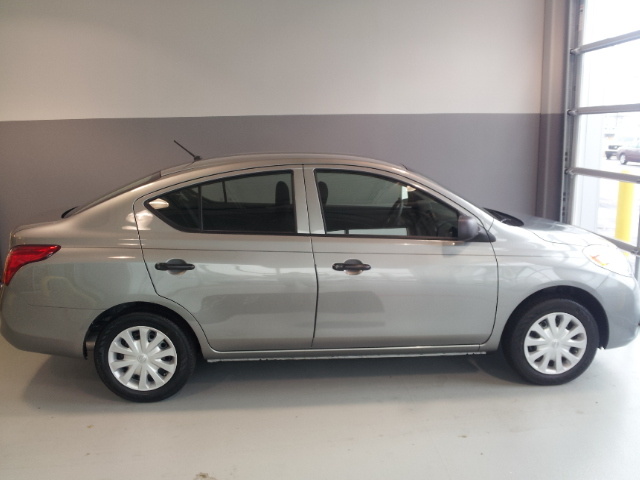
New sedan and same-old hatch, the Nissan Versa shuffles things a bit while still hoping to maintain its standing as the subcompact sales leader. With competitors like Ford and Hyundai attempting to up the style and sexiness of their offerings with the Fiesta and the Accent, the boring old Versa looks like it shouldn’t even show up. But sales figures don’t lie, and people have responded. This year, the sedan utilizes the V platform, replacing the old B platform with 20 percent fewer components and 150 fewer pounds. Styling has been massaged as well, and the powertrain is fresh, too. The hatchback gets no such treatment, but as the hatch has outsold the sedan nearly 2 to 1 here in the States, no such attention was needed.
The new Versa sedan retains the old 102.4-inch wheelbase, but is 1.2 inches lower and 0.6 inches shorter. The entire body has been shifted rearward on the wheelbase, which allowed for an increase of trunk space – now 14.8 feet – but resulted in a slight decrease in interior volume. Still, the Versa boasts class-leading rear legroom and plenty of head and shoulder space regardless, front and rear.
Nissan claims it was able to achieve these numbers thanks to its redesigned and super-compact powertrain setup. Despite sharing the same displacement numbers of the engine it replaces, the 1.6-liter mill here is new, with dual injection and a second-gen CVT excepting in the base 1.6S trim, which has an optional 5-speed manual. Horsepower is up to 109, and torque is down to 107, and the Versa still manages a 30 mpg city/38 highway rating.
Hatchback trims retain the 1.8-liter engine good for 122 hp and 127 lb-ft of torque, with an mpg rating of 28/34 with the CVT that comes standard in the SL. The S trim offers a 6-speed manual or 4-speed automatic with a rating of 26/31 or 24/32, respectively. The redesigned interior of the sedan follows in Nissan’s frugal footsteps with a plastic-y cheapness that doesn’t seem out of place for the price point. That said, it won’t be winning any accolades either. Functional comes to mind if you’re the forgiving type, as many of the knobs and switches are simply poor quality, both in operation and construction. The base trim’s single center gauge looks out of place, and many test models have suffered from creaks, cracks, misaligned panels and malfunctioning features. Perhaps this will be fixed in time for release.
Either Nissan knows what it's doing or it's about to be overtaken. It’s hard to argue with someone who stands as the segment sales leader, but there’s no mistaking the fact that competitive offerings are more attractive, handle better and feel far less cheap. With the base sedan trim, the Versa severely undercuts the competition, but does so by sacrificing features the competition makes standard. If functionality is your sole standard – and you’re okay with a few features functioning infrequently – the redesigned Versa is waiting for your order.

User reviews for 2012 Nissan Versa
Write a review2012 Nissan Versa Pricing
Trims & specs
Air Conditioning
Single front air conditioning zones
Airbags
Dual front airbags · Passenger airbag deactivation: occupant sensing deactivation · Front side airbags · Front side curtain airbags
Audio System
Antenna Type: mast · Auxiliary audio input: jack · Single disc in-Dash CD · AM/FM radio · Total Number of Speakers: 4
Brakes
ABS: 4-wheel · Front brakes: ventilated disc · Rear brake diameter: 8.0 · Rear brakes: drum
Comfort Features
Door sill trim: illuminated scuff plate · Floor Material: carpet
Convenience Features
Center console: front console with storage · Cupholders: front · Dimming rearview mirror: auto-dimming · Power outlet(s): 12V front · Power steering: electric · Steering wheel: tilt-adjustable · Steering wheel mounted controls: cruise controls · Storage: door pockets
Driver Seat
Manual adjustments: 6
Drivetrain
Axle ratio: 3.89
Engine
Alternator: 110 amps
Exterior Features
Door handle color: black · Front bumper color: body-color · Mirror color: black · Rear bumper color: body-color · Window trim: black
Headrests
Front headrests: adjustable · Number of front headrests: 2 · Number of rear headrests: 2
Instrumentation
Fuel economy display: range · Warnings and reminders: maintenance reminder
Mirrors
Exterior mirrors: manual
Passenger Seat
Manual Adjustments: 4
Rear Seats
Type: 60-40 split bench
Safety
Active head restraints: driver · Child seat anchors: LATCH system · Crumple zones: front
Seatbelts
Emergency locking retractors: front · Front seatbelts: 3-point · Seatbelt force limiters: front · Seatbelt pretensioners: front · Second row seatbelts: 3-point
Seats
Front seat type: bucket · Rear headrests: adjustable · Upholstery: cloth · Upholstery accents: faux suede
Spare Tire
Mount Location: inside · Size: temporary
Spare Wheel
Rim Type: steel
Steering
Steering ratio: 16.8 · Turns lock-to-lock: 3.0
Suspension
Front Arm Type: lower control arms · Front Shock Type: gas shock absorbers · Front Spring Type: coil springs · Front Stabilizer Bar: diameter 23 mm · Front Suspension Classification: independent · Front Suspension Type: MacPherson struts · Rear Shock Type: gas shock absorbers · Rear Spring Type: coil springs · Rear Suspension Classification: semi-independent · Rear Suspension Type: torsion bar
Tires
Type: all season
Tires and Rims
Wheels: steel
Wheels
Wheel covers: full
Windows
Front wipers: intermittent
Air Conditioning
Single front air conditioning zones
Airbags
Dual front airbags · Passenger airbag deactivation: occupant sensing deactivation · Front side airbags · Rear side curtain airbags
Audio System
Antenna Type: mast · IPod auxiliary audio input · Single disc in-Dash CD · MP3 player: CD MP3 Playback · AM/FM radio · XM satellite radio · Total Number of Speakers: 4 · 90 watts
Brakes
ABS: 4-wheel · Front brake diameter: 11.0 · Front brake width: .95 · Front brakes: ventilated disc · Rear brake diameter: 9.0 · Rear brakes: drum
Comfort Features
Door sill trim: scuff plate · Floor Material: carpet · Steering wheel trim: leather
Convenience Features
Assist handle: rear · Cupholders: rear · Multi-function remote: keyless entry · One-touch windows: 1 · Overhead console: with sunglass holder · Power outlet(s): 12V front · Power steering: electric · Power windows: lockout button · Steering wheel: tilt-adjustable · Steering wheel mounted controls: audio · Storage: door pockets · Vanity mirrors: dual
Driver Seat
Manual adjustments: 4
Drivetrain
Axle ratio: 4.07
Engine
Alternator: 110 amps
Exterior Features
Door handle color: body-color · Front bumper color: body-color · Mirror color: body-color · Rear bumper color: body-color · Rear trunk/liftgate: liftgate
Headrests
Front headrests: adjustable · Number of front headrests: 2 · Number of rear headrests: 2
Instrumentation
Warnings and reminders: maintenance reminder
Mirrors
Exterior mirrors: power
Passenger Seat
Manual Adjustments: 4
Rear Seats
Type: 60-40 split bench
Safety
Active head restraints: driver · Child seat anchors: LATCH system · Crumple zones: front
Seatbelts
Emergency locking retractors: front · Front seatbelts: 3-point · Seatbelt force limiters: front · Seatbelt pretensioners: front · Second row seatbelts: 3-point
Seats
Front seat type: bucket · Rear headrests: adjustable · Rear seat folding: split · Upholstery: cloth · Upholstery accents: faux suede
Security
Power door locks: anti-lockout
Spare Tire
Mount Location: inside · Size: temporary
Spare Wheel
Rim Type: steel
Steering
Steering ratio: 18.3 · Turns lock-to-lock: 3.3
Suspension
Front Arm Type: lower control arms · Front Shock Type: gas shock absorbers · Front Spring Type: coil springs · Front Stabilizer Bar: diameter 23 mm · Front Suspension Classification: independent · Front Suspension Type: MacPherson struts · Rear Shock Type: gas shock absorbers · Rear Spring Type: coil springs · Rear Suspension Classification: semi-independent · Rear Suspension Type: torsion bar
Telematics
Navigation system: touch screen display · Phone wireless data link: Bluetooth
Tires
Type: all season
Tires and Rims
Wheels: steel
Wheels
Wheel covers: full · Wheel spokes: 6
Windows
Front wipers: variable intermittent · Liftgate window: fixed · Power windows: with safety reverse · Rear wiper: with washer
Air Conditioning
Single front air conditioning zones
Airbags
Dual front airbags · Passenger airbag deactivation: occupant sensing deactivation · Front side airbags · Rear side curtain airbags
Audio System
Antenna Type: mast · IPod auxiliary audio input · Single disc in-Dash CD · MP3 player: CD MP3 Playback · AM/FM radio · Total Number of Speakers: 4
Brakes
ABS: 4-wheel · Front brakes: ventilated disc · Rear brake diameter: 8.0 · Rear brakes: drum
Comfort Features
Door sill trim: illuminated scuff plate · Floor Material: cargo area carpet
Convenience Features
Center console: front console with storage · Cupholders: rear · Dimming rearview mirror: auto-dimming · Multi-function remote: keyless entry with panic alarm · One-touch windows: 1 · Power outlet(s): 12V front · Power steering: speed-proportional · Power windows: lockout button · Reading lights: front · Steering wheel: tilt-adjustable · Steering wheel mounted controls: phone · Storage: door pockets · Vanity mirrors: passenger
Driver Seat
Manual adjustments: 6
Drivetrain
Axle ratio: 3.89
Engine
Alternator: 110 amps
Exterior Features
Door handle color: chrome · Front bumper color: body-color · Grille color: chrome accents · Mirror color: body-color · Rear bumper color: body-color · Window trim: black
Headrests
Front headrests: adjustable · Number of front headrests: 2 · Number of rear headrests: 2
Instrumentation
Fuel economy display: range · Warnings and reminders: coolant temperature warning
Mirrors
Exterior mirrors: power
Passenger Seat
Manual Adjustments: 4
Rear Seats
Type: 60-40 split bench
Safety
Active head restraints: driver · Child seat anchors: LATCH system · Crumple zones: front
Seatbelts
Emergency locking retractors: front and rear · Front seatbelts: 3-point · Seatbelt force limiters: front · Seatbelt pretensioners: front · Second row seatbelts: 3-point
Seats
Front seat type: bucket · Rear headrests: adjustable · Upholstery: cloth
Spare Tire
Mount Location: inside · Size: temporary
Spare Wheel
Rim Type: steel
Steering
Steering ratio: 16.8 · Turns lock-to-lock: 3.0
Suspension
Front Arm Type: lower control arms · Front Shock Type: gas shock absorbers · Front Spring Type: coil springs · Front Stabilizer Bar: diameter 23 mm · Front Suspension Classification: independent · Front Suspension Type: MacPherson struts · Rear Shock Type: gas shock absorbers · Rear Spring Type: coil springs · Rear Suspension Classification: semi-independent · Rear Suspension Type: torsion bar
Telematics
Phone wireless data link: Bluetooth
Tires
Type: all season
Tires and Rims
Wheels: steel
Wheels
Wheel covers: full
Windows
Front wipers: intermittent · Power windows: with safety reverse
Air Conditioning
Single front air conditioning zones
Airbags
Dual front airbags · Passenger airbag deactivation: occupant sensing deactivation · Front side airbags · Front side curtain airbags
Audio System
Antenna Type: mast · Auxiliary audio input: jack · Single disc in-Dash CD · MP3 player: CD MP3 Playback · AM/FM radio · XM-ready satellite radio · Total Number of Speakers: 4
Brakes
ABS: 4-wheel · Front brakes: ventilated disc · Rear brake diameter: 8.0 · Rear brakes: drum
Comfort Features
Door sill trim: illuminated scuff plate · Door trim: cloth · Floor Material: carpet
Convenience Features
Center console: front console with storage · Cupholders: rear · Dimming rearview mirror: auto-dimming · Multi-function remote: trunk release · One-touch windows: 1 · Power outlet(s): 12V front · Power steering: speed-proportional · Power windows: lockout button · Reading lights: front · Steering wheel: tilt-adjustable · Steering wheel mounted controls: cruise controls · Storage: door pockets · Vanity mirrors: passenger
Driver Seat
Manual adjustments: 6
Drivetrain
Axle ratio: 3.89
Engine
Alternator: 110 amps
Exterior Features
Door handle color: chrome · Front bumper color: body-color · Grille color: chrome accents · Mirror color: body-color · Rear bumper color: body-color · Window trim: black
Headrests
Front headrests: adjustable · Number of front headrests: 2 · Number of rear headrests: 2
Instrumentation
Fuel economy display: MPG · Warnings and reminders: lamp failure
Mirrors
Exterior mirrors: power
Passenger Seat
Manual Adjustments: 4
Rear Seats
Type: 60-40 split bench
Safety
Active head restraints: driver · Child seat anchors: LATCH system · Crumple zones: rear
Seatbelts
Emergency locking retractors: front · Front seatbelts: 3-point · Seatbelt force limiters: front · Seatbelt pretensioners: front · Second row seatbelts: 3-point
Seats
Front seat type: bucket · Rear headrests: adjustable · Rear seat folding: split · Upholstery: cloth
Spare Tire
Mount Location: inside · Size: temporary
Spare Wheel
Rim Type: steel
Steering
Steering ratio: 16.8 · Turns lock-to-lock: 3.0
Suspension
Front Arm Type: lower control arms · Front Shock Type: gas shock absorbers · Front Spring Type: coil springs · Front Stabilizer Bar: diameter 23 mm · Front Suspension Classification: independent · Front Suspension Type: MacPherson struts · Rear Shock Type: gas shock absorbers · Rear Spring Type: coil springs · Rear Suspension Classification: semi-independent · Rear Suspension Type: torsion bar
Telematics
Phone: voice activated · Phone wireless data link: Bluetooth
Tires
Type: all season
Tires and Rims
Wheel type: aluminum alloy
Windows
Front wipers: variable intermittent · Power windows: with safety reverse
Air Conditioning
Single front air conditioning zones
Airbags
Dual front airbags · Passenger airbag deactivation: occupant sensing deactivation · Front side airbags · Rear side curtain airbags
Audio System
Antenna Type: mast · Auxiliary audio input: jack · Single disc in-Dash CD · MP3 player: CD MP3 Playback · AM/FM radio · XM satellite radio · Total Number of Speakers: 6 · 180 watts
Brakes
ABS: 4-wheel · Front brake diameter: 11.0 · Front brake width: .95 · Front brakes: ventilated disc · Rear brake diameter: 9.0 · Rear brakes: drum
Comfort Features
Door sill trim: aluminum · Floor Material: cargo area carpet · Steering wheel trim: leather
Convenience Features
Assist handle: front · Center console: front console with armrest and storage · Cupholders: rear · Dimming rearview mirror: auto-dimming · Multi-function remote: proximity entry system · One-touch windows: 1 · Power outlet(s): 12V front · Power steering: speed-proportional · Power windows: lockout button · Reading lights: front · Steering wheel: tilt-adjustable · Steering wheel mounted controls: phone · Storage: sunglasses holder · Vanity mirrors: dual illuminating
Driver Seat
Manual adjustments: 6
Drivetrain
Axle ratio: 5.47
Engine
Alternator: 110 amps
Exterior Features
Door handle color: body-color · Front bumper color: body-color · Mirror color: body-color · Rear bumper color: body-color · Rear spoiler: roofline spoiler · Rear spoiler color: body-color · Rear trunk/liftgate: liftgate
Headrests
Front headrests: adjustable · Number of front headrests: 2 · Number of rear headrests: 2
Instrumentation
Warnings and reminders: lamp failure
Mirrors
Exterior mirrors: manual folding
Passenger Seat
Manual Adjustments: 4
Rear Seats
Type: 60-40 split bench
Safety
Active head restraints: driver · Child seat anchors: LATCH system · Crumple zones: front
Seatbelts
Emergency locking retractors: front and rear · Front seatbelts: 3-point · Seatbelt force limiters: front · Seatbelt pretensioners: front · Second row seatbelts: 3-point
Seats
Front seat type: bucket · Rear headrests: adjustable · Rear seat folding: split · Upholstery: cloth
Security
Power door locks: anti-lockout
Spare Tire
Mount Location: inside · Size: temporary
Spare Wheel
Rim Type: steel
Steering
Steering ratio: 18.3 · Turns lock-to-lock: 3.3
Suspension
Front Arm Type: lower control arms · Front Shock Type: gas shock absorbers · Front Spring Type: coil springs · Front Stabilizer Bar: diameter 23 mm · Front Suspension Classification: independent · Front Suspension Type: MacPherson struts · Rear Shock Type: gas shock absorbers · Rear Spring Type: coil springs · Rear Suspension Classification: semi-independent · Rear Suspension Type: torsion bar
Telematics
Navigation system: touch screen display · Phone: voice activated · Phone wireless data link: Bluetooth
Tires
Type: all season
Tires and Rims
Wheel type: aluminum alloy
Windows
Front wipers: variable intermittent · Liftgate window: fixed · Power windows: with safety reverse · Rear wiper: with washer

