Volkswagen Tiguan vs Toyota RAV4 Plug-in Hybrid
Overview | |
MSRP$30,805 | MSRP |
Listings9861 | Listings5461 |
Ratings & Reviews | |
User Reviews | User Reviews |
Expert reviews6.8 out of 10 | Expert reviews7.0 out of 10 |
Pros
Cons
| Pros
Cons
|
Reviews SummaryRedesigned for the 2025 model year, the current third-generation Volkswagen Tiguan gives shoppers an attractive compact crossover with modern styling and a comfortable interior. While it made Volkswagen competitive, there was little about the new Tiguan that helped it stand out in an incredibly crowded market. That changes for 2026 with the introduction of a more powerful SEL R-Line Turbo trim level. The new turbo Tiguan delivers outstanding performance, and its top-shelf interior will help shoppers feel like they’re driving something truly special. Verdict: With regards to performance, tech, and interior luxury, the 2026 Volkswagen Tiguan’s SEL R-Line Turbo trim level is outstanding. Lower-tier trim levels lose the luster, though, and that puts the 2026 Tiguan in a curious position. Shoppers ready to spend $45,000 on a compact crossover will love the Tiguan; those shopping at the less expensive trim levels may prefer the competition, particularly if fuel-economy is a priority. | |
Reviews SummaryThe more powerful RAV4 PHEV is even stronger for 2026, and Toyota has introduced a new GR Sport trim to showcase its sportier side. The expanded lineup has four distinct trims, and the electric range has increased by at least 20% over the 2025 RAV4, so Toyota has furthered its lead over plug-in hybrid newcomers such as the Hyundai Tucson and Kia Sportage—and even the Lexus NX 450h+. Verdict: This is the best version of the RAV4, though we can’t recommend the slightly sportier GR Sport until we know exactly how much it will cost. With improved tech and a greater focus on electrification, as well as available DC charging (despite the charge ports changing sides between trims), the RAV4 PHEV leans forward. | |
No video found | No video found |
Popular Features & Specs | |
Seating Capacity5 | Seating Capacity |
Engine | |
Engine Name2.0L 201 hp I4 | Engine Name |
Torque207 lb-ft @ 1600 rpm | Torque |
Horsepower201 hp @ 4400 rpm | Horsepower |
DrivetrainFWD | Drivetrain |
Fuel Economy | |
MPG City26 | MPG City |
MPG Highway34 | MPG Highway |
Interior | |
Seating Capacity5 | Seating Capacity |
Safety | |
Front Crash Overall4 | Front Crash Overall |
Side Crash Overall5 | Side Crash Overall |
Dimensions & Capacity | |
Cargo Space33.8 cu ft | Cargo Space |
Curb Weight3563 lbs | Curb Weight |
Height66.1 in | Height |
Length184.4 in | Length |
Width84.7 in | Width |
Wheelbase109.9 in | Wheelbase |
Maximum Payload959 lbs | Maximum Payload |
Number of doors4 | Number of doors |
Maximum Towing Capacity1500 lbs | Maximum Towing Capacity |
Overview | ||
MSRP | $30,805 | |
Listings | ||
Ratings & Reviews | ||
User reviews | ||
Expert reviews | 6.8 out of 10Read full review | 7.0 out of 10Read full review |
Pros & cons | Pros
Cons
| Pros
Cons
|
Summary | Redesigned for the 2025 model year, the current third-generation Volkswagen Tiguan gives shoppers an attractive compact crossover with modern styling and a comfortable interior. While it made Volkswagen competitive, there was little about the new Tiguan that helped it stand out in an incredibly crowded market. That changes for 2026 with the introduction of a more powerful SEL R-Line Turbo trim level. The new turbo Tiguan delivers outstanding performance, and its top-shelf interior will help shoppers feel like they’re driving something truly special. Verdict: With regards to performance, tech, and interior luxury, the 2026 Volkswagen Tiguan’s SEL R-Line Turbo trim level is outstanding. Lower-tier trim levels lose the luster, though, and that puts the 2026 Tiguan in a curious position. Shoppers ready to spend $45,000 on a compact crossover will love the Tiguan; those shopping at the less expensive trim levels may prefer the competition, particularly if fuel-economy is a priority. | The more powerful RAV4 PHEV is even stronger for 2026, and Toyota has introduced a new GR Sport trim to showcase its sportier side. The expanded lineup has four distinct trims, and the electric range has increased by at least 20% over the 2025 RAV4, so Toyota has furthered its lead over plug-in hybrid newcomers such as the Hyundai Tucson and Kia Sportage—and even the Lexus NX 450h+. Verdict: This is the best version of the RAV4, though we can’t recommend the slightly sportier GR Sport until we know exactly how much it will cost. With improved tech and a greater focus on electrification, as well as available DC charging (despite the charge ports changing sides between trims), the RAV4 PHEV leans forward. |
Video | No video found | No video found |
Popular Features & Specs | ||
Seating Capacity | 5 | |
Engine | ||
Engine Name | 2.0L 201 hp I4 | |
Torque | 207 lb-ft @ 1600 rpm | |
Horsepower | 201 hp @ 4400 rpm | |
Drivetrain | FWD | |
Fuel Economy | ||
MPG City | 26 | |
MPG Highway | 34 | |
Interior | ||
Seating Capacity | 5 | |
Safety | ||
Front Crash Overall | 4 | |
Side Crash Overall | 5 | |
Dimensions & Capacity | ||
Cargo Space | 33.8 cu ft | |
Curb Weight | 3563 lbs | |
Height | 66.1 in | |
Length | 184.4 in | |
Width | 84.7 in | |
Wheelbase | 109.9 in | |
Maximum Payload | 959 lbs | |
Number of doors | 4 | |
Maximum Towing Capacity | 1500 lbs | |
The 2026 Toyota RAV4 Plug-in Hybrid was available in a limited selection of trims, focusing on the Rugged and Sport designs. The Woodland trim emphasized a more adventurous aesthetic with its extended length, boxy design, and off-road features like all-terrain tires and a roof rack. The Sport trims, including the new GR Sport, showcased a racier look with elements inspired by Toyota's Gazoo Racing division, such as red brake calipers and a prominent rear wing. The RAV4's design was characterized by its square, truck-like presence, with distinctive features like vertical taillights and a variety of trim-specific accents.
Inside, the RAV4 maintained a consistent design across trims, with a focus on functionality and comfort. The interior featured a standard 12.3-inch digital instrument cluster and a choice between a 10.5-inch or 12.9-inch touchscreen. The cabin was equipped with practical storage solutions, such as a wide center console and multiple shelves for small items. The seating offered adequate support, with ventilated seats available on higher trims to enhance comfort. Despite its compact footprint, the RAV4 provided a spacious interior, although cargo space was slightly reduced compared to non-hybrid models.
The 2026 Volkswagen Tiguan, in its third generation, adopted styling cues from VW’s electric lineup, featuring a sleek LED lightbar and a honeycomb design on the front fascia. The SEL R-Line Turbo trim stood out with an illuminated VW logo and a more aggressive rear design. The Tiguan's wheelbase remained unchanged, but the vehicle's overall dimensions were slightly reduced, impacting cargo capacity. Despite this, the Tiguan offered a spacious interior with increased second-row legroom and excellent visibility.
Inside, the Tiguan's cabin was designed for comfort and functionality, with a minimalist dashboard and a large touchscreen as the focal point. The SEL R-Line Turbo trim boasted luxurious features like two-tone leather upholstery and walnut trim. The Tiguan's interior was equipped with practical storage solutions, including large door pockets and a unique wireless charging pad with an integrated cooling fan. The vehicle's build quality ensured a quiet and comfortable ride, although the absence of a hybrid option might have limited its appeal to eco-conscious buyers.

The 2026 Toyota RAV4 Plug-in Hybrid featured an updated 2.5-liter inline four-cylinder engine, producing 186 horsepower, paired with a larger 22.7-kwh battery pack. This combination resulted in a total output of 324 horsepower, making it the most powerful RAV4 to date. The PHEV offered an estimated electric range of 52 miles, with all-wheel drive as standard. The vehicle's performance was characterized by a seamless transition of power, with multiple driving modes to optimize efficiency and performance. The GR Sport trim, with its lower stance and performance tires, provided enhanced handling and reduced body roll.
The 2026 Volkswagen Tiguan was powered by a 2.0-liter turbocharged four-cylinder engine, delivering 201 horsepower in most trims. The SEL R-Line Turbo trim received an upgraded engine, producing 268 horsepower and 258 pound-feet of torque. The Tiguan's eight-speed automatic transmission ensured smooth power delivery, while the vehicle's suspension offered a balance between comfort and agility. The Tiguan's handling was sharp, although the ride could be rough on uneven surfaces. Despite its performance capabilities, the Tiguan lacked a hybrid option, which might have deterred buyers seeking better fuel efficiency.
The 2026 Toyota RAV4 Plug-in Hybrid offered a well-equipped interior with features like a power driver's seat, heated front seats, and multiple USB ports. The cabin's design focused on practicality, with clever storage solutions and comfortable seating for four passengers. The RAV4's interior dimensions remained similar to previous models, providing ample passenger space but slightly reduced cargo capacity due to the hybrid powertrain. The vehicle's cargo area offered 33.6 cubic feet of space, expandable to 63.5 cubic feet with the rear seats folded.
The 2026 Volkswagen Tiguan, redesigned for its third generation, featured a spacious interior with increased second-row legroom and excellent visibility. The vehicle's cargo capacity was slightly reduced compared to previous models, offering 69.8 cubic feet with the rear seats folded. The Tiguan's interior was equipped with practical storage solutions, including large door pockets and a unique wireless charging pad. The vehicle's build quality ensured a comfortable and quiet ride, although the absence of a hybrid option might have limited its appeal to eco-conscious buyers.
The 2026 Toyota RAV4 Plug-in Hybrid came equipped with a new 12.3-inch digital instrument cluster and an enhanced 10.5-inch touchscreen system. The vehicle offered wireless Apple CarPlay and Android Auto as standard, with a larger 12.9-inch touchscreen available on higher trims. The RAV4's infotainment system featured customizable tiles and a quick menu for easy access to commonly used settings. The vehicle also included a built-in dash cam and an advanced voice assistant for added convenience.
The 2026 Volkswagen Tiguan featured a standard 12.9-inch touchscreen, with a larger 15-inch version available on the SEL R-Line Turbo trim. The vehicle offered wireless Apple CarPlay and Android Auto, along with a 10.25-inch digital driver information display. The Tiguan's infotainment system included Volkswagen's "atmospheres" ambient lighting feature, which combined lighting and audio settings to create different moods inside the cabin. The SEL R-Line Turbo trim also featured a premium 12-speaker Harman Kardon audio system for enhanced sound quality.
The 2026 Toyota RAV4 Plug-in Hybrid was equipped with Toyota Safety Sense 4.0, a comprehensive suite of driver-assistance features. The system included automatic emergency braking, lane-departure alert, adaptive cruise control, and blind-spot monitoring. The RAV4 also featured a safe-exit alert and an enhanced rearview camera. The vehicle's safety enhancements were expected to contribute to its strong safety record, although crash-testing results for the 2026 model were not yet available.
The 2026 Volkswagen Tiguan featured an impressive set of standard Advanced Driver Assistance Systems (ADAS) as part of the IQ.Drive suite. The vehicle included automatic emergency braking, blind-spot monitoring, rear cross-traffic alert, and lane-keeping assist. The Tiguan also offered adaptive cruise control and semi-autonomous driving capability through VW's Travel Assist system. The vehicle's Intelligent Crash Response System and Automatic Post-Collision Braking System provided additional safety measures in the event of a crash.
CarGurus highlights
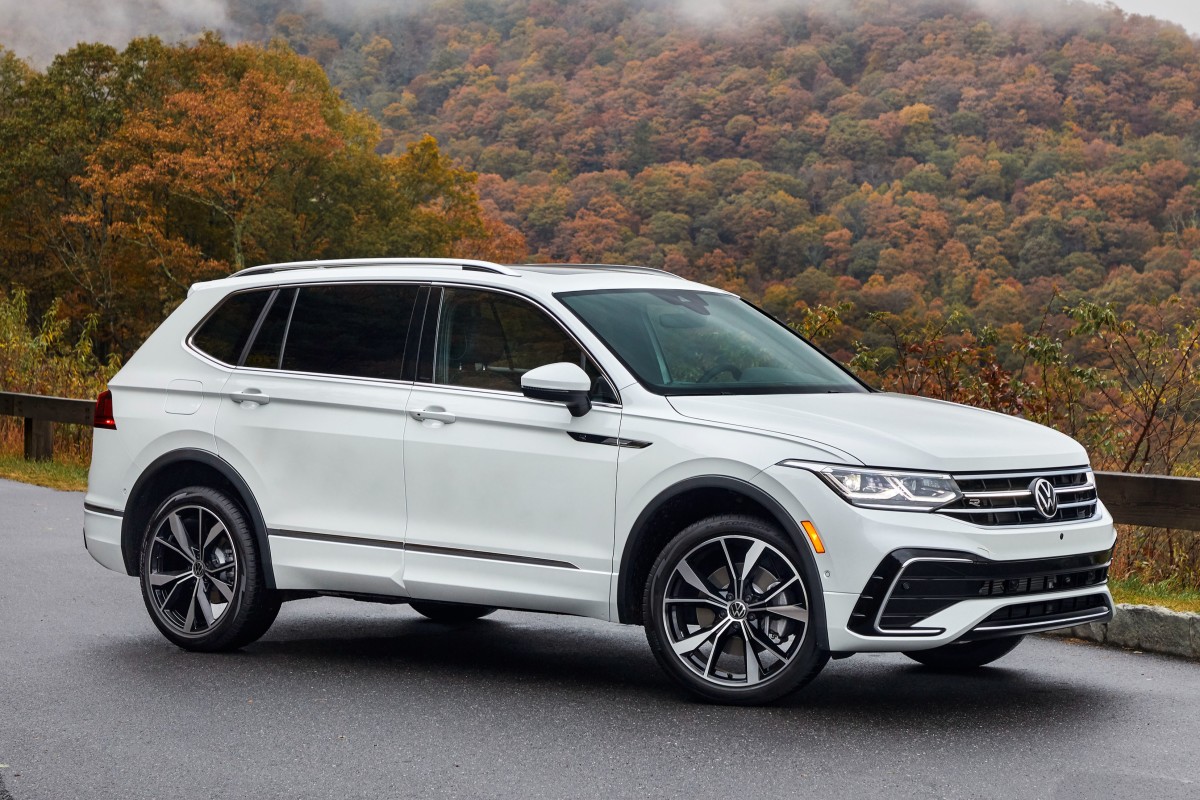
According to CarGurus experts, the overall rating for the 2026 Toyota RAV4 Plug-in Hybrid is 7.0 out of 10, while the 2026 Volkswagen Tiguan scores 6.8 out of 10. Based on these ratings, the Toyota RAV4 Plug-in Hybrid is the recommended choice for its superior performance, advanced technology, and comprehensive safety features.
Choose the 2026 Volkswagen Tiguan if:
- You prefer a spacious interior with increased second-row legroom and excellent visibility.
- You appreciate a minimalist dashboard design with a large touchscreen and advanced infotainment features.
- You desire a vehicle with sharp handling and a comfortable ride, despite the absence of a hybrid option.


Choose the 2026 Toyota RAV4 Plug-in Hybrid if:
- You prioritize a powerful hybrid powertrain with an impressive electric range.
- You value a comprehensive suite of driver-assistance features for enhanced safety.
- You seek a vehicle with a versatile interior and practical storage solutions.


CarGurus highlights
According to CarGurus experts, the overall rating for the 2026 Toyota RAV4 Plug-in Hybrid is 7.0 out of 10, while the 2026 Volkswagen Tiguan scores 6.8 out of 10. Based on these ratings, the Toyota RAV4 Plug-in Hybrid is the recommended choice for its superior performance, advanced technology, and comprehensive safety features.
Choose the 2026 Volkswagen Tiguan if:
Shop Now- You prefer a spacious interior with increased second-row legroom and excellent visibility.
- You appreciate a minimalist dashboard design with a large touchscreen and advanced infotainment features.
- You desire a vehicle with sharp handling and a comfortable ride, despite the absence of a hybrid option.
Choose the 2026 Toyota RAV4 Plug-in Hybrid if:
Shop Now- You prioritize a powerful hybrid powertrain with an impressive electric range.
- You value a comprehensive suite of driver-assistance features for enhanced safety.
- You seek a vehicle with a versatile interior and practical storage solutions.

By: CarGurus + AI
At CarGurus, our team of experienced automotive writers remain at the heart of our content operation, conducting hands-on car tests and writing insightful guides that are backed by years of industry experience. To complement this, we are harnessing AI to make our content offering more diverse and more helpful to shoppers than ever. To achieve this, our AI systems are based exclusively on CarGurus content, ratings and data, so that what we produce is both unique to CarGurus, and uniquely helpful to car shoppers.

