Ford F-150 Raptor vs Toyota Tacoma TRD Pro
 Toyota Tacoma TRD Pro $25,850MSRP | 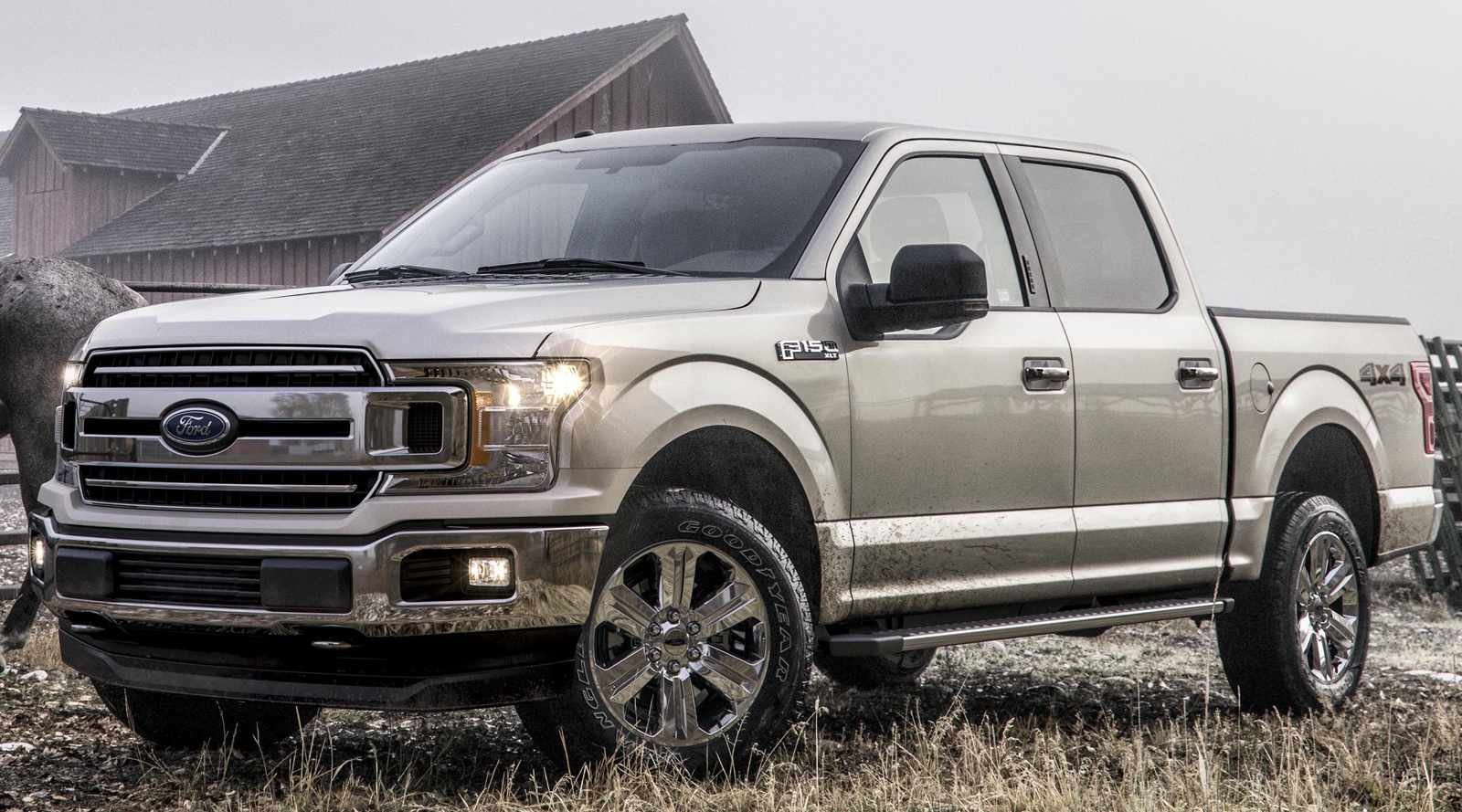 Ford F-150 Raptor $28,155MSRP |
Toyota Tacoma TRD Pro $25,850MSRP | Ford F-150 Raptor $28,155MSRP |
|---|
Overview | |
Years produced2015 | Years produced2018-2019 |
MSRP$25,850 | MSRP$28,155 |
Average price$31,046 | Average price$38,563 |
Listings0 | Listings12 |
Ratings & Reviews | |
User Reviews | User Reviews |
Popular Features & Specs | |
Engine2.7L 159 hp I4 | Engine3.3L 290 hp V6 Flex Fuel Vehicle |
Drivetrain4X2 | Drivetrain4X2 |
Seating Capacity4 | Seating Capacity3 |
Horsepower159 hp @ 5200 rpm | Horsepower |
MPG City20 | MPG City19 |
MPG Highway23 | MPG Highway25 |
Engine | |
Engine Name2.7L 159 hp I4 | Engine Name3.3L 290 hp V6 Flex Fuel Vehicle |
Torque180 lb-ft @ 3800 rpm | Torque |
Horsepower159 hp @ 5200 rpm | Horsepower |
Drivetrain4X2 | Drivetrain4X2 |
Fuel Economy | |
MPG City20 | MPG City19 |
MPG Highway23 | MPG Highway25 |
Interior | |
Seating Capacity4 | Seating Capacity3 |
Safety | |
Front Crash Overall | Front Crash Overall4 |
Side Crash Overall | Side Crash Overall5 |
Dimensions & Capacity | |
Bed Length73.7 in | Bed Length78.9 in |
Cargo Space | Cargo Space12.1 cu ft |
Curb Weight3980 lbs | Curb Weight4069 lbs |
Height70.6 in | Height75.5 in |
Length212.3 in | Length209.3 in |
Width74.4 in | Width96.8 in |
Wheelbase127.4 in | Wheelbase122.4 in |
Maximum Payload1620 lbs | Maximum Payload1990 lbs |
Number of doors4 | Number of doors2 |
Maximum Towing Capacity3500 lbs | Maximum Towing Capacity9200 lbs |
Standard Towing Capacity | Standard Towing Capacity5100 lbs |
Toyota Tacoma TRD Pro $25,850MSRP | Ford F-150 Raptor $28,155MSRP |
Toyota Tacoma TRD Pro $25,850MSRP | Ford F-150 Raptor $28,155MSRP |
|---|
Overview | ||
Years produced | 2015 | 2018-2019 |
MSRP | $25,850 | $28,155 |
Average price | $31,046 | $38,563 |
Listings | ||
Ratings & Reviews | ||
User reviews | ||
Popular Features & Specs | ||
Engine | 2.7L 159 hp I4 | 3.3L 290 hp V6 Flex Fuel Vehicle |
Drivetrain | 4X2 | 4X2 |
Seating Capacity | 4 | 3 |
Horsepower | 159 hp @ 5200 rpm | |
MPG City | 20 | 19 |
MPG Highway | 23 | 25 |
Engine | ||
Engine Name | 2.7L 159 hp I4 | 3.3L 290 hp V6 Flex Fuel Vehicle |
Torque | 180 lb-ft @ 3800 rpm | |
Horsepower | 159 hp @ 5200 rpm | |
Drivetrain | 4X2 | 4X2 |
Fuel Economy | ||
MPG City | 20 | 19 |
MPG Highway | 23 | 25 |
Interior | ||
Seating Capacity | 4 | 3 |
Safety | ||
Front Crash Overall | 4 | |
Side Crash Overall | 5 | |
Dimensions & Capacity | ||
Bed Length | 73.7 in | 78.9 in |
Cargo Space | 12.1 cu ft | |
Curb Weight | 3980 lbs | 4069 lbs |
Height | 70.6 in | 75.5 in |
Length | 212.3 in | 209.3 in |
Width | 74.4 in | 96.8 in |
Wheelbase | 127.4 in | 122.4 in |
Maximum Payload | 1620 lbs | 1990 lbs |
Number of doors | 4 | 2 |
Maximum Towing Capacity | 3500 lbs | 9200 lbs |
Standard Towing Capacity | 5100 lbs | |
The 2019 Toyota Tacoma was a study in rugged aesthetics. Toyota differentiated the various Tacoma trims with unique grilles, wheels, hoods, and finishes, giving each version a distinct personality. The designers appeared to have used nothing but a T-square, a level, and a knife, creating solid blocks of metal detailed with carved character lines, flared fenders, and a provocatively protruding nose. The resultant angular profile exuded a rugged yet handsome look.
On the inside, the Tacoma emphasized durability over luxury with hard-wearing plastics dominating the cabin. There were a few stylish touches, such as geometric upholstery patterns and precisely spaced dashboard air vents, but overall, the interior prioritized function. It featured simple analog gauges and an old-school control panel complete with substantial knobs and buttons that were practical even for gloved hands.
Available in extended-cab (Access Cab) and crew-cab (Double Cab) styles, the 2019 Tacoma could be paired with either a short or a long cargo bed. It also offered a choice between a 4-cylinder or a V6 engine, and rear-wheel drive (RWD) or 4-wheel drive (4WD). Trim levels ranged from the more affordable SR and SR5 to the performance-focused TRD Sport, TRD Off-Road, Limited, and top-tier TRD Pro. The Limited trim, which comes only in Double Cab, short bed, V6, and 4WD, started at a base price of $40,865, ultimately totaling $42,184 with additional options.
The 2019 Ford F-150, when redesigned in 2015, turned heads with its bold adoption of twin-turbocharged EcoBoost engines and extensive use of aluminum in body panels. Ford had refreshed the truck for the 2018 model year, meaning the 2019 version carried over most of its visual cues. General Motors famously poked fun at Ford’s use of aluminum, suggesting it was more vulnerable to damage, despite adopting similar materials in their vehicles later.
Available trim levels included XL, XLT, Lariat, King Ranch, Platinum, Raptor, and Limited. The base XL trim was a no-frills workhorse, while the XLT added power amenities and an upgraded infotainment system. Further up the hierarchy, trims like the Lariat brought leather interiors and advanced features, whereas the King Ranch offered luxurious upholstery options. The Platinum trim pushed luxury even further with unique wood-panel interiors and advanced running boards. For off-road enthusiasts, the Raptor came equipped with specialized shocks and a wide-body kit, while the Limited trim topped the range with 22-inch polished aluminum wheels, a dual-panel moonroof, and massaging seats.
Under the hood, most 2019 Tacoma models housed a direct-injected, Atkinson-cycle, 3.5-liter V6 engine that produced 278 horsepower at 6,000 rpm and 265 lb-ft of torque at 4,600 rpm. For towing, all V6-equipped Tacomas featured heavy-duty cooling, a trailer wiring harness, Trailer Sway Control, and a receiver hitch, allowing for a maximum tow rating of 6,800 pounds.
A 6-speed automatic transmission with a Sport mode and manual shift gate delivered power to the rear wheels. For off-road aficionados, the part-time, shift-on-the-fly 4WD system in combination with the 6-speed manual gearbox offered features like Multi-terrain Select and Crawl Control, which managed off-road traction. TRD Off-Road and TRD Pro variants included a clutch-start cancel switch, allowing for greater control in difficult off-road situations. In terms of ride quality, the Tacoma's performance on pavements reflected its off-road capabilities—it had a bouncy and reactive ride, clear indicators of its rugged build. During testing, the Tacoma returned 18.9 mpg on a test loop, averaging 20.1 mpg for the week.
The 2019 F-150, on the other hand, added a new 3.0-liter Power Stroke turbodiesel V6 engine to its lineup, generating 250 horsepower and an impressive 440 lb-ft of torque. The base engine continued to be a 3.3-liter V6, offering 290 hp and 265 lb-ft. Other options included a 2.7-liter twin-turbo EcoBoost V6 with 325 hp and 400 lb-ft, and a more potent 3.5-liter EcoBoost V6 in two states of tune: 375 hp and 450 hp. For those preferring a V8, the 5.0-liter Coyote V8 offered 395 hp and 400 lb-ft of torque. Towing capacities ranged up to 11,400 pounds with the 3.0-liter diesel engine.
The F-150's engines (except the base V6) paired with a 10-speed automatic transmission, optimizing their power bands and ensuring smooth acceleration. The diesel engine was particularly quiet, making it a comfortable choice for long drives. It also featured an auto stop/start system, though its transitions were noticeable. In terms of fuel efficiency, the diesel achieved an estimated 22 mpg city, 30 highway, and 25 combined with RWD, with a slight dip for 4WD models.
Getting into a 2019 Tacoma was quite different depending on the user's height. Taller individuals found entry easy due to its high stance. However, shorter occupants struggled, especially when the rocker panels were dirty. Once inside, the front seats offered manual adjustments and lumbar support, and storage solutions were plentiful. For 2020, Toyota planned to introduce 10-way power-adjustable driver’s seats in most trims for added comfort. While acceptable for shorter rides, the 2019 model's seats fell short without ventilation options.
Rear-seat passengers experienced the usual cramped quarters common to midsize trucks, with high bottom cushions and padded seatbacks. The bed, while not very deep, came with a plastic liner, LED light, and a 120-volt/400-watt outlet. A maximum payload of 1,540 pounds made it functional for various haulage needs.
The 2019 F-150’s varied configurations included single cab, SuperCab, and SuperCrew body styles, with different bed lengths tailored to each. The SuperCrew model, with its expansive cabin and massive center storage console, stood out for providing generous legroom and configurable cargo space. The rear bench could fold up to create a large load floor for in-cabin storage.
The F-150 excelled in meeting cargo demands with payload and towing capacities surpassing those of the Tacoma. While specific figures fluctuated based on configurations, its overall capacity significantly benefited users requiring robust performance.
Technologically, the 2019 Tacoma lagged behind. While offering an infotainment system with navigation, users frequently encountered issues locating specific addresses. Additionally, the system’s 7-inch display and resistant knobs detracted from ease of use. For 2020, Toyota planned upgrades including Apple CarPlay, Android Auto, and Alexa compatibility with an 8-inch screen, but these were unavailable in the 2019 model. The available 6-speaker JBL sound system provided decent audio, though.
The F-150 outshined the Tacoma technologically, starting with the base XL trim's simple Sync system and 4.2-inch screen. From XLT upward, they included the more intuitive Sync 3 with an 8-inch touchscreen supporting Apple CarPlay and Android Auto. The King Ranch trim, in particular, offered a Wi-Fi hotspot and a premium B&O Play sound system by Harman, enhancing the multimedia experience.
In terms of safety, the 2019 Tacoma came equipped with Toyota’s Safety Sense suite, which included adaptive cruise control, forward-collision warning, automatic emergency braking, lane-departure warning, sway warning, and automatic high beams. Optional features included blind-spot monitoring and rear cross-traffic alert. The Tacoma achieved favorable crash-test ratings from IIHS and NHTSA, with minor caveats on headlight performance and LATCH anchor access. Overall, it performed well within its class, though not as outstanding as the Honda Ridgeline.
The 2019 F-150 provided standard safety features like front- and side-impact airbags, traction control, and a reversing camera. The high-end 360-degree camera system, standard on Limited and optional on others, greatly aided maneuverability. Additionally, it offered advanced driver-assistance features like blind-spot monitoring, forward-collision avoidance, adaptive cruise control, and rear cross-traffic alert, ensuring a high level of safety across the lineup.
CarGurus highlights
According to CarGurus experts, the overall rating for the 2019 Toyota Tacoma is 7.7 out of 10, while the 2019 Ford F-150 scores 8.2 out of 10. The F-150’s superior technology, engine variety, and spacious design make it the better choice for most consumers. Its higher rating reflects its overall advantage in performance, form and function, and safety features. If you are looking for a reliable, feature-rich, and versatile truck, the 2019 Ford F-150 would be the recommended pick.
Choose the Ford F-150 Raptor if:
- You require extensive cargo space and flexible seating configurations.
- You prefer a wide array of powerful engine options for towing and hauling.
- You want advanced technology and driver-assistance features for enhanced safety and convenience.


Choose the Toyota Tacoma TRD Pro if:
- You prioritize off-road capability and rugged design.
- You seek a midsize truck with various configuration options.
- You value Toyota’s reputation for durability and resilience.
CarGurus highlights
According to CarGurus experts, the overall rating for the 2019 Toyota Tacoma is 7.7 out of 10, while the 2019 Ford F-150 scores 8.2 out of 10. The F-150’s superior technology, engine variety, and spacious design make it the better choice for most consumers. Its higher rating reflects its overall advantage in performance, form and function, and safety features. If you are looking for a reliable, feature-rich, and versatile truck, the 2019 Ford F-150 would be the recommended pick.
Choose the Ford F-150 Raptor if:
Shop Now- You require extensive cargo space and flexible seating configurations.
- You prefer a wide array of powerful engine options for towing and hauling.
- You want advanced technology and driver-assistance features for enhanced safety and convenience.
Choose the Toyota Tacoma TRD Pro if:
Shop Now- You prioritize off-road capability and rugged design.
- You seek a midsize truck with various configuration options.
- You value Toyota’s reputation for durability and resilience.

By: CarGurus + AI
At CarGurus, our team of experienced automotive writers remain at the heart of our content operation, conducting hands-on car tests and writing insightful guides that are backed by years of industry experience. To complement this, we are harnessing AI to make our content offering more diverse and more helpful to shoppers than ever. To achieve this, our AI systems are based exclusively on CarGurus content, ratings and data, so that what we produce is both unique to CarGurus, and uniquely helpful to car shoppers.

