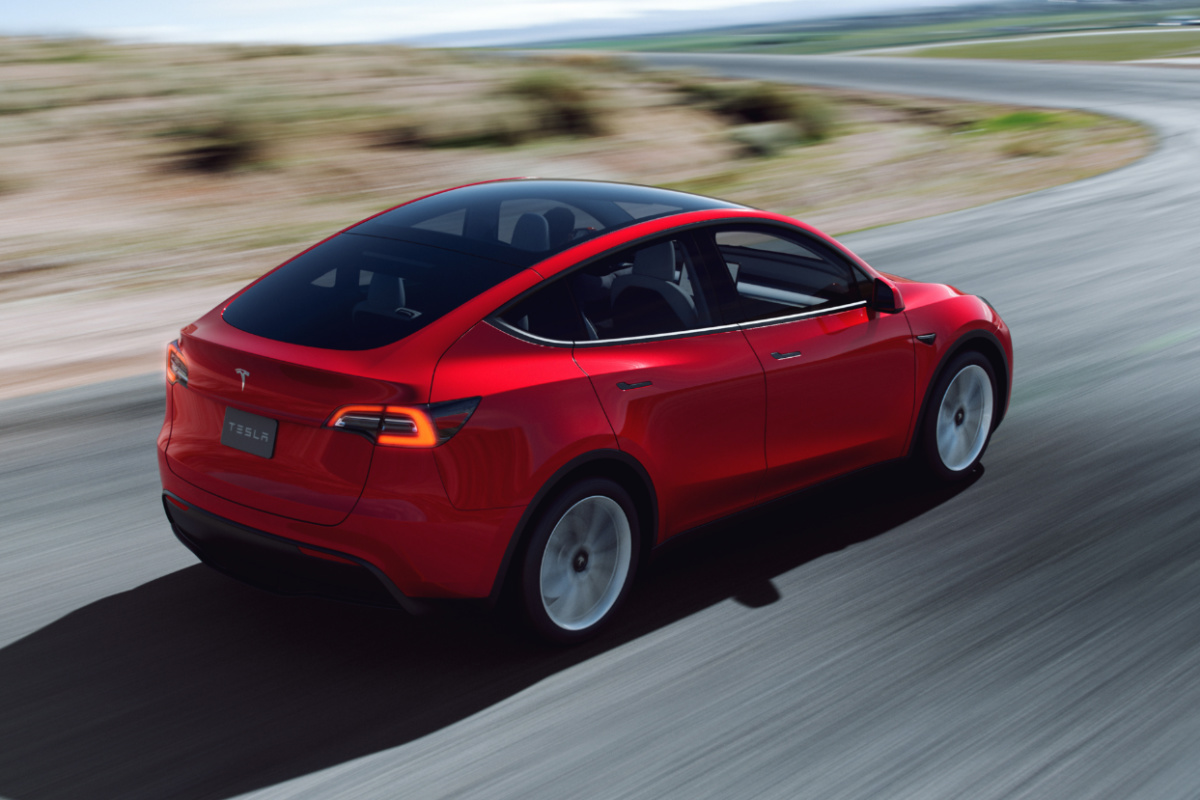
No EV has moved through the used market as quickly as the Tesla Model Y. Its drivetrain is genuinely simple—no transmission, no oil, no timing chain—but Tesla Model Y reliability is more layered than the powertrain picture alone. Production year and factory origin have had a real impact on build quality, and a handful of specific mechanical issues are consistent enough across early models that used buyers need to know about them upfront.
- Tesla Model Y Powertrain Reliability: Which Setup Holds Up?
- Tesla Model Y Battery Reliability and Range Retention
- Drivetrain, Suspension, and Build Quality: What Else to Check
- Tesla Maintenance: What It Takes to Keep a Model Y Running Well
- Model Y Reliability by Year: Which Production Years Are Strongest?
- Is the Tesla Model Y Reliable Enough?

Tesla Model Y Reliability at a Glance
| Reliability Status | Average — trails legacy gas SUVs in fit-and-finish; leads in drivetrain simplicity |
| Most Common Issue | Interior rattles, panel gaps, and upper control arm ball joint squeak (2020–2022) |
| Most Common Major Repair | Heat pump / Supermanifold failure (primarily 2020–2021 models) |
| Most Reliable Configuration | 2022+ Long Range AWD or 2023+ Standard Range RWD |
| Annual Maintenance Cost | Significantly lower than gas counterparts; tires are the primary recurring expense |
Tesla Model Y Powertrain Reliability: Which Setup Holds Up?
The Model Y's electric motors are its most dependable component. Across all configurations, the drive units are among the least problematic items owners report. The meaningful differences between trims come down to battery chemistry and driven wheels.
Quick Comparison: Model Y Powertrains
| Configuration | Common Years | Reliability | Key Trade-Off |
|---|---|---|---|
| Standard Range RWD | 2023–Present | High | Lower range (up to 260 miles); LFP battery requires a regular 100% charge for accurate battery management system calibration |
| Long Range AWD (Dual Motor) | 2020–Present | High | NMC battery performs best when kept below 80% charge for daily use |
| Performance AWD (Dual Motor) | 2020–Present | High | Staggered wheels can't be rotated normally; significantly faster tire wear |
Standard Range RWD — The LFP Battery Advantage
Available in the U.S. from 2023, the Standard Range RWD uses a Lithium Iron Phosphate (LFP) battery. LFP cells are more thermally stable than the NMC chemistry used in Long Range trims, and they're designed to be charged to 100% daily without the degradation penalty that applies to other lithium-ion packs.
- The Range Trade-off: Offers less driving range per charge (up to 260 miles). While this is plenty for daily commuting, it means stopping sooner at Superchargers on long road trips compared to the Long Range model.
- Battery Calibration: Unlike standard EVs, the LFP battery must be charged to 100% regularly. This is required so the computer can calibrate the battery management system and display an accurate range reading on the dashboard.
Long Range AWD — The Proven Benchmark
The Long Range AWD has the broadest real-world track record and the deepest used market availability. Both motors have held up well past 100,000 miles across owner fleet data, and the 2022+ version is the strongest all-around used buy in the lineup.
- Battery Management: The NMC battery pack performs best when kept at or below 80% charge for daily use. Charging to 100% should be reserved for road trips to prevent premature battery wear.
- The Sweet Spot: Prioritizing 2022 or newer models gets you a fully matured version. By this point, Tesla had resolved the biggest early build quality complaints, upgraded the infotainment processor, and swapped in a modern lithium-ion 12-volt battery.
Performance AWD — Fast, But Hard on Tires
The motors hold up as well as any other configuration in the lineup.
- The Tire Trade-off: This trim features a staggered wheel setup, meaning the rear tires are wider than the fronts and cannot be rotated normally.
- Accelerated Wear: Because the tires can't be rotated to balance wear, and because the vehicle combines heavy weight with instant electric power, the rear tires wear out significantly faster than on standard models.
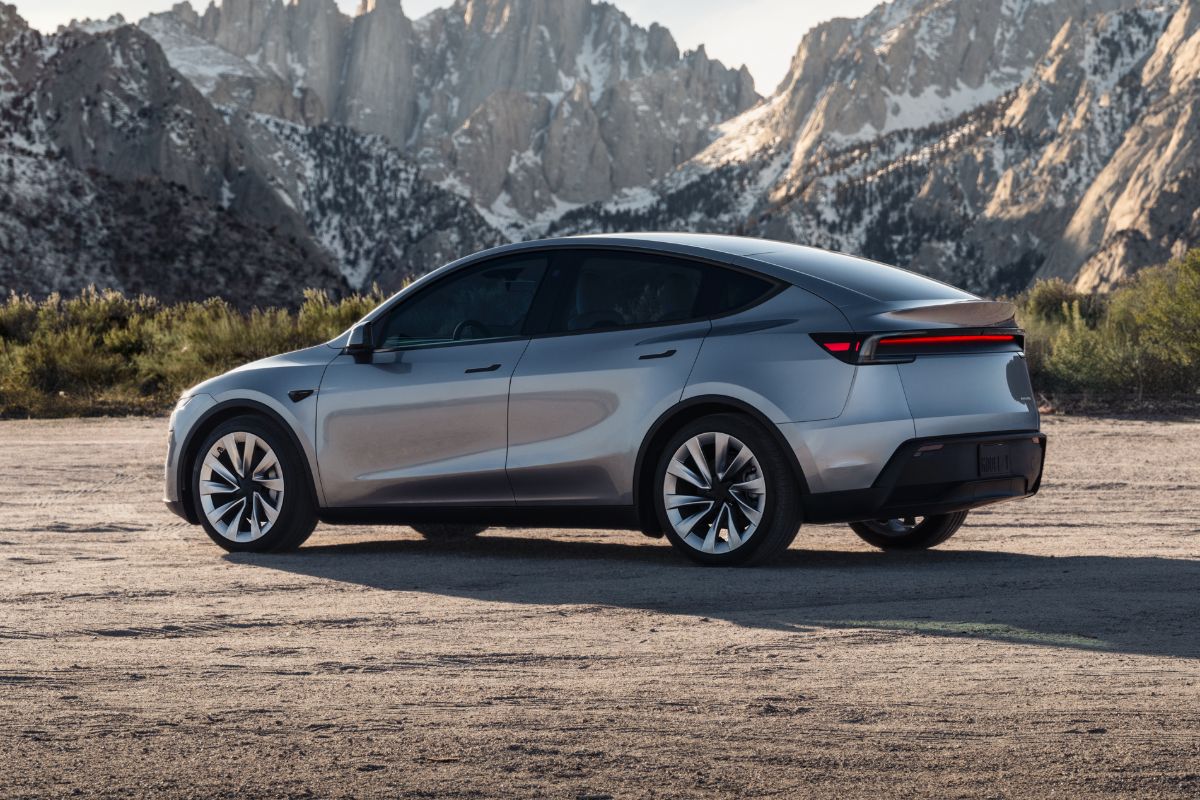
Tesla Model Y Battery Reliability and Range Retention
Battery degradation is the first question most used EV buyers ask, and for the Model Y, the answer is more reassuring than many expect. Tesla's own fleet data shows Long Range Model 3/Y packs retaining an average of 85% capacity at 200,000 miles.
Quick Comparison: Battery Degradation Expectations
| Mileage Range | Expected Degradation | What to Know |
|---|---|---|
| 0–50,000 miles | 5–10% range loss | Normal front-loaded settling. Not a sign of a problem. |
| 50,000–100,000 miles | Additional 2–5% loss | Degradation slows substantially. Most owners report 90%+ of original range. |
| 100,000+ miles | Under 15% total (typical) | Tesla's fleet data shows Long Range Model 3/Y packs averaging ~15% loss at 200,000 miles. |
The High-Voltage Battery — Built to Last
Total battery failure on a Model Y is rare. Tesla warrants the pack for 8 years / 120,000 miles on Long Range and Performance (8 years / 100,000 miles on Standard Range), with a guaranteed floor of 70% capacity retention. Most packs perform well above that floor.
- Degradation Pattern: Capacity loss is front-loaded, typically dropping 5% to 10% during the first 50,000 miles before leveling off into a much slower decline over the rest of the vehicle's lifespan.
- Capacity Retention: Long-term fleet data indicates the high-voltage cells are exceptionally durable, maintaining an average of 85% of their original capacity even after reaching the 200,000-mile mark.
The 12V Battery — An Early Weak Point, Now Fixed
Early Model Ys (2020–2021) used a conventional lead-acid 12V auxiliary battery. Tesla's software demands more constant power from this unit than a traditional gas-powered vehicle requires.
- Sudden Voltage Drop: Lead-acid auxiliary units are prone to abrupt failure without the gradual warning signs typical of a gas car, occasionally leaving the vehicle entirely unable to unlock or initialize the high-voltage system.
- The Production Fix: Tesla permanently engineered out this failure point in late 2021/early 2022 by replacing the lead-acid setup with a significantly more durable 16V lithium-ion auxiliary battery.
Drivetrain, Suspension, and Build Quality: What Else to Check
The areas below are where early production Model Ys showed their growing pains. Each is worth a targeted check before committing to a purchase.
Steering and Suspension — The Control Arm Squeak
The most consistent mechanical complaint on 2020–2022 Model Ys is a creaking or squeaking from the front upper control arm ball joints. Water works past the seal, displaces the grease, and causes corrosion—producing a noise most owners describe as a squeaky mattress spring over bumps or during slow turns.
- TSB and recall history: Tesla issued TSB SB-20-31-006 for ball joint resealing. A separate NHTSA recall (21V-835) covered loose front suspension lateral link fasteners on 2020–2021 models.
- On a test drive: Navigate a parking lot at low speed and make slow turns. The squeak is most audible here. A noisy front end means the repair hasn't been done.
Heat Pump and HVAC — The 2020–2021 Risk Zone
The Model Y's heat pump, introduced in late 2020, was prone to a specific failure on early units: the Electronic Expansion Valve could stick open in cold weather, shutting down the compressor and leaving the cabin without heat or defrost capability.
- The recall: Tesla issued OTA recall 22V026 with a software fix, but many physical failures required full Supermanifold replacement—a costly out-of-warranty repair.
- Musty AC smell: Trapped moisture near the cabin air filter housing is a known design flaw that causes a persistent musty odor inside early production cabins.
Software and Autopilot — Phantom Braking
After Tesla's 2021 switch to camera-only Tesla Vision, some owners reported unexpected hard braking from Autopilot on the highway. Tesla addressed the most common triggers through OTA updates. Confirm the vehicle is on the latest firmware and test Autopilot on the highway during your drive.
Tesla Maintenance: What It Takes to Keep a Model Y Running Well
The Model Y's maintenance list is short compared to a gas SUV—no oil changes, no spark plugs, and minimal brake wear from regenerative braking. But there are EV-specific items that are easy to miss.
| Service | Why It Matters | Recommended Interval |
|---|---|---|
| Tire replacement | The Model Y's weight and instant torque wear the tread faster than a lighter gas SUV. Rotation intervals are shorter than most owners expect. | Rotate every 6,000–8,000 miles; replace typically every 20,000–30,000 miles |
| Cabin air filter | A clogged filter is the primary cause of the musty HVAC smell on early models. | Every 1–2 years |
| Brake fluid | Regenerative braking reduces physical brake use, but fluid still absorbs moisture over time. Degraded fluid lowers the boiling point. | Test every 2 years; replace as needed |
| Brake caliper lubrication | Low brake usage allows salt and grime to seize calipers—a problem unique to EVs in cold-weather regions. | Every 12 months in cold or coastal climates |
| HVAC / heat pump inspection | On 2020–2021 models, the Supermanifold and associated sensors are known failure points. Non-negotiable to verify at purchase. | Inspect at purchase on any 2020–2021 unit |
According to Kelley Blue Book's cost-to-own data, the Model Y averages roughly $613 per year in maintenance costs—well below a comparable gas SUV once you factor in oil changes, spark plugs, and drivetrain service. The main expense most Model Y owners underestimate is tires: the vehicle's weight and torque delivery are hard on tread, and rotation intervals are shorter than most people expect.
Related Reading: Thinking about buying a used Tesla Model Y? Check out the Tesla Model Y Motor Longevity Guide on CarGurus for a full breakdown of how long the drivetrain and battery hold up over time.

Model Y Reliability by Year: Which Production Years Are Strongest?
Unlike conventional vehicles, where reliability follows model year cycles, Tesla makes rolling production changes—a car built in late 2022 can be meaningfully different from one built six months earlier. Build date matters as much as model year on a used Model Y.
Quick Comparison: Model Y Production Years
| Production Year | Best For | Strengths | Watch Out For |
|---|---|---|---|
| 2020–2021 | Budget buyers who verify recalls | Lower used prices; full standard safety suite | Panel gaps, paint issues, heat pump failures, lead-acid 12V battery, upper control arm squeak |
| 2022 | Value-focused used buyers | Ryzen infotainment chip; Li-ion 12V battery; improved suspension mid-year | Verify build date—early 2022 units may still carry 2021-era build quality |
| 2023–Present | Reliability-first buyers | Mature production lines; Hardware 4.0 cameras; highest build quality standard | Higher used prices; upcoming Juniper refresh; long-term data still developing |
Related Reading: Reliability varies meaningfully by production year and build date. For a closer look at which configurations to prioritize, see the Tesla Model Y Buying Guide on CarGurus.
Is the Tesla Model Y Reliable Enough?
The Tesla Model Y is a strong used buy—provided the production year is right and the key systems have been verified. Tesla Model Y reliability issues are real but concentrated in the 2020–2021 range; a well-chosen 2022+ example is a low-maintenance vehicle with a durable drivetrain and a battery that holds up better over time than most buyers expect.
A Model Y with 60,000 miles, a confirmed heat pump inspection, and a clean NHTSA recall check is a far safer purchase than one with 30,000 miles and no paperwork. The mileage matters less than what you can verify.
Ready to go electric? Browse used Tesla Model Y listings on CarGurus to compare vehicle history reports, battery warranty status, and Instant Market Values side by side—so you can find a reliable EV at a fair price.