The Tesla Model Y has no pistons, no valves, and no oil pan—but if you're buying used, the question of how long it will last is just as critical as it would be with any gas vehicle. The answer lives in different places: the health of the high-voltage battery pack, the condition of the electric drive units, and the state of the chassis components that absorb road punishment every day, regardless of what's powering the wheels.
This guide covers Model Y powertrain longevity across its three main configurations: the Long Range AWD, the Rear-Wheel Drive with its LFP battery chemistry, and the Performance AWD. We'll break down the durability of each, the failure points most likely to define their lifespan, and what a used Model Y's battery diagnostics and service history actually need to show before you commit.
- Tesla Model Y Powertrain Longevity: At a Glance
- The Tesla Model Y Average Powertrain Lifespan
- Drivetrain Reliability Rankings: Which Model Y Configuration Lasts the Longest?
- Model Y Mechanical Failure Points: Which Components Break Down by 100,000 Miles?
- Model Y Chassis Mass and Powertrain Stress
- Tesla Model Y Longevity vs. the Competition
- Should You Buy a Tesla Model Y With Over 100,000 Miles?
- The Bottom Line on Tesla Model Y Powertrain Longevity
Tesla Model Y Powertrain Longevity: At a Glance
| Expected Mileage Range | 300,000–500,000 miles (with proper battery care) |
| Most Reliable Configuration | Long Range AWD (Dual Motor) |
| Highest Failure Risk | Front Upper Control Arms and Bushings (40,000–70,000 miles) |
| First Major Failure Window | Suspension components/ball joints: 70,000–100,000 miles |
| Drivetrain Concern | Out-of-warranty battery capacity drop below 70% threshold |
| Best Production Years | 2024+ (Refined suspension tuning and superior build consistency) |

The Tesla Model Y Average Powertrain Lifespan
The Model Y's electric drive units are built to exceed 300,000 miles. With a single-speed reduction gearbox, no combustion heat, and no clutch packs to wear out, the powertrain is fundamentally simpler than any internal combustion equivalent. Tesla's fleet data indicates battery packs retain roughly 85% of original capacity after 200,000 miles—a degradation rate far slower than most buyers expect.
Like a gas car, a Model Y rarely dies from a catastrophic failure—it reaches an economic tipping point instead. For an EV, that moment arrives when out-of-warranty battery degradation drops below the 70% capacity floor Tesla guarantees within its warranty window, making a five-figure battery replacement outweigh the car's remaining value. Disciplined charging habits, avoiding sustained heat exposure, and keeping up with suspension maintenance push that threshold considerably further down the road.
Drivetrain Reliability Rankings: Which Model Y Configuration Lasts the Longest?
The Long Range AWD and RWD are the two configurations most capable of reaching 300,000 miles with consistent care. The Performance AWD is durable, but its chassis demands attention earlier.
Here's how each configuration stacks up for long-term ownership potential, along with the service milestones buyers should plan for:
| Configuration | Estimated Max Life | First Major Service Window | Primary Longevity Factor |
|---|---|---|---|
| Long Range AWD (Dual Motor) | 300,000+ mi | 70k–90k mi (Suspension/control arms) | Dual motors split electrical load; stable nickel-based pack with active thermal management |
| Rear-Wheel Drive (LFP Battery) | 300,000 mi | 60k–80k mi (Tires/bushings) | LFP chemistry tolerates repetitive 100% charge cycles with minimal cell degradation |
| Performance AWD | 250,000 mi | 40k–60k mi (Tires/chassis) | Motors are resilient, but a lowered stance and 21-inch wheels accelerate suspension wear |
Long Range AWD — The Balanced Standard for High Mileage (2020 & Onward)
By splitting propulsion demand between a front and rear drive unit, the Long Range AWD prevents either motor from running under peak load continuously—extending the working life of both units and their inverters. It's the configuration with the most balanced long-term ownership profile in the lineup.
- Engineering Advantage: The NMC or NCA battery pack pairs with active liquid thermal management that regulates cell temperatures during both charging and discharging—the single most important factor in slowing long-term capacity loss. Fleet data shows Long Range models retaining approximately 85% of original capacity at 200,000 miles.
- The Trade-off: Nickel-based chemistry is more sensitive to sustained high states of charge than LFP. Tesla recommends capping daily charging at 80–90% for Long Range variants; owners who routinely charge to 100% will accumulate more cell stress over time.
- Buyer's Tip: Request a Service Mode battery State of Health check before purchase—a healthy unit at 100,000 miles should show 85% or better. Confirm the front upper control arms have been inspected; 2024+ builds include an updated ball joint design that addresses the moisture-intrusion issue documented in earlier production.
Rear-Wheel Drive — The Low-Maintenance Daily Choice (2020 & Onward)
The RWD Model Y pairs a single rear drive unit with an LFP battery pack, eliminating the charging discipline that nickel-based packs require and making it the most straightforward Model Y to own over the long term.
- Engineering Advantage: LFP cells can be charged to 100% daily without meaningfully accelerating degradation—unlike NMC packs, which accumulate cell stress at high states of charge. LFP cells are rated for 3,000–5,000 full cycles before dropping to 80% capacity, versus roughly 1,500–2,500 for nickel chemistries.
- The Trade-off: Lower energy density means a shorter factory range figure, and LFP cells lose more usable capacity in cold temperatures than NMC packs. The single rear motor also means no AWD traction—a real consideration for buyers in snow-prone regions.
- Buyer's Tip: Confirm the battery chemistry before purchasing—not all RWD Model Ys use LFP, and charging guidance differs depending on what's in the pack. A Service Mode diagnostic confirms chemistry and the current State of Health in one step.
Performance AWD — Strong Power, High Chassis Stress (2020 & Onward)
The Performance Model Y shares the Long Range AWD's dual-motor layout but adds higher power outputs, lowered suspension, and 21-inch wheels. The drivetrain is durable—the chassis around it is not.
- Engineering Advantage: The Performance's motors are rated for the same core lifespan as those in the Long Range. With no mechanical transmission or clutch-based torque management, the drivetrain stays largely insulated from the suspension stress the car generates.
- The Trade-off: The lowered ride height reduces suspension travel, transferring more road impact energy into the control arms and bushings with every bump. The 21-inch wheels have less sidewall flex that would otherwise absorb that shock, accelerating front suspension wear faster than either the Long Range or RWD.
- Buyer's Tip: Budget proactively for a front suspension refresh on any used Performance approaching or past 60,000 miles. Control arm replacement, alignment, and associated hardware typically run $600–$1,500 at a Tesla servicer or a qualified independent EV shop—factor that into your offer before signing.
Model Y Mechanical Failure Points: Which Components Break Down by 100,000 Miles?
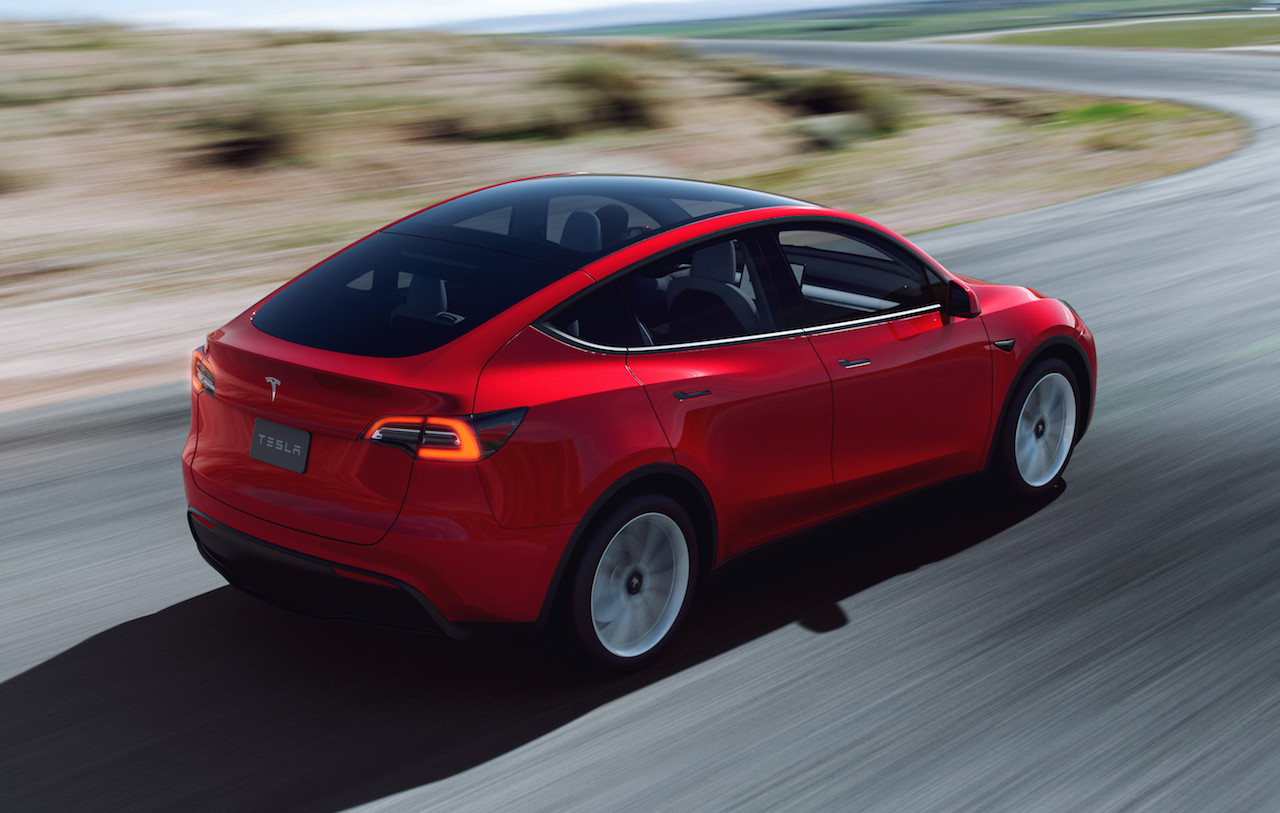
The Model Y's powertrain is exceptionally durable—but the chassis components around it follow a more conventional wear timeline. Once a Model Y crosses 70,000 to 100,000 miles, suspension and structural hardware become the most likely source of unplanned costs.
| Component | Affected Configurations | Failure Point | Why It Matters for Longevity |
|---|---|---|---|
| Front Upper Control Arms / Bushings | All Models | Moisture intrusion into ball joints; rubber tear under vehicle weight | Causes creaking when turning at low speed; introduces vague steering that worsens handling and accelerates tire wear |
| Drive Unit Bearing Wear | Early Production | Bearing pitting from electromagnetic micro-arcing at high RPM | Produces a speed-dependent hum; requires ceramic bearing replacement before damage becomes irreparable |
| Reduction Gearbox Fluid | High-Mileage Units | Thermal breakdown of factory lubrication in the single-speed gearbox | Degraded fluid increases friction and accelerates internal gear wear past 100,000 miles if not addressed |
| Lateral Link / Compliance Bushings | All Models | Rubber tears from repetitive suspension travel under the heavy battery floor | Torn bushings shift wheel alignment, increasing rolling resistance and forcing the drive unit to draw more current |
Model Y Chassis Mass and Powertrain Stress
The Model Y's structural battery floor gives the car exceptional rigidity—but it also means the vehicle weighs 4,400–4,800 pounds depending on configuration, placing sustained load on suspension components that a comparably sized gas crossover simply doesn't generate.
Two things to watch on higher-mileage Model Ys:
- Bushing Wear and Rolling Resistance: When lateral link and compliance bushings tear—typically around 40,000–70,000 miles—the front wheels shift out of designed alignment geometry, increasing rolling resistance and forcing the drive unit to draw more current. That compounding effect accelerates tire wear and strains drive unit cooling over time.
- Steering Feedback as a Diagnostic Tool: Vague or inconsistent steering is one of the earliest indicators of front suspension wear on a used Model Y. Before any test drive, perform a slow, full-lock turn in each direction in a quiet parking lot and listen for creaking from the front end—the most reliable early symptom of upper control arm ball joint deterioration.
Related Reading: Thinking about buying a used Tesla Model Y? Check out the Tesla Model Y Reliability Guide for a full breakdown of which configurations and model years hold up best over time.
Tesla Model Y Longevity vs. the Competition
The Model Y is the best-selling electric crossover in the United States, but it's likely not the only EV on your list. Here's how its powertrain longevity stacks up against its two closest direct-segment rivals—the Ford Mustang Mach-E and the Hyundai Ioniq 5:
| The EV | Estimated Powertrain Lifespan | Most Durable Configuration | The Longevity Trade-Off |
|---|---|---|---|
| Tesla Model Y | 300,000–500,000 mi | Long Range AWD / RWD LFP | Drive units are proven and durable, but suspension wear and out-of-warranty battery costs define the real ownership ceiling |
| Ford Mustang Mach-E | 200,000–300,000 mi | Extended Range AWD | Battery degradation has been modest in real-world use, but the 8-year/100,000-mile warranty cap and a substantial recall history demand active management on used examples |
| Hyundai Ioniq 5 | 200,000–300,000 mi | Long Range AWD | The high-voltage pack has held up well at high mileage, but a documented ICCU failure pattern has driven repeated warranty service visits across a meaningful share of 2022–2024 owners |
The Model Y's drive units carry a genuine durability edge over both competitors. The Model Y also has the largest real-world high-mileage dataset of any electric crossover on the used market—giving buyers more reliable risk data than either rival can offer.
The Mustang Mach-E has shown encouraging battery health in long-mileage use, but high-mileage used examples—especially those from rideshare or delivery service—often arrive with little remaining warranty coverage, leaving the buyer fully exposed to replacement cost risk on a pack without the long-term field data to back it up.
The Ioniq 5's battery packs have held up well in real-world use, with documented examples exceeding 288,000 miles. The more significant variable is the Integrated Charging Control Unit (ICCU)—responsible for DC fast charging and 12-volt management—which has generated repeated failures across a meaningful share of 2022–2024 model years. Verifying ICCU recall completion is an essential pre-purchase step.

Should You Buy a Tesla Model Y With Over 100,000 Miles?
Yes—but warranty status, battery State of Health, and suspension condition matter far more than the odometer figure alone.
Here's how to evaluate the risk by vehicle status:
- Active Battery and Drive Unit Warranty Runway — The Safest Bet: Highly viable if the vehicle remains within its 8-year window and below the 100,000 or 120,000-mile cap, depending on trim. Remaining factory coverage is a concrete backstop against the single largest ownership risk on any used EV.
- Screen-Verified State of Health — Solid with Verification: A strong buy if a Tesla Service Mode or third-party diagnostic confirms State of Health above 80%. Most Model Y packs at 100,000 miles show 88–92% health under normal charging habits—well above the threshold that signals near-term replacement risk.
- Worn Front Steering and Bushings — Negotiate the Cost: Acceptable if you budget for a front suspension refresh. Control arm replacement, bushing service, and alignment represent a known, plannable cost—price it into your offer rather than paying ask on a car that needs it.
- Expired Warranty with High Range Loss — Approach with Caution: Avoid if the vehicle has crossed the warranty mileage cap and the battery State of Health is below 80%, or the real-world range is noticeably lower than comparable examples. Full replacement-cost exposure with no factory protection is difficult to justify at most used-pricing levels.
You can verify any active recalls using the VIN for any Tesla Model Y you're considering at NHTSA.gov.
The Bottom Line on Tesla Model Y Powertrain Longevity
Evaluating a used Model Y requires a complete departure from gas-engine logic. There's no oil consumption, no timing chain, and no combustion wear to account for. What matters is the battery State of Health, the drive unit bearing condition, and the condition of the suspension components tasked with carrying a heavy structural battery floor over every road imperfection it encounters.
A used Model Y with strong battery metrics and fresh suspension is one of the most durable, low-overhead crossovers on the market—gas or electric.
Ready to start shopping? Browse used Tesla Model Y listings on CarGurus and use our Instant Market Value tools and Deal Ratings to find an electric crossover with a verified battery status and plenty of road left ahead. You can also track current market pricing on the Tesla Model Y price trends page on CarGurus.