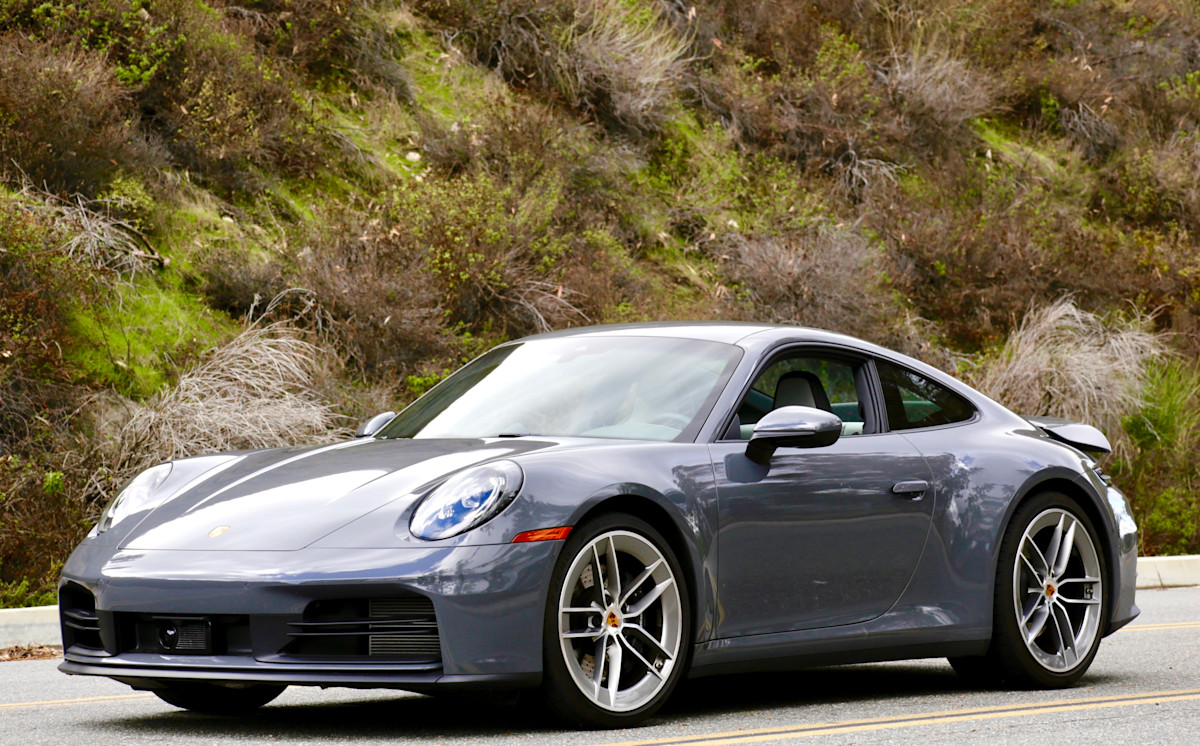
What is a Good Price for a Used Porsche 911 in Miami?
Used 911s in Miami average $209,108 — a 19.1% premium over the national average of $175,555. Miami’s status as one of the country’s premier luxury car markets means strong demand keeps prices elevated, particularly for late-model examples.
Price by Model Year in Miami
The 911 spans eight generations, but the used market in Miami concentrates on the eighth-generation 992 (2020–present) and seventh-generation 991 (2012–2019). Earlier generations — the 997, 996, and air-cooled classics — make up a smaller but meaningful share of inventory for enthusiasts and collectors.
| Model Year |
Miami Avg. Price |
National Avg. Price |
Miami Avg. Mileage |
Inventory Share |
| 2026 |
$282,172 |
$266,063 |
954 miles |
56% |
| 2025 |
$319,856 |
$219,677 |
3,117 miles |
35% |
| 2024 |
$239,887 |
$214,891 |
5,798 miles |
79% |
| 2023 |
$240,237 |
$216,260 |
9,025 miles |
90% |
| 2022 |
$223,492 |
$220,033 |
10,657 miles |
76% |
| 2021 |
$159,389 |
$175,321 |
14,426 miles |
69% |
| 2020 |
$126,198 |
$126,598 |
22,404 miles |
48% |
| 2019 |
$241,714 |
$192,801 |
16,528 miles |
43% |
| 2018 |
$203,455 |
$190,629 |
16,122 miles |
44% |
| 2017 |
$128,421 |
$118,626 |
38,704 miles |
40% |
| 2016 |
$161,670 |
$152,105 |
25,743 miles |
33% |
| 2015 |
$119,845 |
$124,110 |
45,976 miles |
28% |
| 2014 |
$104,174 |
$109,135 |
45,257 miles |
23% |
Eighth Generation 992 — Late Models (2022–2026): $223,492–$319,856
The newest 992-generation 911s command the highest prices in Miami, with the 2025 model year standing out at $319,856 — a staggering 45.6% premium over the national average of $219,677. This reflects Miami’s concentration of high-spec Turbo, GTS hybrid, and limited-edition variants. The 2025 refresh introduced the first hybrid 911 GTS with 532hp, and early examples are commanding significant premiums. The 2022–2024 range runs $223,492–$240,237 with more modest premiums of 1.6–11.6% above national pricing.
Eighth Generation 992 — Early Models (2020–2021): $126,198–$159,389
The entry point to 992 ownership represents the strongest value in Miami’s 911 market. The 2021 model year is particularly noteworthy at $159,389 — actually 9.1% below the national average of $175,321, one of the few model years where Miami undercuts the national market. At 14,426 miles average, these are low-mileage examples of the base Carrera and Carrera S that launched the 992 generation with 379–443hp. The 2020 sits at $126,198, essentially matching the national average.
Seventh Generation 991 — Late Turbo Era (2017–2019): $128,421–$241,714
The 991.2 models from 2017–2019 added turbocharging across nearly the entire lineup, boosting the base Carrera to 370hp and the Carrera S to 420hp. The 2019 model year at $241,714 carries a 25.4% Miami premium — driven by desirable final-year variants like the GT3 RS (520hp), GT2 RS (590hp), and the limited-production Speedster. The 2017 at $128,421 offers a more accessible entry point at an 8.3% premium.
Seventh Generation 991 — Early Naturally Aspirated (2014–2016): $104,174–$161,670
For enthusiasts who value the naturally aspirated flat-six experience, these pre-turbo 991 models represent a compelling proposition. The 2014 model year at $104,174 sits 4.5% below national pricing, offering the Turbo, Turbo S, and GT3 trims alongside refreshed Carrera models. The 2015 at $119,845 is 3.4% below national. Miami’s climate means these examples are well-preserved despite higher average mileage in the 45,000-mile range.
Understanding the Miami Price Premium
The 19.1% premium over national pricing reflects Miami’s position as a luxury car capital. South Florida’s affluent buyer base, year-round driving weather, and vibrant car culture create sustained demand for high-end sports cars — and the 911 sits squarely in Miami’s sweet spot.
Lower mileage inventory: Miami 911s average 20,766 miles versus 29,896 nationally — a 30.5% mileage advantage. Florida’s lack of harsh winters and salt-treated roads means these cars are structurally better preserved, and many serve as second or third vehicles in collections, accumulating fewer miles than the national average.
Newer model concentration: Miami’s inventory skews heavily toward current-generation models. The 2023 model year alone represents 90% of its national inventory share, reflecting how quickly South Florida buyers adopt the latest 911 variants. This newer mix naturally pushes the average price higher.
Value pockets exist: Despite the overall premium, savvy buyers can find below-national pricing on 2020–2021 and 2014–2015 model years. These represent the transition points where depreciation curves create temporary value before the collector market catches up.
Good and Great Deals in Miami
31% of Miami 911 listings qualify as Good or Great Deals — above the national average of 27%. While the Great Deal rate matches nationally at 7%, the Good Deal rate is 23% locally versus 20% nationally. Given the 911’s premium positioning, finding a deal-rated listing carries real value — these represent cars priced meaningfully below their market-adjusted expected value.
| Deal Rating |
Miami Percentage |
National Percentage |
| Great Deals |
7% |
7% |
| Good Deals |
23% |
20% |
The 2020 and 2021 model years show particularly strong value positioning in Miami, with 2021 examples priced 9.1% below national averages and 2020 models essentially matching national pricing. These early 992-generation cars offer modern performance without the premium-market markup of newer variants.
What is the Most Reliable Used Porsche 911 in Miami?
The Porsche 911 has earned a strong reputation for durability across most of its history — remarkable for a high-performance sports car. But not every generation is equal, and the 911’s broad model range means reliability can vary significantly depending on era and variant. Understanding which generations to target helps ensure a rewarding ownership experience, especially in Miami’s heat and humidity.
Most Reliable by Era
Eighth Generation 992 (2020–present):
The current-generation 911 represents the most refined and reliable era in the car’s history. Built on an updated platform with modern manufacturing standards, these models have proven exceptionally dependable. The only serious recall involved certain models with a single center wheel nut that could loosen — a limited-scope issue. Other minor recalls addressed the driveshaft, pedal linkage, suspension elements, window adhesives, hazard lights, and rear seat belts. Miami inventory for 2020–2024 models averages just 10,652 miles, meaning most examples have barely been broken in. The base Carrera’s turbocharged 3.0-liter flat-six producing 379hp is a thoroughly proven unit, and the eight-speed PDK transmission is excellent.
Seventh Generation 991 (2012–2019):
The 991 generation maintained Porsche’s reliability standards with only minor recalls relating to the suspension, seat belt, exhaust, airbag, hood latch, windshield, and fuel system. Issues were addressed quickly and none represented fundamental mechanical problems. The mid-generation switch to turbocharged engines in 2017 (991.2) was well-executed, and both the naturally aspirated and turbocharged powertrains have proven durable. Miami’s 2014–2019 inventory averages 31,392 miles — well within the comfort zone for these engineered-to-last sports cars.
Sixth Generation 997 (2005–2013):
The 997 corrected many of the previous generation’s shortcomings and is considered a reliable sports car by any standard. The 2009 mid-cycle refresh introduced direct fuel injection and the PDK dual-clutch transmission, both of which improved performance and reliability. Pre-refresh models with the Tiptronic automatic are less refined but mechanically solid. The return to traditional round headlights also signaled a return to form for Porsche’s engineering confidence.
Fifth Generation 996 (1999–2004): The Exception.
This is the 911 generation that requires the most caution. The 996 is known for intermediate shaft (IMS) bearing failures — a potentially catastrophic engine issue, particularly in earlier models — and rear main seal (RMS) leaks. The 996 also shared some components with the more affordable Boxster, which purists consider a dilution of the 911’s character. While prices are attractive, the potential for expensive engine repairs makes careful pre-purchase inspection essential.
Fourth Generation 993 and Earlier (1998 and older):
The air-cooled 911s — particularly the fourth-generation 993 (1994–1998) — are beloved by purists and collectors. The 993 was the last air-cooled 911 and introduced multilink rear suspension and the first all-wheel drive Turbo. These older models require specialized maintenance knowledge but are mechanically straightforward. In Miami’s salt-air environment, corrosion prevention is important for any air-cooled 911.
Key Improvements by Model Year — Eighth Generation 992
| Model Year |
Key Improvements |
| 2020 |
New 992 generation debuts with Carrera and Carrera S; 379–443hp turbo flat-six; eight-speed PDK |
| 2021 |
Targa and Turbo/Turbo S added; Turbo S reaches 640hp; expanded lineup |
| 2022 |
GTS (473hp) and GT3 (502hp naturally aspirated 4.0L) join the range |
| 2023 |
Carrera T (manual-only, lightweight), GT3 RS (518hp), Dakar off-road edition, Sport Classic |
| 2024 |
Limited-edition S/T (lightest 911, GT3 RS engine, manual transmission, only 1,963 built) |
| 2025 |
Mid-cycle refresh; hybrid GTS (532hp); fully digital instrument panel; base Carrera bumped to 388hp |
911-Specific Reliability Considerations
IMS Bearing (996 Generation Only):
The intermediate shaft bearing failure is the single most significant mechanical concern in 911 history. It primarily affects 1999–2004 models and can lead to catastrophic engine failure. If considering a 996, verify whether the IMS bearing has been replaced with an upgraded aftermarket unit. This is a deal-breaker inspection item.
Rear Main Seal (996 and Some 997):
Rear main seal leaks are another known issue from the 996 era that can also appear in early 997 models. While not as dramatic as IMS failure, it’s an expensive repair that should be checked during any pre-purchase inspection of these generations.
PDK Transmission Maintenance:
The dual-clutch PDK gearbox used from 2009 onward is remarkably reliable but requires fluid changes at specified intervals. Neglected PDK maintenance can lead to expensive repairs. Verify service records include transmission fluid changes.
Center Wheel Nut (2020–2023 992):
Certain 992 models equipped with the single center-locking wheel nut were subject to a recall for potential loosening. Confirm the recall has been completed on any applicable example.
What to Check When Buying
- Service records: Porsche maintenance isn’t cheap, but it’s critical. Look for documented service at Porsche dealers or reputable independent specialists. Gaps in records are a red flag on any 911.
- IMS bearing status (996 only): If the IMS bearing hasn’t been replaced, factor the cost of the upgrade into your offer. Walk away from any 996 with no documentation and no willingness to address this issue.
- Undercarriage and salt-air exposure: Miami’s coastal environment means salt air is a constant. Inspect the undercarriage, brake components, and any exposed metal surfaces for corrosion — especially on older air-cooled models.
- Tire and brake condition: Performance tires and brakes on a 911 are expensive to replace. Check tread depth, brake pad thickness, and rotor condition — replacement costs can run $3,000–$8,000 depending on the model and whether carbon-ceramic brakes are equipped.
- Convertible and Targa top operation: If considering a Cabriolet or Targa, test the roof mechanism thoroughly. Florida’s UV exposure can degrade seals and mechanisms over time.
- Recall verification: Run the VIN through Porsche’s recall database. Modern 992 models have had several minor recalls that should all be completed.
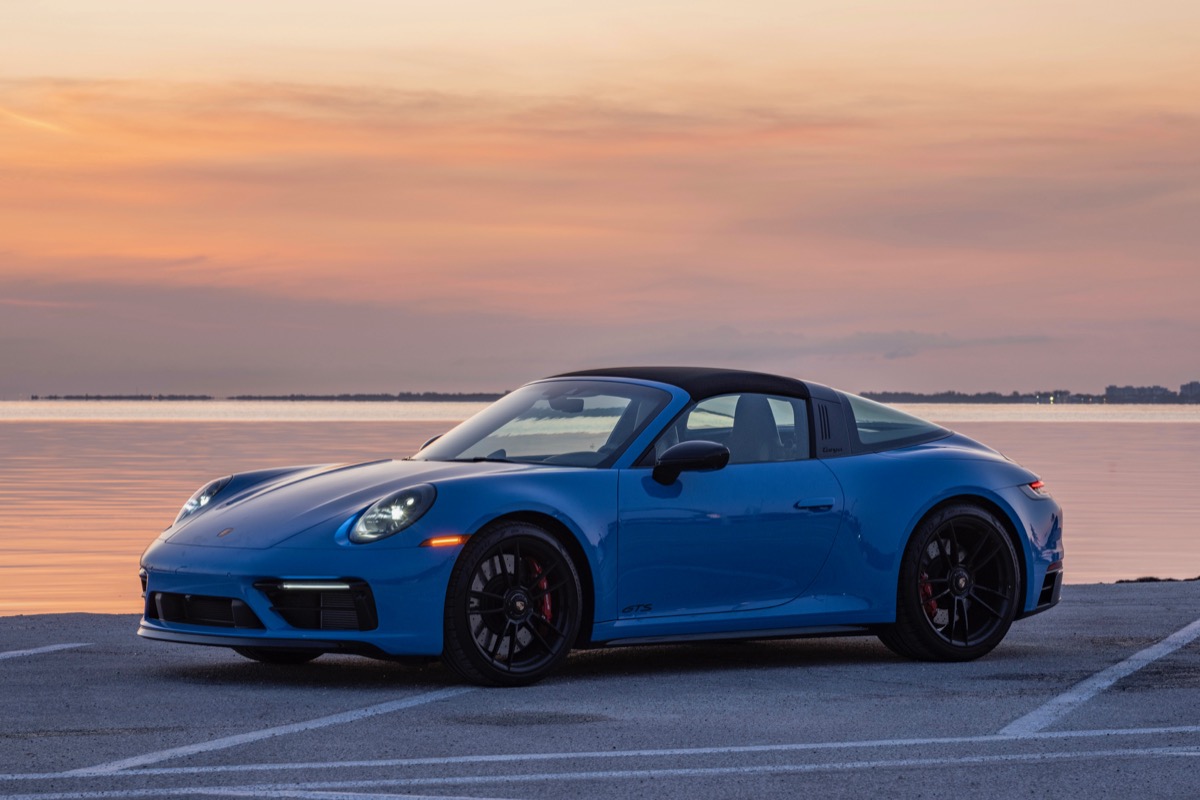
Best and Worst Porsche 911 Years in Miami
With a model range spanning over 60 years, choosing the right 911 model year matters more than with almost any other car. CarGurus data reveals clear patterns in Miami’s market that can help you zero in on the best combination of value, performance, and reliability. For more information on the 911 by generation and model year, check out our Porsche 911 Buying Guide.
Best Porsche 911 Years for Miami
| Category |
Best Years |
Miami Avg. Price |
Why They’re Best |
| Best Overall |
2022–2024 |
$223,492–$240,237 |
Full 992 lineup including GTS and GT3; proven reliability; low Miami mileage |
| Best Value |
2021 |
$159,389 |
9.1% below national average; current-gen 992 with Turbo/Turbo S; 14,426 avg miles |
| Best for Modern Features |
2025–2026 |
$282,172–$319,856 |
Refreshed 992 with hybrid GTS, digital instruments; near-new condition |
| Best Local Discount |
2014–2015 |
$104,174–$119,845 |
3.4–4.5% below national pricing; naturally aspirated 991 with GT3 and Turbo options |
Best Overall: 2022–2024.
These model years represent the 992 generation at its broadest and most capable. The 2022 introduced the GTS (473hp) and the track-focused GT3 (502hp naturally aspirated 4.0-liter), while 2023 added the lightweight Carrera T, the extreme GT3 RS (518hp), and the limited Dakar off-road variant. In Miami, these years average $223,492–$240,237 with just 5,798–10,657 miles — barely broken in by 911 standards. Premiums of 1.6–11.6% above national pricing are modest for the condition you’re getting.
Best Value: 2021.
The standout value play in Miami’s 911 market. At $159,389, the 2021 model year sits 9.1% below the national average of $175,321 — the deepest Miami discount for any 911 model year. This was the year Porsche expanded the 992 lineup to include the Targa body style and the Turbo/Turbo S with up to 640hp. With an average of just 14,426 miles, these are low-mileage, current-generation cars at a genuine Miami discount.
Best for Modern Features: 2025–2026.
The refreshed 992 brought the 911 into the hybrid era with the GTS producing 532hp from its turbocharged flat-six paired with an electric motor. A fully digital instrument panel and subtle styling updates round out the changes. At $282,172–$319,856 in Miami, these carry significant premiums (6.1–45.6% above national), but you’re getting near-new cars with sub-3,000-mile averages and the latest technology.
Best Local Discount: 2014–2015.
For buyers who want a naturally aspirated 991-generation 911 at reasonable money, these model years deliver. The 2014 at $104,174 is 4.5% below national, and 2015 at $119,845 is 3.4% below. Both years offered the Turbo, Turbo S, GT3, and GTS trims alongside refined Carrera models. Higher average mileage (45,000–46,000 miles) is the trade-off, but the 991’s proven reliability makes that manageable.
Worst Porsche 911 Years for Miami
| Years |
Concerns |
| 1999–2004 (996 Generation) |
IMS bearing failures can cause catastrophic engine damage; rear main seal leaks; shared Boxster components; “fried egg” headlight styling divisive among enthusiasts |
| 1970s Models |
Fuel crisis era reduced performance; the four-cylinder 912 reintroduction disappointed; diminished driving experience compared to earlier and later eras |
Avoid Without Careful Inspection: 1999–2004 (996 Generation).
The fifth-generation 996 is the 911 that demands the most caution. The intermediate shaft (IMS) bearing is the primary concern — failure can destroy the engine, and repairs run into five figures. Rear main seal leaks are another known issue. While this generation introduced the water-cooled flat-six and improved daily usability, the potential for expensive mechanical failure overshadows the lower prices. If you’re drawn to this era, budget for an IMS bearing upgrade and a thorough pre-purchase inspection by a Porsche specialist. Proceed with caution.
Approach Carefully: 1970s Models.
The 1970s fuel crisis forced Porsche to compromise on performance, and the reintroduction of the four-cylinder 912 model was widely regarded as a disappointment. While these models have niche collector appeal, they don’t represent the 911 at its best. For buyers seeking a vintage 911 experience, the earlier first-generation models (1964–1973) and the later second-generation SC and Carrera 3.2 (1978–1989) offer more compelling ownership experiences.
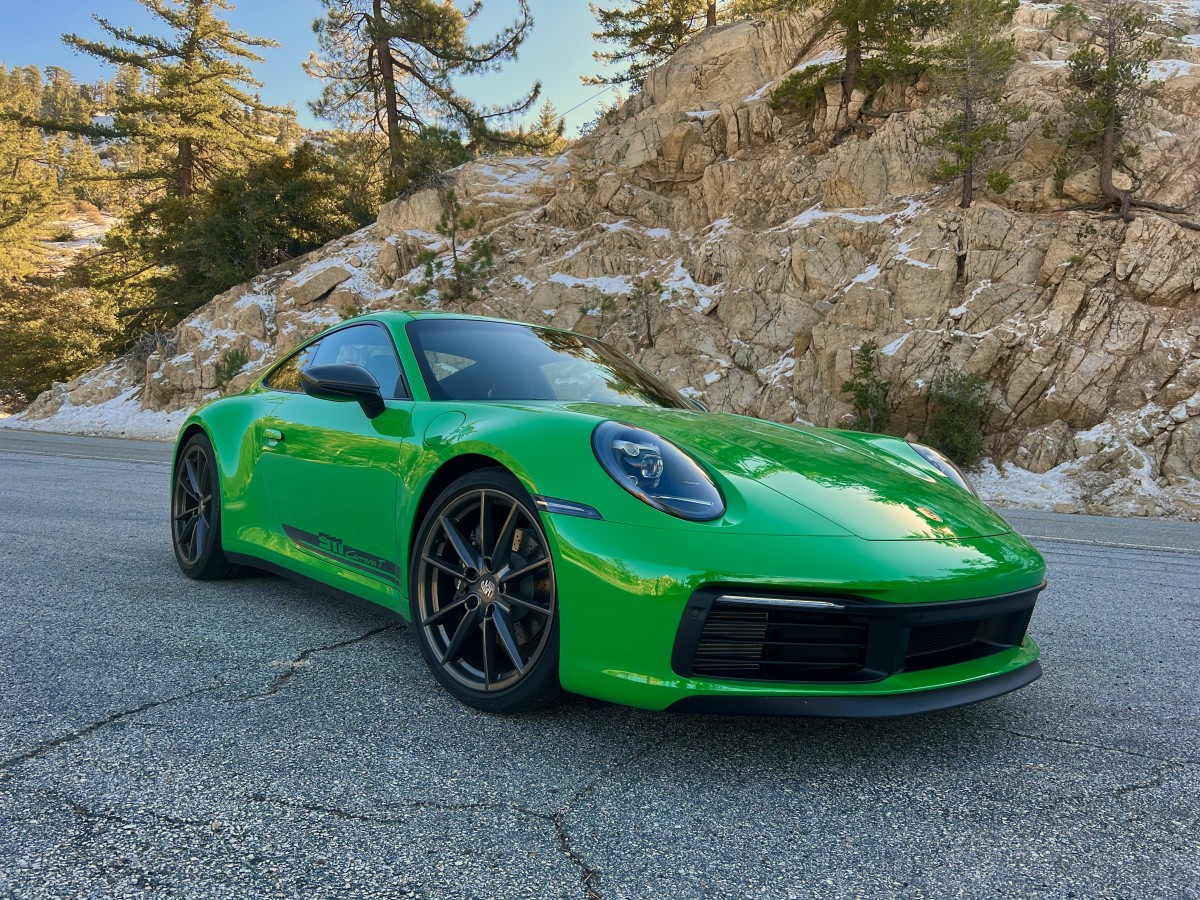
Porsche 911 Pros and Cons
Miami’s year-round warm weather, flat coastal roads, and deep car culture make it one of the most natural markets for 911 ownership in the country. The car’s combination of grand touring comfort and race-bred performance suits South Florida’s lifestyle perfectly — from I-95 commuting to weekend drives through the Keys.
Pros
Exceptional All-Around Performance
The 911’s rear-engine layout delivers a unique driving experience that no competitor replicates. Even the base 992 Carrera produces 379hp from its turbocharged flat-six, enough for genuine sports car performance without sacrificing daily usability. The naturally aspirated GT3 variants push to 502–518hp for track-focused driving. In Miami’s flat, open-road environment, the 911’s high-speed stability and braking confidence shine.
Iconic Design and Strong Resale Value
The 911’s silhouette is instantly recognizable — and that recognition translates directly to resale value. Porsche 911s lose only 10–15% of their value in the first five years of ownership, making them one of the strongest-depreciating sports cars you can buy. Limited editions like the GT3 RS, Dakar, and S/T often appreciate. In Miami’s status-conscious market, the 911 carries real social currency.
Deep Miami Inventory
With 486 used 911s available — nearly 10% of national inventory — Miami offers one of the best selection markets in the country. Whether you want a base Carrera, a Turbo S, a GT3, or a rare limited edition, the chances of finding your exact spec are higher here than almost anywhere else.
Lower Mileage Than National Average
Miami 911s average 20,766 miles versus 29,896 nationally — a 30.5% mileage advantage. Many South Florida 911s serve as secondary or collection vehicles, accumulating fewer miles in a climate that’s kind to both mechanical components and exterior finishes. No road salt, no harsh winters, no seasonal storage concerns.
Year-Round Usability
Miami’s climate means you can enjoy a 911 Cabriolet or Targa every month of the year. There’s no off-season for open-top driving, and the absence of winter weather eliminates the seasonal compromises that affect 911 owners in northern markets. The 911 was designed as a grand tourer as much as a sports car — and Miami’s conditions let you use it that way.
Proven Reliability (Modern Generations)
The 992 and 991 generations have strong reliability records with only minor recalls. Toyota-like dependability this isn’t, but for a high-performance sports car, the 911’s track record is exceptional. The 92% accident-free rate in Miami’s inventory — above the 91% national rate — reflects careful ownership patterns.
Cons
Miami Price Premium
This is the headline trade-off: Miami 911s average $209,108, a 19.1% premium over the national average of $175,555. Strong local demand for luxury sports cars keeps prices elevated, particularly for late-model and high-spec variants. The 2025 model year carries an especially stark 45.6% premium. Buyers willing to shop outside South Florida or consider slightly older model years can offset this.
Expensive to Maintain
Porsche maintenance costs are significantly higher than mainstream brands. Routine service at a dealer is costly, and even independent specialists charge premium rates. Performance tires, brake components (especially carbon-ceramic), and the PDK transmission service add up. In Miami’s heat, cooling system components and air conditioning work harder, potentially adding to maintenance frequency.
Limited Practicality
The 911 seats four on paper but two in practice — the rear seats are suitable only for small children or emergency use. The front trunk offers modest cargo space, and the Cabriolet and Targa variants sacrifice some of that. As a sole daily driver for a family, the 911 requires compromise. Miami’s condo parking situations and valet-heavy lifestyle do suit the 911’s compact footprint, however.
IMS Bearing Risk on Older Models
The 996 generation (1999–2004) carries the well-documented intermediate shaft bearing failure risk that can cause catastrophic engine damage. While this doesn’t affect the 991 or 992 generations that dominate Miami’s market, it’s a critical consideration for budget-minded buyers attracted to the 996’s lower prices.
High Insurance Costs
Miami already carries some of the highest auto insurance rates in the country, and insuring a six-figure sports car amplifies that. Factor insurance into the total ownership cost — it can add meaningful annual expense, particularly for younger drivers or those with limited sports car history.
Final Verdict for Miami Buyers
The 2022–2024 model years represent the clearest recommendation for most buyers — the full 992 lineup with GTS and GT3 options, proven reliability, and low Miami mileage averaging 5,798–10,657 miles. For buyers seeking value in a premium market, the 2021 at $159,389 stands out as the rare Miami discount on a current-generation 911. Just steer clear of the 996 generation unless you’ve budgeted for an IMS bearing upgrade and a thorough pre-purchase inspection. The 911 is one of the few sports cars that genuinely earns its price — and Miami’s deep, well-maintained inventory makes this one of the best places in the country to find the right one.