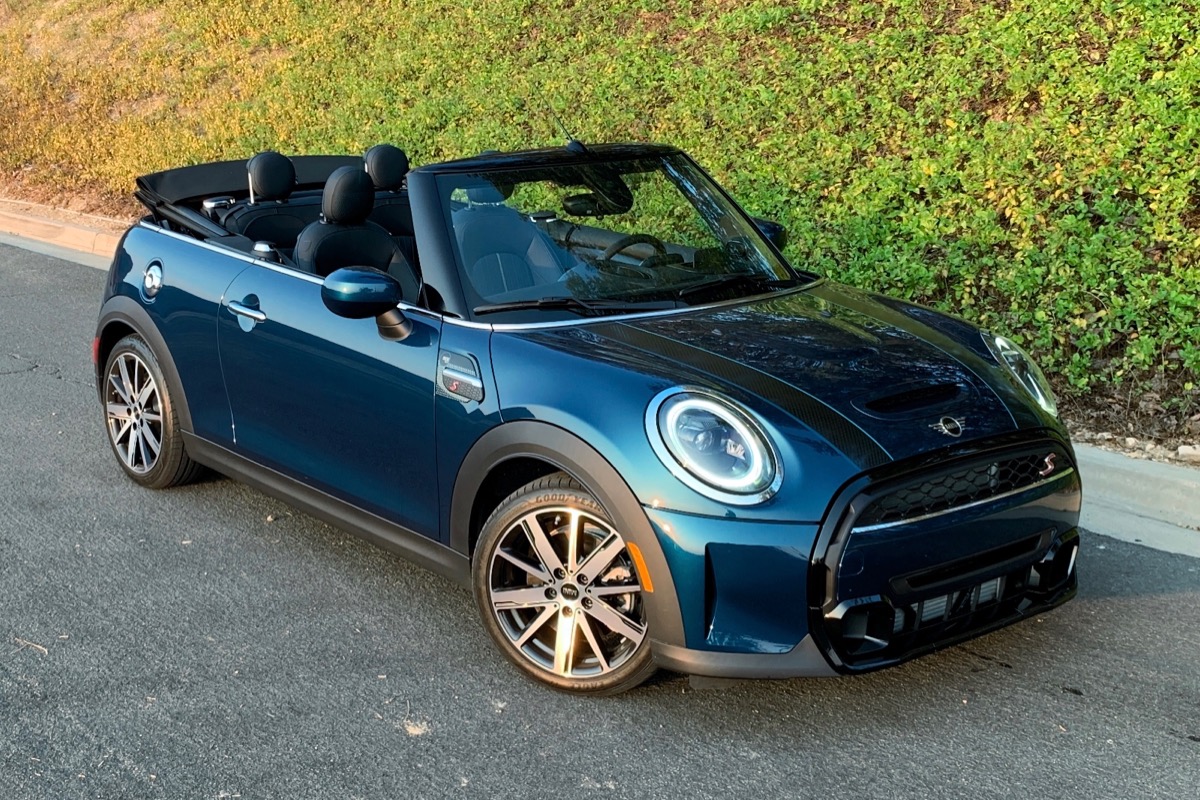
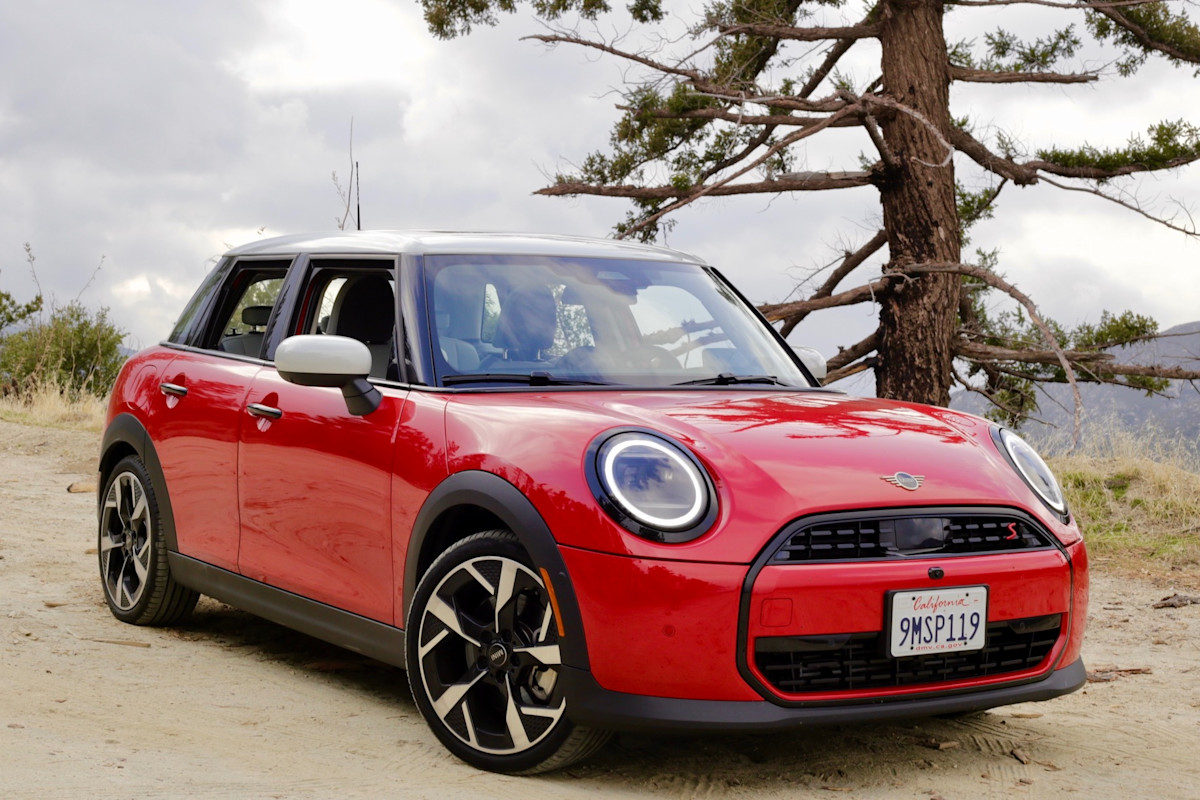
The MINI Countryman was the brand’s first SUV. It was brought to market in 2011, offering the same charm and customizability as Mini's smaller vehicles, but with significantly more rear passenger space and cargo capacity. It also cashed in on MINI's reputation for sporty performance, at least within its higher trim levels.
Like its MINI brethren, the Countryman set itself apart from more conventional rivals with its retro design, sporty demeanor, and wide-ranging personalization options. Over the course of three generations the Countryman has grown significantly in size and lost much of its quirkiness, but it remains a unique proposition compared with rivals such as the Audi Q3, the BMW X1, the Hyundai Kona, and the Volvo XC40.
Our buying guide looks at how the MINI Countryman has evolved over the years, which are the best and worst versions to buy, and how much shoppers can expect to pay for one.
MINI Countryman Buying Guide: Cost, Reliability, and the Best Years to Buy
Frequently Asked Questions
Which MINI Countryman years are the best?
The latest MINI Countryman stands out from its predecessors for its technology features, both in terms of infotainment and safety. It has also distinguished itself with a single minor recall, which is rare for any vehicle, especially in its debut year.
Which MINI Countryman years are the worst?
The 2014 and 2015 Countryman received the most recalls, with some of them being rather serious (failed side impact crash tests and rollaways when parked), but these were quickly addressed. We'd also raise a flag with the 2018–2023 Countryman SE plug-in hybrid, which was recalled for possible battery fires in 2020 and 2021.
Is a used MINI Countryman a good deal?
The newest Countryman is holding its value quite well, so may be out of reach for many shoppers. Second-generation models are much more affordable, and we'd recommend the Countryman S for the biggest bang for the buck. While a used Countryman is likely to cost more than many alternatives, the upsides are its premium image and good reliability record, which could make it a good deal.
Pros and Cons
Pros:
- Stylish design
- Fun to drive
- Multiple powertrain options
Cons:
- Stiff ride
- Weak base engines
- Smaller cargo capacity than rivals
MINI Countryman Generations
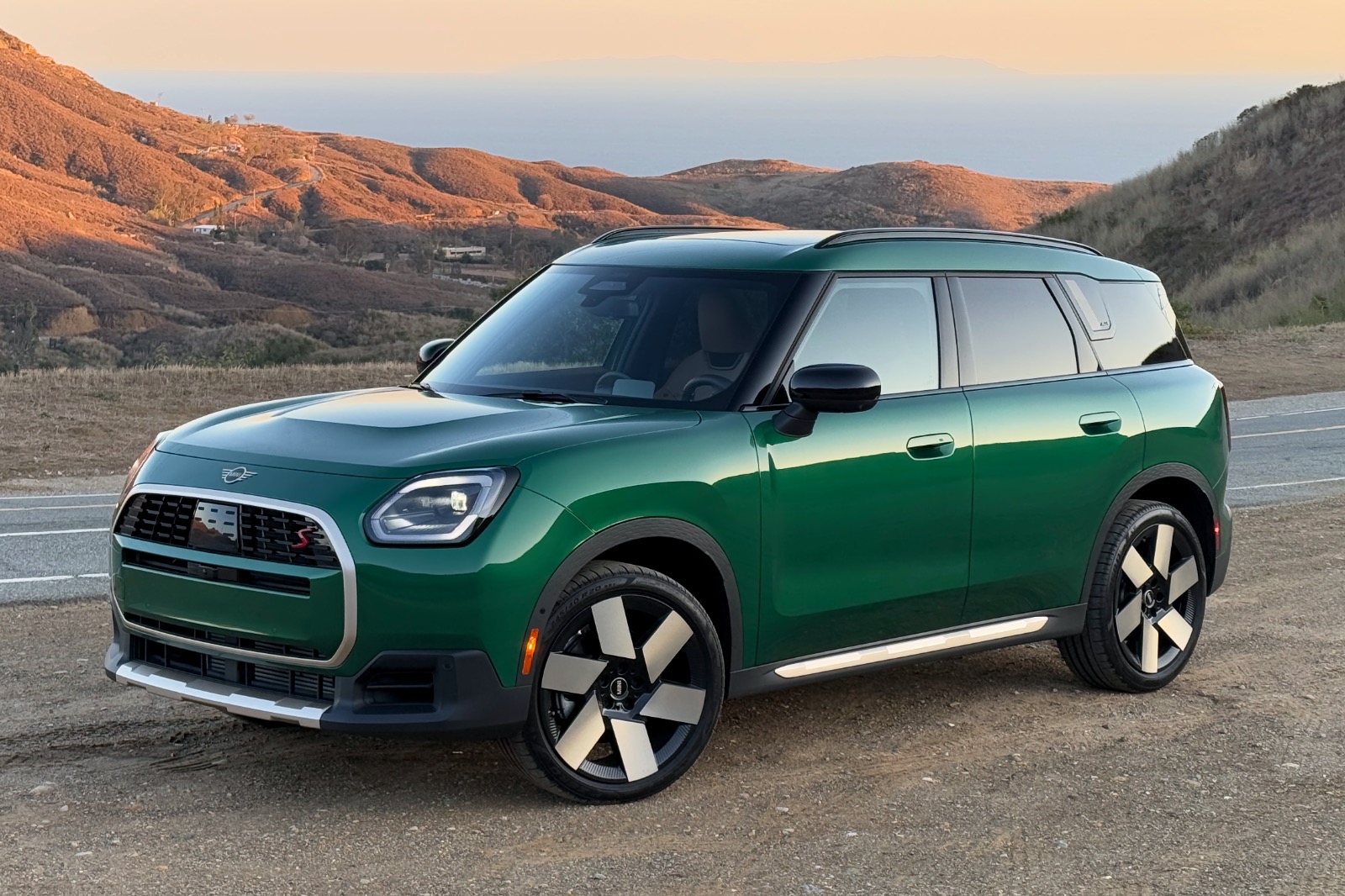
MINI Countryman Third Generation (2025–Present)
The third-generation MINI Countryman debuted in 2025, and grew by about four inches in both length and height. This significant increase put the Countryman on a par with rivals such as the Audi Q3 and the BMW X1 for the first time. Although still vaguely retro, the latest Countryman adopted a modern, generic design, with a more angular look than its predecessors. The larger footprint meant increased rear passenger space, as well as useful extra cargo capacity. Unfortunately, this new Countryman's added size also resulted in a less engaging drive.
The 2025 MINI Countryman was available with three distinctly different powertrains. The base engine was a 2.0-liter turbocharged four-cylinder that produced 241 horsepower, while the John Cooper Works model increased output to 313 hp. Both engines were paired with a seven-speed dual-clutch automatic transmission, and all-wheel drive (AWD) was standard.
The Countryman SE All4 was the all-electric alternative. It had two motors for all-wheel drive, good for a combined 308 hp. It was estimated to return up to 212 miles on a full charge (204 on 19-inch wheels), and was able to DC fast-charge at rates as high as 130 kW. At that speed, the battery could charge from 10% to 80% in about 30 minutes.
The base S All4 trim's standard feature highlights included 18-inch alloy wheels, a power liftgate, a panoramic sunroof, a heated steering wheel and front seats, and wireless Apple CarPlay and Android Auto connectivity. The all-electric SE All4 was similarly equipped and added a navigation system with route planning that incorporated stops for charging.
MINIs are known for extensive customization options, with numerous choices for body and roof paint colors, wheels, exterior graphics, and interior upholstery. Bundled options included a pair of Comfort packages that added a navigation system with augmented reality video overlays, a wireless charging pad, additional camera views, and a hands-free automated driving system (limited to 37 mph).
The John Cooper Works All4 trim was the higher-performance variant. In addition to the more potent engine, it was upgraded to 19-inch wheels, a sport-tuned adaptive suspension, sport brakes, a sport exhaust system, and a premium audio system.
Like the exterior, the current Countryman's interior continued MINI's kitschy retro style. The dashboard was dominated by a large circular infotainment touchscreen, and in place of a traditional instrument panel, a small head-up display screen emerged from the top of the dash. This time, there was a distinct lack of MINI's previous toggle switches and buttons, with most features controlled via the touchscreen. This move complicated some of the most basic functions, requiring several screen taps to adjust elements such as the climate control. The screen shape also restricted Apple CarPlay to a much smaller rectangular section.
The National Highway Traffic Safety Administration (NHTSA) hadn't published crash test results for the latest Countryman at the time of writing, but the Insurance Institute for Highway Safety (IIHS) had. It was awarded the highest score of "Good" in its small overlap frontal crash test, as well as for its updated side impact evaluation, but the newer moderate frontal overlap test had not been conducted.
Standard safety features for the latest Countryman models included forward-collision warning with automatic emergency braking, adaptive cruise control, lane-keep assist, blind-spot monitors with rear cross-traffic alert, and parking proximity sensors. The Active Driving Assistant Pro hands-free automated driving system was available as part of the Comfort Package Max option.
This Countryman generation started out notably trouble-free, with the only recalls issued in 2026 for seatbelt retractors. That lack of initial problems likely contributed to strong residual values compared to other SUVs in the class. According to CarGurus used car price trends data, the inaugural 2025 model year experienced depreciation of less than 4%.
MINI Countryman Second Generation (2017–2024)
The second-generation MINI Countryman looked very similar to the first, even though it grew by a substantial 7.5 inches in length. For the most part, the exterior differences were in the details. The headlights were smaller than before, and the sash-like trim element that extended below the front roof pillar gave way to a badge section that floated in front of the doors. The rear liftgate also incorporated a cutout for the license plate, instead of in the bumper.
Inside, the second-generation Countryman also evolved past themes. The round central display and gauge had obvious nostalgic ties to historic Minis, along with chunky toggle switches that added a certain analog charm that has gone missing in modern cars.
For its debut model year, the second-generation Countryman gave shoppers two engine choices. The base engine was a 1.5-liter turbocharged three-cylinder that produced 134 hp. It was paired with either a six-speed manual or a six-speed automatic transmission, and AWD was standard. The Cooper S trim upgraded to a 189-hp 2.0-liter turbocharged four-cylinder that was available with either a six-speed manual or an eight-speed automatic. Front-wheel drive (FWD) was standard, with AWD available as an option.
Standard features for the base Cooper trim included 17-inch alloy wheels, a panoramic sunroof, synthetic leather upholstery, dual-zone automatic climate control, and a 6.5-inch infotainment display. The Cooper S upgraded to 18-inch wheels, LED headlights, and heated front sport seats. Available options included a hands-free power liftgate, adaptive suspension dampers, a larger infotainment touchscreen, a navigation system, premium audio, a wireless charging pad, and a sporty John Cooper Works appearance package.
For 2018, a legitimate John Cooper Works trim was added. It used an enhanced version of the four-cylinder engine that produced 228 hp and all-wheel drive was standard. Upgrades included a sport-tuned suspension, shift paddles, and racy exterior and interior treatments. That year also introduced the Cooper S E plug-in hybrid, which combined the three-cylinder engine with a rear-mounted electric motor for a total of 221 hp, although the electric-only range was limited to 12 miles. Elsewhere in the lineup, the manual transmission was discontinued for the front-drive Cooper S, and Apple CarPlay became an option.
In 2019, the Countryman models were similarly equipped, with three new sub-trims. The Classic was the base version, while the Signature trim added keyless entry, heated front seats, dual-zone climate control, and a few advanced safety features. The top Iconic trim added the likes of the power liftgate, LED headlights, power-folding mirrors, power-adjustable leather front seats, a larger infotainment screen, navigation, and premium audio.
The Cooper SE Hybrid received a larger battery in 2020, increasing the electric range to 18 miles. The John Cooper Works model also got a power boost to 301 hp, and the base Cooper went with a seven-speed automatic transmission. The following year, the Countryman received a minor styling refresh, along with a digital instrument panel and a new Oxford Edition model. A Boardwalk Edition debuted in 2022 and for 2023 there was an Untamed Edition. That year also saw the end of the base Cooper model and the Classic trim. At the end of the second-generation production, the 2024 Countryman discontinued the S E plug-in hybrid, and the Classic trim was reintroduced.
For the most part, the second-generation MINI Countryman maintained its sporty personality and quirky, retro exterior and interior. The S E plug-in hybrid was a bit of an outlier, but still fun-to-drive—especially for a hybrid. Unfortunately, its short EV range hobbled it for all but the shortest commutes, and the smaller 9.5-gallon fuel tank limited the overall range to only 270 miles.
The NHTSA did not publish crash test results for the second-generation Countryman, but the IIHS gave it top scores and named it a Top Safety Pick in 2017, the Institute's second-highest honor.
Initially, the second-generation Countryman was light on advanced safety features, and standard items included only a rear-view camera and rear parking sensors. Front-collision warning with automatic emergency braking was optional, and adaptive cruise control wasn't added until 2019.
Recalls for this Countryman generation included a missing fuel pump protection plate that wasn't corrected until 2020. Other issues included a problem with the trailer hitch mounting in 2017, an engine crankshaft sensor in 2019, and a passenger seatbelt retractor in 2021. The most serious recall involved a possible battery fire with the S E hybrid in 2020 and 2021.
MINI Countryman models of this era hold their value about as well as competing subcompact SUVs, with CarGurus used car price trends data showing that prices have stabilized between $13,000 and $16,000 for the first few years of production. Later models range from $17,000 to $30,000.
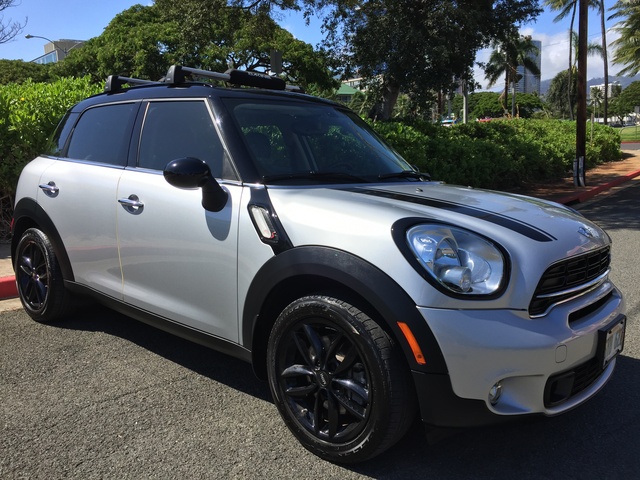
MINI Countryman First Generation (2011–2016)
The MINI Countryman debuted in the 2011 model year, offering shoppers the same charm as other Minis, though with a much more accommodating interior and cargo area. It unmistakably shared the same DNA as the spritely Mini Cooper and the slightly larger Clubman, though it measured 15.1 inches and 5.8 inches longer respectively. In essence, it was an adaptation that cashed in on shoppers' move to SUVs, though initially its rear bucket seats limited passenger capacity to four.
The base 2011 MINI Countryman came with a 1.6-liter four-cylinder engine that produced 121 hp. It was offered with either a six-speed manual or automatic transmission, and only available with front-wheel drive. It was the same base engine as the much smaller MINI Cooper's and rather underpowered for the larger Countryman. The Countryman S increased output to 181 hp and was available with AWD as an option.
The base 2011 Countryman came with 17-inch alloy wheels, synthetic leather upholstery, and the typical standard features found in most cars of the time. The Countryman S had sportier styling, along with sport seats and traction control. As with other Minis, it was eligible for a dizzying array of options and styling enhancements, including a sport-tuned suspension, keyless entry, a dual-pane sunroof, leather seats, heated front seats, navigation, and a premium audio system.
For 2012, a rear bench seat option increased passenger capacity to five. The following year, the John Cooper Works model was added, increasing power output to 211 hp and including AWD as standard. It also upgraded to 18-inch wheels and a sport-tuned suspension. In 2014, the rear bench seat became standard equipment, along with heated mirrors. Supporting models were also eligible for some of the John Cooper Works aesthetic enhancements as options. Automatic climate control became standard in 2015, and 2016 saw the addition of a Park Lane Edition model.
The IIHS awarded the Countryman top scores in crash tests and named it a Top Safety Pick for the 2015 calendar year. The NHTSA did not publish crash test results for this Countryman generation.
Like many compact vehicles of this era, the Countryman wasn’t available with any advanced safety features. Traction control was included with the Countryman S and higher trim levels, with rear parking sensors available as an option.
The MINI Countryman was fairly trouble-free in its early years, with recalls involving the water pump and an electrical issue in 2011 and 2012. There were numerous and serious recalls for 2014 cars for a failed side impact test, and a possible rollaway while parked, while other problems included a faulty passenger seat airbag sensor and airbag. These were addressed by the manufacturer following year. In 2015, a recall was issued for the rear seatback latch, and for 2016, the passenger airbag issue reappeared, along with recalls for the trailer hitch, the turn signal, and the seatbelt retractors.
First-generation MINI Countrymans tended to depreciate at a higher rate than their contemporaries, but prices have recently stabilized. CarGurus used car pricing data puts these first-generation examples between $7,000 and $10,000.
Related Topics