The Mercedes-Benz GLA debuted in 2015 as the new entry point for the German automaker’s crossover range. Smaller and less expensive than the GLK, which was sold from 2010 through 2015, the GLA was based on the same platform as the CLA sedan and similarly offered in two variations. In GLA 250 guise, the small crossover was powered by a 208-horsepower four-cylinder engine and offered in both front-wheel drive (FWD) and all-wheel drive (AWD) forms. The GLA 45 AMG model was much sportier, featuring a 355-hp engine (even more power came later) and standard 4Matic AWD.
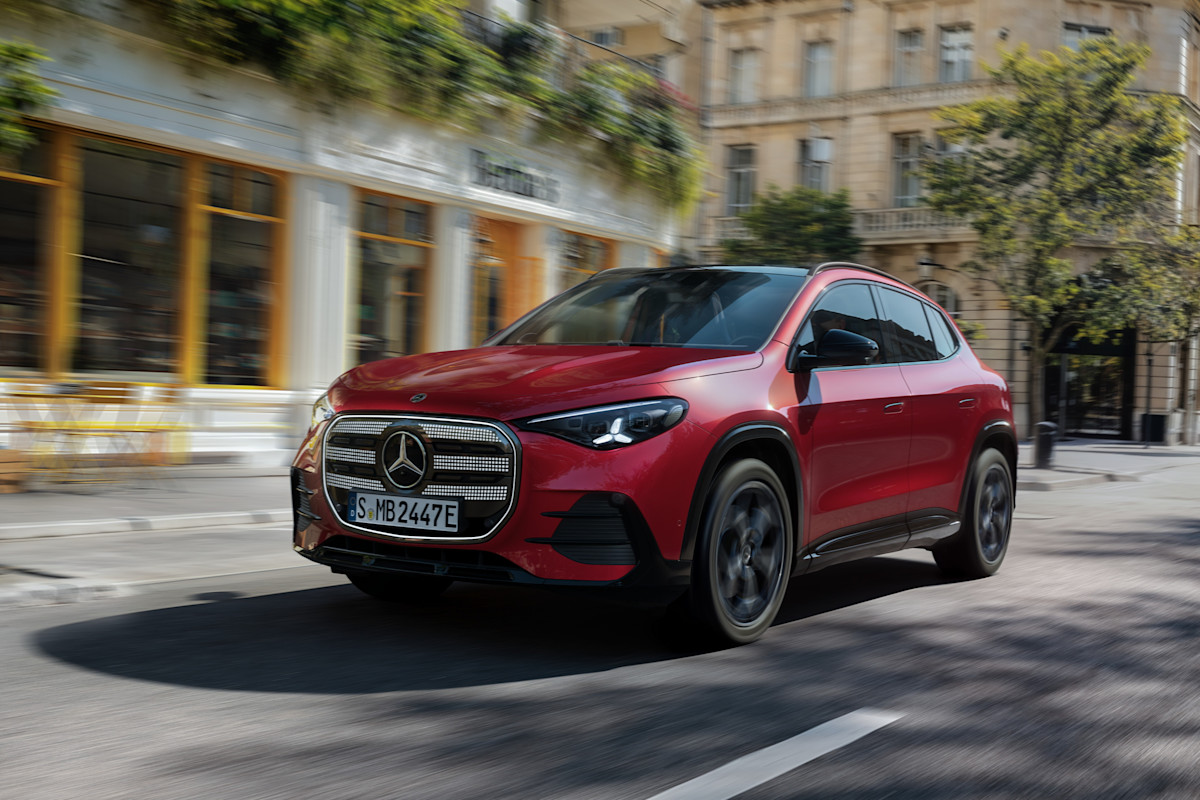
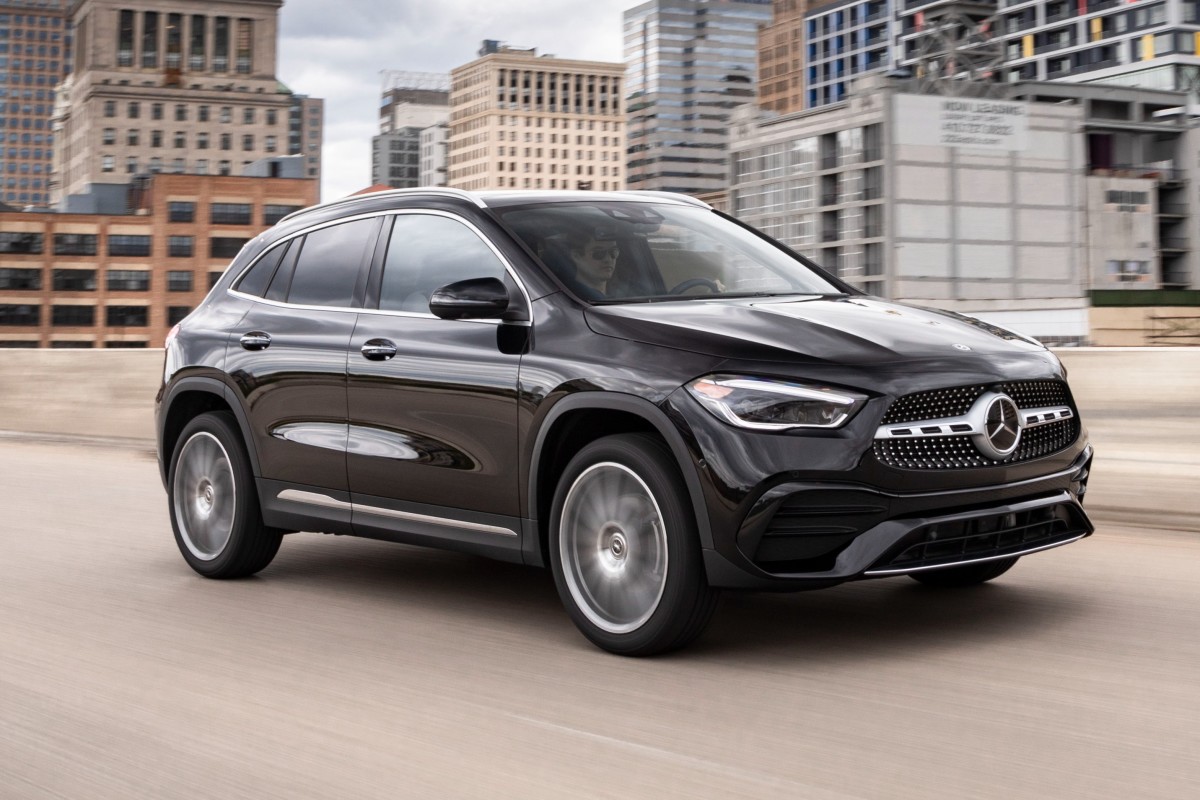
Mercedes-Benz launched a second-generation GLA-Class crossover for the 2021 model year. In place of the jacked-up hatchback look of the first-generation GLA, the redesigned version was larger inside and out, with more ground clearance and a higher seating position that made it feel more like an SUV. It was also more powerful, with the GLA 250 offering 221 hp from its turbocharged engine, a GLA35 AMG model producing 302 hp, and the rip-roaring GLA 45 AMG sending 382 hp to the wheels. Inside, a more luxurious cabin and Mercedes’ MBUX infotainment system kept the redesigned GLA on equal footing against rivals including the Audi Q3, the BMW X1, the Cadillac XT4, Land Rover Range Rover Evoque, the Lexus UX, and the Volvo XC40.
A third generation of the Mercedes-Benz GLA has been announced for the 2028 model year. It will be bigger than the second-generation GLA and offer either hybrid or fully electric powertrain options.
Our Mercedes-Benz GLA-Class buying guide focuses on the first two generations, covering how the model has evolved over time, how much shoppers can expect to pay for one, and which are the best and worst versions to buy.
Mercedes-Benz GLA-Class Buying Guide: Cost, Reliability, and the Best Years to Buy
Frequently Asked Questions
Which Mercedes-Benz GLA-Class years are the best?
The second-generation GLA-Class is generally a better car than the first, due to its improved technology packages, increased size, and better performance. Both generations have solid reliability records, with a very low number of issues raised on CarComplaints.com. There were no faults listed for post-2020 models at the time of writing, though, so the second-generation model—which is also quicker and more practical than the first—is a better bet if budget permits.
Which Mercedes-Benz GLA-Class years are the worst?
There are more issues raised for 2015 GLA models than any other model year, although the overall number is very low. Reliability figures from JD Power suggest that there aren’t any particularly unreliable or bad model years.
Is a used Mercedes-Benz GLA-Class a good deal?
The GLA is the least expensive Mercedes-Benz SUV, but costs more than many similar cars, so buyers who value a premium interior and strong performance over practicality or value are likely to go for the GLA. The AMG models in particular stand out as a good deal for big power in a small package. But buyers with families will find that the GLA—particularly the first generation—is very small inside and doesn’t offer much room for car seats, strollers, or other bulky luggage.
Pros and Cons
Pros:
- Multiple powertrain options
- Powerful engines in AMG models
- Impressive technology
Cons:
- Poor ride quality of AMG models
- Poor handling from non-AMG models
- Not much cargo space
Mercedes-Benz GLA-Class Generations
Mercedes-Benz GLA-Class Second Generation (2021-Present)
The second-generation Mercedes-Benz GLA was a clean-sheet redesign of the automaker’s entry-level crossover. It was taller and wider than the previous version, which in turn resulted in improved interior room and cargo space (15.4 cubic feet with the rear seat upright or 50.5 cubic feet with the seats folded flat). With its more upright design, the 2021 GLA also looked more like a proper SUV than the first one, which had more of a lifted hatchback appearance.
As before, the redesigned GLA was offered with multiple powertrain options. The base GLA 250 was powered by a turbocharged 2.0-liter engine that produced 221 hp and 258 pound-feet of torque. The GLA 250 was offered with either FWD or 4Matic AWD. Mercedes-Benz quoted a 0–60 mph time of 6.8 seconds and a top speed of 130 miles per hour.
A GLA 35 AMG model was also offered, featuring a turbocharged 2.0-liter engine with 302 hp and 295 lb-ft that pushed it from 0-60 mph in 5.1 seconds. The top-shelf GLA 45 AMG variant also used a turbocharged 2.0-liter engine, with 382 hp and 354 lb-ft of torque giving a 0-60 mph time of just 4.3 seconds. Both AMG-badged GLA models came standard with 4Matic AWD.
The GLA came standard with an eight-speed dual-clutch automatic transmission across all powertrains. The GLA 35 AMG got a performance-enhanced version of 4Matic AWD, while the GLA 45 AMG benefited from AMG Torque Control that could actively vary how much power was sent to each wheel for improved traction and handling.
Both GLA AMG models got upgraded engine cooling, brakes, wheels, and tires. They were also equipped with Slippery, Comfort, Sport, Sport+, and Individual drive modes. The GLA 45 AMG got additional Pro and Master drive modes intended for high-speed driving, particularly on twisty race tracks, along with chassis and body structure reinforcements to improve rigidity. GLA 45 AMG buyers who chose the AMG Dynamic Plus package got an additional Race mode.
The 2021 GLA came standard with a pair of 7-inch digital screens, while 10.25-inch screens were optional. Either way, the Mercedes-Benz User Experience (MBUX) infotainment system was standard and Bluetooth, Apple CarPlay, and Android Auto were supported. The MBUX system could be operated by using the touchscreen or a console-mounted touchpad. Voice prompts were included, activated by saying “Hey Mercedes”. Optional tech features included a 12-speaker Burmester audio system, a head-up display, and wireless smartphone charging. A panoramic sliding sunroof, heated and ventilated front seats, a heated steering wheel, and adaptive suspension were also on the options list.
Neither the National Highway Traffic Safety Administration (NHTSA) nor the Insurance Institute for Highway Safety (IIHS) tested the second-generation GLA for crashworthiness. Standard safety equipment included automatic emergency braking, crosswind assist, and a driver-attention monitor. An optional driver assistance package added adaptive cruise control, lane-centering assist, lane-keep assist, and blind-spot monitors among other functions.
There were no significant changes in 2022 or 2023, but the 2024 model year brought notable updates to the lineup. Mercedes-Benz refreshed the GLA’s exterior styling, added standard LED headlights, and made the larger pair of 10.25-inch digital screens standard. A 48-volt mild hybrid system was added to the GLA 250’s 2.0-liter turbocharged engine that could add a 13-hp bump, but maximum power and fuel efficiency figures remained the same. The GLA 45 AMG was dropped for 2024, but the GLA 35 AMG remained and received the same updates as the GLA 250, including the mild hybrid assist system.
No real changes were made in 2025, but Mercedes added a no-charge AMG Line Lite exterior package to the GLA 250 for 2026 that included a rear spoiler and 19-inch AMG wheels. A Midnight Edition joined the lineup, bringing 20-inch AMG wheels and a Night Package with blacked-out exterior trim. Also new was an optional AMG Night Package including an aggressive body kit, upgraded brakes, sport seats and a flat-bottomed steering wheel, and carbon-style interior trim. New for the 2026 GLA 35 AMG was an AMG Design Plus Package with Alpine Grey non-metallic paint, the blacked-out AMG Night Package, and matte black 19-inch AMG 10-spoke wheels.
Second-generation GLA prices started out fairly high, and got higher over time. In 2021, the Mercedes-Benz GLA 250 started at about $37,000, but by 2026 the equivalent price was more than $41,000. At the time of writing, CarGurus used pricing data had the average list price of a 2021 Mercedes-Benz GLA at less than $23,000, while 2022 and 2023 models were closer to $30,000. Those prices aren’t far from the average cost of a used BMW X1, but newer Volvo XC40 models are more affordable. A 2024 or 2025 GLA 35 AMG with low mileage costs about $40,000, which is reasonable for a small performance-oriented crossover.

Mercedes-Benz GLA-Class First Generation (2015-2020)
Mercedes-Benz had some catching up to do in 2015 when it debuted the GLA crossover lineup, which consisted of the GLA 250 and the GLA 45 AMG. Rival BMW had beaten Mercedes to the segment, unveiling its X1 two years prior in 2013. In fact, the second-generation BMW X1 hit the showroom floor just a year after the first GLA was launched.
Audi also entered the premium subcompact SUV segment in 2015 with the Q3, meaning buyers had choices from all three major German automakers. Compared to the boxy BMW X1 and its rear-wheel-drive chassis, the front-wheel-drive 2015 Mercedes-Benz GLA was low-slung and sleek. The GLA’s interior space was competitive with the Audi and the BMW, but its rakish rear ate into cargo capacity, resulting in a relatively small 11.8 cubic feet of space with the rear seat in place or 42 cubic feet with the seat folded flat.
In addition to the high-output AMG model that featured an aggressive makeover, Mercedes offered its smallest crossover SUV in more subtle GLA 250 and GLA 250 4Matic (AWD) forms. Power for GLA 250 models came from a turbocharged 2.0-liter four-cylinder with 208 hp and 258 lb-ft of torque. A seven-speed dual-clutch automatic transmission with shift paddles sent that power to the front wheels of GLA 250 models and to all four wheels in GLA 250 4Matic models.
Mercedes equipped the 2015 GLA-Class with a 5.8-inch infotainment screen, but an improved 7-inch unit became standard in 2016, along with keyless ignition and dual-zone climate control. The 2016 GLA 45 AMG got a boost with an additional 20 hp and 18 lb-ft of torque, resulting in power figures of 375 hp and 350 lb-ft. In 2017, Apple CarPlay and Android Auto functionality were added to the GLA’s infotainment system.
A mild refresh for 2018 brought updated styling front and rear, a redesigned gauge cluster, chrome interior highlights, and a standard 8-inch infotainment screen. A rear-view camera also became standard in 2018. There weren’t any significant changes to the GLA lineup in 2019 or 2020, and an all-new second-generation GLA-Class model arrived for the 2021 model year.
Neither NHTSA nor the IIHS tested the first-generation GLA for crashworthiness, but it featured some desirable safety equipment. The 2015 GLA 250 came standard with a driver-attention monitor and automatic emergency braking. Other advanced safety tech, such as blind-spot monitors and lane-keep assist, were optional.
At the time of writing, CarGurus pricing data showed prices for first-generation Mercedes-Benz GLA models started at about $9,000 for cars with less than 100,000 miles. Later, high-spec models can cost up to $24,000 or so, and the 45 AMG models range from about $15,000 to $30,000.
Related Topics