Audi was a little late to the SUV game compared with its traditional German rivals, introducing its first one (the Q7) several years after Mercedes and BMW debuted their inaugural modern SUVs. Its first subcompact crossover SUV, the Q3, was launched in 2011, although it didn’t make it to American shores until 2015. Since then, the Q3 has continued to give shoppers a smaller alternative to the compact Audi Q5 and the midsize Audi Q7, serving as the entry-level SUV in Audi’s U.S. range.
Over the course of three generations the Q3 has grown and acquired new tech, but its character has remained much the same. Like most other Audis, it represents something of a middle ground between its BMW and Mercedes-Benz counterparts in terms of its balance of sportiness and luxury.
Our Audi Q3 buying guide looks at the model’s history, the best and worst versions to buy, and how much shoppers can expect to pay for one.
Audi Q3 Buying Guide: Cost, Reliability, and the Best Years to Own
Frequently Asked Questions
Which Audi Q3 years are the best?
A later version of the second-generation 2019-2025 Audi Q3 is arguably the best used buy. They have a good reliability record and a more comfortable ride quality than the newest, third-generation Q3. The first and second Q3 generations are generally reliable, while the third-generation is too new for any concrete reliability data.
Which Audi Q3 years are the worst?
CarComplaints.com suggests that 2016 and 2020 are comparatively bad years for the Audi Q3, although the overall number of complaints is very low. Engine problems are the main issue for 2015 models, while almost all of the problems with 2020 cars relate to windshields or windows.
Is a used Audi Q3 a good deal?
A new Audi Q3 is priced competitively against its main rivals from BMW and Mercedes-Benz. On the used market, the Q3 has held its value about as well as the average luxury SUV, buoyed by a relative lack of serious recalls and high customer satisfaction scores.
Pros and Cons
Pros:
- Comfortable and quiet
- Refined interior
- Standard AWD (later models)
Cons:
- Subpar fuel economy
- Early generations lack performance
- Some rivals have more rear-seat space
Audi Q3 Generations
Audi Q3 Third Generation (2026–Present)
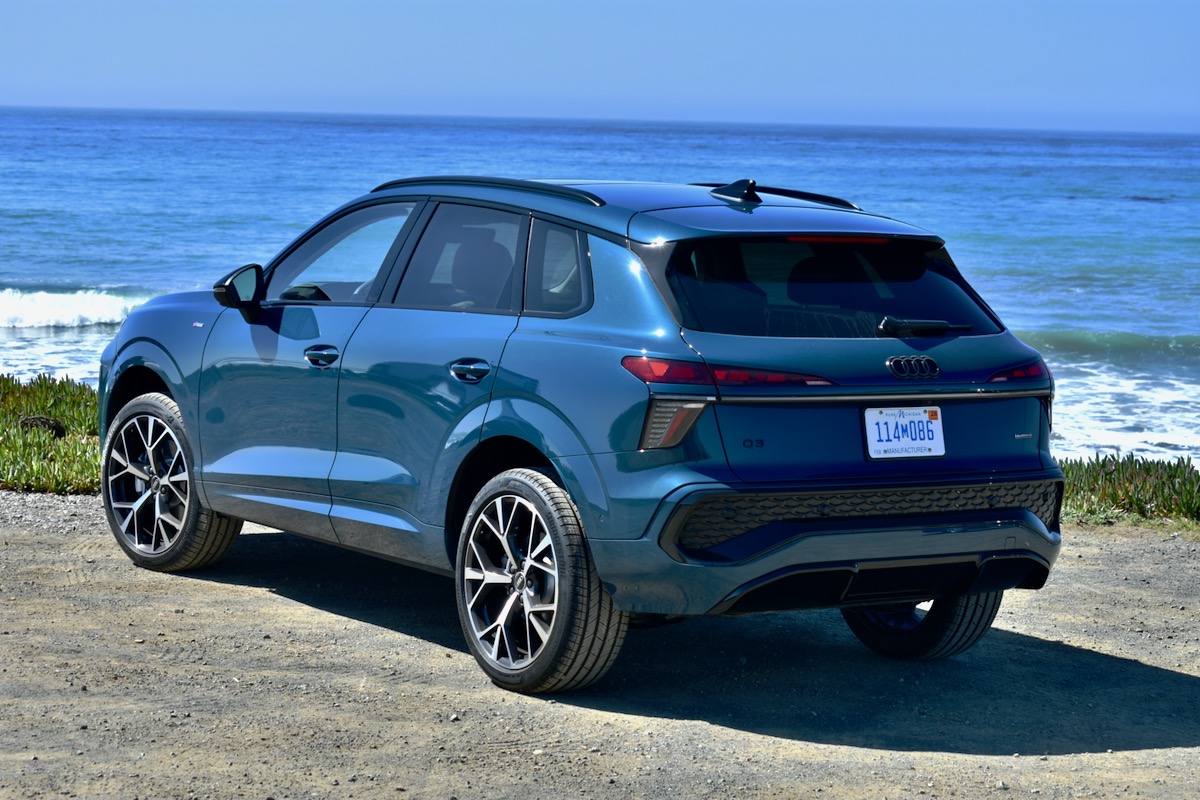
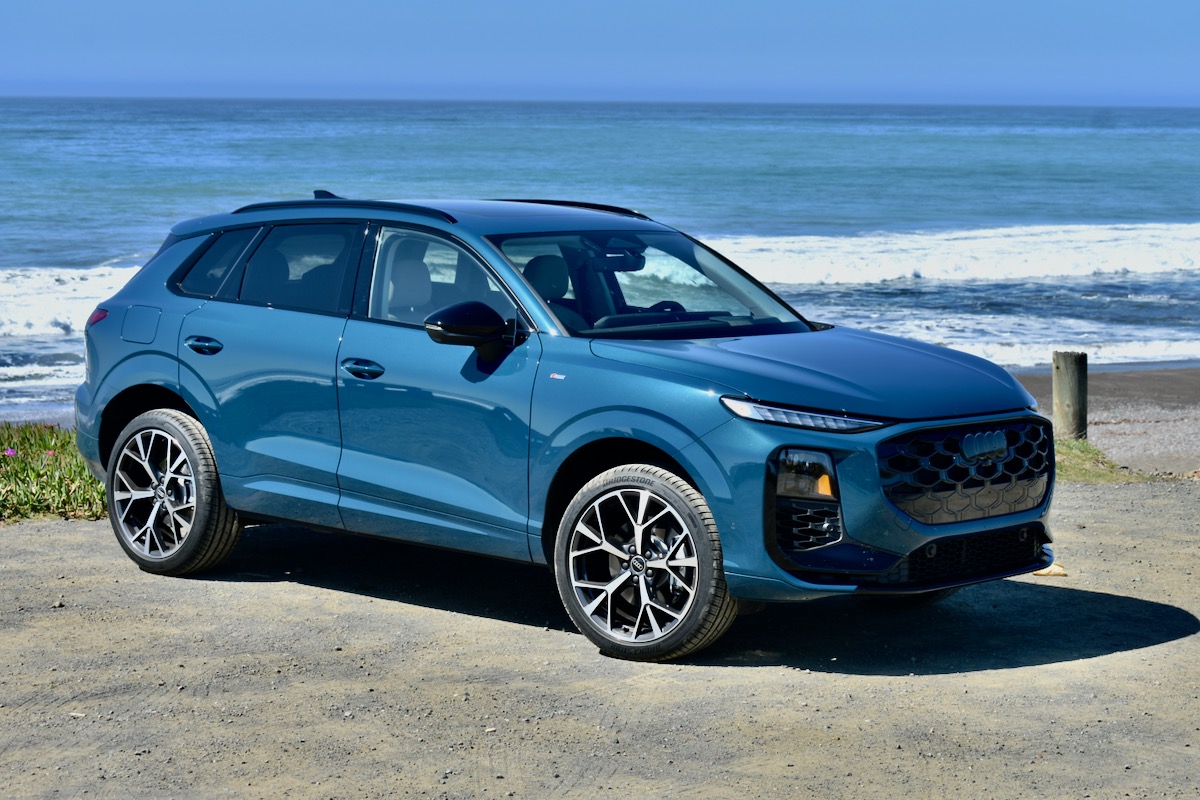
The third-generation Audi Q3 debuted in the 2026 model year looking very much like a scaled-down version of the larger Q5. The front fascia is notable for its large cutouts flanking the grille, which mimic air intakes but actually house the headlights. Pixelated LED accent lights above these somewhat awkward cutouts make it look more modern and racier than its understated predecessor. The interior switched to a minimalistic design that features a simple dashboard, a wide pane of glass housing the instrument panel and infotainment touchscreen, and fewer physical buttons. Size-wise, the current Q3 has grown only slightly by 2.2 inches in length.
The single powertrain available for the third-generation Q3 is a 2.0-liter turbocharged four-cylinder that produces 255 horsepower and 273 pound-feet of torque. A seven-speed automatic is the only available transmission, and all-wheel drive is standard. Unlike its larger Audi SUV siblings, the Q3 isn’t available in the coupe-like Sportback model or higher-performing S and RS models in the U.S.
At the time of writing, the 2026 Audi Q3 was only available in a single trim level. Standard feature highlights included 18-inch alloy wheels, heated and power-folding mirrors, and a panoramic sunroof. Inside, it had tri-zone automatic climate control, leather upholstery, heated front seats, wireless Apple CarPlay and Android Auto integration, wireless charging, an 11.9-inch digital instrument panel, and a 12.8-inch infotainment touchscreen. Forward-collision warning with automatic emergency braking was also included, along with adaptive cruise control, blind-spot monitors with rear cross-traffic alert, lane-departure warning, and parking sensors.
The available Driver Assistance package added a hands-on highway driving assist system, a semi-automated remote parking system, a surround-view camera system, and a heated steering wheel. Other notable options include a 12-speaker Sonos audio upgrade and a head-up display.
The 2026 Q3 was estimated to return 22/29 mpg city/highway and 25 mpg in combined driving. These estimates are about 3 mpg lower than those of its BMW X1 and Mercedes-Benz GLA-Class rivals.
Crash test scores from either the National Highway Traffic Safety Administration (NHTSA) or the Insurance Institute for Highway Safety (IIHS) hadn't been published at the time of writing. There was also no data available regarding recalls or depreciation.
The third-generation Audi Q3 went on sale in early 2026, priced at $44,995 (including destination) before options.
Audi Q3 Second Generation (2019–2025)
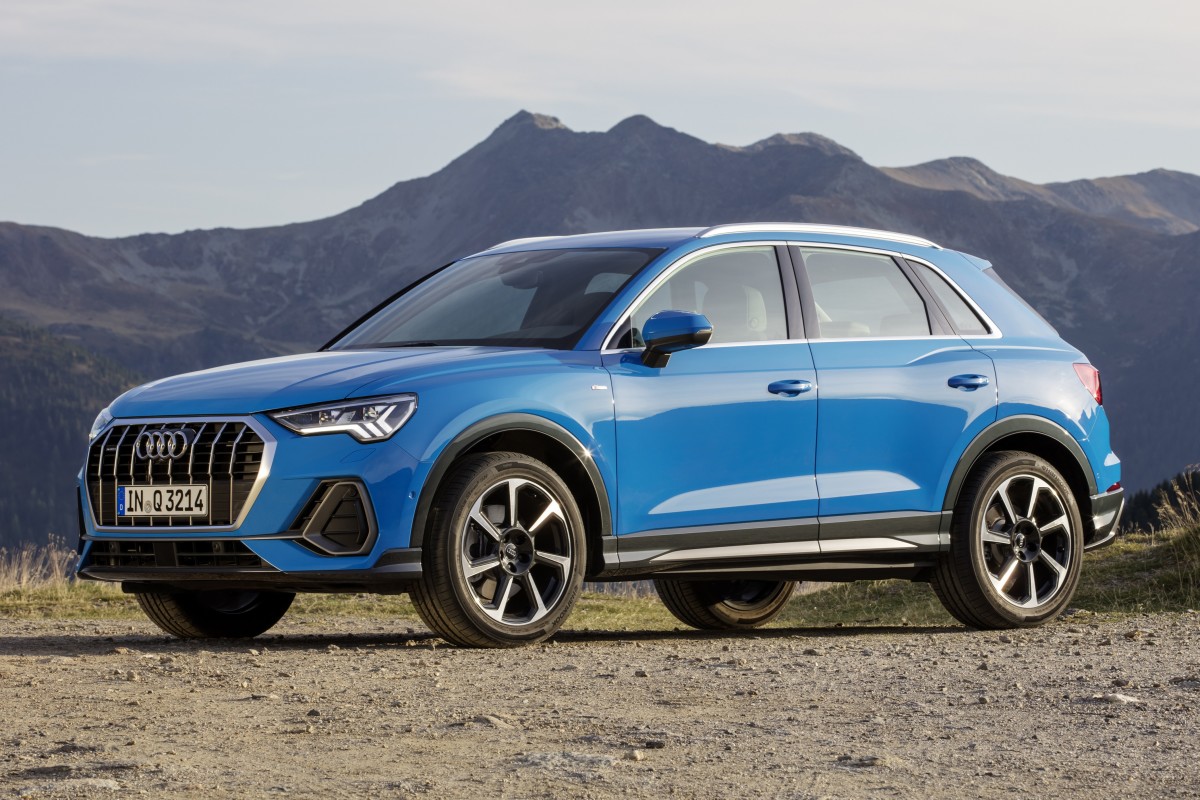
The second-generation Audi Q3 grew by almost four inches and looked its size courtesy of its flatter and wider hood. The side featured sharp body creases that narrowed in the doors and flared out over the fenders, giving it a sportier and wider appearance. The rear represented more of an evolution of its predecessor, rather than a complete rethink.
The 2019 Q3 was powered by a 2.0-liter turbocharged four-cylinder engine that produced 228 hp and 258 lb-ft of torque, paired with an eight-speed automatic transmission that sent power to all four wheels. It needed about 7.5 seconds to accelerate to 60 mph, which was slower than the BMW X1 and Mercedes-Benz GLA-Class of the time. While the power deficit was noticeable, the Q3 cornered with confidence. The ride was on the firm side as a result, but not to a fault.
The 2019 Audi Q3 was available in three trim levels—Premium, Premium Plus, and Prestige S Line. The base Premium trim included 18-inch alloy wheels, a power liftgate, and a panoramic sunroof. Interior features included leather upholstery, heated front seats, an 8.8-inch infotainment touchscreen, and Apple CarPlay and Android Auto. Advanced safety features included forward-collision warning with automatic emergency braking.
The Premium Plus enhanced the Q3 experience with keyless entry/ignition, a wireless charging pad, blind-spot monitors with rear cross-traffic alert, lane-departure warning, and parking sensors. The top Prestige S Line model added power-folding mirrors, a digital instrument panel, a 10.1-inch infotainment touchscreen, a navigation system, interior ambient lighting, and remote vehicle monitoring and control via a smartphone app. Safety enhancements included adaptive cruise control, a surround-view camera system, and a semi-automated parking system.
For 2021, the Prestige S Line trim was eliminated, with most of its features made available in the Parking Assistance and Technology packages. The entry-level Premium trim upgraded to the digital instrument panel and added lane-departure warning. The mid-range Premium Plus gained adaptive cruise control. This model year introduced a lower-output engine called the 40 TFSI, which produced 184 horsepower and 221 pound-feet of torque. The previous 228-hp engine was renamed the 45 TFSI.
In 2022, a new infotainment operating system debuted with quicker responses and expanded availability of many safety features. Elsewhere, the Premium trim added blind-spot monitors with rear cross-traffic alert and parking sensors. A hands-free power liftgate function was included with the Premium Plus trim, along with interior ambient lighting, a surround-view camera system, and lane-keep assist. Meanwhile, wireless Apple CarPlay was offered with the optional Technology package, as was Amazon Alexa integration, and a Sonos premium audio system.
In 2023, the Audi Q3 saw only minor changes, including the switch to a standard wireless charging pad. The following year, adaptive cruise control and lane centering became standard on all Q3s. For the final year of the second-generation, the 2025 Q3's base 40 TFSI engine was discontinued.
The NHTSA awarded the second-generation Audi Q3 an overall rating of five out of five stars for all model years. The IIHS also gave the Q3 top scores for 2019 and 2020 and named it a Top Safety Pick+, the Institute's highest honor. In 2021, the new moderate frontal overlap crash test yielded a second-worst "Marginal" score, which resulted in the loss of its Top Safety Pick+ award.
The second-generation Audi Q3 has a fairly trouble-free history with relatively few problems listed on CarComplaints.com, but there have been some recalls. In its inaugural 2019 model year, recalls were issued for the tire pressure monitors, a possible steering lockup, and the passenger-side airbag. These were addressed before the next year, but recalls were then issued for a weak brake pedal plate and a faulty driver's seat bolt.
In 2021, defective fuel filler vents and seatbelt retractors triggered new recalls, which persisted into 2022, when there were also issues with the rear-view camera and rear-window. There was a recall for the front passenger airbag in 2023, and the following year, another rear-view camera problem, which carried over into 2025.
Over time, the second-generation Audi Q3 retained its value as well as other luxury SUVs in its class, although it also tended to cost a few thousand dollars less when new. CarGurus used car price trends have early model years settling in the $19,000 to $21,000 range, while later examples are estimated between $25,000 and $30,000.
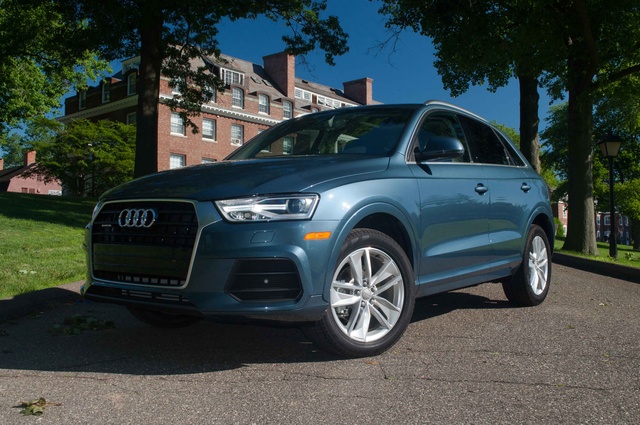
Audi Q3 First Generation (2015–2018)
The original Audi Q3 went into production in 2011 but wasn't imported into the U.S. until the 2015 model year. It coincided with a styling change for all Audi vehicles that gave the grille more angular corners than the rounded frame that preceded it. It was in this era that subcompact luxury SUVs began making their way to the North American market, with the BMW X1 debuting in 2013 and the Mercedes-Benz GLA-Class in 2015.
Under the hood of the 2015 Audi Q3 was a 2.0-liter turbocharged four-cylinder engine good for 200 hp and 207 lb-ft of torque. A six-speed automatic transmission was standard, while shoppers could choose between FWD or AWD. It was a fairly unimpressive powertrain, and the BMW X1 was far more potent. The Q3 also had a softer suspension, which made it less capable at cornering, but it was more comfortable.
The 2015 Q3 was offered in two trim levels: Premium Plus and Prestige. Standard features included 18-inch alloy wheels, a panoramic sunroof, rain-sensing wipers, roof rails, remote keyless ignition and entry, leather upholstery, heated front seats, dual-zone automatic climate control, a 7-inch infotainment screen that rose from the dashboard, SiriusXM satellite radio, and a CD player. The Prestige trim added a power liftgate, power-folding mirrors, a navigation system, a 14-speaker Bose audio system, a Wi-Fi hotspot, parking proximity sensors, a rear-view camera, and blind-spot monitors.
In its follow-up year, the 2016 Q3 received a styling refresh with a more prominent grille frame that bridged the gap to the headlights. Subtle though the change was, it made the front end look more angular and sportier. New standard features included parking proximity sensors and a rear-view camera. The Prestige trim further added 19-inch wheels, LED headlights, and a few extra S Line styling embellishments.
A new Premium base trim was added to the lineup for 2017 and was similarly equipped to the previous year's Premium Plus trim, but added rear parking sensors. The 2017 Premium Plus trim added power-folding mirrors, a power liftgate, keyless entry, an auto-dimming rear-view mirror, and an iPhone/iPod cable. The top Prestige feature content carried on mostly unchanged that year. In 2018, the first-generation Q3's final year, heated seats were added to the Premium trim and the top Prestige trim was discontinued, with most of its features made available as options.
The NHTSA didn’t publish crash test results for the first-generation Audi Q3, but the IIHS did. The 2015 Q3 received top scores in crashworthiness tests and was named a Top Safety Pick, the Institute's second-highest honor. Scores remained consistent throughout production, but lost Top Safety Pick status after the first year.
Recalls were few and minor for the original Audi Q3. They included issues with the side marker lights, the sunroof, brake lights that didn't illuminate when the parking brakes were used in emergencies, and the front turn signals. Over time, these early Q3s retained their value as well as most other subcompact luxury SUVs of the era.
In an apples-to-apples comparison between similarly equipped rivals of the time, the first-generation Audi Q3 depreciated at an average rate. CarGurus used car price trends has prices stabilizing between $10,000 to $14,000.
Related Topics