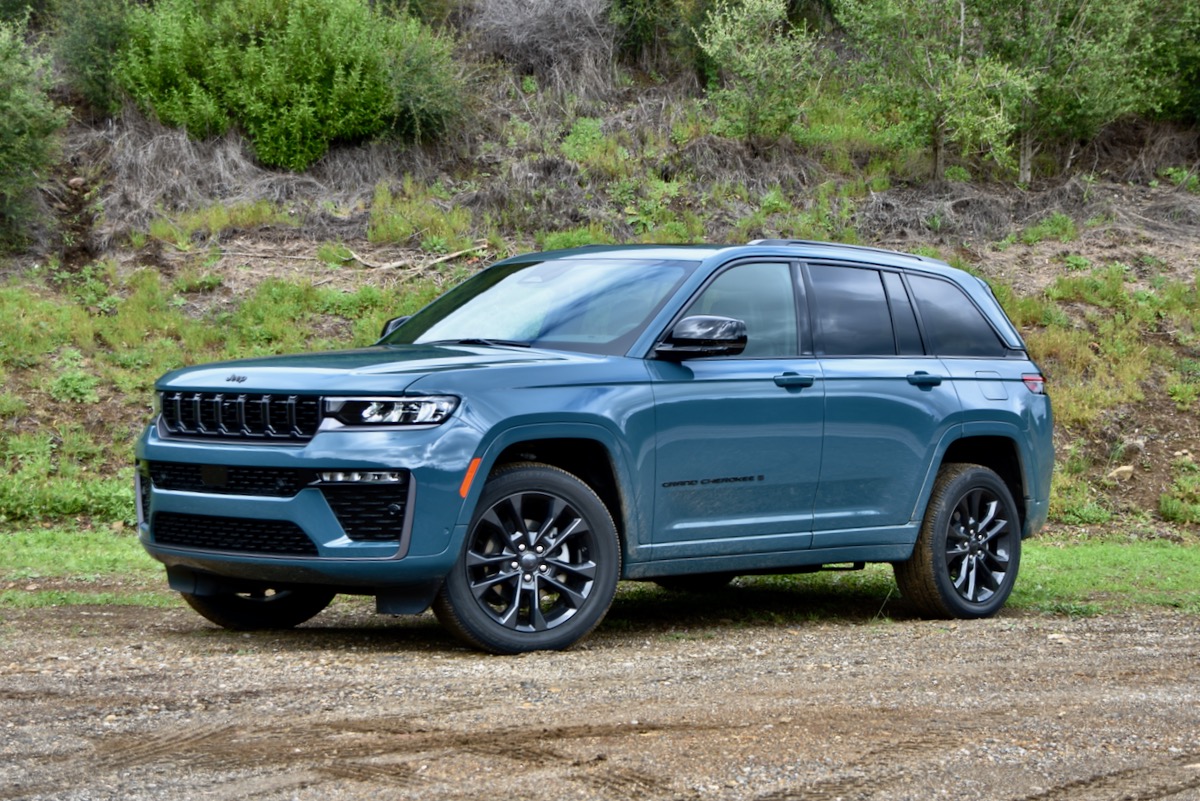
What is a Good Price for a Used Grand Cherokee in Pittsburgh?
Used Grand Cherokees in Pittsburgh average $23,510 — essentially matching the national average of $23,568. While there’s no price discount here, Pittsburgh buyers benefit from significantly lower mileage and better vehicle histories at that price point.
Price by Model Year in Pittsburgh
The Grand Cherokee spans five generations, but the used market concentrates on the fifth-generation (2022–present) and the long-running fourth-generation (2011–2021). The fourth generation received major updates in 2014 and 2017, creating distinct tiers of features and reliability within the same generation. Third-generation models (2005–2010) are available at the lowest prices but come with notable reliability caveats.
| Model Year | Pittsburgh Avg. Price | National Avg. Price | Pittsburgh Avg. Mileage |
|---|
| 2025 | $37,535 | $38,248 | 21,219 miles |
| 2024 | $38,969 | $34,795 | 21,414 miles |
| 2023 | $31,772 | $31,764 | 41,136 miles |
| 2022 | $30,114 | $29,134 | 49,744 miles |
| 2021 | $24,278 | $23,561 | 66,067 miles |
| 2020 | $22,738 | $21,271 | 77,953 miles |
| 2019 | $18,865 | $19,020 | 90,551 miles |
| 2018 | $17,988 | $17,155 | 84,818 miles |
| 2017 | $16,130 | $14,897 | 91,566 miles |
| 2016 | $7,995 | $13,756 | 134,846 miles |
| 2015 | $14,148 | $12,205 | 97,668 miles |
| 2014 | $11,453 | $10,972 | 137,493 miles |
Fifth Generation (2022–2025): $30,114–$38,969
The newest Grand Cherokee is almost an entirely new vehicle, with a more refined interior, advanced technology including Active Driving Assist, and three available four-wheel-drive systems. The 2025 model year shows the best Pittsburgh value at $37,535 — 1.9% below the $38,248 national average. The 2024 model carries a notable Pittsburgh premium at 12.0% above national pricing ($38,969 vs. $34,795), likely reflecting strong local demand for low-mileage examples — Pittsburgh 2024 models average just 21,414 miles versus 33,595 nationally.
Later Fourth Generation (2017–2021): $16,130–$24,278
The sweet spot for most Pittsburgh buyers. These model years benefit from the 2017 update that added a standard backup camera, the Trailhawk off-road trim, and — from 2018 onward — standard Apple CarPlay and Android Auto. The 2019 model year offers the best local pricing at $18,865, 0.8% below the national average of $19,020, with Pittsburgh mileage 4.1% lower than national. The 2021 model averages $24,278 with 66,067 miles locally — notably fresher than the 76,159-mile national average.
Mid Fourth Generation (2014–2016): $7,995–$14,148
The 2014 refresh introduced the eight-speed automatic transmission, a new dashboard layout, forward-collision warning, and the upscale Summit trim. Pittsburgh pricing in this range varies widely: the 2016 stands out at just $7,995 — a striking 41.9% below the $13,756 national average — though local mileage is higher at 134,846 miles. The 2014 at $11,453 offers the first year of significant improvements at an accessible price, though buyers should be aware that early fourth-gen models have more reliability concerns than later years.
Early Fourth Generation (2011–2013) and Third Generation (2005–2010)
These model years fall below the data range but represent the most affordable entry into Grand Cherokee ownership. The MOBG flags early fourth-gen models (especially 2011) as the most problematic Grand Cherokees ever made — electrical and engine troubles are widespread. The third generation (2005–2010) also has build quality concerns. Budget buyers should strongly consider stretching to a 2014 or newer model for meaningfully better reliability.
Understanding the Pittsburgh Price Context
Near-parity pricing with a condition edge: Pittsburgh’s 0.2% discount versus the national average is negligible in dollar terms, but the local condition advantage is significant. Pittsburgh Grand Cherokees average 71,578 miles versus 79,877 nationally — that 10.4% mileage gap means you’re getting fresher vehicles for essentially the same price.
Four-season demand: Western Pennsylvania’s snowy winters and hilly terrain drive consistent demand for capable four-wheel-drive SUVs. The Grand Cherokee’s Quadra-Trac and Quadra-Drive systems are genuinely useful here, which supports pricing — especially on well-equipped models with 4WD.
Strong accident-free inventory: 80% of Pittsburgh Grand Cherokee listings carry accident-free histories versus 76% nationally. That four-point edge is notable and suggests the local supply skews toward well-maintained suburban examples rather than heavily used fleet vehicles.
Good and Great Deals in Pittsburgh
27% of Pittsburgh Grand Cherokee listings qualify as Good or Great Deals — compared to 34% nationally. The lower deal rate reflects Pittsburgh’s pricing at national parity — there are fewer outlier bargains in this market. Buyers should focus on the condition advantage (lower mileage, higher accident-free rates) rather than hunting for deep discounts.
| Deal Rating | Pittsburgh Percentage | National Percentage |
|---|
| Great Deals | 6% | 9% |
| Good Deals | 21% | 25% |
The 2019 and 2016 model years offer the most competitive local pricing relative to national averages. The 2016 in particular shows a dramatic discount, though buyers should verify condition carefully given the higher average mileage on those listings.
What is the Most Reliable Used Grand Cherokee in Pittsburgh?
The Grand Cherokee’s reliability record varies more sharply by generation than almost any other popular SUV. Some eras are genuinely dependable; others are among the most problematic vehicles in their class. In a market like Pittsburgh — where winter salt, potholes, and temperature swings stress every mechanical system — choosing the right generation matters even more.
Most Reliable by Era
Fifth Generation (2022–Present):
The newest Grand Cherokee has a decent early repair record and most examples are still under factory warranty. Built on an entirely new platform with a 3.6-liter V6 (293 hp) as the standard engine, these models benefit from modern engineering and Stellantis’ investment in quality improvement. Pittsburgh 2022 models average 49,744 miles — 12.9% below the national average of 57,108 — suggesting well-maintained local examples. For 2026, the new 2.0-liter Hurricane 4 Turbo engine (324 hp) replaces the V6, promising better performance and efficiency.
Later Fourth Generation (2015–2021):
Far more reliable than their early-2010s predecessors, these models benefit from continuous refinements to the 3.6-liter Pentastar V6 and 5.7-liter Hemi V8 powertrains. The 2017 update brought the Trailhawk trim, standard backup camera, and improved infotainment. The 2018 added Apple CarPlay and Android Auto as standard. Pittsburgh inventory from 2019 averages 90,551 miles — 4.1% below the national average — and these are proven, well-understood vehicles. Electrical issues are far less common than in earlier fourth-gen models.
Early Fourth Generation (2011–2014) — The Problem Era:
Almost universally regarded as the most problematic Grand Cherokees ever built. The 2011 model year is the worst offender, with widespread electrical faults, engine troubles, interior quality failures, and fuel system problems. The 2012–2013 models are only marginally better. The 2014 refresh brought the eight-speed automatic, new dashboard, and driver-assist features, which improved matters — but this remains a riskier era than what followed. Pittsburgh 2014 models average 137,493 miles, so any purchase demands a thorough pre-purchase inspection.
Third Generation (2005–2010):
Build quality is the primary concern here. The WK-series Grand Cherokee introduced independent front suspension and more modern powertrains, but interior quality was subpar and various mechanical issues crop up with age. The cramped cabin and lack of a telescoping steering wheel are additional downsides. In Pittsburgh, where road salt accelerates corrosion, third-gen undercarriage rust is a real concern. These are best left to buyers who want a cheap project or a dedicated off-roader.
First and Second Generations (1993–2004):
The original ZJ (1993–1998) is famously robust mechanically but notoriously rust-prone — a serious liability in Pittsburgh’s salt-heavy winters. Second-gen WJ models (1999–2004) are generally more reliable than the third generation, but at this age, condition varies enormously and any purchase is essentially buying individual vehicle history, not generational reliability.
Key Improvements by Model Year — Fourth Generation (2011–2021)| Model Year | Key Improvements |
|---|
| 2014 | Eight-speed automatic, revised dashboard, forward-collision warning, adaptive cruise control, Summit trim introduced, diesel V6 option |
| 2017 | Standard backup camera and rear parking sensors, Trailhawk off-road trim debut with upgraded air suspension and limited-slip differential |
| 2018 | Standard 7-inch touchscreen, Apple CarPlay and Android Auto, Trackhawk (707 hp) introduced |
Grand Cherokee-Specific Reliability Considerations
Electrical Systems (2011–2014):
The most common complaint across early fourth-gen models. Issues range from erratic dashboard displays and Uconnect infotainment failures to more serious problems with lighting, power windows, and door locks. Pittsburgh’s freeze-thaw cycles can worsen electrical connector corrosion. If considering a 2011–2014 model, budget for potential electrical repairs.
Push-Button Shifter Recalls (Late 2010s):
Many fourth-gen Grand Cherokees were recalled for the push-button electronic shifter, which made it difficult to tell whether the vehicle was in gear. This was addressed through software updates, but verify that any 2014–2018 model you’re considering has had the recall completed.
Engine and Fuel System (2011–2013):
Early Pentastar V6 models experienced fuel system problems and, less commonly, engine issues. The 5.7-liter Hemi V8 is generally more robust in these years, but the V6 is far more common. By 2014, most of these issues had been resolved.
Rust and Corrosion (All Generations):
This is particularly relevant for Pittsburgh buyers. Pennsylvania’s liberal use of road salt accelerates underbody corrosion on any vehicle, and Grand Cherokees are no exception. The first-generation ZJ is famously rust-prone. On any used Grand Cherokee in this market, inspect the frame, suspension components, and brake lines carefully for corrosion — especially on models with over 100,000 miles.
What to Check When Buying
- Underbody rust inspection: Non-negotiable for any Pittsburgh purchase. Check frame rails, suspension mounts, brake lines, and exhaust components. Road salt damage is cumulative and can create expensive structural problems.
- Electrical system scan: Run a full OBD-II diagnostic, especially on 2011–2014 models. Check all power accessories, the infotainment system, and instrument cluster for erratic behavior.
- Transmission behavior: Test the eight-speed automatic (2014+) or five/six-speed (earlier years) through all gears. Shifts should be smooth and predictable. Verify push-button shifter recall completion on applicable models.
- Four-wheel-drive system: Test all 4WD modes if equipped. Engage low range and listen for unusual noises. Quadra-Trac and Quadra-Drive systems are sophisticated and expensive to repair if neglected.
- Service records: Grand Cherokees are more maintenance-sensitive than something like a Toyota 4Runner. Regular oil changes and transmission fluid services are critical, especially for V8 and diesel models.
- Air suspension (if equipped): The height-adjustable air suspension is a great feature for off-roading but expensive to repair. Check that it raises and lowers properly at all four corners and listen for compressor cycling.
Best and Worst Grand Cherokee Years in Pittsburgh
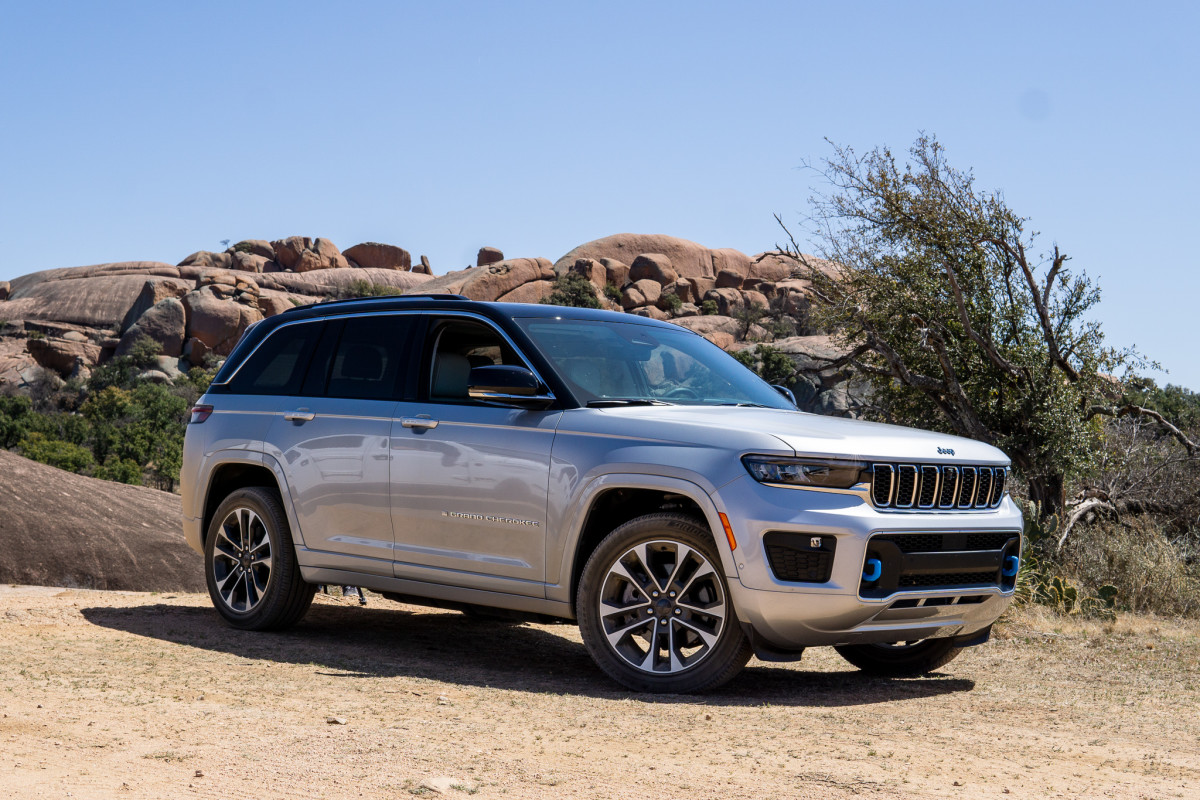
Choosing the right model year is especially important with the Grand Cherokee, where reliability and features vary dramatically across generations. For more information on the Grand Cherokee by generation and model year, check out our Grand Cherokee Buying Guide.
Best Grand Cherokee Years for Pittsburgh
| Category | Best Years | Local Avg. Price | Why They’re Best |
|---|
| Best Overall | 2022–2023 | $30,114–$31,772 | Fifth-gen refinement, modern tech, decent early reliability, competitive local pricing |
| Best Value | 2019 | $18,865 | 0.8% below national average, Apple CarPlay standard, proven later fourth-gen reliability |
| Best for Modern Features | 2018–2020 | $17,988–$22,738 | Apple CarPlay/Android Auto standard, Trailhawk available, significantly lower local mileage |
| Best Local Discount | 2016 | $7,995 | 41.9% below national average, post-2014 refresh improvements, budget entry point |
Best Overall: 2022–2023
The first two model years of the fifth-generation Grand Cherokee hit the sweet spot of modern technology, improved build quality, and meaningful depreciation from new. The 2023 at $31,772 matches the national average exactly, while Pittsburgh examples average 41,136 miles — just 3.6% above national. The 2022 at $30,114 carries a modest 3.4% local premium but averages notably lower mileage at 49,744 miles versus 57,108 nationally.
Best Value: 2019
The 2019 model year represents the refined later fourth-generation Grand Cherokee at its most competitive Pittsburgh price. At $18,865 — 0.8% below the national average of $19,020 — it’s one of the few model years where Pittsburgh undercuts the national market. Local mileage runs 4.1% below national at 90,551 miles. You get Apple CarPlay, Android Auto, and the improved infotainment system standard, wrapped in the well-proven post-2017 update package.
Best for Modern Features: 2018–2020
This three-year window offers the best combination of features and reliability in the fourth generation. The 2018 was the first year with standard Apple CarPlay and Android Auto, plus the option of the 707-hp Trackhawk. Pittsburgh 2018 models average 84,818 miles — 16.9% below the national average of 102,051 — a substantial mileage advantage. The 2020 at $22,738 averages 77,953 local miles versus 86,668 nationally.
Best Local Discount: 2016
At $7,995, the 2016 model year shows a dramatic 41.9% discount versus the $13,756 national average. This is the standout bargain in Pittsburgh’s Grand Cherokee market, though the 134,846-mile average mileage is higher than national. These post-2014-refresh models have the eight-speed automatic and improved interior, making them a viable budget entry — but inspect carefully for rust and high-mileage wear given Pittsburgh’s demanding climate.
Worst Grand Cherokee Years for Pittsburgh
| Years | Local Avg. Price | Avg. Mileage | Concerns |
|---|
| 2011–2013 | Below data range | N/A | Most problematic Grand Cherokee generation — electrical faults, engine troubles, interior quality issues, fuel system problems; 2011 is the worst |
| 2005–2010 | Below data range | N/A | Poor build quality, cramped cabin, underwhelming engines; Pittsburgh road salt compounds rust and corrosion concerns |
Avoid: 2011–2013
Early fourth-generation Grand Cherokees are widely regarded as the least reliable models in the nameplate’s history. The 2011 was the first year of an entirely new generation, launched during a turbulent period at Chrysler, and it shows. Electrical problems, engine issues, and interior quality complaints are pervasive. Even at low prices, these models carry a high risk of expensive repairs. Pittsburgh’s harsh climate only compounds the problem. Spend a few thousand more on a 2015 or newer model for dramatically better reliability.
Approach Carefully: 2005–2010
The third-generation WK Grand Cherokee brought modern independent suspension but fell short on build quality and interior materials. In Pittsburgh, over a decade of road salt exposure makes underbody corrosion a near-certainty on these models. The base 3.7-liter V6 produces just 210 horsepower — underwhelming for a vehicle this size. Unless you specifically want an affordable off-road project with the 5.7-liter Hemi, the fourth generation from 2015 onward is a far better investment. Get a thorough pre-purchase inspection if you proceed.
Grand Cherokee Pros and Cons
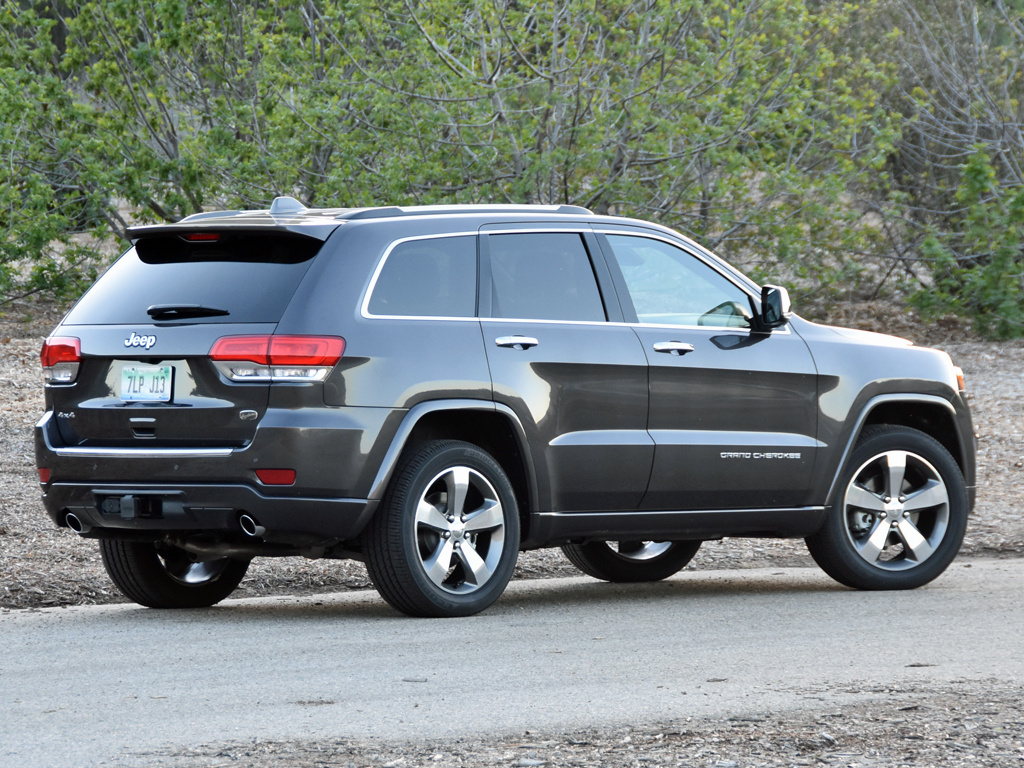
Pittsburgh’s terrain, climate, and driving conditions reward the Grand Cherokee’s core strengths while exposing its weaknesses. Four-wheel drive earns its keep on steep, icy hillside roads; the premium interior makes long commutes comfortable; and the SUV’s ground clearance handles potholed streets better than most sedans. But maintenance costs and generation-dependent reliability require careful buying decisions.
Pros
Genuine Off-Road Capability with Daily-Driver Manners
The Grand Cherokee’s range of four-wheel-drive systems — from basic Quadra-Trac I to the sophisticated Quadra-Drive II with electronic locking rear differential and air suspension — gives buyers real capability without sacrificing on-road comfort. Pittsburgh’s steep grades, snowy winters, and occasional unplowed side streets make this more than a spec-sheet advantage. The Trailhawk trim (2017+) adds even more trail-ready hardware for buyers who venture beyond pavement.
Wide Range of Configurations and Price Points
From a $7,995 2016 model to a $38,969 2024, Pittsburgh’s Grand Cherokee market spans every budget. Entry-level Laredo trims provide the essentials; Summit and Summit Reserve models rival luxury SUVs from Mercedes-Benz and BMW. The range of available engines — including the fuel-efficient Hurricane 4 Turbo, the workhorse Pentastar V6, and the powerful Hemi V8 — means you can match the powertrain to your priorities.
Lower Local Mileage Than National Average
Pittsburgh Grand Cherokee inventory averages 71,578 miles versus 79,877 nationally — a 10.4% mileage advantage. Several model years show even larger gaps: 2018 models run 16.9% below national mileage, and 2022 models are 12.9% below. Fresher vehicles for the same price is a tangible market benefit.
Strong Accident-Free Inventory
80% of Pittsburgh-area listings carry accident-free histories versus 76% nationally. That four-percentage-point edge means a larger pool of clean-title, well-maintained vehicles to choose from — important for long-term ownership peace of mind.
Comfortable and Premium Interior (Fourth-Gen+ Models)
The fourth-generation Grand Cherokee (2011+) moved upmarket substantially, and the fifth generation (2022+) competes directly with entry-level luxury SUVs. Uconnect infotainment systems are intuitive and well-designed. Higher trims offer quilted leather, ventilated seats, and a McIntosh premium audio system. For daily Pittsburgh commutes on I-376 or Route 22, the interior comfort matters.
Competitive Towing Capability
With the V8 engine and proper equipment, the fourth-gen Grand Cherokee can tow up to 7,400 pounds — class-leading for a midsize unibody SUV. Even the V6 handles 3,500 pounds. For Pittsburgh-area buyers who tow boats to Lake Erie or trailers to campgrounds, this capability is a genuine differentiator.
Cons
Reliability Varies Sharply by Generation
No Grand Cherokee matches the reliability reputation of a Toyota 4Runner. Early fourth-gen models (2011–2014) are among the most problematic SUVs of their era, with electrical, engine, and build quality issues. Even the more reliable later models require more attention and maintenance dollars than Japanese competitors. Choosing the wrong generation can turn a good purchase into an expensive headache.
Higher Maintenance and Repair Costs
Grand Cherokee upkeep costs can approach those of luxury brands like Land Rover and Mercedes-Benz. Complex four-wheel-drive systems, air suspension (when equipped), and Chrysler-specific parts contribute to above-average repair bills. In Pittsburgh, where salt damage adds to maintenance needs, budget accordingly — especially for older models.
Pittsburgh Pricing Offers No Discount
Unlike some markets where buyers enjoy meaningful price advantages, Pittsburgh Grand Cherokee pricing essentially matches the national average at $23,510 versus $23,568. The 27% Good and Great Deal rate also trails the national average of 34%. Buyers should focus on the condition advantage rather than expecting a bargain.
Road Salt and Corrosion Risk
Western Pennsylvania’s heavy road salt use is particularly tough on Grand Cherokee underbodies. First-generation models are notorious for rust, and even later models need careful inspection for corroded brake lines, suspension components, and frame rails. Factor in the cost of annual undercoating or rust prevention for any Grand Cherokee purchased in this market.
Third-Gen Interior and Ergonomic Shortcomings
If budget constraints push you toward a 2005–2010 model, be aware of the cramped cabin, non-telescoping steering wheel, and below-average cargo space. These issues are specific to the third generation and resolved in later models, but they’re worth noting for buyers considering this era.
Final Verdict for Pittsburgh Buyers
The 2022–2023 model years represent the clearest recommendation for most buyers — modern technology, improved build quality, and competitive local pricing with lower-than-average mileage. For buyers on a tighter budget, the 2019 offers the most competitive Pittsburgh pricing at $18,865, and the 2018–2020 window delivers proven later fourth-gen reliability with standard smartphone connectivity. The 2016 is the standout bargain at $7,995 for buyers willing to accept higher mileage. Just steer clear of the 2011–2013 early fourth-gen era, where the Grand Cherokee’s reliability record is genuinely poor, and inspect any purchase carefully for Pittsburgh’s trademark road salt damage. The Grand Cherokee won’t match a 4Runner for long-term dependability, but for Pittsburgh buyers who want a capable, comfortable, and premium-feeling SUV that can handle anything western Pennsylvania throws at it — steep hills, snow, potholes, and all — it’s a compelling choice.