What is a Good Price for a Used Honda Accord in Chicago?
Used Accords in Chicago average $16,530 — a 12.4% discount versus the national average of $18,867. That's a $2,337 advantage that holds across most model years, making Chicago one of the more favorable Accord markets in the country.
Price by Model Year in Chicago
The Accord spans three major generations in the used market: the eleventh generation (2023–present), which introduced hybrid as the default powertrain; the tenth generation (2018–2022), a complete redesign with turbocharged engines and modern safety tech; and the ninth generation (2013–2017), a proven and affordable workhorse.
| Model Year |
Chicago Avg. Price |
National Avg. Price |
Chicago Avg. Mileage |
| 2025 |
$27,388 |
$27,704 |
10,406 miles |
| 2024 |
$25,108 |
$25,490 |
30,081 miles |
| 2023 |
$24,144 |
$24,592 |
32,111 miles |
| 2022 |
$23,410 |
$24,780 |
65,089 miles |
| 2021 |
$23,181 |
$22,432 |
63,284 miles |
| 2020 |
$20,634 |
$20,733 |
77,496 miles |
| 2019 |
$19,991 |
$19,253 |
80,155 miles |
| 2018 |
$17,591 |
$18,264 |
100,030 miles |
| 2017 |
$15,690 |
$15,356 |
96,923 miles |
| 2016 |
$15,942 |
$14,862 |
89,570 miles |
| 2015 |
$12,900 |
$13,172 |
122,568 miles |
| 2014 |
$11,543 |
$11,818 |
133,520 miles |
Eleventh Generation (2023–2025): $24,144–$27,388
The newest Accord generation made hybrid the default powertrain on most trims, pairing a 2.0-liter Atkinson-cycle engine with two electric motors. Gas-only versions remain available on the base LX and EX trims with the carryover 1.5-liter turbo. Chicago pricing shows modest discounts of 1–2% below national averages across all three model years, with 2023 models offering the best value entry point at $24,144 and significantly lower mileage (32,111 miles) than older generations.
Tenth Generation (2018–2022): $17,591–$23,410
The sweet spot for most Chicago buyers. Honda's 2018 redesign introduced turbocharged engines, modern safety tech, and a more refined interior. The 2022 model year shows the strongest Chicago discount at 5.5% below national pricing ($23,410 vs. $24,780). The 2018 also delivers solid value at 3.7% below national ($17,591 vs. $18,264), though with higher average mileage at 100,030 miles. Note that 2019 and 2021 models command slight premiums over national averages in the Chicago market — a sign of strong local demand for these popular years.
Ninth Generation (2014–2017): $11,543–$15,942
Budget-friendly entry into proven Accord ownership. The 2016 mid-cycle refresh brought Apple CarPlay, Android Auto, and a refreshed exterior — but Chicago pricing on 2016 models runs 7.3% above national at $15,942, reflecting demand for the updated tech. For pure value, the pre-refresh 2014 at $11,543 and 2015 at $12,900 are priced slightly below national averages and deliver the same fundamental reliability.
Understanding the Chicago Price Advantage
High-volume Midwestern market: Chicago's large population and sprawling metropolitan area create robust demand for reliable sedans. That volume translates to competitive dealer pricing and a deep selection — 477 listings at time of publication.
Seasonal pricing dynamics: Chicago's harsh winters create natural buying cycles. Sedans tend to be priced more competitively than SUVs and trucks during fall and winter months, which benefits Accord shoppers willing to time their purchase.
Mileage considerations: Chicago-area Accords average 94,234 miles versus 91,562 nationally — a modest 2.9% premium in mileage. Long commutes on expressways and tollways account for the difference, though highway miles are easier on a vehicle than city stop-and-go.
Good and Great Deals in Chicago
57% of Chicago Accord listings qualify as Good or Great Deals — dramatically better than the national average of 31%. That's 26 percentage points of additional deal quality, making Chicago an exceptionally strong market for finding a well-priced Accord.
| Deal Rating |
Chicago Percentage |
National Percentage |
| Great Deals |
9% |
8% |
| Good Deals |
47% |
23% |
Chicago's Good Deal rate of 47% is particularly striking — more than double the national 23%. The 2018 and 2022 model years show the strongest Chicago-specific discounts within the tenth generation.
What is the Most Reliable Used Honda Accord in Chicago?
The Honda Accord's reliability reputation is well-earned — most generations deliver trouble-free ownership for years. But not every era is equal, and Chicago's road conditions add a layer of consideration that buyers in milder climates don't face. Understanding which years to target helps ensure you get the dependable experience the Accord is known for.
Most Reliable by Era
Tenth Generation (2018–2022): The most reliable modern Accord era and the best pick for Chicago buyers. Honda's complete 2018 redesign introduced turbocharged four-cylinder engines and dropped the V6 entirely. The 1.5-liter turbo (192 hp) with CVT handles daily commuting efficiently, while the 2.0-liter turbo (252 hp) with a 10-speed automatic provides stronger performance. Early 2018–2019 models had documented HVAC and AC compressor issues, and a fuel pump recall affected 2018–2020 model years — but post-refresh 2021–2022 models have very few reported problems. Chicago listings for this generation average 100,030 miles (2018) down to 63,284 miles (2021), all within comfortable range for Honda's proven powertrains.
Eleventh Generation (2023–Present): Too new for long-term reliability data, but encouraging. The hybrid powertrain now standard on most trims draws heavily from proven tenth-generation components. The 1.5-liter turbo on base trims is a carryover. Honda's evolution-not-revolution approach means the underlying engineering is familiar and tested. Chicago listings average 30,081–32,111 miles for 2023–2024 models — still early in their lifespan.
Ninth Generation (2013–2017): The second-most reliable modern Accord era. The 2.4-liter four-cylinder with CVT is a proven combination, and the 3.5-liter V6 with a six-speed automatic is equally dependable. Starter issues on 2013–2015 four-cylinder models and a Technical Service Bulletin for V6 models are the main documented concerns — both manageable. The 2016–2017 face-lifted models have the fewest reported issues. Chicago listings for this era average 89,570–133,520 miles, so a pre-purchase inspection is worthwhile at these odometer readings.
Eighth Generation (2008–2012): Aging but solid. This generation introduced the Accord as an EPA-classified "large car" and offered strong V6 power (268 hp). Excessive brake wear on 2008–2010 models was the primary concern, remedied by redesigned brake pads. Airbag issues affected some 2008–2009 models, and Takata airbag recall status should be verified. These cars are 14–18 years old now, so age-related maintenance is expected regardless of Honda's reliability.
Seventh Generation (2003–2007): The Exception. This is the Accord generation to avoid. Widespread automatic transmission failures on V6 models make these a risky proposition. Combined with Takata airbag recall exposure and nearly 20 years of wear, these Accords are best left alone — especially when ninth-generation models are available at accessible prices.
Key Improvements by Model Year — Tenth Generation (2018–2022)
| Model Year |
Key Improvements |
| 2018 |
Complete redesign: new turbocharged engines, Honda Sensing standard, sedan-only lineup |
| 2019 |
Bluetooth connectivity improvements addressing 2018 glitches |
| 2021 |
Mid-cycle refresh: new bumpers, brighter LED headlights, manual transmission discontinued; significantly fewer reported issues |
| 2022 |
Final year of tenth generation; most refined and fewest documented problems |
Accord-Specific Reliability Considerations
Turbocharged engine oil dilution: The 1.5-liter turbo in tenth-generation Accords can experience fuel mixing with engine oil in very cold climates during short trips. Chicago's winters make this relevant — if you're making short commutes in sub-zero temperatures, check oil levels periodically and allow the engine to reach full operating temperature when possible.
CVT transmission longevity: Both ninth and tenth-generation Accords use continuously variable transmissions on four-cylinder models. Honda's CVTs have a strong track record, but they benefit from regular fluid changes. Chicago's stop-and-go expressway traffic puts moderate stress on the CVT — maintaining the manufacturer's service intervals is important.
Road salt and undercarriage corrosion: Chicago's liberal road salt use during winter months is the single biggest environmental threat to any vehicle's longevity. Honda's body panels resist rust well, but brake lines, subframe components, and exhaust systems are vulnerable. This affects all generations equally and makes undercarriage inspection essential for any Chicago-area used purchase.
HVAC system (2018–2019): Early tenth-generation models had documented AC compressor failures. If buying a 2018 or 2019, verify the HVAC system works properly across all settings, including full-cold AC operation — critical for Chicago summers.
What to Check When Buying
- Undercarriage rust inspection: Chicago road salt accelerates corrosion on brake lines, subframes, and exhaust components. Have a mechanic put the car on a lift and check for structural rust — this is non-negotiable for any Midwest purchase.
- Transmission behavior (all generations): Test for smooth shifts across the full range. On ninth and tenth-gen CVT models, listen for whining or hesitation during acceleration. On older V6 automatics, any harsh shifts or slipping are immediate red flags.
- Recall status: Verify Takata airbag recall completion on eighth-generation and older models. Check for the fuel pump recall on 2018–2020 tenth-generation models.
- Oil condition (2018+ turbo models): Check the dipstick for fuel contamination — the oil should smell like oil, not gasoline. This is more relevant for short-trip city drivers in cold climates.
- Service records: The Accord is forgiving, but it still needs regular maintenance. Documented oil changes and scheduled service are the best predictor of future reliability.
- Hybrid battery health (if applicable): On ninth and tenth-generation hybrids, check for warning lights and verify that real-world fuel economy matches expectations. Honda hybrid batteries are robust, but degradation can occur on higher-mileage examples.
Best and Worst Honda Accord Years in Chicago
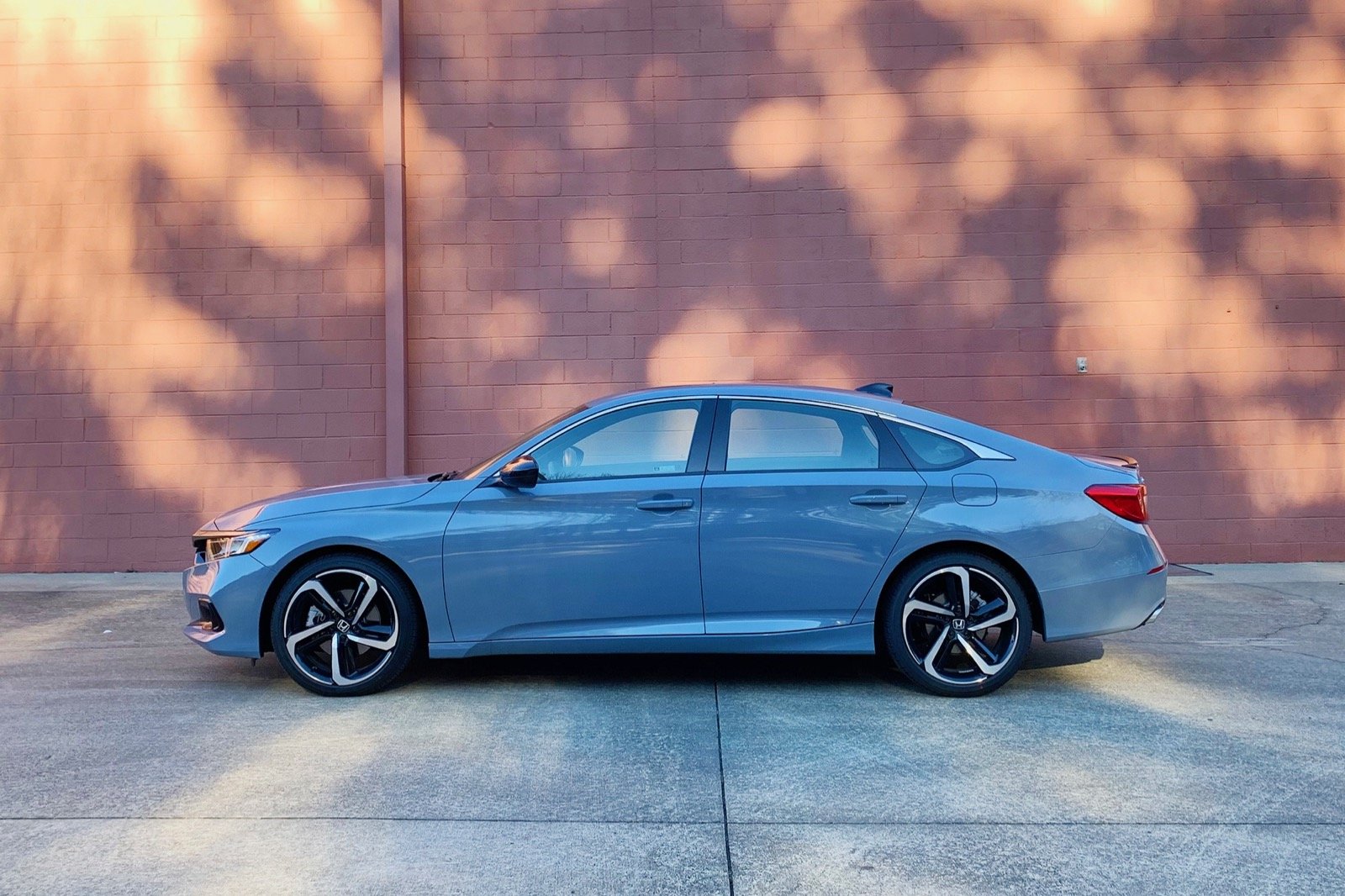
Choosing the right model year is the single most important decision when buying a used Accord. CarGurus data reveals clear patterns about which years deliver the best combination of value, reliability, and features in the Chicago market. For more information on the Accord by generation and model year, check out our Honda Accord Buying Guide.
Best Accord Years for Chicago
| Category |
Best Years |
Chicago Avg. Price |
Why They're Best |
| Best Overall |
2021–2022 |
$23,181–$23,410 |
Post-refresh tenth-gen, fewest reported issues, Honda Sensing standard |
| Best Value |
2018 |
$17,591 |
First tenth-gen year, 3.7% Chicago discount, complete redesign with modern safety |
| Best Budget Option |
2014–2015 |
$11,543–$12,900 |
Proven ninth-gen reliability, sub-$13K, slight Chicago discount |
| Best Local Discount |
2022 |
$23,410 |
5.5% below national ($24,780), final and most refined tenth-gen year |
Best Overall: 2021–2022. These post-refresh tenth-generation models represent the Accord at its most refined. The 2021 mid-cycle update added new bumpers and brighter LED headlights, and these years have the fewest documented reliability concerns of any tenth-gen model. In Chicago, 2021 models average $23,181 with 63,284 miles, and 2022 models average $23,410 with 65,089 miles — both with reasonable odometer readings for their age.
Best Value: 2018. The first year of the tenth-generation redesign delivers modern turbocharged engines, standard Honda Sensing safety tech, and a completely new interior at a meaningful Chicago discount of 3.7% below national pricing ($17,591 vs. $18,264). Average mileage is higher at 100,030 miles, but Honda's 1.5-liter turbo is built to handle it. Check for the fuel pump recall and HVAC concerns on this model year.
Best Budget Option: 2014–2015. The ninth generation's pre-refresh years offer proven Accord reliability at accessible prices. The 2014 at $11,543 and 2015 at $12,900 are both priced slightly below national averages in Chicago. At 122,568–133,520 miles, these are higher-mileage cars, but the ninth-gen's 2.4-liter four-cylinder and CVT are durable combinations that routinely exceed 200,000 miles with proper maintenance.
Best Local Discount: 2022. The final year of the tenth generation commands a 5.5% Chicago discount ($23,410 vs. $24,780 nationally) — the largest price advantage of any model year in the data. As the most refined tenth-gen year with the fewest reported problems, the 2022 offers the rare combination of best reliability and best local pricing.
Worst Accord Years for Chicago
| Years |
Concerns |
| 2003–2007 |
Widespread V6 automatic transmission failures, Takata airbag recall, age-related deterioration |
| 2008–2010 |
Excessive brake wear, airbag problems on 2008–2009, Takata recall, significant age |
Avoid: 2003–2007 (Seventh Generation). The seventh-generation Accord is widely regarded as the worst modern Accord generation. Automatic transmission failures on V6 models are well-documented and expensive to repair. Combined with Takata airbag recall exposure and nearly two decades of wear, these Accords represent poor value even at low prices — especially in Chicago, where road salt has had years to accelerate undercarriage corrosion. Ninth-generation models at $11,543–$12,900 are a far safer investment.
Approach Carefully: 2008–2010 (Eighth Generation). These Accords are fundamentally solid, but excessive brake wear on 2008–2010 models and airbag issues on 2008–2009 are documented concerns. At 16–18 years old in the Chicago salt belt, undercarriage condition is the primary risk. If you find one that's been well-maintained and passes a thorough undercarriage inspection, the eighth generation can still deliver — but a pre-purchase inspection is mandatory, not optional.
Honda Accord Pros and Cons
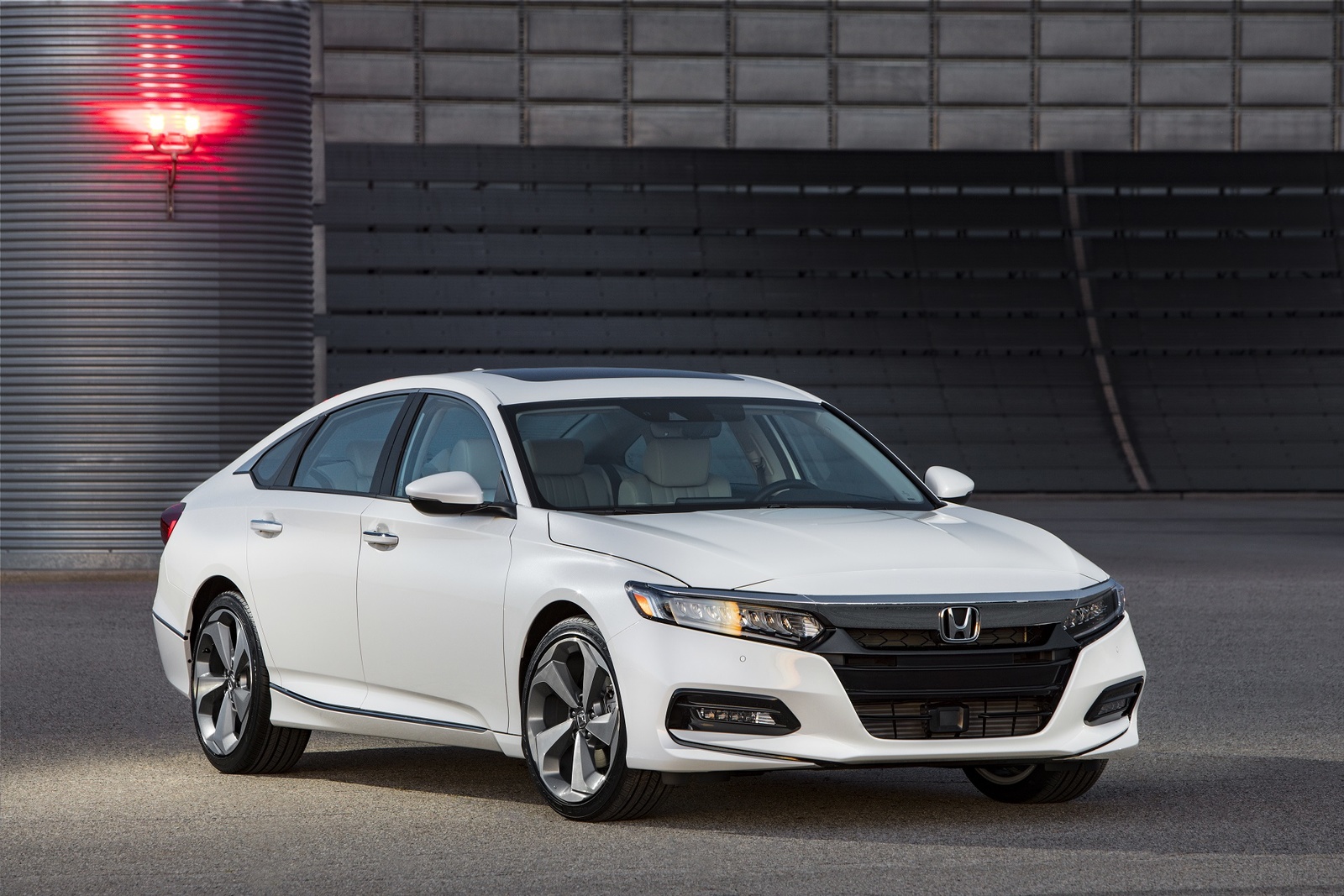
Chicago demands a lot from a daily driver — reliability through brutal winters, comfort on long expressway commutes, and enough practicality to handle everything from grocery runs to airport pickups. The Accord checks most of those boxes, but it's not without trade-offs.
Pros
Exceptional Chicago Deal Quality
The numbers are hard to argue with: 57% of Chicago Accord listings are Good or Great Deals, compared to 31% nationally. Combined with average pricing 12.4% below national, Chicago is one of the strongest Accord markets in the country. That deal quality gives buyers leverage to be selective about trim, mileage, and condition.
Proven Multi-Generation Reliability
The ninth and tenth-generation Accords have excellent reliability track records. Honda's conservative engineering philosophy means proven powertrains that last — the 2.4-liter four-cylinder, 1.5-liter turbo, and hybrid systems all routinely exceed 200,000 miles with regular maintenance. For Chicago commuters putting on serious miles, that durability matters.
Genuinely Fun to Drive
The Accord is the enthusiast's pick among mainstream sedans. The tenth-generation's 2.0-liter turbo (252 hp) with a 10-speed automatic delivers genuinely engaging performance, and even the 1.5-liter turbo feels responsive in daily driving. Honda's chassis tuning strikes a good balance between comfort and composure — the Accord handles Chicago's potholed roads better than most competitors.
Spacious and Practical Interior
The Accord has been EPA-classified as a "large car" since the eighth generation, and it shows. Rear seat room is generous enough for adults, the trunk is best-in-class among its contemporaries, and the interior layout is simple and intuitive. Tenth and eleventh-generation models offer wireless Apple CarPlay and Android Auto, and Honda Sensing safety tech comes standard.
Strong Fuel Economy
For Chicago commuters covering 15,000+ miles annually, fuel costs add up. The tenth-generation hybrid achieves 212 hp with impressive combined efficiency, and even the base 1.5-liter turbo delivers competitive highway numbers. The eleventh-generation's hybrid-standard approach pushes efficiency further. At Chicago's average mileage of 94,234 miles, these powertrains still deliver strong real-world economy.
Deep Local Inventory
With 477 listings in the Chicago area, buyers have genuine choice. That depth means you can hold out for the right combination of year, trim, mileage, color, and price rather than settling for whatever's available.
Cons
No AWD Option
The Accord has never offered all-wheel drive — it's front-wheel drive only across every generation. In a city that averages 36 inches of snow per year, that's a real consideration. Good winter tires largely mitigate the issue on plowed roads, but buyers who need AWD confidence should look at Honda's CR-V or competitors like the Subaru Legacy.
Higher Mileage on Best-Value Years
Chicago's strongest price advantages come on years with above-average mileage. The 2018 model year offers a 3.7% discount but averages 100,030 miles. Even the overall market average of 94,234 miles runs 2.9% above the national figure of 91,562 miles. Chicago commutes are long, and the odometers reflect that.
Some Model Years Command Local Premiums
Not every year benefits from the overall 12.4% discount. The 2016 (+7.3%), 2019 (+3.8%), 2021 (+3.3%), and 2017 (+2.2%) all run above national pricing in Chicago. Popular refresh years and desirable trim combinations can command premiums in this competitive market — shop carefully and compare to national listings.
Seventh-Generation Risk Still in Market
Older seventh-generation Accords (2003–2007) with known V6 transmission problems are still circulating at temptingly low prices. Chicago's road salt compounds the risk with undercarriage corrosion. These are false bargains — the repair costs can easily exceed the purchase price.
Conservative Styling (Pre-2018)
Ninth-generation and earlier Accords are competent but visually unremarkable. The tenth generation brought more distinctive styling, but earlier models blend into traffic. If aesthetics matter to you, budget for the 2018+ redesign.
Who Should Buy a Honda Accord in Chicago?
Ideal buyers based on data patterns:
- Expressway commuters who value reliability and fuel efficiency over AWD capability
- Budget-conscious buyers — ninth-gen models at $11,543–$15,690 deliver proven Honda dependability under $16,000
- Families needing a spacious, safe sedan with standard Honda Sensing driver-assistance tech (2018+)
- Driving enthusiasts who want the best-handling mainstream sedan — the 2.0-liter turbo Sport trim is the pick
- Value hunters — Chicago's 57% Good/Great Deal rate means strong negotiating leverage
Consider alternatives if:
- You need all-wheel drive for winter confidence — the Subaru Legacy or Honda CR-V are better suited
- You prioritize cargo space over driving dynamics — a CR-V or RAV4 offers more versatility
- You want a V6 — Honda dropped it after the ninth generation; look at the Toyota Camry V6 (through 2024) or the 2.0T Accord for comparable power
- You need a truck or SUV for Chicago's rough roads and winter conditions — the Accord's low ground clearance won't handle unplowed side streets as well
Final Verdict for Chicago Buyers
The 2021–2022 model years are the clearest recommendation for most Chicago buyers — post-refresh refinement, minimal reliability concerns, and meaningful local discounts on the 2022 (5.5% below national). For buyers on a tighter budget, the 2018 at $17,591 delivers the same fundamental tenth-generation package at a 3.7% Chicago discount, and the ninth-generation 2014–2015 models provide proven reliability under $13,000. Chicago's exceptional deal quality — 57% Good or Great Deals versus 31% nationally — means the market is working in your favor. Just avoid the seventh generation, invest in good winter tires, and the Accord will handle everything Chicago throws at it.


