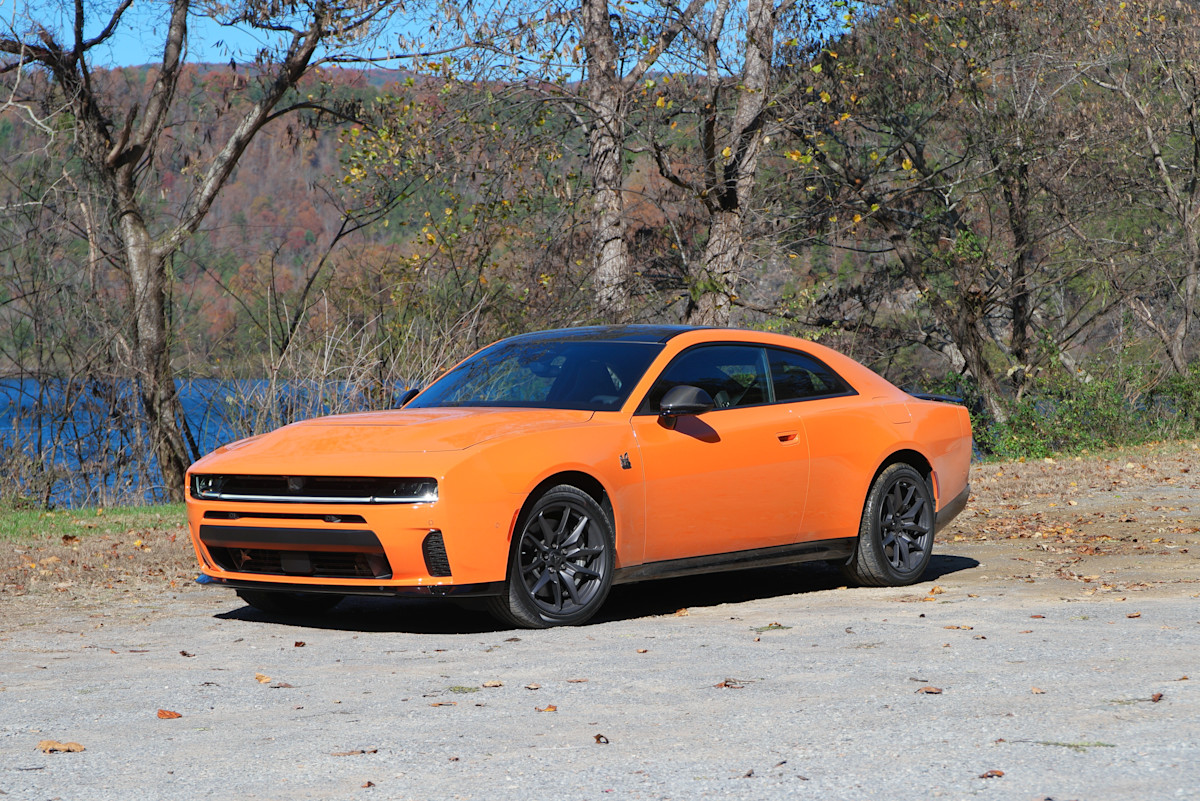
What is a Good Price for a Used Dodge Charger in Charlotte, NC?
Used Chargers in Charlotte average $27,368 — 5.8% above the national average of $25,874. That modest premium reflects steady local demand for these cars, but Charlotte buyers benefit from significantly cleaner inventory and a higher share of well-priced listings.
Price by Model Year in Charlotte, NC
The modern Charger spans two major generations in the used market. The seventh-generation "LD" series (2011–2023) dominates Charlotte's inventory, while the sixth-generation "LX" models (2006–2010) are increasingly scarce. Within the seventh generation, the 2015 refresh brought the eight-speed automatic as standard, a retuned chassis, and the introduction of Hellcat and Scat Pack performance trims — creating a natural price divide between 2011–2014 and 2015–2023 models.
| Model Year |
Charlotte Avg. Price |
National Avg. Price |
Charlotte Avg. Mileage |
| 2023 |
$32,238 |
$34,755 |
44,918 miles |
| 2022 |
$28,317 |
$29,716 |
73,042 miles |
| 2021 |
$30,365 |
$28,377 |
62,265 miles |
| 2020 |
$22,078 |
$24,022 |
96,440 miles |
| 2019 |
$22,820 |
$20,418 |
105,438 miles |
| 2018 |
$22,443 |
$20,172 |
27,295 miles |
| 2017 |
$13,170 |
$18,247 |
156,139 miles |
| 2016 |
$21,592 |
$16,086 |
105,984 miles |
| 2015 |
$12,997 |
$12,755 |
134,512 miles |
| 2014 |
$15,945 |
$10,852 |
108,073 miles |
Final-Year Seventh Generation (2022–2023): $28,317–$32,238
The last two years of the seventh-generation Charger represent the most refined versions of this long-running design. The 2023 includes "last call" special editions like the Super Bee and King Daytona, and Charlotte prices show a meaningful 7.2% discount versus the national average ($32,238 vs. $34,755). The 2022, which introduced the 807-horsepower Jailbreak variant, also prices 4.7% below national. These final years command top dollar but Charlotte buyers get a relative bargain.
Mid-Cycle Seventh Generation (2018–2021): $22,078–$30,365
This range covers the era after Apple CarPlay and Android Auto became standard (2017) and includes the Wide Body models introduced for 2020. Pricing here is mixed: the 2020 shows an 8.1% Charlotte discount ($22,078 vs. $24,022), while 2019 and 2021 carry Charlotte premiums of 11.8% and 7.0% respectively. The 2018 models in Charlotte show unusually low average mileage at 27,295 miles — likely reflecting a concentration of higher-trim, lower-mileage examples in the local market.
Post-Refresh Seventh Generation (2015–2017): $12,997–$21,592
The 2015 refresh made the eight-speed automatic standard and introduced the Hellcat and Scat Pack trims. The 2015 model year is the entry point to this improved era at just $12,997 in Charlotte — essentially matching the $12,755 national average. The 2017 at $13,170 shows a steep 27.8% Charlotte discount, though with high average mileage at 156,139 miles. The 2016, at $21,592, carries a 34.2% Charlotte premium, likely reflecting a local concentration of higher-trim V8 examples.
Pre-Refresh Seventh Generation (2014): $15,945
The 2014 Charger earned a strong 8.3 CarGurus test score and represents the most refined of the pre-refresh seventh-generation models. Charlotte's $15,945 average is notably above the $10,852 national average (+46.9%), suggesting local inventory skews toward well-equipped V8 models rather than base V6 examples.
Understanding the Charlotte Price Context
The 5.8% premium over national pricing reflects a few local dynamics.
High-demand market: Charlotte's car culture, anchored by NASCAR headquarters and a sprawling suburban commuter base, creates steady demand for American performance sedans. The Charger's muscle car image resonates here, supporting prices slightly above the national average.
Exceptional vehicle histories: The standout Charlotte advantage isn't price — it's condition. 91% of Charlotte Charger listings carry accident-free histories, compared to just 66% nationally. That 25-percentage-point gap is remarkable and means Charlotte buyers face significantly lower risk of purchasing a previously damaged vehicle.
Trim-driven pricing: Charlotte's above-average pricing partly reflects local inventory composition. The Charger's wide model range — from $20,000 V6 commuters to $50,000+ Hellcats — means average prices can vary dramatically based on which trims are available locally. The high average prices on certain model years likely indicate a local preference for V8 and performance models.
Good and Great Deals in Charlotte, NC
33% of Charlotte Charger listings qualify as Good or Great Deals — a 5-percentage-point advantage over the national average of 28%.
| Deal Rating |
Charlotte Percentage |
National Percentage |
| Great Deals |
6% |
6% |
| Good Deals |
28% |
21% |
Charlotte's Good Deal rate of 28% exceeds the national 21% by a significant margin. The Great Deal rate matches the national average at 6%. The 2022 and 2023 model years show particularly strong Charlotte discounts versus national pricing.
What is the Most Reliable Used Dodge Charger in Charlotte, NC?
The Dodge Charger's reliability story is one of clear improvement over time. The modern Charger spans two distinct generations with meaningfully different track records, and knowing where the dividing lines fall is essential to buying well. The good news: the seventh-generation models that dominate Charlotte's inventory (2011–2023) are significantly more reliable than the sixth-generation cars (2006–2010), and post-2015 examples are genuinely durable — even the high-performance variants.
Most Reliable by Era
2015–2023 Seventh Generation (Post-Refresh)
This is the reliability sweet spot. The 2015 refresh brought a standard eight-speed automatic, retuned chassis, and updated electronics that resolved the infotainment issues that plagued earlier seventh-gen models. From 2015 onward, the Charger generates minimal complaints, and even the supercharged Hellcat models — with up to 807 horsepower — have proven surprisingly durable. CarGurus test scores for this era are consistently strong: 7.8 (2015), 8.2 (2016), 7.3 (2017), 7.3 (2018), and 8.0 (2022). Charlotte inventory from this era averages 27,295 to 134,512 miles depending on model year, and these cars are built to handle high mileage without major issues.
2011–2014 Seventh Generation (Pre-Refresh)
The "LD" Charger debuted with a comprehensive update — new 3.6-liter Pentastar V6, sleeker styling, and improved interior — but the 2011 and 2012 models had more than their fair share of problems. Most issues were electrical system and infotainment glitches rather than broken mechanical pieces. By 2013, quality improved markedly, and the 2014 model earned an 8.3 CarGurus test score — the highest of any Charger tested. These are solid cars, especially the 2013–2014 examples, though they lack the refinements of the post-2015 refresh.
2006–2010 Sixth Generation
The original modern Charger used a platform heavily derived from Mercedes-Benz components — E-Class and S-Class suspension pieces, the electrical system, rear differential, and optional AWD system. While robust when new, these complex systems have generated the highest number of complaints among any Charger generation. The 2006–2008 models are the worst offenders, with documented issues including valve seal and head gasket problems, transmission failures, and electrical gremlins. The design was new in 2006, and the combination of teething troubles plus Mercedes-derived complexity makes these the riskiest Chargers to buy used. These models are also more rust-prone than later versions — less of a concern in Charlotte's mild climate, but still worth inspecting.
Key Improvements by Model Year — Seventh Generation (2011–2023)
| Model Year |
Key Improvements |
| 2011 |
New 3.6L Pentastar V6 (292hp), revised styling, improved interior, 8.4-inch UConnect available |
| 2012 |
Eight-speed automatic available (30 mpg hwy), SRT8 returned with 6.4L 470hp Hemi |
| 2015 |
Comprehensive refresh — 8-speed standard, retuned chassis, Hellcat (707hp) and Scat Pack (485hp) introduced |
| 2017 |
Apple CarPlay and Android Auto integration, Daytona trims added |
| 2018 |
SE discontinued, SXT became base model, GT AWD variant added with V6 |
| 2020 |
Wide Body models introduced (Hellcat WB, Scat Pack WB) with fender flares and wider tires |
| 2022 |
Jailbreak variant with Hellcat Redeye, supercharged Hemi bumped to 807hp |
Charger-Specific Reliability Considerations
Electrical Systems (2006–2012)
The earliest modern Chargers inherited complex Mercedes-Benz electrical architecture that has proven troublesome over time. Window regulators, dashboard electronics, and infotainment systems are the most common complaint areas. The seventh-generation refresh for 2011 improved matters but didn't fully resolve these issues until the 2013+ models. If buying a 2011–2012, budget for potential electrical repairs.
Engine Durability by Powertrain
The 3.6-liter Pentastar V6 (2011+) has proven exceptionally durable and is the lowest-risk powertrain choice. The 5.7-liter Hemi V8 is also reliable in seventh-generation cars, though earlier sixth-gen versions had valve seal and head gasket concerns. The supercharged 6.2-liter Hellcat engine is surprisingly robust when maintained properly — these engines were over-engineered from the factory.
Transmission Longevity
The eight-speed automatic (standard from 2015, available from 2012) is a proven unit that handles even Hellcat-level power without issue. The earlier five-speed automatic found in 2011 models and the sixth-generation cars is the weakest link in the drivetrain — transmission complaints are among the most common for 2006–2010 Chargers.
Performance Model Wear
The Charger's muscular image and extensive performance trim lineup encourage hard driving. This is especially relevant in Charlotte, where straight-road highway driving can tempt owners into heavy throttle use. High-performance variants (SRT, Scat Pack, Hellcat) should be inspected carefully for signs of aggressive use — check tire wear patterns, brake rotor condition, and listen for any drivetrain noises during test drives.
What to Check When Buying
- Service records: Consistent oil changes and scheduled maintenance are critical, especially for V8 and performance models. The Hemi engines are robust but need proper care.
- Electrical system (pre-2013): Test every window, lock, and electronic feature. Check the infotainment system responsiveness. Electrical issues are the most common complaint for 2006–2012 models.
- Transmission behavior: Drive through all gears and check for smooth, clean shifts. The eight-speed (2012+) should be seamless; any hesitation or harshness in the five-speed (2011 and older) warrants further inspection.
- Undercarriage and rust (sixth-gen): While Charlotte's climate is gentler than northern markets, sixth-generation Chargers are more rust-prone than later models. Inspect wheel wells, rocker panels, and exhaust components.
- Performance model inspection: For SRT, Scat Pack, and Hellcat variants, check for aftermarket modifications, uneven tire wear, and signs of track use. These cars attract enthusiastic drivers — make sure the previous owner maintained the car as aggressively as they drove it.
- Vehicle history report: Charlotte's 91% accident-free rate is exceptional, but always verify. A clean history is especially important for a car that's often driven hard.
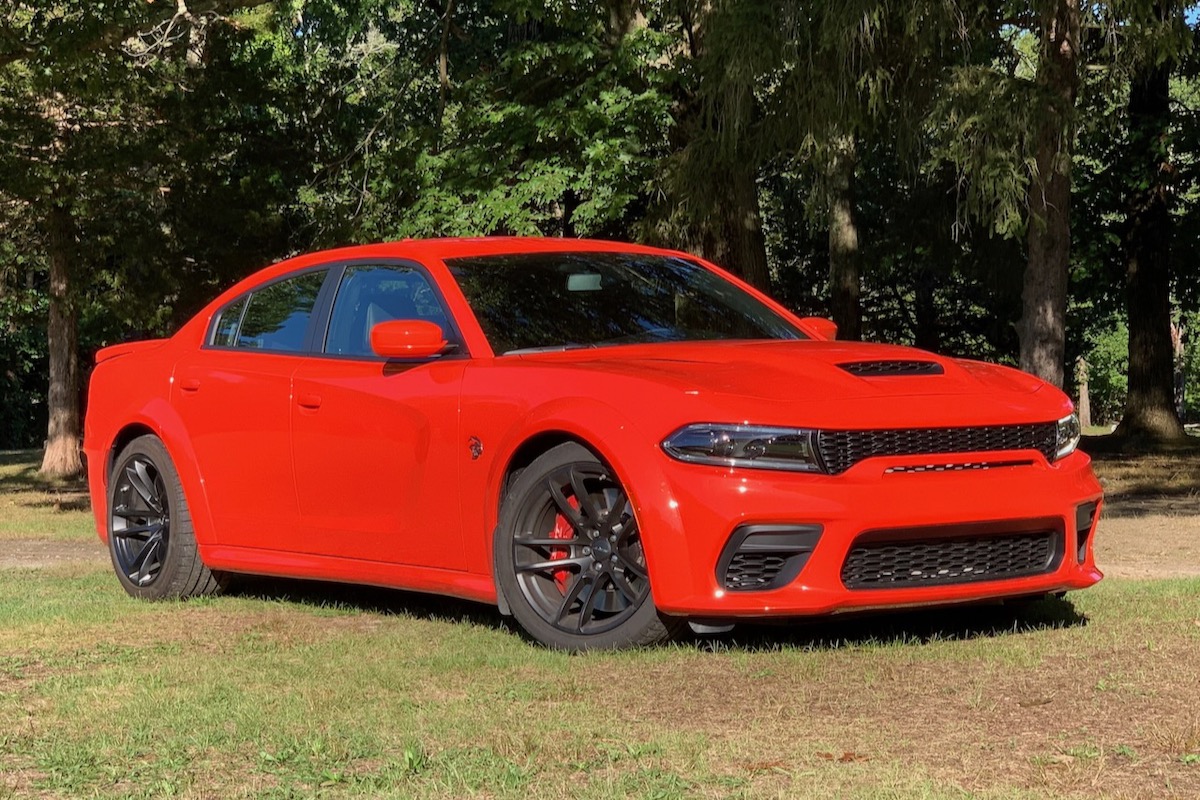
Best and Worst Dodge Charger Years in Charlotte, NC
CarGurus data reveals clear patterns about which model years offer the best value and reliability in the Charlotte market. The Charger's long production run means there's a wide spread between the best and worst years — and the gap matters more than with most cars. For more information on the Charger by generation and model year, check out our Dodge Charger Buying Guide.
Best Dodge Charger Years for Charlotte, NC
| Category |
Best Years |
Charlotte Avg. Price |
Why They're Best |
| Best Overall |
2022–2023 |
$28,317–$32,238 |
Most refined seventh-gen, Charlotte discount vs. national, includes last-call special editions |
| Best Value |
2020 |
$22,078 |
8.1% Charlotte discount, Wide Body models introduced, modern features standard |
| Best for Modern Features |
2017–2018 |
$13,170–$22,443 |
Apple CarPlay/Android Auto standard, post-refresh reliability, proven eight-speed auto |
| Best Local Discount |
2017 |
$13,170 |
27.8% below national average, first year with CarPlay/Android Auto, Daytona trims available |
Best Overall: 2022–2023
The final two years of the seventh-generation Charger represent the pinnacle of this design. The 2022 introduced the Jailbreak variant with the Hellcat Redeye's 807 horsepower, while 2023 brought "last call" special editions before production ended. In Charlotte, the 2023 averages $32,238 — 7.2% below the $34,755 national average, and the 2022 at $28,317 is 4.7% below national pricing. These are the most refined, feature-rich, and best-built Chargers ever made.
Best Value: 2020
The 2020 model year introduced Wide Body variants with fender flares and wider tires, adding visual drama to the Scat Pack and Hellcat trims. Charlotte pricing at $22,078 is 8.1% below the $24,022 national average — the strongest local discount for any late-model Charger. Average mileage is higher at 96,440 miles, but these post-refresh Chargers are built to handle it.
Best for Modern Features: 2017–2018
Apple CarPlay and Android Auto integration arrived for 2017, making these the oldest Chargers with modern smartphone connectivity. The 2017 at $13,170 in Charlotte offers a 27.8% discount versus the $18,247 national average — exceptional for a car with post-refresh reliability and the standard eight-speed automatic. The 2018 models show unusually low local mileage at 27,295 miles, suggesting a concentration of well-kept examples.
Best Local Discount: 2017
At $13,170 — nearly $5,100 below the national average — the 2017 Charger offers the deepest Charlotte discount of any model year. It was also the first year with Daytona trims, adding heritage-inspired styling to the lineup. The high average mileage of 156,139 miles is the trade-off, but the Pentastar V6 and post-2015 drivetrain are proven at these distances.
Worst Dodge Charger Years for Charlotte, NC
| Years |
Charlotte Avg. Price |
Avg. Mileage |
Concerns |
| 2006–2008 |
N/A (limited inventory) |
N/A |
Highest complaint rates; valve seal, head gasket, transmission, and electrical issues; rust-prone |
| 2011–2012 |
N/A (limited inventory) |
N/A |
Electrical system and infotainment bugs; first-year teething issues for seventh-gen design |
Avoid: 2006–2008
The 2006–2008 Chargers are the worst of the modern era. The design was entirely new in 2006, combining a fresh engine family (the 5.7-liter Hemi) with complex Mercedes-Benz-derived electrical and drivetrain systems. The result was a car plagued by valve seal and head gasket failures, transmission problems, and persistent electrical gremlins. These models are also more rust-prone than any later Charger. Charlotte's current inventory shows minimal supply of these years — the market has naturally cycled most of them out — and that's a signal worth heeding. Avoid these entirely.
Approach Carefully: 2011–2012
The first two years of the seventh-generation Charger suffered from teething problems, primarily in the electrical system and infotainment software. The mechanical underpinnings — particularly the new Pentastar V6 — were solid, but electrical glitches can be frustrating and expensive to diagnose. These years don't appear in Charlotte's current pricing data, suggesting limited local supply. If you find one, budget for potential electrical repairs and get a thorough pre-purchase inspection.
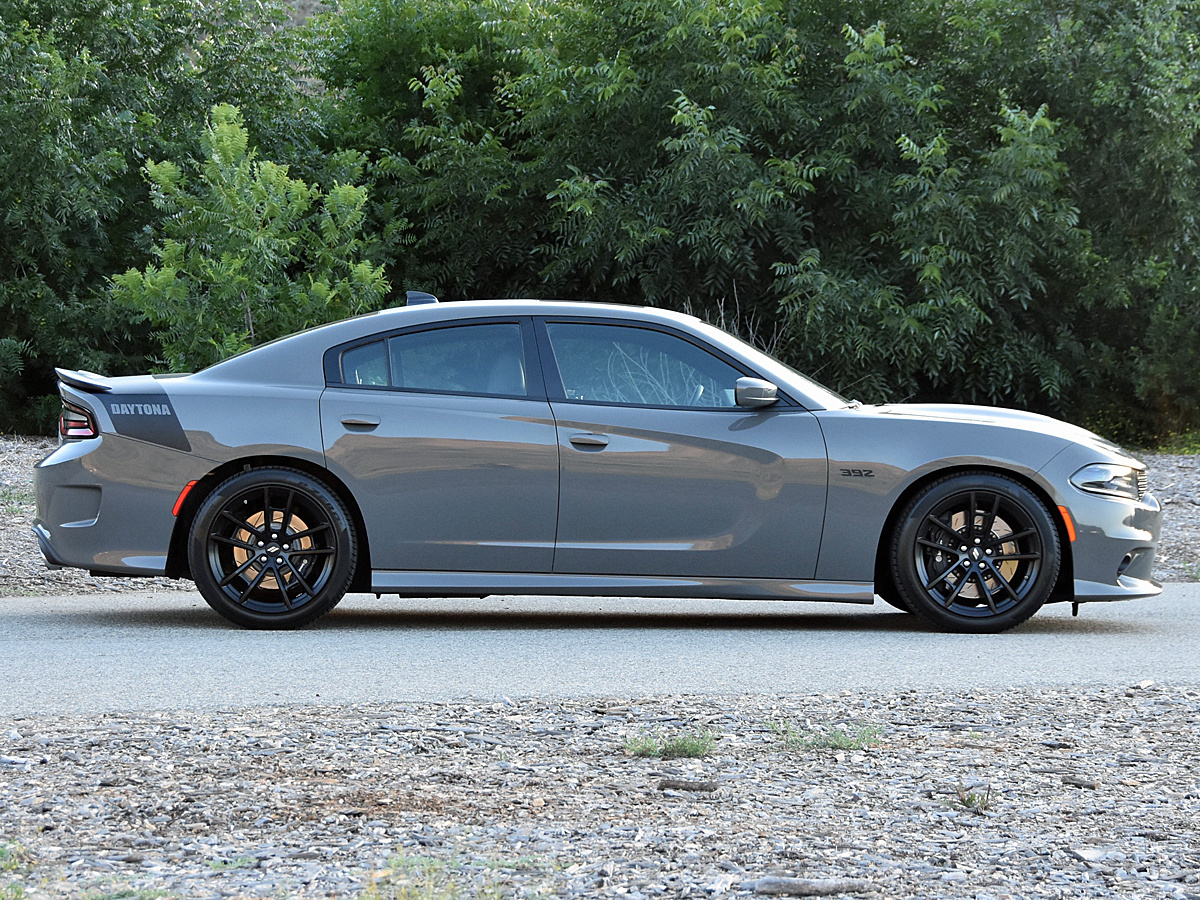
Dodge Charger Pros and Cons
Charlotte's mix of highway commuting, suburban driving, and car-culture enthusiasm plays to most of the Charger's strengths. The wide, flat roads of the greater Charlotte area reward the Charger's comfortable ride and straight-line performance, while the mild Mid-Atlantic climate avoids the extreme heat and salt exposure that can accelerate wear on these cars.
Pros
Exceptional Clean-History Inventory in Charlotte
Charlotte's Charger market is remarkably clean. 91% of local listings carry accident-free histories — 25 percentage points above the 66% national rate. For a car with a performance-oriented image that can attract aggressive driving, this level of clean inventory is unusual and gives Charlotte buyers a significant confidence advantage when shopping.
Unmatched Performance Range
No other four-door sedan offers the Charger's breadth of performance. The lineup spans from the efficient 292-horsepower Pentastar V6 to the 807-horsepower supercharged Hellcat Redeye — all in a car that seats five adults comfortably. Charlotte's 850-unit inventory means buyers can find everything from sensible commuters to street-legal drag machines, often at the same dealership.
Spacious and Practical
Despite its muscle-car image, the Charger is a genuine full-size sedan with a generous trunk and comfortable rear seats. It handles family duty as capably as a Camry or Accord, which makes it a rare combination: a car that's exciting to drive and practical enough for daily life. For Charlotte commuters, that dual personality is a real asset.
Strong Deal Quality Locally
33% of Charlotte Charger listings qualify as Good or Great Deals, compared to 28% nationally. The Good Deal rate is especially strong at 28% versus 21% nationally. While average prices run slightly above the national market, patient shoppers have a meaningful advantage finding well-priced examples.
Proven Post-2015 Reliability
The seventh-generation Charger's post-2015 refresh is genuinely reliable. Even supercharged Hellcat models with 700+ horsepower have proven durable with proper maintenance. The Pentastar V6 is essentially bulletproof, and the eight-speed automatic handles all power levels without issue. For a performance car, maintenance costs are reasonable and independent shops can service them easily.
Available All-Wheel Drive
While Charlotte doesn't see much snow, the occasional ice storm and wet-road conditions make the Charger's available AWD a worthwhile option. AWD models (available on V6 trims from 2015+) add all-weather confidence without sacrificing the Charger's character.
Cons
Fuel Economy Is a Weakness
The Charger is thirsty by any standard. Even the V6 models manage only 27–30 mpg highway with the eight-speed automatic, and the V8s drop to 19–25 mpg depending on configuration. Hellcat models are in single digits during spirited driving. For Charlotte commuters covering significant highway miles, fuel costs add up compared to more efficient midsize sedans.
Interior Feels Dated
By 2023 standards — let alone 2026 — the Charger's cabin shows its age. While functional and comfortable, the materials, design language, and tech interface can't match what competitors like the Genesis G70 or even a loaded Hyundai Sonata offer. The basic layout barely changed from 2011 to 2023, and it shows.
Charlotte Prices Run Above National Average
Charlotte Charger prices average $27,368 — 5.8% above the $25,874 national average. Local demand for these cars keeps prices firm, and certain model years (2016, 2019, 2021) show double-digit premiums over national pricing. The clean-history advantage compensates, but buyers should shop across multiple model years to find the best value.
Performance Image Invites Hard Driving
The Charger's aggressive styling and powerful engine options attract enthusiastic drivers, which means some used examples have been driven hard. This is especially true for SRT, Scat Pack, and Hellcat trims. Always request service records and get a pre-purchase inspection, particularly for high-performance variants.
Safety Tech Lags Behind
Most seventh-generation Chargers lack the advanced driver-assistance features that are standard on modern competitors. Basic features like blind-spot monitoring and forward-collision warning were available but not always standard, and adaptive cruise control was limited to higher trims. If modern safety tech is a priority, the Charger falls short.
Final Verdict for Charlotte Buyers
The 2022–2023 model years are the clearest recommendation for Charlotte buyers seeking the best Charger experience — refined, powerful, well-built, and priced 4.7–7.2% below national averages. For buyers on a tighter budget, the 2020 at $22,078 (8.1% below national) offers the best value with Wide Body availability, while the 2017 at $13,170 delivers modern features at a steep local discount. Charlotte's true standout advantage isn't price — it's the 91% accident-free inventory rate that makes this one of the cleanest Charger markets in the country. Steer clear of 2006–2008 models entirely, and the Charger delivers exactly what it promises: a lot of car for the money.