BMW's roadster, the Z4, replaced the Z3 in late 2002 as the purest example of the company's expertise in engines, chassis dynamics, and cutting-edge technology. While the sharp-edged exterior styling was a big contrast to the flowing, classical shape of the Z3, the Z4 carried on as a small, perfectly balanced sports car with a folding roof and two seats. Even as it gained tremendous amounts of power and complex software into its third generation, the Z4 became one of very few convertibles on sale under $100,000.
Available in three generations, two body styles, and a multitude of powertrains, the Z4 is an affordable used car and competes against the Porsche Boxster, the Audi TT Roadster, and the Mercedes-Benz SLK and SLC. Production of the Z4 ended in spring 2026, with no fourth-generation model on the horizon. For larger BMW convertibles with more than two seats, consider shopping for a 3 Series, 4 Series, or 6 Series convertible during the Z4's model years.
Our BMW Z4 buying guide covers the three model generations available, with in-depth details of its history and specs, which are the best and worst versions to buy, and how much buyers can expect to pay for one.
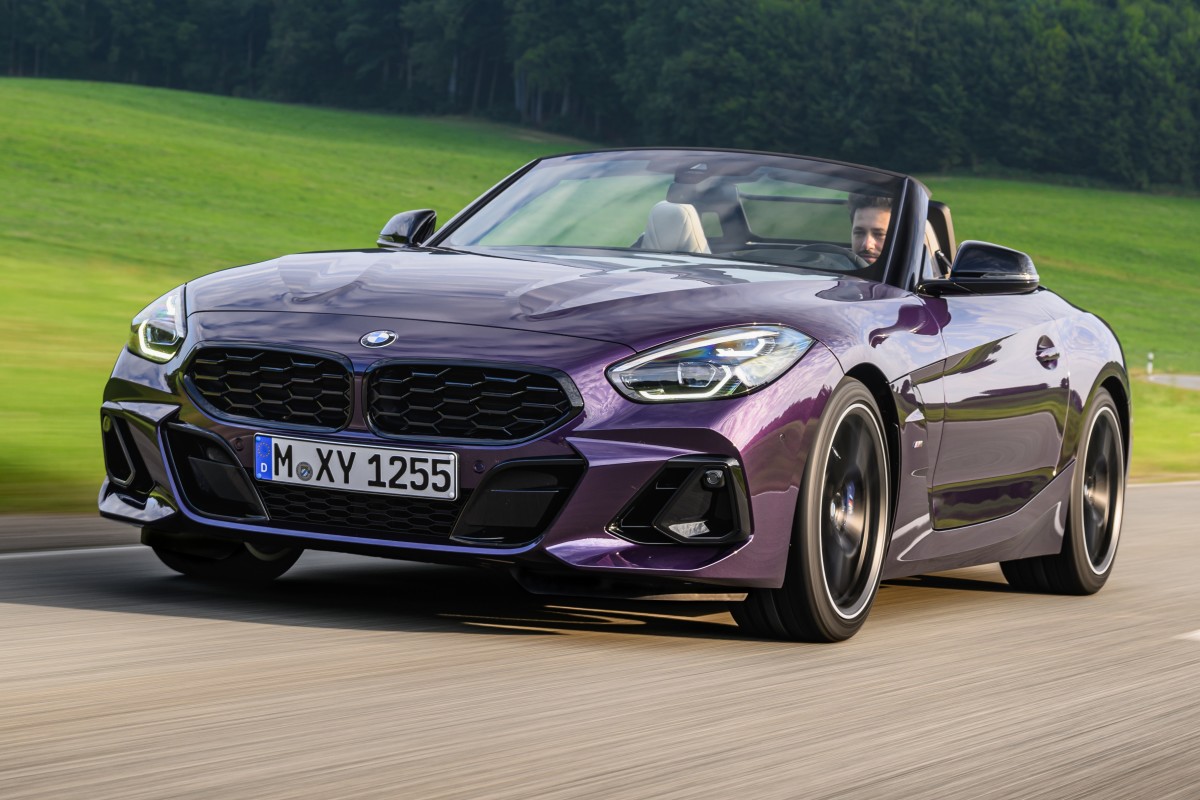
BMW Z4 Third Generation (2019–2026)
After skipping two model years, the Z4 returned as an all-new model in 2019 with greater comfort, power, agility, and arguably its prettiest design yet. For the latest software and convenience features—plus sleek styling and quality craftsmanship in a small convertible—look no further than a Z4 from 2019 on.
Unusually, the Z4 was co-developed with Toyota this time around and shared many parts with the fifth-generation Toyota Supra. The Supra was a coupe, though, while the Z4 was only available as a convertible. The two cars bore no external resemblance, with the Z4 having a design that aligned it closely with the (much) larger 8 Series convertible.
Much of the dashboard and tech was shared with the 3 Series, with some modifications to the center console (for example, there were no central cupholders unless drivers opened the armrest cubby). The stacked headlights, short wheelbase, and uniquely stitched seats were not shared with other BMWs. Compared to the second-gen Z4, this one was 3.8 inches longer, while the wheelbase was reduced by one inch. The steering and suspension were sharper and felt more direct than before.
Two trims were available for this generation. At launch, only the sDrive30i was available; it featured a 2.0-liter turbocharged inline-four engine with 255 horsepower and 295 pound-feet of torque. The M40i (which was added in 2020) used a 3.0-liter turbocharged inline-six with 382 hp and 369 lb-ft of torque. Either powertrain routed all that thrust through an eight-speed automatic transmission to the rear wheels, and certain trim levels came with a limited-slip differential and adaptive dampers. Every Z4 had paddle shifters and driving modes to optimize the powertrain for efficient or sporty behavior.
Most importantly, a power soft top returned in place of the hardtop, which meant the trunk's 10-cubic-foot capacity was unaffected when the roof was stowed. It also gave the Z4 a classier look as luxury convertibles shifted away from hardtops.
Pricing for the 2019 Z4 started at just over $50,000. Standard equipment on the entry-level Z4 sDrive30i included LED headlights, 18-inch wheels, a 10.2-inch touchscreen with iDrive 7, navigation, Apple CarPlay (but not Android Auto), a digital instrument panel, automatic emergency braking, a 10-speaker stereo, leatherette upholstery, and many other powered accessories. An M Sport Package brought an aero kit with 19-inch wheels, adaptive dampers, and a special steering wheel.
The Track Handling Package added larger brakes with blue calipers, a limited-slip differential, and retuned dampers, all of which were standard on the M40i. Other features, such as blind-spot monitors, a head-up display, and other driver-assistance functions were optional. Many features of the new iDrive 7 software gave enhanced connectivity, including remote start and the use of a digital key card.
After a carryover year in 2020, the M40i trim arrived in 2021, adding SiriusXM satellite radio and Android Auto. A wireless charging pad was optional, along with a no-cost option to change the M Sport brake calipers to red. There were no major changes for 2022 aside from a temporary deletion of the charging pad and ambient lighting (due to a chip shortage during the pandemic). The M Sport Package became standard for 2023 and a few new paint colors were added.
The biggest news arrived for the 2024 model year, when BMW finally brought back a six-speed manual transmission. Available as part of the Handschalter Package on the M40i, this Z4 came with staggered-diameter wheels plus retuned steering and dampers.
For 2026, its last model year, BMW offered a Z4 Final Edition in matte black with either a manual or an automatic.
According to CarGurus pricing data, average used prices for third-generation Z4s range from about $38,000 for a 2020 model to $59,000 for a 2026 model.
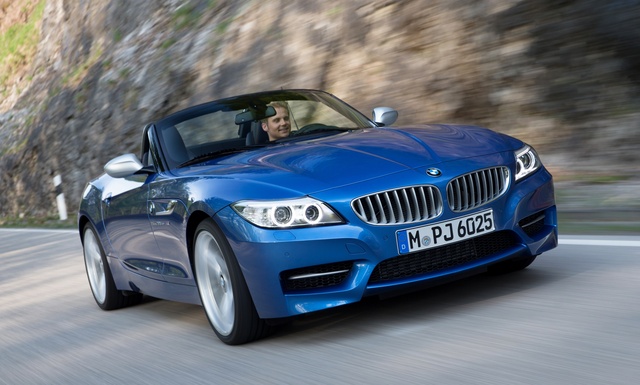
BMW Z4 Second Generation (2009–2017)
The second-generation BMW Z4 employed smoother body lines, lighter steering, extra body weight, and softer tuning that made it feel more comfortable than the original. It remained quick and agile, though the Coupe and the M models would never return. Prices were very high for the time, as the sDrive30i, which replaced the 30i, started above $46,000. The sDrive35i, the successor to the 30si, could cost more than $70,000 with options. That's where a 2026 Z4 with nearly all options was priced.
This Z4 was six inches longer than the first, but with nearly the same width and height. It came with a power retractable hardtop, just as the 3 Series convertible did at the time. The trunk capacity grew to 10.9 cubic feet with the roof up, but just 6.4 cubic feet with it folded. The sDrive30i came with a 3.0-liter inline-six making 255 hp and 220 lb-ft of torque with a six-speed manual or automatic. The sDrive35i had a new twin-turbo inline-six making 300 hp and 300 lb-ft, with the option for a seven-speed dual-clutch automatic also shared with the 335is. While fast, it was not nearly as thrilling as the M Roadster yet cost just as much. Production moved from South Carolina to Germany.
Standard features included bi-xenon headlights, leatherette upholstery, and a power hardtop. The majority of features, such as iDrive infotainment on an 8.8-inch display, were optional, including an iPod/USB port, HD radio, leather, wood or aluminum trim, power seats, a proximity key, a garage door opener, ambient lighting, and more. HD radio was made standard for 2010 with high-beam assist as a new option. The Z4 sDrive35is joined the lineup as a third trim for 2011 with an uprated version of the twin-turbo engine making 335 hp and 369 lb-ft. With chassis and exhaust upgrades, this was as close to an M Roadster as the Z4 would get in this generation.
The sDrive28i was introduced for the 2012 model year. It replaced the six-cylinder sDrive30i, and featured a 2.0-liter turbo inline-four making 240 hp and 260 lb-ft. Bluetooth, power seats, an alarm, and auto stop-start became standard across the range. Fuel efficiency increased to as much as an estimated 34 mpg highway, whereas six-cylinder models could not exceed 30 mpg. A minor facelift came in 2013, along with the introduction of BMW Connected apps. There were no major changes through the final 2017 model year.
CarGurus pricing data shows buyers expect to pay about $10,000 for early, high-mileage models to just over $30,000 for later, higher-spec versions.
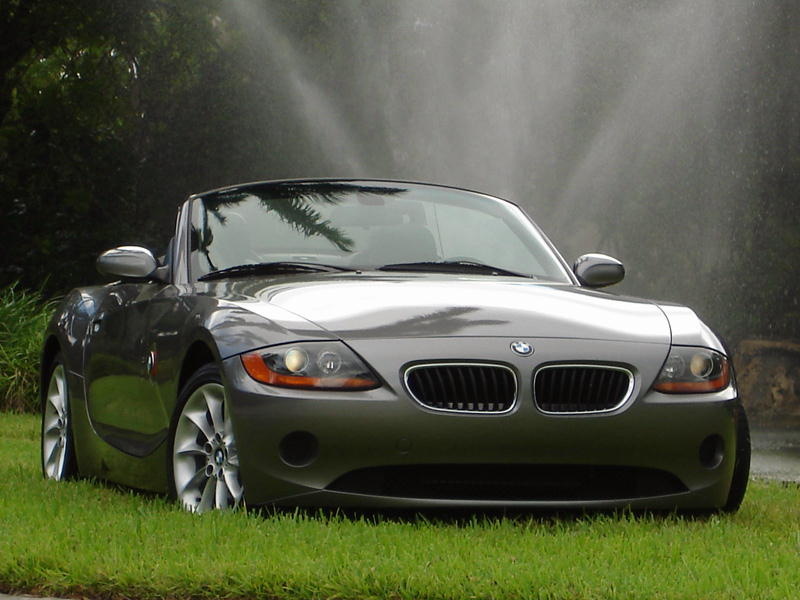
BMW Z4 First Generation (2003–2008)
The first BMW Z4 arrived in late 2002 as a replacement for the Z3, which starred in the 1995 James Bond movie Goldeneye and restarted a romance for premium two-seat roadsters. The Z4, with its radical styling and new electronic controls, was initially ill-received by BMW enthusiasts, but like most good things that shock tradition, the change was eventually accepted.
The steering, throttle, and new automatic transmissions were all electric or electronically controlled by a computer instead of hydraulic or cable linkages. The suspension was entirely revamped to be firmer and planted at higher speeds. The cabin, while still small, echoed the appearance of the very limited Z8 roadster. The BMW roundel on the front flanks remained, but cleverly, it doubled as a side turn signal.
The base 2.5i came with a 2.5-liter inline-six with 184 hp, 175 lb-ft of torque, and a five-speed manual transmission. The 3.0i had a 3.0-liter inline-six with 225 hp and 214 lb-ft linked to a six-speed manual. A five-speed automatic or six-speed SMG (semi-manual gearbox adapted from the M3) were optional. The optional powered soft top came with a heated glass window—a welcome upgrade from the Z3's manual top and plastic window. The Z4, like the Z3, was built in Spartanburg, South Carolina.
The 2003 Z4 started at just under $34,000. Standard equipment included knee airbags, side airbags, courtesy lights, remote keyless entry, cupholders, a 10-speaker CD stereo, 16-inch wheels, and leatherette upholstery. As was typical in a BMW of the time, just about every expected feature had a price tag. Heated power seats, leather upholstery, cruise control, automatic xenon headlights, and automatic climate control were all optional, primarily in packages. A sport suspension with a new computer-controlled Dynamic Driving Control was part of the Sport Package. A DVD-based navigation system flipped up from the top of the dash. The leather, sycamore wood, and aluminum trim from this time period compare well with any of BMW's materials today.
For 2004, BMW made rain-sensing wipers and automatic headlights standard while revising the steering wheel with more buttons. BMW Assist, similar to OnStar, was introduced as an option for emergency calls and vehicle location tracking and a removable hardtop was a new option. For 2006, the SMG transmission was dropped and larger 17-inch wheels and brakes became standard, along with a new 3.0-liter inline-six that powered all versions. The 2.5i was dropped in place of the 3.0i, while the 3.0i became the 3.0si. Power and torque (215 hp/185 lb-ft or 255 hp/220 lb-ft) were markedly better. Paddle shifters for automatic models were new and this was the first time they appeared on any BMW. The five-speed manual and five-speed automatic were dropped, and six-speed transmissions were added to all trims.
The 2007 Z4 introduced the Coupe, which was based on the 3.0si powertrain and is a rare model to find nowadays. In that same year, the Z4 M Roadster and M Coupe were launched with the M3's 3.2-liter inline-six with 330 hp. Everything else about these cars was entirely reengineered for serious performance. There were no major changes for 2008, this Z4's last year.
CarGurus pricing data suggests that prices for core first-generation Z4 models range from about $7,000 to $11,000. Rarer, high-end models cost considerably more.
Related Topics