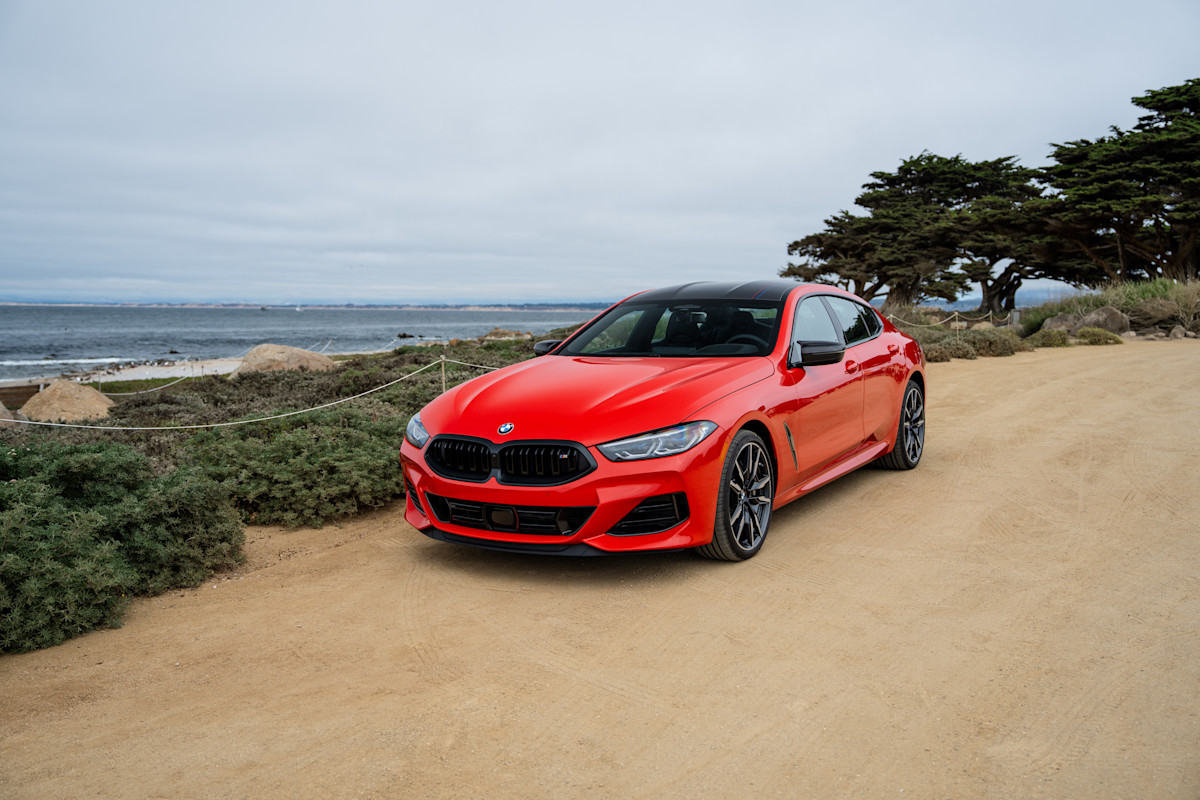
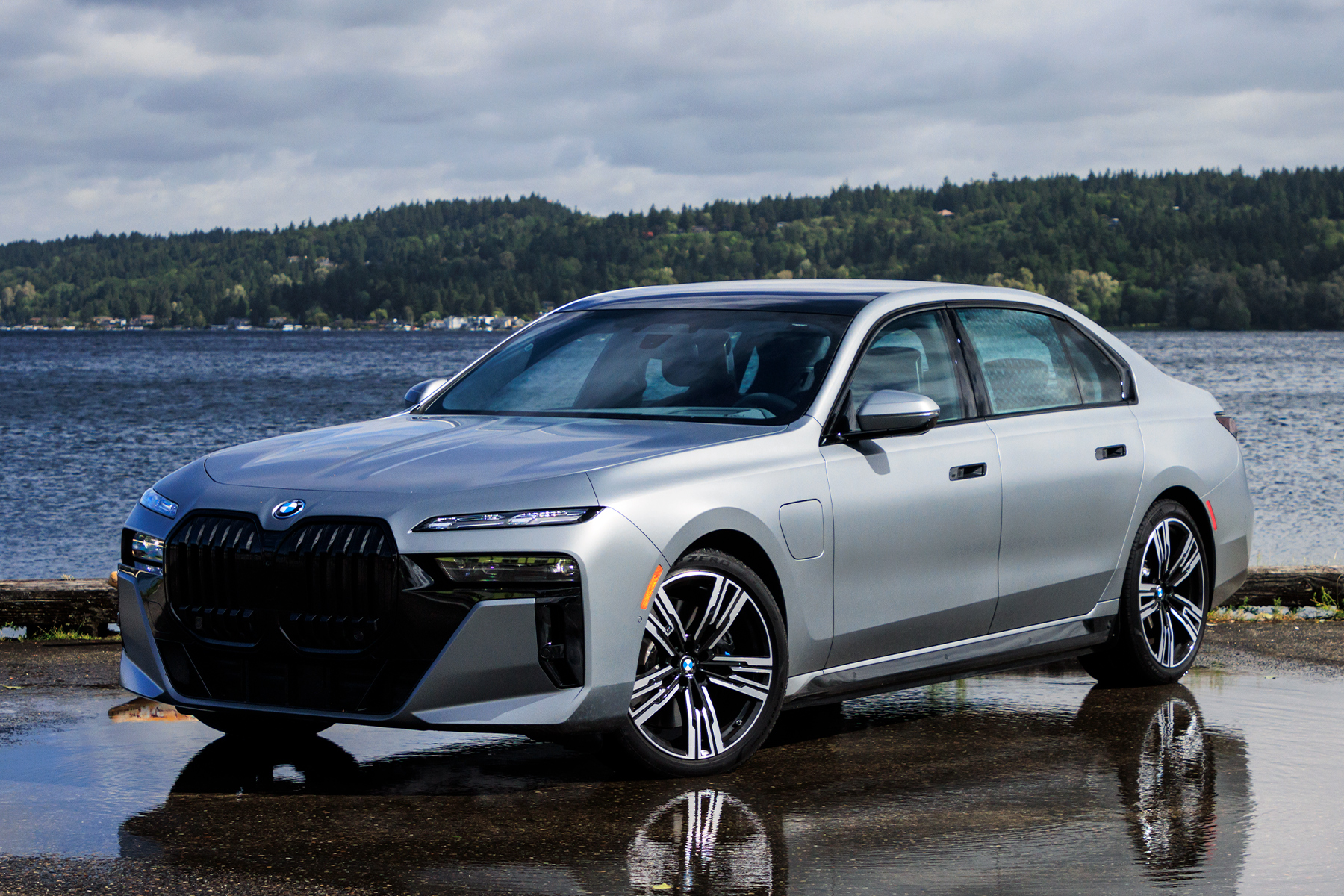
There was nothing quite like the BMW 8 Series when it debuted in the U.S. for the 1991 model year. Ostensibly a replacement for the 635CSi coupe, the 1991 BMW 8 Series featured a V12 engine and a low, long shape that looked like it was designed solely to slice through the wind with ease. Eight years later, when American actor and singer Will Smith name-dropped the 8 Series in the song “Gettin' Jiggy Wit It,” the model was truly ensconced in American lore. By that time, the 8 Series had offered V12 and V8 engine options and was available in multiple configurations with varying levels of performance.
BMW ceased production of the first-generation 8 Series following the 1997 model year, but that wasn’t the end of the luxury coupe’s story. An all-new 8 Series debuted for 2019, again with sleek styling and, again, a replacement for the 6 Series that preceded it. This modern-day 8 Series came with a twin-turbocharged V8 engine, all-wheel drive (AWD), and the choice of hard-top or convertible body styles. A four-door version arrived in 2020 called the BMW 8 Series Gran Coupe. The second-generation BMW 8 Series ended production in 2026, and while a few unsold examples can still be found, they're no longer listed on BMW’s official website.
Our buying guide looks at the history of the BMW 8 Series over the course of its two generations, the best and worst versions to buy, and how much shoppers can expect to pay for one.
BMW 8 Series Buying Guide: Cost, Reliability, and the Best Years to Buy
Frequently Asked Questions
Which BMW 8 Series years are the best?
It seems the second-generation BMW 8 Series, built between 2019 and 2026, is pretty reliable— especially for a premium model loaded with technology. J.D. Power gives the 2022 BMW 8 Series a reliability score of 80, which is average, while the 2023, 2025, and 2026 models have a great rating of 85. For those looking at first-generation BMW 8 Series models, which were sold in the U.S. from 1991 through 1997, the high-performance 850CSi models are the most desirable. In reality, though, any first-generation 8 Series is a 30-year-old car that’s loaded with complex technology and could be expensive to keep on the road.
Which BMW 8 Series years are the worst?
First-generation 8 Series models are much more likely to require expensive maintenance and repairs than the newer and more advanced second-generation versions. Since the second-generation 8 Series is such a new model and hasn’t gone through a lot of major changes, cars with high mileage are the ones to avoid rather than any specific model years.
Is a used BMW 8 Series a good deal?
Used luxury cars—especially the likes of the second-generation 8 Series that regularly sold for $100,000 or more—depreciate faster than pretty much any other category of vehicle. So it’s not uncommon to find a used 8 Series that’s lost half of its value after just a few years—which is a good deal. In reality, there are reasons that used luxury cars depreciate. One of those is that they are expensive to maintain and repair, so buyers should make sure they have funds available for the upkeep. Objectively, the first-generation 8 Series can’t be classed as a good deal, because it’s a car shoppers purchase with their hearts rather than their heads.
Pros and Cons
Pros:
- Multiple body styles (second-generation)
- Stylish design
- Impressive technology
Cons:
- Some advanced safety features are not standard
- Cramped back seat
- Expensive to maintain and repair
BMW 8 Series Generations
BMW 8 Series Second Generation (2019-Present)
Although it shares its naming scheme and market positioning with the 8 Series that was produced from 1991 through 1997, the second-generation BMW 8 Series was all-new when it debuted in 2019 and represented a fully modern take on the luxury coupe. It’s an interesting footnote that both the first- and second-generation BMW 8 Series models were designed as upmarket replacements for outgoing 6 Series models. Like the 650i that preceded it, the 2019 BMW M850i featured a 4.4-liter twin-turbo V8 engine tuned to produce 523 horsepower (up 79 hp over the 6 Series) and 553 pound-feet of torque. That powerplant was paired with an eight-speed automatic transmission that routed power to all four wheels in the M850i.
While the 2019 M850i, which was priced at about $113,000 when new, was at its best as a grand tourer, more performance was to come. BMW introduced the all-new M8 for 2020, just one year after reintroducing the 8 Series to the American market. Priced at around $135,000, the 2020 BMW M8 produced 600 hp from its turbocharged V8 engine. The M8 Competition variant, which added around $13,000 to the M8’s price, pushed that figure to 617 hp—good enough for a 0-60 mph time of just three seconds.
The 2019 BMW 8 Series Coupe featured a double-bubble roof with an indented contour running down the center. The roof could be ordered in carbon fiber and additional carbon exterior components were available, including front intake bars and a rear spoiler. Adaptive M suspension with electronically controlled dampers was standard, while a five-link rear axle with electromechanical steering aided handling.
Inside, a 12.3-inch digital gauge cluster that BMW called Live Cockpit Professional was paired with a 10.25-inch infotainment screen. In addition to the touchscreen, BMW put its familiar iDrive controller, now in its seventh generation, in the center console to help make use of the BMW Operating System.
Several advanced driver-assistance systems came standard, including automatic emergency braking with pedestrian detection. An optional Driving Assistant Professional package added adaptive cruise control with stop-and-go, steering and lane-centering assist, and lane-keep assist with active side collision protection.
In addition to the M850i Coupe and the Convertible that launched in 2019, BMW added a four-door 8 Series model to the lineup in 2020. With an elongated chassis, an adult-sized back seat, and a pair of rear doors, the 8 Series Gran Coupe promised all the performance of the hardtop with more practicality. In reality, the sloping roofline of the Gran Coupe made the back seat less hospitable than most passengers would like.
The 2020 model year also heralded more engine options. The M850i was still on the market along with the high-output M8, and a new 840i with a six-cylinder engine became the base model that sold for more than $20,000 less than the M-badged equivalent. With 335 hp from a turbocharged inline-six, the 840i wasn’t slow by any means, and was offered in both rear- and all-wheel-drive forms.
BMW added a standard lane-departure warning system and Android Auto to the 8 Series in 2021, and for 2022 it equipped all 840i models with the M Sport Package that had previously been a cost option. Bigger news was the addition of an Alpina B8 model to the Gran Coupe line that included a 612-hp turbocharged V8 engine, revised exterior styling, unique 21-inch wheels, and an upgraded interior.
A nip-and-tuck facelift for the 2023 model year included an illuminated pair of kidney grilles and an enlarged 12.3-inch infotainment screen. An offbeat 8 x Jeff Koons model, limited to 99 units globally, also appeared in 2023 wearing comic-themed paint, blue and red leather seats, and a price tag of more than $350,000.
Production of the M8, both Coupe and Gran Coupe, ended following the 2025 model year, while 2026 marks the end of the rest of the 8 Series lineup. The run-out 2026 BMW 8 Series Coupe carried a base MSRP of $95,875 and the Gran Coupe started at $96,050.
According to CarGurus pricing data, a used 2019 BMW 8 Series averages around $45,000 in 2026. Prices actually drop a little for the 2020 model, likely due to the addition of the lower-cost 840i model range, and predictably rise as cars get younger.
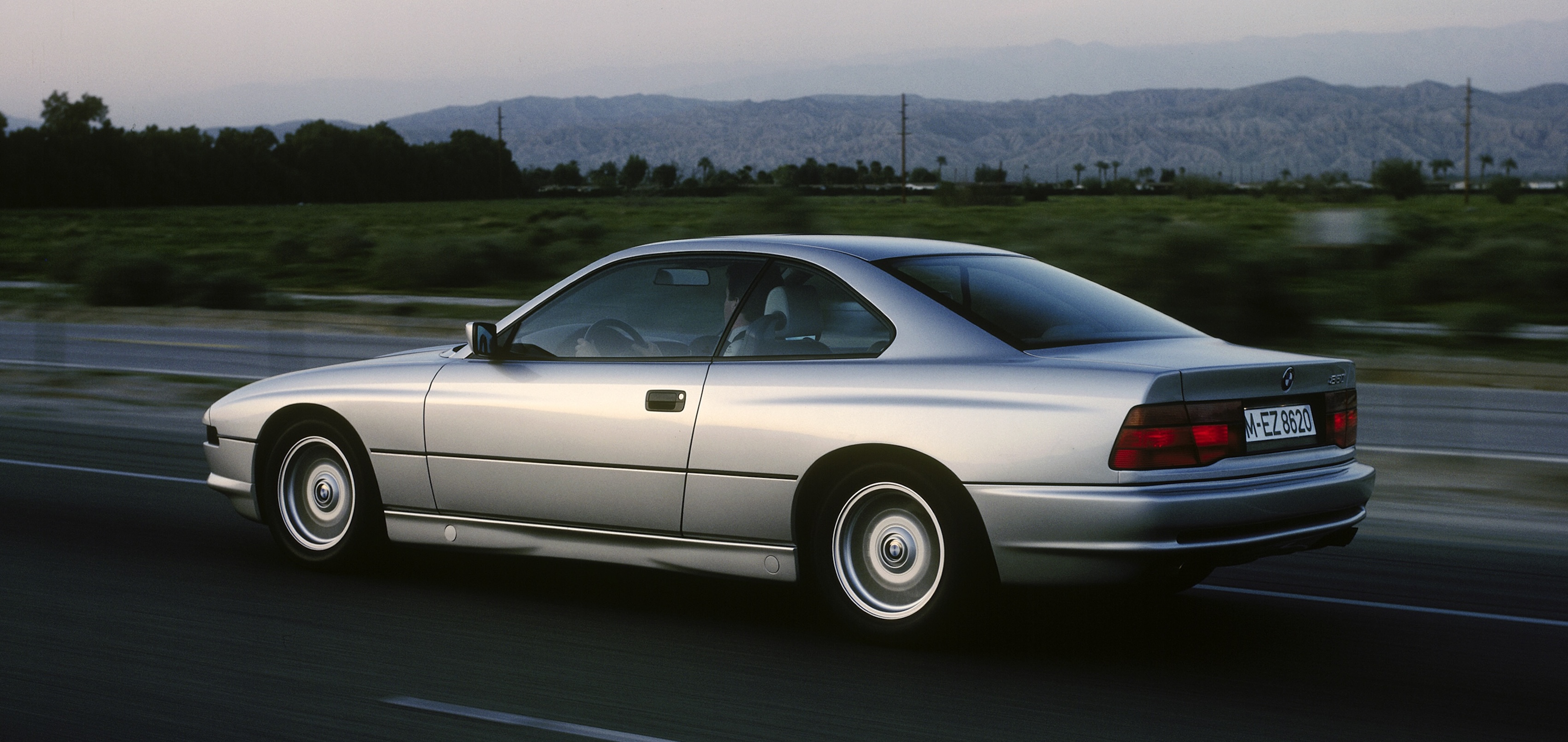
BMW 8 Series First Generation (1991-1997)
The 8 Series broke ground when BMW introduced the first-generation in 1991. It was only the second modern BMW with a 12-cylinder engine and the first to pair a V12 with a manual transmission. It looked spectacular, with its wedge-shaped exterior, pop-up headlights, and a complete lack of pillars between the windshield and rear glass. Underneath the sleek bodywork, the original 8 Series was the first BMW to feature an integral rear axle with five-link suspension. It also launched BMW’s use of Automatic Stability Control plus Traction (ASC+T), speed-sensitive power steering, and Electronic Damper Control.
At first, all 850i models were powered by a 5.0-liter V12 engine that produced 296 hp and 332 lb-ft of torque. Later, BMW launched the 850CSi variant with a 5.6-liter V12 engine producing 375 hp, stiffened suspension, rear-wheel steering, and more. A 5.4-liter V12 engine was added as the 850Ci version launched, and an entry-level 840Ci was produced with a 4.0-liter V8 engine that produced 282 hp. A 4.4-liter version replaced the 4.0-liter in 1995, with greater torque for quicker acceleration.
It’s the 850CSi that brings in the big bucks on the used market. And no wonder, since it’s the version that was pitched at buyers looking for outright performance as opposed to luxurious touring. They don’t come up for sale often, but when an 850CSi in good shape hits the market, it’s likely to cost at least double what any other first-generation 8 Series will sell for. Buyers who don’t mind a V8 instead of a high-output V12 should be able to find an 8 Series with reasonable mileage for $40,000 or less. High-mileage 850i models with maintenance-intensive V12s sell for similar prices, while low-mileage versions carry a premium.
Buyers considering a first-generation BMW 8 Series should be aware that maintenance costs will likely be heavy. These cars were packed with technology and electronics, and they are not cheap to fix. Collectors may be fine with those running costs, but an older 8 Series isn’t recommended as a daily driver for casual enthusiasts.
Related Topics