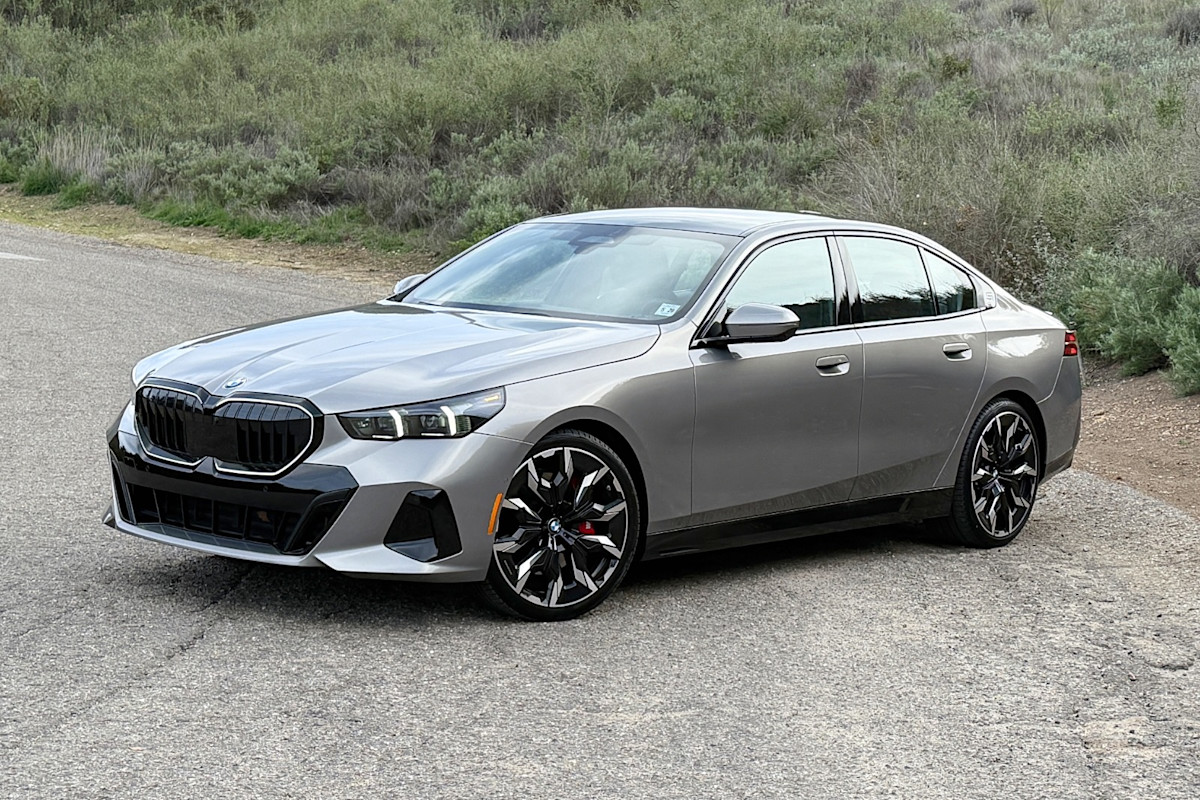
What is a Good Price for a Used BMW 5 Series in New York, NY?
Used 5 Series in New York average $26,588 — a 4% discount versus the national average of $27,682. Combined with lower-than-average mileage and a significantly higher accident-free rate, New York is a strong market for 5 Series buyers.
Price by Model Year in New York
The 5 Series spans three modern generations in the used market: the eighth-generation G60 (2024–present) with its larger footprint and electric i5 companion, the seventh-generation G30 (2017–2023) that represents the reliability sweet spot, and the sixth-generation F10 (2011–2016) offering budget entry into 5 Series ownership. Older fifth-generation E60 models (2004–2010) have largely aged out of the mainstream market.
| Model Year |
NY Avg. Price |
National Avg. Price |
NY Avg. Mileage |
Inventory Share |
| 2026 |
$55,010 |
$60,436 |
12,466 miles |
17% |
| 2025 |
$42,991 |
$51,322 |
23,406 miles |
25% |
| 2024 |
$45,581 |
$46,312 |
24,559 miles |
28% |
| 2023 |
$38,243 |
$40,130 |
41,032 miles |
31% |
| 2022 |
$33,963 |
$35,470 |
56,027 miles |
33% |
| 2021 |
$29,767 |
$29,861 |
70,458 miles |
34% |
| 2020 |
$23,268 |
$25,192 |
70,721 miles |
48% |
| 2019 |
$21,148 |
$21,293 |
79,435 miles |
59% |
| 2018 |
$17,813 |
$19,398 |
90,795 miles |
57% |
| 2017 |
$17,369 |
$17,486 |
88,764 miles |
44% |
| 2016 |
$11,063 |
$12,836 |
109,185 miles |
30% |
| 2015 |
$10,335 |
$11,672 |
104,718 miles |
30% |
| 2014 |
$9,423 |
$11,058 |
106,048 miles |
25% |
Eighth Generation G60 (2024–2026): $42,991–$55,010
The newest 5 Series brings the biggest redesign in the model's history — a dramatically larger footprint, the curved display interior, and available electric i5 variants. The 2025 model year stands out in New York with a striking 16.2% discount below national pricing ($42,991 vs. $51,322), likely reflecting the concentration of lease returns in the tri-state market. The 2026 models show a 9.0% NY discount at $55,010 versus $60,436 nationally.
Seventh Generation G30 (2017–2023): $17,369–$38,243
The sweet spot for most buyers. This is the most reliable modern 5 Series generation, and prices span a wide range from the first-year 2017 at $17,369 to the final-year 2023 at $38,243 in New York. The 2020 model year offers a notable 7.6% NY discount ($23,268 vs. $25,192) with moderate mileage at 70,721 miles. The 2018 shows an 8.2% discount ($17,813 vs. $19,398) for buyers seeking the lowest entry point into this generation. The 2021 facelift models start at $29,767 locally with updated styling and a larger infotainment screen.
Sixth Generation F10 (2014–2016): $9,423–$11,063
Budget entry into 5 Series ownership, but approach with awareness. Early F10 four-cylinder models (2011–2013) generated the most complaints for engine and electrical issues, though six-cylinder and diesel variants were less trouble-prone. The 2014 model year, which brought navigation and handwriting recognition as standard, shows the strongest NY discount in this tier at 14.8% below national ($9,423 vs. $11,058). At these prices, factor in higher maintenance costs typical of aging BMWs.
Understanding the New York Price Advantage
The 4% discount over national pricing reflects New York's unique market dynamics. The tri-state area's density of BMW lessees creates a steady flow of well-maintained, lower-mileage trade-ins — local listings average 69,683 miles versus 76,475 nationally. That 8.9% mileage advantage is meaningful for a car where maintenance costs rise with age.
Vehicle condition in New York stands out dramatically. 87% of local 5 Series listings carry accident-free histories versus just 73% nationally — a 14-percentage-point advantage. This likely reflects the higher proportion of highway and parkway miles versus rural driving, combined with the metro area's concentration of careful lease-return vehicles.
Competitive dealer density drives pricing. With 627 local listings competing for attention, New York dealers price aggressively. The discounts vary by model year — the 2025 shows a 16.2% discount while newer 2024 models sit closer to national pricing at 1.6% below — but the overall trend favors buyers.
Good and Great Deals in New York
44% of NYC 5 Series listings qualify as Good or Great Deals — substantially above the national average of 34%. The Great Deal rate of 15% nearly doubles the national 8%, making New York one of the stronger markets for finding below-market 5 Series pricing.
| Deal Rating |
NY Percentage |
National Percentage |
| Great Deals |
15% |
8% |
| Good Deals |
29% |
25% |
The 2018 and 2020 model years show the strongest NY discounts among seventh-generation models, and the 2025 eighth-generation offers an unusually large 16.2% local advantage. Buyers targeting these years will find the best overlap of discount pricing and strong deal quality.
What is the Most Reliable Used BMW 5 Series in New York, NY?
The BMW 5 Series has a mixed reliability record — certain generations are genuinely dependable, while others carry well-documented mechanical and electrical risks. Understanding which eras to target is essential, especially in a market like New York where road salt, pothole damage, and stop-and-go traffic accelerate wear on suspension and electrical components.
Most Reliable by Era
Seventh Generation G30 (2017–2023):
The most reliable modern 5 Series by a clear margin. The G30 earned IIHS Top Safety Pick+ ratings nearly every year it was on sale and generates minimal complaints from owners. The 2019–2023 models are the strongest picks, benefiting from years of refinement. The 2021 facelift brought a mild-hybrid system to the 540i for better stop/start performance — a genuine advantage in New York traffic. Local 2019 models average 79,435 miles at $21,148, while 2021 facelifts average 70,458 miles at $29,767. The 540d diesel, available in 2018, was considered the most reliable variant of this generation, though it was discontinued for 2019.
Eighth Generation G60 (2024–present):
Too new for long-term reliability data, but the G60 builds on proven BMW powertrain technology. The 530i uses a 2.0-liter turbo four making 255 horsepower, while the 540i's 3.0-liter inline six produces 375 horsepower. The 550e plug-in hybrid joined for 2025. Early indicators are neutral — no widespread issues reported, but extended warranty coverage is advisable given BMW's complexity. Local 2024 models average 24,559 miles at $45,581.
Sixth Generation F10 (2011–2016):
A generation to approach with caution. The 2011–2013 four-cylinder models generate the most complaints and the most serious issues, centered on engine and electrical problems. Six-cylinder models and the 535d diesel are notably less trouble-prone. The 2014–2016 years are somewhat improved, but this generation doesn't match the G30's reliability record. At $9,423–$11,063 in New York with 104,000–109,000 miles, budget for higher maintenance costs. New York's harsh winters and road salt amplify suspension and undercarriage wear on these aging examples.
Fifth Generation E60 (2004–2010):
The least reliable 5 Series generation. Transmission problems, costly engine repairs, and electrical gremlins are common across the range. While E60s have largely aged out of the New York market, any remaining examples should be approached only with a thorough pre-purchase inspection and a dedicated maintenance budget. The problems are more widespread and more expensive to fix than in the F10.
Fourth Generation E39 (1997–2003) and Earlier:
The first four generations of the 5 Series are all pillars of reliability, with the E39 widely considered the most rewarding to drive of any 5 Series. These are collectible-tier vehicles at this point rather than daily transportation in the New York market, but they demonstrate that BMW's reliability concerns are a modern phenomenon, not an inherent trait.
Key Improvements by Model Year — Seventh Generation G30 (2017–2023)
| Model Year |
Key Improvements |
| 2017 |
All-new G30 platform; 530i (248 hp) and 540i (335 hp); 8-speed automatic; available xDrive AWD |
| 2018 |
Added 530e PHEV (248 hp, 16 mi EV range), 540d diesel (261 hp), M550i (456 hp V8); Apple CarPlay added |
| 2019 |
Diesel dropped; Apple CarPlay subscription fee removed |
| 2020 |
530e gets larger battery (21 mi EV range); M550i power bumped to 523 hp |
| 2021 |
Mid-cycle facelift with updated front end and larger infotainment screen; 530e boosted to 288 hp; 540i gains mild-hybrid system |
| 2022–2023 |
No major changes; parking assistance dropped in 2023 |
BMW-Specific Reliability Considerations
Engine and Turbo Systems:
The turbocharged engines in the F10 (2011–2016) four-cylinder models are the most complaint-prone in the modern 5 Series lineup. Oil leaks, turbo failures, and timing chain issues affect these years disproportionately. The G30 generation's 2.0-liter and 3.0-liter turbo engines are significantly more refined. In New York's temperature extremes — summer heat and winter cold starts — turbo components face added stress.
Electrical Complexity:
Every modern 5 Series is packed with electronic systems, and the F10 and E60 generations have well-documented electrical gremlins. The G30 is better, but BMW's iDrive system remains complex. The G60's curved display setup is entirely new and worth monitoring. Road salt spray in New York winters can accelerate corrosion of wiring harnesses and connectors, particularly on older models.
Transmission Reliability:
The E60 (2004–2010) is notorious for transmission issues that are expensive to resolve. The eight-speed automatic used in both the F10 and G30 is more reliable, though it benefits from regular fluid changes — a service interval many owners skip. The G30's transmission is well-regarded for both smoothness and longevity.
Suspension and Undercarriage:
New York's pothole-laden roads are hard on the 5 Series' sophisticated suspension systems. Adaptive dampers, air springs (where equipped), and control arm bushings all wear faster in urban conditions. Budget for suspension work on any 5 Series over 80,000 miles in the New York market — this is a real-world cost that affects ownership economics.
What to Check When Buying
- Service history documentation: BMWs reward diligent maintenance and punish neglect. Look for complete records showing regular oil changes (every 10,000 miles or less) and scheduled maintenance from BMW dealerships or qualified independent specialists.
- Oil leaks (all generations): Check around the valve cover gasket, oil filter housing, and oil pan. These are common BMW wear items and more prevalent on F10 and E60 models. New York's freeze-thaw cycles accelerate gasket degradation.
- Undercarriage rust (especially F10 and older): Inspect subframe, suspension mounting points, and brake lines for corrosion. New York road salt takes a toll. The G30's improved corrosion protection makes this less of a concern for 2017+ models.
- Electrical system scan: Have a BMW-specific diagnostic tool read all modules before purchase. Look for stored fault codes in the DME (engine management), transmission, and comfort access systems. Intermittent electrical faults are a leading complaint on F10 models.
- Transmission behavior: Drive the car through multiple gear changes at various speeds. The eight-speed should shift smoothly and promptly. Any harshness, hesitation, or clunking warrants a specialist inspection — especially on F10 models.
- Coolant system integrity: BMW cooling systems use plastic components that become brittle with age. Check the expansion tank, hoses, and water pump for signs of seepage or white residue, particularly on F10 models over 80,000 miles.
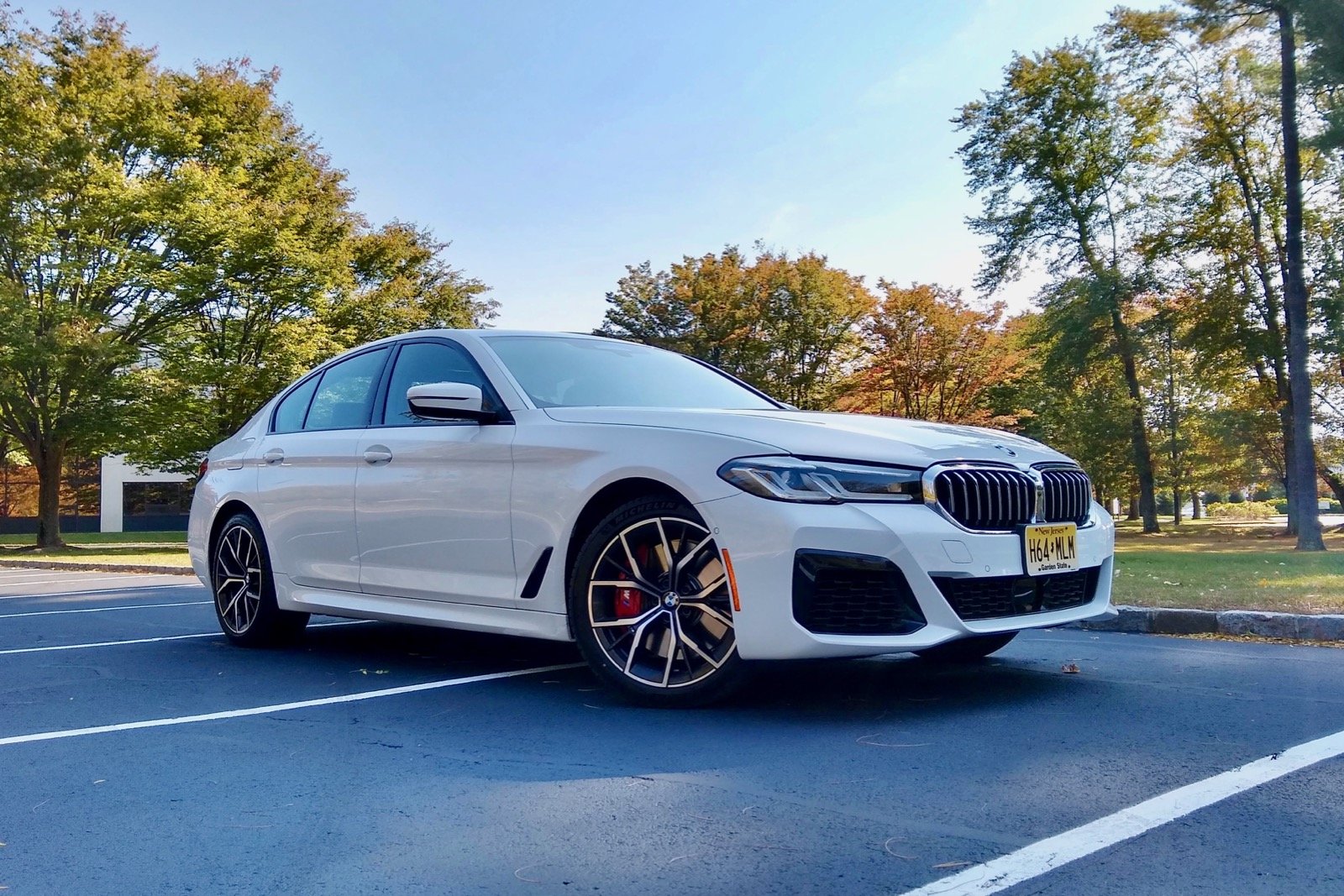
Best and Worst BMW 5 Series Years in New York, NY
Choosing the right model year matters more with the 5 Series than with most sedans — the gap between the best and worst generations is significant in both reliability and running costs. CarGurus data reveals clear patterns about where New York buyers can find the strongest value. For more information on the 5 Series by generation and model year, check out our BMW 5 Series Buying Guide.
Best BMW 5 Series Years for NYC
| Category |
Best Years |
NY Avg. Price |
Why They're Best |
| Best Overall |
2021–2023 |
$29,767–$38,243 |
Facelifted G30 with updated tech, mild-hybrid 540i, most reliable modern gen |
| Best Value |
2018–2019 |
$17,813–$21,148 |
Full G30 lineup available, 8.2% NY discount on 2018, proven reliable |
| Best for Modern Features |
2025 |
$42,991 |
Newest G60 design, 16.2% NY discount, 550e PHEV and M5 available |
| Best Local Discount |
2025 |
$42,991 |
16.2% below national average ($51,322) — the largest NY discount of any model year |
Best Overall: 2021–2023
The facelifted seventh-generation G30 hits the ideal balance of modern technology, proven reliability, and meaningful depreciation. The 2021 update brought a refreshed front end, larger infotainment touchscreen, and a mild-hybrid system for the 540i that improves efficiency and stop/start performance — a genuine benefit in New York traffic. These are the most reliable model years of the most reliable modern 5 Series generation, available at $29,767–$38,243 in New York with 41,000–70,000 miles.
Best Value: 2018–2019
These early G30 years offer the same fundamental platform as the 2021–2023 models at a significant discount. The 2018 added the 530e plug-in hybrid, 540d diesel, and the M550i V8, giving buyers the broadest model selection. At $17,813 in New York — an 8.2% discount versus national pricing — the 2018 delivers seventh-gen reliability for less than a sixth-gen car cost just a few years ago. The 2019 dropped the diesel and the Apple CarPlay subscription fee, making it a slightly cleaner buy at $21,148.
Best for Modern Features: 2025
The second model year of the eighth-generation G60 added the 550e plug-in hybrid and the return of the M5. The 2025 shows a remarkable 16.2% NY discount ($42,991 vs. $51,322 nationally), likely driven by lease returns flooding the tri-state market. At 23,406 average miles, these are essentially lightly used examples of BMW's most advanced 5 Series ever, with the curved display interior and a 0.22 drag coefficient.
Worst BMW 5 Series Years for New York
| Years |
NY Avg. Price |
Avg. Mileage |
Concerns |
| 2004–2010 (E60) |
N/A |
N/A |
Most problematic generation — transmission failures, engine issues, costly electrical repairs across all models |
| 2014–2016 (F10) |
$9,423–$11,063 |
104,718–109,185 mi |
Improved from earlier F10 years but less reliable than G30; four-cylinder models most complaint-prone; high mileage and age increase maintenance risk |
Avoid: 2004–2010 (E60 Fifth Generation)
The E60 is the least reliable 5 Series generation by a wide margin. Transmission failures, engine problems, and expensive electrical issues affect models across the range. No current E60 listings appear in the New York market data, and that's not a loss — even if priced attractively, the potential repair costs make these poor values. The more reliable 2017+ G30 generation starts at $17,369 locally and offers a fundamentally better ownership experience.
Approach Carefully: 2014–2016 (Late F10 Sixth Generation)
The later years of the F10 are improved over the troubled 2011–2013 four-cylinder models, but they still don't approach G30-level reliability. At $9,423–$11,063 in New York with 104,000–109,000 miles, the prices look appealing, but these cars are entering the age where BMW maintenance costs escalate. New York's road salt and temperature extremes compound the risk. If you're set on this budget range, target six-cylinder models (535i) and get a thorough pre-purchase inspection — or save a few thousand more for a 2017 G30 at $17,369.

BMW 5 Series Pros and Cons
New York rewards certain 5 Series strengths — the refined highway ride suits long commutes on the FDR and BQE, xDrive AWD handles winter weather confidently, and the sedan's compact footprint fits parking constraints better than an SUV. But the city's harsh conditions also amplify BMW ownership costs in ways that matter.
Pros
Exceptional Driving Dynamics
The 5 Series remains one of the best-driving luxury sedans available, with a balance of comfort and engagement that competitors struggle to match. The seventh-generation G30 earned praise for its composed highway ride and capable handling, while the M550i variant — with up to 523 horsepower after the 2020 update — delivers genuine sports car acceleration. For New York drivers splitting time between highway commutes and weekend drives, the 5 Series feels more alive than alternatives like the Genesis G80 or Mercedes-Benz E-Class.
Strong New York Market Conditions
The data makes a compelling case: 4% lower average prices than national, a 15% Great Deal rate versus 8% nationally, and 87% accident-free listings versus 73% nationally. New York offers meaningfully better conditions for 5 Series buyers than most markets, with lower mileage (69,683 vs. 76,475 miles nationally) reflecting the area's concentration of well-maintained lease returns.
Broad Powertrain Selection
The G30 alone offered five powertrains — four-cylinder turbo, inline-six turbo, V8, plug-in hybrid, and diesel — plus available xDrive AWD. The G60 adds the fully electric i5 and the 550e PHEV. For New York buyers, the xDrive option is particularly valuable for winter traction, while the 530e PHEV's electric-only range covers short urban trips without burning fuel.
Significant Depreciation Works in Buyers' Favor
The 5 Series depreciates faster than many competitors, which is bad news for original owners but excellent news for used buyers. A 2020 model averages $23,268 in New York — roughly 60% below its original MSRP — for a car with 70,721 miles, full luxury appointments, and the most reliable generation's powertrain. The 2025 G60 at $42,991 shows a 16.2% NY discount, offering near-new technology at a steep cut from the $61,950+ sticker.
Generous Standard Safety Equipment (G30)
Every G30 5 Series came standard with blind spot monitoring, lane departure warnings with lane keep assist, rear cross-traffic alerts, traffic sign recognition, and automatic high beams. It earned IIHS Top Safety Pick+ ratings nearly every year — important for families and commuters in dense New York traffic.
Cons
Higher Ownership Costs Than Japanese Rivals
The 5 Series is an expensive car to maintain regardless of generation. Parts are pricier than comparable Lexus or Genesis components, and BMW-specific expertise commands a premium at independent shops. In New York, where labor rates are already elevated, routine services and unplanned repairs add up faster. Factor in at least $1,500–$2,500 annually for maintenance on a G30 — more on an F10.
Sixth-Generation (F10) Reliability Concerns
The 2011–2016 F10's attractive $9,423–$11,063 pricing in New York can be misleading. Early four-cylinder models (2011–2013) have well-documented engine and electrical problems, and even the improved 2014–2016 years don't match G30 dependability. Road salt corrosion and New York's pothole-heavy streets compound these risks as these cars age past 100,000 miles.
Complex Technology With a Learning Curve
BMW's iDrive system has improved steadily, but it remains one of the more complex infotainment interfaces in the luxury segment. The G60's curved display drops physical controls entirely, which reviewers have criticized. For buyers upgrading from simpler vehicles, the adaptation period is real — and diagnosing tech glitches on older models can be expensive.
No Manual Transmission (Modern Gens)
The six-speed manual was available on select F10 models but disappeared with the G30. Every modern 5 Series uses BMW's eight-speed automatic. It's a fine gearbox — smooth and responsive — but enthusiasts who value three-pedal driving will need to look at older generations or other models entirely.
Rear Seat and Trunk Compromises
Despite the G60 being the largest 5 Series ever at 199 inches long, trunk volume actually shrank to 18.4 cubic feet from the G30's 18.7. The PHEV and hybrid variants sacrifice additional cargo space to battery packs. For New York families using the trunk for strollers, groceries, and weekend gear, this is a genuine consideration.
Who Should Buy a BMW 5 Series in New York?
Ideal buyers based on data patterns:
- Highway commuters who value driving engagement and want a luxury sedan that feels responsive, not numb — the 5 Series shines on long runs into Connecticut or up the Taconic
- Buyers with $20,000–$38,000 targeting a 2018–2023 G30 for the best reliability-to-value ratio in the luxury sedan segment
- Tech-forward buyers drawn to the 2025 G60 at a 16.2% NY discount, getting cutting-edge design and available PHEV or EV powertrains
- Shoppers who prioritize vehicle history — New York's 87% accident-free rate gives buyers exceptional selection among clean-title examples
- Winter drivers who want xDrive AWD paired with a refined ride and strong safety ratings
Consider alternatives if:
- You want rock-bottom maintenance costs — a Lexus ES or Genesis G80 will be cheaper to run long-term
- You're drawn to F10 prices under $12,000 but can't budget for elevated repair costs — the reliability gap versus the G30 is real
- Maximum rear-seat space and cargo capacity are top priorities — the 5 Series trunk is modest for its exterior size
- You prefer simple, intuitive technology — BMW's infotainment has a steeper learning curve than most competitors
Final Verdict for New York Buyers
The 2021–2023 G30 model years represent the clearest recommendation for most buyers — the most reliable modern 5 Series generation with the facelift's updated technology, available at $29,767–$38,243 in a market where 87% of listings are accident-free and 44% qualify as Good or Great Deals. For buyers seeking lower entry prices, the 2018–2019 G30 delivers the same fundamental package from $17,813. The 5 Series won't be the cheapest luxury sedan to own — BMW's complexity demands respect and a maintenance budget — but in New York's competitive market, the combination of driving satisfaction, strong deal quality, and exceptional vehicle condition makes a compelling case.