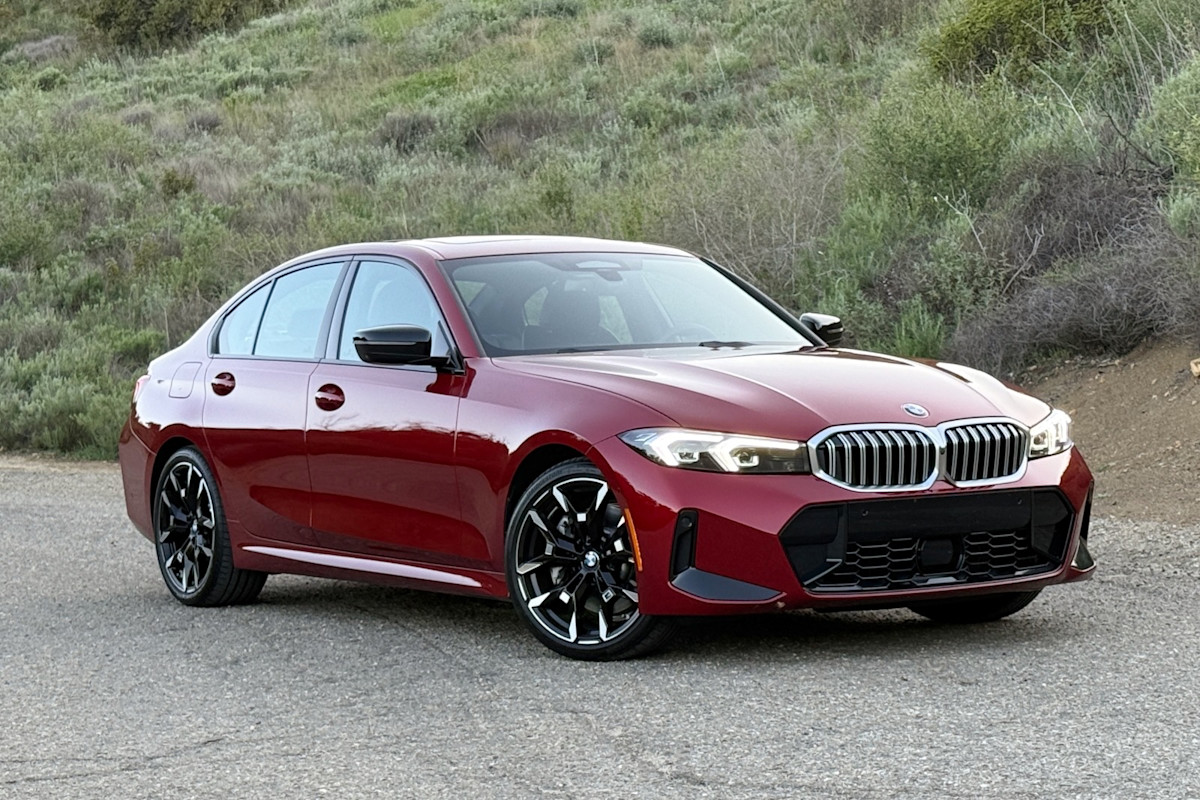
What is a Good Price for a Used BMW 3 Series in New York?
Used 3 Series in New York average $23,445 — essentially matching the national average of $23,277 (just +0.7%). While there's no dramatic price discount, New York buyers benefit from lower average mileage and significantly better vehicle condition than the national market.
Price by Model Year in New York
The 3 Series spans several generations on the used market, but inventory concentrates on the seventh-generation G20 (2019–present) and sixth-generation F30 (2012–2018). The G20 brought a single sedan body style, modernized technology, and improved reliability. The F30 offers a wider range of body styles and powertrains at more accessible prices.
| Model Year |
NY Avg. Price |
National Avg. Price |
NY Avg. Mileage |
Inventory Share |
| 2026 |
$47,039 |
$51,920 |
11,947 miles |
20% |
| 2025 |
$43,391 |
$43,692 |
14,251 miles |
30% |
| 2024 |
$34,463 |
$37,553 |
37,676 miles |
32% |
| 2023 |
$35,173 |
$35,643 |
37,784 miles |
28% |
| 2022 |
$30,416 |
$29,612 |
48,190 miles |
30% |
| 2021 |
$25,319 |
$26,757 |
64,877 miles |
42% |
| 2020 |
$26,501 |
$24,402 |
74,763 miles |
43% |
| 2019 |
$19,892 |
$20,763 |
77,891 miles |
43% |
| 2018 |
$16,507 |
$15,216 |
88,744 miles |
38% |
| 2017 |
$13,799 |
$14,295 |
96,551 miles |
39% |
| 2016 |
$12,370 |
$11,965 |
102,668 miles |
32% |
| 2015 |
$9,947 |
$10,819 |
108,053 miles |
37% |
| 2014 |
$9,586 |
$10,107 |
108,046 miles |
35% |
Seventh Generation G20 (2019–2026): $19,892–$47,039
The current-generation 3 Series dominates New York inventory and offers the widest price spread. The 2024 model year stands out with an 8.2% New York discount ($34,463 vs. $37,553 nationally) — the strongest local savings in the lineup. The 2021 model at $25,319 represents compelling value: seventh-gen refinement with 64,877 average miles and a 5.4% local discount. The 2026 model, just entering the used market, shows a substantial 9.4% New York discount ($47,039 vs. $51,920), likely reflecting high local lease return volume.
Sixth Generation F30 (2014–2018): $9,586–$16,507
The budget-friendly path into a modern 3 Series. The 2014 and 2015 model years offer the best local value, both priced 5–8% below national averages ($9,586 and $9,947 respectively). These years coincide with the mid-cycle improvements BMW made to the F30 — better engines, improved reliability ratings — making them the smart money in this generation. The 2017 at $13,799 (3.5% below national) is the final and most refined year before the generation change.
Understanding the New York Price Context
Condition advantage over pricing: New York's real edge isn't price — it's condition. Local 3 Series inventory averages 72,464 miles versus 78,715 nationally, a 7.9% mileage advantage. For a BMW, where maintenance costs escalate with mileage, fewer miles at the same price point translates to real savings over ownership.
Exceptional vehicle histories: 88% of New York listings carry accident-free histories, a 17-percentage-point advantage over the national rate of 71%. This is one of the highest clean-history rates in any major metro market and reflects both the quality of the local inventory and the high proportion of well-maintained lease returns.
Deep inventory, strong selection: With 728 local listings, New York buyers have substantial selection across model years, trims, and configurations. High-volume markets like this tend to create competitive dealer pricing, which contributes to the above-average deal quality metrics.
Good and Great Deals in New York
39% of New York 3 Series listings qualify as Good or Great Deals — meaningfully better than the 33% national average. The Great Deal rate is particularly notable: 12% in New York versus 8% nationally, a 50% higher chance of finding an exceptional price.
| Deal Rating |
NY Percentage |
National Percentage |
| Great Deals |
12% |
8% |
| Good Deals |
27% |
24% |
New York's 12% Great Deal rate significantly exceeds the national 8%. The 2024 and 2021 model years offer particularly strong local discounts for buyers targeting late-model G20 examples.
What is the Most Reliable Used BMW 3 Series in New York?
The BMW 3 Series has a split personality when it comes to reliability. Late-model examples — roughly 2014 and newer — have earned solid dependability ratings, while the 2006–2011 fifth generation is one of BMW's worst. Understanding which eras to target, and which to avoid, is essential for anyone buying a used 3 Series in a market where maintenance costs are already elevated by New York labor rates.
Most Reliable by Era
Seventh Generation G20 (2019–Present):
The most reliable 3 Series generation in decades. Built on BMW's CLAR platform, the G20 benefits from mature turbocharged engines (the B48 four-cylinder and B58 inline-six) that have been refined over multiple model cycles. The 2020–2023 model years have the highest reliability ratings and fewest reported problems. The 2019 model, which was a transitional year, has the most bugs of this generation. In New York, G20 models average 72,464 miles — comfortably within the window where these cars remain trouble-free with proper maintenance.
Sixth Generation F30 (2012–2018):
A meaningful improvement over the E90 it replaced. The 2014–2018 model years are the strongest, benefiting from the mid-cycle switch to BMW's newer B-series engines. The 2012–2013 models still carry reliability concerns — Consumer Reports flags them with poor ratings — so steer toward 2014 and later. Local examples from 2014–2015 average 108,046–108,053 miles, which means maintenance history becomes critical at this mileage for a BMW. The six-cylinder 335i/340i models are mechanically sound but more expensive to service than the four-cylinder 328i/330i.
Fifth Generation E90 (2006–2011): The Generation to Avoid.
This is BMW's worst 3 Series for reliability. Electrical gremlins, engine problems (including oil leaks and valve cover gasket failures), transmission issues, and general build-quality woes are common across the range. The final two model years (2010–2011) are marginally better, but not enough to recommend. These cars are not represented in current New York market data, and that's a signal — they've aged out of the mainstream used market for good reason.
Fourth Generation E46 (1999–2005):
More reliable than the E90 that followed, the E46 is a better-built car with fewer systemic issues. However, these are now 20+ year-old vehicles, and maintenance costs can be significant regardless of generation. The E46 is popular with enthusiasts but requires a buyer willing to invest in upkeep.
Key Improvements by Model Year — Seventh Generation (G20)
| Model Year |
Key Improvements |
| 2019 |
G20 debut (sedan only); 330i with 255-hp turbo four; available xDrive AWD |
| 2020 |
First full U.S. model year; M340i added with 382-hp mild-hybrid inline-six |
| 2021 |
330e plug-in hybrid added (288 hp, 22 mi EV range); M3 debuts with 473-hp turbo six |
| 2023 |
Major refresh: new curved panel display, updated infotainment, wireless Apple CarPlay/Android Auto standard |
BMW-Specific Reliability Considerations
Turbocharger and cooling system longevity:
BMW's turbocharged engines are generally robust, but the cooling system components — water pumps, thermostats, expansion tanks — are known wear items. On the F30 generation, these failures tend to surface between 60,000 and 100,000 miles. New York's stop-and-go traffic can accelerate cooling system stress. Budget for proactive replacement on any F30 with 80,000+ miles.
Electrical complexity:
The 3 Series packs significant electronic systems — iDrive infotainment, adaptive suspension, driver-assistance features — and electrical issues were the primary complaint on E90 models. The G20 generation has fewer electrical problems, but sensor failures and software glitches still occur, particularly on early 2019 models. Ensure all electronics function during a test drive.
Transmission behavior:
The eight-speed ZF automatic used across most modern 3 Series models is proven and durable. The six-speed manual, available on select F30 and M3 models, is similarly reliable. Transmission failures were primarily an E90-era issue. In current-generation models, check for smooth shifts and proper adaptive behavior.
Maintenance cost escalation:
BMWs cost more to maintain than mainstream sedans, and that cost increases with age and mileage. Independent BMW specialists in the New York metro area can reduce costs versus dealer service, but parts remain premium-priced. Factor in $1,500–$2,500 annually for maintenance on any 3 Series over 60,000 miles.
What to Check When Buying
- Service records: A complete maintenance history is non-negotiable for a used BMW. Look for documented oil changes at BMW's recommended intervals and evidence of cooling system service on F30 models approaching 80,000 miles.
- Oil leaks: Inspect the valve cover gasket area and oil filter housing — common leak points on both F30 and E90 engines. Any visible seepage warrants a closer inspection or a price adjustment.
- Cooling system condition: Check coolant level, look for discoloration or residue around the expansion tank, and ask about water pump replacement history. Proactive cooling system overhaul on an F30 is better than a roadside failure.
- Electronics and iDrive: Test every infotainment function, check that the navigation and Apple CarPlay/Android Auto work, cycle through driver-assistance features, and verify all warning lights clear after startup.
- Tire and brake wear: Performance-oriented BMWs consume tires and brakes faster than economy sedans, and replacement costs are higher. Uneven tire wear can signal suspension issues. Check brake pad thickness and rotor condition.
- Pre-purchase inspection: A PPI from an independent BMW specialist is essential, especially for any F30 model. New York has numerous qualified shops — the $200–$300 cost is minimal insurance against a costly surprise.
Best and Worst BMW 3 Series Years in New York
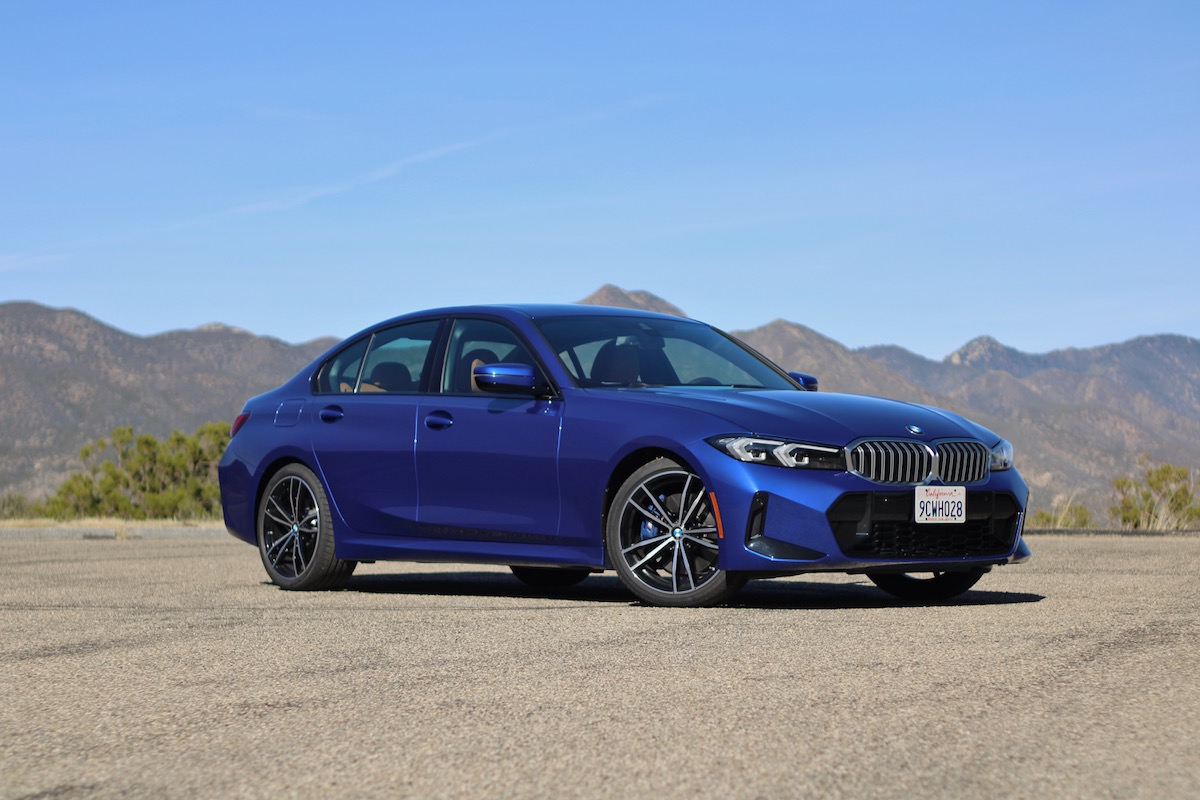
Choosing the right model year matters more with a BMW 3 Series than with most sedans, because reliability and ownership costs vary dramatically across generations. For more information on the 3 Series by generation and model year, check out our BMW 3 Series Buying Guide.
Best BMW 3 Series Years for New York
| Category |
Best Years |
NY Avg. Price |
Why They're Best |
| Best Overall |
2021–2023 |
$25,319–$35,173 |
Peak G20 reliability, full model lineup including 330e and M3, meaningful depreciation |
| Best Value |
2014–2015 |
$9,586–$9,947 |
Best F30 reliability years, 5–8% NY discount, sub-$10,000 entry point |
| Best for Modern Features |
2023–2024 |
$34,463–$35,173 |
Refreshed curved display, wireless CarPlay/Android Auto, 2024 shows 8.2% NY discount |
| Best Local Discount |
2026 |
$47,039 |
9.4% below national average, likely reflecting high NYC lease return volume |
Best Overall: 2021–2023
These model years represent the G20's sweet spot. The full lineup is available — 330i, 330e plug-in hybrid, M340i, and M3 — and these years carry the fewest reported reliability issues of any modern 3 Series. The 2021 stands out in New York at $25,319, a 5.4% local discount with 64,877 average miles. The 2023 brings the significant mid-cycle refresh with BMW's new curved display and updated infotainment.
Best Value: 2014–2015
The post-refresh F30 models deliver the best reliability of the sixth generation at the most accessible prices. In New York, 2014 models average $9,586 (5.2% below national) and 2015 models average $9,947 (8.1% below national). These years benefit from BMW's switch to more reliable B-series engines and improved build quality. At under $10,000, they're the most affordable route into a modern, well-equipped 3 Series.
Best for Modern Features: 2023–2024
The 2023 refresh brought BMW's curved panel display, a dramatically improved infotainment experience, and standard wireless Apple CarPlay and Android Auto. The 2024 model year shows the strongest local discount in this range — $34,463 versus $37,553 nationally, an 8.2% New York advantage — making it the best value among late-model, fully loaded examples.
Best Local Discount: 2026
Near-new 2026 models in New York average $47,039 versus $51,920 nationally, a 9.4% discount. This likely reflects New York's high volume of corporate and lease returns flowing back into the market. With just 11,947 average miles, these are essentially new cars at a meaningful savings — though you'll pay a premium compared to models with just one more year of depreciation.
Worst BMW 3 Series Years for New York
| Years |
Concerns |
| 2006–2011 (E90) |
BMW's worst 3 Series generation: electrical failures, engine oil leaks, transmission problems, poor overall build quality |
| 2012–2013 (early F30) |
First-year teething issues with the N20 engine, poor Consumer Reports reliability ratings; 2014+ models are meaningfully better |
| 2019 (early G20) |
Transitional first year with more reported bugs than 2020+ models; the buggiest year of the current generation |
Avoid: 2006–2011 (E90)
The fifth-generation 3 Series is BMW's least reliable generation by a wide margin. Electrical gremlins, engine oil leaks, valve cover gasket failures, and transmission issues are common across the range. The final two model years (2010–2011) are marginally improved but still well below the standard set by the F30 that replaced them. These models are no longer represented in New York's active market data — they've effectively aged out of the mainstream used market. Avoid them regardless of price.
Approach Carefully: 2012–2013 (Early F30)
The first two years of the sixth generation carried teething issues, particularly with the N20 turbocharged four-cylinder engine. Consumer Reports flagged these years with below-average reliability. The 2014 model year and later, which introduced improved engines and refinements, are meaningfully better. Given that 2014 models in New York average just $9,586, there's little reason to save a few hundred dollars on a 2012 or 2013 when a more reliable option costs about the same.
Approach Carefully: 2019 (Early G20)
As the transitional first year of the current generation, the 2019 model has the most reported issues of any G20. At $19,892 in New York with 77,891 average miles, it offers savings over 2020+ models, but a 2021 at $25,319 with 64,877 miles and a stronger reliability record represents better long-term value. Proceed with a thorough pre-purchase inspection if targeting a 2019.
BMW 3 Series Pros and Cons
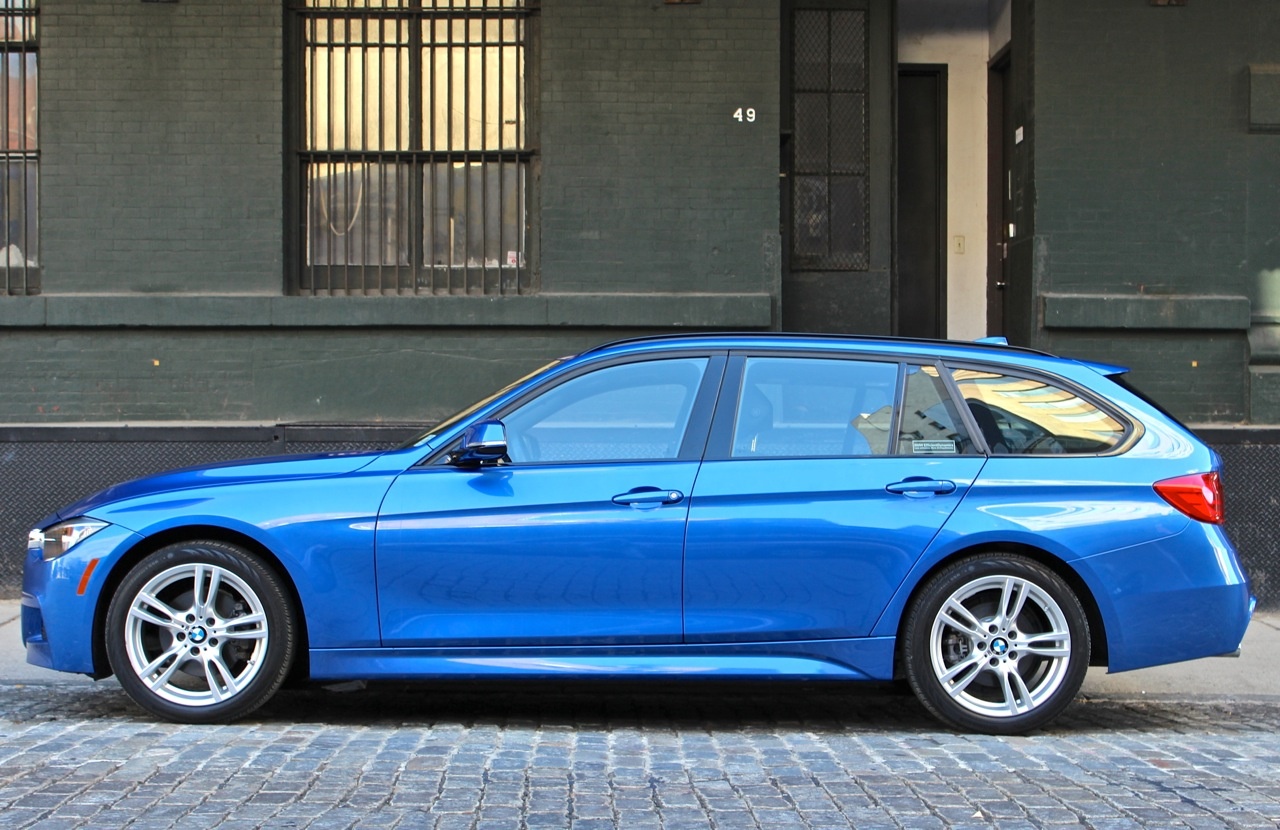
New York's driving environment — dense traffic, pothole-riddled streets, tight parking, and the occasional blast up the Taconic — tests a car's versatility. The 3 Series is built for exactly this kind of range, but its premium nature comes with trade-offs that matter more in an expensive city.
Pros
Engaging Driving Dynamics
The 3 Series remains the benchmark for sport sedan handling. The G20 generation delivers sharp, confidence-inspiring steering and balanced chassis tuning that makes city driving less tedious and highway runs genuinely enjoyable. The M340i, with 382 horsepower and a zero-to-60 time of 4.1 seconds, delivers near-M3 performance in a more livable package. Even the base 330i, with 255 horsepower, is quicker than most competitors.
Exceptional Vehicle Condition in New York
88% of New York listings carry accident-free histories — 17 percentage points above the national rate of 71%. Local inventory also averages 72,464 miles versus 78,715 nationally. For a car where maintenance history directly affects ownership costs, this condition advantage is substantial.
Strong Deal Quality
39% of New York listings qualify as Good or Great Deals, compared to 33% nationally. The 12% Great Deal rate is 50% higher than the national 8%. High-volume lease return markets like New York tend to produce aggressive dealer pricing on desirable late-model examples.
Premium Technology and Comfort
The 2023+ G20 refresh brought BMW's curved panel display and a significantly improved infotainment system with wireless Apple CarPlay and Android Auto. Standard driver-assistance features include frontal collision warning with automatic braking. The cabin is well-appointed with quality materials, and road noise insulation has improved markedly over older generations.
Wide Powertrain Selection
From the efficient 330e plug-in hybrid (288 hp, 22 miles of electric range) to the M340i's 382-hp mild-hybrid inline-six to the M3's 473–503-hp six-cylinder, the 3 Series lineup covers a broader range of performance and efficiency than any competitor. Rear-wheel and all-wheel drive are available across most variants — xDrive AWD is particularly relevant for New York winters.
Solid Late-Model Reliability
The 2020–2023 G20 models have the highest reliability ratings and fewest reported problems of any modern 3 Series. This generation marks a genuine improvement over the troublesome E90 era and even the sometimes-finicky early F30 years.
Cons
Higher Ownership Costs Than Mainstream Sedans
BMWs cost more to maintain and repair than a Honda Accord or Toyota Camry. Parts are premium-priced, and even routine service runs higher at dealer rates. Budget $1,500–$2,500 annually for maintenance on any 3 Series over 60,000 miles. New York labor rates amplify this further.
Tight Rear Seat
The 3 Series is a four-seater in practical terms. The rear seat accommodates two adults adequately but three uncomfortably, and legroom is limited compared to a midsize sedan. For regular family duty with rear-seat passengers, consider the larger 5 Series or a competitor with more rear space.
Generational Reliability Gap
Not every 3 Series is created equal. The 2006–2011 E90 generation has a rotten reliability record with electrical, engine, and transmission issues. The 2012–2013 F30 models also underperform. Buyers must be generation-savvy — a cheap E90 is often a false economy.
Premium Pricing on Desirable Configurations
While the overall New York market trades near national averages, desirable configurations — M340i, low-mileage G20, xDrive models — command premium prices. The 2020 model year trades at $26,501 in New York versus $24,402 nationally, an 8.6% local premium, suggesting high local demand for certain variants.
Reduced Cargo in Plug-In Hybrid
The 330e plug-in hybrid sacrifices trunk space to accommodate its battery pack. If maximum cargo utility matters alongside fuel efficiency, the standard 330i or a competitor's non-hybrid option may be more practical.
Who Should Buy a BMW 3 Series in New York?
Ideal buyers based on data patterns:
- Commuters who value driving engagement and want a sedan that's genuinely fun on the FDR Drive or a weekend escape to the Hudson Valley
- Buyers prioritizing vehicle condition — New York's 88% accident-free rate and lower-than-average mileage mean cleaner inventory than most markets
- Shoppers targeting 2021–2023 G20 models, where strong reliability meets meaningful depreciation and a 5.4% local discount on 2021 examples
- Budget-conscious buyers willing to accept higher mileage on 2014–2015 F30 models at sub-$10,000 prices with 5–8% local discounts
- All-weather commuters who need xDrive AWD capability for New York's winter road conditions
Consider alternatives if:
- Low maintenance costs are a priority — a Lexus IS or Genesis G70 offers similar luxury with better reliability reputations and lower upkeep
- Rear-seat space matters for regular passengers — the 3 Series is tight; a midsize sedan or the BMW 5 Series may suit better
- You're drawn to the E90 generation on price alone — the reliability risks outweigh the savings, and more dependable F30 models cost about the same
- Maximum fuel efficiency is the primary goal — a Toyota Camry Hybrid or Honda Accord Hybrid delivers better mpg at lower total cost
Final Verdict for New York Buyers
The 2021–2023 model years are the clearest recommendation for most buyers — modern technology, proven reliability, and a deep New York inventory with 88% accident-free histories and lower average mileage than the national market. The 2021 at $25,319 with a 5.4% local discount is particularly compelling. For budget buyers, the 2014–2015 F30 delivers BMW's driving character under $10,000 with the best reliability of that generation. The 3 Series won't be cheap to own, but in a market with this inventory depth, deal quality, and vehicle condition, New York is a strong place to buy one.