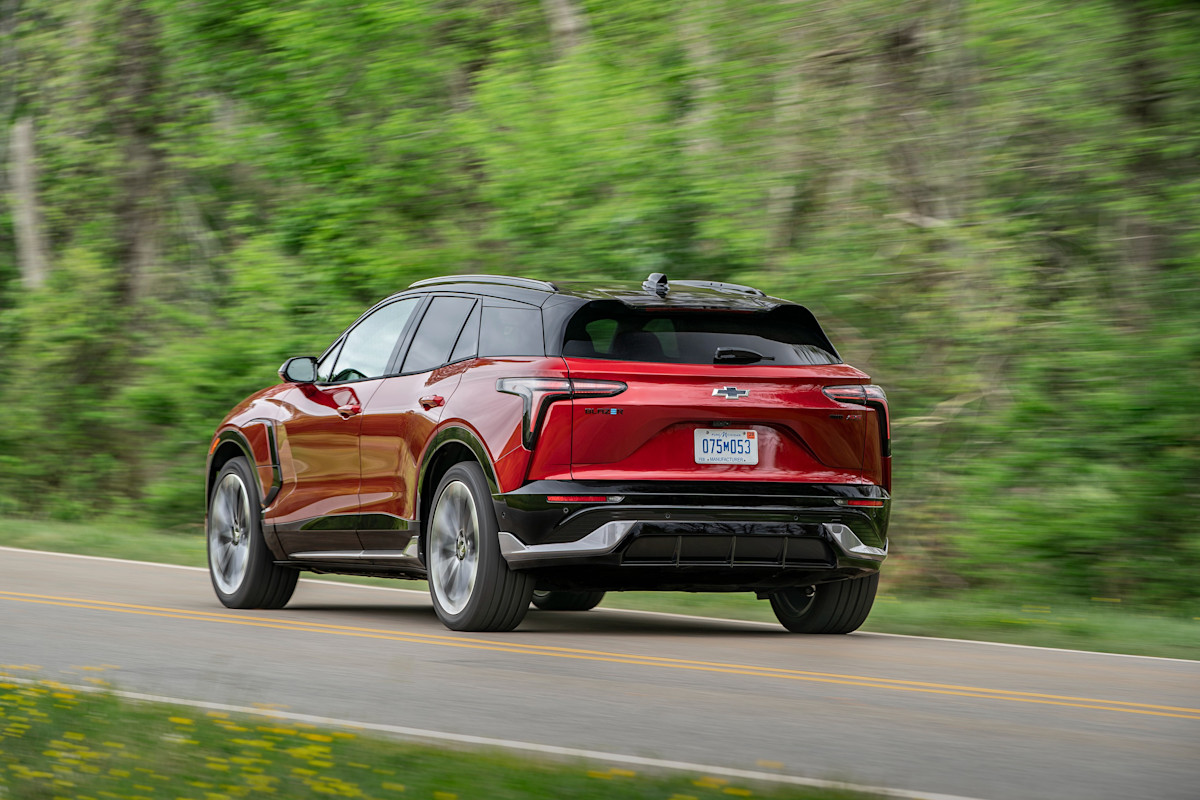
With bodywork inspired by the now-defunct Camaro, the Blazer EV is the most stylish of Chevrolet’s EV SUVs, and also the most powerful in its SS trim.
2026 Chevrolet Blazer EV Pricing, Specs, and Release Date
- What’s New for the 2026 Chevrolet Blazer EV
- Design
- Powertrain
- Interior
- Technology
- Safety
- Pricing and Release Date
- Further Research

What’s New for the 2026 Chevrolet Blazer EV
The Blazer EV arrived for the 2024 model year and hasn’t seen a major update since. For 2026, the Blazer EV loses its rear-wheel-drive (RWD) variant that was part of the RS trim. It also offers a North American Charging System (NACS) adapter so it can charge at Tesla Superchargers, and gets a new Tech Bronze package with 22-inch bronze wheels, a hood decal, black bodyside decals, and black badges.
Design
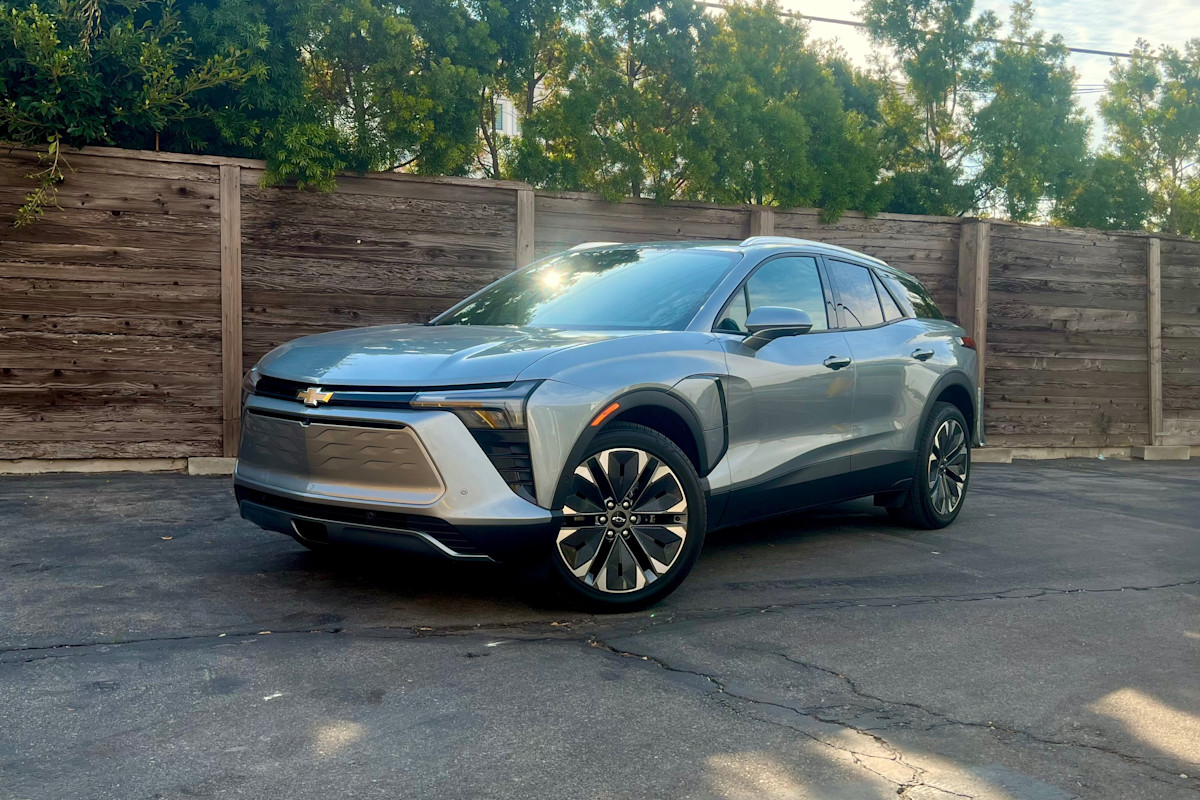
Like its gas-powered equivalent, the Blazer EV is a midsize crossover that draws styling cues from the legendary Camaro coupe. The look is especially noticeable in the frowning face and the front and rear haunches that contribute to a Coke-bottle shape. The flanks also have what appear to be flaps behind the front wheels—an odd design flourish that’s used to cover the charge port. Also along the sides, every Blazer EV has black wheel flares and rocker panels more fitting for an SUV. The RS and SS have different versions of a blacked-out nose and black roofs. Buyers can get more blacked-out trim, as well as hood and side decals and bronze wheels. Wheel sizes range from 19 to 22 inches.
Powertrain
Chevy offers the Blazer EV with single-motor front-wheel-drive (FWD) or dual-motor all-wheel-drive (AWD) powertrains. With FWD, the Blazer EV makes 220 horsepower and 243 pound-feet of torque. With AWD, those figures improve to 300 hp and 355 lb-ft in the LS and RS trims. The SS trim’s AWD powertrain ups the output to 615 hp and 650 lb-ft of torque. The Blazer EV LS and RS trims use an 85-kWh battery pack that unlocks 312 miles of range with FWD and 283 miles with AWD. The SS has a 102-kWh battery and 303 miles of range. The LS and RS trims can charge at up to 150 kW on a DC fast charger, and the SS can charge at up to 190 kW. An 11.5-kW onboard charger allows the Blazer EV to charge relatively quickly on a Level 2 240-volt home outlet. The Blazer EV can tow a very modest 1,500 pounds, and is not meant as an off-roader.
Interior
At its base level, the Blazer EV gets cloth upholstery and manually adjustable front seats. Moving up to the RS adds power-adjustable front seats with heating and ventilation, synthetic suede and synthetic leather upholstery, driver’s seat memory, a heated steering wheel, and dual-zone automatic climate control. The SS also has heated outboard rear seats. Cargo space is somewhat limited for the class. The Blazer EV has 25.5 cubic feet of space behind the second row and 59.1 cubic feet with that seat folded flat. It does not have a front trunk (frunk) and a hands-free power liftgate is available.
Technology
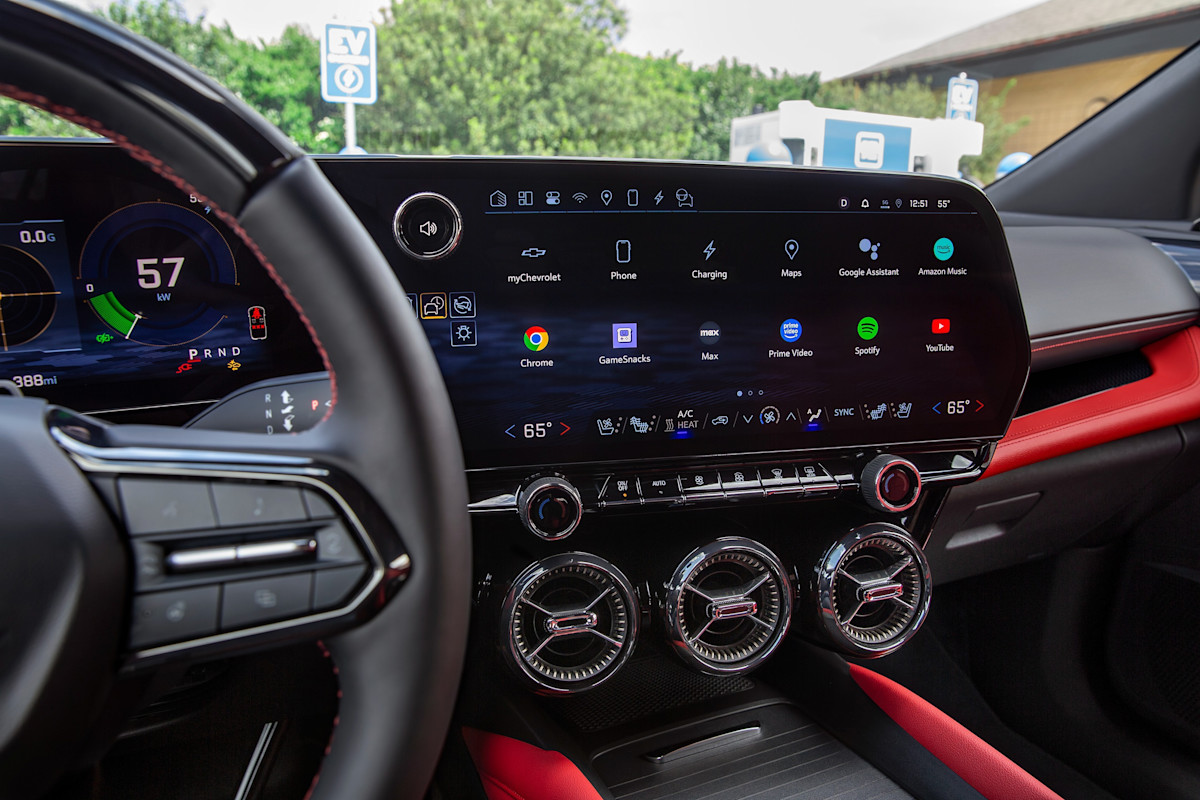
Chevy outfits the Blazer EV with an 11-inch digital instrument cluster and a massive 17.7-inch infotainment touchscreen that comes with Google built-in and navigation. It does not have Apple CarPlay or Android Auto, but does come with a satellite radio trial and equipment for a Wi-Fi hotspot. The base audio system has six speakers, and an eight-speaker Bose system is available. Also available are a wireless phone charger, a head-up display, and a rear-camera mirror.