2026 Lincoln Nautilus Reviews, Pricing & Specs


Pros & cons
What we like
Buttery smooth ride
Quiet, comfortable cabin
Bristling with technology
What to consider
Sportiness isn’t even a consideration
The sheer amount of screen space can be distracting
Little power for the money
The CarGurus verdict
The 2026 Lincoln Nautilus reinvents interior technology while leaning into luxury.
Most luxury automakers pursue power and sportiness to go with their vehicles’ luxury. Luxury is Lincoln's only consideration, and the 2026 Nautilus is a perfect example. It offers dashing good looks, smooth power delivery, and a new take on interior technology—but most of all it’s about opulence.
Verdict: The 2026 Lincoln Nautilus is for the buyer for whom comfort, luxury, and technology are more important than outright power and sporty handling. Its take on technology splashes the interior with screens, which some will find overwhelming, but the Nautilus is also roomy, and its hybrid powertrain is the clear choice in the lineup, even though it doesn’t achieve top-notch fuel economy.
out of 10 expert review
Look & feel
The Nautilus has a stately appearance. There's a hint of horse collar to the grille, and while its mesh is black on all models, the Lincoln star trim elements can be chrome, copper, or blacked out, depending on the trim level or appearance package. A large Lincoln logo sits in the middle, and the grille is flanked by squinting eye-slit headlights with winged LED light signatures.
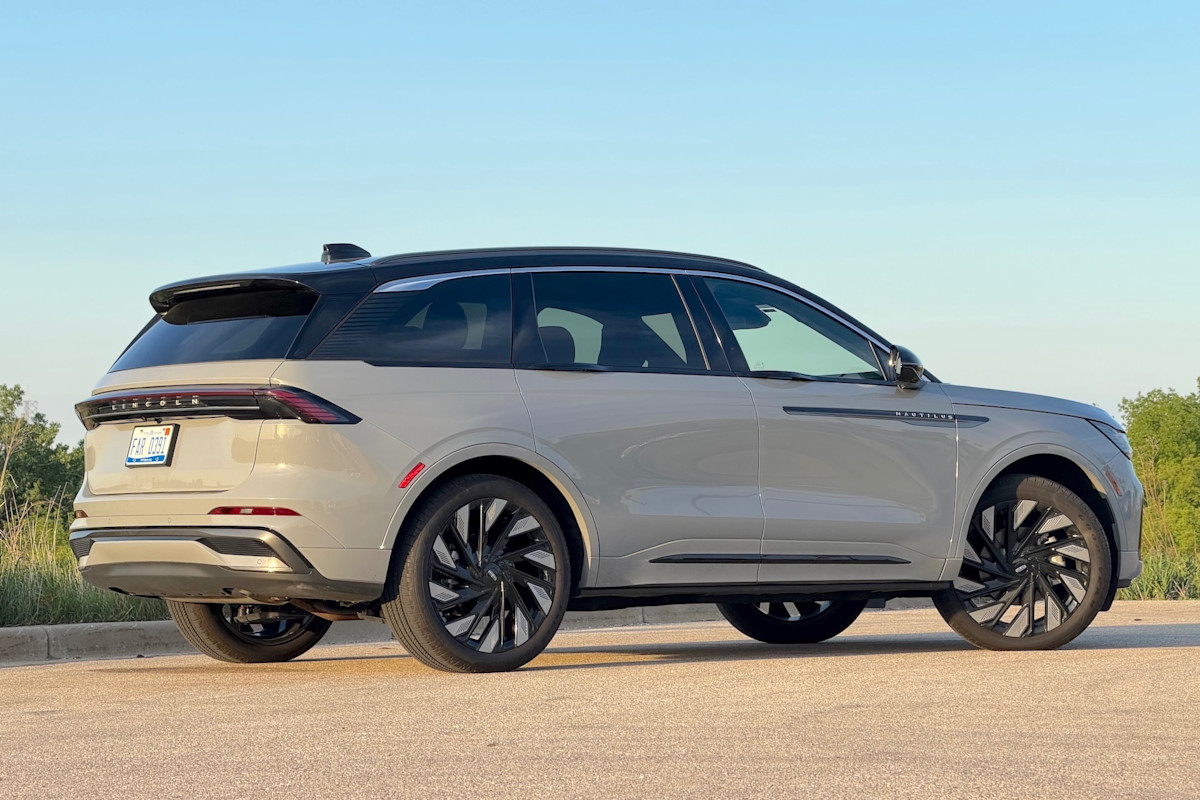
The body sits wide and proud, with a contrasting black roof and pillars. The door handles are integrated into the shoulder line, where they're out of sight. The slab sides are broken up by a spear-shaped design element along the upper doors that stabs into the front fenders and includes Nautilus lettering, and another trim strip just above the rocker panels. The rear has a spoiler up top and a full-width taillight within a black trim piece that also includes Lincoln lettering. It all sits on standard 19-inch alloy wheels, but 20s, 21s, and 22s are available on higher trim levels.
An available Jet Appearance package brings satin dark luster wheels, body-color wheel arches, lower door cladding and bumpers, black badges, black roof rails, and black grille inserts.
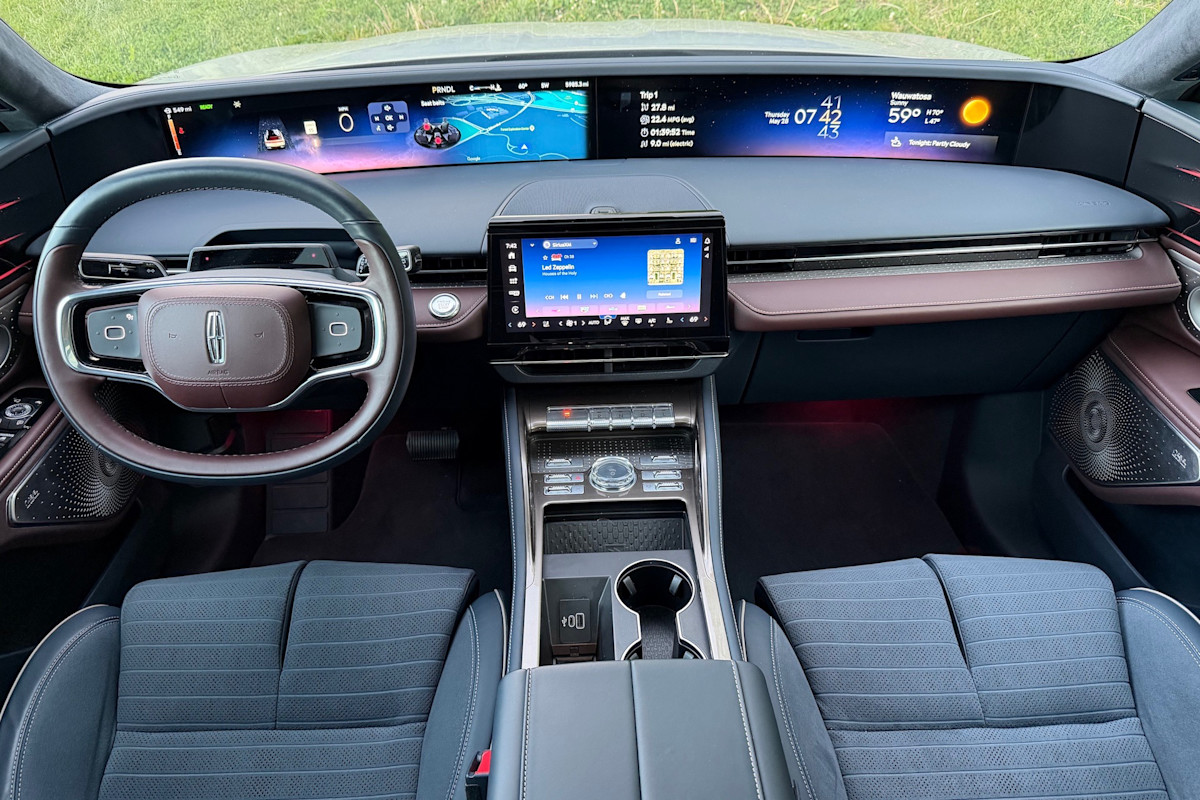
The interior adopts a unique, high-end look. Putting a large 48-inch screen at the base of the windshield required Lincoln to move the steering wheel down and give it a flat top so it wouldn’t block the view of the speedometer. It’s a different take on interior layout that we don’t particularly like, though it is functional.
That layout gives the cockpit a stepped design starting with the low-set center console, moving up to the infotainment touchscreen with a plateau above it, and culminating in the wide display screen.
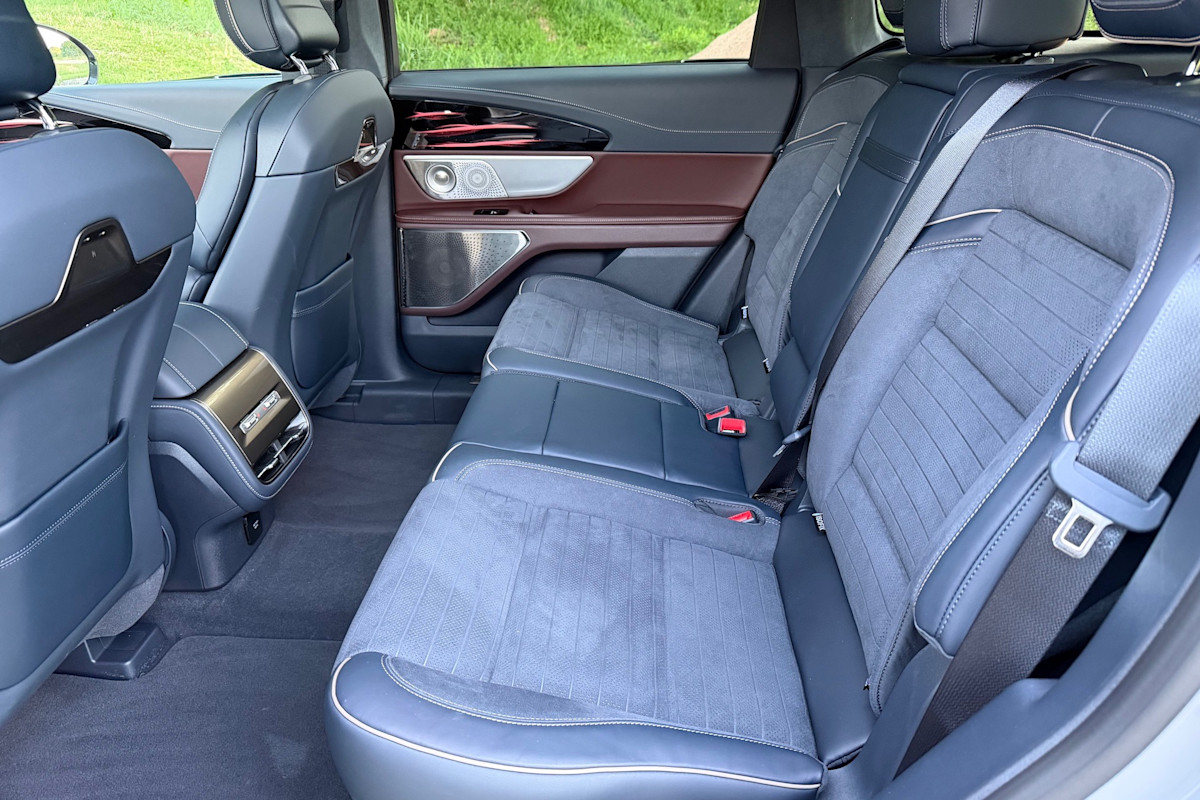
The Nautilus’ base Premiere trim offers black or gray synthetic leather upholstery; the step-up Reserve upgrades to leather and adds a chocolate brown color option. The top Black Label model brings two design themes: Chalet or Aurora. Chalet features a cream and brown interior that manages to be light and warm at the same time, while the Aurora theme’s dark blue and brown leather and synthetic suede feel more like a modern, high-end office.
Performance
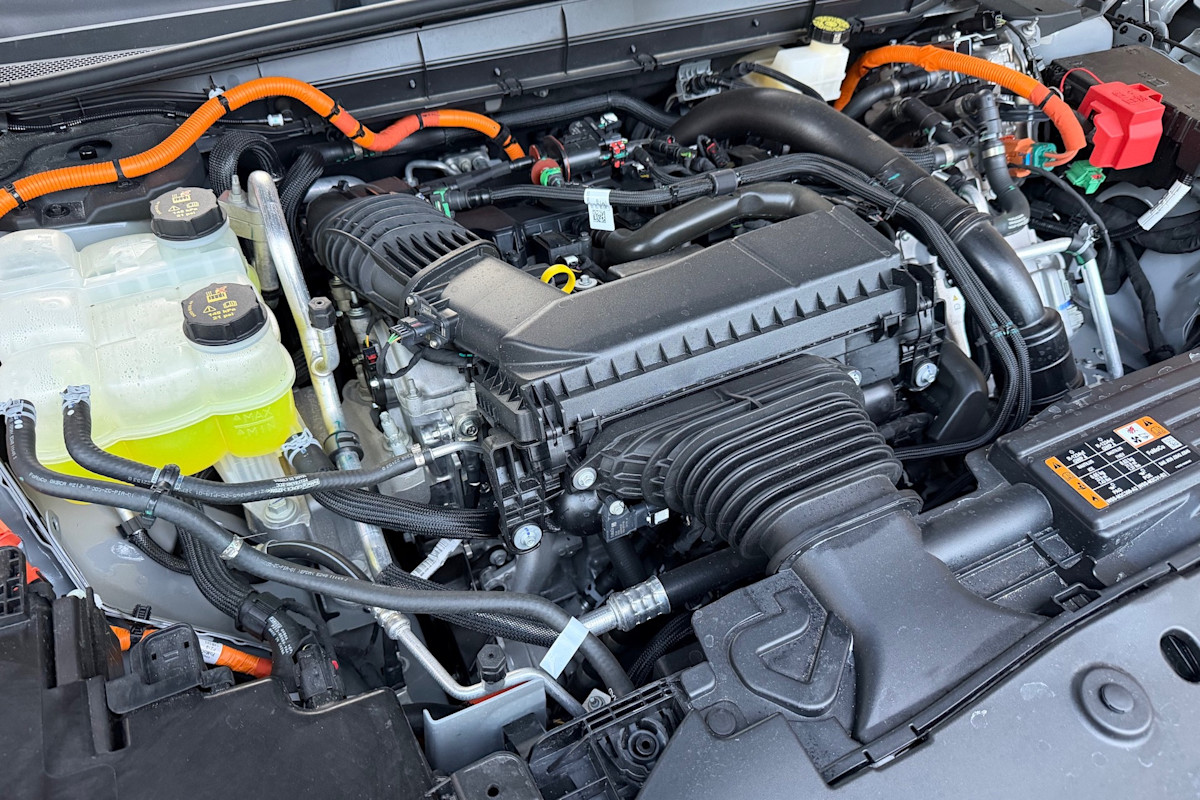
The Nautilus has only modest power for its price. Its standard turbocharged 2.0-liter four-cylinder engine makes 250 horsepower and 280 pound-feet of torque. That’s fine for a typical midsize SUV, but luxury buyers expect more, especially from a vehicle that weighs more than 4,500 pounds. It’s backed by an eight-speed automatic transmission and comes standard with all-wheel drive (AWD).
The better choice is the hybrid, which we drove. It uses the same engine, straps on a larger turbo, and adds an electric motor to boost output to 310 hp and 295 lb-ft of torque. It uses a continuously variable transmission (CVT) that works here because the powertrain is meant to stay in the background, not make itself known with big power, sharp shifts, and lots of noise. The extra grunt drops the 0-60 mph time from about 7.5 seconds to about 7 seconds. That’s still middling, especially for a luxury vehicle, but it’s enough for worry-free passing.
On the road, the Nautilus focuses on quiet, serene comfort. Sportiness isn’t even in its vocabulary. Lincoln sets it on a MacPherson strut front suspension and a multi-link rear suspension with steel springs all around. The Reserve and Black Label trim levels add the only advanced chassis technology—adaptive dampers that vary from soft to softer.
The Nautilus offers Normal, Conserve, Excite, Slippery, and Deep Conditions drive modes, though the last two are for adverse weather only. In the Normal and Conserve modes the dampers are simply too soft. The Nautilus eases into corners, almost with a flop, and requires a pregnant pause before taking a set to finally track true. The spongy handling is appropriately matched by slow but direct steering through the oval wheel.
Excite firms up the dampers to provide a bit more control, but it’s still rather floppy. It also adds a little more weight to the steering, but most noticeably holds the revs higher for more accessible power.
No matter the mode, the ride is buttery smooth, even with the largest-available 22-inch wheels of our Black Label test vehicle. Bumps never pound through and the Nautilus glides placidly over most pavement, but a rippled surface can cause more jiggling than we’d expect from a Mercedes, for example, likely because the dampers are just too soft to quell secondary motions.
Form & function
Lincoln leans into comfort for both the first- and second-row passengers. The Nautilus comes standard with power-adjustable heated front seats, dual-zone automatic climate control, a heated steering wheel, active noise cancellation, ambient lighting, and a power tilt/telescoping steering column. Higher up the trim ladder, Lincoln offers ventilated front seats, 24-way power front seats with a massage function, and heated rear seats. It’s all quite roomy and comfortable—especially with the 24-way seats and their massagers.
The second row has excellent space for two adults or three in a pinch. It has 43.2 inches of legroom—which is stretch-out space—and the seats are almost as sculpted as those in the front. It also comes with a fold-down center armrest with a pair of cupholders.
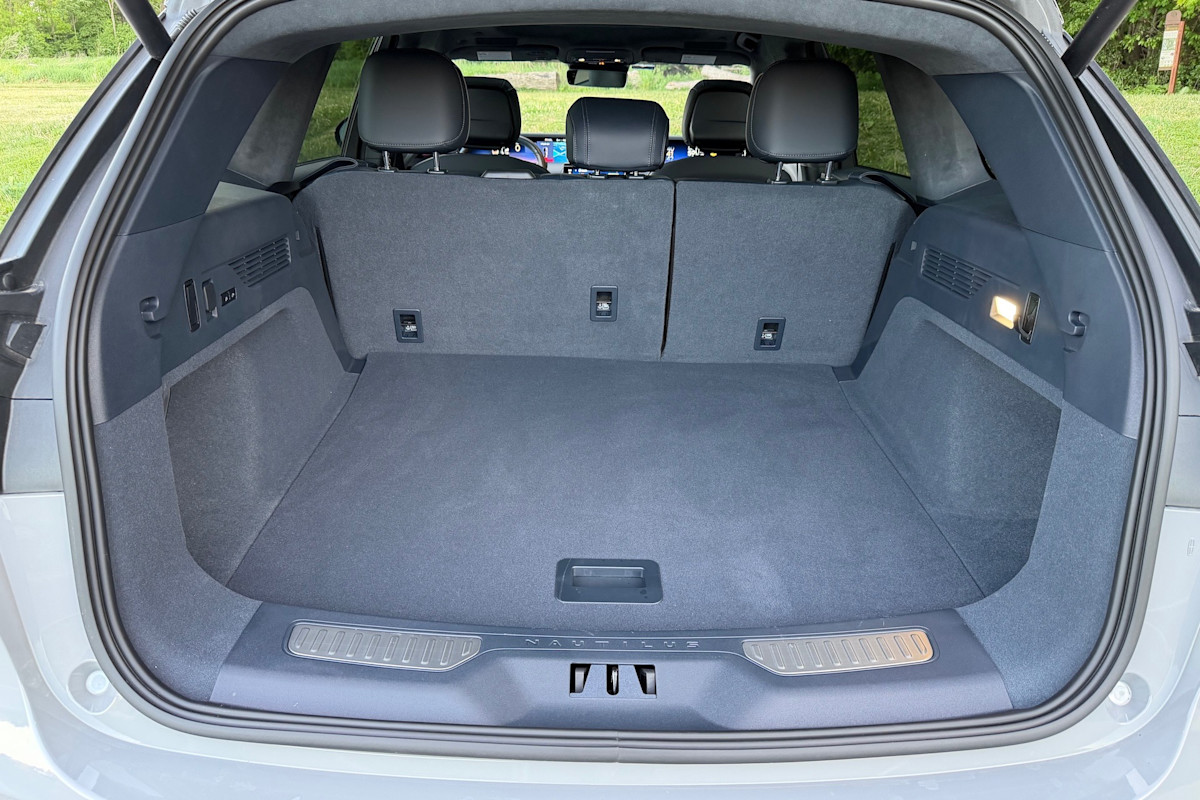
The rear seats fold down via power releases in the cargo area but pushing them back up is a manual process. Cargo space is generous at 36.4 cubic feet with the rear seats upright and 71.3 cubic feet when they're folded flat—decent numbers for the midsize class. A power liftgate is standard, and a hands-free version is available for when a wave of the foot is much easier than dropping the groceries to access the key.
Technology
Lincoln’s different approach to technology centers around the full-width, 48-inch screen located at the base of the windshield that displays everything a driver might need, including a map, weather, date and time, fuel level, cruise control status, trip meter, compass, fuel economy, tire pressure, and current media. Some of this information is always on display, and other bits can be chosen as widgets via the traditional touchscreen below the full-width screen.
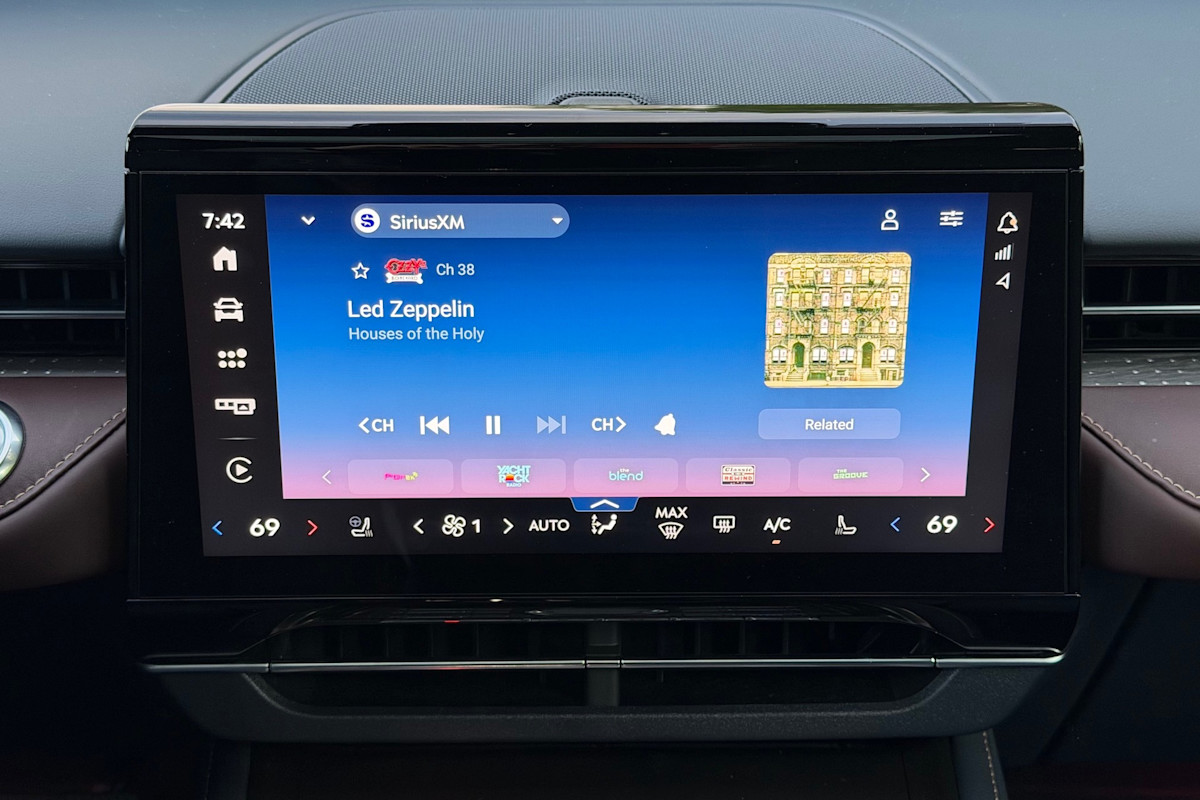
This 11.1-inch touchscreen is for the typical infotainment controls, such as navigation, climate settings, audio functions, and phone mirroring via standard wireless Apple CarPlay and Android Auto. Also standard are a 5G Wi-Fi hotspot, a digital key, satellite radio, remote start, and a wireless smartphone charger. The standard audio system has 10 speakers, but Lincoln offers a 14-speaker Revel system and a thumping 28-speaker Revel Ultima 3D unit.
Digital Scent perfume spritzing is available, and the top Black Label trim includes Lincoln Rejuvenate, which uses the scent, the seating position, the seat heating or ventilation, the seat massagers, the interior lighting, and the temperature to provide relaxation programs. It also uses the 48-inch screen to show calming images of forests, waterfalls, mountains, water, the aurora borealis, and the ocean to go with the exercises. It’s available with five- or 10-minute guided sessions designed to help owners unwind.
The steering wheel has a pair of five-way controllers. The one on the left handles cruise control, while the one on the right is used for voice controls and a rather complicated means of changing the volume, which involves pressing the controller, moving the cursor to choose the volume up or down icons, then pressing the controller again to achieve the desired volume. Thankfully, there is a centrally located volume dial on the center console.
Safety
Lincoln loads up the Nautilus with standard safety features, including a surround-view camera system, adaptive cruise control, lane-centering steering, lane-keep assist, lane-departure warning, high-beam assist, blind-spot monitors, rear cross-traffic alert, exit warning, front and rear parking sensors, a driver-attention monitor, forward collision warning with pedestrian detection and intersection assist, and front and rear automatic emergency braking. Lincoln BlueCruise is also standard—a hands-free driving system that works on thousands of miles of mapped highways.
BlueCruise is effective, even performing automatic lane changes to get around slower traffic, but it’s not without its flaws. The system requires the driver to monitor the road but sometimes feels like a helicopter parent and freaks out if it can’t detect the driver’s eyes. We’ve had it disengage and sound an alert simply because the sun reflected off normal glasses—not even sunglasses. The system also required us to take back control in a construction zone. The rest of the safety features work as advertised, and it's impressive that Lincoln makes them all standard.
The Nautilus scores well in crash tests. It earned a perfect five stars from the government-run National Highway Traffic Safety Administration and a Top Safety Pick rating from the insurance industry-backed Insurance Institute for Highway Safety, only missing out on the highest honor, Top Safety Pick+, because it hadn’t yet been subjected to the vehicle-to-vehicle front crash prevention test.
Cost-effectiveness
Lincoln offers the 2026 Nautilus in Premiere, Reserve, and Black Label trim levels. The Premiere starts at $56,290, including a hefty $2,295 destination fee. The Reserve runs $66,290 and the Black Label tops the charts at $79,955. The hybrid powertrain costs another $3,000, adding power and improving fuel economy.
The hybrid Nautilus is EPA-rated at 29 mpg city, 31 mpg highway, and 30 mpg combined. That’s 6 mpg better than the base engine, but EPA estimates suggest it will take more than five years to recoup the extra cost of the hybrid—and it could take even longer based on real-world driving. We averaged 25.2 mpg over 120 miles of mixed city and highway driving.
The $23,000 delta from the base Premiere model to the top Black Label trim brings a lot of additional luxury, so buyers should consider what features are important to them before leaping from the mid-$50,000s into the $80,000 range. For instance, the Reserve costs $10,000 more, while adding leather upholstery, adaptive dampers, upgraded Revel audio, a panoramic roof, and 20-inch wheels. The Black Label gets its higher-end interior trim, the Lincoln Rejuvenate relaxation system, the top Revel audio system, and 22-inch wheels.
Buyers should also consider if they want some sportiness and ready power in their luxury SUV. If they do, Audi, BMW, Genesis, and Mercedes-Benz offer models that accelerate quicker and handle better than the Nautilus, though the Lincoln is on a par with those brands for technology, comfort, and luxury.
What owners say
Trims & specs
Base MSRP $53,995 | Seating 5 |
Engine N/A | Cargo Capacity 36.4 cu ft |
Combined MPG N/A | Drivetrain N/A |
Base MSRP $63,595 | Seating 5 |
Engine N/A | Cargo Capacity 35.2 cu ft |
Combined MPG N/A | Drivetrain N/A |
Base MSRP $77,660 | Seating 5 |
Engine N/A | Cargo Capacity 35.2 cu ft |
Combined MPG N/A | Drivetrain N/A |
Base MSRP $80,660 | Seating 5 |
Engine N/A | Cargo Capacity 35.2 cu ft |
Combined MPG N/A | Drivetrain N/A |
Base MSRP $56,995 | Seating 5 |
Engine N/A | Cargo Capacity 36.4 cu ft |
Combined MPG N/A | Drivetrain N/A |
Base MSRP $66,595 | Seating 5 |
Engine N/A | Cargo Capacity 35.2 cu ft |
Combined MPG N/A | Drivetrain N/A |


Pricing trends
MSRP range
$53,995 - $80,660
Current avg. market price
$58,655
Trending up by 0.3% this month
May 2026 - November 2026


