2026 Lexus IS Reviews, Pricing & Specs

Pros & cons
What we like
Fun to drive
Premium interior materials
Good reliability track record
What to consider
Poor fuel economy
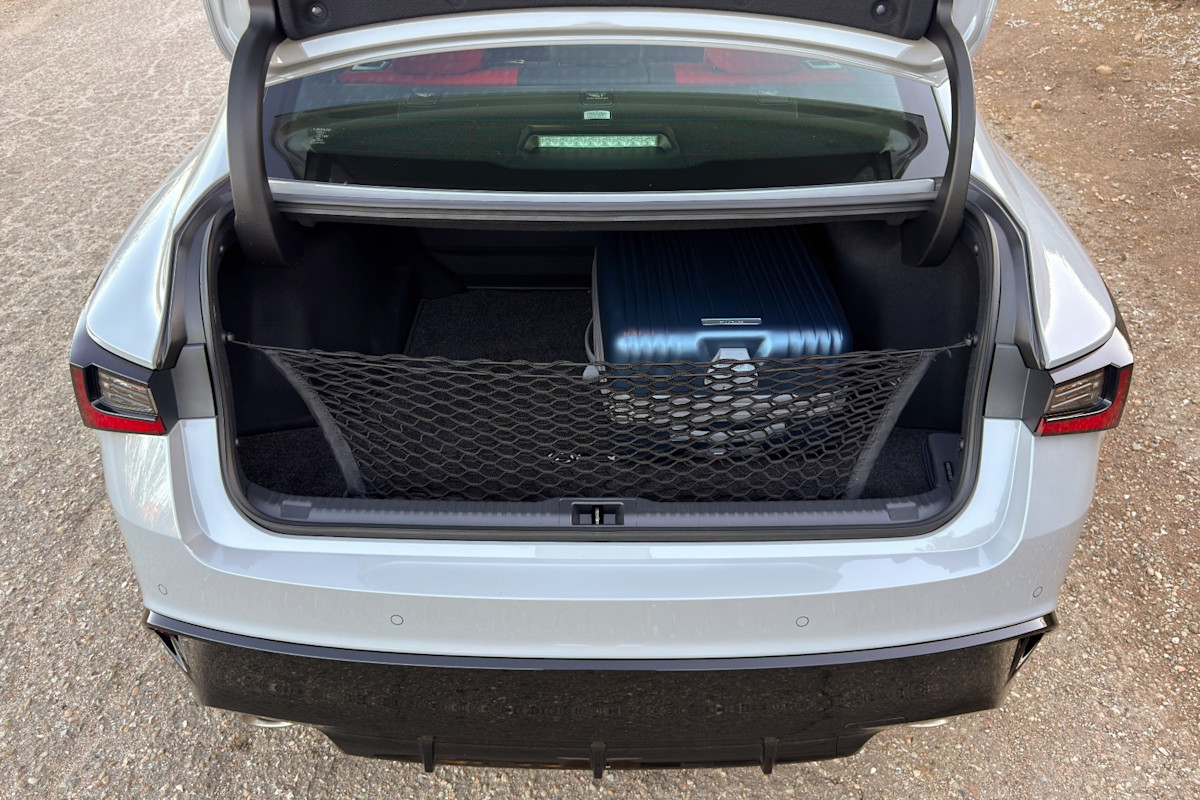
Not much cargo space
Incomplete safety ratings
The CarGurus verdict
The 2026 Lexus IS blends a fun drive with luxury and reliability.
Lexus refreshed the IS for the 2026 model year, infusing it with the latest digital instrumentation, infotainment, and driver-assistance technologies. It also updated the exterior and interior, re-tuned the steering and suspension, and refined the driving experience. However, the lineup loses the IS 300 with the turbocharged four-cylinder engine and the IS 500 with the thundering 5.0-liter V8, leaving a V6-powered IS 350 with rear-wheel drive (RWD) or all-wheel drive (AWD) as the sole model.
Verdict: The 2026 Lexus IS 350 is enjoyable to drive, exudes quality, and boasts a long-standing reputation for reliability. For those who want a small sports sedan with such characteristics, this is the car.
out of 10 expert review
Look & feel
The simplified 2026 Lexus IS lineup is easy to describe. It comes only as the IS 350 with a 3.5-liter V6 engine and a choice of RWD and AWD.
Three trim levels are available, all wearing F Sport nomenclature. The F Sport Design is the least expensive, while the F Sport sharpens the focus on performance and offers an optional Handling Package. A limited-production run of F Sport Special Appearance Package models is also available. Prices range from $46,895 to $63,095, including the $1,345 destination charge.
Our test vehicle had F Sport trim, RWD, and a full load of options. Highlights included the Handling Package, the Technology Package, triple-beam LED headlights, surround-view camera system, parking-assistance tech, a Mark Levinson audio system, and a power sunroof. The manufacturer’s suggested retail price (MSRP) came to $56,048, including destination.
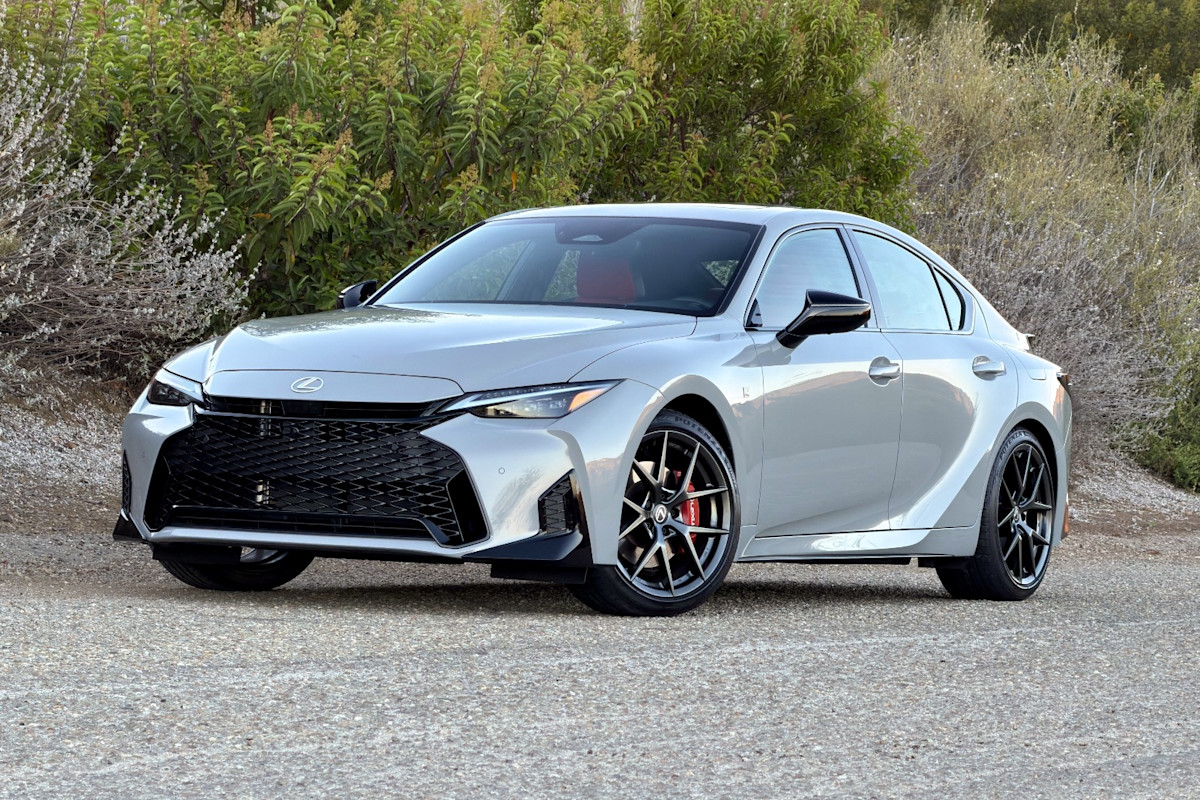
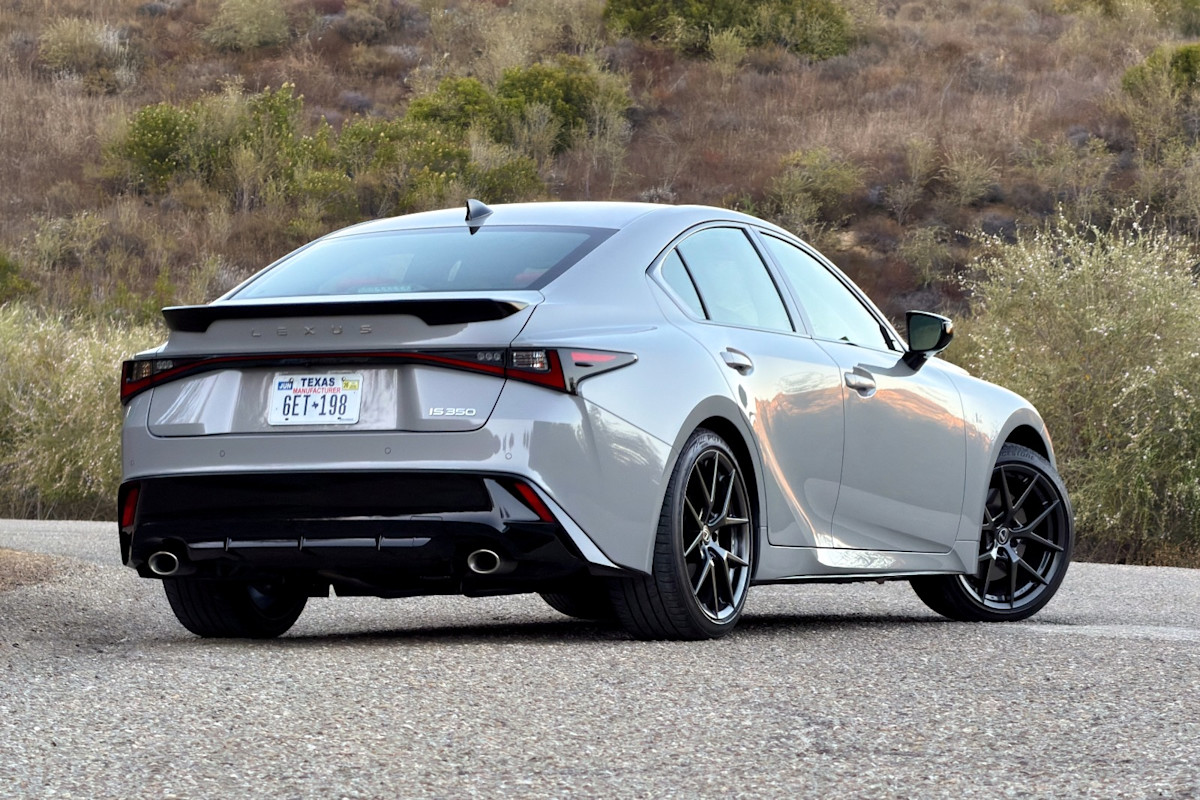
Design is a subjective matter, and while we’re not thrilled with the L-E-X-U-S lettering running across the trunk like it’s a dang pickup truck, the current trend in automotive design is away from easily identifiable emblems and toward chrome or black capital letters. While we think the new front end is an aesthetic improvement and evokes a level of aggression appropriate for a sports sedan, it’s less distinctive and carries strong whiffs of Toyota. At least the car’s nose still proudly wears the Lexus emblem.
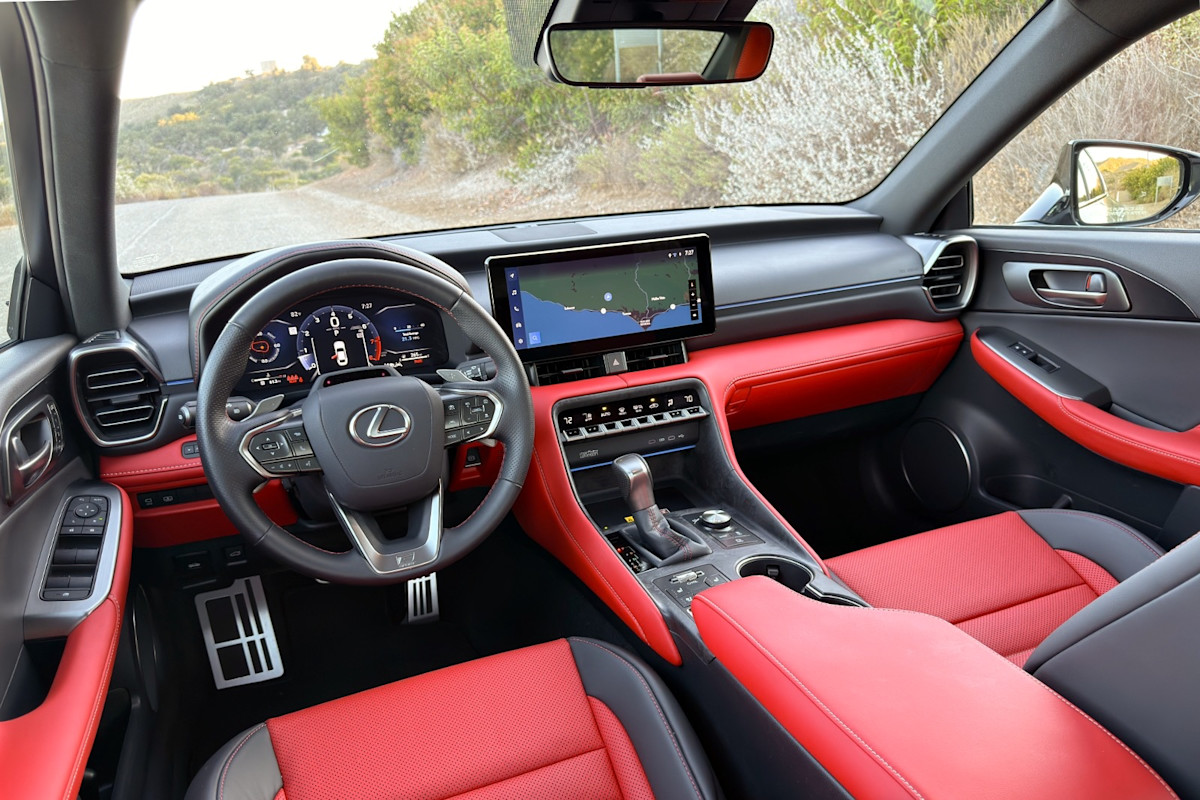
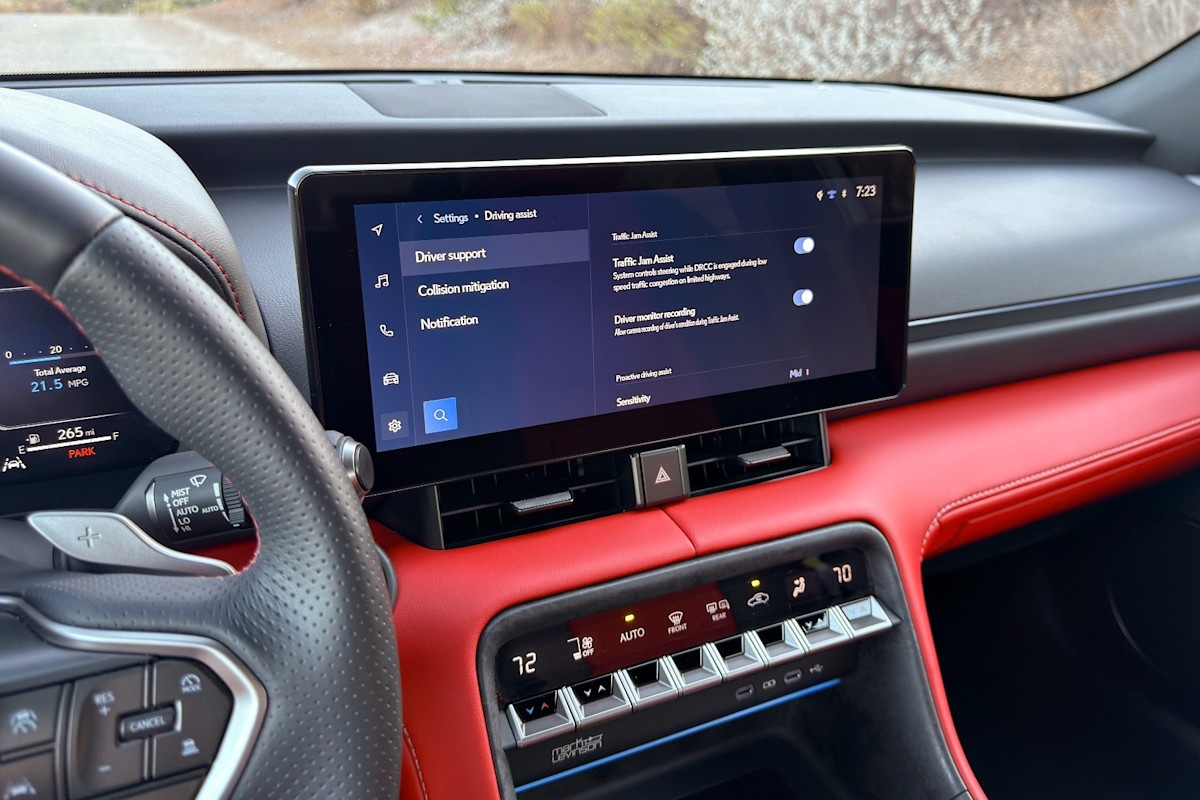
Overall, the 2026 IS looks good, and few people would guess the underlying design dates to 2014. Inside, Lexus modernized the interior for 2026 with a redesigned dashboard and center console, new 12.3-inch digital driver display, and a matching 12.3-inch touchscreen. Thankfully, plenty of traditional analog switchgear remains, including properly marked steering wheel controls and a traditional PRNDL shifter.
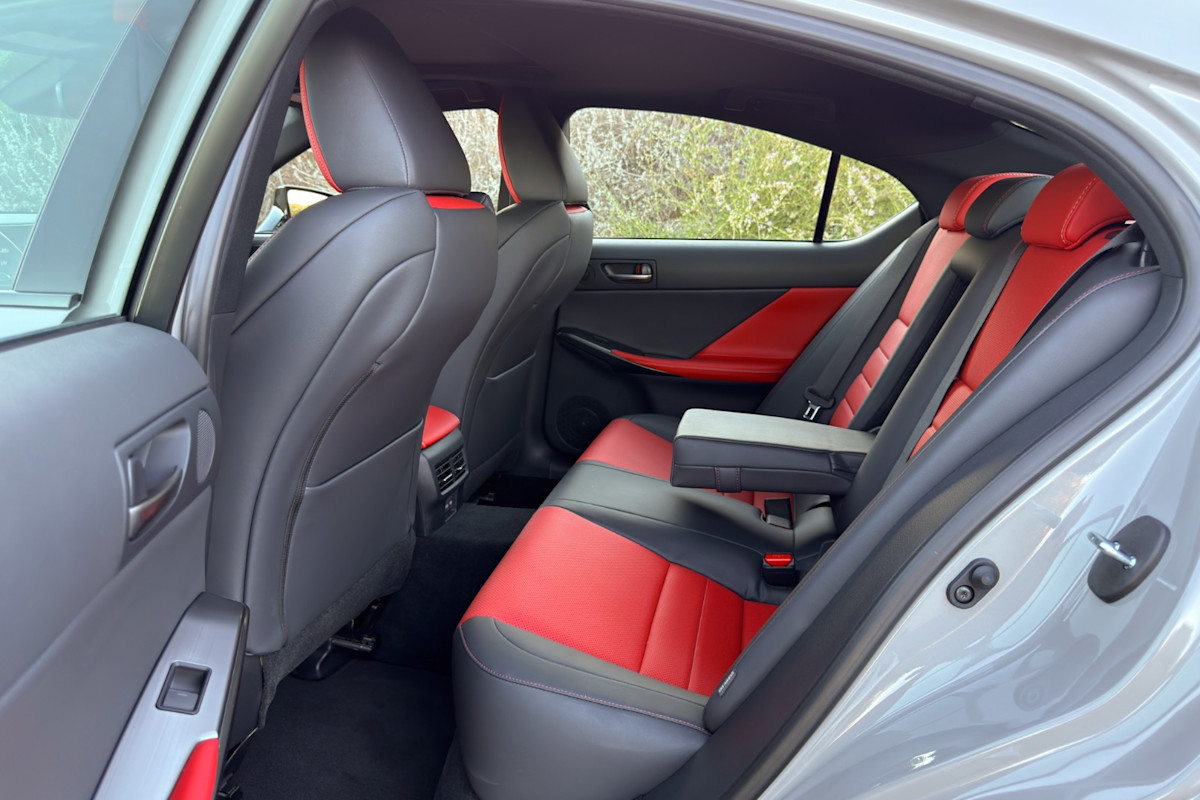
Quality levels are high, and while the IS offers NuLuxe artificial leather across the board, it does a good job of mimicking the real thing. Depending on the model, buyers can choose from four different interior colors and mix-and-match with exterior hues.
Performance
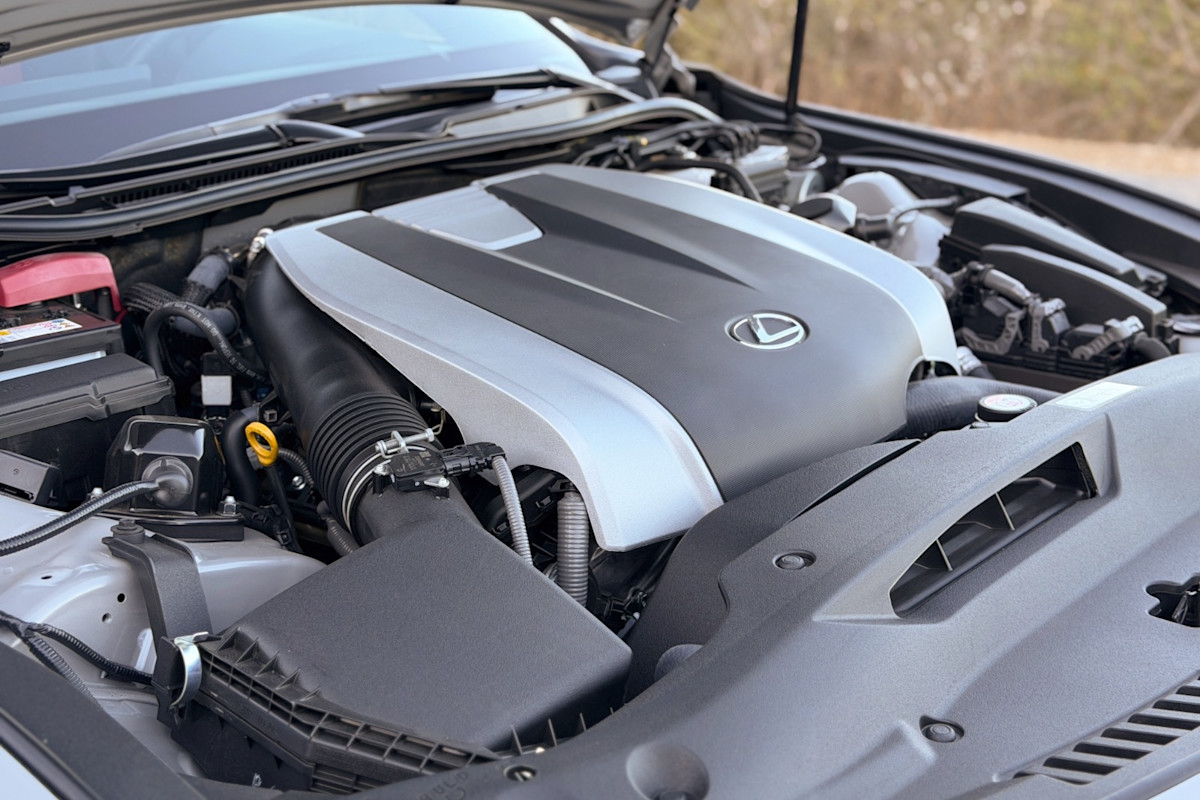
The IS 350 has a 3.5-liter V6 engine making 311 horsepower and 280 pound-feet of torque. RWD models have an eight-speed automatic transmission, while AWD models have a six-speed automatic.
Regardless of drivetrain, the IS 350 is EPA-rated at 22 mpg combined. Our RWD test car averaged 22.5 mpg on our Southern California fuel-economy test route, 20.4 mpg on the mountainous vehicle evaluation loop, and 17.8 mpg for the city driving only. Lexus recommends premium fuel for the V6 engine.
The F Sport Design and the F Sport are mechanically identical except for the latter’s firmer suspension. However, only the F Sport offers an optional Handling Package that equips the car with a limited-slip rear differential, a performance-tuned adaptive suspension, and additional driving modes. Buyers can also add forged aluminum wheels that reduce unsprung weight at each corner as an option with the F Sport, but not the F Sport Design.
Lexus says the IS 350 accelerates to 60 mph in 5.9 seconds. That is credible; the car doesn’t feel downright fast, but it sure is quick, especially in the Sport S or Sport S+ driving modes. This V6 is a smooth, refined engine, and sounds terrific when revved. Left to its own programming, the eight-speed automatic transmission does a fine job of holding gears and shifting when necessary. Steering wheel paddles allow for manual shifting, but we found they delayed the response and made shifts rougher.
Around town, the IS 350’s adaptive suspension produces a firm response to surface anomalies while erasing unwanted body motion and roll in corners. However, the car doesn’t beat up its occupants, and exhibits a smooth refinement at times, as though Lexus dipped every component in silicone before bolting it into the car. Not only that, but for a vehicle architecture that’s now 13 years old, the IS displayed an uncanny amount of structural rigidity in our speed bump test.
On the highway, we noticed a lot of road noise and tire slap on stretches of sectioned concrete. However, on blacktop, the IS was quiet, with only hints of wind noise coming from its oversized mirrors.
In the mountains, the IS 350 demonstrated its worth as a sports sedan. We were happy to discover that choosing the most aggressive Sport S+ driving mode did not defeat the stability control, so that’s what we used while running the car down Mulholland Highway to its terminus at the beach. That mode offers the sharpest throttle response, the sportiest transmission behavior, the heaviest steering weight, and the firmest suspension setting.
Despite using Sport S+, the IS 350 retained its graceful fluidity, just at a heightened state of urgency. We sensed a hint more roll and float than we would have liked on Mulholland’s occasionally lumpy, undulating pavement, and when the brakes heated up, the pedal felt a little spongy (though without any detectable fade). Otherwise, the IS turned in a sensational driving experience.
Form & function
As is to be expected of a low-slung sports sedan, entering and exiting the IS is something of a hassle, and it's a snug fit all-round. That said, the F Sport’s bolstered sport seats are comfortable, the NuLuxe upholstery is satisfying, and, in our test car, the front chairs included heating and ventilation. Once drivers have tucked themselves in, they can spend hours behind the wheel without complaint.
Lexus also provides a reasonable amount of storage space for small items for the driver and front passenger. The cupholders are big enough for oversized beverages, there is a decent amount of room in the bin under the center armrest, and the lower door panel pockets are relatively wide. A wireless smartphone charger lives in the tray located under the climate control panel.
The rear seat offers just enough room for adult legs, feet, and heads. There isn’t room to stretch out, but the IS provides a proper rear seating position with generous leg support and a comfortable backrest angle. Air conditioning vents and USB charging ports help to keep passengers happy, and if they’ve brought drinks with them, cupholders pop out of the center armrest.
Road-trippers may need to pack light, because the trunk is small at 10.8 cubic feet. Enclosed trunk lid hinges mean it can be packed full, though. The 60/40-split folding rear seat also allows space to be expanded as necessary, and our test car had an optional cargo net to hold grocery bags in place.
Technology
Two 12.3-inch displays greet occupants when they get into the Lexus IS. The driver display represents a significant improvement over the previous model, giving the data more room to breathe while adding extra configurability.
Setup can be a little confusing, and we recommend pulling over to make adjustments because using the controls requires a lot of attention. However, at least the new IS hasn’t inherited the nonsensical, unmarked, dual-action steering wheel controls from other Lexus models.
In the middle of the new dashboard, the 12.3-inch touchscreen has the latest Lexus Interface infotainment system software. It won’t wow drivers with graphical goodness, but it is relatively easy to navigate through each of the main menus. Unfortunately, it isn't possible to display more than one at a time, so when drivers have the navigation map up, that’s all they can see unless they switch to a different menu.
During our voice recognition system test, the Intelligent Assistant technology performed almost flawlessly. Telling the system 'I want to listen to reggae music' wasn’t enough; we had to issue additional clarifications before we got the desired result. And speaking of music, restarting the car would bring up a list of radio station favorites that wasn’t ours, even after we deleted it. This may relate to Lexus’ connected services and a need to keep certain extras working.
Those extras are packaged into five different connected service plans with complimentary subscriptions lasting from 30 days (Wi-Fi Connect) to five years (Safety Connect). Depending on the plan, they include a native navigation system and the conversational voice assistant (Drive Connect), remote engine starting (Remote Connect), and an SOS emergency button (Safety Connect).
Wireless Apple CarPlay and Android Auto are standard, and that’s what we used for most of our week with the IS 350. It reconnected each time we drove the car, and we had no trouble streaming music to the impressive 1,800-watt, 17-speaker Mark Levinson audio system.
Safety
For 2026, the IS upgrades from the Lexus Safety System+ (LSS+) 2.5 driver-assistance tech to version 3.0, and the list of features is a long one.
Standard equipment includes adaptive cruise control, forward-collision warning, pedestrian/cyclist/motorcyclist detection, automatic emergency braking, and intersection/oncoming vehicle assist. Additionally, LSS+ 3.0 includes a lane-departure warning, lane-keep assist, lane-centering assist, evasive steering assist, traffic-sign recognition, and high-beam assist.
Separately, blind-spot monitors, rear cross-traffic alert, and a safe-exit warning system are also standard. Optional upgrades include a surround-view camera system, parking assistance with automatic braking, and rear cross-traffic automatic braking. Traffic Jam Assist, which allows for hands-off driving in stop-and-go traffic, is also available.
Proactive Driving Assist is a new feature and part of LSS+ 3.0. When activated, it can automatically use the brakes and the steering to keep a safe distance from vehicles ahead and steer clear of obstacles. In some Lexus models, this technology feels intrusive. That wasn’t the case in the IS, but we nevertheless turned it off for most of our week in the car. We also turned off the new automatic speed reduction feature, which slows the car down too much in curves.
With those technologies deactivated, LSS+ 3.0 proved smooth, refined, and predictable. The hands-on-detection steering wheel makes long-distance driving with the adaptive cruise and lane-centering assist a lot more enjoyable, and the optional Technology Package’s lane-change assist function worked well during our test.
The Technology Package also equips the IS with front cross-traffic alert. Creep forward when making a right turn at a red light, and the front cross-traffic alert notifies the driver if the intersection isn’t quite clear. If drivers are trying to exit a blind alley or enter a street lined with parked trucks, this feature is undeniably helpful.
Safety ratings for the Lexus IS are incomplete. The National Highway Traffic Safety Administration (NHTSA) hadn’t published any at the time of writing, and the Insurance Institute for Highway Safety (IIHS) had only published ratings in a few categories. These include a Marginal score in the moderate overlap front crash test, Good or Acceptable headlight ratings (depending on trim level), and Good ratings for front-crash prevention tech in both vehicle-to-vehicle and vehicle-to-pedestrian testing.
Cost-effectiveness
The Genesis G70 is the value leader in this segment. That car’s primary problem is its genuinely inhospitable back seat, a flaw it shares with the undeniably affordable Cadillac CT4. The Caddy suffers a distinct lack of overall refinement, and the G70’s available V6 engine isn’t very fuel-efficient, so while these two rivals seem like deals, they come with a few flaws.
At the other end of the segment, there is the Audi A5, the BMW 3 Series, and the Mercedes-Benz C-Class. They’re all more expensive than the Lexus, but also more fuel-efficient. The Audi and the BMW include complimentary scheduled maintenance for three years, as does the Genesis, but they can’t match the G70’s excellent warranty coverage. The Audi is the only one in the class to earn a Top Safety Pick+ rating from the IIHS and has a handy sportback design for added utility.
The 2026 IS lands in the middle of this mix. It offers more powertrain protection than German rivals, but not as much as the Genesis. Buyers get two complimentary scheduled maintenance visits, but they both happen during the first year of ownership. The connected service trial subscriptions are generous, though, and considering the IS model’s track record for reliability, its starting price seems like a real bargain. The potential fuel bill is no joke, though, especially for those who regularly drive in the city.
Ultimately, the Lexus IS blends rewarding driving dynamics with quality materials and favorable reliability. With proper maintenance, it will likely last a long time without requiring many repairs. If that’s the kind of cost-effectiveness buyers are looking for, they’ll find it in the updated and upgraded 2026 IS 350.
What owners say
Trims & specs
Base MSRP $49,950 | Seating 5 |
Engine 3.5L 311 hp V6 | Cargo Capacity 10.8 cu ft |
Combined MPG 22 | Drivetrain AWD |
Base MSRP $47,500 | Seating 5 |
Engine 3.5L 311 hp V6 | Cargo Capacity 10.8 cu ft |
Combined MPG 22 | Drivetrain AWD |
Base MSRP N/A | Seating N/A |
Engine N/A | Cargo Capacity N/A |
Combined MPG N/A | Drivetrain N/A |
Base MSRP N/A | Seating N/A |
Engine N/A | Cargo Capacity N/A |
Combined MPG N/A | Drivetrain N/A |
Base MSRP $47,950 | Seating 5 |
Engine 3.5L 311 hp V6 | Cargo Capacity 10.8 cu ft |
Combined MPG 23 | Drivetrain RWD |
Base MSRP $45,500 | Seating 5 |
Engine 3.5L 311 hp V6 | Cargo Capacity 10.8 cu ft |
Combined MPG 23 | Drivetrain RWD |
Base MSRP N/A | Seating N/A |
Engine N/A | Cargo Capacity N/A |
Combined MPG N/A | Drivetrain N/A |


Pricing trends
MSRP range
$45,500 - $49,950
Current avg. market price
$50,435
Trending down by 2.0% this month
June 2026 - November 2026


