2024 Lexus GX Reviews, Pricing & Specs
Write a reviewPros
Very powerful engine
Impressive technology
Capable Overtrail trims
Cons
Poor gas mileage
Polarizing styling
Much more expensive than the 2023 model
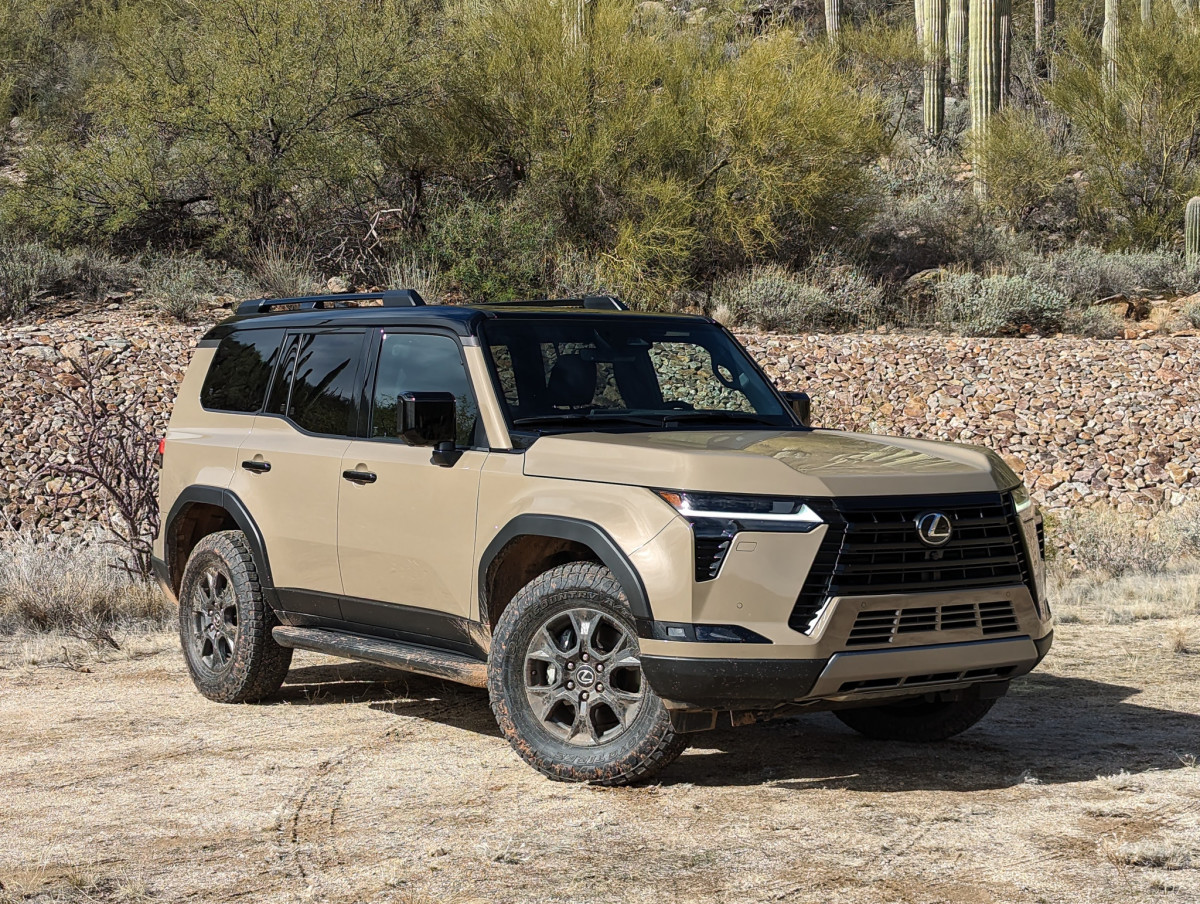
For the first time since 2010, the 2024 Lexus GX is all-new. The fully redesigned midsize SUV aims to blend luxury with utility.
Redesigning a long-running vehicle requires a big swing, and after fourteen years since the second-generation model debuted, building the all-new 2024 GX was a tall order. Lexus’s engineers struck out to make this midsize SUV better in every way: better tech, a better engine, more capability, and more luxury. They succeeded.
Verdict: Comfortable but rugged, the thirsty, body-on-frame Lexus GX isn’t the right luxury SUV for every shopper. However, for those in the market for this particular blend of lavish capability, it may be the best option on the market.
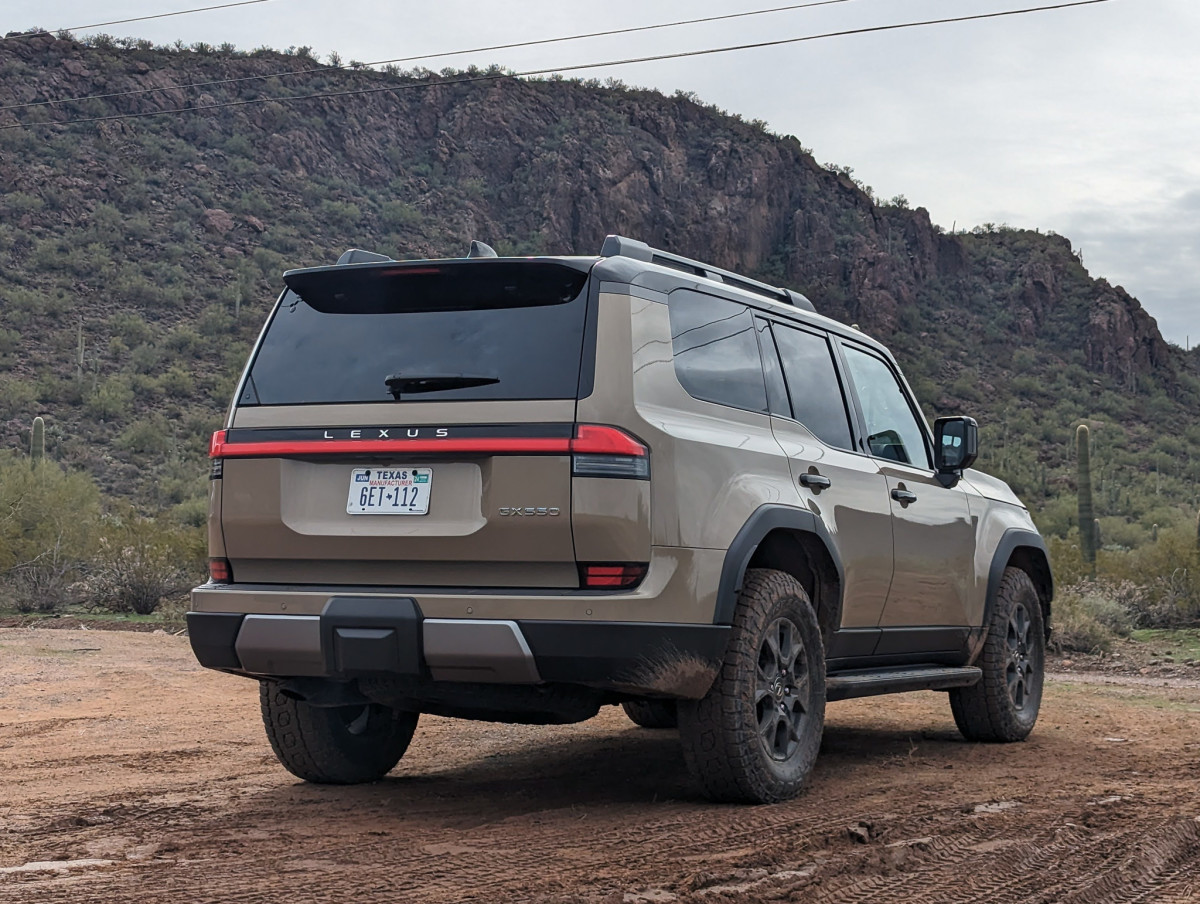
There’s no mistaking a 2024 Lexus GX 550 for a 2023 Lexus GX 470. Whereas the outgoing model had softer, more rounded corners, the newly redesigned midsize SUV embraces geometric styling from headlight to taillight. Although the brand’s trademark “spindle” grille is still on display, it’s noticeably less pronounced with this generation. Standard triple-beam LED headlights flank the grille, sitting at the squared-off upper edge of the GX’s front fascia. The new front end stands much more vertically than it does on the second-generation GX; the designers have stiffened up a formerly soft chin to give this new car a more aggressive look. The otherwise flat hood rises on the left and right side, each hump conveniently positioned above each front wheel to help drivers maintain their positional awareness when driving off-road.
Down the side, the GX looks almost as if it were carved from a solid metal block. Character lines are minimal and maintain a relatively horizontal path across the SUV’s profile. The window beltline sits low on the GX, again an effort to help with visibility and awareness when off-roading. Like a mesa rising out of the desert, the lower edge of the window frame kicks up just ahead of the C-pillar before continuing its steady, horizontal journey to the rear of the vehicle. Standard running boards round out the bottom edge of the GX; powered units are available on the Luxury+ trim.
In total, Lexus offers the new Lexus GX in six trim levels: Premium, Premium+, Luxury, Luxury+, and Overtrail and Overtrail+. Although the company expects the Premium+ trim level to be its best-seller, the GX Luxury+ and Overtrail+ highlight the SUV’s best features.
Luxury models are aimed at, well, luxury. 22-inch wheels, illuminated doorsills, and interior ambient lighting are just a few examples. The Overtrail duo are focused heavily on off-roading. They opt for 18-inch wheels to allow for the larger sidewalls on 33-inch all-terrain tires. Eco-friendly Nuluxe leatherette upholstery is harder-wearing, so it covers the Overtrail’s seats instead of the semi-aniline leather found in the Luxury trims. And under the sheet metal, the Overtrails employ legitimate off-roading hardware.
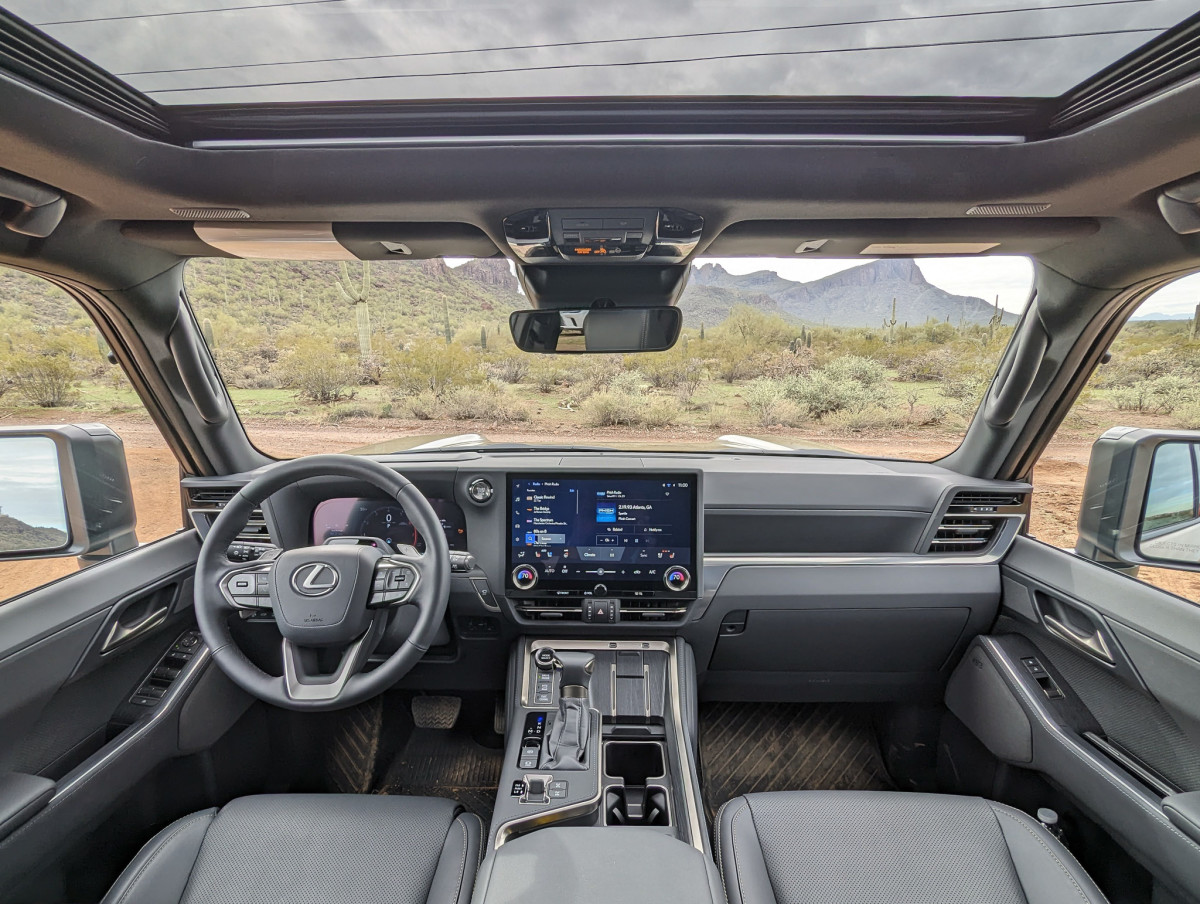
All GX models boast an interior that blends luxury appointments (think standard heated and ventilated front seats) with utilitarian materials. There are more robust polyurethane-derived touchpoints than you’d expect to find in other Lexus vehicles, and the dashboard sits flat and upright; it doesn’t tilt toward the driver. A large 14-inch touchscreen display takes center stage, but below the display, you’ll find plenty of physical controls for the GX’s off-road-oriented controls, plus rotary knobs for climate control and stereo volume.
It’s less luxurious than a Land Rover Defender–and certainly less lavish than a Mercedes-Benz G-Class–but the third-generation Lexus GX looks and feels like a premium SUV prepared for a long life of hard use.
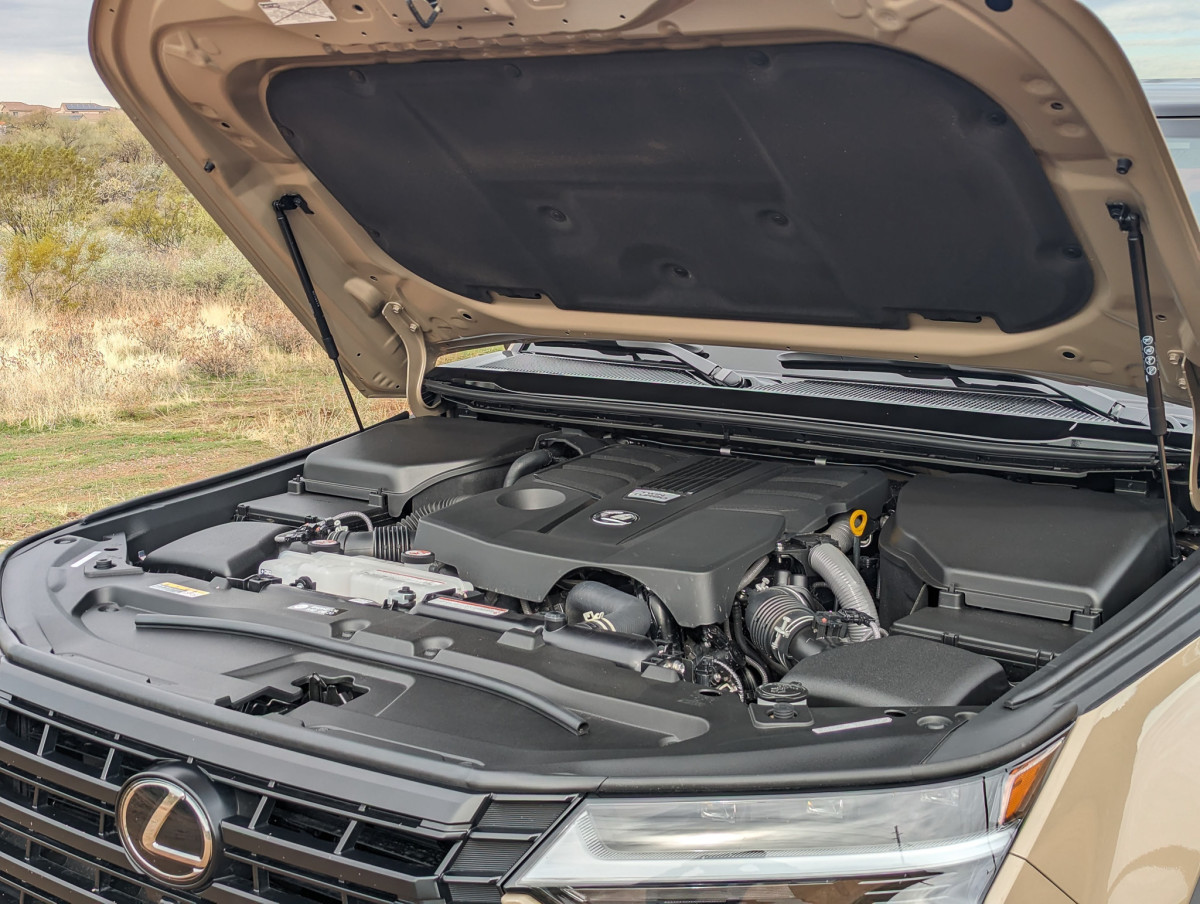
To many, the previous Lexus GX was essentially a fancy Toyota 4Runner with one major difference: it came equipped with a naturally aspirated V8 engine. That’s not the case anymore, as Lexus has dropped the trusty V8 for a newer and more advanced V6.
Although the GX’s powertrain is down two cylinders from last year, it makes significantly more power. 349 horsepower and 479 pound-feet of torque come from the twin-turbocharged 3.4-liter V6 engine. Better yet, the impressive torque becomes available low in the rev range, meaning drivers need only tap the accelerator to clear obstacles when driving through the dirt.
The 2024 Lexus GX is built atop the GA-F truck platform, which serves as the underpinnings of a number of Toyota and Lexus vehicles, from the J300 Toyota Land Cruiser and current Lexus LX to the Toyota Tundra and the new-for-2023 Toyota Tacoma. It’s a significantly stiffer chassis, which helps the GX feel more stable while cornering on-road and bouncing over rugged terrain off-road.
Like the Tundra, the GX employs a 10-speed automatic transmission but, unlike in the Tundra, it operates confidently and assertively; there’s no hunting for the right gear or frenetic shifting under acceleration. Standard full-time four-wheel drive (4WD) and a locking Torsen limited-slip center differential come standard, meaning every GX will have low- and high-range 4WD. Additionally, the Overtrail trim levels add a locking rear differential, allowing drivers to split engine power between the rear wheels in a 50:50 balance.
The Overtrail trims also get Lexus’s Electronic Kinetic Dynamic Suspension System (E-KDSS). It’s an advanced bit of suspension tech meant to balance off-road and on-road stability by locking and unlocking the front and rear stabilizer bars as needed. The result is increased wheel articulation (up to 25 inches) and a better chance of ensuring that all four wheels stay in contact with the ground while clearing obstacles.
During our test drive, the GX accelerated well both from a stop and at highway speeds, and we found the brakes to be extremely effective, although conditions were very favorable. With temperatures in the 60s and very little elevation change on our route, there wasn’t much chance for the brakes to fade in the first place. Every GX weighs well over 5,000 pounds, which you’ll want to be aware of before stepping on the brakes during a long descent on a hot day.
Being a big, body-on-frame vehicle, we expected the GX to demonstrate plenty of body roll when driving through twists and turns on our route. The older model did, for sure, but the new GX stays composed. Given the GX’s off-road chops, its controlled and relaxed behavior on-road came as a pleasant surprise.
Our off-road testing loop was completely washed out after heavy rainfall and, in an effort to preserve the terrain more than any concern for the off-road capability of the GX Overtrail+, we opted for a less aggressive proving ground. As a result, we weren’t able to fully evaluate the GX’s various traction management modes or its crawl-control and descent-control systems.
The 2024 GX’s interior styling demonstrates a dramatic departure from the second-generation model. More minimalist and sophisticated, the 2024 GX has a fraction of the number of physical buttons as the outgoing GX, but it retains the important ones. Rotary knobs for climate control flank the touchscreen, with a small volume knob centered between them. Lower down the center console stack, physical buttons for off-roading features like crawl control and the two-speed transfer case remain.
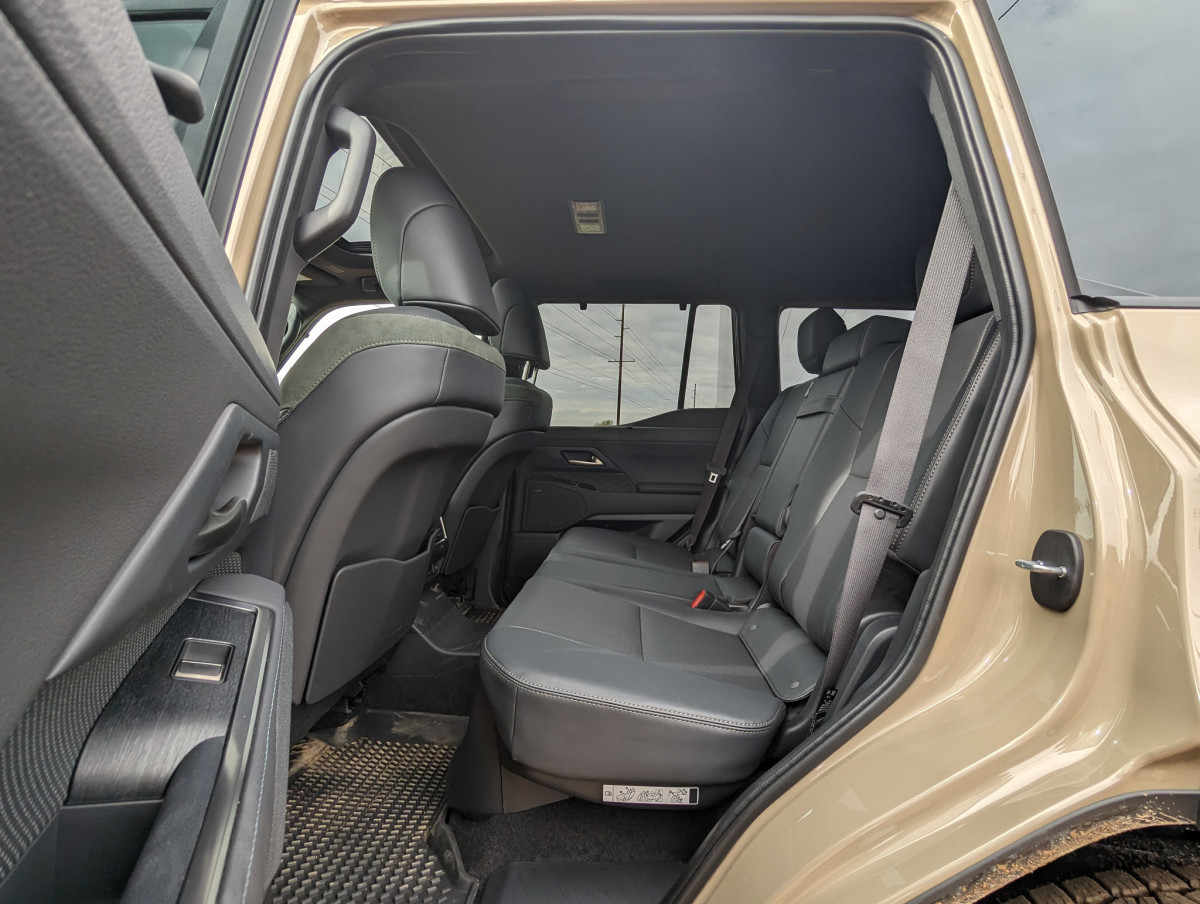
In terms of passenger space, the 2024 GX feels comfortable and spacious for six-foot-tall adults in the first and second rows, with 41.2 inches of legroom in the front seats and 36.7 in the second row. The available third row in Premium and Luxury models is far too tight for anyone but children–its 31.7 inches of legroom is deceiving; adults won’t be happy back there.
The GX’s most obvious competitor is the Land Rover Defender 110, which can also be equipped with a third row. The Defender 110 is marginally tighter in the front row, a bit more spacious in the second, but even tighter in the way back, with only 20.5 inches of legroom for those relegated to the third row. The Defender 110 is also roughly 10 inches shorter in length than the GX, however; if you’re really considering stashing seven people in your off-roading luxury SUV, we recommend upgrading to the longer-wheelbase Defender 130.
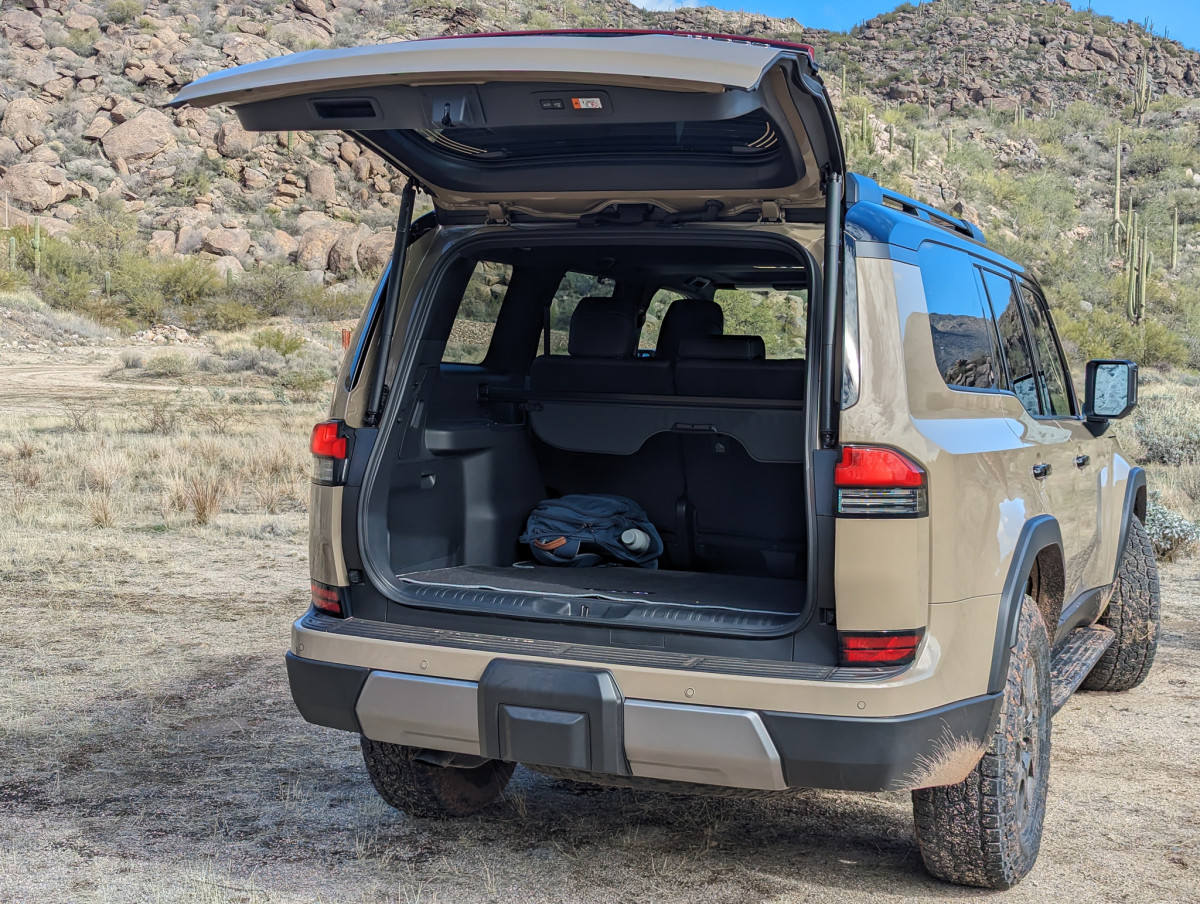
The GX, happily, is a cargo-space king. 10.3 cubic feet behind the third row is a bit scant, but that figure expands to an impressive 40.2 cubic feet with the third row folded. Total cargo space measures 76.9 cubic feet. Overtrail models are even more capacious, with 45.6 cubic feet behind the second row (the third row is not available on GX Overtrail and Overtrail+) and a whopping 90.5 cubic feet of total cargo space.
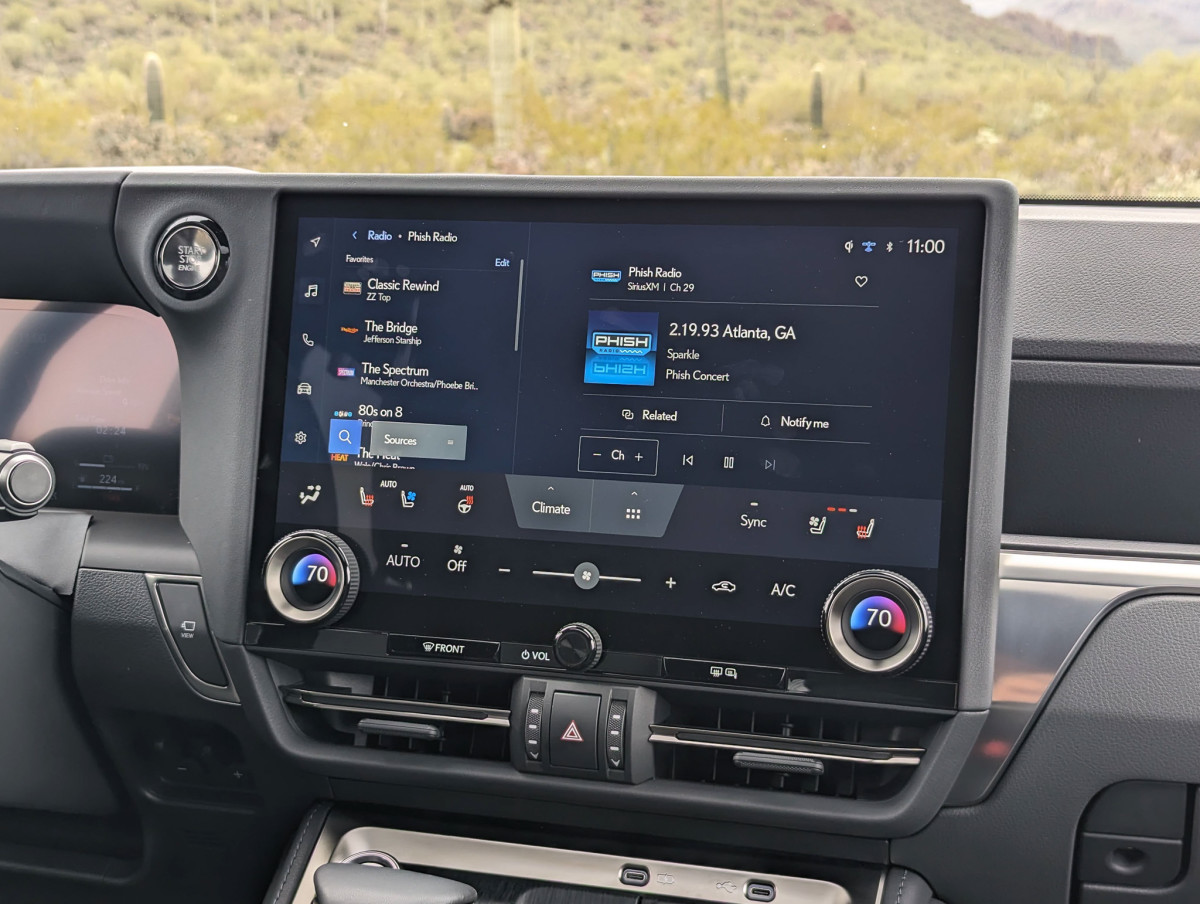
A 14-inch touchscreen sits, stylishly integrated, in the center of the GX’s dash. Below it, a pair of USB-C ports and an available wireless charging pad promise plenty of power for front-seat passengers. In GX Overtrail models, two additional USB-C ports are standard fare for the back seat, and non-Overtrail models receive two more beyond that. Finally, there’s a 120-volt wall-style AC electrical outlet in the trunk of every GX.
The Lexus Interface infotainment system offers Wireless Apple CarPlay and Wireless Android Auto, and the Drive Connect subscription service also gets an intelligent voice assistant–just say “Hey Lexus,” and it can help with commands related to navigation, climate control, and stereo controls. Drive Connect and Remote Connect, which provides remote locking and unlocking, ignition, and vehicle diagnostics, are offered with initial three-year trial subscriptions for free. After these trials, subscription costs range from 15 to 25 dollars per month, depending on the plan selected.
Speaking of stereos, the GX comes equipped with a 10-speaker audio system, but the Luxury and Overtrail+ trim levels are available with an impressive 21-speaker Mark Levinson stereo, which is included as standard equipment on the Luxury+ trim.
The Lexus Interface is easy enough to use, and it certainly looks impressive, but after the initial three-year trial, we’re a bit dismayed to see features locked up behind subscription plans. If you're the type to buy a car and hold it for a long time, you may want to factor these costs into your long-term budget.
Safety has been a bit of a concern for the GX. CarGurus experts rated the 2023 model with a six out of 10, and a year prior, it had scored a measly four out of 10.
Luckily, things look better in 2024. The all-new GX gets a massive upgrade in terms of advanced driver assistance systems (ADAS). Lexus Safety System+ 3.0 is now standard, offering pre-collision detection, avoidance and braking systems on every GX. The third-generation GX also comes standard with adaptive cruise control (with full stop-and-go capability), lane-tracing assist, lane-departure warning with steering assist, and road-sign recognition. A new proactive driving assist feature will also brake the car as necessary when adaptive cruise control is in use, for instance, ahead of and through tighter highway turns.
Neither the Insurance Institute for Highway Safety (IIHS) nor the National Highway Traffic Safety Administration (NHTSA) has crash-tested the 2024 GX, yet. That’s to be expected with all-new models, and more so for ones as pricey as the GX. Even still, the fact that the new vehicle is built on the modern GA-F architecture and includes a rich set of ADAS has us feeling more confident in its safety offerings than ever before.
The 2024 GX will be expensive to operate, given that its estimated fuel economy measures 15 mpg city, 21 highway, 17 combined. Those are very thirsty figures, and they represent the inevitable downside of the GX’s incredibly powerful twin-turbo V6 engine and full-time 4WD system.
Lexus has priced the GX competitively, with an MSRP of $64,250 (including a $1,350 destination fee) for the lowest-tier GX 550 Premium. Prices rise $5,000 for the Premium+ and the Overtrail, with the Luxury and Overtrail+ costing a somewhat more painful $77,250. At the top of the price structure lives the Luxury+ trim. That one costs $81,250.
Those prices–particularly for the Overtrail, Luxury, and Luxury+–can give you the feeling that someone in the room has started cutting onions. But Lexus plays in the luxury car space, and it looks competitive with its most direct rival, the Defender.
Yes, a Defender 90 undercuts the price, starting at $56,400. However, the Defender 90 is also a two-door, short-wheelbase model. Move up to a four-door Defender 110, and the starting price jumps almost five grand–plus, a Defender’s option sheet will make you feel like you’re in the center of the entire onion processing plant.
As such, the 2024 Lexus GX is a good deal, if not a great one. It’s significantly more expensive than the outgoing 2023 model, but it’s also a significant step forward. Ultimately, Lexus has upgraded its luxurious but rugged, off-road capable SUV to fit modern standards. If that’s the type of vehicle you’re hoping to buy, then the GX deserves a look.

User reviews for 2024 Lexus GX
Write a review2024 Lexus GX Pricing
Trims & specs
Air Conditioning
Automatic climate control front air conditioning · Dual front air conditioning zones · Rear air conditioning: with independent controls · Single rear air conditioning zones · Second and third row rear heat vents
Airbags
Dual front airbags · Dual front knee airbags · Passenger airbag deactivation: occupant sensing deactivation · Front side airbags · Third row side curtain airbags
Audio System
Antenna Type: diversity · Voice recognition audio system · Bluetooth auxiliary audio input · HD radio · Satellite Radio: SiriusXM · Total Number of Speakers: 10
Brakes
ABS: 4-wheel · Braking assist: hill start assist · Electronic parking brake: auto off · Front brake diameter: 13.9 · Front brake width: 1.26 · Front brakes: ventilated disc · Rear brake diameter: 13.2 · Rear brake width: 0.79 · Rear brakes: ventilated disc
Comfort Features
Armrests: rear center with cupholders · Center console trim: simulated wood · Dash trim: simulated wood · Door trim: simulated wood · Floor Mat Material: carpet · Floor Material: carpet · Floor Mats: front · Shift knob trim: leather · Steering wheel trim: leather
Convenience Features
Adaptive stop and go cruise control: semi-automatic · Assist handle: rear · Autonomous lane guidance: lane centering · Cargo area power outlet: 115V · Center console: front console with armrest and storage · Cruise control: adaptive · Cupholders: front · Dimming rearview mirror: auto-dimming · Easy entry: manual rear seat · Multi-function remote: proximity entry system · One-touch windows: 4 · Power outlet(s): USB-C rear · Power steering: speed-proportional · Power windows: lockout button · Reading lights: front · Steering wheel: tilt and telescopic · Steering wheel mounted controls: multi-function screen controls · Storage: cargo tie-down anchors and hooks · Universal garage door opener: Homelink · Vanity mirrors: dual illuminating
Driver Seat
Adjustable lumbar support: power · Power adjustments: 8
Drivetrain
4WD Type: full time · Axle ratio: 3.31 · Limited slip differential: center · Locking differential: center
Engine
Battery: maintenance-free
Exterior Features
Door handle color: body-color · Exhaust tip color: black · Fender lip moldings: body-color · Front bumper color: black · Grille color: black · Mirror color: body-color · Rear bumper color: black · Rear spoiler: roofline spoiler · Rear spoiler color: black · Rear trunk/liftgate: liftgate · Rocker panel color: black · Running boards: black · Window trim: black
Headrests
Front headrests: adjustable · Number of front headrests: 2 · Number of rear headrests: 3 · Number of third row headrests: 2
In Car Entertainment
Connected in-car apps: Google search · Infotainment screen size: 14 in. · Smartphone integration: wireless Android Auto
Instrumentation
Fuel economy display: range · Instrument cluster screen size: 12.3 in. · Warnings and reminders: low oil level
Lights
Daytime running lights: LED · Headlights: auto delay off · Tail and brake lights: LED
Mirrors
Exterior mirrors: driver side auto-dimming
Passenger Seat
Adjustable lumbar support: power · Power adjustments: 8
Rear Seats
Type: 40-20-40 split bench
Roof
Moonroof: tilt/slide · Moonroof / Sunroof: power sunshade · Roof rails: black
Safety
Automatic emergency braking: rear · Camera system: rearview · Child seat anchors: LATCH system · Cross Traffic Alert: rear · Impact sensor: post-collision safety system · Parking sensors: front · Pre-Collision Warning System: audible warning · Pre-collision warning system: intersection/junction turn · Rearview monitor: in dash
Seatbelts
Emergency locking retractors: front · Front seatbelts: 3-point · Seatbelt force limiters: front · Seatbelt pretensioners: front and rear · Seatbelt warning sensor: driver and passenger · Second row seatbelts: 3-point · Third row seatbelts: 3-point
Seats
Driver seat power adjustments: height · Front seat type: bucket · Passenger seat power adjustments: height · Rear headrests: adjustable · Rear seat folding: flat · Rear seat manual adjustments: reclining · Third row headrests: adjustable · Third row manual adjustments: reclining · Third row seat folding: flat · Upholstery: leatherette
Security
Power door locks: anti-lockout
Spare Tire
Mount Location: underbody · Size: full-size
Spare Wheel
Rim type: aluminum alloy
Stability and Traction
Traction control: with trailer stability control
Steering
Turns lock-to-lock: 3.2
Suspension
Front Shock Type: gas shock absorbers · Front Spring Type: coil springs · Front Suspension Classification: independent · Front Suspension Type: strut · Rear Shock Type: gas shock absorbers · Rear Spring Type: coil springs · Rear Suspension Classification: solid live axle · Rear Suspension Type: multi-link
Telematics
Driver assistance app: roadside assistance · Electronic messaging assistance: with voice recognition · Navigation system: over-the-air map updates (OTA) · Phone: voice activated · Phone wireless data link: Bluetooth · Smart device app function: lock operation · Wifi: hotspot
Third Row Seat
Type: 50-50 split bench
Tires
Type: all season
Tires and Rims
Wheel type: aluminum alloy
Towing and Hauling
Trailer hitch: Class IV · Trailer wiring: 4-pin
Windows
Front wipers: variable intermittent · Laminated glass: acoustic · Liftgate window: manual flip-up · Power windows: with safety reverse · Rear wiper: with washer
Air Conditioning
Automatic climate control front air conditioning · Dual front air conditioning zones · Rear air conditioning: with independent controls · Single rear air conditioning zones
Airbags
Dual front airbags · Dual front knee airbags · Passenger airbag deactivation: occupant sensing deactivation · Rear side airbags · Front side curtain airbags
Audio System
Antenna Type: mast · Voice recognition audio system · Bluetooth auxiliary audio input · HD radio · Satellite Radio: SiriusXM · Total Number of Speakers: 10
Brakes
ABS: 4-wheel · Braking assist: hill start assist · Electronic parking brake: auto off · Front brake diameter: 13.9 · Front brake width: 1.26 · Front brakes: ventilated disc · Rear brake diameter: 13.2 · Rear brake width: 0.79 · Rear brakes: ventilated disc
Comfort Features
Armrests: rear center with cupholders · Center console trim: simulated wood · Dash trim: simulated wood · Door trim: simulated wood · Floor Mat Material: carpet · Floor Material: carpet · Floor Mats: front · Shift knob trim: leather · Steering wheel trim: leather
Convenience Features
Adaptive stop and go cruise control: semi-automatic · Assist handle: rear · Autonomous lane guidance: lane centering · Cargo area power outlet: 115V · Center console: front console with armrest and storage · Cruise control: adaptive · Cupholders: rear · Dimming rearview mirror: auto-dimming · Easy entry: power driver seat · Multi-function remote: keyless entry with panic alarm · One-touch windows: 4 · Power outlet(s): 12V front · Power steering: speed-proportional · Power windows: lockout button · Reading lights: rear · Steering wheel: tilt and telescopic · Steering wheel mounted controls: audio · Storage: front seatback · Universal garage door opener: Homelink · Vanity mirrors: dual illuminating
Driver Seat
Adjustable lumbar support: power · Power adjustments: 8
Drivetrain
4WD Type: full time · Axle ratio: 3.31 · Limited slip differential: center · Locking differential: rear
Engine
Battery: maintenance-free
Exterior Features
Door handle color: black · Exhaust tip color: black · Fender lip moldings: black · Front bumper color: black accents · Grille color: black · Mirror color: black · Rear bumper color: black accents · Rear spoiler: roofline spoiler · Rear spoiler color: black · Rear trunk/liftgate: liftgate · Rocker panel color: black · Running boards: black · Skid plate(s): front · Window trim: black
Headrests
Front headrests: adjustable · Number of front headrests: 2 · Number of rear headrests: 3
In Car Entertainment
Connected in-car apps: Google POIs · Infotainment screen size: 14 in. · Smartphone integration: wireless Android Auto
Instrumentation
Fuel economy display: range · Instrument cluster screen size: 12.3 in. · Warnings and reminders: lamp failure
Lights
Daytime running lights: LED · Front fog lights: LED · Headlights: LED · Tail and brake lights: LED
Mirrors
Exterior mirrors: power folding
Passenger Seat
Adjustable lumbar support: power · Power adjustments: 8
Rear Seats
Type: 40-20-40 split bench
Roof
Moonroof: one-touch open/close · Moonroof / Sunroof: power sunshade · Roof rails: black
Safety
Automatic emergency braking: rear · Camera system: surround view · Child seat anchors: LATCH system · Cross Traffic Alert: rear · Impact sensor: post-collision safety system · Parking sensors: front · Pre-Collision Warning System: audible warning · Pre-collision warning system: intersection/junction turn · Rearview monitor: in dash
Seatbelts
Emergency locking retractors: front · Front seatbelts: 3-point · Seatbelt force limiters: front · Seatbelt pretensioners: front and rear · Seatbelt warning sensor: driver and passenger · Second row seatbelts: 3-point
Seats
Driver seat power adjustments: reclining · Front seat type: bucket · Passenger seat power adjustments: reclining · Rear headrests: adjustable · Rear seat folding: flat · Rear seat manual adjustments: reclining · Upholstery: leatherette · Upholstery accents: faux suede
Security
Power door locks: anti-lockout
Spare Tire
Mount Location: underbody · Size: full-size
Spare Wheel
Rim type: aluminum alloy
Stability and Traction
Traction control: with trailer stability control
Steering
Turns lock-to-lock: 3.2
Suspension
Driver Adjustable Suspension: ride control · Front Shock Type: twin-tube gas shock absorbers · Front Spring Type: coil springs · Front Suspension Classification: independent · Front Suspension Type: double wishbones · Front stabilizer bar: electronic disconnecting · Rear Shock Type: twin-tube gas shock absorbers · Rear Spring Type: coil springs · Rear Suspension Classification: solid live axle · Rear Suspension Type: multi-link · Stabilizer bar(s): rear · Suspension control: electronic
Telematics
Driver assistance app: roadside assistance · Electronic messaging assistance: with read function · Navigation system: with voice recognition · Phone: voice activated · Phone wireless data link: Bluetooth · Smart device app function: lock operation · Wifi: hotspot
Tires
Type: all terrain
Tires and Rims
Wheel type: aluminum alloy
Towing and Hauling
Trailer hitch: Class IV · Trailer wiring: 4-pin
Windows
Front wipers: variable intermittent · Laminated glass: acoustic · Liftgate window: manual flip-up · Power windows: with safety reverse · Rear wiper: auto-on in reverse
Air Conditioning
Automatic climate control front air conditioning · Dual front air conditioning zones · Rear air conditioning: with independent controls · Single rear air conditioning zones · Second and third row rear heat vents
Airbags
Dual front airbags · Dual front knee airbags · Passenger airbag deactivation: occupant sensing deactivation · Front side airbags · Third row side curtain airbags
Audio System
Antenna Type: diversity · Voice recognition audio system · Bluetooth auxiliary audio input · HD radio · Satellite Radio: SiriusXM · Total Number of Speakers: 10
Brakes
ABS: 4-wheel · Braking assist: hill start assist · Electronic parking brake: auto off · Front brake diameter: 13.9 · Front brake width: 1.26 · Front brakes: ventilated disc · Rear brake diameter: 13.2 · Rear brake width: 0.79 · Rear brakes: ventilated disc
Comfort Features
Armrests: rear center with cupholders · Center console trim: simulated wood · Dash trim: simulated wood · Door trim: simulated wood · Floor Mat Material: carpet · Floor Material: carpet · Floor Mats: front · Shift knob trim: leather · Steering wheel trim: leather
Convenience Features
Adaptive stop and go cruise control: semi-automatic · Ambient lighting: color-adjustable · Assist handle: front · Autonomous lane guidance: lane centering · Cargo area power outlet: 115V · Center console: with lighting · Cruise control: adaptive · Cupholders: front · Dimming rearview mirror: auto-dimming · Easy entry: manual rear seat · Memorized settings: side mirrors · Multi-function remote: trunk release · One-touch windows: 4 · Power outlet(s): 12V front · Power steering: electric · Power windows: lockout button · Reading lights: rear · Steering wheel: power tilt and telescopic · Steering wheel mounted controls: audio · Storage: door pockets · Universal garage door opener: Homelink · Vanity mirrors: dual illuminating
Driver Seat
Adjustable lumbar support: power · Power adjustments: 8
Drivetrain
4WD Type: full time · Axle ratio: 3.31 · Limited slip differential: center · Locking differential: center
Engine
Battery: maintenance-free
Exterior Features
Door handle color: body-color · Exhaust tip color: black · Fender lip moldings: body-color · Front bumper color: black · Grille color: black · Mirror color: body-color · Rear bumper color: black · Rear spoiler: roofline spoiler · Rear spoiler color: black · Rear trunk/liftgate: sensor-activated · Rocker panel color: black · Running boards: black · Window trim: black
Headrests
Front headrests: adjustable · Number of front headrests: 2 · Number of rear headrests: 3 · Number of third row headrests: 2
In Car Entertainment
Connected in-car apps: Google search · Infotainment screen size: 14 in. · Smartphone integration: wireless Apple CarPlay
Instrumentation
Fuel economy display: range · Instrument cluster screen size: 12.3 in. · Warnings and reminders: maintenance reminder
Lights
Daytime running lights: LED · Front fog lights: LED · Headlights: auto delay off · Tail and brake lights: LED
Mirrors
Exterior mirrors: power
Passenger Seat
Adjustable lumbar support: power · Power adjustments: 8
Rear Seats
Type: 40-20-40 split bench
Roof
Moonroof: one-touch open/close · Moonroof / Sunroof: power sunshade · Roof rails: black
Safety
Automatic emergency braking: front · Camera system: surround view · Child seat anchors: LATCH system · Cross Traffic Alert: rear · Impact sensor: door unlock · Parking sensors: rear · Pre-Collision Warning System: audible warning · Pre-collision warning system: pedestrian detection · Rearview monitor: in dash
Seatbelts
Emergency locking retractors: front, rear, third, and fourth row · Front seatbelts: 3-point · Seatbelt force limiters: front · Seatbelt pretensioners: front · Seatbelt warning sensor: driver and passenger · Second row seatbelts: 3-point · Third row seatbelts: 3-point
Seats
Driver seat power adjustments: reclining · Front seat type: bucket · Passenger seat power adjustments: reclining · Rear headrests: adjustable · Rear seat folding: split · Rear seat manual adjustments: reclining · Third row headrests: adjustable · Third row seat folding: split · Upholstery: leatherette
Security
Power door locks: anti-lockout
Spare Tire
Mount Location: underbody · Size: full-size
Spare Wheel
Rim type: aluminum alloy
Stability and Traction
Traction control: with trailer stability control
Steering
Turns lock-to-lock: 3.2
Suspension
Front Shock Type: gas shock absorbers · Front Spring Type: coil springs · Front Suspension Classification: independent · Front Suspension Type: double wishbones · Rear Shock Type: gas shock absorbers · Rear Spring Type: coil springs · Rear Suspension Classification: solid live axle · Rear Suspension Type: multi-link
Telematics
Driver assistance app: roadside assistance · Electronic messaging assistance: with read function · Navigation system: touch screen display · Phone: voice activated · Phone wireless data link: Bluetooth · Smart device app function: send destination to vehicle · Wifi: hotspot
Third Row Seat
Type: 50-50 split bench
Tires
Type: all season
Tires and Rims
Wheel type: aluminum alloy
Towing and Hauling
Trailer hitch: Class IV · Trailer wiring: 4-pin
Windows
Front wipers: variable intermittent · Laminated glass: acoustic · Liftgate window: manual flip-up · Power windows: with safety reverse · Rear wiper: intermittent
Air Conditioning
Automatic climate control front air conditioning · Dual front air conditioning zones · Automatic climate control rear air conditioning · Single rear air conditioning zones
Airbags
Dual front airbags · Dual front knee airbags · Passenger airbag deactivation: occupant sensing deactivation · Rear side airbags · Rear side curtain airbags
Audio System
Antenna Type: mast · Voice recognition audio system · USB auxiliary audio input · Touch screen display radio · Satellite Radio: SiriusXM · Total Number of Speakers: 10
Brakes
ABS: 4-wheel · Braking assist: hill start assist · Electronic parking brake: auto off · Front brake diameter: 13.9 · Front brake width: 1.26 · Front brakes: ventilated disc · Rear brake diameter: 13.2 · Rear brake width: 0.79 · Rear brakes: ventilated disc
Comfort Features
Armrests: rear center with cupholders · Center console trim: simulated wood · Dash trim: simulated wood · Door sill trim: illuminated scuff plate · Door trim: simulated wood · Floor Mat Material: carpet · Floor Material: carpet · Floor Mats: front · Shift knob trim: leather · Steering wheel trim: leather
Convenience Features
Adaptive stop and go cruise control: semi-automatic · Ambient lighting: color-adjustable · Assist handle: rear · Autonomous lane guidance: lane centering · Cargo area power outlet: 115V · Center console: with lighting · Cruise control: adaptive · Cupholders: rear · Dimming rearview mirror: auto-dimming · Easy entry: power steering wheel · Memorized settings: driver seat · Multi-function remote: vehicle and key memory · One-touch windows: 4 · Power outlet(s): USB-C rear · Power steering: electric · Power windows: lockout button · Reading lights: front · Steering wheel: power tilt and telescopic · Steering wheel mounted controls: cruise controls · Storage: dual level cargo area · Sunshade: side window · Universal garage door opener: Homelink · Vanity mirrors: dual illuminating
Driver Seat
Adjustable lumbar support: 4-way power · Power adjustments: 10
Drivetrain
4WD Type: full time · Axle ratio: 3.31 · Limited slip differential: center · Locking differential: center
Engine
Battery: maintenance-free
Exterior Features
Door handle color: black · Exhaust tip color: black · Fender lip moldings: black · Front bumper color: black accents · Grille color: black · Mirror color: black · Rear bumper color: black accents · Rear spoiler: roofline spoiler · Rear spoiler color: black · Rear trunk/liftgate: power operated · Rocker panel color: black · Running boards: black · Skid plate(s): front · Window trim: black
Headrests
Front headrests: adjustable · Number of front headrests: 2 · Number of rear headrests: 3
In Car Entertainment
Connected in-car apps: Google search · Infotainment screen size: 14 in. · Smartphone integration: wireless Apple CarPlay
Instrumentation
Fuel economy display: range · Instrument cluster screen size: 12.3 in. · Warnings and reminders: low battery
Lights
Daytime running lights: LED · Exterior entry lights: puddle lamps · Front fog lights: LED · Headlights: wiper activated · Tail and brake lights: LED
Mirrors
Exterior mirrors: driver side auto-dimming
Passenger Seat
Power adjustments: 10
Rear Seats
Type: 40-20-40 split bench
Roof
Moonroof: tilt/slide · Moonroof / Sunroof: power sunshade · Roof rails: black
Safety
Automatic emergency braking: front · Camera system: surround view · Child seat anchors: LATCH system · Cross Traffic Alert: rear · Impact sensor: fuel cut-off · Parking sensors: rear · Pre-Collision Warning System: audible warning · Pre-collision warning system: pedestrian detection · Rearview monitor: in dash
Seatbelts
Emergency locking retractors: front and rear · Front seatbelts: 3-point · Seatbelt force limiters: front · Seatbelt pretensioners: front and rear · Seatbelt warning sensor: driver and passenger · Second row seatbelts: 3-point
Seats
Driver seat power adjustments: height · Front seat type: bucket · Passenger seat power adjustments: height · Rear headrests: adjustable · Rear seat folding: split · Rear seat manual adjustments: reclining · Upholstery: leatherette · Upholstery accents: faux suede
Security
Power door locks: anti-lockout
Spare Tire
Mount Location: underbody · Size: full-size
Spare Wheel
Rim type: aluminum alloy
Stability and Traction
Traction control: with trailer stability control
Steering
Turns lock-to-lock: 3.2
Suspension
Driver Adjustable Suspension: ride control · Front Shock Type: twin-tube gas shock absorbers · Front Spring Type: coil springs · Front Suspension Classification: independent · Front Suspension Type: strut · Front stabilizer bar: electronic disconnecting · Rear Shock Type: twin-tube gas shock absorbers · Rear Spring Type: coil springs · Rear Suspension Classification: solid live axle · Rear Suspension Type: multi-link · Stabilizer bar(s): rear · Suspension control: electronic
Telematics
Driver assistance app: roadside assistance · Electronic messaging assistance: with voice recognition · Navigation system: with voice recognition · Phone: voice activated · Phone wireless data link: Bluetooth · Smart device app function: vehicle location · Wifi: hotspot
Tires
Type: all terrain
Tires and Rims
Wheel type: aluminum alloy
Towing and Hauling
Trailer hitch: Class IV · Trailer wiring: 4-pin
Windows
Front wipers: rain sensing · Laminated glass: acoustic · Liftgate window: manual flip-up · Power windows: with safety reverse · Rear wiper: with washer
Air Conditioning
Automatic climate control front air conditioning · Dual front air conditioning zones · Rear air conditioning: with independent controls · Single rear air conditioning zones · Second and third row rear heat vents
Airbags
Dual front airbags · Dual front knee airbags · Passenger airbag deactivation: occupant sensing deactivation · Front side airbags · Front side curtain airbags
Audio System
Antenna Type: diversity · Voice recognition audio system · Bluetooth auxiliary audio input · Touch screen display radio · Satellite Radio: SiriusXM · Total Number of Speakers: 10
Brakes
ABS: 4-wheel · Braking assist: hill start assist · Electronic parking brake: auto off · Front brake diameter: 13.9 · Front brake width: 1.26 · Front brakes: ventilated disc · Rear brake diameter: 13.2 · Rear brake width: 0.79 · Rear brakes: ventilated disc
Comfort Features
Armrests: rear center with cupholders · Center console trim: leather · Dash trim: simulated wood · Door sill trim: illuminated scuff plate · Door trim: simulated wood · Floor Mat Material: carpet · Floor Material: carpet · Floor Mats: front · Shift knob trim: leather · Steering wheel trim: leather
Convenience Features
Adaptive stop and go cruise control: semi-automatic · Ambient lighting: color-adjustable · Assist handle: rear · Autonomous lane guidance: lane centering · Cargo area power outlet: 115V · Center console: with lighting · Cruise control: adaptive · Cupholders: front, rear and third row · Dimming rearview mirror: auto-dimming · Easy entry: manual rear seat · Memorized settings: steering wheel · Multi-function remote: proximity entry system · One-touch windows: 4 · Power outlet(s): 12V front · Power steering: speed-proportional · Power windows: lockout button · Reading lights: front · Steering wheel: power tilt and telescopic · Steering wheel mounted controls: multi-function screen controls · Storage: cargo tie-down anchors and hooks · Sunshade: side window · Universal garage door opener: Homelink · Vanity mirrors: dual illuminating
Driver Seat
Adjustable lumbar support: 4-way power · Power adjustments: 10
Drivetrain
4WD Type: full time · Axle ratio: 3.31 · Limited slip differential: center · Locking differential: center
Engine
Battery: maintenance-free
Exterior Features
Door handle color: body-color · Exhaust tip color: black · Fender lip moldings: body-color · Front bumper color: black · Grille color: black · Mirror color: body-color · Rear bumper color: black · Rear spoiler: roofline spoiler · Rear spoiler color: black · Rear trunk/liftgate: sensor-activated · Rocker panel color: black · Running boards: black · Window trim: black
Headrests
Front headrests: adjustable · Number of front headrests: 2 · Number of rear headrests: 3 · Number of third row headrests: 2
In Car Entertainment
Connected in-car apps: Google POIs · Infotainment screen size: 14 in. · Smartphone integration: wireless Android Auto
Instrumentation
Fuel economy display: range · Instrument cluster screen size: 12.3 in. · Warnings and reminders: coolant temperature warning
Lights
Daytime running lights: LED · Exterior entry lights: puddle lamps · Front fog lights: LED · Headlights: LED · Tail and brake lights: LED
Mirrors
Exterior mirrors: reverse gear tilt
Passenger Seat
Power adjustments: 10
Rear Seats
Type: 40-20-40 split bench
Roof
Moonroof: sliding sunshade · Moonroof / Sunroof: power sunshade · Roof rails: black
Safety
Automatic emergency braking: front pedestrian · Camera system: surround view · Child seat anchors: LATCH system · Cross Traffic Alert: rear · Impact sensor: post-collision safety system · Parking sensors: front · Pre-Collision Warning System: visual warning · Pre-collision warning system: pedestrian detection · Rearview monitor: in dash
Seatbelts
Emergency locking retractors: front and rear · Front seatbelts: 3-point · Seatbelt force limiters: front · Seatbelt pretensioners: front and rear · Seatbelt warning sensor: driver and passenger · Second row seatbelts: 3-point · Third row seatbelts: 3-point
Seats
Driver seat power adjustments: height · Front seat type: bucket · Passenger seat power adjustments: height · Rear headrests: adjustable · Rear seat folding: flat · Rear seat manual adjustments: reclining · Third row headrests: adjustable · Third row seat folding: flat · Upholstery: semi-aniline leather
Security
Power door locks: anti-lockout
Spare Tire
Mount Location: underbody · Size: full-size
Spare Wheel
Rim type: aluminum alloy
Stability and Traction
Traction control: with trailer stability control
Steering
Turns lock-to-lock: 3.2
Suspension
Front Shock Type: gas shock absorbers · Front Spring Type: coil springs · Front Suspension Classification: independent · Front Suspension Type: double wishbones · Rear Shock Type: gas shock absorbers · Rear Spring Type: coil springs · Rear Suspension Classification: solid live axle · Rear Suspension Type: multi-link
Telematics
Driver assistance app: roadside assistance · Electronic messaging assistance: with voice recognition · Navigation system: over-the-air map updates (OTA) · Phone: voice activated · Phone wireless data link: Bluetooth · Smart device app function: lock operation · Wifi: hotspot
Third Row Seat
Type: 50-50 split bench
Tires
Type: all season
Tires and Rims
Wheel type: aluminum alloy
Towing and Hauling
Trailer hitch: Class IV · Trailer wiring: 7-pin
Windows
Front wipers: variable intermittent · Laminated glass: acoustic · Liftgate window: manual flip-up · Power windows: with safety reverse · Rear wiper: auto-on in reverse
Air Conditioning
Automatic climate control front air conditioning · Dual front air conditioning zones · Automatic climate control rear air conditioning · Single rear air conditioning zones · Second and third row rear heat vents
Airbags
Dual front airbags · Dual front knee airbags · Passenger airbag deactivation: occupant sensing deactivation · Front side airbags · Third row side curtain airbags
Audio System
Antenna Type: diversity · Voice recognition audio system · Bluetooth auxiliary audio input · Premium Brand: Mark Levinson · HD radio · Satellite Radio: SiriusXM · 1 subwoofer · Total speakers: 20 · Watts: 1800
Brakes
ABS: 4-wheel · Braking assist: hill start assist · Electronic parking brake: auto off · Front brake diameter: 13.9 · Front brake width: 1.26 · Front brakes: ventilated disc · Rear brake diameter: 13.2 · Rear brake width: 0.79 · Rear brakes: ventilated disc
Comfort Features
Armrests: rear center with cupholders · Center console trim: simulated wood · Dash trim: simulated wood · Door sill trim: illuminated scuff plate · Door trim: leather · Floor Mat Material: carpet · Floor Material: carpet · Floor Mats: front · Shift knob trim: leather · Steering wheel trim: leather
Convenience Features
Adaptive stop and go cruise control: semi-automatic · Ambient lighting: color-adjustable · Assist handle: rear · Autonomous lane guidance: lane centering · Cargo area power outlet: 115V · Center console: front console with armrest and storage · Cruise control: adaptive · Cupholders: front · Dimming rearview mirror: auto-dimming · Easy entry: manual rear seat · Memorized settings: steering wheel · Multi-function remote: trunk release · One-touch windows: 4 · Power outlet(s): USB-C rear · Power steering: speed-proportional · Power windows: lockout button · Reading lights: rear · Rearview mirror: camera-based · Steering wheel: power tilt and telescopic · Steering wheel mounted controls: audio · Storage: cargo tie-down anchors and hooks · Sunshade: side window · Universal garage door opener: Homelink · Vanity mirrors: dual illuminating
Driver Seat
Adjustable lumbar support: 4-way power · Power adjustments: 10
Drivetrain
4WD Type: full time · Axle ratio: 3.31 · Limited slip differential: center · Locking differential: center
Engine
Battery: maintenance-free
Exterior Features
Door handle color: body-color · Exhaust tip color: black · Fender lip moldings: body-color · Front bumper color: black · Grille color: black · Lower body step rails: power-retractable · Mirror color: body-color · Rear bumper color: black · Rear spoiler: roofline spoiler · Rear spoiler color: black · Rear trunk/liftgate: liftgate · Rocker panel color: black · Running boards: black · Window trim: black
Headrests
Front headrests: adjustable · Number of front headrests: 2 · Number of rear headrests: 3 · Number of third row headrests: 2
In Car Entertainment
Connected in-car apps: Google POIs · Infotainment screen size: 14 in. · Smartphone integration: wireless Android Auto
Instrumentation
Fuel economy display: range · Instrument cluster screen size: 12.3 in. · Warnings and reminders: low oil level
Lights
Daytime running lights: LED · Exterior entry lights: puddle lamps · Front fog lights: LED · Headlights: auto delay off · Tail and brake lights: LED
Mirrors
Exterior mirrors: power
Passenger Seat
Power adjustments: 10
Rear Seats
Type: 40-20-40 split bench
Roof
Roof rails: black · Sunroof: panoramic
Safety
Automatic emergency braking: rear · Camera system: surround view · Child seat anchors: LATCH system · Cross Traffic Alert: rear · Impact sensor: fuel cut-off · Parking sensors: front · Pre-Collision Warning System: audible warning · Pre-collision warning system: pedestrian detection · Rearview monitor: in dash
Seatbelts
Emergency locking retractors: front · Front seatbelts: 3-point · Seatbelt force limiters: front · Seatbelt pretensioners: front · Seatbelt warning sensor: driver and passenger · Second row seatbelts: 3-point · Third row seatbelts: 3-point
Seats
Driver seat power adjustments: height · Front seat type: bucket · Passenger seat power adjustments: height · Rear headrests: adjustable · Rear seat folding: flat · Rear seat manual adjustments: reclining · Third row headrests: adjustable · Third row seat folding: flat · Upholstery: semi-aniline leather
Security
Power door locks: anti-lockout
Spare Tire
Mount Location: underbody · Size: full-size
Spare Wheel
Rim type: aluminum alloy
Stability and Traction
Traction control: with trailer stability control
Steering
Turns lock-to-lock: 3.2
Suspension
Driver Adjustable Suspension: ride control · Front Shock Type: gas shock absorbers · Front Spring Type: coil springs · Front Suspension Classification: independent · Front Suspension Type: double wishbones · Rear Shock Type: gas shock absorbers · Rear Spring Type: coil springs · Rear Suspension Classification: solid live axle · Rear Suspension Type: multi-link · Suspension control: electronic
Telematics
Driver assistance app: roadside assistance · Electronic messaging assistance: with voice recognition · Navigation system: over-the-air map updates (OTA) · Phone: voice activated · Phone wireless data link: Bluetooth · Smart device app function: security event/collision alert · Wifi: hotspot
Third Row Seat
Type: 50-50 split bench
Tires
Type: all season
Tires and Rims
Wheel type: aluminum alloy
Towing and Hauling
Trailer hitch: Class IV · Trailer wiring: 4-pin
Windows
Front wipers: variable intermittent · Laminated glass: acoustic · Liftgate window: manual flip-up · Power windows: with safety reverse · Rear wiper: intermittent

