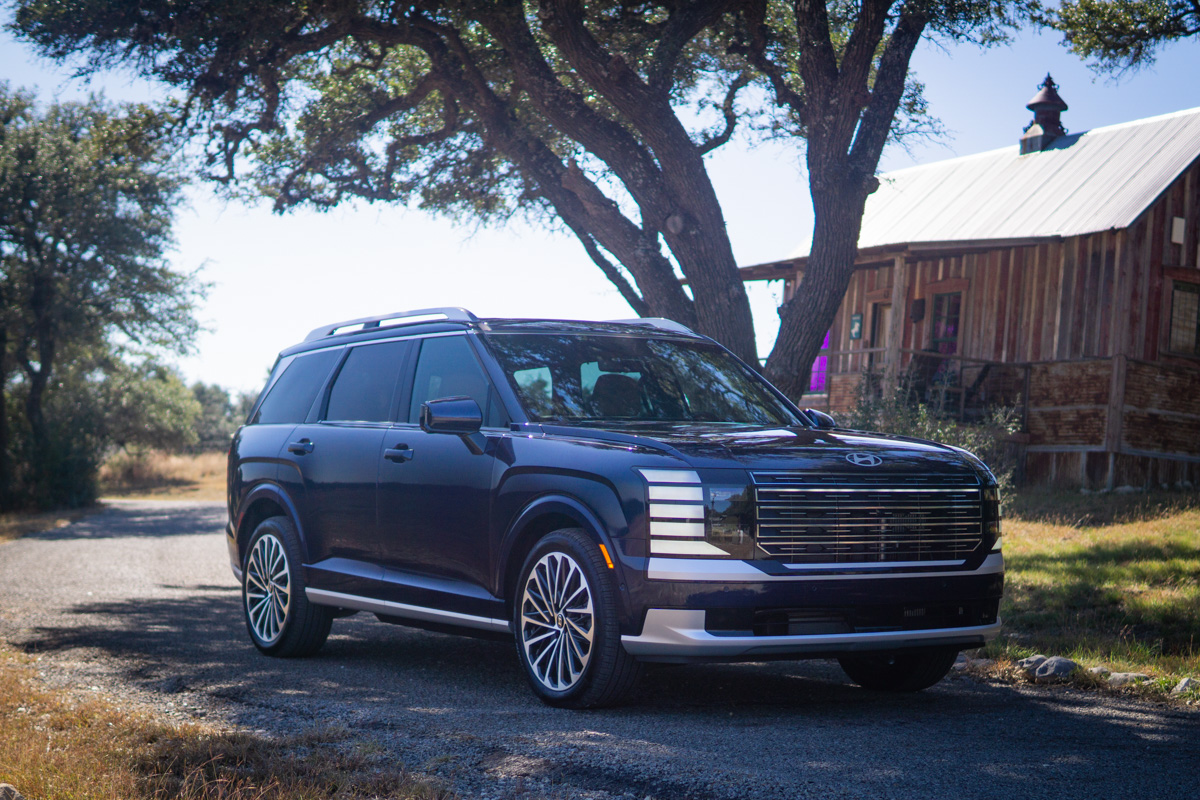
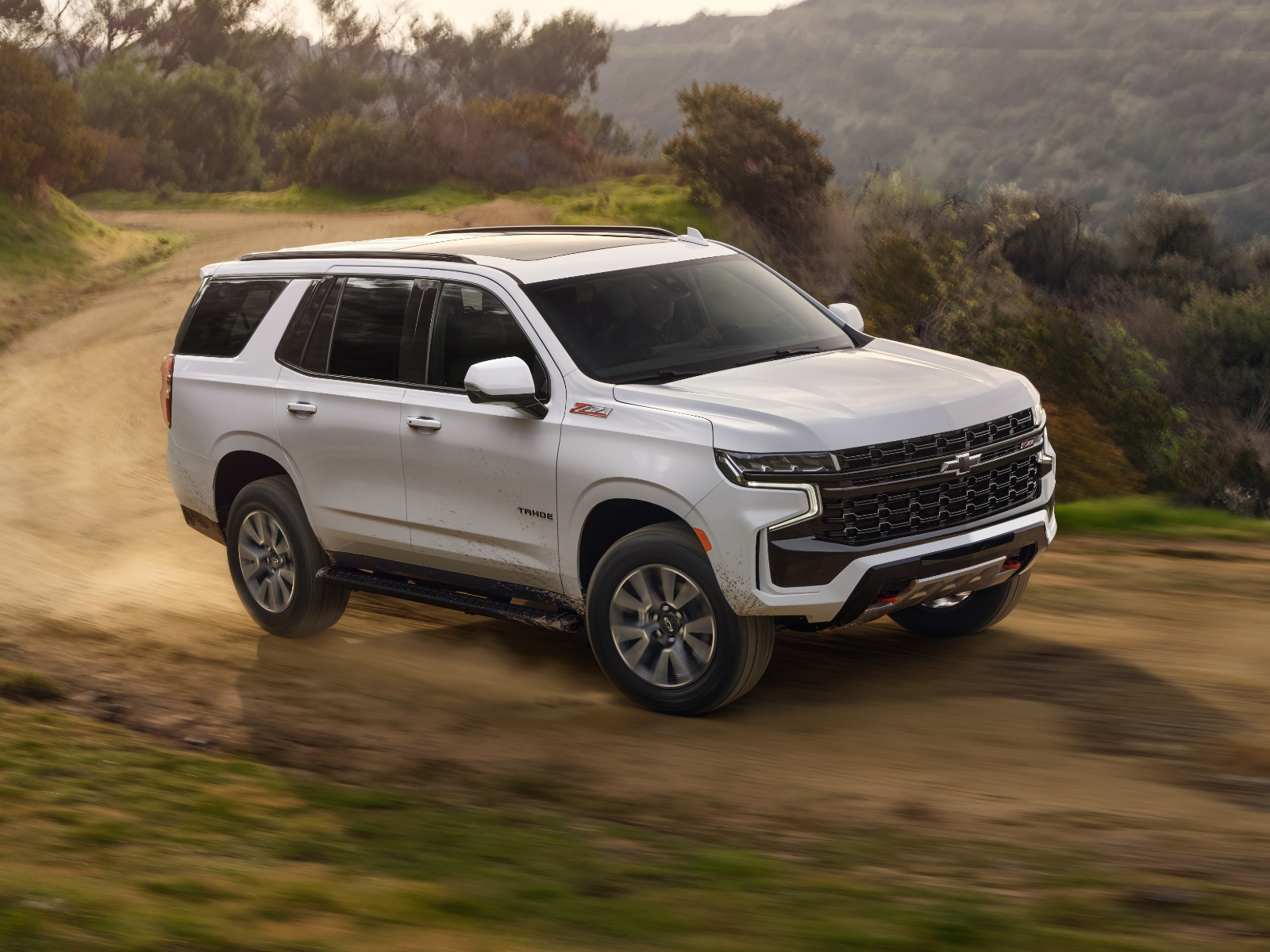
2024 Chevrolet Traverse Reviews, Pricing & Specs


Pros & cons
What we like
Rugged, truck-like exterior
More power and torque
Giant infotainment touchscreen
What to consider
Base LS trim is a little too basic
Range-topping RS trim is pricey
Feels its size
The CarGurus verdict
The 2024 Chevrolet Traverse is bigger, bolder, and more capable than before.
The 2024 Chevrolet Traverse has gone from being something of a wallflower to becoming one of the more stand-out choices among midsize SUVs with three rows of seating. That’s because Chevrolet’s design and engineering team did its homework when it came time to update this third generation of the Traverse, a model that has featured in the brand’s lineup since its introduction back for the 2009 model year.
The 2024 Chevy Traverse is taller, wider, and longer than the outgoing variant. It’s also much more memorable to look at; following current SUV trends, Chevrolet gave the Traverse a more rugged appearance that borrows from both the full-size Tahoe SUV and Sierra pickup truck. Styling is always subjective, but in this instance, we think it’s fair to say Chevy got things right.
Verdict: More important than any additional visual bravado is that the 2024 Traverse has been improved in countless other ways. It has more standard driver aids, such as blind-spot monitoring and rear cross-traffic alert. There is more space for passengers, particularly those seated in the third row. And the infotainment system gets a much larger touchscreen.
out of 10 expert review
Look & feel
The Traverse is available in four main trims: LS, LT, Z71, and RS. Of these four, the Z71 is the all-new addition to the range and is intended for three-row SUV shoppers who intend to do some moderate off-roading. Keep that “moderate” mention in mind if you’re the ultimate weekend warrior.
That’s because Chevrolet’s representatives made it clear during our test drive, on a variety of roads one hour west of Atlanta, that the Z71 variant–the model in which we spent the vast majority of our drive time–isn’t meant to be a mud-plugging machine like the Jeep Wrangler or the Ford Bronco. Instead, it’s engineered to be capable of tackling reasonably rugged terrain, though perhaps not the Rubicon Trail.
Pricing is competitive considering the Traverse’s direct rivals include the Kia Telluride, Ford Explorer, Volkswagen Atlas, Honda Pilot, Hyundai Palisade, and the Toyota Grand Highlander. Minus any options, the Traverse LS starts at $38,995, excluding a $1,395 destination fee. This extends all the way up to $55,595 for the top-of-the-line RS model. To be fair, the RS isn’t inexpensive, but it comes loaded with nearly every available feature that can be added to the Traverse.
Our test vehicle was a Z71 model (starting price of $47,795) that rode on gloss black-painted 18-inch alloy wheels and was decked out in Iridescent Pearl Tricoat paint. It’s one of six available colors offered on the Z71 and, incidentally, the priciest at $995 (we chalk it up to our fancy taste). Our tester’s Jet Black interior was livened up by what Chevy calls "Torch Red" accents along the doors and dashboard. It’s nice, if you like red, but a few other color choices wouldn’t go amiss here. Synthetic leather seating upholstery is optional for an additional $1,000, though we were happy with the overall look, comfort, and breathability of the standard cloth seats in our tester.

Performance
Fans of V6 engines, you might want to look away when opening the hood of the new Traverse. Gone is the previous model’s 310-horsepower 3.6-liter V6. In its place is a turbocharged 2.5-liter four-cylinder that produces 328 horsepower and 326 lb-ft of torque. As you will have noticed, that power output figure from the new engine is 18 ponies more than the V6. This advantage widens when talk turns to torque; the discontinued V6 churned out 266 lb-ft in total, or 50 fewer than the turbo four-cylinder.
All-wheel drive (AWD) is optional on every trim, though the system fitted in the Traverse Z71 is slightly more advanced. It features a dual-clutch arrangement that can redirect torque to the rear wheel with the most grip in slippery conditions.
On a mixture of highways and moderately twisty two-lane country roads, we found acceleration and passing power more than acceptable for a vehicle this size. It’s not a road rocket, nor do you feel like you’ve accepted life in the slow lane because you need a large crossover. In fact, the exhaust has a surprisingly nice little growl to it when you need a jolt of acceleration, in our opinion.
The steering felt fine if we didn’t hurry the Traverse, or attempt to squeeze into the narrowest of parking spots. So long as you have a little room to roam, so to speak, the steering points you in the right direction. This Chevy does feel every bit its 204.5 inches of overall length. For a little comparison, a Kia Telluride is 196.9 inches long.
The ride itself was exemplary, even considering our Z71 tester rolled on chunkier all-terrain tires and had 1.2 inches of extra ground clearance compared to the rest of the range. Occasionally, on certain stretches of asphalt, there was a hint more tire noise than we’d deem ideal–but these were rare instances.
A couple nice surprises were the progressive nature of the brakes: Coming to a safe and controlled stop didn’t lead to excessive nose dive. The fuel-saving stop-and-start feature also proved so seamless in operation, we completely forgot it was there. If fuel economy is a primary concern, know that the official EPA estimates range from 18 mpg city, 26 highway, 21 combined for the Traverse Limited with FWD down to 17/25/20 for the Limited with AWD. Estimates have not yet been released for the other Traverse trim levels.

Form & function
Of the four trims, the base LS model is the only one that comes with seating for eight as standard. Moving up to the LT model brings along second-row dual captain’s chairs, though the bench seat remains available.
The Z71 and RS are strictly seven-seaters, because those cozy captain’s chairs are standard. They also permit easier access to the third row seats which, we’re happy to say, are suitable to be used by average-size adults. Taller folks perched back there will want to ask the person ahead to slide their seat forward a bit, however.
On this note, Chevy’s Smart Slide second-row seats are a cinch to use and are now located on either row of the vehicle–previously, there was only one on the passenger side of the Traverse. Another nice perk is a power-folding third row that’s available on lower trims, and standard equipment on the RS. This quick and easy way to boost cargo capacity is aided by the Autosense power liftgate. Standard on every model, the liftgate can be opened using a button on the key fob, or it will automatically open when it detects the fob is within 3 feet of the rear of the vehicle. This is great for those moments when you have your hands full of luggage or shopping bags.
Cargo volume behind the third row clocks in at 22.9 cubic feet, which is about average among three-row midsize SUVs. With the second and third row folded, space expands to approximately 96 cubic feet, a figure that ranks among class leaders.
There are also many storage nooks and cubbies littered throughout the cabin. We especially like the sizable hidden storage area under the center console that’s accessible to either the driver or front passenger. It’s large enough to hide something like a laptop or purse from prying eyes. There is a similarly convenient and covert underfloor storage bin in the cargo bay.
Outward visibility is mostly positive, except for those in the third row. It’s not exactly claustrophobic, but the sporty upsweep of the rear fender into the side glass doesn’t do much for the view from inside.
Our Z71 test vehicle had a power-operated driver’s seat that made finding the perfect seating position painless. Considering the $47,795 starting price, though, we were a little surprised to find the front passenger's seat relegated to manually adjustable controls.

Technology
One of the most immediate changes we noticed when stepping into the Traverse was the sheer scale of the infotainment touchscreen. Gone is the ho-hum 8-inch screen from the previous Traverse, replaced by an expansive 17.7-inch system that’s standard on every model. Response times are rapid and the menus simple to scroll through while driving.
This is complemented by an 11-inch digital instrument display that can be configured by the driver to show various information and vehicle functions. It was much appreciated while navigating unfamiliar roads through rural Georgia: The navigation directions were front and center, conveniently right in our line of sight.
Running on Google-based software, the infotainment unit has intuitive voice commands and, yes, the all-important wireless AppleCarPlay and Android Auto. The wireless charging pad tucked into the center console of our Z71 not only did a great job adding more juice to our smartphone, but also held the phone nicely in place during cornering. This little detail isn’t something we take for granted considering some of the slip-and-slide charge pads we’ve encountered.
We also applaud Chevrolet for keeping a row of physical controls for volume and HVAC functions. We were less enamored by the sad-looking rectangular button buried below and to the left of the steering wheel. This controls various driving modes, and in our opinion, it would make sense for it to feature more prominently.
And don’t get us started on why Chevrolet insists headlight functions should reside in layers of the infotainment system. The reasoning is that, with automatic high beams standard, there’s little need to keep physical controls for them. Apparently no one on the Chevy headlight design team has driven on a road and attempted to flash their lights to oncoming traffic about an approaching road hazard–okay, or flashed at a slowpoke hogging the passing lane on a highway.
Back in the positive column, for the first time, the much-lauded Super Cruise hands-free driving aid is offered on the Traverse. This is one of the better automated-driving systems we’ve encountered, and recent improvements expand its functionality. Chevrolet says it looks to increase the Super Cruise network to over 750,000 miles of roads throughout North America by 2025.
Super Cruise can also now be activated on pre-mapped single-lane roadways, versus previously when it was limited to multi-lane highways with clear dividers. We felt a little strange engaging Super Cruise on what were essentially narrow country roads, though the system didn’t falter. One note of warning: It does automatically disengage when the mapping system detects the vehicle is approaching an intersection. This happened a couple of times during our drive and takes getting used to.

Safety
At the time of our test drive the Traverse had not undergone crash tests conducted by the National Highway Traffic and Safety Administration (NHTSA), or the Insurance Institute for Highway Safety (IIHS). While we eagerly await these official results, the 2024 Traverse has a wide range of driver aids fitted at no additional cost.
All models get automatic emergency braking with cyclist and pedestrian detection, lane-keep assist, lane-departure warning, blind-spot warning, rear cross-traffic alert, adaptive cruise control, traffic-sign recognition, side-exit assist, rear pedestrian alert, a surround-view parking camera, and much more. Thankfully, we didn’t have reason to test any of these systems during our two days with the 2024 Traverse, but it was nice knowing they were there.

Cost-effectiveness
Here’s the bad news: The 2024 Traverse has a starting price that’s approximately $4,400 higher than the 2023 model. This is a big jump, though it still aligns the Chevy’s entry-level model with rivals like the Ford Explorer, the Mazda CX-90, and the Jeep Grand Cherokee L.
Chevrolet representatives told us they expect the LT trim to remain the most popular model, and this makes a good deal of sense. Starting at $41,395 (excluding delivery fees), it allows for a choice of a second-row bench or dual captain’s chairs. You can also add Super Cruise and an optional Trailering Package that uncorks the Traverse’s 5,000 pounds of maximum towing capacity.
The 2024 Traverse is more expensive, granted, but we think it’s become a vastly better vehicle that combines a more eye-catching shape with a fully modernized cabin and impressive lineup of driver aids. During our test drive, Chevy reps made no secret of the fact that the Traverse had fallen behind rivals, particularly the strong-selling Kia Telluride and Hyundai Palisade. After a few days behind the wheel, it’s clear the Traverse has made some pretty giant strides with this latest generation and doesn’t need to make any more excuses.

What owners say
Great car for the price point. LT trim level is perfectly appointed. Looks sharp too!
November 14, 2024This is a great vehicle. Although current market prices are extremely high, this particular vehicle was out of my budget. The safety features are excellent. And the drive is smooth. 2024 is just about the same cost as 2025, so yes - it has good value.
November 17, 2025If you like the new Tahoe or Suburban, you will love the new Traverse. Looks like a mini Tahoe.
June 16, 2024What owners say
Great car for the price point. LT trim level is perfectly appointed. Looks sharp too!
November 14, 2024This is a great vehicle. Although current market prices are extremely high, this particular vehicle was out of my budget. The safety features are excellent. And the drive is smooth. 2024 is just about the same cost as 2025, so yes - it has good value.
November 17, 2025If you like the new Tahoe or Suburban, you will love the new Traverse. Looks like a mini Tahoe.
June 16, 2024It’s a good a SUV great for family Travel
July 14, 2024Trims & specs
Base MSRP $47,200 | Seating 7 |
Engine 3.6L 310 hp V6 | Cargo Capacity 23.0 cu ft |
Combined MPG 22 | Drivetrain FWD |
Base MSRP $40,000 | Seating 8 |
Engine 2.5L 328 hp I4 | Cargo Capacity 22.9 cu ft |
Combined MPG 23 | Drivetrain FWD |
Base MSRP $49,800 | Seating 7 |
Engine 3.6L 310 hp V6 | Cargo Capacity 23.0 cu ft |
Combined MPG 21 | Drivetrain 4X4 |
Base MSRP $52,000 | Seating 7 |
Engine 3.6L 310 hp V6 | Cargo Capacity 23.0 cu ft |
Combined MPG 22 | Drivetrain FWD |
Base MSRP $56,200 | Seating 8 |
Engine 2.5L 328 hp I4 | Cargo Capacity 22.9 cu ft |
Combined MPG 21 | Drivetrain 4X4 |
Base MSRP $39,600 | Seating 8 |
Engine 2.5L 328 hp I4 | Cargo Capacity 22.9 cu ft |
Combined MPG 21 | Drivetrain 4X4 |
Base MSRP $54,200 | Seating 7 |
Engine 3.6L 310 hp V6 | Cargo Capacity 23.0 cu ft |
Combined MPG 21 | Drivetrain 4X4 |
Base MSRP $42,000 | Seating 8 |
Engine 2.5L 328 hp I4 | Cargo Capacity 22.9 cu ft |
Combined MPG 21 | Drivetrain 4X4 |
Base MSRP $40,740 | Seating 8 |
Engine 3.6L 310 hp V6 | Cargo Capacity 23.0 cu ft |
Combined MPG 22 | Drivetrain FWD |
Base MSRP $37,045 | Seating 8 |
Engine 3.6L 310 hp V6 | Cargo Capacity 23.0 cu ft |
Combined MPG 22 | Drivetrain FWD |
Base MSRP $46,400 | Seating 8 |
Engine 2.5L 328 hp I4 | Cargo Capacity 22.9 cu ft |
Combined MPG 21 | Drivetrain 4X4 |
Base MSRP $42,740 | Seating 8 |
Engine 3.6L 310 hp V6 | Cargo Capacity 23.0 cu ft |
Combined MPG 21 | Drivetrain 4X4 |
Base MSRP $39,045 | Seating 8 |
Engine 3.6L 310 hp V6 | Cargo Capacity 23.0 cu ft |
Combined MPG 21 | Drivetrain 4X4 |
Base MSRP $54,200 | Seating 8 |
Engine 2.5L 328 hp I4 | Cargo Capacity 22.9 cu ft |
Combined MPG 23 | Drivetrain FWD |
Base MSRP $37,045 | Seating 8 |
Engine 3.6L 310 hp V6 | Cargo Capacity 23.0 cu ft |
Combined MPG 22 | Drivetrain FWD |
Base MSRP $37,600 | Seating 8 |
Engine 2.5L 328 hp I4 | Cargo Capacity 22.9 cu ft |
Combined MPG 23 | Drivetrain FWD |
Base MSRP $40,845 | Seating 8 |
Engine 3.6L 310 hp V6 | Cargo Capacity 23.0 cu ft |
Combined MPG 21 | Drivetrain 4X4 |
Base MSRP $45,045 | Seating 7 |
Engine 3.6L 310 hp V6 | Cargo Capacity 23.0 cu ft |
Combined MPG 22 | Drivetrain FWD |
Base MSRP $47,045 | Seating 7 |
Engine 3.6L 310 hp V6 | Cargo Capacity 23.0 cu ft |
Combined MPG 21 | Drivetrain 4X4 |
Base MSRP $34,520 | Seating 8 |
Engine 3.6L 310 hp V6 | Cargo Capacity 23.0 cu ft |
Combined MPG 22 | Drivetrain FWD |
Base MSRP $36,520 | Seating 8 |
Engine 3.6L 310 hp V6 | Cargo Capacity 23.0 cu ft |
Combined MPG 21 | Drivetrain 4X4 |


Pricing trends
MSRP range
$34,520 - $56,200
Current avg. market price
$37,014
Trending down by 2.2% this month
May 2026 - November 2026