2023 Mazda CX-5 Reviews, Pricing & Specs
Write a reviewPros
Stylish design
Fun to drive
Great safety ratings
Cons
Cramped back seat
Not much cargo space
Awful infotainment user interface
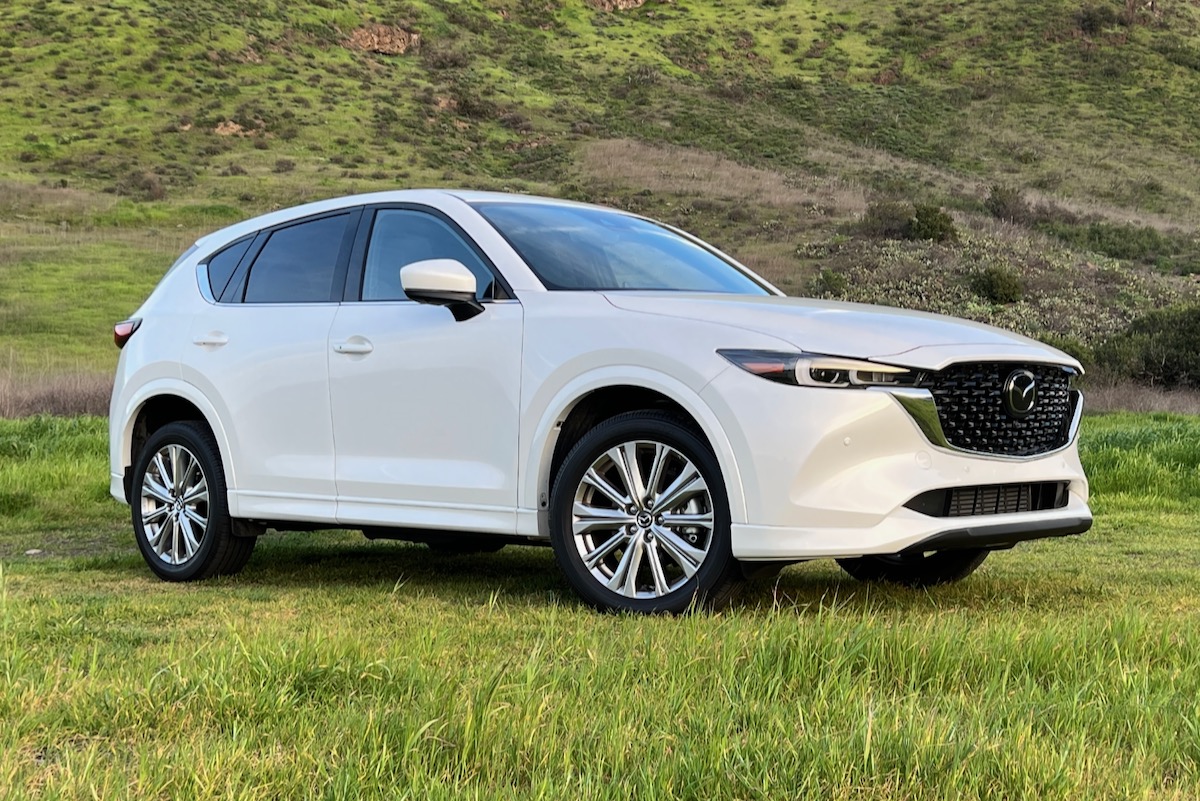
The 2023 Mazda CX-5 remains an appealing choice in its segment, but the Mazda CX-50 is the better compact crossover SUV.
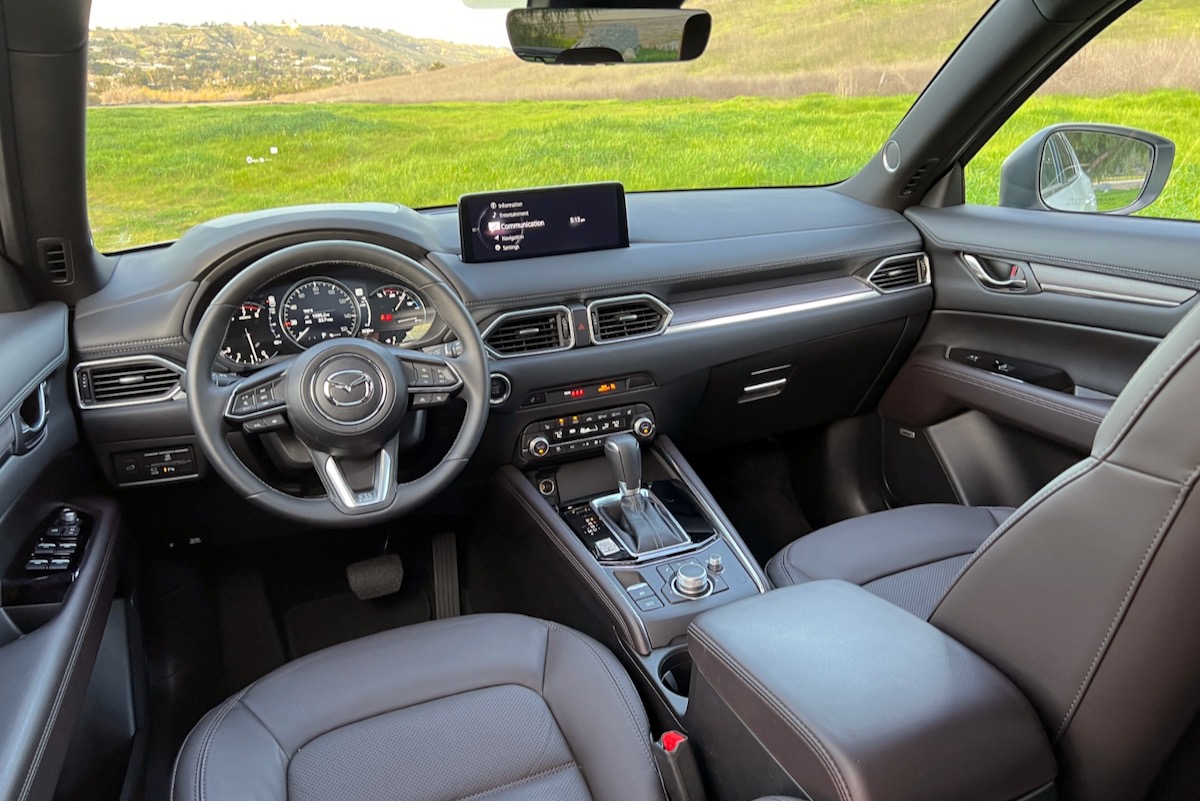
The likely impending death of the Mazda CX-5 isn’t this model’s fault. Despite its age, the CX-5 remains an excellent choice in the compact crossover SUV segment as long as its small back seat, cramped cargo area, and irritating infotainment system aren’t deal-breakers. That’s because the 2023 CX-5 is stylish and assembled with high-quality materials, looking and feeling more like a small luxury SUV than a mass-market machine. Plus, the available turbocharged engine supplies impressive power, and this Mazda boasts a Top Safety Pick rating from the Insurance Institute for Highway Safety (IIHS). So, why is Mazda eventually (probably) killing its most popular model?
In reality, it isn’t. Instead, the company redesigned and renamed the CX-5 as the CX-50. But when a beloved nameplate departs due to broader automaker marketing strategies, such as when Infiniti renamed the fan favorite G37 sedan and coupe as the Q50 and Q60, respectively, some product overlap allowing consumers to get used to the idea is a wise move. Hopefully, Mazda will have more success in directing its loyal CX-5 customers to the CX-50 than Infiniti did when it switched to its Q-this and QX-that naming conventions.
So, we’ve established that the 2023 Mazda CX-5 looks good and feels good, and these traits are not limited to the top-of-the-line model we tested for this review. No matter which version you choose, you’re getting a vehicle that exudes quality, refinement, and sophistication.
Your first decision, however, relates to the engine. Do you want the standard 187-horsepower four-cylinder, or the available 256-hp turbocharged four? If you’d prefer the latter, you’ll select the 2.5 Turbo or the 2.5 Turbo Signature, the most expensive variants at $36,850 and $39,650, before adding destination charges. The rest of the lineup spans from the 2.5 S at $26,700 to the 2.5 S Premium Plus at $35,500. In all, there are eight versions of this SUV on sale, all priced in the sweet spot of the compact crossover segment.
Our 2.5 Turbo Signature test vehicle had the new extra-cost Rhodium White metallic paint, standard Caturra Brown premium Nappa leather upholstery, and an accessory rear bumper guard. These upgrades brought the manufacturer’s suggested retail price (MSRP) to $41,655, including a destination charge of $1,275. While this is a high price for a compact crossover, the CX-5 2.5 Turbo Signature seems worthy of it, unlike many of its rivals.
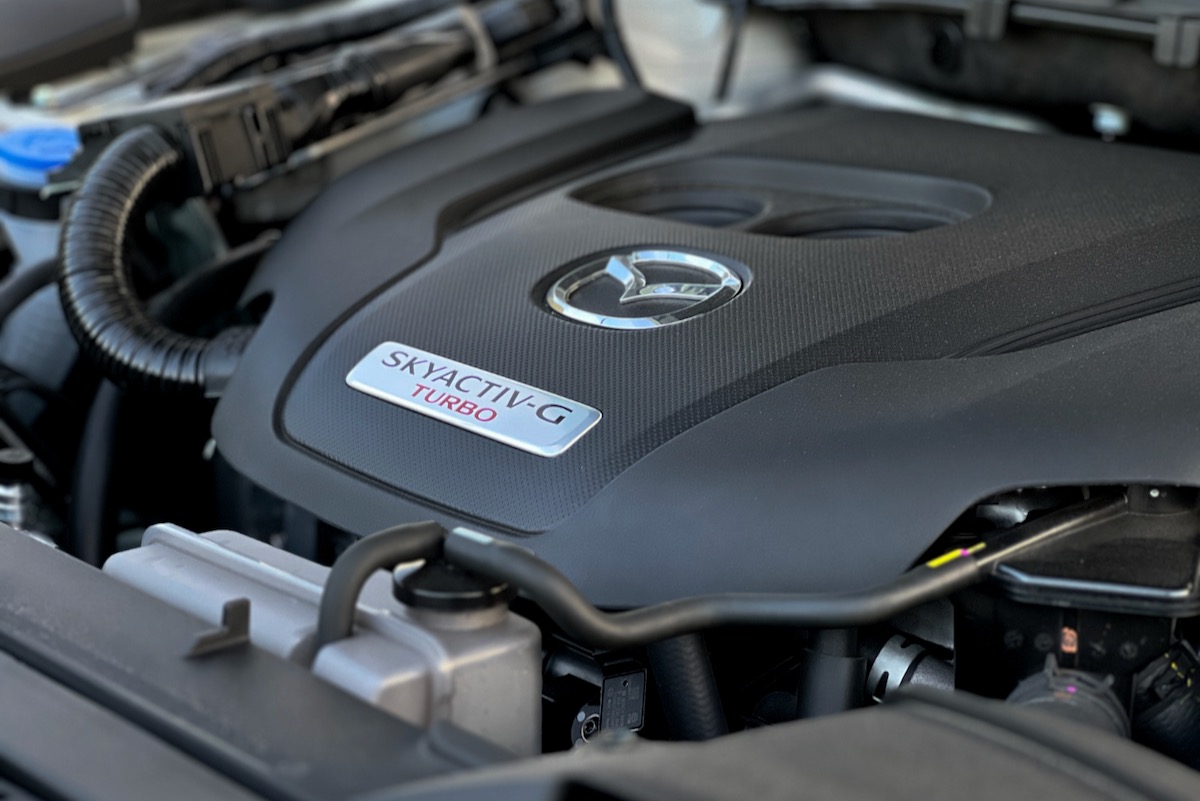
If you get a Mazda CX-5 2.5 S base model with the standard powertrain, know that the 2.5-liter four-cylinder delivers competitive power. It generates 187 hp and 186 pound-feet of torque, delivered to the standard all-wheel-drive (AWD) system though a six-speed automatic transmission (an optional Premium Package adds paddle shifters). The official EPA fuel economy rating is 26 mpg in combined driving.
However, the CX-5 2.5 Turbo’s 2.5-liter turbocharged four-cylinder is pretty irresistible, especially if you run it on premium fuel. With the higher octane gas, it supplies 256 hp and 320 lb-ft of torque. Elect to save money at the pump, and you’ll still enjoy a rewarding 227 hp and 310 lb-ft. This engine pairs with the same six-speed automatic and standard AWD system you’ll find in the CX-5 2.5. It should return 24 mpg in combined driving, according to the EPA.
The turbo four’s horsepower rating grew for the 2022 model year, at the same time Mazda increased the CX-5’s structural rigidity, improved suspension dampening, reduced interior noise, and revised the automatic transmission for more responsive performance. The automaker also made AWD standard instead of optional. These updates help to make the CX-5 feel less like its age and more like the entry-level luxury vehicle it aspires to be.
Like any of Mazda’s finely tuned adjustments to a model’s driving dynamics, these alterations collectively made the CX-5 more rewarding to drive. The slight power increase is less noticeable than the structural and suspension modifications, which make the CX-5 feel tighter and more solid while reducing impact harshness and the irritating tendency to create “head toss” on undulating pavement.
With the turbocharged engine, the torque arrives at 2,000 rpm when you’re using regular gas and 2,500 rpm with premium fuel. So, it takes a moment before the rush of acceleration begins. But once you start surfing on that swell of torque, the CX-5 2.5 Turbo is effortlessly quick, the acceleration accompanied by a pleasant, muted note similar to what you’d get with a boxer-type engine.
Of course, as with any turbocharged engine, if you dip too deeply into the well of power, you’ll pay a price at the pump. On our mountainous Southern California testing loop, the CX-5 2.5 Turbo returned 21.4 mpg in combined driving, missing the expected mark by 2.6 mpg. We drove primarily in Normal mode, using Sport mode for the mountain driving. There is an Off-Road mode, too, but dicey winter weather made our usual testing trails unsafe.
You’re unlikely to take a CX-5 too far off the beaten path anyway, though Mazda claims the SUV is up to the task. So, know that on paved roads of all kinds, the CX-5 is a delight. But this is especially evident on the twisting, turning, undulating roads that Mazdas typically master. Last year’s engineering updates nearly eliminate the unwanted body roll in curves and corners, while reducing the rollicking body motions that once plagued the CX-5.
In their place, the CX-5 provides a firm, connected, and communicative ride quality that can border on choppy, depending on the road surface. This is in keeping with Mazda’s brand identity, though, which emphasizes a sporty driving experience. Add the deliciously thick band of generous torque, the snappy shifting from the six-speed automatic, the perfectly tuned steering, and the responsive brakes, and you’ve got a compact crossover SUV you’ll look forward to driving every day.
As a part of the 2022-model-year updates, Mazda also modified the CX-5’s front seats for improved comfort and support, resolving another of our complaints about the model. Every version of the CX-5 has a height-adjustable driver’s seat, and all but the base 2.5 S include a height-adjustable front passenger’s seat.
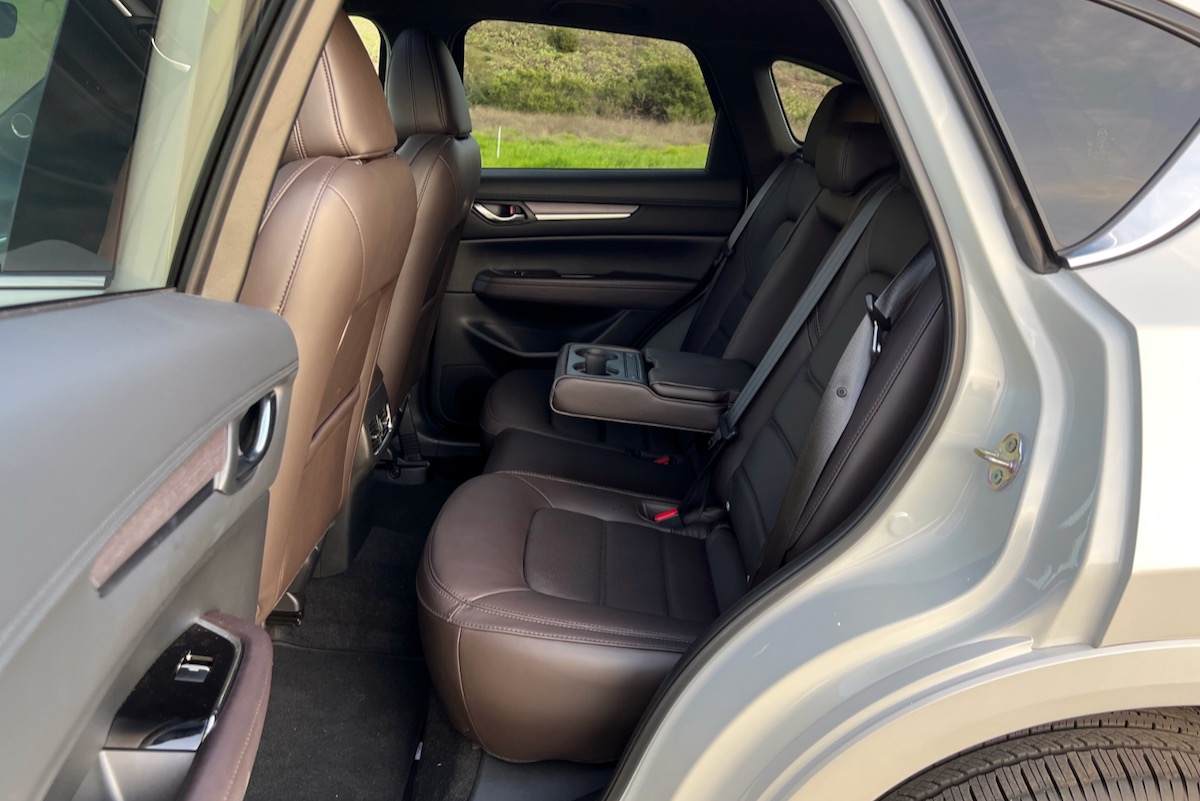
Working your way up the trim-level ladder, you can get power adjustment for both front seats, heated front and rear seats, ventilated front seats, dual-zone automatic climate control, and three different upholstery upgrades. Because the test vehicle had Signature trim, it came with all of the extras, including supple Nappa leather that looked, felt, and smelled like luxury.
Unfortunately, this is where the praise comes to an end. While Mazda uses top-notch materials inside the CX-5, the technology, storage space, rear-seat room, and cargo space leave something to be desired.
For example, Mazda believes touchscreen infotainment systems are too distracting to use while driving, but the automaker does not offer a conversational voice recognition system to solve for it. Unlike in some of the models Mazda could credibly compete against, like base versions of the BMW X1 and Mercedes-Benz GLA, you can’t say “Hey Mazda” to rouse a digital assistant and execute basic functions. Apple launched Siri more than a decade ago. Solving this problem isn’t rocket science.
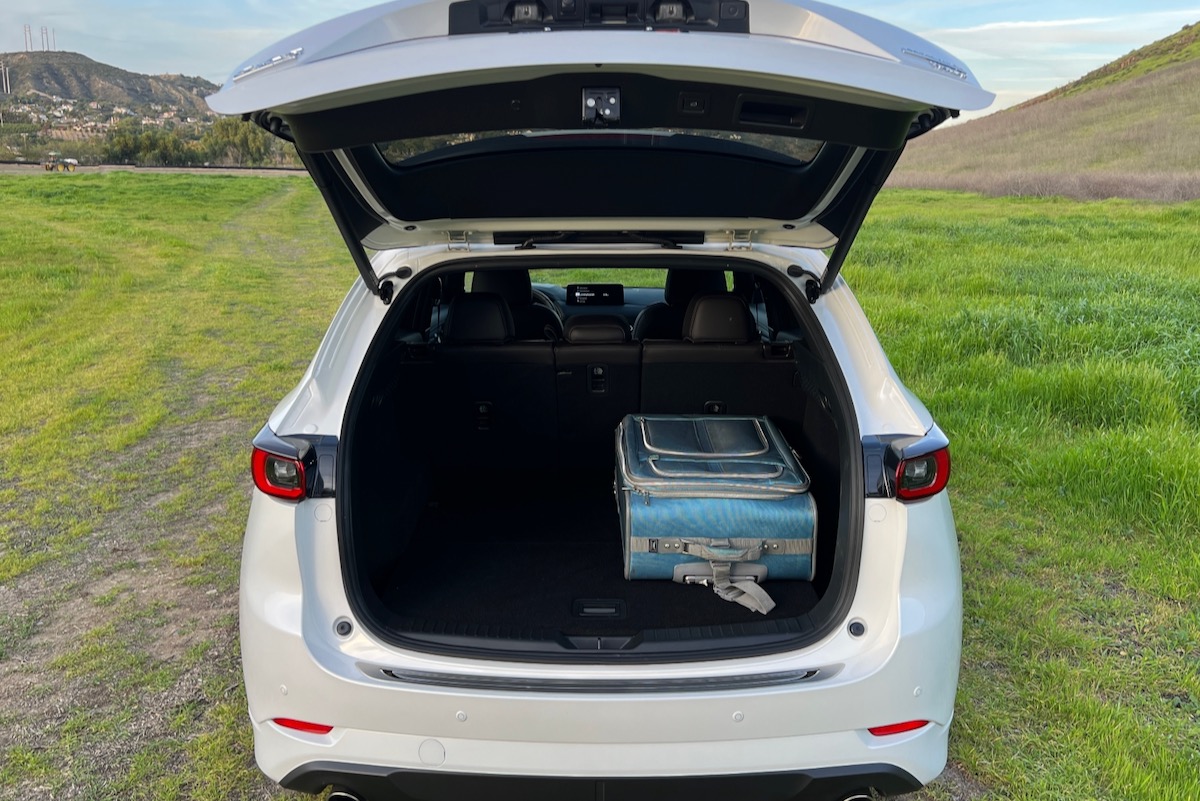
In addition, the CX-5 is one of the smaller models in its competitive class. That means in-cabin storage areas are relatively small, the back seat is comparatively cramped, and the cargo area can’t hold as much of your stuff. Behind the rear seat, the CX-5 supplies 30.9 cubic feet of cargo space, which is reasonable. The maximum number with the back seat folded down measures 59.3 cubic feet, less than many mainstream rivals but more than several entry-luxury models.
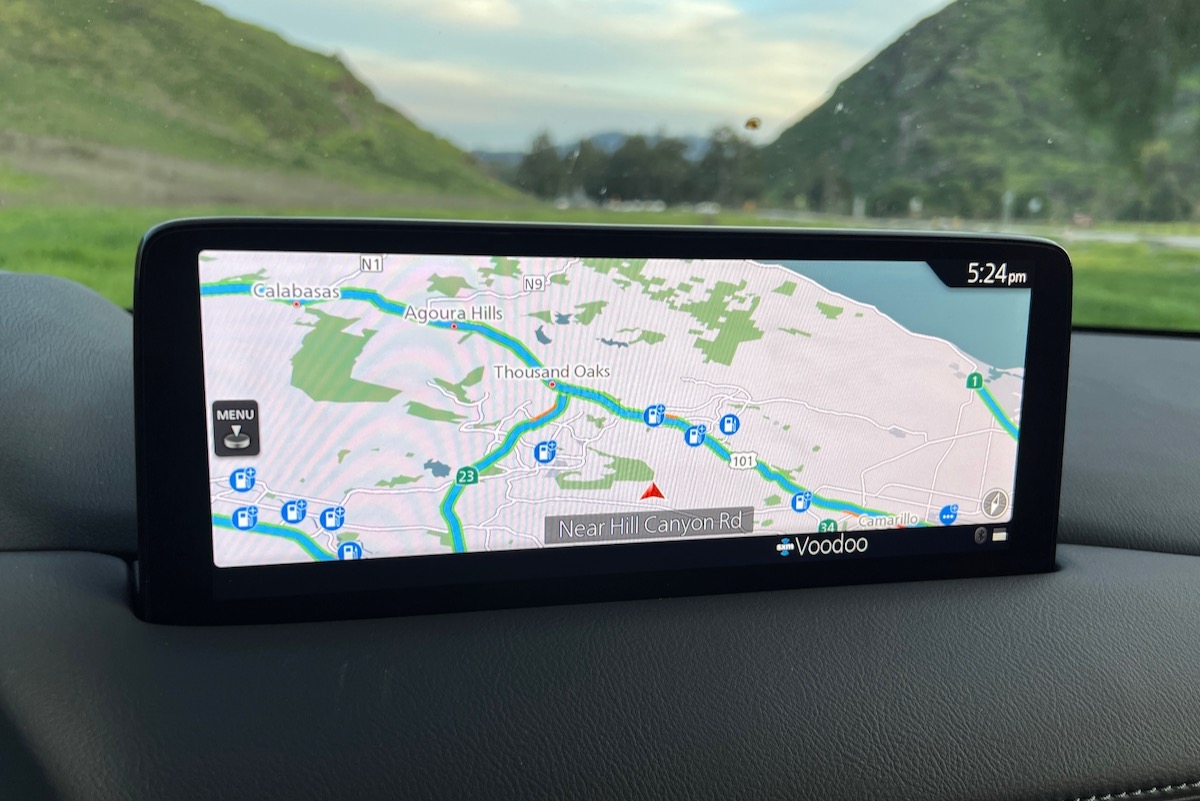
In the previous section, we alluded to our dissatisfaction with the CX-5’s Mazda Connect infotainment system. Equipped with a wide, 10.25-inch display featuring sophisticated graphics and a logical menu structure, the system looks appealing. Functionally, though, it is a source of frustration.
In addition to lacking a helpful voice recognition system, Mazda Connect’s physical controls on the center console are somewhat awkward to use. They also require initial memorization and, later, conscious thought as your fingertips navigate the topography seeking the right function. Of course, you could look down, but when you do that the road ahead completely disappears from your peripheral view. It is rather terrifying.
Furthermore, the system’s control knob often requires a series of twists and pushes to execute commands. Ironically, to succeed in this endeavor, you need to look away from the road ahead and focus on the infotainment display, review and comprehend the menu selections, and then use the physical controls to select the correct item. How is this process less distracting than a touchscreen?
Finally, the user experience often falls flat. For example, if you’re simply trying to tune from one SiriusXM satellite radio station to another, the channel list defaults to the bottom of the list instead of putting you in the same neighborhood and genre as the current station.
To summarize, Mazda Connect doesn’t work like any other piece of technology currently in your life. That alone makes it confusing and distracting. Neither are its center console controls as simple to understand and use as old-school buttons and knobs placed on the dashboard. While we concede that, over time, you acclimate to Mazda Connect, it shouldn’t be this hard.
Other automakers that once took a similar stance against touchscreens, such as Audi, BMW, and Mercedes-Benz, now offer them in addition to excellent voice-activated digital assistants. Not only that, but Mazda itself has conceded that touchscreens are most effective for using Apple CarPlay and Android Auto, and the 2023 Mazda CX-50 is the first to get this functionality.
Aside from its frustrating user interface, Mazda Connect offers an appealing list of features. For example, it comes with Apple CarPlay and Android Auto and a free three-year trial subscription to Mazda Connected Services (WiFi service costs extra following a short free plan). Most CX-5s also have SiriusXM, and upper trims include a decent-sounding 10-speaker Bose premium audio system.
In addition, the test vehicle offered a front-facing camera that activates when the parking sensors detect an object ahead (you can also manually activate the front camera when you wish), and a helpful surround-view camera system to make parking easier.
If Mazda gets the CX-5’s infotainment tech wrong, it makes up for it regarding the driver assistance tech.
Bundled under the i-Activsense banner, Mazda offers most of the technology in its arsenal as standard equipment, except for a handful of features that are exclusive to the 2.5 Turbo Signature. Those exclusive features include the surround-view camera system, front and rear parking sensors, a rear low-speed automatic emergency braking system, and Traffic Jam Assist, which combines the adaptive cruise control and lane-centering assist systems at lower travel speeds.
Generally speaking, the i-Activsense tech operates in a smooth, refined, and accurate manner. In the three most expensive versions of the CX-5, they pair with an Active Driving Display (head-up display) that shows operational status as well as blind-spot monitoring and lane-departure warning alerts. In addition to the visual indicators, the lane-departure warning system offers audible alerts, tactile alerts, or a combination of the two. The tactile alert is a silent and subdued steering wheel vibration. When active, the lane-keeping assist is equally subtle about its actions, and the adaptive cruise control provides smooth braking to maintain speed and adjust to changing traffic conditions. The Traffic Jam Assist feature is also helpful, but it would be better if Mazda offered it at higher travel speeds in addition to those you encounter during a typical commute.
The CX-5 also comes with an E911 system providing automatic collision notification. But what this SUV desperately needs is a warning message when drivers are traveling at night without the headlights on. We’ve noticed that many people are now cruising around after dark with only the front running lights active and without any taillights on. If not for the red reflectors in the bumper, they’d be nearly invisible from the rear. The problem appears to stem from running lights that are too bright and interior illumination that works whether or not you have the headlights turned on. And the problem seems to afflict the Mazda CX-5 more than most other vehicles.
To determine why this might be, we tried driving our test vehicle after dark without the headlights on. Sure enough, the running lights cast enough light to see the road ahead, and everything on the dashboard had illumination. If we hadn’t purposely turned the CX-5’s headlights off, we wouldn’t have any idea they weren’t on. Mazda needs to solve this issue as soon as possible.
As for Mazda CX-5 crash-test ratings, this compact SUV performs exceptionally well, especially considering the age of its underlying engineering. According to the National Highway Traffic Safety Administration (NHTSA), the CX-5 gets five-star ratings in every assessment, coupled with the usual four-star rollover resistance rating that most crossovers earn. The Insurance Institute for Highway Safety (IIHS) gives the CX-5 a Top Safety Pick rating for 2023. Notably, the Mazda receives top marks in the latest small-overlap and side-impact tests.
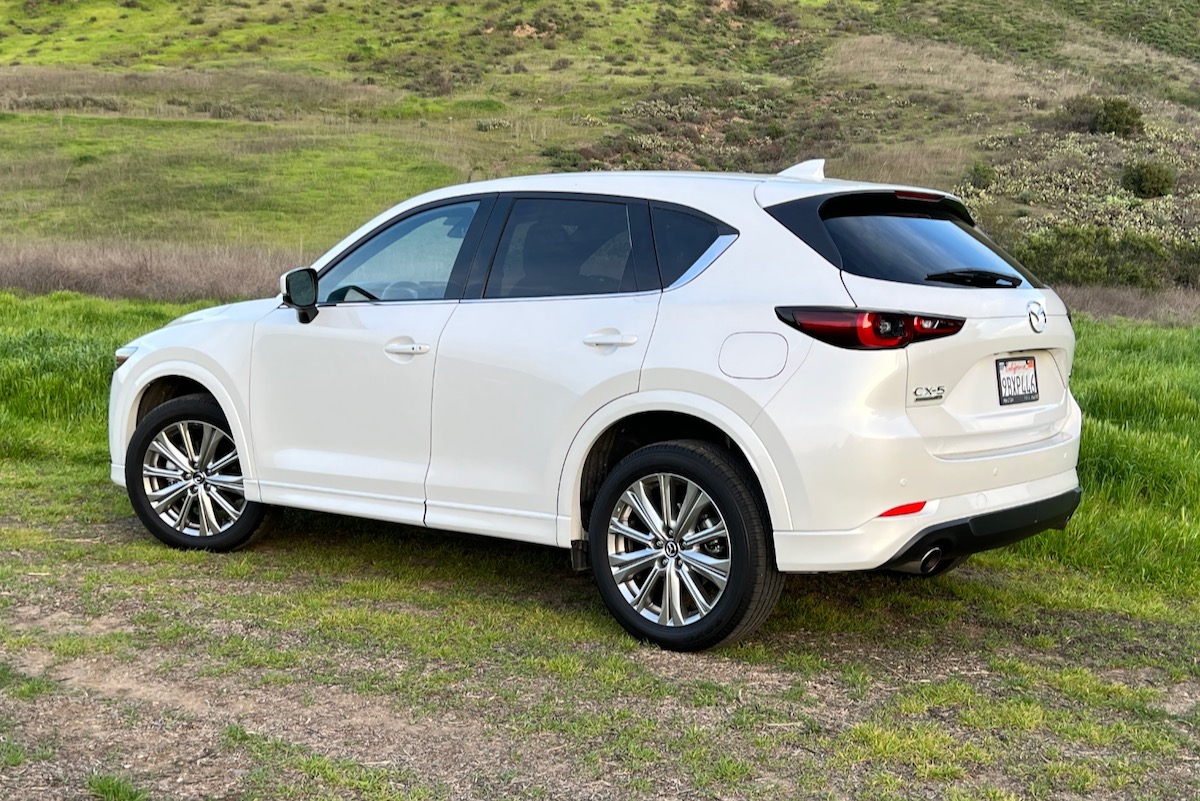
Mazda has made it clear that it wants to elevate itself into premium territory, positioning the brand as a worthy alternative to Acura, Infiniti, Lincoln, and other second-tier luxury marques, as opposed to mainstream brands like Honda, Subaru, and Toyota. However, unlike some automakers that merely say they play in this upscale arena, like Buick and GMC, Mazda is walking the walk before talking the talk, demonstrating that it is worthy of the distinction.
That makes the 2023 Mazda CX-5 a genuine bargain, because it delivers the considered design, quality materials, and attention to the smallest details you expect of a luxury vehicle at a mass-market price. Effectively, it is a proof point for Mazda’s move upmarket, a way for the automaker to show you why it is a premium brand before it tells you that.
Nevertheless, as impressed as we are with the CX-5, you might want to examine the model’s eventual, and slightly more expensive, replacement, the Mazda CX-50. In our opinion, the CX-50 is the better vehicle to buy, though its Mazda Connect technology is nearly as maddening to use.
Still, if you love the CX-5’s styling, feel, size, and price, we won’t steer you clear of it. Just make sure to turn those headlights to the Auto position and never, ever touch them again. And just run Apple CarPlay or Android Auto at all times in order to preserve your sanity.

User reviews for 2023 Mazda CX-5
Write a review2023 Mazda CX-5 Pricing
Trims & specs
Air Conditioning
Single front air conditioning zones
Airbags
Dual front airbags · Passenger airbag deactivation: occupant sensing deactivation · Front side airbags · Rear side curtain airbags
Audio System
Antenna Type: mast · Voice recognition audio system · USB auxiliary audio input · Pandora internet radio · AM/FM radio · Total Number of Speakers: 4
Brakes
ABS: 4-wheel · Braking assist: hill start assist · Electronic parking brake: auto off · Front brake diameter: 11.7 · Front brake width: 1.1 · Front brakes: ventilated disc · Rear brake diameter: 11.9 · Rear brake width: 0.4 · Rear brakes: disc
Comfort Features
Door trim: cloth · Floor Mat Material: carpet · Floor Material: carpet · Floor Mats: front · Shift knob trim: leather · Steering wheel trim: leather
Convenience Features
Adaptive stop and go cruise control: semi-automatic · Assist handle: front · Cargo area power outlet: 12V · Center console: front console with armrest and storage · Cruise control: adaptive · Cupholders: rear · Multi-function remote: keyless entry · One-touch windows: 4 · Power outlet(s): USB front · Power steering: speed-proportional · Power windows: lockout button · Reading lights: front · Steering wheel: tilt and telescopic · Steering wheel mounted controls: multi-function screen controls · Storage: accessory hook · Vanity mirrors: dual
Driver Seat
Manual adjustments: 6
Drivetrain
4WD Type: on demand · Axle ratio: 4.62
Engine
Alternator: 100 amps · Battery: maintenance-free
Exterior Features
Door handle color: body-color · Exhaust: dual exhaust tips · Exhaust tip color: metallic · Fender lip moldings: body-color · Front bumper color: body-color · Grille color: grey surround · Mirror color: body-color · Rear bumper color: body-color · Rear spoiler: roofline spoiler · Rear spoiler color: body-color · Rear trunk/liftgate: liftgate · Rocker panel color: black · Window trim: chrome
Headrests
Front headrests: adjustable · Number of front headrests: 2 · Number of rear headrests: 3
In Car Entertainment
Connected in-car apps: Google search · Infotainment: Mazda Connect · Infotainment screen size: 10.25 in.
Instrumentation
Fuel economy display: MPG · Instrument cluster screen size: 4.6 in. · Warnings and reminders: low fuel level
Lights
Exterior entry lights: security approach lamps · Headlights: Auto on/off
Mirrors
Exterior mirrors: integrated turn signals · Inside rearview mirror: manual day/night
Passenger Seat
Manual Adjustments: 4
Rear Seats
Type: 40-20-40 split bench
Safety
Automatic emergency braking: front pedestrian · Camera system: rearview · Child seat anchors: LATCH system · Cross Traffic Alert: rear · Crumple zones: rear · Impact absorbing seats: dual front · Impact sensor: alert system · Pre-Collision Warning System: visual warning · Pre-collision warning system: pedestrian detection · Rearview monitor: in dash
Seatbelts
Emergency locking retractors: front and rear · Front seatbelts: 3-point · Seatbelt force limiters: front · Seatbelt pretensioners: front · Seatbelt warning sensor: driver and passenger · Second row seatbelts: 3-point
Seats
Driver seat manual adjustments: reclining · Front seat type: bucket · Passenger seat manual adjustments: reclining · Rear headrests: adjustable · Rear seat folding: split · Rear seat manual adjustments: reclining · Upholstery: cloth
Spare Tire
Mount Location: inside · Size: temporary
Spare Wheel
Rim Type: steel
Steering
Steering ratio: 15.5 · Turns lock-to-lock: 2.7
Suspension
Front Arm Type: lower control arms · Front Shock Type: twin-tube gas shock absorbers · Front Spring Type: coil springs · Front Suspension Classification: independent · Front Suspension Type: MacPherson struts · Rear Shock Type: twin-tube gas shock absorbers · Rear Spring Type: coil springs · Rear Suspension Classification: independent · Rear Suspension Type: multi-link · Stabilizer bar(s): rear
Telematics
Driver assistance app: roadside assistance · Electronic messaging assistance: with read function · Phone: voice activated · Phone wireless data link: Bluetooth · Smart device app compatibility: MyMazda · Smart device app function: maintenance status · Wifi: hotspot
Tires
Type: all season
Tires and Rims
Wheels: painted aluminum
Windows
Front wipers: rain sensing · Liftgate window: fixed · Power windows: remote operation · Rear wiper: with washer
Air Conditioning
Sun sensor climate control front air conditioning · Dual front air conditioning zones
Airbags
Dual front airbags · Passenger airbag deactivation: occupant sensing deactivation · Front side airbags · Rear side curtain airbags
Audio System
Antenna Type: mast · Voice recognition audio system · USB auxiliary audio input · Pandora internet radio · AM/FM radio · Total Number of Speakers: 6
Brakes
ABS: 4-wheel · Braking assist: hill start assist · Electronic parking brake: auto off · Front brake diameter: 11.7 · Front brake width: 1.1 · Front brakes: ventilated disc · Rear brake diameter: 11.9 · Rear brake width: 0.4 · Rear brakes: disc
Comfort Features
Armrests: rear center folding with storage · Door trim: leatherette · Floor Mat Material: carpet · Floor Material: carpet · Floor Mats: front · Shift knob trim: leather · Steering wheel trim: leather
Convenience Features
Adaptive stop and go cruise control: semi-automatic · Assist handle: rear · Cargo area power outlet: 12V · Center console: front console with armrest and storage · Cruise control: adaptive · Cupholders: front · Multi-function remote: proximity entry system · One-touch windows: 4 · Power outlet(s): 12V front · Power steering: speed-proportional · Power windows: lockout button · Reading lights: front · Steering wheel: tilt and telescopic · Steering wheel mounted controls: multi-function screen controls · Storage: accessory hook · Vanity mirrors: dual illuminating
Driver Seat
Adjustable lumbar support: manual · Power adjustments: 6
Drivetrain
4WD Type: on demand · Axle ratio: 4.62
Engine
Alternator: 100 amps · Battery: maintenance-free
Exterior Features
Door handle color: body-color · Exhaust: dual exhaust tips · Exhaust tip color: metallic · Fender lip moldings: body-color · Front bumper color: body-color · Grille color: grey surround · Mirror color: body-color · Rear bumper color: body-color · Rear spoiler: roofline spoiler · Rear spoiler color: body-color · Rear trunk/liftgate: liftgate · Rocker panel color: black · Window trim: chrome
Headrests
Front headrests: adjustable · Number of front headrests: 2 · Number of rear headrests: 3
In Car Entertainment
Connected in-car apps: Google POIs · Infotainment: Android Auto ready · Infotainment screen size: 10.25 in.
Instrumentation
Fuel economy display: range · Instrument cluster screen size: 4.6 in. · Warnings and reminders: maintenance reminder
Lights
Exterior entry lights: security approach lamps · Headlights: Auto on/off
Mirrors
Exterior mirrors: integrated turn signals · Inside rearview mirror: manual day/night
Passenger Seat
Manual Adjustments: 6
Rear Seats
Type: 40-20-40 split bench
Safety
Automatic emergency braking: front · Camera system: rearview · Child seat anchors: LATCH system · Cross Traffic Alert: rear · Crumple zones: rear · Impact absorbing seats: dual front · Impact sensor: alert system · Pre-Collision Warning System: visual warning · Pre-collision warning system: pedestrian detection · Rearview monitor: in dash
Seatbelts
Emergency locking retractors: front and rear · Front seatbelts: 3-point · Seatbelt force limiters: front · Seatbelt pretensioners: front · Seatbelt warning sensor: driver and passenger · Second row seatbelts: 3-point
Seats
Driver seat power adjustments: height · Front seat type: bucket · Passenger seat manual adjustments: reclining · Rear headrests: adjustable · Rear seat folding: split · Rear seat manual adjustments: reclining · Upholstery: leatherette
Security
Power door locks: anti-lockout
Spare Tire
Mount Location: inside · Size: temporary
Spare Wheel
Rim Type: steel
Steering
Steering ratio: 15.5 · Turns lock-to-lock: 2.7
Suspension
Front Arm Type: lower control arms · Front Shock Type: twin-tube gas shock absorbers · Front Spring Type: coil springs · Front Suspension Classification: independent · Front Suspension Type: MacPherson struts · Rear Shock Type: twin-tube gas shock absorbers · Rear Spring Type: coil springs · Rear Suspension Classification: independent · Rear Suspension Type: multi-link · Stabilizer bar(s): rear
Telematics
Driver assistance app: roadside assistance · Electronic messaging assistance: with voice recognition · Phone: voice activated · Phone wireless data link: Bluetooth · Smart device app compatibility: MyMazda · Smart device app function: maintenance status · Wifi: hotspot
Tires
Type: all season
Tires and Rims
Wheels: painted aluminum
Windows
Front wipers: rain sensing · Liftgate window: fixed · Power windows: remote operation · Rear wiper: with washer
Air Conditioning
Automatic climate control front air conditioning · Dual front air conditioning zones
Airbags
Dual front airbags · Passenger airbag deactivation: occupant sensing deactivation · Front side airbags · Front side curtain airbags
Audio System
Antenna Type: mast · Voice recognition audio system · Bluetooth auxiliary audio input · Pandora internet radio · HD radio · Total Number of Speakers: 6
Brakes
ABS: 4-wheel · Braking assist: hill start assist · Electronic parking brake: auto off · Front brake diameter: 11.7 · Front brake width: 1.1 · Front brakes: ventilated disc · Rear brake diameter: 11.9 · Rear brake width: 0.4 · Rear brakes: disc
Comfort Features
Armrests: rear center with cupholders · Door trim: leatherette · Floor Mat Material: carpet · Floor Material: carpet · Floor Mats: front · Shift knob trim: leather · Steering wheel trim: leather
Convenience Features
Adaptive stop and go cruise control: semi-automatic · Assist handle: rear · Cargo area power outlet: 12V · Center console: front console with armrest and storage · Cruise control: adaptive · Cupholders: rear · Dimming rearview mirror: auto-dimming · Memorized settings: 2 driver · Multi-function remote: proximity entry system · One-touch windows: 4 · Power outlet(s): USB front · Power steering: electric · Power windows: lockout button · Reading lights: front · Steering wheel: tilt and telescopic · Steering wheel mounted controls: phone · Storage: sunglasses holder · Universal garage door opener: Homelink · Vanity mirrors: dual illuminating
Driver Seat
Adjustable lumbar support: power · Power adjustments: 8
Drivetrain
4WD Type: on demand · Axle ratio: 4.62
Engine
Alternator: 100 amps · Battery: maintenance-free
Exterior Features
Door handle color: body-color · Exhaust: dual exhaust tips · Exhaust tip color: metallic · Fender lip moldings: body-color · Front bumper color: body-color · Grille color: black · Mirror color: body-color · Rear bumper color: body-color · Rear spoiler: roofline spoiler · Rear spoiler color: body-color · Rear trunk/liftgate: liftgate · Rocker panel color: black · Window trim: chrome
Headrests
Front headrests: adjustable · Number of front headrests: 2 · Number of rear headrests: 3
In Car Entertainment
Connected in-car apps: Google search · Infotainment: Android Auto ready · Infotainment screen size: 10.25 in.
Instrumentation
Fuel economy display: range · Instrument cluster screen size: 4.6 in. · Warnings and reminders: lamp failure
Lights
Exterior entry lights: security approach lamps · Headlights: auto delay off
Mirrors
Exterior mirrors: manual folding
Passenger Seat
Power adjustments: 6
Rear Seats
Type: 40-20-40 split bench
Roof
Moonroof: power glass
Safety
Automatic emergency braking: front pedestrian · Camera system: rearview · Child seat anchors: LATCH system · Cross Traffic Alert: rear · Crumple zones: rear · Impact absorbing seats: dual front · Impact sensor: alert system · Pre-Collision Warning System: visual warning · Pre-collision warning system: pedestrian detection · Rearview monitor: in dash
Seatbelts
Emergency locking retractors: front · Front seatbelts: 3-point · Seatbelt force limiters: front · Seatbelt pretensioners: front and rear · Seatbelt warning sensor: driver and passenger · Second row seatbelts: 3-point
Seats
Driver seat power adjustments: height · Front seat type: bucket · Passenger seat power adjustments: height · Rear headrests: adjustable · Rear seat folding: split · Rear seat manual adjustments: reclining · Upholstery: leather-trimmed
Security
Power door locks: anti-lockout
Spare Tire
Mount Location: inside · Size: temporary
Spare Wheel
Rim Type: steel
Steering
Steering ratio: 15.5 · Turns lock-to-lock: 2.7
Suspension
Front Arm Type: lower control arms · Front Shock Type: twin-tube gas shock absorbers · Front Spring Type: coil springs · Front Suspension Classification: independent · Front Suspension Type: MacPherson struts · Rear Shock Type: twin-tube gas shock absorbers · Rear Spring Type: coil springs · Rear Suspension Classification: independent · Rear Suspension Type: multi-link · Stabilizer bar(s): front
Telematics
Driver assistance app: roadside assistance · Electronic messaging assistance: with read function · Phone: voice activated · Phone wireless data link: Bluetooth · Smart device app compatibility: MyMazda · Smart device app function: security event/collision alert · Wifi: hotspot
Tires
Type: all season
Tires and Rims
Wheels: painted aluminum
Windows
Front wipers: speed sensitive · Liftgate window: fixed · Power windows: with safety reverse · Rear wiper: intermittent
Air Conditioning
Automatic climate control front air conditioning · Dual front air conditioning zones
Airbags
Dual front airbags · Passenger airbag deactivation: occupant sensing deactivation · Front side airbags · Front side curtain airbags
Audio System
Antenna Type: mast · Voice recognition audio system · Bluetooth auxiliary audio input · Pandora internet radio · Touch screen display radio · Total Number of Speakers: 6
Brakes
ABS: 4-wheel · Braking assist: hill start assist · Electronic parking brake: auto off · Front brake diameter: 11.7 · Front brake width: 1.1 · Front brakes: ventilated disc · Rear brake diameter: 11.9 · Rear brake width: 0.4 · Rear brakes: disc
Comfort Features
Armrests: rear center folding with storage · Door trim: leatherette · Floor Mat Material: carpet · Floor Material: carpet · Floor Mats: front · Shift knob trim: leather · Steering wheel trim: leather
Convenience Features
Adaptive stop and go cruise control: semi-automatic · Assist handle: front · Cargo area power outlet: 12V · Center console: front console with armrest and storage · Cruise control: adaptive · Cupholders: rear · Dimming rearview mirror: auto-dimming · Memorized settings: 2 driver · Multi-function remote: proximity entry system · One-touch windows: 4 · Power outlet(s): USB rear · Power steering: speed-proportional · Power windows: lockout button · Reading lights: front · Steering wheel: tilt and telescopic · Steering wheel mounted controls: cruise controls · Storage: sunglasses holder · Universal garage door opener: Homelink · Vanity mirrors: dual illuminating
Driver Seat
Adjustable lumbar support: power · Power adjustments: 8
Drivetrain
4WD Type: on demand · Axle ratio: 4.62
Engine
Alternator: 100 amps · Battery: maintenance-free
Exterior Features
Door handle color: body-color · Exhaust: dual exhaust tips · Exhaust tip color: metallic · Fender lip moldings: body-color · Front bumper color: body-color · Grille color: black · Mirror color: black · Rear bumper color: body-color · Rear spoiler: roofline spoiler · Rear spoiler color: body-color · Rear trunk/liftgate: liftgate · Rocker panel color: black · Window trim: chrome
Headrests
Front headrests: adjustable · Number of front headrests: 2 · Number of rear headrests: 3
In Car Entertainment
Connected in-car apps: Google POIs · Infotainment: Mazda Connect · Infotainment screen size: 10.25 in.
Instrumentation
Fuel economy display: MPG · Instrument cluster screen size: 4.6 in. · Warnings and reminders: low fuel level
Lights
Exterior entry lights: security approach lamps · Headlights: Auto on/off
Mirrors
Exterior mirrors: integrated turn signals
Passenger Seat
Power adjustments: 6
Rear Seats
Type: 40-20-40 split bench
Roof
Moonroof: anti-trapping feature
Safety
Automatic emergency braking: front · Camera system: rearview · Child seat anchors: LATCH system · Cross Traffic Alert: rear · Crumple zones: rear · Impact absorbing seats: dual front · Impact sensor: post-collision safety system · Pre-Collision Warning System: audible warning · Pre-collision warning system: pedestrian detection · Rearview monitor: in dash
Seatbelts
Emergency locking retractors: front and rear · Front seatbelts: 3-point · Seatbelt force limiters: front and rear · Seatbelt pretensioners: front · Seatbelt warning sensor: driver and passenger · Second row seatbelts: 3-point
Seats
Driver seat power adjustments: height · Front seat type: bucket · Passenger seat power adjustments: height · Rear headrests: adjustable · Rear seat folding: split · Rear seat manual adjustments: reclining · Upholstery: leather-trimmed
Security
Power door locks: anti-lockout
Spare Tire
Mount Location: inside · Size: temporary
Spare Wheel
Rim Type: steel
Steering
Steering ratio: 15.5 · Turns lock-to-lock: 2.7
Suspension
Front Arm Type: lower control arms · Front Shock Type: twin-tube gas shock absorbers · Front Spring Type: coil springs · Front Suspension Classification: independent · Front Suspension Type: MacPherson struts · Rear Shock Type: twin-tube gas shock absorbers · Rear Spring Type: coil springs · Rear Suspension Classification: independent · Rear Suspension Type: multi-link · Stabilizer bar(s): front
Telematics
Driver assistance app: roadside assistance · Electronic messaging assistance: with voice recognition · Phone: voice activated · Phone wireless data link: Bluetooth · Smart device app compatibility: MyMazda · Smart device app function: maintenance status · Wifi: hotspot
Tires
Type: all season
Tires and Rims
Wheels: painted aluminum
Windows
Front wipers: rain sensing · Liftgate window: fixed · Power windows: with safety reverse · Rear wiper: with washer
Air Conditioning
Sun sensor climate control front air conditioning · Dual front air conditioning zones
Airbags
Dual front airbags · Passenger airbag deactivation: occupant sensing deactivation · Front side airbags · Rear side curtain airbags
Audio System
Antenna Type: mast · Voice recognition audio system · Bluetooth auxiliary audio input · Pandora internet radio · Premium Brand: Bose · HD radio · Satellite Radio: SiriusXM · 1 subwoofer · Total Number of Speakers: 9
Brakes
ABS: 4-wheel · Braking assist: hill start assist · Electronic parking brake: auto off · Front brake diameter: 11.7 · Front brake width: 1.1 · Front brakes: ventilated disc · Rear brake diameter: 11.9 · Rear brake width: 0.4 · Rear brakes: disc
Comfort Features
Armrests: rear center folding with storage · Door trim: leatherette · Floor Mat Material: carpet · Floor Material: carpet · Floor Mats: front · Shift knob trim: leather · Steering wheel trim: leather
Convenience Features
Adaptive stop and go cruise control: semi-automatic · Assist handle: front · Cargo area power outlet: 12V · Center console: front console with armrest and storage · Cruise control: adaptive · Cupholders: front · Dimming rearview mirror: auto-dimming · Memorized settings: liftgate · Multi-function remote: proximity entry system · One-touch windows: 4 · Power outlet(s): USB rear · Power steering: speed-proportional · Power windows: lockout button · Reading lights: rear · Steering wheel: tilt and telescopic · Steering wheel mounted controls: paddle shifter · Storage: door pockets · Universal garage door opener: Homelink · Vanity mirrors: dual illuminating
Driver Seat
Adjustable lumbar support: power · Power adjustments: 8
Drivetrain
4WD Type: on demand · Axle ratio: 4.62
Engine
Alternator: 100 amps · Battery: maintenance-free
Exterior Features
Door handle color: body-color · Exhaust: dual exhaust tips · Exhaust tip color: metallic · Fender lip moldings: body-color · Front bumper color: body-color · Grille color: grey surround · Mirror color: body-color · Rear bumper color: body-color · Rear spoiler: roofline spoiler · Rear spoiler color: body-color · Rear trunk/liftgate: power operated · Rocker panel color: black · Window trim: chrome
Headrests
Front headrests: adjustable · Number of front headrests: 2 · Number of rear headrests: 3
In Car Entertainment
Connected in-car apps: Google search · Infotainment: Mazda Connect · Infotainment screen size: 10.25 in.
Instrumentation
Fuel economy display: range · Instrument cluster screen size: 7 in. · Warnings and reminders: maintenance reminder
Lights
Daytime running lights: LED · Exterior entry lights: security approach lamps · Headlights: LED · Tail and brake lights: LED
Mirrors
Exterior mirrors: power
Passenger Seat
Power adjustments: 6
Rear Seats
Type: 40-20-40 split bench
Roof
Moonroof: tilt/slide
Safety
Automatic emergency braking: front pedestrian · Camera system: rearview · Child seat anchors: LATCH system · Cross Traffic Alert: rear · Crumple zones: rear · Impact absorbing seats: dual front · Impact sensor: alert system · Pre-Collision Warning System: visual warning · Pre-collision warning system: pedestrian detection · Rearview monitor: in dash
Seatbelts
Emergency locking retractors: front · Front seatbelts: 3-point · Seatbelt force limiters: front · Seatbelt pretensioners: front · Seatbelt warning sensor: driver and passenger · Second row seatbelts: 3-point
Seats
Driver seat power adjustments: reclining · Front seat type: bucket · Passenger seat power adjustments: reclining · Rear headrests: adjustable · Rear seat folding: split · Rear seat manual adjustments: reclining · Upholstery: leather-trimmed
Security
Power door locks: anti-lockout
Spare Tire
Mount Location: inside · Size: temporary
Spare Wheel
Rim Type: steel
Steering
Steering ratio: 15.5 · Turns lock-to-lock: 2.7
Suspension
Front Arm Type: lower control arms · Front Shock Type: twin-tube gas shock absorbers · Front Spring Type: coil springs · Front Suspension Classification: independent · Front Suspension Type: MacPherson struts · Rear Shock Type: twin-tube gas shock absorbers · Rear Spring Type: coil springs · Rear Suspension Classification: independent · Rear Suspension Type: multi-link · Stabilizer bar(s): rear
Telematics
Driver assistance app: roadside assistance · Electronic messaging assistance: with read function · Phone: voice activated · Phone wireless data link: Bluetooth · Smart device app compatibility: MyMazda · Smart device app function: lock operation · Wifi: hotspot
Tires
Type: all season
Tires and Rims
Wheels: painted aluminum
Windows
Front wipers: variable intermittent · Liftgate window: fixed · Power windows: remote operation · Rear wiper: intermittent
Air Conditioning
Automatic climate control front air conditioning · Dual front air conditioning zones
Airbags
Dual front airbags · Passenger airbag deactivation: occupant sensing deactivation · Front side airbags · Front side curtain airbags
Audio System
Antenna Type: mast · Voice recognition audio system · USB auxiliary audio input · Pandora internet radio · Premium Brand: Bose · HD radio · Satellite Radio: SiriusXM · 1 subwoofer · Total Number of Speakers: 9
Brakes
ABS: 4-wheel · Braking assist: hill start assist · Electronic parking brake: auto off · Front brake diameter: 11.7 · Front brake width: 1.1 · Front brakes: ventilated disc · Rear brake diameter: 11.9 · Rear brake width: 0.4 · Rear brakes: disc
Comfort Features
Armrests: rear center with cupholders · Door trim: leatherette · Floor Mat Material: carpet · Floor Material: carpet · Floor Mats: front · Shift knob trim: leather · Steering wheel trim: leather
Convenience Features
Adaptive stop and go cruise control: semi-automatic · Assist handle: front · Cargo area power outlet: 12V · Center console: front console with armrest and storage · Cruise control: adaptive · Cupholders: front · Dimming rearview mirror: auto-dimming · Memorized settings: driver seat · Multi-function remote: trunk release · One-touch windows: 4 · Power outlet(s): 12V front · Power steering: electric · Power windows: lockout button · Reading lights: rear · Steering wheel: tilt and telescopic · Steering wheel mounted controls: audio · Storage: door pockets · Universal garage door opener: Homelink · Vanity mirrors: dual illuminating
Driver Seat
Adjustable lumbar support: power · Power adjustments: 8
Drivetrain
4WD Type: on demand · Axle ratio: 4.62
Engine
Alternator: 100 amps · Battery: maintenance-free
Exterior Features
Door handle color: body-color · Exhaust: dual exhaust tips · Exhaust tip color: metallic · Fender lip moldings: body-color · Front bumper color: body-color · Grille color: grey surround · Mirror color: body-color · Rear bumper color: body-color · Rear spoiler: roofline spoiler · Rear spoiler color: body-color · Rear trunk/liftgate: liftgate · Rocker panel color: black · Window trim: chrome
Headrests
Front headrests: adjustable · Number of front headrests: 2 · Number of rear headrests: 3
In Car Entertainment
Connected in-car apps: Google POIs · Infotainment: Mazda Connect · Infotainment screen size: 10.25 in.
Instrumentation
Fuel economy display: MPG · Instrument cluster screen size: 7 in. · Warnings and reminders: low fuel level
Lights
Daytime running lights: LED · Exterior entry lights: security approach lamps · Headlights: LED · Tail and brake lights: LED
Mirrors
Exterior mirrors: power
Passenger Seat
Power adjustments: 6
Rear Seats
Type: 40-20-40 split bench
Roof
Moonroof: tilt/slide
Safety
Automatic emergency braking: front · Camera system: rearview · Child seat anchors: LATCH system · Cross Traffic Alert: rear · Crumple zones: front · Impact absorbing seats: dual front · Impact sensor: post-collision safety system · Pre-Collision Warning System: visual warning · Pre-collision warning system: pedestrian detection · Rearview monitor: in dash
Seatbelts
Emergency locking retractors: front and rear · Front seatbelts: 3-point · Seatbelt force limiters: front · Seatbelt pretensioners: front · Seatbelt warning sensor: driver and passenger · Second row seatbelts: 3-point
Seats
Driver seat power adjustments: reclining · Front seat type: bucket · Passenger seat power adjustments: reclining · Rear headrests: adjustable · Rear seat folding: one-touch fold flat · Rear seat manual adjustments: reclining · Upholstery: leather-trimmed
Security
Power door locks: anti-lockout
Spare Tire
Mount Location: inside · Size: temporary
Spare Wheel
Rim Type: steel
Steering
Steering ratio: 15.5 · Turns lock-to-lock: 2.7
Suspension
Front Arm Type: lower control arms · Front Shock Type: twin-tube gas shock absorbers · Front Spring Type: coil springs · Front Suspension Classification: independent · Front Suspension Type: MacPherson struts · Rear Shock Type: twin-tube gas shock absorbers · Rear Spring Type: coil springs · Rear Suspension Classification: independent · Rear Suspension Type: multi-link · Stabilizer bar(s): rear
Telematics
Driver assistance app: roadside assistance · Electronic messaging assistance: with voice recognition · Phone: voice activated · Phone wireless data link: Bluetooth · Smart device app compatibility: MyMazda · Smart device app function: security event/collision alert · Wifi: hotspot
Tires
Type: all season
Tires and Rims
Wheels: painted aluminum
Windows
Front wipers: variable intermittent · Liftgate window: fixed · Power windows: remote operation · Rear wiper: intermittent
Air Conditioning
Sun sensor climate control front air conditioning · Dual front air conditioning zones
Airbags
Dual front airbags · Passenger airbag deactivation: occupant sensing deactivation · Front side airbags · Rear side curtain airbags
Audio System
Antenna Type: diversity · Voice recognition audio system · USB auxiliary audio input · Pandora internet radio · Premium Brand: Bose · Touch screen display radio · Satellite Radio: SiriusXM · 1 subwoofer · Total Number of Speakers: 9
Brakes
ABS: 4-wheel · Braking assist: hill start assist · Electronic parking brake: auto off · Front brake diameter: 12.6 · Front brake width: 1.1 · Front brakes: ventilated disc · Rear brake diameter: 11.9 · Rear brake width: 0.4 · Rear brakes: disc
Comfort Features
Armrests: rear center with cupholders · Door trim: leatherette · Floor Mat Material: carpet · Floor Material: carpet · Floor Mats: front · Shift knob trim: leather · Steering wheel trim: leather
Convenience Features
Adaptive stop and go cruise control: semi-automatic · Assist handle: rear · Cargo area power outlet: 12V · Center console: front console with armrest and storage · Cruise control: adaptive · Cupholders: rear · Dimming rearview mirror: auto-dimming · Memorized settings: driver seat · Multi-function remote: keyless entry with panic alarm · One-touch windows: 4 · Power outlet(s): USB rear · Power steering: electric · Power windows: lockout button · Reading lights: rear · Steering wheel: tilt and telescopic · Steering wheel mounted controls: voice recognition controls · Storage: door pockets · Universal garage door opener: Homelink · Vanity mirrors: dual illuminating
Driver Seat
Adjustable lumbar support: power · Power adjustments: 8
Drivetrain
4WD Type: on demand · Axle ratio: 4.41
Engine
Alternator: 150 amps · Battery: maintenance-free
Exterior Features
Door handle color: body-color · Exhaust: dual exhaust tips · Exhaust tip color: metallic · Fender lip moldings: body-color · Front bumper color: body-color · Grille color: black surround · Mirror color: body-color · Rear bumper color: body-color · Rear spoiler: roofline spoiler · Rear spoiler color: body-color · Rear trunk/liftgate: power operated · Rocker panel color: black · Window trim: chrome
Headrests
Front headrests: adjustable · Number of front headrests: 2 · Number of rear headrests: 3
In Car Entertainment
Connected in-car apps: Google search · Infotainment: Apply CarPlay ready · Infotainment screen size: 10.25 in.
Instrumentation
Fuel economy display: range · Instrument cluster screen size: 7 in. · Warnings and reminders: low oil pressure
Lights
Daytime running lights: LED · Exterior entry lights: security approach lamps · Headlights: LED · Tail and brake lights: LED
Mirrors
Exterior mirrors: power folding
Passenger Seat
Power adjustments: 6
Rear Seats
Type: 40-20-40 split bench
Roof
Moonroof: sliding sunshade
Safety
Automatic emergency braking: front · Camera system: rearview · Child seat anchors: LATCH system · Cross Traffic Alert: rear · Crumple zones: rear · Impact absorbing seats: dual front · Impact sensor: alert system · Pre-Collision Warning System: visual warning · Pre-collision warning system: pedestrian detection · Rearview monitor: in dash
Seatbelts
Emergency locking retractors: front · Front seatbelts: 3-point · Seatbelt force limiters: front · Seatbelt pretensioners: front · Seatbelt warning sensor: driver and passenger · Second row seatbelts: 3-point
Seats
Driver seat power adjustments: reclining · Front seat type: bucket · Passenger seat power adjustments: reclining · Rear headrests: adjustable · Rear seat folding: split · Rear seat manual adjustments: reclining · Upholstery: leather-trimmed
Security
Power door locks: anti-lockout
Spare Tire
Mount Location: inside · Size: temporary
Spare Wheel
Rim Type: steel
Steering
Steering ratio: 15.5 · Turns lock-to-lock: 2.7
Suspension
Front Arm Type: lower control arms · Front Shock Type: twin-tube gas shock absorbers · Front Spring Type: coil springs · Front Suspension Classification: independent · Front Suspension Type: MacPherson struts · Rear Shock Type: twin-tube gas shock absorbers · Rear Spring Type: coil springs · Rear Suspension Classification: independent · Rear Suspension Type: multi-link · Stabilizer bar(s): front
Telematics
Driver assistance app: roadside assistance · Electronic messaging assistance: with read function · Phone: voice activated · Phone wireless data link: Bluetooth · Smart device app compatibility: MyMazda · Smart device app function: horn/light operation · Wifi: hotspot
Tires
Type: all season
Tires and Rims
Wheels: painted aluminum
Windows
Front wipers: speed sensitive · Liftgate window: fixed · Power windows: with safety reverse · Rear wiper: with washer
Air Conditioning
Automatic climate control front air conditioning · Dual front air conditioning zones
Airbags
Dual front airbags · Passenger airbag deactivation: occupant sensing deactivation · Front side airbags · Front side curtain airbags
Audio System
Antenna Type: diversity · Voice recognition audio system · Auxiliary audio input: jack · Pandora internet radio · Premium Brand: Bose · Touch screen display radio · Satellite Radio: SiriusXM · 1 subwoofer · Total Number of Speakers: 9
Brakes
ABS: 4-wheel · Braking assist: hill start assist · Electronic parking brake: auto off · Front brake diameter: 12.6 · Front brake width: 1.1 · Front brakes: ventilated disc · Rear brake diameter: 11.9 · Rear brake width: 0.4 · Rear brakes: disc
Comfort Features
Armrests: rear center folding with storage · Dash trim: wood · Door trim: leatherette · Floor Mat Material: carpet · Floor Material: carpet · Floor Mats: front · Interior accents: wood · Shift knob trim: leather · Steering wheel trim: leather
Convenience Features
Adaptive stop and go cruise control: semi-automatic · Assist handle: rear · Autonomous lane guidance: lane centering · Cargo area power outlet: 12V · Center console: front console with armrest and storage · Cruise control: adaptive · Cupholders: front · Dimming rearview mirror: auto-dimming · Memorized settings: driver seat · Multi-function remote: proximity entry system · One-touch windows: 4 · Power outlet(s): USB rear · Power steering: speed-proportional · Power windows: lockout button · Reading lights: front · Steering wheel: tilt and telescopic · Steering wheel mounted controls: phone · Storage: accessory hook · Universal garage door opener: Homelink · Vanity mirrors: dual illuminating
Driver Seat
Adjustable lumbar support: power · Power adjustments: 8
Drivetrain
4WD Type: on demand · Axle ratio: 4.41
Engine
Alternator: 150 amps · Battery: maintenance-free
Exterior Features
Door handle color: body-color · Exhaust: dual exhaust tips · Exhaust tip color: metallic · Fender lip moldings: body-color · Front bumper color: body-color · Grille color: grey surround · Mirror color: body-color · Rear bumper color: body-color · Rear spoiler: roofline spoiler · Rear spoiler color: body-color · Rear trunk/liftgate: power operated · Rocker panel color: black · Window trim: chrome
Headrests
Front headrests: adjustable · Number of front headrests: 2 · Number of rear headrests: 3
In Car Entertainment
Connected in-car apps: Google POIs · Infotainment: Android Auto ready · Infotainment screen size: 10.25 in.
Instrumentation
Fuel economy display: range · Instrument cluster screen size: 7 in. · Warnings and reminders: maintenance reminder
Lights
Daytime running lights: LED · Exterior entry lights: security approach lamps · Headlights: self-leveling · Tail and brake lights: LED
Mirrors
Exterior mirrors: heated
Passenger Seat
Power adjustments: 6
Rear Seats
Type: 40-20-40 split bench
Roof
Moonroof: power glass
Safety
Automatic emergency braking: rear · Camera system: surround view · Child seat anchors: LATCH system · Cross Traffic Alert: rear · Crumple zones: rear · Impact absorbing seats: dual front · Impact sensor: post-collision safety system · Parking sensors: rear · Pre-Collision Warning System: visual warning · Pre-collision warning system: pedestrian detection · Rearview monitor: in dash
Seatbelts
Emergency locking retractors: front and rear · Front seatbelts: 3-point · Seatbelt force limiters: front · Seatbelt pretensioners: front · Seatbelt warning sensor: driver and passenger · Second row seatbelts: 3-point
Seats
Driver seat power adjustments: reclining · Front seat type: bucket · Passenger seat power adjustments: reclining · Rear headrests: adjustable · Rear seat folding: split · Rear seat manual adjustments: reclining · Upholstery: premium leather · Upholstery accents: leather-trimmed
Security
Power door locks: anti-lockout
Spare Tire
Mount Location: inside · Size: temporary
Spare Wheel
Rim Type: steel
Steering
Steering ratio: 15.5 · Turns lock-to-lock: 2.7
Suspension
Front Arm Type: lower control arms · Front Shock Type: twin-tube gas shock absorbers · Front Spring Type: coil springs · Front Suspension Classification: independent · Front Suspension Type: MacPherson struts · Rear Shock Type: twin-tube gas shock absorbers · Rear Spring Type: coil springs · Rear Suspension Classification: independent · Rear Suspension Type: multi-link · Stabilizer bar(s): rear
Telematics
Driver assistance app: roadside assistance · Electronic messaging assistance: with voice recognition · Navigation system: with voice recognition · Phone: voice activated · Phone wireless data link: Bluetooth · Smart device app compatibility: MyMazda · Smart device app function: vehicle location · Wifi: hotspot
Tires
Type: all season
Tires and Rims
Wheels: painted aluminum
Windows
Front wipers: rain sensing · Liftgate window: fixed · Power windows: remote operation · Rear wiper: with washer

