2023 Ford Escape Reviews, Pricing & Specs
Write a reviewPros
Comfortable
Powerful engine available
Impressive technology
Cons
Interior materials feel cheap
Too much wind noise
Poor value for money
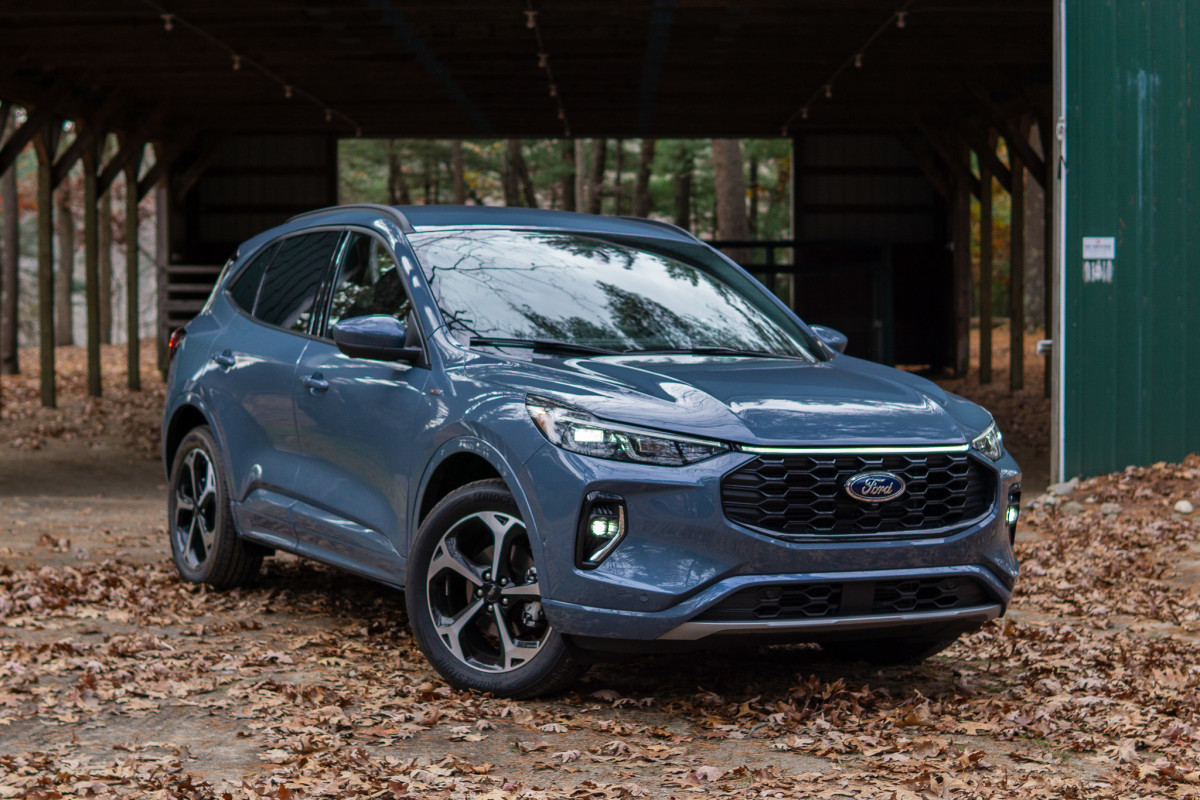
Ford’s older compact crossover looks ready to cede control to the Bronco Sport.
The Ford Escape holds a special place in crossover history as part of the vanguard that ushered in compact crossovers as a dominant segment of the automotive landscape. But now, more than two decades after its initial debut, the Escape looks like somewhat of an afterthought. While “Escape” may still be a household name, the emergence of the Ford Bronco Sport has relegated it to second-fiddle status. Regardless, the Escape still sells well in a competitive field, and its available up-powered engine gives it an advantage for shoppers who feel a need for extra passing speed.
Verdict: The 2023 Ford Escape offers an impressive array of safety and infotainment technology, and it’s available with a powerful engine upgrade, too. This handsome crossover should appeal to shoppers looking for an upscale design and a tech-forward approach. However, it may feel a bit cramped for some shoppers, and it’s priced on the higher end of the segment.

Modern crossover design has shifted away from smooth, sleek styling and toward a more rugged, boxy aesthetic. Ironically, this means that the first- and second-generation Escape adhere more closely to the modern zeitgeist than the 2023 model. Ford diverged from the old Escape’s blocky exterior and installed a much more European design language at the start of the Escape’s third generation. A 2023 refresh swapped out the previously cartoonish grille (which looked to us a bit like a smiling goldfish) and put in its place a more traditional front end, complete with the Ford blue oval logo mounted in the center of the grille, below a stylish LED light bar.
Shoppers can choose from an array of trim levels. Starting at the base trim, the ladder goes as follows: Active, ST-Line, ST-Line Select, Platinum, and ST-Line Elite. We tested a 2023 Ford Escape ST-Line Elite.
Even though the Escape doesn’t look like it’s ready to tackle the Rubicon Trail, it’s not an ugly SUV by any stretch. Our top-trim test vehicle wore 19-inch wheels and sported body-color mirror caps and wheel-arch cladding, eschewing tough plastic protection for a sleek design. If anything, the Escape looks more upscale than many of its competitors, similar to a Mazda CX-5.
Inside, our ST-Line Elite test car flaunted beautiful diamond-stitched leather upholstery that looked good but felt hard and plasticky. Devoid of the warmth and softness of top-tier leather, our test car’s interior at least looked and felt like it would hold up well over years of abuse. Admittedly, the seats themselves are very comfortable and softly padded. The Escape is a good car to drive for long periods, and our tester’s 10-way power adjustable driver’s seat was easy to dial in for our preferred position.
Beyond the Escape’s leather upholstery lies a sea of plastic. Some of it looks better than others–the center console, for instance, had a nice textured appearance–but most of it feels scratchy and poorly reinforced. Plastic is an unavoidable material in mass-market vehicles, but it feels overly cost-cutting in the Escape.

Ford differentiates the Escape from a relatively bland sea of competing crossovers by way of multiple powertrain options. In addition to the hybrid and plug-in hybrid models covered separately, the Escape can be equipped with one of two available engine options. The first, a 1.5-liter turbocharged three-cylinder, delivers 180 horsepower and 199 pound-feet of torque via an eight-speed automatic transmission. This potent little three-cylinder can be paired with either front-wheel drive (FWD) or all-wheel drive (AWD) and looks competitive (at least on paper) with most of the segment’s options.
The ST-Line Select, Platinum, and ST-Line Elite trim levels, on the other hand, carry a 2.0-liter turbocharged four-cylinder good for 250 horsepower and 280 pound-feet of torque. Employing the same eight-speed transmission but available exclusively with AWD, this iteration of the Escape is much more comfortable accelerating and in higher-speed passing and merging situations.
That said, despite the four-cylinder’s impressive output, at no point will shoppers confuse an Escape ST-Line Elite with a genuine performance crossover. The suspension remains soft and compliant, rather than firm and precise, and the transmission doesn’t demonstrate any real performance tuning. In fact, with no paddle shifters and an electronic rotary controller, there’s no way to force upshifts or downshifts in the Escape, even when driving in Sport mode.
Ford has done a nice job with the Escape’s brakes, which offer very predictable and linear stopping power. Further, the soft suspension might not be ready to take on a race track, but it was a blessing when driving on New England’s pothole-riddled streets. Finally, although a bit vague, the Escape’s steering inputs were well-weighted. Many competitors in the compact-crossover segment over-boost their electric steering systems to make their vehicles easy to maneuver at low speeds. This can result in twitchy steering inputs, but the Escape doesn’t suffer from this unpleasantness at all.

We found the Escape to be very comfortable, with soft and supportive seats and excellent ergonomics. The steering wheel, while a bit drab to look at, felt great to hold. The front-door armrests are well-positioned and sit at the same height as the center console's armrest, and the front-seat cupholders are conveniently arranged in tandem. Our test vehicle was equipped with a head-up display, which we found easy to adjust for drivers of different heights.
The Escape comes up short of its segment leaders in cargo space. With up to 37.5 cubic feet of storage behind the second row and 65.4 cubic feet with the second row folded, the Escape is close in size to the Chevrolet Equinox and Mazda CX-5. However, it can’t match the Honda CR-V, Hyundai Tucson, Nissan Rogue, or Toyota RAV4. You’ll likely find the Escape large enough for daily use, but it might feel a bit snug on move-in day.
Passenger space is a similar story, with the Escape offering slightly less rear-seat legroom than many of its competitors. However, we were impressed with the back seat’s headroom, and the Escape’s front-seat backs are softly padded and deeply scalloped, helping maximize space for tall passengers relegated to the back.

The Escape name may be old, but its technology is anything but. Equipped with Sync 4, the Ford Escape impresses with attractive and intuitive tech features. Lower-trim models come equipped with an 8-inch touchscreen infotainment display, but all trims can be equipped with a larger 13.2-inch screen (which is standard on the ST-Line Elite and Platinum).
The 13.2-inch screen dominates the interior, and it immediately upgrades the cabin’s look over the smaller 8-inch system. Sync 4 is well organized, too, with individual tiles for navigation, music, and Bluetooth pairing. We were pleased with how easy it was to navigate from Android Auto to the native navigation system–which looked good enough that we initially mistook it for Google Maps. Ford also includes a static “Home” button in the top-left corner, making it easy to jump from various applications like Apple CarPlay or Sirius XM Satellite Radio to the initial information hub.
We did find Sync 4 to be a bit slow to respond to inputs, and we got tired of reaching across the dash to turn the volume knob, which got pushed to the far-right side of the stack to make room for the car’s ignition button on the left side. However, these annoyances were incredibly minor, given the impressive feature set, layout, and ease of use of Sync 4.

The National Highway Traffic Safety Administration (NHTSA) awarded the 2023 Ford Escape an impressive five-star overall rating in its crash-test evaluation, with five stars in frontal- and side-crash tests and four stars in the rollover test. The Insurance Institute for Highway Safety, however, did not grant the Escape a Top Safety Pick or Top Safety Pick+ designation, noting that it received a score of Marginal in its updated side-impact test. Outside the side-impact test, the 2023 Escape received the top score of “Good” in all of the IIHS’ other tests.
Ford ships every 2023 Escape with its suite of advanced driver assistance systems (ADAS), branded Co-Pilot360. This collection of safety tech includes forward-collision warning with pedestrian detection, automatic emergency braking, lane-departure warning, lane-keeping assist, blind-spot monitoring, rear cross-traffic alert, and automatic high beams. It’s particularly nice to see blind-spot monitoring included as standard, as that remains an optional feature on many other compact crossovers.
Further, shoppers can upgrade their Escape with Co-Pilot360 2.0, a more advanced driver-assist system that adds adaptive cruise control, road sign recognition, and lane-centering technology to allow for a hands-on, semi-autonomous driving experience. Co-Pilot360 2.0 also includes a helpful surround-view camera view, which we found particularly useful when parallel parking.

The 2023 Ford Escape’s base trim starts at $28,000. Moving up the trim range, the Escape Active is priced from $29,345 and the ST-Line from $30,340. If you want the 2.0-liter engine, you’ll need the ST-Line Select, which starts at $33,540. The Platinum starts at $36,965, and our ST-Line Elite trim starts at $37,960. All prices are also subject to an additional $1,495 destination fee.
As tested, our ST-Line Elite rang in at just under $43,000. That’s a high price for a compact crossover, even in top trim. Yes, the 2.0-liter turbocharged four-cylinder gives the ST-Line Elite a powerful edge over many competitors, but it incurs higher running costs, too.
As rated by the EPA, fuel economy for the Escape ST-Line Elite measures 23 mpg city, 31 highway, 26 combined. Over 400 miles, we observed 27 mpg. Buying a 1.5-liter Escape will save you at the pump; FWD versions return 27 mpg city, 34 highway, 30 combined. However, if fuel costs are your primary concern, we recommend either the Escape Hybrid, which can do 39 mpg combined, or the Escape Plug-in Hybrid, which can travel 37 miles on electricity before returning 40 mpg combined from the hybrid gas engine.
The Escape has plenty of competition, and much of it offers similar features at lower prices. As such, it’s easy to envision a future without the Ford Escape–after all, Ford has a direct competitor in-house with the Bronco Sport. But for now, the Escape remains on sale as an attractive–if not rugged–option for shoppers who value powerful engines, great technology, and styling that shades more toward sophistication than sturdy.

User reviews for 2023 Ford Escape
Write a review2023 Ford Escape Pricing
Trims & specs
Air Conditioning
Single front air conditioning zones
Airbags
Dual front airbags · Driver knee airbags · Passenger airbag deactivation: occupant sensing deactivation · Front side airbags · Rear side curtain airbags
Audio System
Antenna Type: mast · Bluetooth auxiliary audio input · Pandora internet radio · Touch screen display radio · Total Number of Speakers: 6 · 80 watts
Brakes
ABS: 4-wheel · Braking assist: hill start assist · Electronic parking brake: auto off · Front brakes: ventilated disc · Rear brakes: disc
Comfort Features
Floor Mat Material: carpet · Floor Material: carpet · Floor Mats: front · Steering wheel trim: urethane
Convenience Features
Assist handle: front · Cargo area power outlet: 12V · Center console: front console with armrest and storage · Cupholders: rear · Multi-function remote: keyless entry · One-touch windows: 1 · Power outlet(s): USB cargo area · Power steering: electric · Power windows: lockout button · Reading lights: front · Rear power outlet: 12V · Steering wheel: tilt and telescopic · Steering wheel mounted controls: phone · Storage: door pockets · Vanity mirrors: dual
Driver Seat
Manual adjustments: 6
Drivetrain
Axle ratio: 3.81
Engine
Battery: maintenance-free
Exterior Features
Door handle color: black · Exhaust: dual exhaust tips · Exhaust tip color: chrome · Front bumper color: body-color · Grille color: black · Mirror color: black · Rear bumper color: black · Rear spoiler: roofline spoiler · Rear spoiler color: body-color · Rear trunk/liftgate: liftgate · Rocker panel color: black · Window trim: black
Headrests
Front headrests: adjustable · Number of front headrests: 2 · Number of rear headrests: 3
In Car Entertainment
Connected in-car apps: app marketplace integration · Infotainment: SYNC · Infotainment screen size: 8 in. · Smartphone integration: wireless Apple CarPlay
Instrumentation
Fuel economy display: range · Instrument cluster screen size: 8 in. · Warnings and reminders: maintenance reminder
Lights
Daytime running lights: LED · Exterior entry lights: security approach lamps · Headlights: auto delay off · Tail and brake lights: LED
Mirrors
Exterior mirrors: power · Inside rearview mirror: manual day/night
Passenger Seat
Manual Adjustments: 4
Rear Seats
Type: 60-40 split bench
Safety
Automatic emergency braking: front pedestrian · Camera system: rearview · Child seat anchors: LATCH system · Cross Traffic Alert: rear · Crumple zones: front · Impact sensor: door unlock · Pre-Collision Warning System: visual warning · Pre-collision warning system: pedestrian detection · Rearview monitor: in dash
Seatbelts
Emergency locking retractors: front · Front seatbelts: 3-point · Seatbelt force limiters: front · Seatbelt pretensioners: front · Seatbelt warning sensor: driver and passenger · Second row seatbelts: 3-point
Seats
Driver seat manual adjustments: height · Front seat type: bucket · Passenger seat manual adjustments: reclining · Rear headrests: adjustable · Rear seat folding: flat · Rear seat manual adjustments: reclining · Upholstery: cloth
Spare Tire
Mount Location: inside · Size: temporary
Spare Wheel
Rim Type: steel
Steering
Steering ratio: 15.1
Suspension
Front Arm Type: lower control arms · Front Shock Type: gas shock absorbers · Front Spring Type: coil springs · Front Stabilizer Bar: diameter 27 mm · Front Suspension Classification: independent · Front Suspension Type: MacPherson struts · Rear Shock Type: gas shock absorbers · Rear Spring Type: coil springs · Rear Stabilizer Bar: diameter 23 mm · Rear Suspension Classification: independent · Rear Suspension Type: multi-link
Telematics
Phone wireless data link: Bluetooth · Smart device app compatibility: FordPass Connect · Smart device app function: maintenance status · Wifi: hotspot
Tires
Type: all season
Tires and Rims
Wheels: steel
Wheels
Wheel covers: full
Windows
Front wipers: variable intermittent · Liftgate window: fixed · Rear wiper: intermittent
Air Conditioning
Automatic climate control front air conditioning · Dual front air conditioning zones
Airbags
Dual front airbags · Driver knee airbags · Passenger airbag deactivation: occupant sensing deactivation · Front side airbags · Rear side curtain airbags
Audio System
Antenna Type: diversity · USB auxiliary audio input · Pandora internet radio · AM/FM radio · Satellite Radio: SiriusXM · Total Number of Speakers: 6 · 80 watts
Brakes
ABS: 4-wheel · Braking assist: hill start assist · Electronic parking brake: auto off · Front brakes: ventilated disc · Rear brakes: disc
Comfort Features
Armrests: rear center with cupholders · Floor Mat Material: carpet · Floor Material: carpet · Floor Mats: front · Steering wheel trim: leatherette
Convenience Features
Assist handle: front · Cargo area power outlet: 12V · Center console: front console with armrest and storage · Cupholders: front · Multi-function remote: trunk release · One-touch windows: 1 · Power outlet(s): USB cargo area · Power steering: electric · Power windows: lockout button · Reading lights: rear · Steering wheel: tilt and telescopic · Steering wheel mounted controls: audio · Storage: door pockets · Vanity mirrors: dual illuminating
Driver Seat
Adjustable lumbar support: power · Power adjustments: 8
Drivetrain
Axle ratio: 3.81
Engine
Battery: maintenance-free
Exterior Features
Door handle color: body-color · Exhaust: dual exhaust tips · Exhaust tip color: chrome · Front bumper color: body-color · Grille color: black · Mirror color: black · Rear bumper color: black · Rear spoiler: roofline spoiler · Rear spoiler color: body-color · Rear trunk/liftgate: liftgate · Rocker panel color: black · Window trim: chrome
Headrests
Front headrests: adjustable · Number of front headrests: 2 · Number of rear headrests: 3
In Car Entertainment
Connected in-car apps: Google search · Infotainment: SYNC · Infotainment screen size: 8 in. · Smartphone integration: wireless Apple CarPlay
Instrumentation
Fuel economy display: MPG · Instrument cluster screen size: 8 in. · Warnings and reminders: low fuel level
Lights
Daytime running lights: LED · Exterior entry lights: security approach lamps · Headlights: automatic high beam dimmer · Tail and brake lights: LED
Mirrors
Exterior mirrors: power · Inside rearview mirror: manual day/night
Passenger Seat
Manual Adjustments: 4
Rear Seats
Type: 60-40 split bench
Safety
Automatic emergency braking: front pedestrian · Camera system: rearview · Child seat anchors: LATCH system · Cross Traffic Alert: rear · Crumple zones: front · Impact sensor: door unlock · Pre-Collision Warning System: visual warning · Pre-collision warning system: pedestrian detection · Rearview monitor: in dash
Seatbelts
Emergency locking retractors: front and rear · Front seatbelts: 3-point · Seatbelt force limiters: front · Seatbelt pretensioners: front · Seatbelt warning sensor: driver and passenger · Second row seatbelts: 3-point
Seats
Driver seat power adjustments: reclining · Front seat type: bucket · Passenger seat manual adjustments: reclining · Rear headrests: adjustable · Rear seat folding: split · Rear seat manual adjustments: reclining · Upholstery: cloth
Security
Power door locks: anti-lockout
Spare Tire
Mount Location: inside · Size: temporary
Spare Wheel
Rim Type: steel
Steering
Steering ratio: 15.1
Suspension
Front Arm Type: lower control arms · Front Shock Type: gas shock absorbers · Front Spring Type: coil springs · Front Stabilizer Bar: diameter 27 mm · Front Suspension Classification: independent · Front Suspension Type: MacPherson struts · Rear Shock Type: gas shock absorbers · Rear Spring Type: coil springs · Rear Stabilizer Bar: diameter 23 mm · Rear Suspension Classification: independent · Rear Suspension Type: multi-link
Telematics
Phone wireless data link: Bluetooth · Smart device app compatibility: FordPass Connect · Smart device app function: engine start · Wifi: hotspot
Tires
Type: all season
Tires and Rims
Wheels: painted aluminum
Windows
Front wipers: speed sensitive · Liftgate window: fixed · Rear wiper: intermittent
Air Conditioning
Single front air conditioning zones
Airbags
Dual front airbags · Driver knee airbags · Passenger airbag deactivation: occupant sensing deactivation · Front side airbags · Rear side curtain airbags
Audio System
Antenna Type: mast · USB auxiliary audio input · Pandora internet radio · AM/FM radio · Total Number of Speakers: 6 · 80 watts
Brakes
ABS: 4-wheel · Braking assist: hill start assist · Electronic parking brake: auto off · Front brakes: ventilated disc · Rear brakes: disc
Comfort Features
Floor Mat Material: carpet · Floor Material: carpet · Floor Mats: front · Steering wheel trim: urethane
Convenience Features
Assist handle: rear · Cargo area power outlet: 12V · Center console: front console with armrest and storage · Cupholders: front · Multi-function remote: keyless entry · One-touch windows: 1 · Power outlet(s): 12V front · Power steering: electric · Power windows: lockout button · Reading lights: front · Rear power outlet: 12V · Steering wheel: tilt and telescopic · Steering wheel mounted controls: cruise controls · Storage: accessory hook · Vanity mirrors: dual
Driver Seat
Manual adjustments: 6
Drivetrain
4WD Type: on demand · Axle ratio: 3.81
Engine
Battery: maintenance-free
Exterior Features
Door handle color: black · Exhaust: dual exhaust tips · Exhaust tip color: chrome · Front bumper color: body-color · Grille color: black · Mirror color: black · Rear bumper color: black · Rear spoiler: roofline spoiler · Rear spoiler color: body-color · Rear trunk/liftgate: liftgate · Rocker panel color: black · Window trim: black
Headrests
Front headrests: adjustable · Number of front headrests: 2 · Number of rear headrests: 3
In Car Entertainment
Connected in-car apps: app marketplace integration · Infotainment: SYNC · Infotainment screen size: 8 in. · Smartphone integration: wireless Apple CarPlay
Instrumentation
Fuel economy display: MPG · Instrument cluster screen size: 8 in. · Warnings and reminders: maintenance reminder
Lights
Daytime running lights: LED · Exterior entry lights: security approach lamps · Headlights: wiper activated · Tail and brake lights: LED
Mirrors
Exterior mirrors: manual folding · Inside rearview mirror: manual day/night
Passenger Seat
Manual Adjustments: 4
Rear Seats
Type: 60-40 split bench
Safety
Automatic emergency braking: front · Camera system: rearview · Child seat anchors: LATCH system · Cross Traffic Alert: rear · Crumple zones: front · Impact sensor: door unlock · Pre-Collision Warning System: visual warning · Pre-collision warning system: pedestrian detection · Rearview monitor: in dash
Seatbelts
Emergency locking retractors: front · Front seatbelts: 3-point · Seatbelt force limiters: front · Seatbelt pretensioners: front · Seatbelt warning sensor: driver and passenger · Second row seatbelts: 3-point
Seats
Driver seat manual adjustments: reclining · Front seat type: bucket · Passenger seat manual adjustments: reclining · Rear headrests: adjustable · Rear seat folding: flat · Rear seat manual adjustments: reclining · Upholstery: cloth
Spare Tire
Mount Location: inside · Size: temporary
Spare Wheel
Rim Type: steel
Steering
Steering ratio: 15.1
Suspension
Front Arm Type: lower control arms · Front Shock Type: gas shock absorbers · Front Spring Type: coil springs · Front Stabilizer Bar: diameter 27 mm · Front Suspension Classification: independent · Front Suspension Type: MacPherson struts · Rear Shock Type: gas shock absorbers · Rear Spring Type: coil springs · Rear Stabilizer Bar: diameter 23 mm · Rear Suspension Classification: independent · Rear Suspension Type: multi-link
Telematics
Phone wireless data link: Bluetooth · Smart device app compatibility: FordPass Connect · Smart device app function: vehicle location · Wifi: hotspot
Tires
Type: all season
Tires and Rims
Wheels: steel
Wheels
Wheel covers: full
Windows
Front wipers: speed sensitive · Liftgate window: fixed · Rear wiper: with washer
Air Conditioning
Automatic climate control front air conditioning · Dual front air conditioning zones
Airbags
Dual front airbags · Driver knee airbags · Passenger airbag deactivation: occupant sensing deactivation · Front side airbags · Front side curtain airbags
Audio System
Antenna Type: mast · Bluetooth auxiliary audio input · Pandora internet radio · Touch screen display radio · Satellite Radio: SiriusXM · Total Number of Speakers: 6 · 80 watts
Brakes
ABS: 4-wheel · Braking assist: hill start assist · Electronic parking brake: auto off · Front brakes: ventilated disc · Rear brakes: disc
Comfort Features
Armrests: rear center with cupholders · Floor Mat Material: carpet · Floor Material: carpet · Floor Mats: front · Foot pedal trim: alloy · Steering wheel trim: leatherette
Convenience Features
Assist handle: rear · Cargo area power outlet: 12V · Center console: front console with armrest and storage · Cupholders: rear · Multi-function remote: trunk release · One-touch windows: 1 · Power outlet(s): USB-C front · Power steering: electric · Power windows: lockout button · Reading lights: front · Steering wheel: tilt and telescopic · Steering wheel mounted controls: multi-function screen controls · Storage: accessory hook · Vanity mirrors: dual illuminating
Driver Seat
Adjustable lumbar support: power · Power adjustments: 8
Drivetrain
Axle ratio: 3.81
Engine
Battery: maintenance-free
Exterior Features
Door handle color: body-color · Exhaust: dual exhaust tips · Exhaust tip color: chrome · Front bumper color: body-color · Grille color: black · Mirror color: black · Rear bumper color: body-color · Rear spoiler: roofline spoiler · Rear spoiler color: body-color · Rear trunk/liftgate: liftgate · Rocker panel color: body-color · Skid plate(s): front and rear · Window trim: black
Headrests
Front headrests: adjustable · Number of front headrests: 2 · Number of rear headrests: 3
In Car Entertainment
Connected in-car apps: Google POIs · Infotainment: SYNC · Infotainment screen size: 8 in. · Smartphone integration: wireless Android Auto
Instrumentation
Fuel economy display: MPG · Instrument cluster screen size: 8 in. · Warnings and reminders: maintenance reminder
Lights
Daytime running lights: LED · Exterior entry lights: security approach lamps · Headlights: Auto on/off · Tail and brake lights: LED
Mirrors
Exterior mirrors: manual folding · Inside rearview mirror: manual day/night
Passenger Seat
Manual Adjustments: 4
Rear Seats
Type: 60-40 split bench
Roof
Roof rails: black
Safety
Automatic emergency braking: front pedestrian · Camera system: rearview · Child seat anchors: LATCH system · Cross Traffic Alert: rear · Crumple zones: front · Impact sensor: door unlock · Pre-Collision Warning System: audible warning · Pre-collision warning system: pedestrian detection · Rearview monitor: in dash
Seatbelts
Emergency locking retractors: front and rear · Front seatbelts: 3-point · Seatbelt force limiters: front · Seatbelt pretensioners: front · Seatbelt warning sensor: driver and passenger · Second row seatbelts: 3-point
Seats
Driver seat power adjustments: height · Front seat type: sport bucket · Passenger seat manual adjustments: reclining · Rear headrests: adjustable · Rear seat folding: flat · Rear seat manual adjustments: reclining · Upholstery: vinyl · Upholstery accents: cloth
Security
Power door locks: anti-lockout
Spare Tire
Mount Location: inside · Size: temporary
Spare Wheel
Rim Type: steel
Steering
Steering ratio: 15.1
Suspension
Front Arm Type: lower control arms · Front Shock Type: gas shock absorbers · Front Spring Type: coil springs · Front Stabilizer Bar: diameter 27 mm · Front Suspension Classification: independent · Front Suspension Type: MacPherson struts · Rear Shock Type: gas shock absorbers · Rear Spring Type: coil springs · Rear Stabilizer Bar: diameter 23 mm · Rear Suspension Classification: independent · Rear Suspension Type: multi-link
Telematics
Phone wireless data link: Bluetooth · Smart device app compatibility: FordPass Connect · Smart device app function: engine start · Wifi: hotspot
Tires
Type: all season
Tires and Rims
Wheels: painted aluminum
Windows
Front wipers: speed sensitive · Liftgate window: fixed · Rear wiper: intermittent
Air Conditioning
Automatic climate control front air conditioning · Dual front air conditioning zones
Airbags
Dual front airbags · Driver knee airbags · Passenger airbag deactivation: occupant sensing deactivation · Front side airbags · Front side curtain airbags
Audio System
Antenna Type: diversity · Bluetooth auxiliary audio input · Pandora internet radio · Touch screen display radio · Satellite Radio: SiriusXM · Total Number of Speakers: 6 · 80 watts
Brakes
ABS: 4-wheel · Braking assist: hill start assist · Electronic parking brake: auto off · Front brakes: ventilated disc · Rear brakes: disc
Comfort Features
Armrests: rear center with cupholders · Floor Mat Material: carpet · Floor Material: carpet · Floor Mats: front · Steering wheel trim: leatherette
Convenience Features
Assist handle: front · Cargo area power outlet: 12V · Center console: front console with armrest and storage · Cupholders: rear · Multi-function remote: proximity entry system · One-touch windows: 1 · Power outlet(s): USB-C rear · Power steering: speed-proportional · Power windows: lockout button · Reading lights: rear · Steering wheel: tilt and telescopic · Steering wheel mounted controls: audio · Storage: accessory hook · Vanity mirrors: dual illuminating
Driver Seat
Adjustable lumbar support: power · Power adjustments: 8
Drivetrain
4WD Type: on demand · Axle ratio: 3.81
Engine
Battery: maintenance-free
Exterior Features
Door handle color: body-color · Exhaust: dual exhaust tips · Exhaust tip color: chrome · Front bumper color: body-color · Grille color: black · Mirror color: black · Rear bumper color: black · Rear spoiler: roofline spoiler · Rear spoiler color: body-color · Rear trunk/liftgate: power operated · Rocker panel color: black · Window trim: chrome
Headrests
Front headrests: adjustable · Number of front headrests: 2 · Number of rear headrests: 3
In Car Entertainment
Connected in-car apps: app marketplace integration · Infotainment: SYNC · Infotainment screen size: 8 in. · Smartphone integration: wireless Apple CarPlay
Instrumentation
Fuel economy display: MPG · Instrument cluster screen size: 8 in. · Warnings and reminders: maintenance reminder
Lights
Daytime running lights: LED · Exterior entry lights: security approach lamps · Headlights: wiper activated · Tail and brake lights: LED
Mirrors
Exterior mirrors: heated · Inside rearview mirror: manual day/night
Passenger Seat
Manual Adjustments: 4
Rear Seats
Type: 60-40 split bench
Safety
Automatic emergency braking: rear · Camera system: rearview · Child seat anchors: LATCH system · Cross Traffic Alert: rear · Crumple zones: front · Impact sensor: post-collision safety system · Pre-Collision Warning System: audible warning · Pre-collision warning system: pedestrian detection · Rearview monitor: in dash
Seatbelts
Emergency locking retractors: front and rear · Front seatbelts: 3-point · Seatbelt force limiters: front · Seatbelt pretensioners: front · Seatbelt warning sensor: driver and passenger · Second row seatbelts: 3-point
Seats
Driver seat power adjustments: height · Front seat type: bucket · Passenger seat manual adjustments: reclining · Rear headrests: adjustable · Rear seat folding: split · Rear seat manual adjustments: reclining · Upholstery: cloth
Security
Power door locks: anti-lockout
Spare Tire
Mount Location: inside · Size: temporary
Spare Wheel
Rim Type: steel
Steering
Steering ratio: 15.1
Suspension
Front Arm Type: lower control arms · Front Shock Type: gas shock absorbers · Front Spring Type: coil springs · Front Stabilizer Bar: diameter 27 mm · Front Suspension Classification: independent · Front Suspension Type: MacPherson struts · Rear Shock Type: gas shock absorbers · Rear Spring Type: coil springs · Rear Stabilizer Bar: diameter 23 mm · Rear Suspension Classification: independent · Rear Suspension Type: multi-link
Telematics
Phone wireless data link: Bluetooth · Smart device app compatibility: FordPass Connect · Smart device app function: vehicle location · Wifi: hotspot
Tires
Type: all season
Tires and Rims
Wheels: painted aluminum
Windows
Front wipers: variable intermittent · Liftgate window: fixed · Rear wiper: with washer
Air Conditioning
Automatic climate control front air conditioning · Dual front air conditioning zones
Airbags
Dual front airbags · Driver knee airbags · Passenger airbag deactivation: occupant sensing deactivation · Front side airbags · Rear side curtain airbags
Audio System
Antenna Type: diversity · USB auxiliary audio input · Pandora internet radio · Touch screen display radio · Satellite Radio: SiriusXM · Total Number of Speakers: 6 · 80 watts
Brakes
ABS: 4-wheel · Braking assist: hill start assist · Electronic parking brake: auto off · Front brakes: ventilated disc · Rear brakes: disc
Comfort Features
Armrests: rear center with cupholders · Floor Mat Material: carpet · Floor Material: carpet · Floor Mats: front · Foot pedal trim: alloy · Steering wheel trim: leatherette
Convenience Features
Assist handle: front · Cargo area power outlet: 12V · Center console: front console with armrest and storage · Cupholders: rear · Multi-function remote: proximity entry system · One-touch windows: 1 · Power outlet(s): USB front · Power steering: speed-proportional · Power windows: lockout button · Reading lights: front · Steering wheel: tilt and telescopic · Steering wheel mounted controls: phone · Storage: cargo tie-down anchors and hooks · Vanity mirrors: dual illuminating
Driver Seat
Adjustable lumbar support: power · Power adjustments: 8
Drivetrain
4WD Type: on demand · Axle ratio: 3.81
Engine
Battery: maintenance-free
Exterior Features
Door handle color: body-color · Exhaust: dual exhaust tips · Exhaust tip color: chrome · Front bumper color: body-color · Grille color: chrome accents · Mirror color: black · Rear bumper color: body-color · Rear spoiler: roofline spoiler · Rear spoiler color: body-color · Rear trunk/liftgate: liftgate · Rocker panel color: body-color · Skid plate(s): front and rear · Window trim: black
Headrests
Front headrests: adjustable · Number of front headrests: 2 · Number of rear headrests: 3
In Car Entertainment
Connected in-car apps: app marketplace integration · Infotainment: SYNC · Infotainment screen size: 8 in. · Smartphone integration: wireless Apple CarPlay
Instrumentation
Fuel economy display: MPG · Instrument cluster screen size: 8 in. · Warnings and reminders: low fuel level
Lights
Daytime running lights: LED · Exterior entry lights: security approach lamps · Headlights: wiper activated · Tail and brake lights: LED
Mirrors
Exterior mirrors: manual folding · Inside rearview mirror: manual day/night
Passenger Seat
Manual Adjustments: 4
Rear Seats
Type: 60-40 split bench
Roof
Roof rails: black
Safety
Automatic emergency braking: front pedestrian · Camera system: rearview · Child seat anchors: LATCH system · Cross Traffic Alert: rear · Crumple zones: front · Impact sensor: door unlock · Pre-Collision Warning System: visual warning · Pre-collision warning system: pedestrian detection · Rearview monitor: in dash
Seatbelts
Emergency locking retractors: front · Front seatbelts: 3-point · Seatbelt force limiters: front · Seatbelt pretensioners: front · Seatbelt warning sensor: driver and passenger · Second row seatbelts: 3-point
Seats
Driver seat power adjustments: height · Front seat type: sport bucket · Passenger seat manual adjustments: reclining · Rear headrests: adjustable · Rear seat folding: flat · Rear seat manual adjustments: reclining · Upholstery: vinyl · Upholstery accents: cloth
Security
Power door locks: anti-lockout
Spare Tire
Mount Location: inside · Size: temporary
Spare Wheel
Rim Type: steel
Steering
Steering ratio: 15.1
Suspension
Front Arm Type: lower control arms · Front Shock Type: gas shock absorbers · Front Spring Type: coil springs · Front Stabilizer Bar: diameter 27 mm · Front Suspension Classification: independent · Front Suspension Type: MacPherson struts · Rear Shock Type: gas shock absorbers · Rear Spring Type: coil springs · Rear Stabilizer Bar: diameter 23 mm · Rear Suspension Classification: independent · Rear Suspension Type: multi-link
Telematics
Phone wireless data link: Bluetooth · Smart device app compatibility: FordPass Connect · Smart device app function: maintenance status · Wifi: hotspot
Tires
Type: all season
Tires and Rims
Wheels: painted aluminum
Windows
Front wipers: speed sensitive · Liftgate window: fixed · Rear wiper: with washer
Air Conditioning
Automatic climate control front air conditioning · Dual front air conditioning zones
Airbags
Dual front airbags · Driver knee airbags · Passenger airbag deactivation: occupant sensing deactivation · Front side airbags · Front side curtain airbags
Audio System
Antenna Type: mast · Bluetooth auxiliary audio input · Pandora internet radio · AM/FM radio · Satellite Radio: SiriusXM · Total Number of Speakers: 6 · 80 watts
Brakes
ABS: 4-wheel · Braking assist: hill start assist · Electronic parking brake: auto off · Front brakes: ventilated disc · Rear brakes: disc
Comfort Features
Armrests: rear center with cupholders · Floor Mat Material: carpet · Floor Material: carpet · Floor Mats: front · Foot pedal trim: alloy · Steering wheel trim: leatherette
Convenience Features
Assist handle: rear · Cargo area power outlet: 12V · Center console: front console with armrest and storage · Cupholders: front · Multi-function remote: trunk release · One-touch windows: 4 · Power outlet(s): USB-C front · Power steering: electric · Power windows: lockout button · Reading lights: rear · Steering wheel: tilt and telescopic · Steering wheel mounted controls: audio · Storage: front seatback · Vanity mirrors: dual illuminating
Driver Seat
Adjustable lumbar support: power · Power adjustments: 8
Drivetrain
4WD Type: on demand · Axle ratio: 3.47
Engine
Battery: maintenance-free
Exterior Features
Door handle color: body-color · Exhaust: dual exhaust tips · Exhaust tip color: chrome · Front bumper color: body-color · Grille color: black · Mirror color: body-color · Rear bumper color: body-color · Rear spoiler: roofline spoiler · Rear spoiler color: body-color · Rear trunk/liftgate: power operated · Rocker panel color: body-color · Skid plate(s): front and rear · Window trim: black
Headrests
Front headrests: adjustable · Number of front headrests: 2 · Number of rear headrests: 3
In Car Entertainment
Connected in-car apps: app marketplace integration · Infotainment: SYNC · Infotainment screen size: 8 in. · Smartphone integration: wireless Android Auto
Instrumentation
Fuel economy display: range · Instrument cluster screen size: 8 in. · Warnings and reminders: low fuel level
Lights
Daytime running lights: LED · Exterior entry lights: security approach lamps · Front fog lights: LED · Headlights: automatic high beam dimmer · Tail and brake lights: LED
Mirrors
Exterior mirrors: manual folding · Inside rearview mirror: manual day/night
Passenger Seat
Manual Adjustments: 4
Rear Seats
Type: 60-40 split bench
Roof
Roof rails: black
Safety
Automatic emergency braking: front pedestrian · Camera system: rearview · Child seat anchors: LATCH system · Cross Traffic Alert: rear · Crumple zones: front · Impact sensor: post-collision safety system · Pre-Collision Warning System: visual warning · Pre-collision warning system: pedestrian detection · Rearview monitor: in dash
Seatbelts
Emergency locking retractors: front and rear · Front seatbelts: 3-point · Seatbelt force limiters: front · Seatbelt pretensioners: front · Seatbelt warning sensor: driver and passenger · Second row seatbelts: 3-point
Seats
Driver seat power adjustments: height · Front seat type: sport bucket · Passenger seat manual adjustments: reclining · Rear headrests: adjustable · Rear seat folding: flat · Rear seat manual adjustments: reclining · Upholstery: contrast stitching · Upholstery accents: cloth
Security
Power door locks: anti-lockout
Spare Tire
Mount Location: inside · Size: temporary
Spare Wheel
Rim Type: steel
Steering
Steering ratio: 15.1
Suspension
Front Arm Type: lower control arms · Front Shock Type: gas shock absorbers · Front Spring Type: coil springs · Front Stabilizer Bar: diameter 27 mm · Front Suspension Classification: independent · Front Suspension Type: MacPherson struts · Rear Shock Type: gas shock absorbers · Rear Spring Type: coil springs · Rear Stabilizer Bar: diameter 23 mm · Rear Suspension Classification: independent · Rear Suspension Type: multi-link
Telematics
Phone wireless data link: Bluetooth · Smart device app compatibility: FordPass Connect · Smart device app function: lock operation · Wifi: hotspot
Tires
Type: all season
Tires and Rims
Wheels: painted aluminum
Windows
Front wipers: variable intermittent · Liftgate window: fixed · Power windows: with safety reverse · Rear wiper: intermittent
Air Conditioning
Automatic climate control front air conditioning · Dual front air conditioning zones
Airbags
Dual front airbags · Driver knee airbags · Passenger airbag deactivation: occupant sensing deactivation · Front side airbags · Rear side curtain airbags
Audio System
Antenna Type: mast · Voice recognition audio system · USB auxiliary audio input · Pandora internet radio · AM/FM radio · Satellite Radio: SiriusXM · Total Number of Speakers: 6 · 80 watts
Brakes
ABS: 4-wheel · Braking assist: hill start assist · Electronic parking brake: auto off · Front brakes: ventilated disc · Rear brakes: disc
Comfort Features
Armrests: rear center with cupholders · Floor Mat Material: carpet · Floor Material: carpet · Floor Mats: front · Steering wheel trim: leatherette
Convenience Features
Adaptive stop and go cruise control: semi-automatic · Ambient lighting: color-adjustable · Assist handle: front · Autonomous lane guidance: lane centering · Cargo area power outlet: 12V · Center console: front console with armrest and storage · Cruise control: adaptive · Cupholders: front · Dimming rearview mirror: auto-dimming · Footwell lights: color-adjustable · Keyless entry: keypad · Memorized settings: driver seat · Multi-function remote: proximity entry system · One-touch windows: 4 · Power outlet(s): 12V front · Power steering: speed-proportional · Power windows: lockout button · Reading lights: rear · Steering wheel: tilt and telescopic · Steering wheel mounted controls: audio · Storage: accessory hook · Universal garage door opener: Homelink · Vanity mirrors: dual illuminating
Driver Seat
Adjustable lumbar support: power · Power adjustments: 10
Drivetrain
4WD Type: on demand · Axle ratio: 3.47
Engine
Battery: maintenance-free
Exterior Features
Door handle color: body-color · Exhaust: dual exhaust tips · Exhaust tip color: chrome · Front bumper color: body-color · Grille color: chrome accents · Mirror color: body-color · Rear bumper color: black · Rear spoiler: roofline spoiler · Rear spoiler color: body-color · Rear trunk/liftgate: power operated · Rocker panel color: black · Window trim: chrome
Headrests
Front headrests: adjustable · Number of front headrests: 2 · Number of rear headrests: 3
In Car Entertainment
Connected in-car apps: Google POIs · Infotainment: SYNC · Infotainment screen size: 13.2 in. · Smartphone integration: wireless Android Auto
Instrumentation
Fuel economy display: MPG · Instrument cluster screen size: 12.3 in. · Warnings and reminders: low fuel level
Lights
Daytime running lights: LED · Exterior entry lights: security approach lamps · Front fog lights: LED · Headlights: auto delay off · Tail and brake lights: LED
Mirrors
Exterior mirrors: power
Passenger Seat
Power adjustments: 6
Rear Seats
Type: 60-40 split bench
Roof
Roof rails: black
Safety
Automatic emergency braking: intersection/junction turn · Camera system: surround view · Child seat anchors: LATCH system · Cross Traffic Alert: rear · Crumple zones: front · Impact sensor: door unlock · Parking sensors: rear · Pre-Collision Warning System: audible warning · Pre-collision warning system: pedestrian detection · Rearview monitor: in dash · Traffic sign recognition: adaptive speed limiting
Seatbelts
Emergency locking retractors: front and rear · Front seatbelts: 3-point · Seatbelt force limiters: front · Seatbelt pretensioners: front · Seatbelt warning sensor: driver and passenger · Second row seatbelts: 3-point
Seats
Driver seat power adjustments: reclining · Front seat type: sport bucket · Passenger seat power adjustments: height · Rear headrests: adjustable · Rear seat folding: split · Rear seat manual adjustments: reclining · Upholstery: leatherette
Security
Power door locks: anti-lockout
Spare Tire
Mount Location: inside · Size: temporary
Spare Wheel
Rim Type: steel
Steering
Steering ratio: 15.1
Suspension
Front Arm Type: lower control arms · Front Shock Type: gas shock absorbers · Front Spring Type: coil springs · Front Stabilizer Bar: diameter 27 mm · Front Suspension Classification: independent · Front Suspension Type: MacPherson struts · Rear Shock Type: gas shock absorbers · Rear Spring Type: coil springs · Rear Stabilizer Bar: diameter 23 mm · Rear Suspension Classification: independent · Rear Suspension Type: multi-link
Telematics
Electronic messaging assistance: with read function · Navigation system: touch screen display · Phone: voice activated · Phone wireless data link: Bluetooth · Smart device app compatibility: FordPass Connect · Smart device app function: vehicle location · Wifi: hotspot
Tires
Type: all season
Tires and Rims
Wheels: painted aluminum
Windows
Front wipers: rain sensing · Liftgate window: fixed · Power windows: with safety reverse · Rear wiper: with washer
Air Conditioning
Automatic climate control front air conditioning · Dual front air conditioning zones
Airbags
Dual front airbags · Driver knee airbags · Passenger airbag deactivation: occupant sensing deactivation · Front side airbags · Rear side curtain airbags
Audio System
Antenna Type: diversity · Voice recognition audio system · Bluetooth auxiliary audio input · Pandora internet radio · AM/FM radio · Satellite Radio: SiriusXM · Total Number of Speakers: 6 · 80 watts
Brakes
ABS: 4-wheel · Braking assist: hill start assist · Electronic parking brake: auto off · Front brakes: ventilated disc · Rear brakes: disc
Comfort Features
Armrests: rear center with cupholders · Floor Mat Material: carpet · Floor Material: carpet · Floor Mats: front · Foot pedal trim: alloy · Steering wheel trim: leatherette
Convenience Features
Adaptive stop and go cruise control: semi-automatic · Ambient lighting: color-adjustable · Assist handle: rear · Autonomous lane guidance: lane centering · Cargo area power outlet: 12V · Center console: front console with armrest and storage · Cruise control: adaptive · Cupholders: front · Dimming rearview mirror: auto-dimming · Footwell lights: color-adjustable · Keyless entry: keypad · Memorized settings: 3 driver · Multi-function remote: trunk release · One-touch windows: 4 · Power outlet(s): 12V front · Power steering: electric · Power windows: lockout button · Reading lights: rear · Steering wheel: tilt and telescopic · Steering wheel mounted controls: cruise controls · Storage: accessory hook · Universal garage door opener: Homelink · Vanity mirrors: dual illuminating
Driver Seat
Adjustable lumbar support: power · Power adjustments: 10
Drivetrain
4WD Type: on demand · Axle ratio: 3.47
Engine
Battery: maintenance-free
Exterior Features
Door handle color: body-color · Exhaust: dual exhaust tips · Exhaust tip color: chrome · Front bumper color: body-color · Grille color: black · Mirror color: body-color · Rear bumper color: body-color · Rear spoiler: roofline spoiler · Rear spoiler color: body-color · Rear trunk/liftgate: power operated · Rocker panel color: body-color · Skid plate(s): front and rear · Window trim: black
Headrests
Front headrests: adjustable · Number of front headrests: 2 · Number of rear headrests: 3
In Car Entertainment
Connected in-car apps: app marketplace integration · Infotainment: SYNC · Infotainment screen size: 13.2 in. · Smartphone integration: wireless Apple CarPlay
Instrumentation
Fuel economy display: MPG · Instrument cluster screen size: 12.3 in. · Warnings and reminders: maintenance reminder
Lights
Daytime running lights: LED · Exterior entry lights: security approach lamps · Front fog lights: LED · Headlights: auto delay off · Tail and brake lights: LED
Mirrors
Exterior mirrors: power
Passenger Seat
Power adjustments: 6
Rear Seats
Type: 60-40 split bench
Roof
Roof rails: black
Safety
Automatic emergency braking: rear · Camera system: surround view · Child seat anchors: LATCH system · Cross Traffic Alert: rear · Crumple zones: front · Impact sensor: door unlock · Parking sensors: rear · Pre-Collision Warning System: audible warning · Pre-collision warning system: pedestrian detection · Rearview monitor: in dash · Traffic sign recognition: adaptive speed limiting
Seatbelts
Emergency locking retractors: front · Front seatbelts: 3-point · Seatbelt force limiters: front · Seatbelt pretensioners: front · Seatbelt warning sensor: driver and passenger · Second row seatbelts: 3-point
Seats
Driver seat power adjustments: reclining · Front seat type: sport bucket · Passenger seat power adjustments: reclining · Rear headrests: adjustable · Rear seat folding: split · Rear seat manual adjustments: reclining · Upholstery: vinyl · Upholstery accents: cloth
Security
Power door locks: anti-lockout
Spare Tire
Mount Location: inside · Size: temporary
Spare Wheel
Rim Type: steel
Steering
Steering ratio: 15.1
Suspension
Front Arm Type: lower control arms · Front Shock Type: gas shock absorbers · Front Spring Type: coil springs · Front Stabilizer Bar: diameter 27 mm · Front Suspension Classification: independent · Front Suspension Type: MacPherson struts · Rear Shock Type: gas shock absorbers · Rear Spring Type: coil springs · Rear Stabilizer Bar: diameter 23 mm · Rear Suspension Classification: independent · Rear Suspension Type: multi-link
Telematics
Electronic messaging assistance: with read function · Navigation system: touch screen display · Phone: voice activated · Phone wireless data link: Bluetooth · Smart device app compatibility: FordPass Connect · Smart device app function: engine start · Wifi: hotspot
Tires
Type: all season
Tires and Rims
Wheels: painted aluminum
Windows
Front wipers: variable intermittent · Liftgate window: fixed · Power windows: with safety reverse · Rear wiper: intermittent

