2022 Toyota Supra Reviews, Pricing & Specs

Pros & cons
What we like
Fun to drive
Great handling
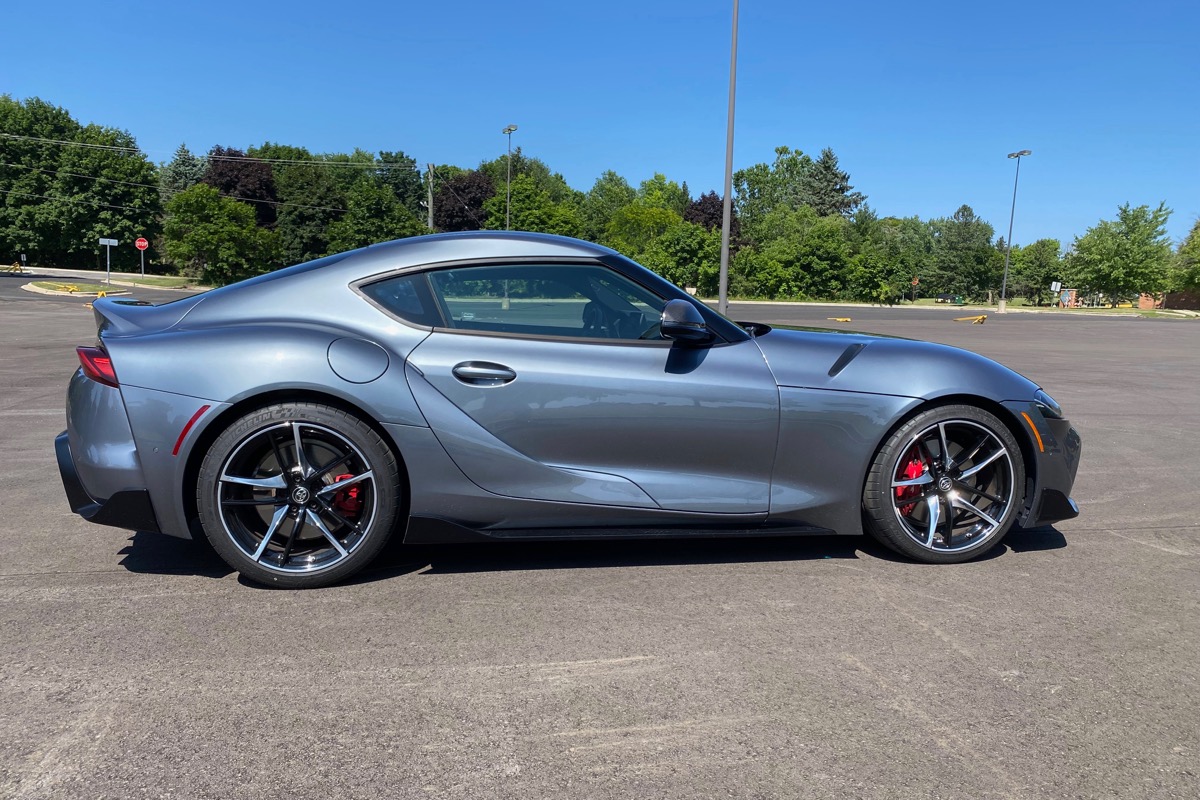
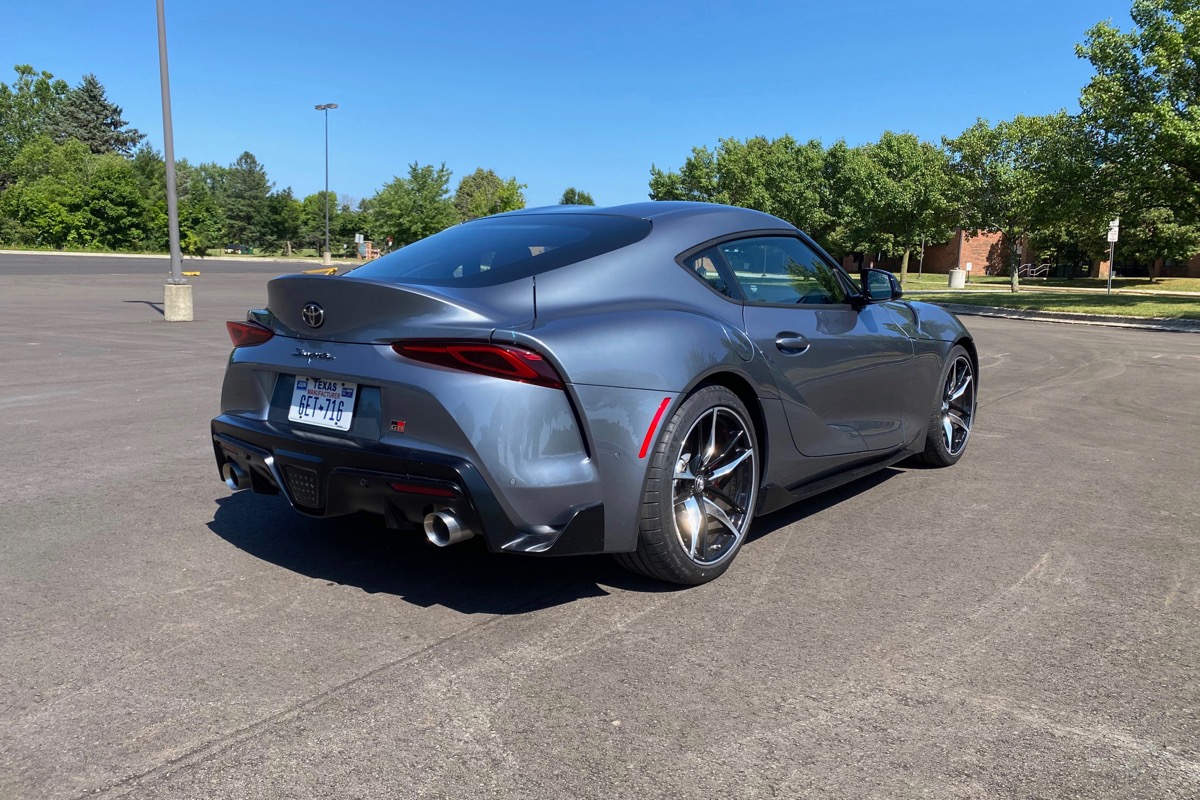
Stylish design
What to consider
Manual transmission not available
All-wheel drive not available
Small touchscreen
Expert review
The 2022 Toyota GR Supra keeps the performance flag flying at Toyota.
The Toyota sports coupe is back, and it's spitting fire. The 2022 Toyota GR Supra has a turbocharged 2.0-liter four-cylinder gasoline engine or a 3.0-liter turbocharged inline-six. Each engine comes with rear-wheel drive (RWD) and an eight-speed automatic transmission. The Supra starts at $43,540.
out of 10 expert review
Look & feel
The original Toyota Supra was a six-cylinder Celica variant birthed in 1979. The Supra evolved over the next two decades, putting out more horsepower and gaining a turbocharger option in 1987. Until Toyota pulled it from the United States market after the 1998 model year, the Supra was known for its exciting acceleration and outstanding handling.
Unfortunately, sales flagged, and Toyota focused more energy on mass-market vehicles like the Prius and RAV4. But the faithful never forgot the Supra, in part thanks to its appearance in "The Fast and the Furious" and in several video games. Toyota CEO Akio Toyoda is a Supra fan, too. He ultimately instigated its revival through Toyota’s Gazoo Racing division, hence the “GR” prefix. The GR Supra debuted at the 2019 North American International Auto Show in Detroit and went on sale as a 2020 model, giving Toyota a second RWD coupe alongside the GR 86.
Like the GR 86, which was co-developed with Subaru, Toyota recruited a partner for the new Supra. This time, it teamed up with BMW for development. The Supra shares a platform with the BMW Z4, along with powertrains, suspension, and other components. But the Supra is available only as a coupe, while the Z4 is sold only as a convertible. Unlike the GR 86 and its Subaru BRZ twin, the Supra and Z4 also have very different styling. And the BMW and Toyota engineering teams tuned each model separately to further differentiate them.
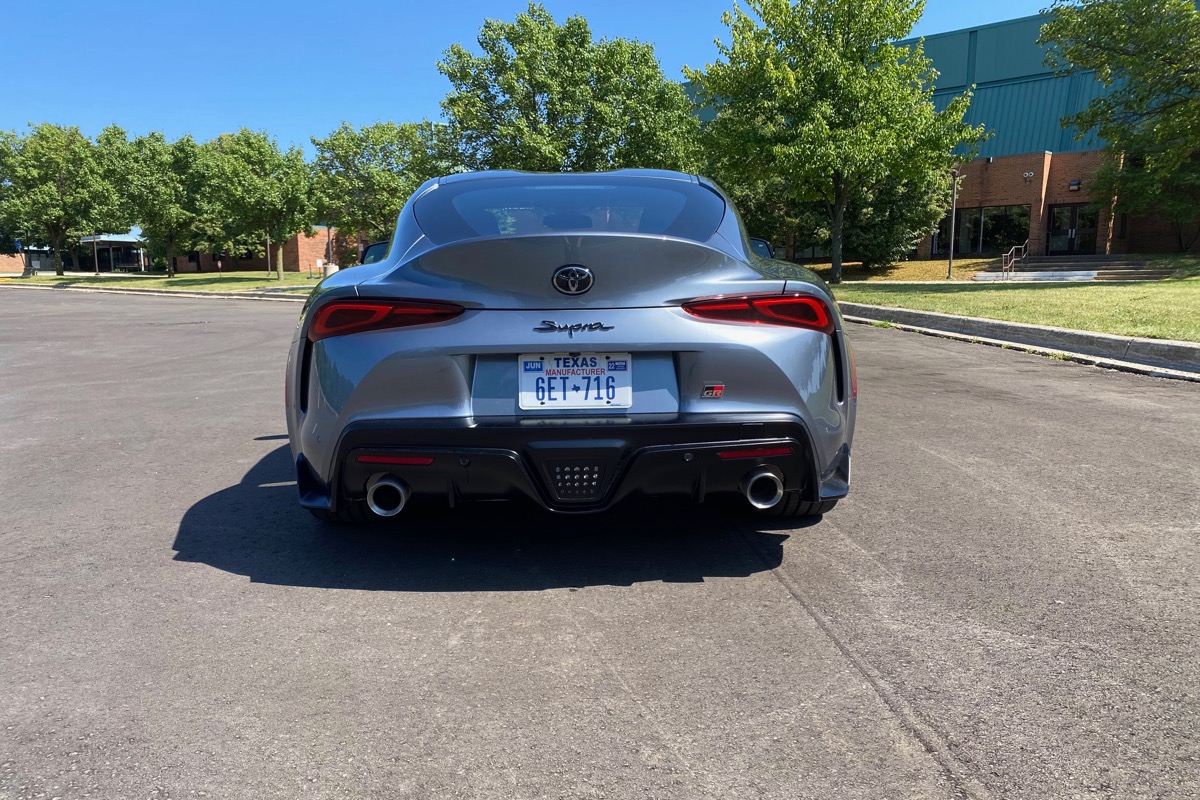
Sports car styling is always subjective, even more than other vehicle types. The Supra has excellent proportions, with a long hood, a low-slung body, and assertive cutouts. It looks fast standing still, and wears its Toyota logo proudly. The Supra will get attention at every gas station and in every parking lot. It's not so familiar to the public yet, so it draws the curious like it's drenched in pheromones. It's approachable, though, not intimidating like an exotic or supercar. People can see themselves driving a Supra, which makes it even more attractive.
Performance
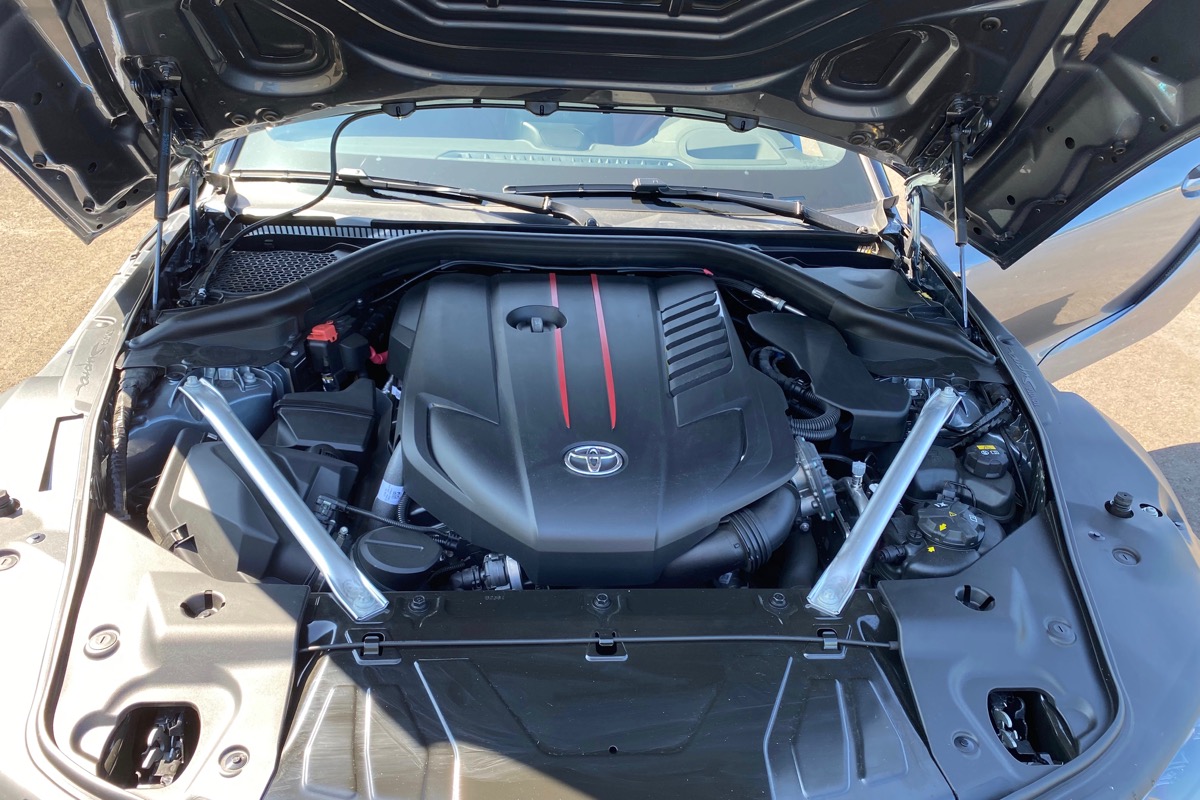
The base Supra 2.0 comes with a turbocharged 2.0-liter four-cylinder engine tuned to produce 255 horsepower and 295 pound-feet of torque. The Supra 3.0, 3.0 Premium, and A91-CF Edition models get a turbocharged 3.0-liter inline six-cylinder (very BMW-esque) tuned to produce 382 hp and 368 lb-ft of torque.
An eight-speed automatic transmission and RWD gets the power to the road on all models. You'll have to be satisfied (for now) with paddle shifters and two pedals, as no manual transmission is available for 2022. But Toyota has announced a six-speed manual transmission will be available on six-cylinder Supra models for 2023.
The four-cylinder Supra 2.0 gets EPA-rated fuel economy of 25 mpg city/32 mpg highway/28 mpg combined, while six-cylinder models come in at 22 mpg city/30 mpg highway, 25 mpg combined. Both engines require premium fuel.
The classic Supra was praised more for its handling and suspension, so the new GR Supra has much to live up to in that department. Up front, it uses MacPherson struts with double-joints. In the rear, a five-arm multi-link takes care of the bumps. Stabilizer bars are standard front and rear (23.5 mm front/18.0 mm rear). The power steering is electric with an overall ratio of 15.1 and a turning circle diameter of 34.1 feet. Staggered wheels (18 x 9 front/18 x 10 rear on the 2.0, 19 x 9.0 front/19 x 10 rear) get wrapped with Michelin Pilot Super Sport rubber, a premium tire choice.
In the braking department, the 2.0 model gets 13.0-inch ventilated discs front and rear with single-piston floating calipers. In contrast, the 3.0 models get 13.7-inch ventilated discs with Brembo four-piston fixed calipers in front and 13.6-inch or 13.0-inch ventilated discs in the rear with a single piston floating caliper. The parking brake is electric, so handbrake shenanigans are off the table.
The numbers tell only part of the story here. The GR Supra's strength is how they combine to create a beautifully balanced, fun-to-drive car. Weighing in at 3,181 pounds, the four-cylinder version is powerful enough. But the six-cylinder 3.0 versions better fulfill the sports-car fantasy. At 3,400 pounds, the Supra 3.0 is no featherweight, but Toyota claims a 0-60 time of 3.9 seconds for the six-cylinder, significantly faster than the 2.0's 5.0-second time. The top speed for both powertrains is electronically limited to 155 mph.
Our test car was a Supra 3.0 Premium, and spending a week behind the wheel on public roads was an exercise in self-control. The Supra wants hard driving. It responds to a heavy throttle foot with an angry growl and immediate acceleration—one place the BMW DNA comes out in force. Throw this Supra into a curve, and it sticks like glue. This car is so capable it would be a disservice to own one and not take it to a few track days, just for the chance to safely explore its limits—which you'll never approach legally otherwise.
Despite the Supra's enticing capability, it is quite comfortable and makes an excellent daily-driving companion. While many enthusiasts have complained about the missing manual transmission (which is being remedied for 2023), the eight-speed automatic is smooth when cruising and shifts assertively and quickly when prodded into action.
Form & function
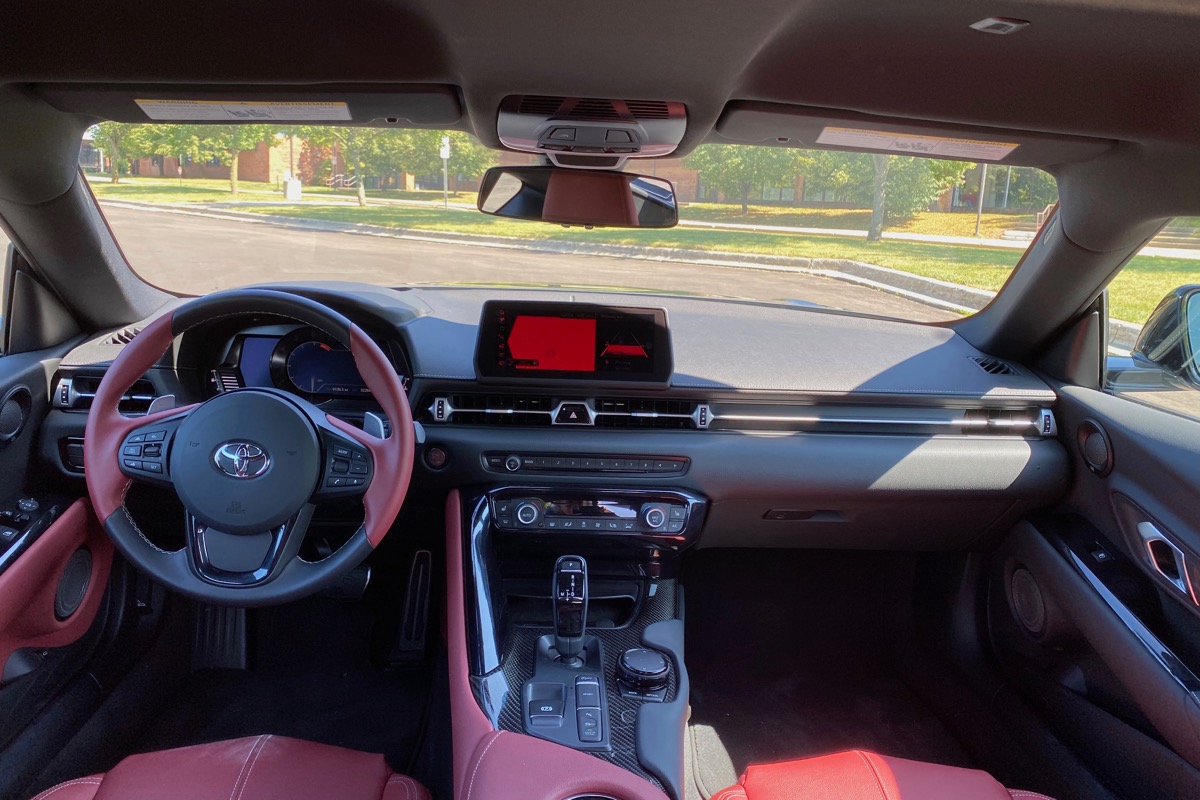
Sport coupes aren't noted for their functionality, but Toyota hasn't ignored the daily drivers. The GR Supra has a roomy cabin, despite its two-passenger capacity. Unlike some other "driver's cars," the Supra is easy to get in and out of and has ample legroom, head clearance, and hip space. The cabin is driver-oriented, but amenities like dual cupholders in the center console, bottle holders in the doors, a big locking glove compartment, and storage under the center armrest make the space welcoming and useful.
The Supra's fastback design means it has a rear hatch instead of a trunk. The hatchback reveals 10.2 cubic feet of luggage space, with a removable cover allowing occasional overstuffing. The cargo area is open to the passenger cabin, so a long item like a snowboard could fit in. A small to medium dog could even travel in the Supra if the luggage cover were out of the way.
The Supra is about driving, though, not hauling groceries, luggage, or even dogs (sorry, pups). The car's seats deliver all-day comfort with great adjustability (eight-way manual on the 2.0, 14-way power on the 3.0 and above), and upper trim levels come with seat heating. Tilt and telescopic reach are manually adjustable for the steering wheel. Finding your best driving position is easily accomplished.
Technology
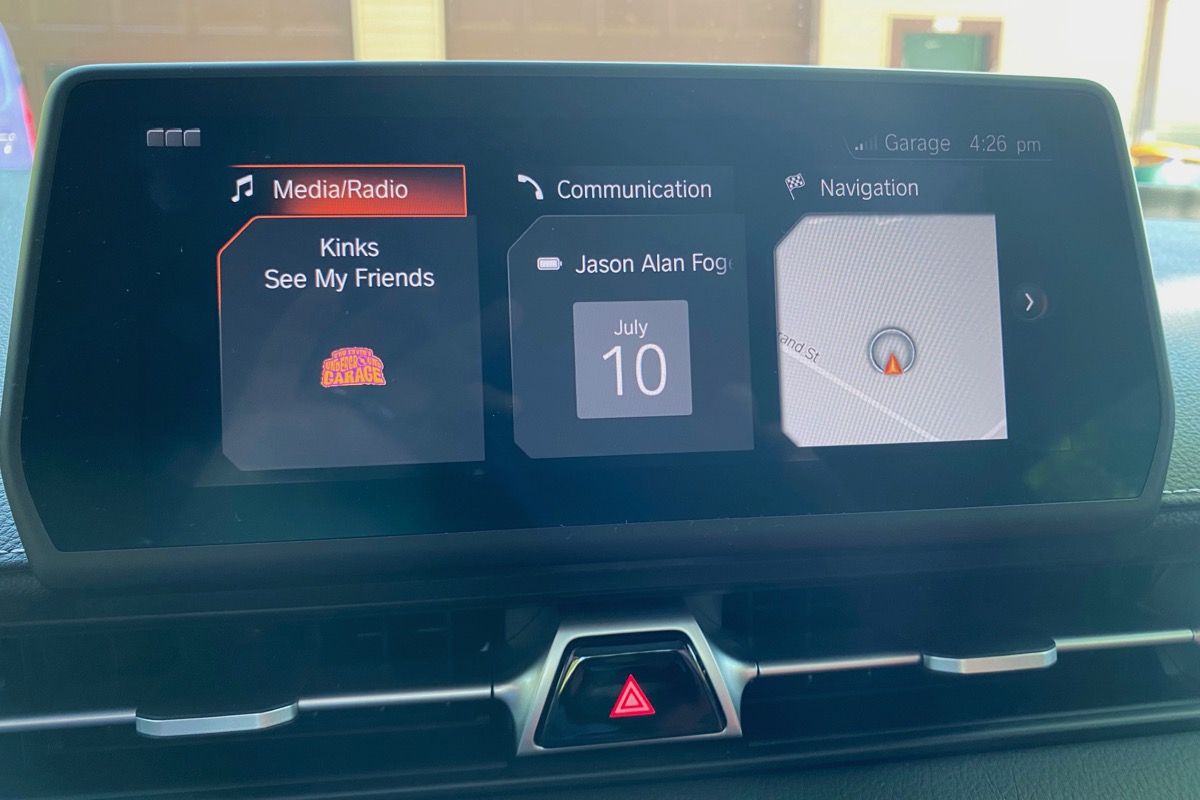
The Supra 2.0's base sound system comes with four speakers and an 8.8-inch display screen with AM/FM, digital audio, satellite radio, USB and Bluetooth connectivity. The 3.0 model upgrades to a 10-speaker, 250-watt sound system with the same display screen interface.
The 3.0 Premium and A91-CF Editions have a standard 12-speaker JBL surround-sound audio system with 500 watts of power. In place of the display screen, Toyota fits an 8.8-inch touchscreen with navigation, wireless Apple CarPlay, and voice recognition in addition to the base system's features. You can add this system to a 2.0 or 3.0 model as part of the $3,155 Safety and Technology Package.
Perhaps we've grown jaded by big touchscreen displays, but the Supra's landscape-oriented setup induced frustration, especially when using the native navigation function. Once the system applied split-screen and automatic zooming functions, following our vehicle's progress on the display was quite challenging. Using Apple CarPlay with our iPhone 11 Pro remedied this somewhat, but the screen still felt too small. Also, you can't get Apple CarPlay on the base system in the 2.0 or 3.0 unless you bite on the $3,000 upgrade, in which case you'd be upgrading just not to use the navigation. Help, aftermarket!
The 3.0 Premium model comes with a full-color head-up display, one of our favorite features for safer and more convenient driving. Unfortunately, it's not available in any of the other trim levels.
Safety
Driving a coupe in an SUV and pickup truck-dominated country is a managed risk. No matter how much safety equipment the Supra has, the laws of physics are against it in a collision with a vehicle twice its size and weight. That doesn't mean you should avoid all coupes and small cars or that safety equipment and technology don't matter. It means you need to be extra cautious about where, when, and how you drive a Supra. The National Highway Transportation Safety Administration (NHTSA) and the Insurance Institute for Highway Safety (IIHS) haven’t published crash-test ratings for the Supra, however, so we’re just speculating on how it would perform in a crash.
Toyota does its best on standard safety features for the Supra. Each model and trim level includes front, side, knee, and curtain airbags, a forward collision warning and automatic emergency braking with pedestrian detection, lane departure warning with steering assist, and automatic high beams.
A Driver Assist Package ($1,195) for the 3.0 Premium and A91-CF Edition models adds adaptive cruise control, blind-spot monitoring, rear cross-traffic alert, and parking sensors with emergency braking function. You can add the same features to other models, but only as part of a more extensive (and more expensive) Safety and Technology Package bundling driver assists with premium audio, navigation, connected services, and other features.
Sports car enthusiasts might assert that a small, nimble car has a better chance of avoiding a collision in the first place—especially in the hands of a skilled driver. In some situations, the enthusiasts are right. Not only that, the Supra's excellent handling can make a good driver better. But all drivers should be concerned about those unavoidable, unpredictable scenarios we all encounter on the road.
Cost-effectiveness
As mentioned above, the 2022 Toyota GR Supra is available in four trim levels. The base four-cylinder 2.0 model starts at $43,540, and then there’s a fairly large gap to the six-cylinder Supra 3.0’s $51,890 starting price. From there, the 3.0 Premium starts at $55,040 and the A91-CF Edition sits atop the range at $63,280.
The A91-CF Edition is a limited-production model named after the internal Toyota chassis designation for the GR Supra (A91) and the model's carbon fiber (CF) body parts. The factory will only produce 600 units, all exclusively destined for North America.
The only available packages are the above-mentioned Driver Assist Package for the 3.0 Premium and A91-CF and Safety and Technology Package for the 2.0 and 3.0 models. Toyota also offers a handful of Supra accessories, though not the endless catalog you can find for other models like the 4Runner.
We feel the sweet spot in the lineup is the 3.0 Premium with the Driver Assist Package, coming in at $56,235. We drove a similarly equipped car, although some accessories brought the as-tested price to $57,915.
The Supra's list of competitors is short but significant. It includes the co-developed BMW Z4 (starting at $51,500) and the Mazda MX-5 Miata (starting at $27,650)—both convertible roadsters—along with the Subaru BRZ (starting at $28,595) and Toyota GR 86 (starting at $27,900) coupes. Stretching in the other direction, the Jaguar F-Type starts at $73,400 in hardtop coupe form, and the Porsche 718 Cayman starts at $63,400. Perhaps the Supra's most direct competitor, the 2023 Nissan Z begins at $39,990.
As a sports coupe, shoppers will measure the Supra by a different standard than an ordinary sedan, pickup, or SUV. Because of its comparatively limited production numbers, the Supra might be a candidate as an investment vehicle. It's too early to know for sure, but 2020 and newer models seem to be holding their value well. It's also a bit early to predict long-term reliability, as we'd usually do with a Toyota model. The Supra's powertrain relies heavily on BMW engineering and will require BMW levels of maintenance and repair, which could be pricier than the average Toyota budget.
It's hard to put a price on fun, though. The 2022 Toyota GR Supra will deliver that feature in abundance and, for many drivers, it may be the deciding factor.

What owners say
"Overall, owners of the 2022 Toyota Supra are really impressed with its performance and handling, often highlighting the car's power and fun driving experience. Many appreciate the sporty feel and stylish interior. However, some drivers mentioned concerns about the dealer markup, indicating that the price might be higher than expected."
Excellent handling very powerful engine nice interior good value true sports car
January 19, 2024GT-R performance with lots of convenience features and style everyone recognizes. A great sports car experience for the money.
October 3, 2022This car is great it has great handling it has great performance. Since I had a BMW m3 2021 I’m very familiar with the BMW cars. This car checks all the boxes and very underrated
November 4, 2021What owners say
Excellent handling very powerful engine nice interior good value true sports car
January 19, 2024GT-R performance with lots of convenience features and style everyone recognizes. A great sports car experience for the money.
October 3, 2022This car is great it has great handling it has great performance. Since I had a BMW m3 2021 I’m very familiar with the BMW cars. This car checks all the boxes and very underrated
November 4, 2021An awesome vehicle. Tue it has sourced parts from BMW, but Toyota has put there spn on them and turned out a serious sports car. Bravo.
March 1, 2022Trims & specs
Base MSRP $63,280 | Seating 2 |
Engine 3.0L 382 hp I6 | Cargo Capacity 10.2 cu ft |
Combined MPG 26 | Drivetrain RWD |
Base MSRP $43,540 | Seating 2 |
Engine 2.0L 255 hp I4 | Cargo Capacity 10.2 cu ft |
Combined MPG 28 | Drivetrain RWD |
Base MSRP $51,890 | Seating 2 |
Engine 3.0L 382 hp I6 | Cargo Capacity 10.2 cu ft |
Combined MPG 26 | Drivetrain RWD |
Base MSRP $55,040 | Seating 2 |
Engine 3.0L 382 hp I6 | Cargo Capacity 10.2 cu ft |
Combined MPG 26 | Drivetrain RWD |


Pricing trends
MSRP range
$43,540 - $63,280
Current avg. market price
$52,389
Trending up by 2.9% this month
May 2026 - October 2026


