2017 Nissan Rogue Hybrid Reviews, Pricing & Specs




The CarGurus verdict
Nissan expects the Rogue to become its best-selling vehicle. Does an update for the 2017 model year give this compact crossover SUV what it needs for success?
Seems like everybody wants a compact crossover SUV, and among them the 2017 Nissan Rogue presents a compelling case for purchase. It looks sharp, it’s got a roomy interior, and the price is right. Plus, for 2017, a new hybrid version arrives, along with fortifications on the driver-assistance and collision-avoidance technology front. These changes, however, may not prove substantial enough to keep this aging model on consumer radar screens.
out of 10 expert review
Look & feel
If you believe findings from J.D. Power, styling is just as important to American car buyers as reliability. From this perspective, the freshened 2017 Rogue ought to draw plenty of people into Nissan showrooms.
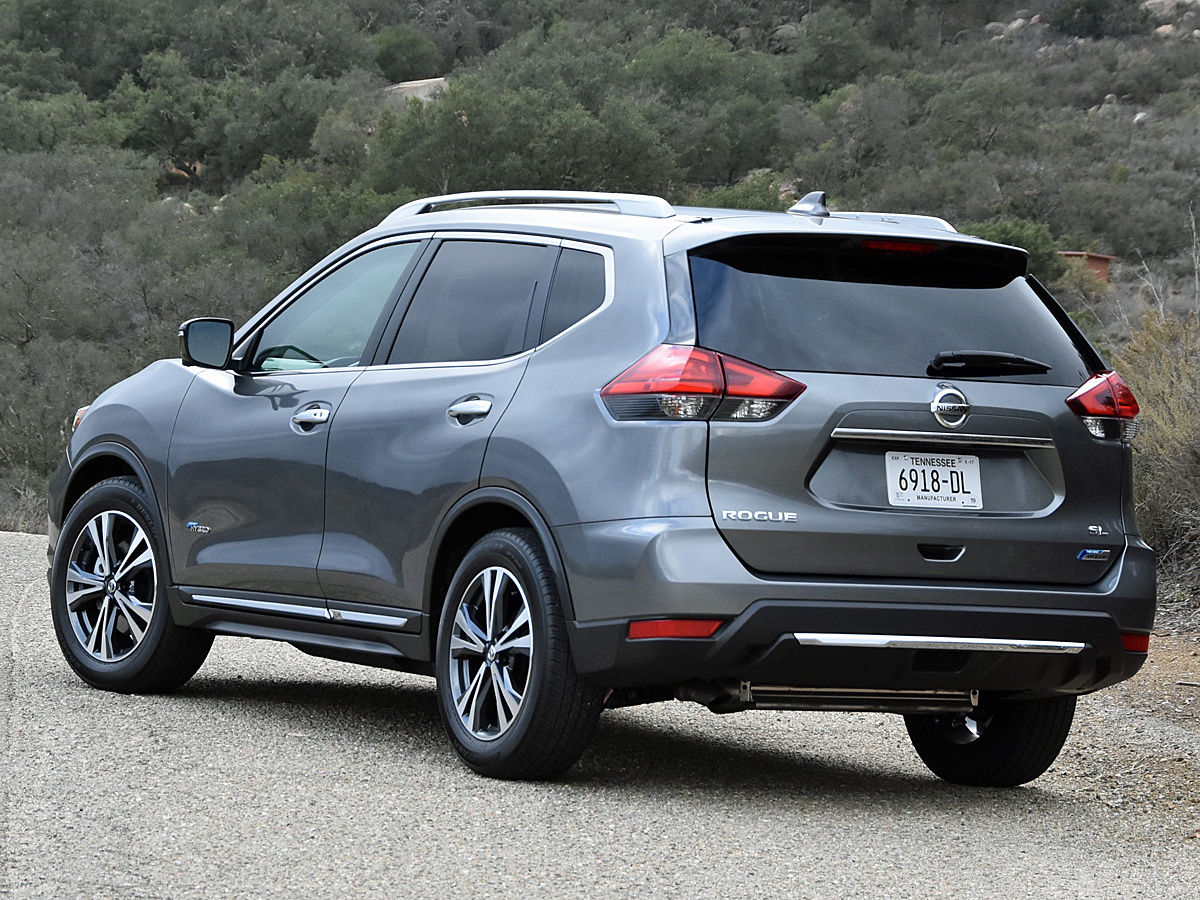
For the most balanced look, skip the Rogue S ($24,760 including the $940 destination charge) and the Rogue SV ($26,180) in favor of the Rogue SL ($30,900). Why? The most expensive version also gets the largest and most stylish set of aluminum wheels, optionally sized up to 19 inches in diameter.
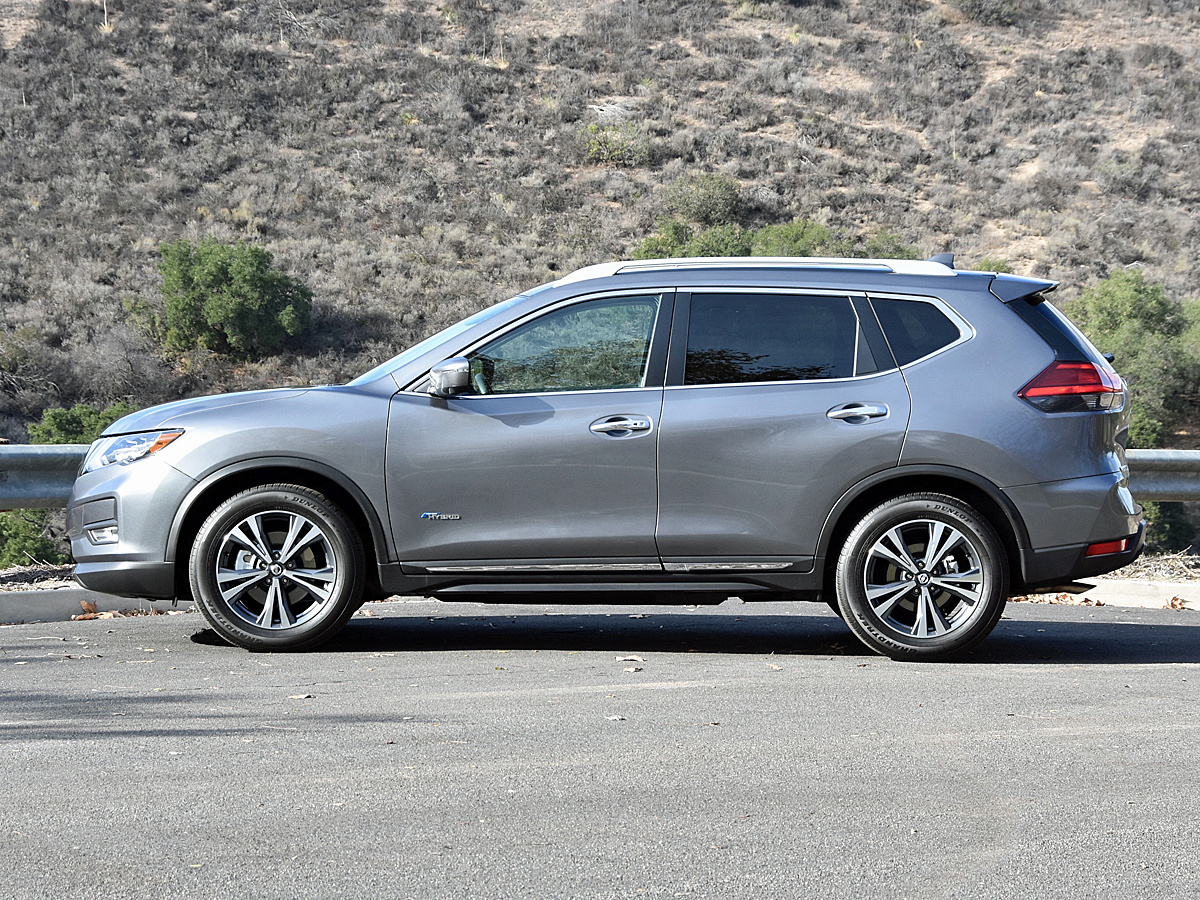
Styling updates include a bolder grille, and Nissan wisely chose not to sweep the new headlights up into the hood or fenders, avoiding the weird, wide-eyed appearance of the larger Murano and the automaker’s car lineup. Inside, Nissan says it has updated fabrics and materials, and all Rogues now come with a racy-looking flat-bottom steering wheel. An optional Platinum Reserve package installs unique saddle tan leather with a quilted pattern, adding a splash of luxury to the Rogue SL.
My test vehicle was the Rogue Hybrid SL, painted in Gun Metallic with a Charcoal leather interior. As this review was written, pricing for the Rogue Hybrid was not finalized, but Nissan spokespeople say the more efficient powertrain will run about a grand more than a standard Rogue. That would put my test model’s base price at about $32,000, including the destination charge. To this, my Rogue Hybrid SL added a Premium Package including a panoramic sunroof, LED headlights, and automatic emergency braking, bringing the estimated price to about $34,000.
Considering that discounts are almost always available for the Rogue, this strikes me as just about right. The upgraded interior does look and feel like higher quality, and the exterior styling expresses plenty of character without going too far overboard.
Unfortunately, the Rogue’s styling is the best thing about it.
Performance
In theory, adding the Rogue Hybrid to the lineup is a smart move. It doesn’t cost much of a premium over the standard 170-horsepower, 2.5-liter 4-cylinder engine. It provides a slight increase in horsepower combined with extra low-end torque from the electric assist motor. Nissan estimates that it will get up to 34 mpg in combined driving. And the price undercuts the Toyota RAV4 Hybrid, the only other compact crossover with this type of powertrain.
In reality, the Rogue Hybrid does not achieve the promised fuel efficiency, which makes all the compromises forced by the powertrain much harder to accept.
My test vehicle had front-wheel rather than all-wheel drive, so it should have returned 34 mpg (the estimate is 33 mpg for Rogue Hybrids with AWD). On my usual test loop, the Rogue Hybrid averaged 26.5 mpg. Granted, this is a mountainous route, I cycled between all three of the Rogue Hybrid’s driving modes, and the SUV fought a stiff headwind coming off the ocean while I headed north on Pacific Coast Highway, but that’s still a concerning result.
Later, after the windy weather passed, I tried a different route, one that stuck to relatively flat terrain. During this trial, driven exclusively in Normal driving mode, the Rogue Hybrid got 30.3 mpg. That’s better, but still represents a fail given the expectations set by the company’s estimates.
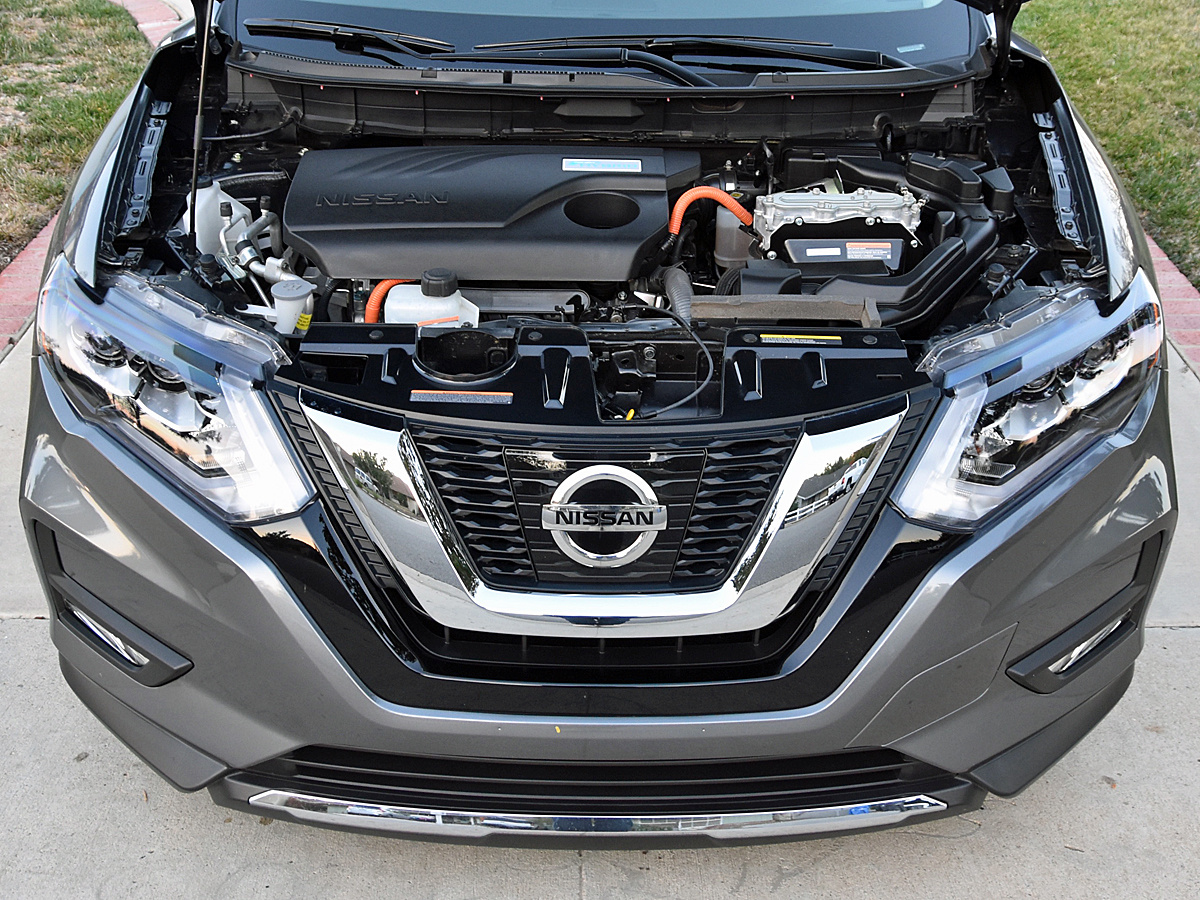
Rogue Hybrids pair a 2.0-liter 4-cylinder engine with a continuously variable transmission (CVT), an electric assist motor, and a lithium-ion battery. Combined output measures 176 horsepower, and the system adds about 200 pounds to the Rogue’s curb weight.
That extra weight is housed beneath the cargo floor, and while it restricts the Rogue’s utility, it also improves the SUV’s weight distribution while lowering its center of gravity. Combine those traits with my test model’s 225/60R18 Dunlop Grandtrek tires, Active Trace Control to help tighten your cornering line, and Active Engine Braking to enhance handling, and you’ve got a crossover that is unexpectedly fun to drive around curves and corners, which makes the somewhat wooden and lifeless steering even more disappointing.
Nissan also needs to refine the way this hybrid powertrain works. For example, the gasoline engine’s automatic start/stop system is eager to shut the 2.0-liter 4-cylinder off in order to conserve fuel. No surprise there. However, on a consistent basis, after this shutdown occurs as the SUV nearly approaches a stop at an intersection, when the driver steps on the accelerator pedal to round a turn or in response to a light that has changed to green, the powertrain stumbles and stutters as it decides whether or not to fire up the gas engine again. This behavior was a regular source of irritation during my week with the Rogue Hybrid.
Also, the extra torque delivered by the electric motor can catch the driver off-guard, especially when maneuvering in close quarters, such as when parallel parking. Accelerate with gusto around a city corner, and the inside tire threatens to break loose, torque steer bringing signs of life to the steering wheel in a decidedly negative fashion.
Finally, the Rogue Hybrid is equipped with a regenerative braking system. Like most such setups, it can be touchy and difficult to modulate. The reason for criticism here is because newer hybrids, like the Toyota Prius, are equipped with blended regenerative braking systems that feel far more natural and refined.
Had the Rogue Hybrid produced the real-world fuel economy it promised, such quirks of driving character, as well as the SUV’s restricted cargo space, would be much easier to accept. As it stands, based on my experience with this particular test vehicle, my recommendation would be to save the extra grand and stick with the standard 2.5-liter gas engine.
Form & function
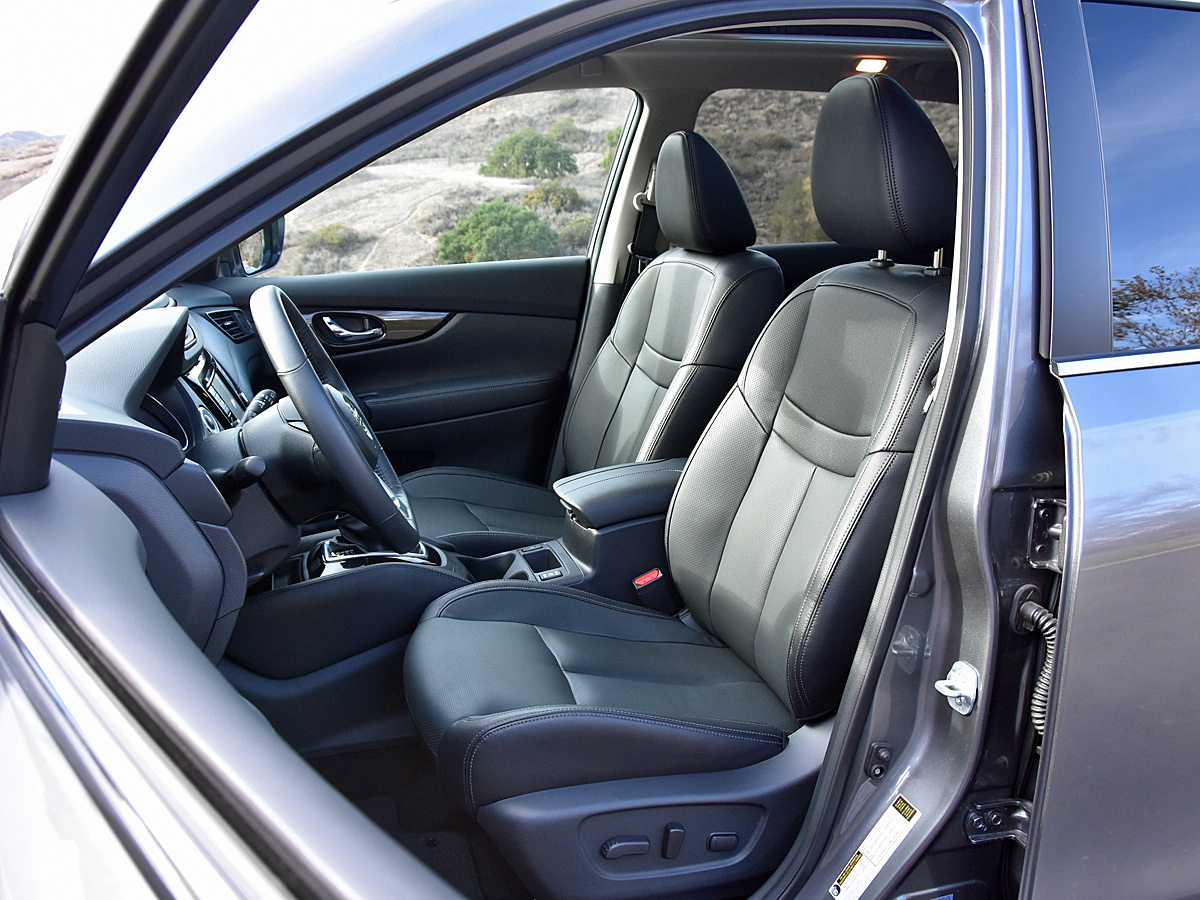
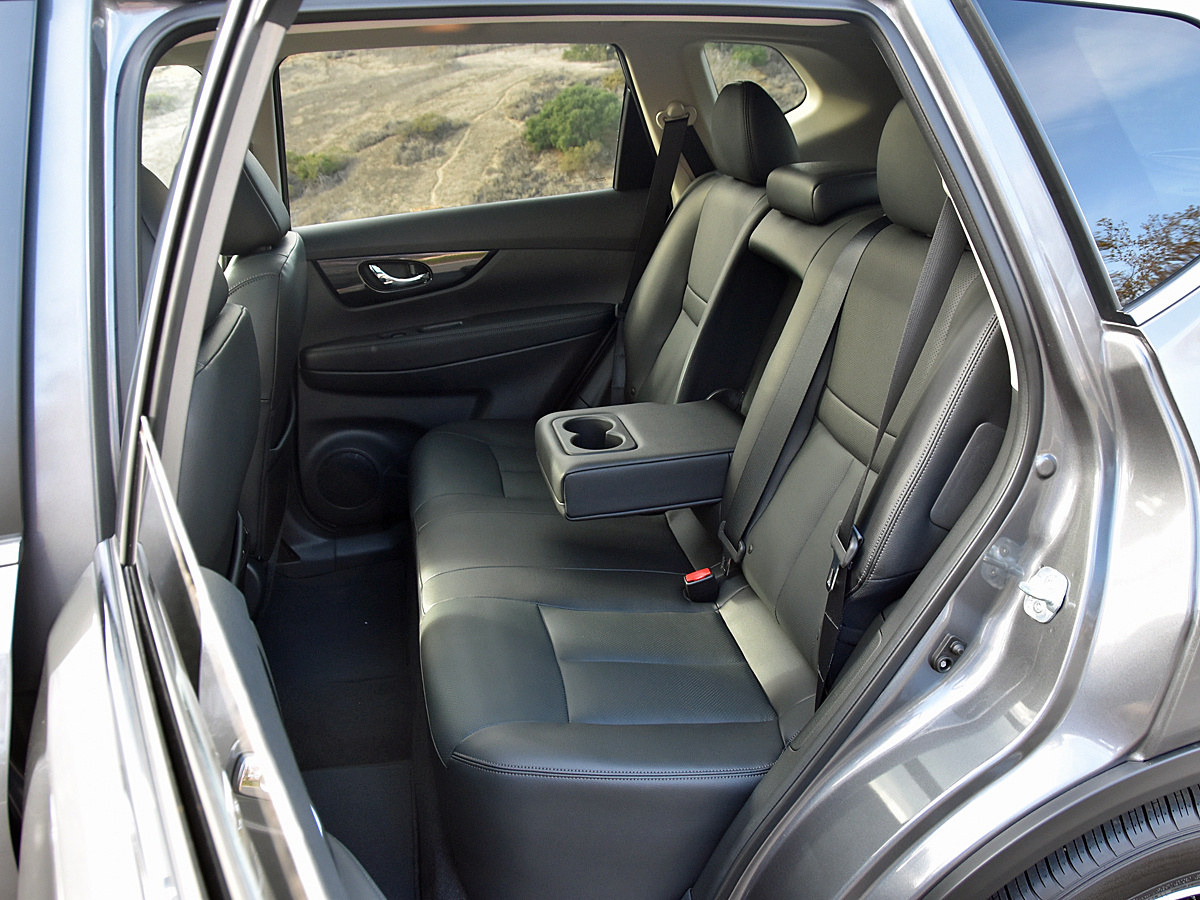
Choose a color other than Charcoal, and the Rogue’s interior presents a premium, two-tone appearance. In Charcoal, the look is less upscale, though silver accents, piano black trim, and contrast-color stitching do their best to convey a sense of luxury within the leather-lined SL model.
Thanks to Nissan’s Zero Gravity seat designs, the front chairs are quite comfortable, though taller people will wish the driver’s seat supplied more seat-track travel and I personally wished for a greater range of height adjustment. The best seat in the house is the one in the back. It sits up nice and high, provides excellent thigh support, and offers lots of leg- and footroom.
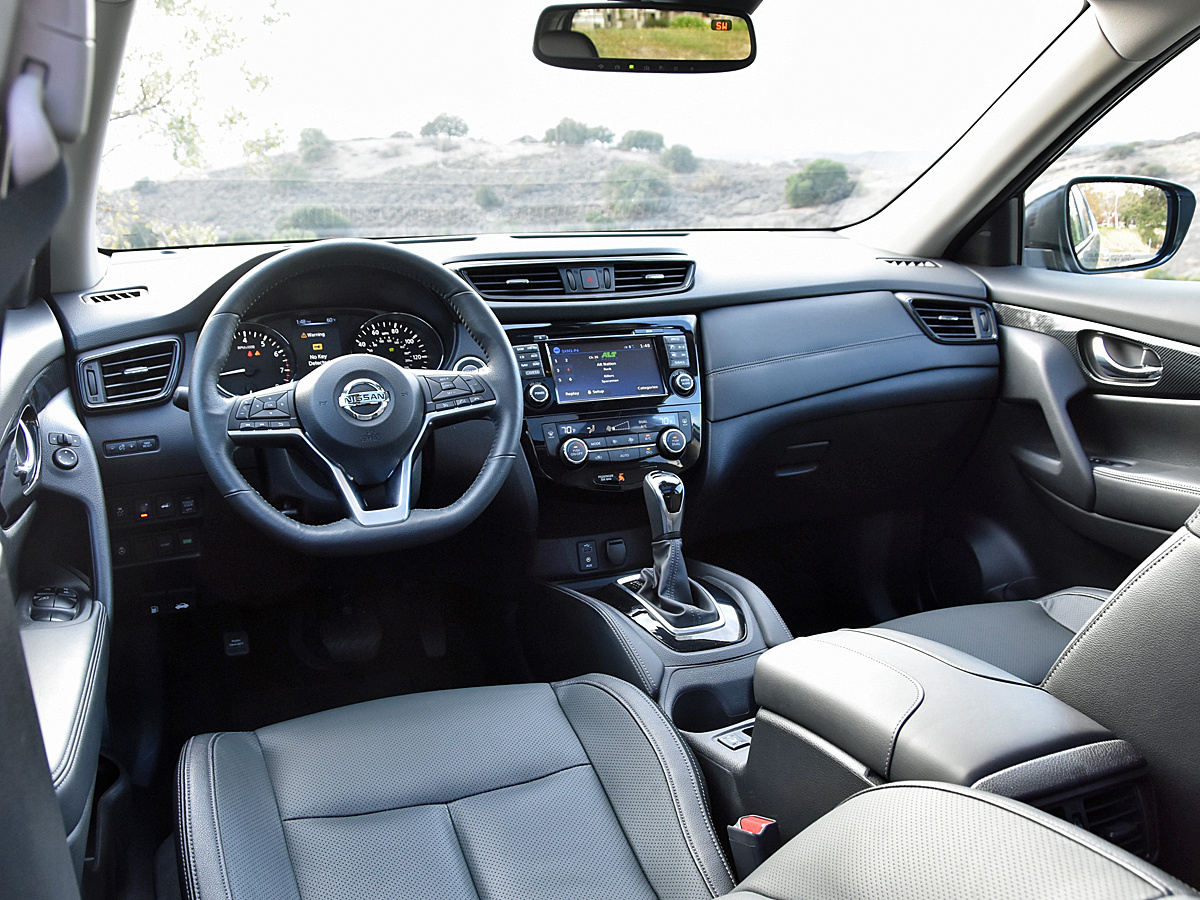
Primary controls are logically located, and the instrumentation is a model of clarity. Where Nissan can improve is with regard to certain secondary functions. The buttons on the lower left part of the dashboard are almost impossible to use while driving, and they include heated steering wheel activation, the Eco driving mode, the Sport driving mode, and the lane-departure warning system—all functions you might wish to use while the SUV is underway.
A hands-free power rear tailgate is also new for 2017, opening to one of the larger cargo areas in the segment. However, another thing to keep in mind when researching the Rogue Hybrid, aside from the added cost, the changes in driving dynamics, and the disappointing real-world fuel economy, is a reduction of utility.
The standard Rogue supplies 39.3 cubic feet of cargo space behind the rear seat, is equipped with a handy Divide-N-Hide cargo-management system, and in SV trim can even be ordered with a small third-row seat.
The Rogue Hybrid does not include Divide-N-Hide and does not offer a third-row seat, because the battery is housed under the cargo floor. The cargo floor is also raised 3 inches, and all of these compromises mean you’ve got less room… to the tune of 27.3 cubic feet. Maximum volume measures 61.4 cubic feet in the Rogue Hybrid, compared to 70 cubic feet in the standard Rogue.
All 2017 Rogues do, however, have a front passenger’s seat that reclines flat in order to carry long items with the tailgate closed.
Technology
Equipped with the top version of NissanConnect infotainment technology, my Rogue Hybrid SL provided a 7-inch touchscreen display, navigation, Siri Eyes Free compatibility, a text-message alert and assistance system, and on-screen access to mobile applications like Pandora, Facebook, Google search, and more. The Rogue does not, however, provide smartphone projection capability in the form of Apple CarPlay or Android Auto.
I had no trouble quickly pairing my iPhone 6 to the Bluetooth system, and while the infotainment screen is rather small, for the most part it's functional. Best of all, the stereo volume and tuning knobs, and the climate controls, are separate from the touchscreen. This design makes them easy to find and use.
In addition, NissanConnect Services are available for the Rogue. They provide remote access to the SUV’s locks and lights, maintenance alerts, alarm notification, and a stolen-vehicle locator. Several safety-related features are also a part of the Services package, including automatic collision notification and several safe teen-driver functions related to vehicle speed, vehicle location, and curfew time.
Safety
Like most other car companies, Nissan makes a big deal out of safety and groups its suite of driver-assistance and collision-avoidance technologies under the Nissan Safety Shield banner. They include forward-collision warning with pedestrian detection and automatic emergency braking, a blind-spot warning system with rear cross-traffic alert, a lane-departure warning and prevention system, a 360-degree camera system with moving-object detection, and high-beam assist headlights.
A handful of these technologies are standard or optional for the Rogue SV. To obtain the full slate of systems, upgrading to the Rogue SL and then spending almost $3,000 is necessary. And that’s how a compact crossover SUV winds up costing almost $34,000.
It’s great that Nissan offers a competitive package of driver-assistance and collision-avoidance technologies, but the company really should have spent some money upgrading the Rogue’s structure for improved crash protection. In fact, in my opinion, one of the only good reasons to skip buying a 2017 Rogue in favor of a competing model is related to its crash-test scores.
We’re not talking about Insurance Institute for Highway Safety (IIHS) ratings here. The IIHS has given the Rogue a Top Safety Pick+ rating for 2017, based on the SUV’s favorable performance in small overlap frontal-impact testing on the driver’s side.
We are talking about federal government ratings, standards for which haven’t changed since 2011. In the National Highway Traffic Safety Administration's (NHTSA) frontal-impact test, the 2017 Rogue earns a lousy 3-star protection rating for the front passenger, and it gets no better than a 4-star rating for the driver.
It’s hard to understand why Nissan apparently made no attempts to improve the Rogue in this regard, especially since the company was spending money on updates for the 2017 model year. That rating also makes it hard for the company to credibly brag about its focus on family-friendly safety, and it makes me wonder what might happen if the IIHS elected to perform its tough small overlap test on the Rogue’s right front corner.
Cost-effectiveness
The 2017 Nissan Rogue is a stylish, roomy, practical, and affordable crossover SUV that offers you the option of upgrading with luxurious features, advanced technologies, and a hybrid drivetrain. Deals are almost always available, too, so you can count on paying thousands less than sticker price.
Should you get a new Rogue Hybrid? As long as you’re cool with the price premium, the compromises related to driving dynamics and utility, and you don’t care if it gets anywhere close to the expected fuel-economy number, then sure, why not?
The better question is this: Should you buy any version of the Rogue? That one is harder to answer, but only because of that crappy 3-star rating for front passenger protection in a collision.
We’re talking about a company that promotes its Snug Kids child safety seat program and its Nissan Safety Shield technologies that monitor, respond, and protect. And yet, here we’ve got the Rogue, Nissan’s entry in the hottest segment in the market, the model the company expects to become its best seller, and in a crash-test assessment that hasn’t changed since 2011, it gets a 3-star protection rating for whomever is riding shotgun.
As a consumer, especially one who might be buying a Rogue to serve as a family vehicle, that’s tough to overlook, don’t you think?
What owners say
Trims & specs
Base MSRP $31,160 | Seating 5 |
Engine 2.0L 176 hp I4 Hybrid | Cargo Capacity 27.3 cu ft |
Combined MPG 34 | Drivetrain FWD |
Base MSRP $26,240 | Seating 5 |
Engine 2.0L 176 hp I4 Hybrid | Cargo Capacity 27.3 cu ft |
Combined MPG 34 | Drivetrain FWD |
Base MSRP $32,510 | Seating 5 |
Engine 2.0L 176 hp I4 Hybrid | Cargo Capacity 27.3 cu ft |
Combined MPG 32 | Drivetrain AWD |
Base MSRP $26,640 | Seating 5 |
Engine 2.0L 176 hp I4 Hybrid | Cargo Capacity 27.3 cu ft |
Combined MPG 34 | Drivetrain FWD |
Base MSRP $32,910 | Seating 5 |
Engine 2.0L 176 hp I4 Hybrid | Cargo Capacity 27.3 cu ft |
Combined MPG 32 | Drivetrain AWD |
Base MSRP $27,590 | Seating 5 |
Engine 2.0L 176 hp I4 Hybrid | Cargo Capacity 27.3 cu ft |
Combined MPG 32 | Drivetrain AWD |
Base MSRP $31,560 | Seating 5 |
Engine 2.0L 176 hp I4 Hybrid | Cargo Capacity 27.3 cu ft |
Combined MPG 34 | Drivetrain FWD |
Base MSRP $27,990 | Seating 5 |
Engine 2.0L 176 hp I4 Hybrid | Cargo Capacity 27.3 cu ft |
Combined MPG 32 | Drivetrain AWD |


