2017 Ford Fusion Energi Reviews, Pricing & Specs






Expert review
The Ford Fusion Energi tries to up its appeal with new standard LED lighting for 2017, along with a slight redesign inside and out and a bit of extra range.
Ford's plug-in hybrid Fusion Energi has enjoyed a relatively sparse field of competition in its adolescent years, but recent entrants and expected newcomers mean it’ll have to work hard to maintain its position. With that in mind, the familiar Fusion gets standard LED lighting front and back, a visual redesign inside and out, and a couple extra miles of range for 2017.
out of 10 expert review
Look & feel
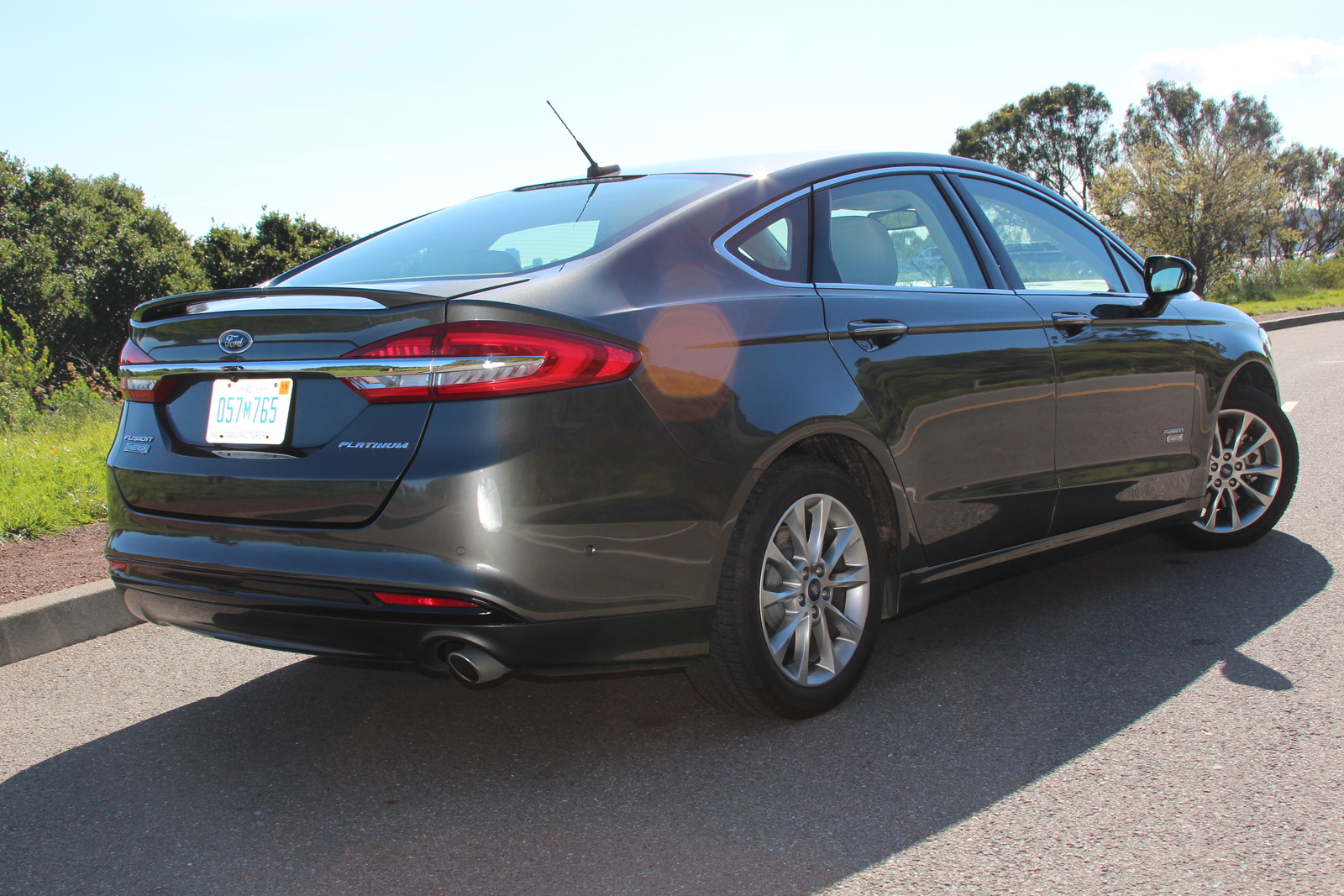
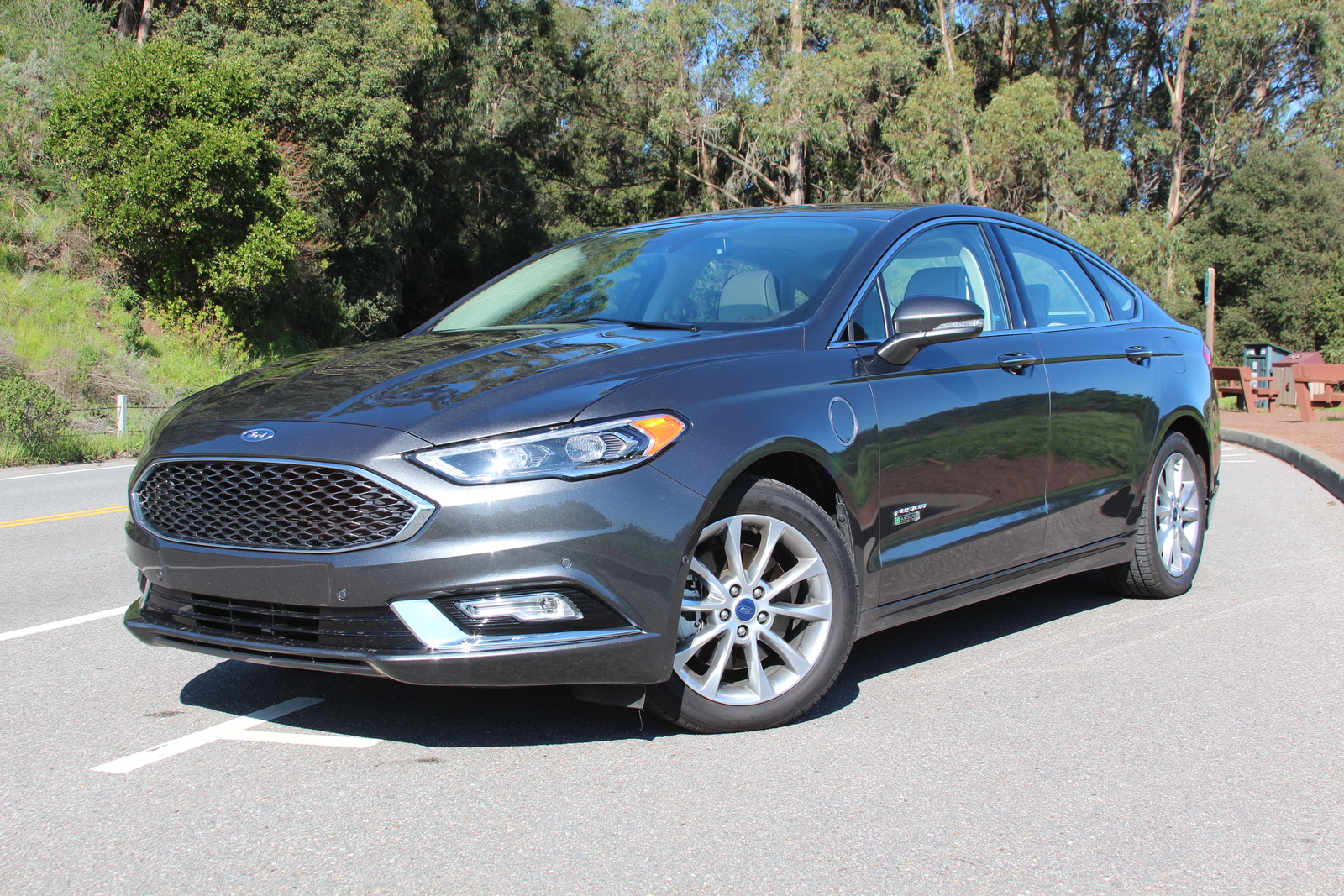
Things should be very familiar here, at least visually. New headlights are now LED, and they blend more aggressively into a slightly smaller grille, now flanked by sharper angles at the corners. Fog lights get a chrome strip along the bottom, matched by a similar treatment at the rear.
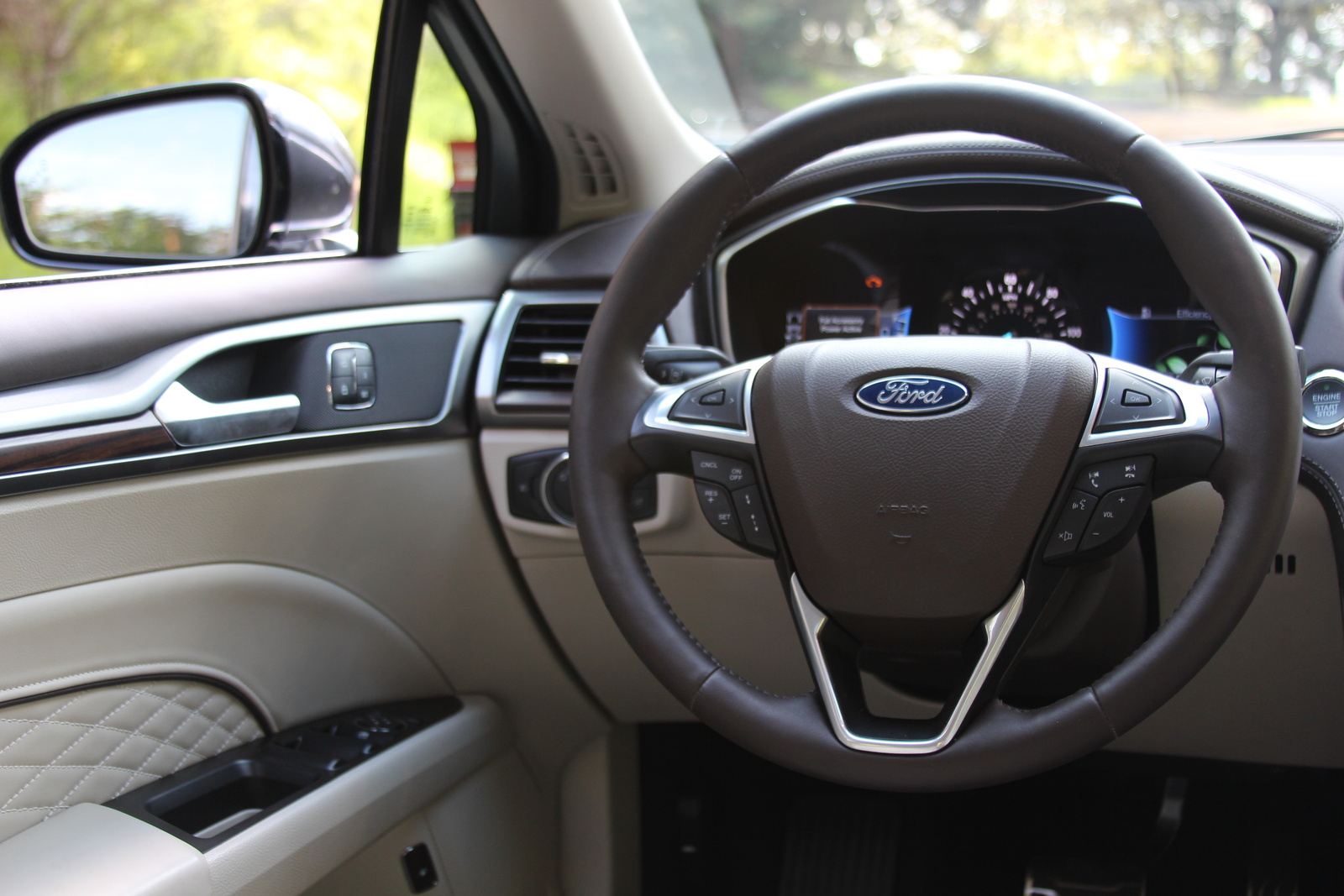
Inside, the changes are more dramatic, though still not revolutionary. A rotary dial now controls gear selection, and this has freed up a lot of space on the center console for a larger storage bin, tandem cupholders, and a new smartphone tray. Physically, this is the whole of the changes, but what you should be really excited about is that the Sync 3 system now powers your infotainment. This was the largest complaint with the 2016 Fusion and is likely to attract the most new and return buyers.
Continuing with the tradition of trying to woo customers to the hybrid life through luxury, the Fusion Energi offers just three higher-level trims: SE Luxury, Titanium, and Platinum. With the SE Luxury, you’ll start with features like the new suite of LEDs including fog and automatic headlights, keyless ignition and entry with remote start, leather, heated mirrors with auto dimming, rear parking sensors, and an 8-inch touchscreen with Sync 3. That’s a nice list of entry-level features, and that’s ignoring the standards like dual-zone auto climate controls, heated power seats with driver's memory, satellite radio, and a wealth of jacks and inputs including Aux, 110 volts, and dual USBs.
For a $31,120 starting MSRP, that’s not a bad list, and that’s not even counting the additional discounts—from both Ford and the federal government. People seem to really like their Fusions with that rear spoiler, though, and for that you’ll have to move up to the Titanium trim for another $1,000. That’s hard to turn down, considering that grand will also get you sport heated and ventilated front seats, full 8-way power for the passenger (as opposed to 6-way in the SE Luxury), ambient interior lighting, and a 12-speaker Sony stereo with HD Radio. Like I said, hard to pass up.
The $8,000 jump to the Platinum trim is a harder sell. It’s not that the Platinum doesn’t come with a lot of extras, but $8,000 is still a big bill to fill, representing as it does more than a 25% premium over the starting MSRP. Still, let’s look at what you’d get. First, there’s a Driver Assist package that’s optional on the Titanium trim. It offers blind-spot monitoring with rear cross-traffic alert, lane-departure warning and assist, auto high beams and wipers, and a heated steering wheel. For the Platinum, that steering wheel gains power adjust as well, along with upgraded leather and additional leather trim across the dash and the doors that really dresses up the interior nicely. The rest of the additions to the Platinum trim can also be added to the Titanium, for a price of course. This includes adaptive cruise with frontal collision warning and auto brake, a sunroof, navigation, and the famous Ford auto-parking feature.
My week was spent in a Platinum trim Fusion, fitted with the 17-inch “luster nickel” wheels. With an $875 destination & delivery charge and a $2,000 discount from Ford, that brought the drive-away price before discounts and incentives to $39,995.
Performance
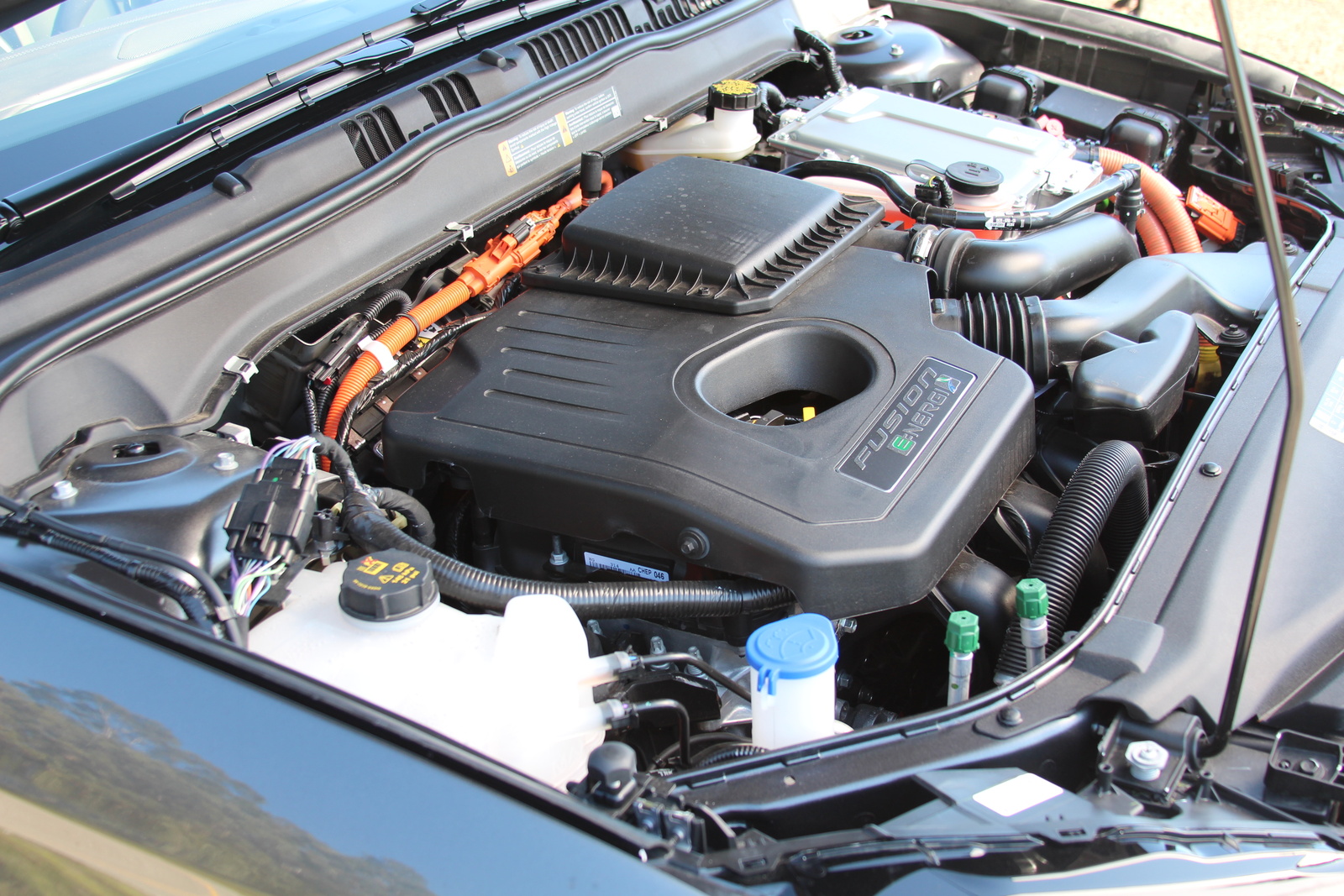
Performance with regard to the batteries and electric motors is definitely up this year, although by a negligible amount. Ford claims you’ll be able to travel up to 22 miles on electric power alone, an increase of 2 miles over the 2016. Any improvement is certainly welcome, but with the hills of the San Francisco Bay, I wasn’t able to drive on electric power alone for much more than a block or so before the gasoline engine kicked in. As soon as that power wasn’t needed again, the gasoline engine would quietly go back to bed and allow the electrics to do the lifting, but still I never got anywhere near 20 miles of electric driving before the batteries were dead. And before you claim that I was driving with too heavy a foot, the digital “Eco-meter” was showing I was quite efficient in my acceleration, braking, and coasting, so it wasn’t my driving habits that posed the problem.
Ford also claims that you’ll be able to drive up to 85 mph on electric only, and that’s another one I couldn’t reproduce. More than that, the Fusion Energi is slow. Painfully so. If you try to accelerate on electric power alone, 60 mph will take more than 15 seconds, and that’s dangerous when trying to merge. I can’t imagine how long 85 would take, even if you could stop the gasoline engine from kicking on. In hybrid mode, things are better. 60 comes in a more respectable 8 seconds, which is almost impressive considering the Energi weighs nearly 600 pounds more than the Fusion’s gasoline-powered versions. Weight like that affects everything—braking, handling, wear and tear on components—and you can certainly feel it here.
With low-rolling-resistance tires and that low-end torque from the electric motors, there’s a lot of spinning and squealing when you take off and go around corners, unless you’re being ponderously conservative with your acceleration habits. And if things are wet, spinning those tires is pretty much a guarantee. The same principle works in reverse, as those tires and the extra weight mean the Fusion Energi takes an additional 10-15 feet over the regular Fusion to come to a stop from 60 mph, accomplishing the task in 130 feet.
As for fuel efficiency, there’s actually some good news here. While the gasoline efficiency of the Energy is rated at 42 combined mpg, I was actually able to achieve around 38, which is laudably close to the mark considering my terrain and driving habits. When it comes time to recharge, a standard outlet should take around 7 hours, while a 240-volt one will take 3, figures I was able to reproduce.
Form & function
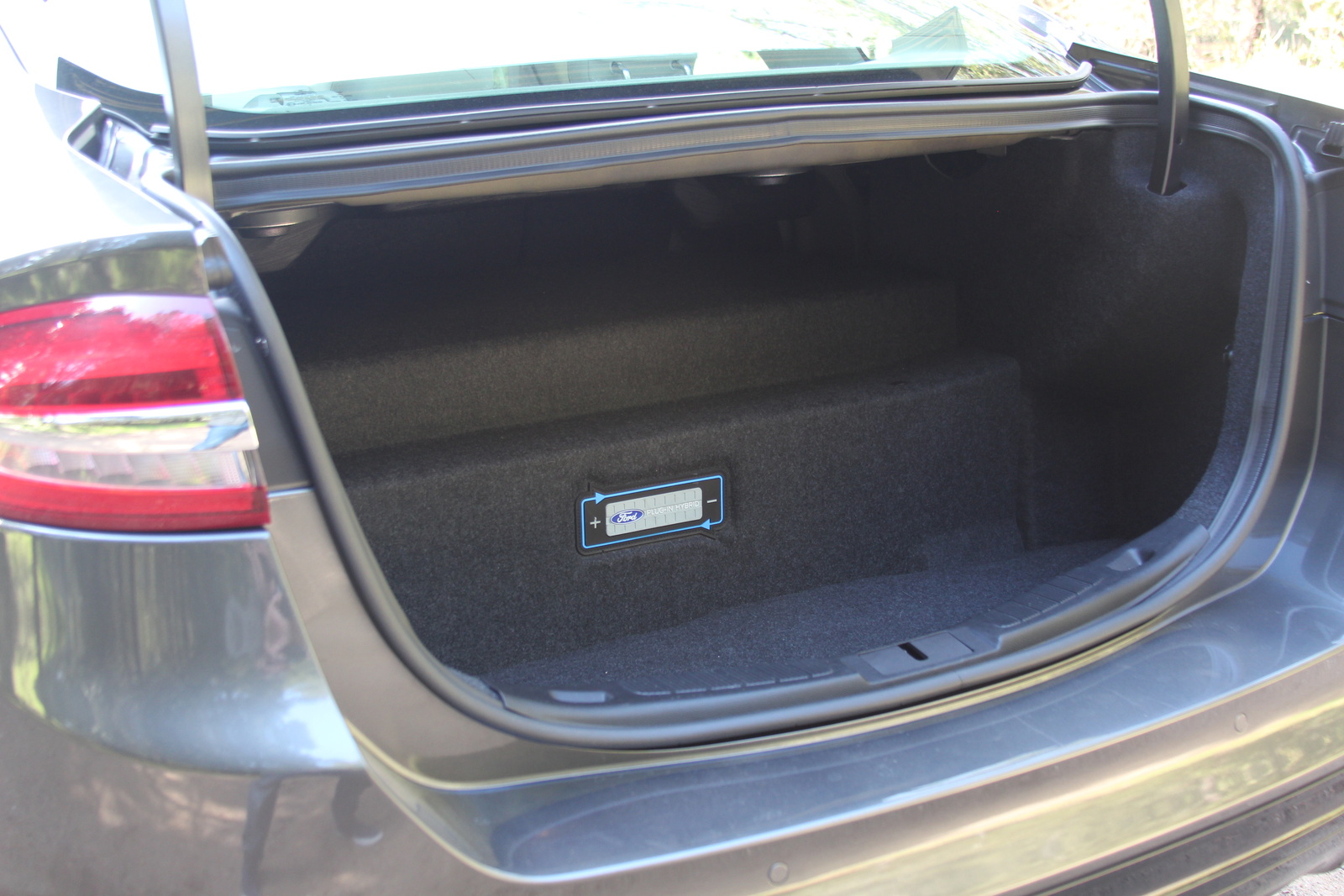
But that recharge ability does hamper function a bit. While the regular Fusion offers a large trunk with 16 cubic feet of space, when you start stuffing batteries back there, things quickly get tight. The hybrid version drops to 12, while the Energi has just 8.2. That’s a tiny trunk.
The hybrid tech affects the brake feel as well, as a regenerative braking system captures energy from braking to recharge the batteries. Most of these systems feel rather inelegant—it’s the reason BMW adopted a largely brakeless driving experience for its electric options—but this is the worst one I’ve driven. Somehow it manages to be both grabby at first and then very mushy after, making for a lot of jolts when applying the brakes. Usually this simply takes a few days to get used to, but after a week with this particular car in addition to having tested several other Ford hybrids, I’ve never gotten the hang of it enough to be graceful in my application.
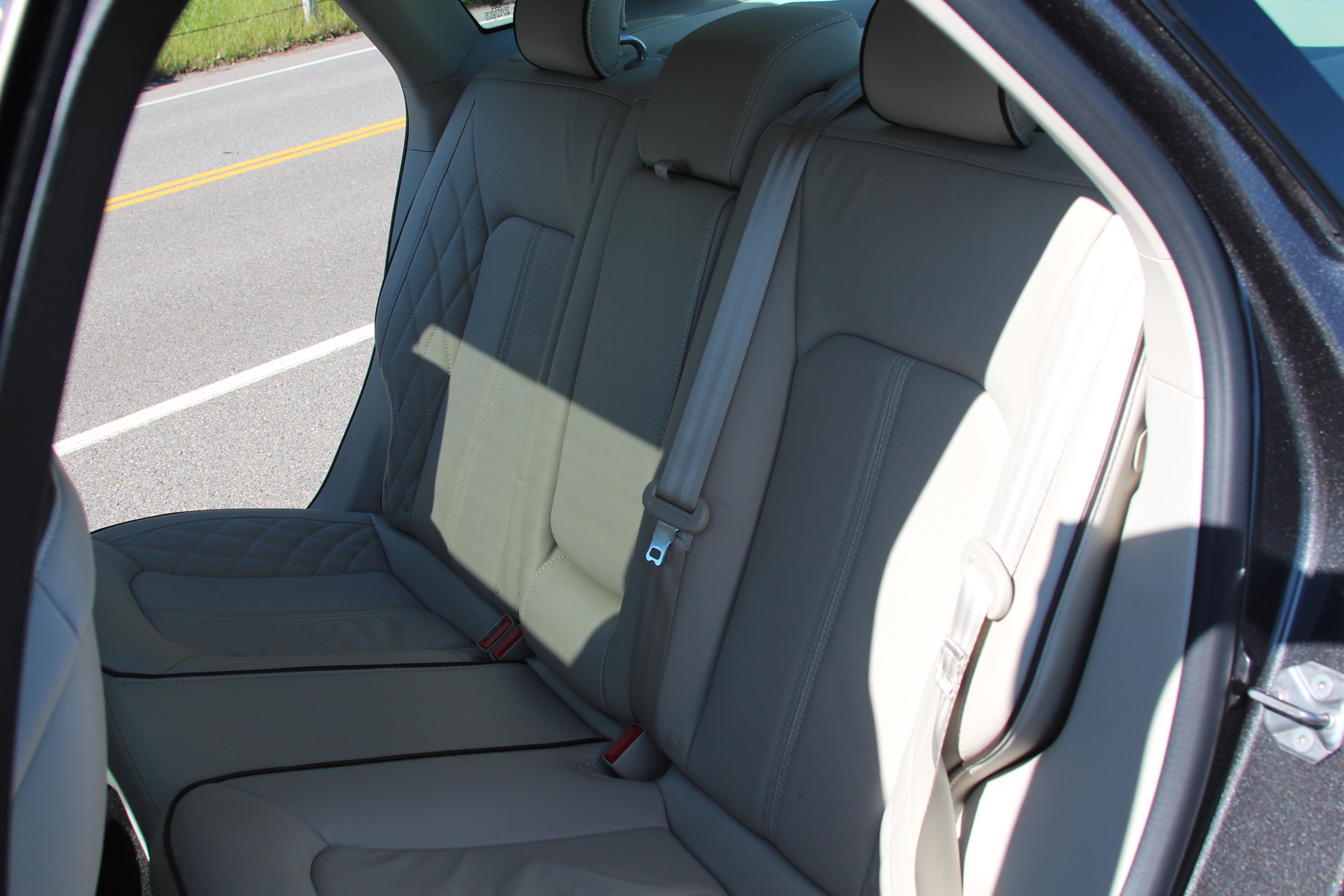
Space at least is abundant, as even for my lanky frame, I had more than enough head- and legroom. I could even squeeze into the back seat behind my driver’s seat without moving it forward at all, and that’s not a claim I can often make. With the new rotary dial for gear selection, there’s a lot more room inside for storage, and even better, more perceived room with that cleaned-up center console. With the added trim on the Platinum, things look appropriately luxurious as well (though they should for the price), and it’s easy to say that the Fusion has the best interior of the small list of competitors. I foresee only the return of the Accord plug-in threatening the Fusion’s place in that category.
Technology
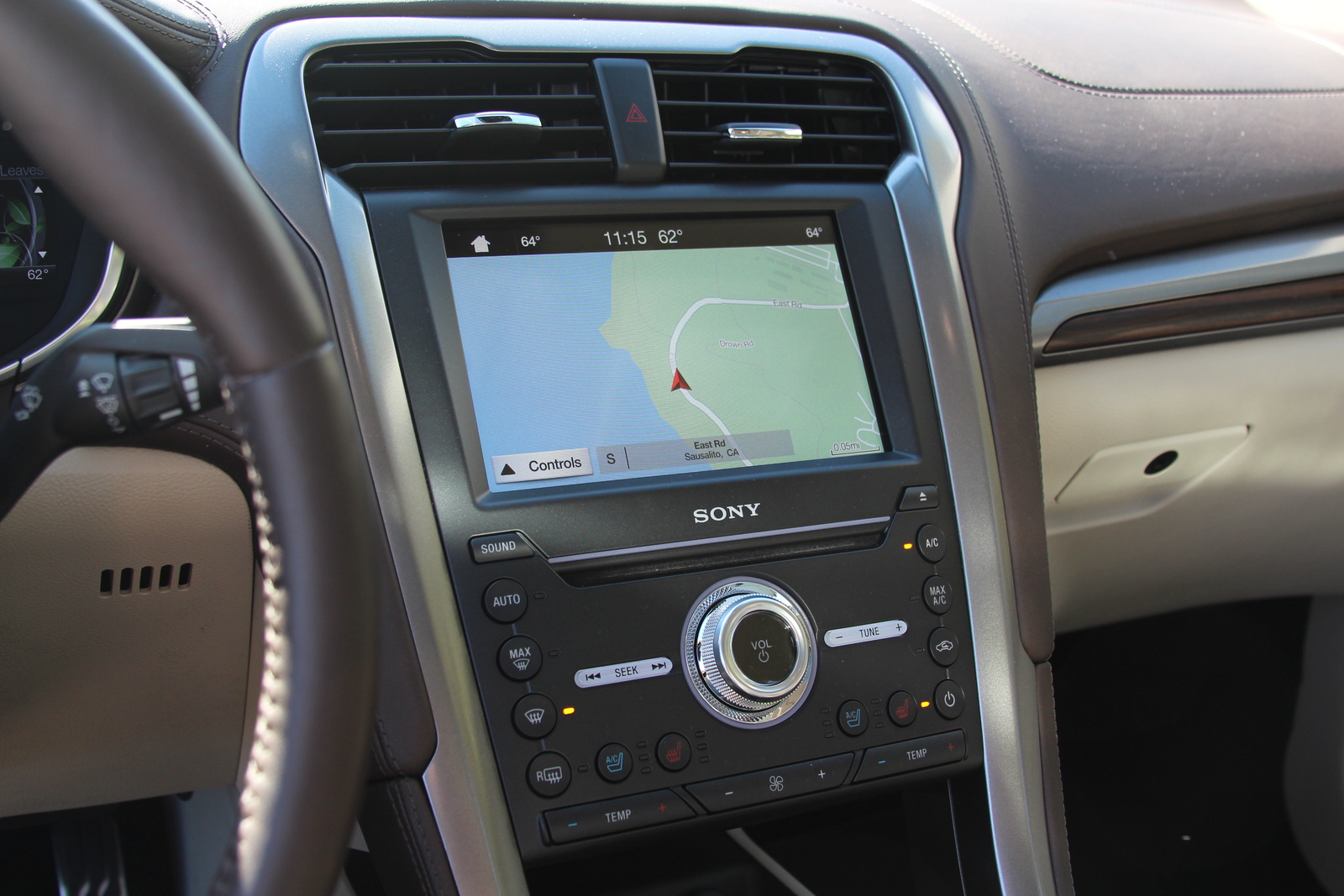
Fusion lovers rejoice, for MyFord Touch is no more. Sync 3 has made its debut in the Fusion, and it’s a joy to behold. I still don’t like the styling of the actual interface, but it’s easy to navigate, has large buttons for bad eyes, is fast, functional, and doesn’t crash anymore. That’s a very, very good thing. Pairing phones is a snap, and the optional 12-speaker Sony stereo is more than capable of filling the Fusion’s very quiet interior.
My one complaint, and this extends to all similarly equipped Fords, is that the satellite radio is constantly cutting out. All satellite radio can get touchy when going under bridges or through tunnels, but in all the Fords I’ve tested, it will cut out in the middle of a bright, clear, sunny day with no overhead obstructions. And it doesn’t simply cut out for a second or two—I’m talking losing the signal long enough to miss entire songs. Looking into this, I’ve found several discussions online of customers having trouble in the SF Bay area, unrelated to buildings or other possible line-of-sight obstructions. Why it’s happening only with my Ford test vehicles, I’m not sure.
Safety
With the full suite of safety features mentioned above, the Fusion Energi is a Top Safety Pick+ from the Insurance Institute for Highway Safety (IIHS), and the cheapest way to get that is by grabbing a Titanium trim and adding the Driver Assistance package and the optional adaptive cruise, bringing your pre-incentive and rebate price to $35,505.
If you don’t go that route, the Fusion is still well-suited to a safe drive, despite the drawbacks of its extra weight and the eco-friendly tires that bring stopping distance to 130 feet. While the Fusion Energi hasn’t been specifically tested, the 2017 Fusion’s ratings were shuffled slightly compared to 2016. Frontal crash tests have dropped to a 4-star rating, while side impacts now earn 5 stars, an adjustment of 1 star in both categories, and while the overall rating for the Fusion is still at 5 stars, it should be noted that competitors got 5 stars across the board.
Cost-effectiveness

What owners say
Smooth ride and great MPG’s. Wish the EV were more than a 17 mile range but for the price you can’t beat it
March 23, 2022Good riding car, but poor mileage on charge and poor trunk space (consumed by batter).
November 21, 2020Trims & specs
Base MSRP $41,120 | Seating 5 |
Engine 2.0L 188 hp I4 Hybrid | Cargo Capacity 8.2 cu ft |
Combined MPG 42 | Drivetrain FWD |
Base MSRP $33,120 | Seating 5 |
Engine 2.0L 188 hp I4 Hybrid | Cargo Capacity 8.2 cu ft |
Combined MPG 42 | Drivetrain FWD |
Base MSRP $34,120 | Seating 5 |
Engine 2.0L 188 hp I4 Hybrid | Cargo Capacity 8.2 cu ft |
Combined MPG 98 | Drivetrain FWD |


Pricing trends
MSRP range
$33,120 - $41,120
Current avg. market price
$10,781
Trending down by 3.3% this month
May 2026 - October 2026


