2015 Chevrolet Silverado 1500 Reviews, Pricing & Specs
Write a review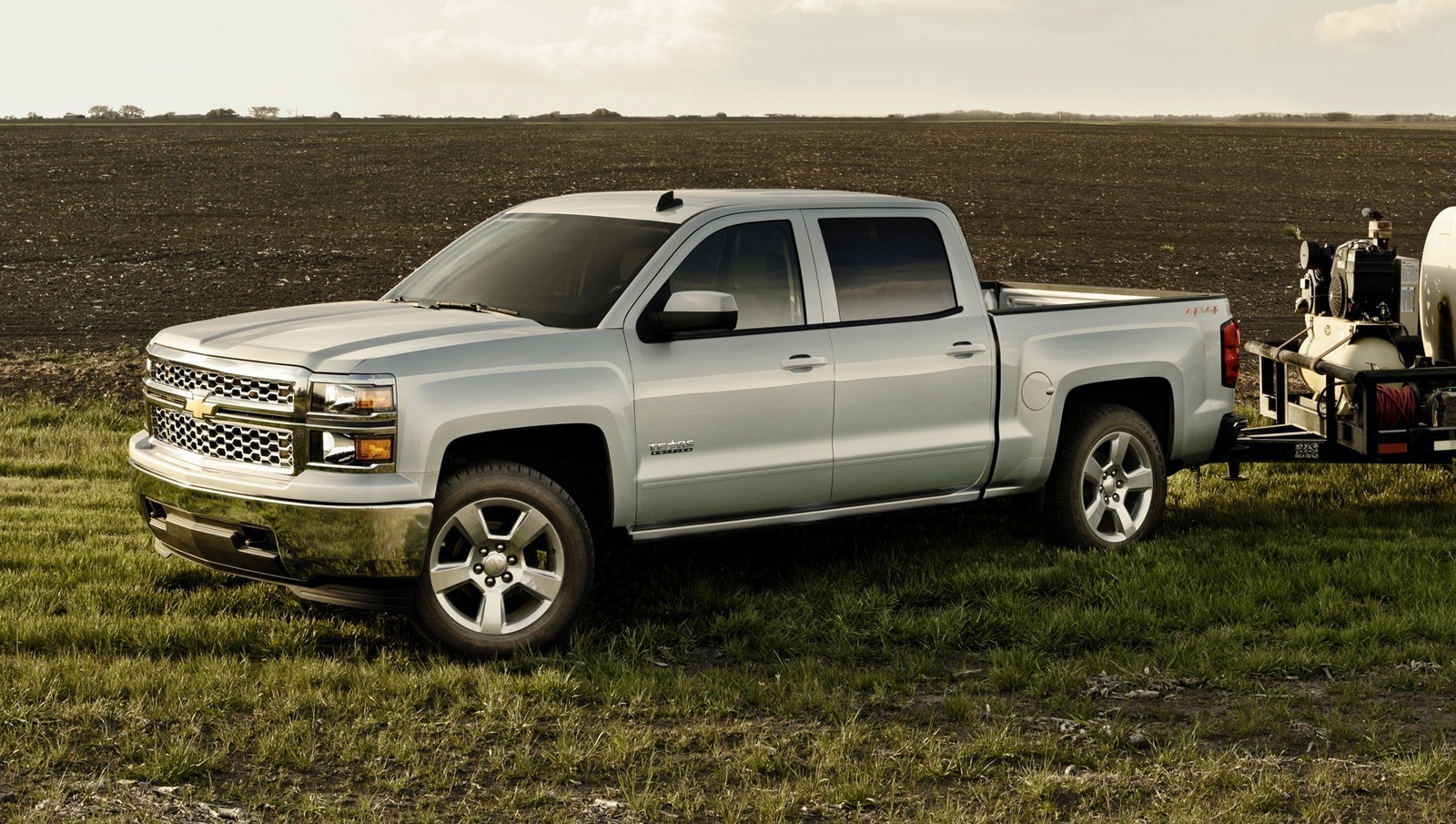
If you tow on a regular basis, the upgrade to the Chevy Silverado's 6.2-liter V8 engine is worthwhile. If you don’t, it’s not.

Full-size, light-duty pickup engineers face two main decisions when building a modern truck. Do we go aluminum? Do we go diesel? At General Motors, the answer, so far, is no.
Given how cheap regular unleaded is, that gamble has paid off. The direct-injected family of engines that Chevrolet and GMC employ in the Silverado and Sierra models feature Active Fuel Management technology, which improves fuel economy enough to minimize the aluminum-bodied, EcoBoosted F-150’s lead on this front.
Diesel remains more expensive than unleaded, both in terms of the price at the pump and the cost of the optional engine, so as much as I love the Ram 1500’s available EcoDiesel powerplant and its effortless ability to return fuel economy usually associated with smaller and lighter passenger cars, I can’t justify its cost to buy and feed.
So then, the Chevy Silverado 1500 still makes sense, a good thing given the investment GM made in the truck’s complete redesign for the 2014 model year. Prices for a regular cab, standard box, 2-wheel-drive Silverado Work Truck (WT) start at $27,365, including a destination charge of $1,195. Load up a Crew cab, standard box, 4-wheel-drive (4WD) Silverado High Country with all the fixings, and you’ll spend more than $60,000.
My test truck started down the assembly line as a Crew cab model with a short cargo box. To this, Chevrolet added a 4WD system, fancier LTZ trim, a Z71 package designed to improve the truck’s off-roading capabilities, 6-inch side assist steps that ultimately limit the truck’s off-roading capabilities, and a Custom Sport Edition package with lots of body-color trim pieces, a spray-in bedliner, and shiny 20-inch chrome wheels. Add White Diamond Tricoat paint, heated and ventilated front seats, a Bose premium sound system, a navigation system, a power sunroof, a Driver Alert package containing several safety technologies, a trailer brake controller, and a big-ass 6.2-liter V8 engine under the hood, and the sticker price landed at $58,130.
That’s a pricey hunk of truck. But it looks good, though I’d skip this fancy paint job, which looks as creamy in sunlight as your grandpa’s old Cadillac. If Chevy’s T-square approach to truck design resonates with you, there are many ways to customize a Silverado’s appearance, and my Custom Sport model is just one of several special-edition versions of the truck that went on sale for 2015. Also, don’t forget that the GMC Sierra is basically the same thing wrapped in a different package.
Even when dressed up, the Silverado’s interior is clearly designed for work and for conveying strength. Metallic trim appears to bleed through the dashboard, presenting the air vents and center stack of controls. When luxed up like my test truck, premium materials mix with the hard plastics common to hose-‘em-out workhorses, creating an effect jarring perhaps only to people unfamiliar with the work-and-play truck lifestyle.
Overall, the Chevy Silverado looks good. The exterior isn’t dramatically over-styled like a Toyota Tundra, and I prefer the Chevy’s cabin to the new Ford F-150's.

In exchange for $2,495, you can swap a Silverado’s available 5.3-liter V8 engine for a 6.2-liter V8 engine. In my Crew cab, short box, 4WD test truck, this option added 65 hp and 77 lb-ft of torque while reducing fuel economy by a single mile per gallon in both city and highway driving. Maximum payload capacity shrank by 160 pounds, but maximum towing capacity increased by 900 pounds.
Obviously, everyone’s situation is different, but I’d likely stick with the 5.3-liter V8, which delivers nearly 90 percent of its peak torque between 2,000 rpm and 5,600 rpm, and in my test truck’s configuration can tow up to 10,900 pounds when equipped with the optional 3.73 axle ratio and Max Trailering package.
Why? It’s a cost-benefit analysis. With the 6.2-liter V8, you spend lots more to get the engine, you feed it more fuel over time, and you get reduced payload capacity just so that you can tow up to 900 extra pounds of trailer (depending on configuration). If you tow on a regular basis, the upgrade is worthwhile. If you don’t, it’s not.
For 2015, the 6.2-liter V8 gets a new 8-speed automatic transmission. Between the automatic’s delayed engagement and occasionally harsh shifting characteristics, and the perceptible operation of the Active Fuel Management technology as it switched the engine from all 8 cylinders to running on 4 cylinders, the powertrain drew too much attention to itself.
Given that I averaged 16.1 mpg in this muscular Silverado, compared to 16.4 mpg in a Sierra with a 5.3-liter V8 that I evaluated last year, I could easily live with Active Fuel Management’s evident cycling.
More troubling is the delay in gear engagement. During photo and video shoots, while re-positioning the Silverado, I’d shift into gear, release the brake, and step on the gas only to have the engine momentarily rev freely, the transmission suddenly clunk into gear, and the truck lurch forward or backward. In short order, this generated irritation.
As for the Silverado’s driving dynamics, the truck impresses. Center the left hood bulge in the middle of a country road’s lane, and you’ll keep the truck right where it needs to be even on narrow stretches of 2-lane blacktop. The variable-assist steering requires little effort at low speeds, but remains resolute on center at higher speeds, and the brake pedal is easy to modulate in order to bring the truck to a smooth stop.
Although my test truck had the Z71 option package with a beefed-up suspension, an automatic locking rear differential, a transfer-case skid plate, hill descent control, and a set of all-terrain tires, I didn’t venture far off the pavement. The reason why is because my truck also had optional 6-inch side step rails, and I’ve learned from first-hand experience that they reduce a Silverado’s breakover angle. If you’re heading off-road, don’t get this option. And make sure you remove the lower front air dam, too, which can get chewed up in a hurry.
While certain types of pavement produce a choppy ride quality, for the most part the Z71 suspension’s 46mm Rancho monotube shocks don’t negatively affect comfort levels. I also used the Silverado for an IKEA run, putting hundreds of pounds of furniture into the bed, and that really smoothed out the ride. By the way, in case you’re wondering, the 6.2-liter V8 shrugged off the full cargo bed, even when climbing a pass over a local mountain range.
Something else to note are changes to Chevrolet’s free maintenance and warranty programs. Next year, for 2016, the Silverado’s powertrain warranty drops to 5 years/60,000 miles from the current 5 years/100,000 miles. Also, the free scheduled maintenance coverage will cover a total of 4 visits during the first 2 years/24,000 miles of ownership, down from the current 8 visits.

Previously, I touched upon my loaded Silverado’s mix of upscale materials with the types of durable, easy-to-clean plastics that any pickup truck designed for work must contain. The bottom line is that if you’re willing to spend enough money, Chevrolet will provide soft-touch materials on most surfaces, complete with exposed stitching.
The control layout is simple, and the available Chevrolet MyLink infotainment system features a large, 8-inch touch-sensitive screen with appealing graphics and a fairly simple user interface. New for 2015, Siri Eyes Free technology arrives for Apple iPhone users, and a text-messaging assistant is included for Android device users. Thoughtfully, Chevrolet makes it easy to use most of the Silverado’s controls while you’re wearing work gloves, including MyLink.
Comfort levels inside a loaded Silverado are impressive, from the soft places to rest an arm or elbow to the incredibly effective optional climate-controlled seats. It was hot and muggy during my time with this truck, and the ventilated seats made getting into the Silverado a genuine pleasure. Of course, those same step rails that limit off-roading capability sure come in handy in every other situation, making it easier to clamber aboard and to exit the Silverado.
Crew cab models provide lots of space for rear passengers, and the bench seat supplies enough width to handle 3 adults. The seat cushion is mounted too low, though. Flip it up to create a sizable storage area within the Silverado’s cab.
If you’re planning to carry children, note that I found it difficult to properly tighten my daughter’s forward-facing child safety seat using the upper child-seat tether strap. Instead of using the looped anchors supplied by Chevrolet, I opted instead to use the lower anchors in combination with the 3-point seat belt.
I’m not a truck guy, but it sure seems like Chevrolet missed some opportunities to improve the Silverado’s interior storage capabilities. The dual glovebox design is remarkably small for such a big truck, and the front door panels could benefit from a 3-tier tray design similar to the Crew cab’s rear seats. It is nice, though, that the cupholders can be moved, and the center console’s stacked slots work well for holding a smartphone.
Loading and securing cargo is easy, thanks to steps built into the truck’s rear bumper, the available EZ Lift-and-Lower tailgate, and handy tie-down hooks. The optional spray-on bed liner makes it harder to slide things into the truck, though.

Two versions of Chevrolet MyLink are available for the Silverado. The basic setup includes a 4.2-inch touchscreen display, but my test truck had the larger system with an 8-inch touchscreen. Using MyLink is simple enough, and pairing to the Bluetooth connection is no trouble at all.
In addition to adding Siri Eyes Free and Text-Messaging Alerts technology to its MyLink infotainment system, the Silverado is available with a new OnStar 4G LTE Internet connection, which transforms the truck into a mobile Wi-Fi hot spot. The service is free for the first 3 months or 3GB of data use and is available via subscription thereafter.
Connecting to the Internet is easy, and thanks to my test truck’s 3-prong, 110-volt electrical outlet, mounted just forward of the center console on the dashboard, a Silverado makes for a comfortable mobile office. It would be better, however, if another outlet were provided for rear-seat occupants.
Silverados equipped with OnStar also get 5 free years of Remote Link service, which allows the owner to remotely lock or unlock the truck’s doors using a smartphone app or to activate the horn and lights if necessary.

OnStar also supplies Automatic Crash Response, free for the first 6 months of vehicle ownership and requiring a subscription following the trial period. This service activates in the event of a collision in which the airbags deploy, dispatching emergency rescue personnel to the scene of the accident whether the truck’s occupants are responsive or not.
A reversing camera and rear parking-assist sensors are available for the Silverado, and Chevrolet offers an optional Driver Alert Package containing a lane-departure warning system, a forward-collision alert system, front and rear parking-assist sensors, and a safety-alert seat that vibrates in response to a threat.
In practice, the forward-collision warning system occasionally issues false alarms, usually in relationship to sudden and brief lighting changes or with respect to curved multi-lane streets. Errors are infrequent, though, and did not inspire me to shut the system off. I also like the safety-alert seat, which provides subtle vibration to signal a driver’s need to pay closer attention.
What’s missing from the Silverado, and cannot be added to the truck no matter how much money you have to spend, is a blind-spot warning system. With that said, however, it is worth noting that the Silverado’s side mirrors are very wide, and the driver’s mirror has a convex circle on it that shows what’s in the truck’s blind spot.
In crash tests performed by the NHTSA, the Silverado crew cab receives 5-star ratings in all assessments except for rollover resistance, for which it gets a 4-star rating with both 2WD and 4WD. The Insurance Institute for Highway Safety (IIHS) has released findings only for the Silverado’s performance in the moderate overlap frontal-impact test, which receives the highest rating of Good.

Getting a deal on a full-size truck is usually pretty easy. Although trucks are top sellers in the U.S., and while just 5 automakers compete in the full-size pickup segment, and despite the fact that truck owners tend to be brand loyal, huge discounts are the rule rather than the exception. This means that differences in terms of fuel economy, quality and reliability, long-term depreciation, and overall cost of ownership are key to establishing how much value one truck might provide over another.
When it comes to the Silverado, free scheduled maintenance is one way Chevrolet tries to establish added value. The company’s Active Fuel Management system also qualifies, delivering impressive fuel economy without the false promises sometimes associated with turbocharged gasoline and turbocharged diesel engines.
I got 16.1 mpg from a Silverado Crew cab with 4WD, and that reflected extra idling during photo and video shoots, plus a 42-mile ride with hundreds of pounds of cargo in the bed. More than half of my total miles were covered on highways, though, so given the EPA’s 17-mpg rating in combined driving, perhaps I should have expected just a bit better gas mileage.
Depending on your source for information, a Silverado is either a disaster waiting to happen or a high-quality vehicle. Consumer Reports predicts this Chevy will be expensive to own and won’t prove dependable over time, while J.D. Power gives the Silverado an award for quality and thinks this truck will prove reliable over time. Either way, a Silverado is not to be considered an investment. According to ALG, it does an average job of retaining its value.
Full-size trucks are not cheap to buy, and they are not cheap to own. They serve to haul and tow large loads. If you’re choosing one for lifestyle rather than practical reasons, prepare to pay for the privilege. And don’t complain when gas prices inevitably spike.

User reviews for 2015 Chevrolet Silverado 1500
Write a review2015 Chevrolet Silverado 1500 Pricing
Trims & specs
Air Conditioning
Single front air conditioning zones
Airbags
Dual front airbags · Passenger airbag deactivation: occupant sensing deactivation · Front side airbags · Front side curtain airbags
Audio System
Antenna Type: mast · Memory card slot auxiliary audio input · AM/FM radio · Total Number of Speakers: 4
Brakes
ABS: 4-wheel · Braking assist: hill start assist · Front brake diameter: 13.0 · Front brake width: 1.18 · Front brakes: ventilated disc · Rear brake diameter: 13.6 · Rear brake width: 0.79 · Rear brakes: ventilated disc
Comfort Features
Floor Material: rubber
Convenience Features
Assist handle: passenger side · One-touch windows: 2 · Power steering: electric · Power windows: lockout button · Steering wheel: tilt-adjustable · Steering wheel mounted controls: cruise controls
Drivetrain
Axle ratio: 3.23
Engine
Alternator: 150 amps · Battery: maintenance-free · Oil cooler: auxiliary
Exterior Features
Bumper detail: rear integrated corner step · Door handle color: black · Exhaust tip color: stainless-steel · Front bumper color: black · Grille color: black · Mirror color: black · Rear bumper color: black · Window trim: black
Headrests
Front headrests: adjustable · Number of front headrests: 2
Instrumentation
Warnings and reminders: low fuel level
Lights
Headlights: Auto on/off
Mirrors
Inside rearview mirror: manual day/night
Seatbelts
Front seatbelts: 3-point · Seatbelt warning sensor: driver and passenger
Seats
Driver seat manual adjustments: height · Front seat type: 40-20-40 split bench · Passenger seat manual adjustments: reclining · Upholstery: vinyl
Spare Tire
Mount Location: underbody · Size: full-size
Spare Wheel
Rim type: aluminum alloy
Stability and Traction
Traction control: with trailer stability control
Suspension
Front Arm Type: upper and lower control arms · Front Shock Type: twin-tube gas shock absorbers · Front Spring Type: coil springs · Front Stabilizer Bar: diameter 34 mm · Front Suspension Classification: independent · Front Suspension Type: strut · Rear Shock Type: twin-tube gas shock absorbers · Rear Spring Type: leaf springs · Rear Suspension Classification: solid live axle · Rear Suspension Type: multi-leaf
Tires
Type: all season
Tires and Rims
Wheels: painted steel
Windows
Front wipers: variable intermittent · Power windows: front
Air Conditioning
Single front air conditioning zones
Airbags
Dual front airbags · Passenger airbag deactivation: occupant sensing deactivation · Front side airbags · Front side curtain airbags
Audio System
Antenna Type: mast · USB auxiliary audio input · AM/FM radio · Total Number of Speakers: 4
Brakes
ABS: 4-wheel · Braking assist: hill start assist · Front brake diameter: 13.0 · Front brake width: 1.18 · Front brakes: ventilated disc · Rear brake diameter: 13.6 · Rear brake width: 0.79 · Rear brakes: ventilated disc
Comfort Features
Floor Material: rubber
Convenience Features
Assist handle: front · One-touch windows: 2 · Power windows: lockout button · Steering wheel: tilt-adjustable · Steering wheel mounted controls: cruise controls
Drivetrain
Axle ratio: 3.23
Engine
Alternator: 150 amps · Battery: 730 CCA · Oil cooler: auxiliary
Exterior Features
Bumper detail: rear integrated corner step · Door handle color: black · Exhaust tip color: stainless-steel · Front bumper color: black · Grille color: black · Mirror color: black · Rear bumper color: black · Window trim: black
Headrests
Front headrests: adjustable · Number of front headrests: 2
Instrumentation
Warnings and reminders: turn off headlights
Lights
Headlights: Halogen
Mirrors
Inside rearview mirror: manual day/night
Seatbelts
Front seatbelts: 3-point · Seatbelt warning sensor: driver and passenger
Seats
Driver seat manual adjustments: height · Front seat type: 40-20-40 split bench · Passenger seat manual adjustments: reclining · Upholstery: vinyl
Spare Tire
Mount Location: underbody · Size: full-size
Spare Wheel
Rim Type: steel
Stability and Traction
Traction control: with trailer stability control
Suspension
Front Arm Type: upper and lower control arms · Front Shock Type: twin-tube gas shock absorbers · Front Spring Type: coil springs · Front Stabilizer Bar: diameter 34 mm · Front Suspension Classification: independent · Front Suspension Type: strut · Rear Shock Type: twin-tube gas shock absorbers · Rear Spring Type: leaf springs · Rear Suspension Classification: solid live axle · Rear Suspension Type: multi-leaf
Tires
Type: all season
Tires and Rims
Wheels: painted steel
Windows
Front wipers: variable intermittent · Power windows: front
Air Conditioning
Single front air conditioning zones
Airbags
Dual front airbags · Passenger airbag deactivation: occupant sensing deactivation · Front side airbags · Front side curtain airbags
Audio System
Antenna Type: mast · Voice recognition audio system · Bluetooth auxiliary audio input · Single disc in-Dash CD · Pandora internet radio · MP3 player: CD MP3 Playback · AM/FM radio · Satellite Radio: SiriusXM · Total Number of Speakers: 4
Brakes
ABS: 4-wheel · Braking assist: hill start assist · Front brake diameter: 13.0 · Front brake width: 1.18 · Front brakes: ventilated disc · Rear brake diameter: 13.6 · Rear brake width: 0.79 · Rear brakes: ventilated disc
Comfort Features
Floor Material: rubber
Convenience Features
Assist handle: front · Multi-function remote: keyless entry with panic alarm · One-touch windows: 2 · Power steering: electric · Power windows: lockout button · Steering wheel: tilt-adjustable · Steering wheel mounted controls: cruise controls
Drivetrain
Axle ratio: 3.23
Engine
Alternator: 150 amps · Battery: 730 CCA · Oil cooler: auxiliary
Exterior Features
Bumper detail: rear integrated corner step · Door handle color: black · Exhaust tip color: stainless-steel · Front bumper color: chrome · Grille color: chrome surround · Mirror color: black · Rear bumper color: chrome · Window trim: black
Headrests
Front headrests: adjustable · Number of front headrests: 2
In Car Entertainment
Infotainment: MyLink · Infotainment screen size: 4.2 in.
Instrumentation
Warnings and reminders: low fuel level
Lights
Headlights: Auto on/off
Mirrors
Exterior mirrors: power · Inside rearview mirror: manual day/night
Seatbelts
Front seatbelts: 3-point · Seatbelt warning sensor: driver and passenger
Seats
Driver seat manual adjustments: height · Front seat type: 40-20-40 split bench · Passenger seat manual adjustments: reclining · Upholstery: vinyl
Spare Tire
Mount Location: underbody · Size: full-size
Spare Wheel
Rim type: aluminum alloy
Stability and Traction
Traction control: with trailer stability control
Suspension
Front Arm Type: upper and lower control arms · Front Shock Type: twin-tube gas shock absorbers · Front Spring Type: coil springs · Front Stabilizer Bar: diameter 34 mm · Front Suspension Classification: independent · Front Suspension Type: strut · Rear Shock Type: twin-tube gas shock absorbers · Rear Spring Type: leaf springs · Rear Suspension Classification: solid live axle · Rear Suspension Type: multi-leaf
Telematics
Phone: voice activated · Phone wireless data link: Bluetooth · Satellite communications: OnStar · Wifi: hotspot compatible
Tires
Type: all season
Tires and Rims
Wheels: steel
Windows
Front wipers: variable intermittent · Power windows: front
Air Conditioning
Single front air conditioning zones
Airbags
Dual front airbags · Passenger airbag deactivation: occupant sensing deactivation · Front side airbags · Front side curtain airbags
Audio System
Antenna Type: diversity · Voice recognition audio system · USB auxiliary audio input · Single disc in-Dash CD · Pandora internet radio · MP3 player: CD MP3 Playback · AM/FM radio · Satellite Radio: SiriusXM · Total Number of Speakers: 4
Brakes
ABS: 4-wheel · Braking assist: hill start assist · Front brake diameter: 13.0 · Front brake width: 1.18 · Front brakes: ventilated disc · Rear brake diameter: 13.6 · Rear brake width: 0.79 · Rear brakes: ventilated disc
Comfort Features
Floor Material: rubber
Convenience Features
Assist handle: passenger side · Multi-function remote: keyless entry · One-touch windows: 2 · Power steering: electric · Power windows: lockout button · Steering wheel: tilt-adjustable · Steering wheel mounted controls: cruise controls
Drivetrain
Axle ratio: 3.23
Engine
Alternator: 150 amps · Battery: 730 CCA · Oil cooler: auxiliary
Exterior Features
Bumper detail: rear integrated corner step · Door handle color: black · Exhaust tip color: stainless-steel · Front bumper color: chrome · Grille color: chrome surround · Mirror color: black · Rear bumper color: chrome · Window trim: black
Headrests
Front headrests: adjustable · Number of front headrests: 2
In Car Entertainment
Infotainment: MyLink · Infotainment screen size: 4.2 in.
Instrumentation
Warnings and reminders: maintenance reminder
Lights
Headlights: Auto on/off
Mirrors
Exterior mirrors: heated · Inside rearview mirror: manual day/night
Seatbelts
Front seatbelts: 3-point · Seatbelt warning sensor: driver and passenger
Seats
Driver seat manual adjustments: reclining · Front seat type: 40-20-40 split bench · Passenger seat manual adjustments: reclining · Upholstery: vinyl
Spare Tire
Mount Location: underbody · Size: full-size
Spare Wheel
Rim Type: steel
Stability and Traction
Traction control: with trailer stability control
Suspension
Front Arm Type: upper and lower control arms · Front Shock Type: twin-tube gas shock absorbers · Front Spring Type: coil springs · Front Stabilizer Bar: diameter 34 mm · Front Suspension Classification: independent · Front Suspension Type: strut · Rear Shock Type: twin-tube gas shock absorbers · Rear Spring Type: leaf springs · Rear Suspension Classification: solid live axle · Rear Suspension Type: multi-leaf
Telematics
Phone: voice activated · Phone wireless data link: Bluetooth · Satellite communications: OnStar · Wifi: hotspot compatible
Tires
Type: all season
Tires and Rims
Wheels: steel
Windows
Front wipers: variable intermittent · Power windows: front
Air Conditioning
Single front air conditioning zones
Airbags
Dual front airbags · Passenger airbag deactivation: occupant sensing deactivation · Front side airbags · Front side curtain airbags
Audio System
Antenna Type: mast · Memory card slot auxiliary audio input · AM/FM radio · Total Number of Speakers: 4
Brakes
ABS: 4-wheel · Braking assist: hill start assist · Front brake diameter: 13.0 · Front brake width: 1.18 · Front brakes: ventilated disc · Rear brake diameter: 13.6 · Rear brake width: 0.79 · Rear brakes: ventilated disc
Comfort Features
Floor Material: rubber
Convenience Features
Assist handle: front · One-touch windows: 2 · Power steering: electric · Power windows: lockout button · Steering wheel: tilt-adjustable · Steering wheel mounted controls: cruise controls
Drivetrain
4WD Type: part time · Axle ratio: 3.42 · Transfer Case: manual hi-lo gear selection
Engine
Alternator: 150 amps · Battery: maintenance-free · Oil cooler: auxiliary
Exterior Features
Bumper detail: rear integrated corner step · Door handle color: black · Exhaust tip color: stainless-steel · Front bumper color: black · Grille color: black · Mirror color: black · Rear bumper color: black · Window trim: black
Headrests
Front headrests: adjustable · Number of front headrests: 2
Instrumentation
Warnings and reminders: low fuel level
Lights
Headlights: Auto on/off
Mirrors
Inside rearview mirror: manual day/night
Seatbelts
Front seatbelts: 3-point · Seatbelt warning sensor: driver and passenger
Seats
Driver seat manual adjustments: height · Front seat type: 40-20-40 split bench · Passenger seat manual adjustments: reclining · Upholstery: vinyl
Spare Tire
Mount Location: underbody · Size: full-size
Spare Wheel
Rim type: aluminum alloy
Stability and Traction
Traction control: with trailer stability control
Suspension
Front Arm Type: upper and lower control arms · Front Shock Type: twin-tube gas shock absorbers · Front Spring Type: coil springs · Front Stabilizer Bar: diameter 34 mm · Front Suspension Classification: independent · Front Suspension Type: strut · Rear Shock Type: twin-tube gas shock absorbers · Rear Spring Type: leaf springs · Rear Suspension Classification: solid live axle · Rear Suspension Type: multi-leaf
Tires
Type: all season
Tires and Rims
Wheels: painted steel
Towing and Hauling
Tow hooks: front
Windows
Front wipers: variable intermittent · Power windows: front
Air Conditioning
Single front air conditioning zones
Airbags
Dual front airbags · Passenger airbag deactivation: occupant sensing deactivation · Front side airbags · Rear side curtain airbags
Audio System
Antenna Type: mast · Memory card slot auxiliary audio input · AM/FM radio · Total Number of Speakers: 6
Brakes
ABS: 4-wheel · Braking assist: hill start assist · Front brake diameter: 13.0 · Front brake width: 1.18 · Front brakes: ventilated disc · Rear brake diameter: 13.6 · Rear brake width: 0.79 · Rear brakes: ventilated disc
Comfort Features
Floor Material: rubber
Convenience Features
Assist handle: passenger side · One-touch windows: 4 · Power steering: electric · Power windows: lockout button · Steering wheel: tilt-adjustable · Steering wheel mounted controls: cruise controls
Drivetrain
Axle ratio: 3.23
Engine
Alternator: 150 amps · Battery: maintenance-free · Oil cooler: auxiliary
Exterior Features
Bumper detail: rear integrated corner step · Door handle color: black · Exhaust tip color: stainless-steel · Front bumper color: black · Grille color: black · Mirror color: black · Rear bumper color: black · Window trim: black
Headrests
Front headrests: adjustable · Number of front headrests: 2 · Number of rear headrests: 2
Instrumentation
Warnings and reminders: low fuel level
Lights
Headlights: Auto on/off
Mirrors
Exterior mirrors: manual · Inside rearview mirror: manual day/night
Rear Seats
Type: bench
Safety
Child seat anchors: LATCH system
Seatbelts
Front seatbelts: 3-point · Seatbelt warning sensor: driver and passenger · Second row seatbelts: 3-point
Seats
Driver seat manual adjustments: reclining · Front seat type: 40-20-40 split bench · Passenger seat manual adjustments: reclining · Rear headrests: adjustable · Rear seat folding: folds up · Upholstery: vinyl
Spare Tire
Mount Location: underbody · Size: full-size
Spare Wheel
Rim Type: steel
Stability and Traction
Traction control: with trailer stability control
Suspension
Front Arm Type: upper and lower control arms · Front Shock Type: twin-tube gas shock absorbers · Front Spring Type: coil springs · Front Stabilizer Bar: diameter 34 mm · Front Suspension Classification: independent · Front Suspension Type: strut · Rear Shock Type: twin-tube gas shock absorbers · Rear Spring Type: leaf springs · Rear Suspension Classification: solid live axle · Rear Suspension Type: multi-leaf
Tires
Type: all season
Tires and Rims
Wheels: painted steel
Windows
Front wipers: variable intermittent
Air Conditioning
Single front air conditioning zones
Airbags
Dual front airbags · Passenger airbag deactivation: occupant sensing deactivation · Front side airbags · Front side curtain airbags
Audio System
Antenna Type: mast · Memory card slot auxiliary audio input · AM/FM radio · Total Number of Speakers: 4
Brakes
ABS: 4-wheel · Braking assist: hill start assist · Front brake diameter: 13.0 · Front brake width: 1.18 · Front brakes: ventilated disc · Rear brake diameter: 13.6 · Rear brake width: 0.79 · Rear brakes: ventilated disc
Comfort Features
Floor Material: rubber
Convenience Features
Assist handle: front · One-touch windows: 2 · Power steering: electric · Power windows: lockout button · Steering wheel: tilt-adjustable · Steering wheel mounted controls: cruise controls
Drivetrain
4WD Type: part time · Axle ratio: 3.42 · Transfer Case: manual hi-lo gear selection
Engine
Alternator: 150 amps · Battery: maintenance-free · Oil cooler: auxiliary
Exterior Features
Bumper detail: rear integrated corner step · Door handle color: black · Exhaust tip color: stainless-steel · Front bumper color: black · Grille color: black · Mirror color: black · Rear bumper color: black · Window trim: black
Headrests
Front headrests: adjustable · Number of front headrests: 2
Instrumentation
Warnings and reminders: low fuel level
Lights
Headlights: Auto on/off
Mirrors
Inside rearview mirror: manual day/night
Seatbelts
Front seatbelts: 3-point · Seatbelt warning sensor: driver and passenger
Seats
Driver seat manual adjustments: height · Front seat type: 40-20-40 split bench · Passenger seat manual adjustments: reclining · Upholstery: vinyl
Spare Tire
Mount Location: underbody · Size: full-size
Spare Wheel
Rim Type: steel
Stability and Traction
Traction control: with trailer stability control
Suspension
Front Arm Type: upper and lower control arms · Front Shock Type: twin-tube gas shock absorbers · Front Spring Type: coil springs · Front Stabilizer Bar: diameter 34 mm · Front Suspension Classification: independent · Front Suspension Type: strut · Rear Shock Type: twin-tube gas shock absorbers · Rear Spring Type: leaf springs · Rear Suspension Classification: solid live axle · Rear Suspension Type: multi-leaf
Tires
Type: all season
Tires and Rims
Wheels: painted steel
Towing and Hauling
Tow hooks: front
Windows
Front wipers: variable intermittent · Power windows: front
Air Conditioning
Single front air conditioning zones
Airbags
Dual front airbags · Passenger airbag deactivation: occupant sensing deactivation · Front side airbags · Front side curtain airbags
Audio System
Antenna Type: diversity · Voice recognition audio system · Auxiliary audio input: jack · Single disc in-Dash CD · Pandora internet radio · MP3 player: CD MP3 Playback · AM/FM radio · Satellite Radio: SiriusXM · Total Number of Speakers: 6
Brakes
ABS: 4-wheel · Braking assist: hill start assist · Front brake diameter: 13.0 · Front brake width: 1.18 · Front brakes: ventilated disc · Rear brake diameter: 13.6 · Rear brake width: 0.79 · Rear brakes: ventilated disc
Comfort Features
Armrests: front center · Floor Mat Material: vinyl/rubber · Floor Material: carpet · Floor Mats: front · Steering wheel trim: leather
Convenience Features
Assist handle: front · Multi-function remote: keyless entry · One-touch windows: 2 · Power windows: lockout button · Steering wheel: tilt-adjustable · Steering wheel mounted controls: cruise controls · Storage: in seat cushion · Vanity mirrors: dual illuminating
Driver Seat
Adjustable lumbar support: manual
Drivetrain
Axle ratio: 3.23
Engine
Alternator: 150 amps · Battery: maintenance-free · Oil cooler: auxiliary
Exterior Features
Body side moldings: body-color · Bumper detail: rear integrated corner step · Door handle color: body-color · Exhaust tip color: stainless-steel · Front bumper color: chrome · Grille color: chrome surround · Mirror color: body-color · Rear bumper color: chrome · Tailgate: EZ-Lift · Window trim: black
Headrests
Front headrests: adjustable · Number of front headrests: 2
In Car Entertainment
Infotainment: MyLink · Infotainment screen size: 4.2 in.
Instrumentation
Warnings and reminders: low fuel level
Lights
Headlights: Halogen
Mirrors
Exterior mirrors: power · Inside rearview mirror: manual day/night
Seatbelts
Front seatbelts: 3-point · Seatbelt warning sensor: driver and passenger
Seats
Driver seat manual adjustments: height · Front seat type: 40-20-40 split bench · Passenger seat manual adjustments: reclining · Upholstery: cloth
Spare Tire
Mount Location: underbody · Size: full-size
Spare Wheel
Rim type: aluminum alloy
Stability and Traction
Traction control: with trailer stability control
Suspension
Front Arm Type: upper and lower control arms · Front Shock Type: twin-tube gas shock absorbers · Front Spring Type: coil springs · Front Stabilizer Bar: diameter 34 mm · Front Suspension Classification: independent · Front Suspension Type: strut · Rear Shock Type: twin-tube gas shock absorbers · Rear Spring Type: leaf springs · Rear Suspension Classification: solid live axle · Rear Suspension Type: multi-leaf
Telematics
Phone: voice activated · Phone wireless data link: Bluetooth · Satellite communications: OnStar · Wifi: hotspot compatible
Tires
Type: all season
Tires and Rims
Wheel type: aluminum alloy
Windows
Front wipers: variable intermittent · Power windows: front
Air Conditioning
Single front air conditioning zones
Airbags
Dual front airbags · Passenger airbag deactivation: occupant sensing deactivation · Front side airbags · Front side curtain airbags
Audio System
Antenna Type: mast · Voice recognition audio system · USB auxiliary audio input · Single disc in-Dash CD · Pandora internet radio · MP3 player: CD MP3 Playback · AM/FM radio · Satellite Radio: SiriusXM · Total Number of Speakers: 6
Brakes
ABS: 4-wheel · Braking assist: hill start assist · Front brake diameter: 13.0 · Front brake width: 1.18 · Front brakes: ventilated disc · Rear brake diameter: 13.6 · Rear brake width: 0.79 · Rear brakes: ventilated disc
Comfort Features
Armrests: front center · Floor Mat Material: vinyl/rubber · Floor Material: carpet · Floor Mats: front · Steering wheel trim: leather
Convenience Features
Assist handle: front · Multi-function remote: keyless entry · One-touch windows: 2 · Power steering: electric · Power windows: lockout button · Steering wheel: tilt-adjustable · Steering wheel mounted controls: audio · Storage: front seatback · Vanity mirrors: dual illuminating
Driver Seat
Adjustable lumbar support: manual
Drivetrain
Axle ratio: 3.23
Engine
Alternator: 150 amps · Battery: 730 CCA · Oil cooler: auxiliary
Exterior Features
Body side moldings: body-color · Bumper detail: rear integrated corner step · Door handle color: body-color · Exhaust tip color: stainless-steel · Front bumper color: chrome · Grille color: chrome · Mirror color: body-color · Rear bumper color: chrome · Tailgate: EZ-Lift · Window trim: black
Headrests
Front headrests: adjustable · Number of front headrests: 2
In Car Entertainment
Infotainment: MyLink · Infotainment screen size: 4.2 in.
Instrumentation
Warnings and reminders: maintenance reminder
Lights
Headlights: Auto on/off
Mirrors
Exterior mirrors: power · Inside rearview mirror: manual day/night
Seatbelts
Front seatbelts: 3-point · Seatbelt warning sensor: driver and passenger
Seats
Driver seat manual adjustments: reclining · Front seat type: 40-20-40 split bench · Passenger seat manual adjustments: reclining · Upholstery: cloth
Spare Tire
Mount Location: underbody · Size: full-size
Spare Wheel
Rim Type: steel
Stability and Traction
Traction control: with trailer stability control
Suspension
Front Arm Type: upper and lower control arms · Front Shock Type: twin-tube gas shock absorbers · Front Spring Type: coil springs · Front Stabilizer Bar: diameter 34 mm · Front Suspension Classification: independent · Front Suspension Type: strut · Rear Shock Type: twin-tube gas shock absorbers · Rear Spring Type: leaf springs · Rear Suspension Classification: solid live axle · Rear Suspension Type: multi-leaf
Telematics
Phone: voice activated · Phone wireless data link: Bluetooth · Satellite communications: OnStar · Wifi: hotspot compatible
Tires
Type: all season
Tires and Rims
Wheel type: aluminum alloy
Windows
Front wipers: variable intermittent · Power windows: front
Air Conditioning
Single front air conditioning zones
Airbags
Dual front airbags · Passenger airbag deactivation: occupant sensing deactivation · Front side airbags · Rear side curtain airbags
Audio System
Antenna Type: mast · Voice recognition audio system · Bluetooth auxiliary audio input · Single disc in-Dash CD · Pandora internet radio · MP3 player: CD MP3 Playback · AM/FM radio · Satellite Radio: SiriusXM · Total Number of Speakers: 6
Brakes
ABS: 4-wheel · Braking assist: hill start assist · Front brake diameter: 13.0 · Front brake width: 1.18 · Front brakes: ventilated disc · Rear brake diameter: 13.6 · Rear brake width: 0.79 · Rear brakes: ventilated disc
Comfort Features
Floor Material: rubber
Convenience Features
Assist handle: front · Multi-function remote: keyless entry · One-touch windows: 4 · Power steering: electric · Power windows: lockout button · Steering wheel: tilt-adjustable · Steering wheel mounted controls: cruise controls
Drivetrain
Axle ratio: 3.23
Engine
Alternator: 150 amps · Battery: 730 CCA · Oil cooler: auxiliary
Exterior Features
Bumper detail: rear integrated corner step · Door handle color: black · Exhaust tip color: stainless-steel · Front bumper color: chrome · Grille color: chrome surround · Mirror color: black · Rear bumper color: chrome · Window trim: black
Headrests
Front headrests: adjustable · Number of front headrests: 2 · Number of rear headrests: 2
In Car Entertainment
Infotainment: MyLink · Infotainment screen size: 4.2 in.
Instrumentation
Warnings and reminders: maintenance reminder
Lights
Headlights: Halogen
Mirrors
Exterior mirrors: heated · Inside rearview mirror: manual day/night
Rear Seats
Type: bench
Safety
Child seat anchors: LATCH system
Seatbelts
Front seatbelts: 3-point · Seatbelt warning sensor: driver and passenger · Second row seatbelts: 3-point
Seats
Driver seat manual adjustments: reclining · Front seat type: 40-20-40 split bench · Passenger seat manual adjustments: reclining · Rear headrests: adjustable · Rear seat folding: folds up · Upholstery: vinyl
Spare Tire
Mount Location: underbody · Size: full-size
Spare Wheel
Rim Type: steel
Stability and Traction
Traction control: with trailer stability control
Suspension
Front Arm Type: upper and lower control arms · Front Shock Type: twin-tube gas shock absorbers · Front Spring Type: coil springs · Front Stabilizer Bar: diameter 34 mm · Front Suspension Classification: independent · Front Suspension Type: strut · Rear Shock Type: twin-tube gas shock absorbers · Rear Spring Type: leaf springs · Rear Suspension Classification: solid live axle · Rear Suspension Type: multi-leaf
Telematics
Phone: voice activated · Phone wireless data link: Bluetooth · Satellite communications: OnStar · Wifi: hotspot compatible
Tires
Type: all season
Tires and Rims
Wheels: steel
Windows
Front wipers: variable intermittent
Air Conditioning
Single front air conditioning zones
Airbags
Dual front airbags · Passenger airbag deactivation: occupant sensing deactivation · Front side airbags · Front side curtain airbags
Audio System
Antenna Type: mast · Voice recognition audio system · Bluetooth auxiliary audio input · Single disc in-Dash CD · Pandora internet radio · MP3 player: CD MP3 Playback · AM/FM radio · Satellite Radio: SiriusXM · Total Number of Speakers: 4
Brakes
ABS: 4-wheel · Braking assist: hill start assist · Front brake diameter: 13.0 · Front brake width: 1.18 · Front brakes: ventilated disc · Rear brake diameter: 13.6 · Rear brake width: 0.79 · Rear brakes: ventilated disc
Comfort Features
Floor Material: rubber
Convenience Features
Assist handle: front · Multi-function remote: keyless entry with panic alarm · One-touch windows: 2 · Power steering: electric · Power windows: lockout button · Steering wheel: tilt-adjustable · Steering wheel mounted controls: cruise controls
Drivetrain
4WD Type: part time · Axle ratio: 3.42 · Transfer Case: manual hi-lo gear selection
Engine
Alternator: 150 amps · Battery: 730 CCA · Oil cooler: auxiliary
Exterior Features
Bumper detail: rear integrated corner step · Door handle color: black · Exhaust tip color: stainless-steel · Front bumper color: chrome · Grille color: black · Mirror color: black · Rear bumper color: chrome · Window trim: black
Headrests
Front headrests: adjustable · Number of front headrests: 2
In Car Entertainment
Infotainment: MyLink · Infotainment screen size: 4.2 in.
Instrumentation
Warnings and reminders: turn off headlights
Lights
Headlights: Halogen
Mirrors
Exterior mirrors: heated · Inside rearview mirror: manual day/night
Seatbelts
Front seatbelts: 3-point · Seatbelt warning sensor: driver and passenger
Seats
Driver seat manual adjustments: height · Front seat type: 40-20-40 split bench · Passenger seat manual adjustments: reclining · Upholstery: vinyl
Spare Tire
Mount Location: underbody · Size: full-size
Spare Wheel
Rim type: aluminum alloy
Stability and Traction
Traction control: with trailer stability control
Suspension
Front Arm Type: upper and lower control arms · Front Shock Type: twin-tube gas shock absorbers · Front Spring Type: coil springs · Front Stabilizer Bar: diameter 34 mm · Front Suspension Classification: independent · Front Suspension Type: strut · Rear Shock Type: twin-tube gas shock absorbers · Rear Spring Type: leaf springs · Rear Suspension Classification: solid live axle · Rear Suspension Type: multi-leaf
Telematics
Phone: voice activated · Phone wireless data link: Bluetooth · Satellite communications: OnStar · Wifi: hotspot compatible
Tires
Type: all season
Tires and Rims
Wheels: steel
Towing and Hauling
Tow hooks: front
Windows
Front wipers: variable intermittent · Power windows: front
Air Conditioning
Single front air conditioning zones
Airbags
Dual front airbags · Passenger airbag deactivation: occupant sensing deactivation · Front side airbags · Front side curtain airbags
Audio System
Antenna Type: diversity · Voice recognition audio system · USB auxiliary audio input · Single disc in-Dash CD · Pandora internet radio · MP3 player: CD MP3 Playback · AM/FM radio · Satellite Radio: SiriusXM · Total Number of Speakers: 4
Brakes
ABS: 4-wheel · Braking assist: hill start assist · Front brake diameter: 13.0 · Front brake width: 1.18 · Front brakes: ventilated disc · Rear brake diameter: 13.6 · Rear brake width: 0.79 · Rear brakes: ventilated disc
Comfort Features
Floor Material: rubber
Convenience Features
Assist handle: front · Multi-function remote: keyless entry with panic alarm · One-touch windows: 2 · Power steering: electric · Power windows: lockout button · Steering wheel: tilt-adjustable · Steering wheel mounted controls: cruise controls
Drivetrain
4WD Type: part time · Axle ratio: 3.42 · Transfer Case: manual hi-lo gear selection
Engine
Alternator: 150 amps · Battery: maintenance-free · Oil cooler: auxiliary
Exterior Features
Bumper detail: rear integrated corner step · Door handle color: black · Exhaust tip color: stainless-steel · Front bumper color: chrome · Grille color: black · Mirror color: black · Rear bumper color: chrome · Window trim: black
Headrests
Front headrests: adjustable · Number of front headrests: 2
In Car Entertainment
Infotainment: MyLink · Infotainment screen size: 4.2 in.
Instrumentation
Warnings and reminders: low fuel level
Lights
Headlights: Halogen
Mirrors
Exterior mirrors: power · Inside rearview mirror: manual day/night
Seatbelts
Front seatbelts: 3-point · Seatbelt warning sensor: driver and passenger
Seats
Driver seat manual adjustments: height · Front seat type: 40-20-40 split bench · Passenger seat manual adjustments: reclining · Upholstery: vinyl
Spare Tire
Mount Location: underbody · Size: full-size
Spare Wheel
Rim Type: steel
Stability and Traction
Traction control: with trailer stability control
Suspension
Front Arm Type: upper and lower control arms · Front Shock Type: twin-tube gas shock absorbers · Front Spring Type: coil springs · Front Stabilizer Bar: diameter 34 mm · Front Suspension Classification: independent · Front Suspension Type: strut · Rear Shock Type: twin-tube gas shock absorbers · Rear Spring Type: leaf springs · Rear Suspension Classification: solid live axle · Rear Suspension Type: multi-leaf
Telematics
Phone: voice activated · Phone wireless data link: Bluetooth · Satellite communications: OnStar · Wifi: hotspot compatible
Tires
Type: all season
Tires and Rims
Wheels: steel
Towing and Hauling
Tow hooks: front
Windows
Front wipers: variable intermittent · Power windows: front
Air Conditioning
Single front air conditioning zones
Airbags
Dual front airbags · Passenger airbag deactivation: occupant sensing deactivation · Front side airbags · Front side curtain airbags
Audio System
Antenna Type: diversity · Voice recognition audio system · Auxiliary audio input: jack · Single disc in-Dash CD · Pandora internet radio · MP3 player: CD MP3 Playback · AM/FM radio · Satellite Radio: SiriusXM · Total Number of Speakers: 6
Brakes
ABS: 4-wheel · Braking assist: hill start assist · Front brake diameter: 13.0 · Front brake width: 1.18 · Front brakes: ventilated disc · Rear brake diameter: 13.6 · Rear brake width: 0.79 · Rear brakes: ventilated disc
Comfort Features
Armrests: front center · Floor Mat Material: vinyl/rubber · Floor Material: carpet · Floor Mats: front · Steering wheel trim: leather
Convenience Features
Assist handle: front · Multi-function remote: keyless entry with panic alarm · One-touch windows: 2 · Power steering: electric · Power windows: lockout button · Steering wheel: tilt-adjustable · Steering wheel mounted controls: cruise controls · Storage: in seat cushion · Vanity mirrors: dual illuminating
Driver Seat
Adjustable lumbar support: manual
Drivetrain
Axle ratio: 3.23 · Locking differential: rear
Engine
Alternator: 150 amps · Battery: 730 CCA · Oil cooler: auxiliary
Exterior Features
Body side moldings: body-color · Bumper detail: rear integrated corner step · Door handle color: body-color · Exhaust tip color: stainless-steel · Front bumper color: chrome · Grille color: chrome surround · Mirror color: body-color · Rear bumper color: chrome · Tailgate: EZ-Lift · Window trim: black
Headrests
Front headrests: adjustable · Number of front headrests: 2
In Car Entertainment
Infotainment: MyLink · Infotainment screen size: 4.2 in.
Instrumentation
Warnings and reminders: maintenance reminder
Lights
Headlights: Halogen
Mirrors
Exterior mirrors: heated · Inside rearview mirror: manual day/night
Seatbelts
Front seatbelts: 3-point · Seatbelt warning sensor: driver and passenger
Seats
Driver seat manual adjustments: reclining · Front seat type: 40-20-40 split bench · Passenger seat manual adjustments: reclining · Upholstery: cloth
Spare Tire
Mount Location: underbody · Size: full-size
Spare Wheel
Rim type: aluminum alloy
Stability and Traction
Traction control: with trailer stability control
Suspension
Front Arm Type: upper and lower control arms · Front Spring Type: coil springs · Front Stabilizer Bar: diameter 34 mm · Front Suspension Classification: independent · Front Suspension Type: strut · Front shock type: monotube · Rear Spring Type: leaf springs · Rear Suspension Classification: solid live axle · Rear Suspension Type: multi-leaf · Rear shock type: monotube
Telematics
Phone: voice activated · Phone wireless data link: Bluetooth · Satellite communications: OnStar · Wifi: hotspot compatible
Tires
Type: all terrain
Tires and Rims
Wheel type: aluminum alloy
Towing and Hauling
Tow hooks: front · Trailer hitch: ready · Trailer wiring: 7-pin
Windows
Front wipers: variable intermittent · Power windows: front
Air Conditioning
Single front air conditioning zones
Airbags
Dual front airbags · Passenger airbag deactivation: occupant sensing deactivation · Front side airbags · Front side curtain airbags
Audio System
Antenna Type: mast · Voice recognition audio system · Auxiliary audio input: jack · Single disc in-Dash CD · Pandora internet radio · MP3 player: CD MP3 Playback · AM/FM radio · Satellite Radio: SiriusXM · Total Number of Speakers: 6
Brakes
ABS: 4-wheel · Braking assist: hill start assist · Front brake diameter: 13.0 · Front brake width: 1.18 · Front brakes: ventilated disc · Rear brake diameter: 13.6 · Rear brake width: 0.79 · Rear brakes: ventilated disc
Comfort Features
Armrests: front center · Floor Mat Material: vinyl/rubber · Floor Material: carpet · Floor Mats: front · Steering wheel trim: leather
Convenience Features
Assist handle: front · Multi-function remote: keyless entry with panic alarm · One-touch windows: 2 · Power steering: electric · Power windows: lockout button · Steering wheel: tilt-adjustable · Steering wheel mounted controls: audio · Storage: in seat cushion · Vanity mirrors: dual illuminating
Driver Seat
Adjustable lumbar support: manual
Drivetrain
Axle ratio: 3.23 · Locking differential: rear
Engine
Alternator: 150 amps · Battery: 730 CCA · Oil cooler: auxiliary
Exterior Features
Body side moldings: body-color · Bumper detail: rear integrated corner step · Door handle color: body-color · Exhaust tip color: stainless-steel · Front bumper color: chrome · Grille color: chrome surround · Mirror color: body-color · Rear bumper color: chrome · Tailgate: EZ-Lift · Window trim: black
Headrests
Front headrests: adjustable · Number of front headrests: 2
In Car Entertainment
Infotainment: MyLink · Infotainment screen size: 4.2 in.
Instrumentation
Warnings and reminders: maintenance reminder
Lights
Headlights: Halogen
Mirrors
Exterior mirrors: power · Inside rearview mirror: manual day/night
Seatbelts
Front seatbelts: 3-point · Seatbelt warning sensor: driver and passenger
Seats
Driver seat manual adjustments: height · Front seat type: 40-20-40 split bench · Passenger seat manual adjustments: reclining · Upholstery: cloth
Spare Tire
Mount Location: underbody · Size: full-size
Spare Wheel
Rim Type: steel
Stability and Traction
Traction control: with trailer stability control
Suspension
Front Arm Type: upper and lower control arms · Front Spring Type: coil springs · Front Stabilizer Bar: diameter 34 mm · Front Suspension Classification: independent · Front Suspension Type: strut · Front shock type: monotube · Rear Spring Type: leaf springs · Rear Suspension Classification: solid live axle · Rear Suspension Type: multi-leaf · Rear shock type: monotube
Telematics
Phone: voice activated · Phone wireless data link: Bluetooth · Satellite communications: OnStar · Wifi: hotspot compatible
Tires
Type: all terrain
Tires and Rims
Wheel type: aluminum alloy
Towing and Hauling
Tow hooks: front · Trailer hitch: ready · Trailer wiring: 7-pin
Windows
Front wipers: variable intermittent · Power windows: front
Air Conditioning
Single front air conditioning zones
Airbags
Dual front airbags · Passenger airbag deactivation: occupant sensing deactivation · Front side airbags · Rear side curtain airbags
Audio System
Antenna Type: mast · USB auxiliary audio input · AM/FM radio · Total Number of Speakers: 6
Brakes
ABS: 4-wheel · Braking assist: hill start assist · Front brake diameter: 13.0 · Front brake width: 1.18 · Front brakes: ventilated disc · Rear brake diameter: 13.6 · Rear brake width: 0.79 · Rear brakes: ventilated disc
Comfort Features
Floor Material: rubber
Convenience Features
Assist handle: front · One-touch windows: 4 · Power steering: electric · Power windows: lockout button · Steering wheel: tilt-adjustable · Steering wheel mounted controls: cruise controls
Drivetrain
4WD Type: part time · Axle ratio: 3.42 · Transfer Case: manual hi-lo gear selection
Engine
Alternator: 150 amps · Battery: 730 CCA · Oil cooler: auxiliary
Exterior Features
Bumper detail: rear integrated corner step · Door handle color: black · Exhaust tip color: stainless-steel · Front bumper color: black · Grille color: black · Mirror color: black · Rear bumper color: black · Window trim: black
Headrests
Front headrests: adjustable · Number of front headrests: 2 · Number of rear headrests: 2
Instrumentation
Warnings and reminders: maintenance reminder
Lights
Headlights: Auto on/off
Mirrors
Exterior mirrors: manual · Inside rearview mirror: manual day/night
Rear Seats
Type: bench
Safety
Child seat anchors: LATCH system
Seatbelts
Front seatbelts: 3-point · Seatbelt warning sensor: driver and passenger · Second row seatbelts: 3-point
Seats
Driver seat manual adjustments: reclining · Front seat type: 40-20-40 split bench · Passenger seat manual adjustments: reclining · Rear headrests: adjustable · Rear seat folding: folds up · Upholstery: vinyl
Spare Tire
Mount Location: underbody · Size: full-size
Spare Wheel
Rim Type: steel
Stability and Traction
Traction control: with trailer stability control
Suspension
Front Arm Type: upper and lower control arms · Front Shock Type: twin-tube gas shock absorbers · Front Spring Type: coil springs · Front Stabilizer Bar: diameter 34 mm · Front Suspension Classification: independent · Front Suspension Type: strut · Rear Shock Type: twin-tube gas shock absorbers · Rear Spring Type: leaf springs · Rear Suspension Classification: solid live axle · Rear Suspension Type: multi-leaf
Tires
Type: all season
Tires and Rims
Wheels: painted steel
Towing and Hauling
Tow hooks: front
Windows
Front wipers: variable intermittent
Air Conditioning
Single front air conditioning zones
Airbags
Dual front airbags · Passenger airbag deactivation: occupant sensing deactivation · Front side airbags · Rear side curtain airbags
Audio System
Antenna Type: mast · Auxiliary audio input: jack · AM/FM radio · Total Number of Speakers: 6
Brakes
ABS: 4-wheel · Braking assist: hill start assist · Front brake diameter: 13.0 · Front brake width: 1.18 · Front brakes: ventilated disc · Rear brake diameter: 13.6 · Rear brake width: 0.79 · Rear brakes: ventilated disc
Comfort Features
Floor Material: rubber
Convenience Features
Assist handle: passenger side · One-touch windows: 4 · Power steering: electric · Power windows: lockout button · Steering wheel: tilt-adjustable · Steering wheel mounted controls: cruise controls
Drivetrain
Axle ratio: 3.23
Engine
Alternator: 150 amps · Battery: 730 CCA · Oil cooler: auxiliary
Exterior Features
Bumper detail: rear integrated corner step · Door handle color: black · Exhaust tip color: stainless-steel · Front bumper color: black · Grille color: black · Mirror color: black · Rear bumper color: black · Window trim: black
Headrests
Front headrests: adjustable · Number of front headrests: 2 · Number of rear headrests: 2
Instrumentation
Warnings and reminders: turn off headlights
Lights
Headlights: Auto on/off
Mirrors
Exterior mirrors: manual · Inside rearview mirror: manual day/night
Rear Seats
Type: 60-40 split bench
Safety
Child seat anchors: LATCH system
Seatbelts
Front seatbelts: 3-point · Seatbelt warning sensor: driver and passenger · Second row seatbelts: 3-point
Seats
Driver seat manual adjustments: reclining · Front seat type: 40-20-40 split bench · Passenger seat manual adjustments: reclining · Rear headrests: adjustable · Rear seat folding: folds up · Upholstery: vinyl
Spare Tire
Mount Location: underbody · Size: full-size
Spare Wheel
Rim Type: steel
Stability and Traction
Traction control: with trailer stability control
Suspension
Front Arm Type: upper and lower control arms · Front Shock Type: twin-tube gas shock absorbers · Front Spring Type: coil springs · Front Stabilizer Bar: diameter 34 mm · Front Suspension Classification: independent · Front Suspension Type: strut · Rear Shock Type: twin-tube gas shock absorbers · Rear Spring Type: leaf springs · Rear Suspension Classification: solid live axle · Rear Suspension Type: multi-leaf
Tires
Type: all season
Tires and Rims
Wheels: painted steel
Windows
Front wipers: variable intermittent
Air Conditioning
Single front air conditioning zones
Airbags
Dual front airbags · Passenger airbag deactivation: occupant sensing deactivation · Front side airbags · Rear side curtain airbags
Audio System
Antenna Type: diversity · Voice recognition audio system · Memory card slot auxiliary audio input · Single disc in-Dash CD · Pandora internet radio · MP3 player: CD MP3 Playback · AM/FM radio · Satellite Radio: SiriusXM · Total Number of Speakers: 6
Brakes
ABS: 4-wheel · Braking assist: hill start assist · Front brake diameter: 13.0 · Front brake width: 1.18 · Front brakes: ventilated disc · Rear brake diameter: 13.6 · Rear brake width: 0.79 · Rear brakes: ventilated disc
Comfort Features
Armrests: front center · Floor Mat Material: vinyl/rubber · Floor Material: carpet · Floor Mats: front · Steering wheel trim: leather
Convenience Features
Assist handle: rear · Multi-function remote: keyless entry · One-touch windows: 4 · Power steering: electric · Power windows: lockout button · Steering wheel: tilt-adjustable · Steering wheel mounted controls: audio · Storage: front seatback · Vanity mirrors: dual illuminating
Driver Seat
Adjustable lumbar support: manual
Drivetrain
Axle ratio: 3.23
Engine
Alternator: 150 amps · Battery: 730 CCA · Oil cooler: auxiliary
Exterior Features
Body side moldings: body-color · Bumper detail: rear integrated corner step · Door handle color: body-color · Exhaust tip color: stainless-steel · Front bumper color: chrome · Grille color: chrome · Mirror color: body-color · Rear bumper color: chrome · Tailgate: EZ-Lift · Window trim: black
Headrests
Front headrests: adjustable · Number of front headrests: 2 · Number of rear headrests: 2
In Car Entertainment
Infotainment: MyLink · Infotainment screen size: 4.2 in.
Instrumentation
Warnings and reminders: maintenance reminder
Lights
Headlights: Auto on/off
Mirrors
Exterior mirrors: heated · Inside rearview mirror: manual day/night
Rear Seats
Type: 60-40 split bench
Safety
Child seat anchors: LATCH system
Seatbelts
Front seatbelts: 3-point · Seatbelt warning sensor: driver and passenger · Second row seatbelts: 3-point
Seats
Driver seat manual adjustments: reclining · Front seat type: 40-20-40 split bench · Passenger seat manual adjustments: reclining · Rear headrests: adjustable · Rear seat folding: folds up · Upholstery: cloth
Spare Tire
Mount Location: underbody · Size: full-size
Spare Wheel
Rim Type: steel
Stability and Traction
Traction control: with trailer stability control
Suspension
Front Arm Type: upper and lower control arms · Front Shock Type: twin-tube gas shock absorbers · Front Spring Type: coil springs · Front Stabilizer Bar: diameter 34 mm · Front Suspension Classification: independent · Front Suspension Type: strut · Rear Shock Type: twin-tube gas shock absorbers · Rear Spring Type: leaf springs · Rear Suspension Classification: solid live axle · Rear Suspension Type: multi-leaf
Telematics
Phone: voice activated · Phone wireless data link: Bluetooth · Satellite communications: OnStar · Wifi: hotspot compatible
Tires
Type: all season
Tires and Rims
Wheel type: aluminum alloy
Windows
Front wipers: variable intermittent
Air Conditioning
Single front air conditioning zones
Airbags
Dual front airbags · Passenger airbag deactivation: occupant sensing deactivation · Front side airbags · Front side curtain airbags
Audio System
Antenna Type: mast · Auxiliary audio input: jack · AM/FM radio · Total Number of Speakers: 6
Brakes
ABS: 4-wheel · Braking assist: hill start assist · Front brake diameter: 13.0 · Front brake width: 1.18 · Front brakes: ventilated disc · Rear brake diameter: 13.6 · Rear brake width: 0.79 · Rear brakes: ventilated disc
Comfort Features
Floor Material: rubber
Convenience Features
Assist handle: passenger side · One-touch windows: 4 · Power steering: electric · Power windows: lockout button · Steering wheel: tilt-adjustable · Steering wheel mounted controls: cruise controls
Drivetrain
Axle ratio: 3.23
Engine
Alternator: 150 amps · Battery: 730 CCA · Oil cooler: auxiliary
Exterior Features
Bumper detail: rear integrated corner step · Door handle color: black · Exhaust tip color: stainless-steel · Front bumper color: black · Grille color: black · Mirror color: black · Rear bumper color: black · Window trim: black
Headrests
Front headrests: adjustable · Number of front headrests: 2 · Number of rear headrests: 2
Instrumentation
Warnings and reminders: maintenance reminder
Lights
Headlights: Auto on/off
Mirrors
Exterior mirrors: manual · Inside rearview mirror: manual day/night
Rear Seats
Type: 60-40 split bench
Safety
Child seat anchors: LATCH system
Seatbelts
Front seatbelts: 3-point · Seatbelt warning sensor: driver and passenger · Second row seatbelts: 3-point
Seats
Driver seat manual adjustments: height · Front seat type: 40-20-40 split bench · Passenger seat manual adjustments: reclining · Rear headrests: adjustable · Rear seat folding: folds up · Upholstery: vinyl
Spare Tire
Mount Location: underbody · Size: full-size
Spare Wheel
Rim Type: steel
Stability and Traction
Traction control: with trailer stability control
Suspension
Front Arm Type: upper and lower control arms · Front Shock Type: twin-tube gas shock absorbers · Front Spring Type: coil springs · Front Stabilizer Bar: diameter 34 mm · Front Suspension Classification: independent · Front Suspension Type: strut · Rear Shock Type: twin-tube gas shock absorbers · Rear Spring Type: leaf springs · Rear Suspension Classification: solid live axle · Rear Suspension Type: multi-leaf
Tires
Type: all season
Tires and Rims
Wheels: painted steel
Windows
Front wipers: variable intermittent
Air Conditioning
Single front air conditioning zones
Airbags
Dual front airbags · Passenger airbag deactivation: occupant sensing deactivation · Front side airbags · Front side curtain airbags
Audio System
Antenna Type: diversity · Voice recognition audio system · USB auxiliary audio input · Single disc in-Dash CD · Pandora internet radio · MP3 player: CD MP3 Playback · AM/FM radio · Satellite Radio: SiriusXM · Total Number of Speakers: 6
Brakes
ABS: 4-wheel · Braking assist: hill start assist · Front brake diameter: 13.0 · Front brake width: 1.18 · Front brakes: ventilated disc · Rear brake diameter: 13.6 · Rear brake width: 0.79 · Rear brakes: ventilated disc
Comfort Features
Armrests: front center · Floor Mat Material: vinyl/rubber · Floor Material: carpet · Floor Mats: front · Steering wheel trim: leather
Convenience Features
Assist handle: front · Multi-function remote: keyless entry · One-touch windows: 2 · Power steering: electric · Power windows: lockout button · Steering wheel: tilt-adjustable · Steering wheel mounted controls: cruise controls · Storage: in seat cushion · Vanity mirrors: dual illuminating
Driver Seat
Adjustable lumbar support: manual
Drivetrain
4WD Type: part time w/ on demand setting · Axle ratio: 3.42 · Transfer Case: electronic hi-lo gear selection
Engine
Alternator: 150 amps · Battery: 730 CCA · Oil cooler: auxiliary
Exterior Features
Body side moldings: body-color · Bumper detail: rear integrated corner step · Door handle color: body-color · Exhaust tip color: stainless-steel · Front bumper color: chrome · Grille color: chrome · Mirror color: body-color · Rear bumper color: chrome · Tailgate: EZ-Lift · Window trim: black
Headrests
Front headrests: adjustable · Number of front headrests: 2
In Car Entertainment
Infotainment: MyLink · Infotainment screen size: 4.2 in.
Instrumentation
Warnings and reminders: low fuel level
Lights
Headlights: Halogen
Mirrors
Exterior mirrors: power · Inside rearview mirror: manual day/night
Seatbelts
Front seatbelts: 3-point · Seatbelt warning sensor: driver and passenger
Seats
Driver seat manual adjustments: reclining · Front seat type: 40-20-40 split bench · Passenger seat manual adjustments: reclining · Upholstery: cloth
Spare Tire
Mount Location: underbody · Size: full-size
Spare Wheel
Rim type: aluminum alloy
Stability and Traction
Traction control: with trailer stability control
Suspension
Front Arm Type: upper and lower control arms · Front Shock Type: twin-tube gas shock absorbers · Front Spring Type: coil springs · Front Stabilizer Bar: diameter 34 mm · Front Suspension Classification: independent · Front Suspension Type: strut · Rear Shock Type: twin-tube gas shock absorbers · Rear Spring Type: leaf springs · Rear Suspension Classification: solid live axle · Rear Suspension Type: multi-leaf
Telematics
Phone: voice activated · Phone wireless data link: Bluetooth · Satellite communications: OnStar · Wifi: hotspot compatible
Tires
Type: all season
Tires and Rims
Wheel type: aluminum alloy
Towing and Hauling
Tow hooks: front
Windows
Front wipers: variable intermittent · Power windows: front
Air Conditioning
Single front air conditioning zones
Airbags
Dual front airbags · Passenger airbag deactivation: occupant sensing deactivation · Front side airbags · Front side curtain airbags
Audio System
Antenna Type: mast · Voice recognition audio system · Auxiliary audio input: jack · Single disc in-Dash CD · Pandora internet radio · MP3 player: CD MP3 Playback · AM/FM radio · Satellite Radio: SiriusXM · Total Number of Speakers: 6
Brakes
ABS: 4-wheel · Braking assist: hill start assist · Front brake diameter: 13.0 · Front brake width: 1.18 · Front brakes: ventilated disc · Rear brake diameter: 13.6 · Rear brake width: 0.79 · Rear brakes: ventilated disc
Comfort Features
Armrests: front center · Floor Mat Material: vinyl/rubber · Floor Material: carpet · Floor Mats: front · Steering wheel trim: leather
Convenience Features
Assist handle: front · Multi-function remote: keyless entry with panic alarm · One-touch windows: 2 · Power windows: lockout button · Steering wheel: tilt-adjustable · Steering wheel mounted controls: cruise controls · Storage: front seatback · Vanity mirrors: dual illuminating
Driver Seat
Adjustable lumbar support: manual
Drivetrain
4WD Type: part time w/ on demand setting · Axle ratio: 3.42 · Transfer Case: electronic hi-lo gear selection
Engine
Alternator: 150 amps · Battery: maintenance-free · Oil cooler: auxiliary
Exterior Features
Body side moldings: body-color · Bumper detail: rear integrated corner step · Door handle color: body-color · Exhaust tip color: stainless-steel · Front bumper color: chrome · Grille color: chrome surround · Mirror color: body-color · Rear bumper color: chrome · Tailgate: EZ-Lift · Window trim: black
Headrests
Front headrests: adjustable · Number of front headrests: 2
In Car Entertainment
Infotainment: MyLink · Infotainment screen size: 4.2 in.
Instrumentation
Warnings and reminders: low fuel level
Lights
Headlights: Auto on/off
Mirrors
Exterior mirrors: heated · Inside rearview mirror: manual day/night
Seatbelts
Front seatbelts: 3-point · Seatbelt warning sensor: driver and passenger
Seats
Driver seat manual adjustments: reclining · Front seat type: 40-20-40 split bench · Passenger seat manual adjustments: reclining · Upholstery: cloth
Spare Tire
Mount Location: underbody · Size: full-size
Spare Wheel
Rim Type: steel
Stability and Traction
Traction control: with trailer stability control
Suspension
Front Arm Type: upper and lower control arms · Front Shock Type: twin-tube gas shock absorbers · Front Spring Type: coil springs · Front Stabilizer Bar: diameter 34 mm · Front Suspension Classification: independent · Front Suspension Type: strut · Rear Shock Type: twin-tube gas shock absorbers · Rear Spring Type: leaf springs · Rear Suspension Classification: solid live axle · Rear Suspension Type: multi-leaf
Telematics
Phone: voice activated · Phone wireless data link: Bluetooth · Satellite communications: OnStar · Wifi: hotspot compatible
Tires
Type: all season
Tires and Rims
Wheel type: aluminum alloy
Towing and Hauling
Tow hooks: front
Windows
Front wipers: variable intermittent · Power windows: front
Air Conditioning
Single front air conditioning zones
Airbags
Dual front airbags · Passenger airbag deactivation: occupant sensing deactivation · Front side airbags · Rear side curtain airbags
Audio System
Antenna Type: diversity · Voice recognition audio system · USB auxiliary audio input · Single disc in-Dash CD · Pandora internet radio · MP3 player: CD MP3 Playback · AM/FM radio · Satellite Radio: SiriusXM · Total Number of Speakers: 6
Brakes
ABS: 4-wheel · Braking assist: hill start assist · Front brake diameter: 13.0 · Front brake width: 1.18 · Front brakes: ventilated disc · Rear brake diameter: 13.6 · Rear brake width: 0.79 · Rear brakes: ventilated disc
Comfort Features
Armrests: front center · Floor Mat Material: vinyl/rubber · Floor Material: carpet · Floor Mats: front · Steering wheel trim: leather
Convenience Features
Assist handle: front · Multi-function remote: keyless entry · One-touch windows: 4 · Power windows: lockout button · Steering wheel: tilt-adjustable · Steering wheel mounted controls: cruise controls · Storage: in seat cushion · Vanity mirrors: dual illuminating
Driver Seat
Adjustable lumbar support: manual
Drivetrain
Axle ratio: 3.23 · Locking differential: rear
Engine
Alternator: 150 amps · Battery: 730 CCA · Oil cooler: auxiliary
Exterior Features
Body side moldings: body-color · Bumper detail: rear integrated corner step · Door handle color: body-color · Exhaust tip color: stainless-steel · Front bumper color: chrome · Grille color: black · Mirror color: body-color · Rear bumper color: chrome · Tailgate: EZ-Lift · Window trim: black
Headrests
Front headrests: adjustable · Number of front headrests: 2 · Number of rear headrests: 2
In Car Entertainment
Infotainment: MyLink · Infotainment screen size: 4.2 in.
Instrumentation
Warnings and reminders: maintenance reminder
Lights
Headlights: Halogen
Mirrors
Exterior mirrors: heated · Inside rearview mirror: manual day/night
Rear Seats
Type: 60-40 split bench
Safety
Child seat anchors: LATCH system
Seatbelts
Front seatbelts: 3-point · Seatbelt warning sensor: driver and passenger · Second row seatbelts: 3-point
Seats
Driver seat manual adjustments: height · Front seat type: 40-20-40 split bench · Passenger seat manual adjustments: reclining · Rear headrests: adjustable · Rear seat folding: folds up · Upholstery: cloth
Spare Tire
Mount Location: underbody · Size: full-size
Spare Wheel
Rim Type: steel
Stability and Traction
Traction control: with trailer stability control
Suspension
Front Arm Type: upper and lower control arms · Front Spring Type: coil springs · Front Stabilizer Bar: diameter 34 mm · Front Suspension Classification: independent · Front Suspension Type: strut · Front shock type: monotube · Rear Spring Type: leaf springs · Rear Suspension Classification: solid live axle · Rear Suspension Type: multi-leaf · Rear shock type: monotube
Telematics
Phone: voice activated · Phone wireless data link: Bluetooth · Satellite communications: OnStar · Wifi: hotspot compatible
Tires
Type: all terrain
Tires and Rims
Wheel type: aluminum alloy
Towing and Hauling
Tow hooks: front · Trailer hitch: ready · Trailer wiring: 4-pin
Windows
Front wipers: variable intermittent
Air Conditioning
Single front air conditioning zones
Airbags
Dual front airbags · Passenger airbag deactivation: occupant sensing deactivation · Front side airbags · Rear side curtain airbags
Audio System
Antenna Type: mast · Voice recognition audio system · Bluetooth auxiliary audio input · Single disc in-Dash CD · Pandora internet radio · MP3 player: CD MP3 Playback · AM/FM radio · Satellite Radio: SiriusXM · Total Number of Speakers: 6
Brakes
ABS: 4-wheel · Braking assist: hill start assist · Front brake diameter: 13.0 · Front brake width: 1.18 · Front brakes: ventilated disc · Rear brake diameter: 13.6 · Rear brake width: 0.79 · Rear brakes: ventilated disc
Comfort Features
Floor Material: rubber
Convenience Features
Assist handle: passenger side · Multi-function remote: keyless entry · One-touch windows: 4 · Power steering: electric · Power windows: lockout button · Steering wheel: tilt-adjustable · Steering wheel mounted controls: cruise controls
Drivetrain
4WD Type: part time · Axle ratio: 3.42 · Transfer Case: manual hi-lo gear selection
Engine
Alternator: 150 amps · Battery: 730 CCA · Oil cooler: auxiliary
Exterior Features
Bumper detail: rear integrated corner step · Door handle color: black · Exhaust tip color: stainless-steel · Front bumper color: chrome · Grille color: chrome surround · Mirror color: black · Rear bumper color: chrome · Window trim: black
Headrests
Front headrests: adjustable · Number of front headrests: 2 · Number of rear headrests: 2
In Car Entertainment
Infotainment: MyLink · Infotainment screen size: 4.2 in.
Instrumentation
Warnings and reminders: maintenance reminder
Lights
Headlights: Auto on/off
Mirrors
Exterior mirrors: power · Inside rearview mirror: manual day/night
Rear Seats
Type: bench
Safety
Child seat anchors: LATCH system
Seatbelts
Front seatbelts: 3-point · Seatbelt warning sensor: driver and passenger · Second row seatbelts: 3-point
Seats
Driver seat manual adjustments: height · Front seat type: 40-20-40 split bench · Passenger seat manual adjustments: reclining · Rear headrests: adjustable · Rear seat folding: folds up · Upholstery: vinyl
Spare Tire
Mount Location: underbody · Size: full-size
Spare Wheel
Rim Type: steel
Stability and Traction
Traction control: with trailer stability control
Suspension
Front Arm Type: upper and lower control arms · Front Shock Type: twin-tube gas shock absorbers · Front Spring Type: coil springs · Front Stabilizer Bar: diameter 34 mm · Front Suspension Classification: independent · Front Suspension Type: strut · Rear Shock Type: twin-tube gas shock absorbers · Rear Spring Type: leaf springs · Rear Suspension Classification: solid live axle · Rear Suspension Type: multi-leaf
Telematics
Phone: voice activated · Phone wireless data link: Bluetooth · Satellite communications: OnStar · Wifi: hotspot compatible
Tires
Type: all season
Tires and Rims
Wheels: steel
Towing and Hauling
Tow hooks: front
Windows
Front wipers: variable intermittent
Air Conditioning
Single front air conditioning zones
Airbags
Dual front airbags · Passenger airbag deactivation: occupant sensing deactivation · Front side airbags · Rear side curtain airbags
Audio System
Antenna Type: diversity · Voice recognition audio system · USB auxiliary audio input · Single disc in-Dash CD · Pandora internet radio · MP3 player: CD MP3 Playback · AM/FM radio · Satellite Radio: SiriusXM · Total Number of Speakers: 6
Brakes
ABS: 4-wheel · Braking assist: hill start assist · Front brake diameter: 13.0 · Front brake width: 1.18 · Front brakes: ventilated disc · Rear brake diameter: 13.6 · Rear brake width: 0.79 · Rear brakes: ventilated disc
Comfort Features
Floor Material: rubber
Convenience Features
Assist handle: rear · Multi-function remote: keyless entry with panic alarm · One-touch windows: 4 · Power steering: electric · Power windows: lockout button · Steering wheel: tilt-adjustable · Steering wheel mounted controls: cruise controls
Drivetrain
Axle ratio: 3.23
Engine
Alternator: 150 amps · Battery: 730 CCA · Oil cooler: auxiliary
Exterior Features
Bumper detail: rear integrated corner step · Door handle color: black · Exhaust tip color: stainless-steel · Front bumper color: chrome · Grille color: chrome surround · Mirror color: black · Rear bumper color: chrome · Window trim: black
Headrests
Front headrests: adjustable · Number of front headrests: 2 · Number of rear headrests: 2
In Car Entertainment
Infotainment: MyLink · Infotainment screen size: 4.2 in.
Instrumentation
Warnings and reminders: turn off headlights
Lights
Headlights: Auto on/off
Mirrors
Exterior mirrors: heated · Inside rearview mirror: manual day/night
Rear Seats
Type: 60-40 split bench
Safety
Child seat anchors: LATCH system
Seatbelts
Front seatbelts: 3-point · Seatbelt warning sensor: driver and passenger · Second row seatbelts: 3-point
Seats
Driver seat manual adjustments: reclining · Front seat type: 40-20-40 split bench · Passenger seat manual adjustments: reclining · Rear headrests: adjustable · Rear seat folding: folds up · Upholstery: vinyl
Spare Tire
Mount Location: underbody · Size: full-size
Spare Wheel
Rim Type: steel
Stability and Traction
Traction control: with trailer stability control
Suspension
Front Arm Type: upper and lower control arms · Front Shock Type: twin-tube gas shock absorbers · Front Spring Type: coil springs · Front Stabilizer Bar: diameter 34 mm · Front Suspension Classification: independent · Front Suspension Type: strut · Rear Shock Type: twin-tube gas shock absorbers · Rear Spring Type: leaf springs · Rear Suspension Classification: solid live axle · Rear Suspension Type: multi-leaf
Telematics
Phone: voice activated · Phone wireless data link: Bluetooth · Satellite communications: OnStar · Wifi: hotspot compatible
Tires
Type: all season
Tires and Rims
Wheels: steel
Windows
Front wipers: variable intermittent
Air Conditioning
Single front air conditioning zones
Airbags
Dual front airbags · Passenger airbag deactivation: occupant sensing deactivation · Front side airbags · Front side curtain airbags
Audio System
Antenna Type: mast · Voice recognition audio system · USB auxiliary audio input · Single disc in-Dash CD · Pandora internet radio · MP3 player: CD MP3 Playback · AM/FM radio · Satellite Radio: SiriusXM · Total Number of Speakers: 6
Brakes
ABS: 4-wheel · Braking assist: hill start assist · Front brake diameter: 13.0 · Front brake width: 1.18 · Front brakes: ventilated disc · Rear brake diameter: 13.6 · Rear brake width: 0.79 · Rear brakes: ventilated disc
Comfort Features
Floor Material: rubber
Convenience Features
Assist handle: rear · Multi-function remote: keyless entry with panic alarm · One-touch windows: 4 · Power steering: electric · Power windows: lockout button · Steering wheel: tilt-adjustable · Steering wheel mounted controls: cruise controls
Drivetrain
Axle ratio: 3.23
Engine
Alternator: 150 amps · Battery: maintenance-free · Oil cooler: auxiliary
Exterior Features
Bumper detail: rear integrated corner step · Door handle color: black · Exhaust tip color: stainless-steel · Front bumper color: chrome · Grille color: black · Mirror color: black · Rear bumper color: chrome · Window trim: black
Headrests
Front headrests: adjustable · Number of front headrests: 2 · Number of rear headrests: 2
In Car Entertainment
Infotainment: MyLink · Infotainment screen size: 4.2 in.
Instrumentation
Warnings and reminders: low fuel level
Lights
Headlights: Halogen
Mirrors
Exterior mirrors: power · Inside rearview mirror: manual day/night
Rear Seats
Type: 60-40 split bench
Safety
Child seat anchors: LATCH system
Seatbelts
Front seatbelts: 3-point · Seatbelt warning sensor: driver and passenger · Second row seatbelts: 3-point
Seats
Driver seat manual adjustments: reclining · Front seat type: 40-20-40 split bench · Passenger seat manual adjustments: reclining · Rear headrests: adjustable · Rear seat folding: folds up · Upholstery: vinyl
Spare Tire
Mount Location: underbody · Size: full-size
Spare Wheel
Rim Type: steel
Stability and Traction
Traction control: with trailer stability control
Suspension
Front Arm Type: upper and lower control arms · Front Shock Type: twin-tube gas shock absorbers · Front Spring Type: coil springs · Front Stabilizer Bar: diameter 34 mm · Front Suspension Classification: independent · Front Suspension Type: strut · Rear Shock Type: twin-tube gas shock absorbers · Rear Spring Type: leaf springs · Rear Suspension Classification: solid live axle · Rear Suspension Type: multi-leaf
Telematics
Phone: voice activated · Phone wireless data link: Bluetooth · Satellite communications: OnStar · Wifi: hotspot compatible
Tires
Type: all season
Tires and Rims
Wheels: steel
Windows
Front wipers: variable intermittent
Air Conditioning
Single front air conditioning zones
Airbags
Dual front airbags · Passenger airbag deactivation: occupant sensing deactivation · Front side airbags · Front side curtain airbags
Audio System
Antenna Type: mast · Voice recognition audio system · Memory card slot auxiliary audio input · Single disc in-Dash CD · Pandora internet radio · MP3 player: CD MP3 Playback · AM/FM radio · Satellite Radio: SiriusXM · Total Number of Speakers: 6
Brakes
ABS: 4-wheel · Braking assist: hill start assist · Front brake diameter: 13.0 · Front brake width: 1.18 · Front brakes: ventilated disc · Rear brake diameter: 13.6 · Rear brake width: 0.79 · Rear brakes: ventilated disc
Comfort Features
Armrests: front center · Floor Mat Material: vinyl/rubber · Floor Material: carpet · Floor Mats: front · Steering wheel trim: leather
Convenience Features
Assist handle: rear · Multi-function remote: keyless entry · One-touch windows: 4 · Power steering: electric · Power windows: lockout button · Steering wheel: tilt-adjustable · Steering wheel mounted controls: cruise controls · Storage: front seatback · Vanity mirrors: dual illuminating
Driver Seat
Adjustable lumbar support: manual
Drivetrain
Axle ratio: 3.23
Engine
Alternator: 150 amps · Battery: maintenance-free · Oil cooler: auxiliary
Exterior Features
Body side moldings: body-color · Bumper detail: rear integrated corner step · Door handle color: black · Exhaust tip color: stainless-steel · Front bumper color: chrome · Grille color: chrome surround · Mirror color: body-color · Rear bumper color: chrome · Tailgate: EZ-Lift · Window trim: black
Headrests
Front headrests: adjustable · Number of front headrests: 2 · Number of rear headrests: 2
In Car Entertainment
Infotainment: MyLink · Infotainment screen size: 4.2 in.
Instrumentation
Warnings and reminders: low fuel level
Lights
Headlights: Auto on/off
Mirrors
Exterior mirrors: power · Inside rearview mirror: manual day/night
Rear Seats
Type: 60-40 split bench
Safety
Child seat anchors: LATCH system
Seatbelts
Front seatbelts: 3-point · Seatbelt warning sensor: driver and passenger · Second row seatbelts: 3-point
Seats
Driver seat manual adjustments: height · Front seat type: 40-20-40 split bench · Passenger seat manual adjustments: reclining · Rear headrests: adjustable · Rear seat folding: folds up · Upholstery: cloth
Spare Tire
Mount Location: underbody · Size: full-size
Spare Wheel
Rim Type: steel
Stability and Traction
Traction control: with trailer stability control
Suspension
Front Arm Type: upper and lower control arms · Front Shock Type: twin-tube gas shock absorbers · Front Spring Type: coil springs · Front Stabilizer Bar: diameter 34 mm · Front Suspension Classification: independent · Front Suspension Type: strut · Rear Shock Type: twin-tube gas shock absorbers · Rear Spring Type: leaf springs · Rear Suspension Classification: solid live axle · Rear Suspension Type: multi-leaf
Telematics
Phone: voice activated · Phone wireless data link: Bluetooth · Satellite communications: OnStar · Wifi: hotspot compatible
Tires
Type: all season
Tires and Rims
Wheel type: aluminum alloy
Windows
Front wipers: variable intermittent
Air Conditioning
Single front air conditioning zones
Airbags
Dual front airbags · Passenger airbag deactivation: occupant sensing deactivation · Front side airbags · Front side curtain airbags
Audio System
Antenna Type: diversity · Voice recognition audio system · Memory card slot auxiliary audio input · Single disc in-Dash CD · Pandora internet radio · MP3 player: CD MP3 Playback · AM/FM radio · Satellite Radio: SiriusXM · Total Number of Speakers: 6
Brakes
ABS: 4-wheel · Braking assist: hill start assist · Front brake diameter: 13.0 · Front brake width: 1.18 · Front brakes: ventilated disc · Rear brake diameter: 13.6 · Rear brake width: 0.79 · Rear brakes: ventilated disc
Comfort Features
Armrests: front center · Floor Mat Material: vinyl/rubber · Floor Material: carpet · Floor Mats: front · Steering wheel trim: leather
Convenience Features
Assist handle: passenger side · Multi-function remote: keyless entry · One-touch windows: 2 · Power steering: electric · Power windows: lockout button · Steering wheel: tilt-adjustable · Steering wheel mounted controls: cruise controls · Storage: front seatback · Vanity mirrors: dual illuminating
Driver Seat
Adjustable lumbar support: manual
Drivetrain
4WD Type: part time w/ on demand setting · Axle ratio: 3.42 · Locking differential: rear · Transfer Case: electronic hi-lo gear selection
Engine
Alternator: 150 amps · Battery: maintenance-free · Oil cooler: auxiliary
Exterior Features
Body side moldings: body-color · Bumper detail: rear integrated corner step · Door handle color: body-color · Exhaust tip color: stainless-steel · Front bumper color: chrome · Grille color: black · Mirror color: body-color · Rear bumper color: chrome · Tailgate: EZ-Lift · Window trim: black
Headrests
Front headrests: adjustable · Number of front headrests: 2
In Car Entertainment
Infotainment: MyLink · Infotainment screen size: 4.2 in.
Instrumentation
Warnings and reminders: low fuel level
Lights
Headlights: Auto on/off
Mirrors
Exterior mirrors: power · Inside rearview mirror: manual day/night
Seatbelts
Front seatbelts: 3-point · Seatbelt warning sensor: driver and passenger
Seats
Driver seat manual adjustments: height · Front seat type: 40-20-40 split bench · Passenger seat manual adjustments: reclining · Upholstery: cloth
Spare Tire
Mount Location: underbody · Size: full-size
Spare Wheel
Rim type: aluminum alloy
Stability and Traction
Traction control: with trailer stability control
Suspension
Front Arm Type: upper and lower control arms · Front Spring Type: coil springs · Front Stabilizer Bar: diameter 34 mm · Front Suspension Classification: independent · Front Suspension Type: strut · Front shock type: monotube · Rear Spring Type: leaf springs · Rear Suspension Classification: solid live axle · Rear Suspension Type: multi-leaf · Rear shock type: monotube
Telematics
Phone: voice activated · Phone wireless data link: Bluetooth · Satellite communications: OnStar · Wifi: hotspot compatible
Tires
Type: all terrain
Tires and Rims
Wheel type: aluminum alloy
Towing and Hauling
Tow hooks: front · Trailer hitch: ready · Trailer wiring: 4-pin
Windows
Front wipers: variable intermittent · Power windows: front
Air Conditioning
Single front air conditioning zones
Airbags
Dual front airbags · Passenger airbag deactivation: occupant sensing deactivation · Front side airbags · Front side curtain airbags
Audio System
Antenna Type: diversity · Voice recognition audio system · Memory card slot auxiliary audio input · Single disc in-Dash CD · Pandora internet radio · MP3 player: CD MP3 Playback · AM/FM radio · Satellite Radio: SiriusXM · Total Number of Speakers: 6
Brakes
ABS: 4-wheel · Braking assist: hill start assist · Front brake diameter: 13.0 · Front brake width: 1.18 · Front brakes: ventilated disc · Rear brake diameter: 13.6 · Rear brake width: 0.79 · Rear brakes: ventilated disc
Comfort Features
Armrests: front center · Floor Mat Material: vinyl/rubber · Floor Material: carpet · Floor Mats: front · Steering wheel trim: leather
Convenience Features
Assist handle: passenger side · Multi-function remote: keyless entry · One-touch windows: 4 · Power steering: electric · Power windows: lockout button · Steering wheel: tilt-adjustable · Steering wheel mounted controls: audio · Storage: front seatback · Vanity mirrors: dual illuminating
Driver Seat
Adjustable lumbar support: manual
Drivetrain
Axle ratio: 3.23
Engine
Alternator: 150 amps · Battery: maintenance-free · Oil cooler: auxiliary
Exterior Features
Body side moldings: body-color · Bumper detail: rear integrated corner step · Door handle color: black · Exhaust tip color: stainless-steel · Front bumper color: chrome · Grille color: chrome · Mirror color: body-color · Rear bumper color: chrome · Tailgate: EZ-Lift · Window trim: black
Headrests
Front headrests: adjustable · Number of front headrests: 2 · Number of rear headrests: 2
In Car Entertainment
Infotainment: MyLink · Infotainment screen size: 4.2 in.
Instrumentation
Warnings and reminders: maintenance reminder
Lights
Headlights: Auto on/off
Mirrors
Exterior mirrors: heated · Inside rearview mirror: manual day/night
Rear Seats
Type: 60-40 split bench
Safety
Child seat anchors: LATCH system
Seatbelts
Front seatbelts: 3-point · Seatbelt warning sensor: driver and passenger · Second row seatbelts: 3-point
Seats
Driver seat manual adjustments: height · Front seat type: 40-20-40 split bench · Passenger seat manual adjustments: reclining · Rear headrests: adjustable · Rear seat folding: folds up · Upholstery: cloth
Spare Tire
Mount Location: underbody · Size: full-size
Spare Wheel
Rim Type: steel
Stability and Traction
Traction control: with trailer stability control
Suspension
Front Arm Type: upper and lower control arms · Front Shock Type: twin-tube gas shock absorbers · Front Spring Type: coil springs · Front Stabilizer Bar: diameter 34 mm · Front Suspension Classification: independent · Front Suspension Type: strut · Rear Shock Type: twin-tube gas shock absorbers · Rear Spring Type: leaf springs · Rear Suspension Classification: solid live axle · Rear Suspension Type: multi-leaf
Telematics
Phone: voice activated · Phone wireless data link: Bluetooth · Satellite communications: OnStar · Wifi: hotspot compatible
Tires
Type: all season
Tires and Rims
Wheel type: aluminum alloy
Windows
Front wipers: variable intermittent
Air Conditioning
Single front air conditioning zones
Airbags
Dual front airbags · Passenger airbag deactivation: occupant sensing deactivation · Front side airbags · Front side curtain airbags
Audio System
Antenna Type: diversity · Voice recognition audio system · USB auxiliary audio input · Single disc in-Dash CD · Pandora internet radio · MP3 player: CD MP3 Playback · AM/FM radio · Satellite Radio: SiriusXM · Total Number of Speakers: 6
Brakes
ABS: 4-wheel · Braking assist: hill start assist · Front brake diameter: 13.0 · Front brake width: 1.18 · Front brakes: ventilated disc · Rear brake diameter: 13.6 · Rear brake width: 0.79 · Rear brakes: ventilated disc
Comfort Features
Armrests: front center · Floor Mat Material: vinyl/rubber · Floor Material: carpet · Floor Mats: front · Steering wheel trim: leather
Convenience Features
Assist handle: front · Multi-function remote: keyless entry · One-touch windows: 2 · Power steering: electric · Power windows: lockout button · Steering wheel: tilt-adjustable · Steering wheel mounted controls: audio · Storage: in seat cushion · Vanity mirrors: dual illuminating
Driver Seat
Adjustable lumbar support: manual
Drivetrain
4WD Type: part time w/ on demand setting · Axle ratio: 3.42 · Locking differential: rear · Transfer Case: electronic hi-lo gear selection
Engine
Alternator: 150 amps · Battery: 730 CCA · Oil cooler: auxiliary
Exterior Features
Body side moldings: body-color · Bumper detail: rear integrated corner step · Door handle color: body-color · Exhaust tip color: stainless-steel · Front bumper color: chrome · Grille color: chrome surround · Mirror color: body-color · Rear bumper color: chrome · Tailgate: EZ-Lift · Window trim: black
Headrests
Front headrests: adjustable · Number of front headrests: 2
In Car Entertainment
Infotainment: MyLink · Infotainment screen size: 4.2 in.
Instrumentation
Warnings and reminders: maintenance reminder
Lights
Headlights: Halogen
Mirrors
Exterior mirrors: heated · Inside rearview mirror: manual day/night
Seatbelts
Front seatbelts: 3-point · Seatbelt warning sensor: driver and passenger
Seats
Driver seat manual adjustments: reclining · Front seat type: 40-20-40 split bench · Passenger seat manual adjustments: reclining · Upholstery: cloth
Spare Tire
Mount Location: underbody · Size: full-size
Spare Wheel
Rim Type: steel
Stability and Traction
Traction control: with trailer stability control
Suspension
Front Arm Type: upper and lower control arms · Front Spring Type: coil springs · Front Stabilizer Bar: diameter 34 mm · Front Suspension Classification: independent · Front Suspension Type: strut · Front shock type: monotube · Rear Spring Type: leaf springs · Rear Suspension Classification: solid live axle · Rear Suspension Type: multi-leaf · Rear shock type: monotube
Telematics
Phone: voice activated · Phone wireless data link: Bluetooth · Satellite communications: OnStar · Wifi: hotspot compatible
Tires
Type: all terrain
Tires and Rims
Wheel type: aluminum alloy
Towing and Hauling
Tow hooks: front · Trailer hitch: ready · Trailer wiring: 7-pin
Windows
Front wipers: variable intermittent · Power windows: front
Air Conditioning
Single front air conditioning zones
Airbags
Dual front airbags · Passenger airbag deactivation: occupant sensing deactivation · Front side airbags · Front side curtain airbags
Audio System
Antenna Type: mast · Auxiliary audio input: jack · AM/FM radio · Total Number of Speakers: 6
Brakes
ABS: 4-wheel · Braking assist: hill start assist · Front brake diameter: 13.0 · Front brake width: 1.18 · Front brakes: ventilated disc · Rear brake diameter: 13.6 · Rear brake width: 0.79 · Rear brakes: ventilated disc
Comfort Features
Floor Material: rubber
Convenience Features
Assist handle: rear · One-touch windows: 4 · Power steering: electric · Power windows: lockout button · Steering wheel: tilt-adjustable · Steering wheel mounted controls: cruise controls
Drivetrain
4WD Type: part time · Axle ratio: 3.42 · Transfer Case: manual hi-lo gear selection
Engine
Alternator: 150 amps · Battery: 730 CCA · Oil cooler: auxiliary
Exterior Features
Bumper detail: rear integrated corner step · Door handle color: black · Exhaust tip color: stainless-steel · Front bumper color: black · Grille color: black · Mirror color: black · Rear bumper color: black · Window trim: black
Headrests
Front headrests: adjustable · Number of front headrests: 2 · Number of rear headrests: 2
Instrumentation
Warnings and reminders: maintenance reminder
Lights
Headlights: Halogen
Mirrors
Exterior mirrors: manual · Inside rearview mirror: manual day/night
Rear Seats
Type: 60-40 split bench
Safety
Child seat anchors: LATCH system
Seatbelts
Front seatbelts: 3-point · Seatbelt warning sensor: driver and passenger · Second row seatbelts: 3-point
Seats
Driver seat manual adjustments: reclining · Front seat type: 40-20-40 split bench · Passenger seat manual adjustments: reclining · Rear headrests: adjustable · Rear seat folding: folds up · Upholstery: vinyl
Spare Tire
Mount Location: underbody · Size: full-size
Spare Wheel
Rim type: aluminum alloy
Stability and Traction
Traction control: with trailer stability control
Suspension
Front Arm Type: upper and lower control arms · Front Shock Type: twin-tube gas shock absorbers · Front Spring Type: coil springs · Front Stabilizer Bar: diameter 34 mm · Front Suspension Classification: independent · Front Suspension Type: strut · Rear Shock Type: twin-tube gas shock absorbers · Rear Spring Type: leaf springs · Rear Suspension Classification: solid live axle · Rear Suspension Type: multi-leaf
Tires
Type: all season
Tires and Rims
Wheels: painted steel
Towing and Hauling
Tow hooks: front
Windows
Front wipers: variable intermittent
Air Conditioning
Single front air conditioning zones
Airbags
Dual front airbags · Passenger airbag deactivation: occupant sensing deactivation · Front side airbags · Front side curtain airbags
Audio System
Antenna Type: mast · Memory card slot auxiliary audio input · AM/FM radio · Total Number of Speakers: 6
Brakes
ABS: 4-wheel · Braking assist: hill start assist · Front brake diameter: 13.0 · Front brake width: 1.18 · Front brakes: ventilated disc · Rear brake diameter: 13.6 · Rear brake width: 0.79 · Rear brakes: ventilated disc
Comfort Features
Floor Material: rubber
Convenience Features
Assist handle: passenger side · One-touch windows: 4 · Power steering: electric · Power windows: lockout button · Steering wheel: tilt-adjustable · Steering wheel mounted controls: cruise controls
Drivetrain
4WD Type: part time · Axle ratio: 3.42 · Transfer Case: manual hi-lo gear selection
Engine
Alternator: 150 amps · Battery: 730 CCA · Oil cooler: auxiliary
Exterior Features
Bumper detail: rear integrated corner step · Door handle color: black · Exhaust tip color: stainless-steel · Front bumper color: black · Grille color: black · Mirror color: black · Rear bumper color: black · Window trim: black
Headrests
Front headrests: adjustable · Number of front headrests: 2 · Number of rear headrests: 2
Instrumentation
Warnings and reminders: low fuel level
Lights
Headlights: Halogen
Mirrors
Exterior mirrors: manual · Inside rearview mirror: manual day/night
Rear Seats
Type: 60-40 split bench
Safety
Child seat anchors: LATCH system
Seatbelts
Front seatbelts: 3-point · Seatbelt warning sensor: driver and passenger · Second row seatbelts: 3-point
Seats
Driver seat manual adjustments: height · Front seat type: 40-20-40 split bench · Passenger seat manual adjustments: reclining · Rear headrests: adjustable · Rear seat folding: folds up · Upholstery: vinyl
Spare Tire
Mount Location: underbody · Size: full-size
Spare Wheel
Rim Type: steel
Stability and Traction
Traction control: with trailer stability control
Suspension
Front Arm Type: upper and lower control arms · Front Shock Type: twin-tube gas shock absorbers · Front Spring Type: coil springs · Front Stabilizer Bar: diameter 34 mm · Front Suspension Classification: independent · Front Suspension Type: strut · Rear Shock Type: twin-tube gas shock absorbers · Rear Spring Type: leaf springs · Rear Suspension Classification: solid live axle · Rear Suspension Type: multi-leaf
Tires
Type: all season
Tires and Rims
Wheels: painted steel
Towing and Hauling
Tow hooks: front
Windows
Front wipers: variable intermittent
Air Conditioning
Single front air conditioning zones
Airbags
Dual front airbags · Passenger airbag deactivation: occupant sensing deactivation · Front side airbags · Rear side curtain airbags
Audio System
Antenna Type: diversity · Voice recognition audio system · Memory card slot auxiliary audio input · Single disc in-Dash CD · Pandora internet radio · MP3 player: CD MP3 Playback · AM/FM radio · Satellite Radio: SiriusXM · Total Number of Speakers: 6
Brakes
ABS: 4-wheel · Braking assist: hill start assist · Front brake diameter: 13.0 · Front brake width: 1.18 · Front brakes: ventilated disc · Rear brake diameter: 13.6 · Rear brake width: 0.79 · Rear brakes: ventilated disc
Comfort Features
Armrests: front center · Floor Mat Material: vinyl/rubber · Floor Material: carpet · Floor Mats: front · Steering wheel trim: leather
Convenience Features
Assist handle: rear · Multi-function remote: keyless entry with panic alarm · One-touch windows: 4 · Power steering: electric · Power windows: lockout button · Steering wheel: tilt-adjustable · Steering wheel mounted controls: audio · Storage: front seatback · Vanity mirrors: dual illuminating
Driver Seat
Adjustable lumbar support: manual
Drivetrain
4WD Type: part time w/ on demand setting · Axle ratio: 3.42 · Transfer Case: electronic hi-lo gear selection
Engine
Alternator: 150 amps · Battery: maintenance-free · Oil cooler: auxiliary
Exterior Features
Body side moldings: body-color · Bumper detail: rear integrated corner step · Door handle color: body-color · Exhaust tip color: stainless-steel · Front bumper color: chrome · Grille color: chrome · Mirror color: body-color · Rear bumper color: chrome · Tailgate: EZ-Lift · Window trim: black
Headrests
Front headrests: adjustable · Number of front headrests: 2 · Number of rear headrests: 2
In Car Entertainment
Infotainment: MyLink · Infotainment screen size: 4.2 in.
Instrumentation
Warnings and reminders: turn off headlights
Lights
Headlights: Auto on/off
Mirrors
Exterior mirrors: power · Inside rearview mirror: manual day/night
Rear Seats
Type: 60-40 split bench
Safety
Child seat anchors: LATCH system
Seatbelts
Front seatbelts: 3-point · Seatbelt warning sensor: driver and passenger · Second row seatbelts: 3-point
Seats
Driver seat manual adjustments: reclining · Front seat type: 40-20-40 split bench · Passenger seat manual adjustments: reclining · Rear headrests: adjustable · Rear seat folding: folds up · Upholstery: cloth
Spare Tire
Mount Location: underbody · Size: full-size
Spare Wheel
Rim Type: steel
Stability and Traction
Traction control: with trailer stability control
Suspension
Front Arm Type: upper and lower control arms · Front Shock Type: twin-tube gas shock absorbers · Front Spring Type: coil springs · Front Stabilizer Bar: diameter 34 mm · Front Suspension Classification: independent · Front Suspension Type: strut · Rear Shock Type: twin-tube gas shock absorbers · Rear Spring Type: leaf springs · Rear Suspension Classification: solid live axle · Rear Suspension Type: multi-leaf
Telematics
Phone: voice activated · Phone wireless data link: Bluetooth · Satellite communications: OnStar · Wifi: hotspot compatible
Tires
Type: all season
Tires and Rims
Wheel type: aluminum alloy
Towing and Hauling
Tow hooks: front
Windows
Front wipers: variable intermittent
Air Conditioning
Single front air conditioning zones
Airbags
Dual front airbags · Passenger airbag deactivation: occupant sensing deactivation · Front side airbags · Rear side curtain airbags
Audio System
Antenna Type: diversity · Voice recognition audio system · Memory card slot auxiliary audio input · Single disc in-Dash CD · Pandora internet radio · MP3 player: CD MP3 Playback · AM/FM radio · Satellite Radio: SiriusXM · Total Number of Speakers: 6
Brakes
ABS: 4-wheel · Braking assist: hill start assist · Front brake diameter: 13.0 · Front brake width: 1.18 · Front brakes: ventilated disc · Rear brake diameter: 13.6 · Rear brake width: 0.79 · Rear brakes: ventilated disc
Comfort Features
Armrests: front center · Floor Mat Material: vinyl/rubber · Floor Material: carpet · Floor Mats: front · Steering wheel trim: leather
Convenience Features
Assist handle: rear · Multi-function remote: keyless entry · One-touch windows: 4 · Power steering: electric · Power windows: lockout button · Steering wheel: tilt-adjustable · Steering wheel mounted controls: audio · Storage: front seatback · Vanity mirrors: dual illuminating
Driver Seat
Adjustable lumbar support: manual
Drivetrain
Axle ratio: 3.23 · Locking differential: rear
Engine
Alternator: 150 amps · Battery: maintenance-free · Oil cooler: auxiliary
Exterior Features
Body side moldings: body-color · Bumper detail: rear integrated corner step · Door handle color: black · Exhaust tip color: stainless-steel · Front bumper color: chrome · Grille color: black · Mirror color: body-color · Rear bumper color: chrome · Tailgate: EZ-Lift · Window trim: black
Headrests
Front headrests: adjustable · Number of front headrests: 2 · Number of rear headrests: 2
In Car Entertainment
Infotainment: MyLink · Infotainment screen size: 4.2 in.
Instrumentation
Warnings and reminders: low fuel level
Lights
Headlights: Halogen
Mirrors
Exterior mirrors: power · Inside rearview mirror: manual day/night
Rear Seats
Type: 60-40 split bench
Safety
Child seat anchors: LATCH system
Seatbelts
Front seatbelts: 3-point · Seatbelt warning sensor: driver and passenger · Second row seatbelts: 3-point
Seats
Driver seat manual adjustments: reclining · Front seat type: 40-20-40 split bench · Passenger seat manual adjustments: reclining · Rear headrests: adjustable · Rear seat folding: folds up · Upholstery: cloth
Spare Tire
Mount Location: underbody · Size: full-size
Spare Wheel
Rim Type: steel
Stability and Traction
Traction control: with trailer stability control
Suspension
Front Arm Type: upper and lower control arms · Front Spring Type: coil springs · Front Stabilizer Bar: diameter 34 mm · Front Suspension Classification: independent · Front Suspension Type: strut · Front shock type: monotube · Rear Spring Type: leaf springs · Rear Suspension Classification: solid live axle · Rear Suspension Type: multi-leaf · Rear shock type: monotube
Telematics
Phone: voice activated · Phone wireless data link: Bluetooth · Satellite communications: OnStar · Wifi: hotspot compatible
Tires
Type: all terrain
Tires and Rims
Wheel type: aluminum alloy
Towing and Hauling
Tow hooks: front · Trailer hitch: ready · Trailer wiring: 7-pin
Windows
Front wipers: variable intermittent
Air Conditioning
Single front air conditioning zones
Airbags
Dual front airbags · Passenger airbag deactivation: occupant sensing deactivation · Front side airbags · Front side curtain airbags
Audio System
Antenna Type: mast · Voice recognition audio system · USB auxiliary audio input · Single disc in-Dash CD · Pandora internet radio · MP3 player: CD MP3 Playback · AM/FM radio · Satellite Radio: SiriusXM · Total Number of Speakers: 6
Brakes
ABS: 4-wheel · Braking assist: hill start assist · Front brake diameter: 13.0 · Front brake width: 1.18 · Front brakes: ventilated disc · Rear brake diameter: 13.6 · Rear brake width: 0.79 · Rear brakes: ventilated disc
Comfort Features
Armrests: front center · Floor Mat Material: vinyl/rubber · Floor Material: carpet · Floor Mats: front · Steering wheel trim: leather
Convenience Features
Assist handle: rear · Multi-function remote: keyless entry · One-touch windows: 4 · Power windows: lockout button · Steering wheel: tilt-adjustable · Steering wheel mounted controls: cruise controls · Storage: in seat cushion · Vanity mirrors: dual illuminating
Driver Seat
Adjustable lumbar support: manual
Drivetrain
Axle ratio: 3.23 · Locking differential: rear
Engine
Alternator: 150 amps · Battery: maintenance-free · Oil cooler: auxiliary
Exterior Features
Body side moldings: body-color · Bumper detail: rear integrated corner step · Door handle color: black · Exhaust tip color: stainless-steel · Front bumper color: chrome · Grille color: chrome surround · Mirror color: body-color · Rear bumper color: chrome · Tailgate: EZ-Lift · Window trim: black
Headrests
Front headrests: adjustable · Number of front headrests: 2 · Number of rear headrests: 2
In Car Entertainment
Infotainment: MyLink · Infotainment screen size: 4.2 in.
Instrumentation
Warnings and reminders: low fuel level
Lights
Headlights: Auto on/off
Mirrors
Exterior mirrors: power · Inside rearview mirror: manual day/night
Rear Seats
Type: 60-40 split bench
Safety
Child seat anchors: LATCH system
Seatbelts
Front seatbelts: 3-point · Seatbelt warning sensor: driver and passenger · Second row seatbelts: 3-point
Seats
Driver seat manual adjustments: reclining · Front seat type: 40-20-40 split bench · Passenger seat manual adjustments: reclining · Rear headrests: adjustable · Rear seat folding: folds up · Upholstery: cloth
Spare Tire
Mount Location: underbody · Size: full-size
Spare Wheel
Rim Type: steel
Stability and Traction
Traction control: with trailer stability control
Suspension
Front Arm Type: upper and lower control arms · Front Spring Type: coil springs · Front Stabilizer Bar: diameter 34 mm · Front Suspension Classification: independent · Front Suspension Type: strut · Front shock type: monotube · Rear Spring Type: leaf springs · Rear Suspension Classification: solid live axle · Rear Suspension Type: multi-leaf · Rear shock type: monotube
Telematics
Phone: voice activated · Phone wireless data link: Bluetooth · Satellite communications: OnStar · Wifi: hotspot compatible
Tires
Type: all terrain
Tires and Rims
Wheel type: aluminum alloy
Towing and Hauling
Tow hooks: front · Trailer hitch: ready · Trailer wiring: 7-pin
Windows
Front wipers: variable intermittent
Air Conditioning
Single front air conditioning zones
Airbags
Dual front airbags · Passenger airbag deactivation: occupant sensing deactivation · Front side airbags · Rear side curtain airbags
Audio System
Antenna Type: diversity · Voice recognition audio system · Bluetooth auxiliary audio input · Single disc in-Dash CD · Pandora internet radio · MP3 player: CD MP3 Playback · AM/FM radio · Satellite Radio: SiriusXM · Total Number of Speakers: 6
Brakes
ABS: 4-wheel · Braking assist: hill start assist · Front brake diameter: 13.0 · Front brake width: 1.18 · Front brakes: ventilated disc · Rear brake diameter: 13.6 · Rear brake width: 0.79 · Rear brakes: ventilated disc
Comfort Features
Floor Material: rubber
Convenience Features
Assist handle: rear · Multi-function remote: keyless entry · One-touch windows: 4 · Power steering: electric · Power windows: lockout button · Steering wheel: tilt-adjustable · Steering wheel mounted controls: cruise controls
Drivetrain
4WD Type: part time · Axle ratio: 3.42 · Transfer Case: manual hi-lo gear selection
Engine
Alternator: 150 amps · Battery: maintenance-free · Oil cooler: auxiliary
Exterior Features
Bumper detail: rear integrated corner step · Door handle color: black · Exhaust tip color: stainless-steel · Front bumper color: chrome · Grille color: chrome surround · Mirror color: black · Rear bumper color: chrome · Window trim: black
Headrests
Front headrests: adjustable · Number of front headrests: 2 · Number of rear headrests: 2
In Car Entertainment
Infotainment: MyLink · Infotainment screen size: 4.2 in.
Instrumentation
Warnings and reminders: low fuel level
Lights
Headlights: Auto on/off
Mirrors
Exterior mirrors: power · Inside rearview mirror: manual day/night
Rear Seats
Type: 60-40 split bench
Safety
Child seat anchors: LATCH system
Seatbelts
Front seatbelts: 3-point · Seatbelt warning sensor: driver and passenger · Second row seatbelts: 3-point
Seats
Driver seat manual adjustments: height · Front seat type: 40-20-40 split bench · Passenger seat manual adjustments: reclining · Rear headrests: adjustable · Rear seat folding: folds up · Upholstery: vinyl
Spare Tire
Mount Location: underbody · Size: full-size
Spare Wheel
Rim type: aluminum alloy
Stability and Traction
Traction control: with trailer stability control
Suspension
Front Arm Type: upper and lower control arms · Front Shock Type: twin-tube gas shock absorbers · Front Spring Type: coil springs · Front Stabilizer Bar: diameter 34 mm · Front Suspension Classification: independent · Front Suspension Type: strut · Rear Shock Type: twin-tube gas shock absorbers · Rear Spring Type: leaf springs · Rear Suspension Classification: solid live axle · Rear Suspension Type: multi-leaf
Telematics
Phone: voice activated · Phone wireless data link: Bluetooth · Satellite communications: OnStar · Wifi: hotspot compatible
Tires
Type: all season
Tires and Rims
Wheels: steel
Towing and Hauling
Tow hooks: front
Windows
Front wipers: variable intermittent
Air Conditioning
Single front air conditioning zones
Airbags
Dual front airbags · Passenger airbag deactivation: occupant sensing deactivation · Front side airbags · Front side curtain airbags
Audio System
Antenna Type: mast · Voice recognition audio system · Memory card slot auxiliary audio input · Single disc in-Dash CD · Pandora internet radio · MP3 player: CD MP3 Playback · AM/FM radio · Satellite Radio: SiriusXM · Total Number of Speakers: 6
Brakes
ABS: 4-wheel · Braking assist: hill start assist · Front brake diameter: 13.0 · Front brake width: 1.18 · Front brakes: ventilated disc · Rear brake diameter: 13.6 · Rear brake width: 0.79 · Rear brakes: ventilated disc
Comfort Features
Armrests: front center · Floor Mat Material: vinyl/rubber · Floor Material: carpet · Floor Mats: front · Steering wheel trim: leather
Convenience Features
Assist handle: front · Multi-function remote: keyless entry · One-touch windows: 4 · Power steering: electric · Power windows: lockout button · Steering wheel: tilt-adjustable · Steering wheel mounted controls: cruise controls · Storage: in seat cushion · Vanity mirrors: dual illuminating
Driver Seat
Adjustable lumbar support: manual
Drivetrain
4WD Type: part time w/ on demand setting · Axle ratio: 3.42 · Locking differential: rear · Transfer Case: electronic hi-lo gear selection
Engine
Alternator: 150 amps · Battery: maintenance-free · Oil cooler: auxiliary
Exterior Features
Body side moldings: body-color · Bumper detail: rear integrated corner step · Door handle color: body-color · Exhaust tip color: stainless-steel · Front bumper color: chrome · Grille color: black · Mirror color: body-color · Rear bumper color: chrome · Tailgate: EZ-Lift · Window trim: black
Headrests
Front headrests: adjustable · Number of front headrests: 2 · Number of rear headrests: 2
In Car Entertainment
Infotainment: MyLink · Infotainment screen size: 4.2 in.
Instrumentation
Warnings and reminders: turn off headlights
Lights
Headlights: Halogen
Mirrors
Exterior mirrors: power · Inside rearview mirror: manual day/night
Rear Seats
Type: 60-40 split bench
Safety
Child seat anchors: LATCH system
Seatbelts
Front seatbelts: 3-point · Seatbelt warning sensor: driver and passenger · Second row seatbelts: 3-point
Seats
Driver seat manual adjustments: height · Front seat type: 40-20-40 split bench · Passenger seat manual adjustments: reclining · Rear headrests: adjustable · Rear seat folding: folds up · Upholstery: cloth
Spare Tire
Mount Location: underbody · Size: full-size
Spare Wheel
Rim Type: steel
Stability and Traction
Traction control: with trailer stability control
Suspension
Front Arm Type: upper and lower control arms · Front Spring Type: coil springs · Front Stabilizer Bar: diameter 34 mm · Front Suspension Classification: independent · Front Suspension Type: strut · Front shock type: monotube · Rear Spring Type: leaf springs · Rear Suspension Classification: solid live axle · Rear Suspension Type: multi-leaf · Rear shock type: monotube
Telematics
Phone: voice activated · Phone wireless data link: Bluetooth · Satellite communications: OnStar · Wifi: hotspot compatible
Tires
Type: all terrain
Tires and Rims
Wheel type: aluminum alloy
Towing and Hauling
Tow hooks: front · Trailer hitch: ready · Trailer wiring: 4-pin
Windows
Front wipers: variable intermittent
Air Conditioning
Automatic climate control front air conditioning · Dual front air conditioning zones
Airbags
Dual front airbags · Passenger airbag deactivation: occupant sensing deactivation · Front side airbags · Front side curtain airbags
Audio System
Antenna Type: mast · Voice recognition audio system · Memory card slot auxiliary audio input · Single disc in-Dash CD · Pandora internet radio · MP3 player: CD MP3 Playback · AM/FM radio · Satellite Radio: SiriusXM · Total Number of Speakers: 6
Brakes
ABS: 4-wheel · Braking assist: hill start assist · Front brake diameter: 13.0 · Front brake width: 1.18 · Front brakes: ventilated disc · Rear brake diameter: 13.6 · Rear brake width: 0.79 · Rear brakes: ventilated disc
Comfort Features
Floor Mat Material: vinyl/rubber · Floor Material: carpet · Floor Mats: front · Steering wheel trim: leather
Convenience Features
Assist handle: rear · Dimming rearview mirror: auto-dimming · Memorized settings: 2 driver · Multi-function remote: keyless entry with panic alarm · One-touch windows: 4 · Power outlet(s): 115V · Power steering: electric · Power windows: lockout button · Steering wheel: tilt and telescopic · Steering wheel mounted controls: cruise controls · Vanity mirrors: dual illuminating
Driver Seat
Adjustable lumbar support: power · Power adjustments: 10
Drivetrain
Axle ratio: 3.08 · Locking differential: rear
Engine
Alternator: 150 amps · Battery: maintenance-free · Oil cooler: auxiliary
Exterior Features
Body side moldings: chrome · Bumper detail: rear integrated corner step · Door handle color: chrome · Exhaust tip color: stainless-steel · Front bumper color: chrome · Grille color: chrome surround · Mirror color: chrome · Rear bumper color: chrome · Tailgate: EZ-Lift · Window trim: black
Headrests
Front headrests: adjustable · Number of front headrests: 2 · Number of rear headrests: 2
In Car Entertainment
Infotainment: MyLink · Infotainment screen size: 8 in.
Instrumentation
Warnings and reminders: low fuel level
Lights
Exterior entry lights: puddle lamps · Headlights: Halogen
Mirrors
Exterior mirrors: power
Passenger Seat
Adjustable lumbar support: power · Power adjustments: 10
Rear Seats
Type: 60-40 split bench
Safety
Camera system: rearview · Child seat anchors: LATCH system · Rearview monitor: in dash
Seatbelts
Front seatbelts: 3-point · Seatbelt warning sensor: driver and passenger · Second row seatbelts: 3-point
Seats
Driver seat power adjustments: height · Front seat type: 40-20-40 split bench · Passenger seat power adjustments: height · Rear headrests: adjustable · Rear seat folding: folds up · Upholstery: leather-trimmed
Spare Tire
Mount Location: underbody · Size: full-size
Spare Wheel
Rim Type: steel
Stability and Traction
Traction control: with trailer stability control
Suspension
Front Arm Type: upper and lower control arms · Front Shock Type: twin-tube gas shock absorbers · Front Spring Type: coil springs · Front Stabilizer Bar: diameter 34 mm · Front Suspension Classification: independent · Front Suspension Type: strut · Rear Shock Type: twin-tube gas shock absorbers · Rear Spring Type: leaf springs · Rear Suspension Classification: solid live axle · Rear Suspension Type: multi-leaf
Telematics
Phone: voice activated · Phone wireless data link: Bluetooth · Satellite communications: OnStar · Wifi: hotspot compatible
Tires
Type: all terrain
Tires and Rims
Wheel type: aluminum alloy
Towing and Hauling
Trailer hitch: ready · Trailer wiring: 4-pin
Truck Features
Pickup truck sliding rear window: power horizontal
Windows
Front wipers: variable intermittent
Air Conditioning
Single front air conditioning zones
Airbags
Dual front airbags · Passenger airbag deactivation: occupant sensing deactivation · Front side airbags · Rear side curtain airbags
Audio System
Antenna Type: mast · Voice recognition audio system · Bluetooth auxiliary audio input · Single disc in-Dash CD · Pandora internet radio · MP3 player: CD MP3 Playback · AM/FM radio · Satellite Radio: SiriusXM · Total Number of Speakers: 6
Brakes
ABS: 4-wheel · Braking assist: hill start assist · Front brake diameter: 13.0 · Front brake width: 1.18 · Front brakes: ventilated disc · Rear brake diameter: 13.6 · Rear brake width: 0.79 · Rear brakes: ventilated disc
Comfort Features
Floor Material: rubber
Convenience Features
Assist handle: rear · Multi-function remote: keyless entry with panic alarm · One-touch windows: 4 · Power steering: electric · Power windows: lockout button · Steering wheel: tilt-adjustable · Steering wheel mounted controls: cruise controls
Drivetrain
4WD Type: part time · Axle ratio: 3.42 · Transfer Case: manual hi-lo gear selection
Engine
Alternator: 150 amps · Battery: 730 CCA · Oil cooler: auxiliary
Exterior Features
Bumper detail: rear integrated corner step · Door handle color: black · Exhaust tip color: stainless-steel · Front bumper color: chrome · Grille color: black · Mirror color: black · Rear bumper color: chrome · Window trim: black
Headrests
Front headrests: adjustable · Number of front headrests: 2 · Number of rear headrests: 2
In Car Entertainment
Infotainment: MyLink · Infotainment screen size: 4.2 in.
Instrumentation
Warnings and reminders: maintenance reminder
Lights
Headlights: Halogen
Mirrors
Exterior mirrors: heated · Inside rearview mirror: manual day/night
Rear Seats
Type: 60-40 split bench
Safety
Child seat anchors: LATCH system
Seatbelts
Front seatbelts: 3-point · Seatbelt warning sensor: driver and passenger · Second row seatbelts: 3-point
Seats
Driver seat manual adjustments: reclining · Front seat type: 40-20-40 split bench · Passenger seat manual adjustments: reclining · Rear headrests: adjustable · Rear seat folding: folds up · Upholstery: vinyl
Spare Tire
Mount Location: underbody · Size: full-size
Spare Wheel
Rim Type: steel
Stability and Traction
Traction control: with trailer stability control
Suspension
Front Arm Type: upper and lower control arms · Front Shock Type: twin-tube gas shock absorbers · Front Spring Type: coil springs · Front Stabilizer Bar: diameter 34 mm · Front Suspension Classification: independent · Front Suspension Type: strut · Rear Shock Type: twin-tube gas shock absorbers · Rear Spring Type: leaf springs · Rear Suspension Classification: solid live axle · Rear Suspension Type: multi-leaf
Telematics
Phone: voice activated · Phone wireless data link: Bluetooth · Satellite communications: OnStar · Wifi: hotspot compatible
Tires
Type: all season
Tires and Rims
Wheels: steel
Towing and Hauling
Tow hooks: front
Windows
Front wipers: variable intermittent
Air Conditioning
Automatic climate control front air conditioning · Dual front air conditioning zones
Airbags
Dual front airbags · Passenger airbag deactivation: occupant sensing deactivation · Front side airbags · Rear side curtain airbags
Audio System
Antenna Type: diversity · Voice recognition audio system · USB auxiliary audio input · Single disc in-Dash CD · Pandora internet radio · MP3 player: CD MP3 Playback · AM/FM radio · Satellite Radio: SiriusXM · Total Number of Speakers: 6
Brakes
ABS: 4-wheel · Braking assist: hill start assist · Front brake diameter: 13.0 · Front brake width: 1.18 · Front brakes: ventilated disc · Rear brake diameter: 13.6 · Rear brake width: 0.79 · Rear brakes: ventilated disc
Comfort Features
Floor Mat Material: vinyl/rubber · Floor Material: carpet · Floor Mats: front · Steering wheel trim: leather
Convenience Features
Assist handle: front · Dimming rearview mirror: auto-dimming · Memorized settings: 2 driver · Multi-function remote: keyless entry · One-touch windows: 4 · Power outlet(s): 115V · Power windows: lockout button · Steering wheel: tilt and telescopic · Steering wheel mounted controls: audio · Vanity mirrors: dual illuminating
Driver Seat
Adjustable lumbar support: power · Power adjustments: 10
Drivetrain
Axle ratio: 3.08 · Locking differential: rear
Engine
Alternator: 150 amps · Battery: 720 CCA · Oil cooler: auxiliary
Exterior Features
Body side moldings: chrome · Bumper detail: rear integrated corner step · Door handle color: chrome · Exhaust tip color: stainless-steel · Front bumper color: chrome · Grille color: chrome · Mirror color: chrome · Rear bumper color: chrome · Tailgate: EZ-Lift · Window trim: black
Headrests
Front headrests: adjustable · Number of front headrests: 2 · Number of rear headrests: 2
In Car Entertainment
Infotainment: MyLink · Infotainment screen size: 8 in.
Instrumentation
Warnings and reminders: low fuel level
Lights
Exterior entry lights: puddle lamps · Headlights: Halogen
Mirrors
Exterior mirrors: power folding
Passenger Seat
Adjustable lumbar support: power · Power adjustments: 10
Rear Seats
Type: 60-40 split bench
Safety
Camera system: rearview · Child seat anchors: LATCH system · Rearview monitor: in dash
Seatbelts
Front seatbelts: 3-point · Seatbelt warning sensor: driver and passenger · Second row seatbelts: 3-point
Seats
Driver seat power adjustments: reclining · Front seat type: 40-20-40 split bench · Passenger seat power adjustments: reclining · Rear headrests: adjustable · Rear seat folding: folds up · Upholstery: leather-trimmed
Spare Tire
Mount Location: underbody · Size: full-size
Spare Wheel
Rim Type: steel
Stability and Traction
Traction control: with trailer stability control
Suspension
Front Arm Type: upper and lower control arms · Front Spring Type: coil springs · Front Stabilizer Bar: diameter 34 mm · Front Suspension Classification: independent · Front Suspension Type: strut · Front shock type: monotube · Rear Spring Type: leaf springs · Rear Suspension Classification: solid live axle · Rear Suspension Type: multi-leaf · Rear shock type: monotube
Telematics
Phone: voice activated · Phone wireless data link: Bluetooth · Satellite communications: OnStar · Wifi: hotspot compatible
Tires
Type: all terrain
Tires and Rims
Wheel type: aluminum alloy
Towing and Hauling
Tow hooks: front · Trailer hitch: ready · Trailer wiring: 7-pin
Truck Features
Pickup truck sliding rear window: power horizontal
Windows
Front wipers: variable intermittent
Air Conditioning
Single front air conditioning zones
Airbags
Dual front airbags · Passenger airbag deactivation: occupant sensing deactivation · Front side airbags · Rear side curtain airbags
Audio System
Antenna Type: diversity · Voice recognition audio system · USB auxiliary audio input · Single disc in-Dash CD · Pandora internet radio · MP3 player: CD MP3 Playback · AM/FM radio · Satellite Radio: SiriusXM · Total Number of Speakers: 6
Brakes
ABS: 4-wheel · Braking assist: hill start assist · Front brake diameter: 13.0 · Front brake width: 1.18 · Front brakes: ventilated disc · Rear brake diameter: 13.6 · Rear brake width: 0.79 · Rear brakes: ventilated disc
Comfort Features
Armrests: front center · Floor Mat Material: vinyl/rubber · Floor Material: carpet · Floor Mats: front · Steering wheel trim: leather
Convenience Features
Assist handle: passenger side · Multi-function remote: keyless entry · One-touch windows: 4 · Power steering: electric · Power windows: lockout button · Steering wheel: tilt-adjustable · Steering wheel mounted controls: cruise controls · Storage: front seatback · Vanity mirrors: dual illuminating
Driver Seat
Adjustable lumbar support: manual
Drivetrain
4WD Type: part time w/ on demand setting · Axle ratio: 3.42 · Transfer Case: electronic hi-lo gear selection
Engine
Alternator: 150 amps · Battery: 730 CCA · Oil cooler: auxiliary
Exterior Features
Body side moldings: body-color · Bumper detail: rear integrated corner step · Door handle color: black · Exhaust tip color: stainless-steel · Front bumper color: chrome · Grille color: chrome · Mirror color: body-color · Rear bumper color: chrome · Tailgate: EZ-Lift · Window trim: black
Headrests
Front headrests: adjustable · Number of front headrests: 2 · Number of rear headrests: 2
In Car Entertainment
Infotainment: MyLink · Infotainment screen size: 4.2 in.
Instrumentation
Warnings and reminders: low fuel level
Lights
Headlights: Auto on/off
Mirrors
Exterior mirrors: power · Inside rearview mirror: manual day/night
Rear Seats
Type: 60-40 split bench
Safety
Child seat anchors: LATCH system
Seatbelts
Front seatbelts: 3-point · Seatbelt warning sensor: driver and passenger · Second row seatbelts: 3-point
Seats
Driver seat manual adjustments: reclining · Front seat type: 40-20-40 split bench · Passenger seat manual adjustments: reclining · Rear headrests: adjustable · Rear seat folding: folds up · Upholstery: cloth
Spare Tire
Mount Location: underbody · Size: full-size
Spare Wheel
Rim type: aluminum alloy
Stability and Traction
Traction control: with trailer stability control
Suspension
Front Arm Type: upper and lower control arms · Front Shock Type: twin-tube gas shock absorbers · Front Spring Type: coil springs · Front Stabilizer Bar: diameter 34 mm · Front Suspension Classification: independent · Front Suspension Type: strut · Rear Shock Type: twin-tube gas shock absorbers · Rear Spring Type: leaf springs · Rear Suspension Classification: solid live axle · Rear Suspension Type: multi-leaf
Telematics
Phone: voice activated · Phone wireless data link: Bluetooth · Satellite communications: OnStar · Wifi: hotspot compatible
Tires
Type: all season
Tires and Rims
Wheel type: aluminum alloy
Towing and Hauling
Tow hooks: front
Windows
Front wipers: variable intermittent
Air Conditioning
Single front air conditioning zones
Airbags
Dual front airbags · Passenger airbag deactivation: occupant sensing deactivation · Front side airbags · Front side curtain airbags
Audio System
Antenna Type: diversity · Voice recognition audio system · Memory card slot auxiliary audio input · Single disc in-Dash CD · Pandora internet radio · MP3 player: CD MP3 Playback · AM/FM radio · Satellite Radio: SiriusXM · Total Number of Speakers: 6
Brakes
ABS: 4-wheel · Braking assist: hill start assist · Front brake diameter: 13.0 · Front brake width: 1.18 · Front brakes: ventilated disc · Rear brake diameter: 13.6 · Rear brake width: 0.79 · Rear brakes: ventilated disc
Comfort Features
Armrests: front center · Floor Mat Material: vinyl/rubber · Floor Material: carpet · Floor Mats: front · Steering wheel trim: leather
Convenience Features
Assist handle: rear · Multi-function remote: keyless entry · One-touch windows: 4 · Power steering: electric · Power windows: lockout button · Steering wheel: tilt-adjustable · Steering wheel mounted controls: audio · Storage: front seatback · Vanity mirrors: dual illuminating
Driver Seat
Adjustable lumbar support: manual
Drivetrain
4WD Type: part time w/ on demand setting · Axle ratio: 3.42 · Transfer Case: electronic hi-lo gear selection
Engine
Alternator: 150 amps · Battery: maintenance-free · Oil cooler: auxiliary
Exterior Features
Body side moldings: body-color · Bumper detail: rear integrated corner step · Door handle color: black · Exhaust tip color: stainless-steel · Front bumper color: chrome · Grille color: chrome · Mirror color: body-color · Rear bumper color: chrome · Tailgate: EZ-Lift · Window trim: black
Headrests
Front headrests: adjustable · Number of front headrests: 2 · Number of rear headrests: 2
In Car Entertainment
Infotainment: MyLink · Infotainment screen size: 4.2 in.
Instrumentation
Warnings and reminders: maintenance reminder
Lights
Headlights: Auto on/off
Mirrors
Exterior mirrors: heated · Inside rearview mirror: manual day/night
Rear Seats
Type: 60-40 split bench
Safety
Child seat anchors: LATCH system
Seatbelts
Front seatbelts: 3-point · Seatbelt warning sensor: driver and passenger · Second row seatbelts: 3-point
Seats
Driver seat manual adjustments: reclining · Front seat type: 40-20-40 split bench · Passenger seat manual adjustments: reclining · Rear headrests: adjustable · Rear seat folding: folds up · Upholstery: cloth
Spare Tire
Mount Location: underbody · Size: full-size
Spare Wheel
Rim Type: steel
Stability and Traction
Traction control: with trailer stability control
Suspension
Front Arm Type: upper and lower control arms · Front Shock Type: twin-tube gas shock absorbers · Front Spring Type: coil springs · Front Stabilizer Bar: diameter 34 mm · Front Suspension Classification: independent · Front Suspension Type: strut · Rear Shock Type: twin-tube gas shock absorbers · Rear Spring Type: leaf springs · Rear Suspension Classification: solid live axle · Rear Suspension Type: multi-leaf
Telematics
Phone: voice activated · Phone wireless data link: Bluetooth · Satellite communications: OnStar · Wifi: hotspot compatible
Tires
Type: all season
Tires and Rims
Wheel type: aluminum alloy
Towing and Hauling
Tow hooks: front
Windows
Front wipers: variable intermittent
Air Conditioning
Automatic climate control front air conditioning · Dual front air conditioning zones
Airbags
Dual front airbags · Passenger airbag deactivation: occupant sensing deactivation · Front side airbags · Rear side curtain airbags
Audio System
Antenna Type: diversity · Voice recognition audio system · Bluetooth auxiliary audio input · Single disc in-Dash CD · Pandora internet radio · MP3 player: CD MP3 Playback · AM/FM radio · Satellite Radio: SiriusXM · Total Number of Speakers: 6
Brakes
ABS: 4-wheel · Braking assist: hill start assist · Front brake diameter: 13.0 · Front brake width: 1.18 · Front brakes: ventilated disc · Rear brake diameter: 13.6 · Rear brake width: 0.79 · Rear brakes: ventilated disc
Comfort Features
Floor Mat Material: vinyl/rubber · Floor Material: carpet · Floor Mats: front · Steering wheel trim: leather
Convenience Features
Assist handle: passenger side · Dimming rearview mirror: auto-dimming · Memorized settings: driver side mirror · Multi-function remote: keyless entry · One-touch windows: 4 · Power outlet(s): 115V · Power steering: electric · Power windows: lockout button · Steering wheel: tilt and telescopic · Steering wheel mounted controls: audio · Vanity mirrors: dual illuminating
Driver Seat
Adjustable lumbar support: power · Power adjustments: 10
Drivetrain
Axle ratio: 3.08 · Locking differential: rear
Engine
Alternator: 150 amps · Battery: 720 CCA · Oil cooler: auxiliary
Exterior Features
Body side moldings: chrome · Bumper detail: rear integrated corner step · Door handle color: chrome · Exhaust tip color: stainless-steel · Front bumper color: chrome · Grille color: chrome · Mirror color: chrome · Rear bumper color: chrome · Tailgate: EZ-Lift · Window trim: black
Headrests
Front headrests: adjustable · Number of front headrests: 2 · Number of rear headrests: 2
In Car Entertainment
Infotainment: MyLink · Infotainment screen size: 8 in.
Instrumentation
Warnings and reminders: turn off headlights
Lights
Exterior entry lights: puddle lamps · Headlights: Halogen
Mirrors
Exterior mirrors: integrated turn signals
Passenger Seat
Adjustable lumbar support: power · Power adjustments: 10
Rear Seats
Type: 60-40 split bench
Safety
Camera system: rearview · Child seat anchors: LATCH system · Rearview monitor: in dash
Seatbelts
Front seatbelts: 3-point · Seatbelt warning sensor: driver and passenger · Second row seatbelts: 3-point
Seats
Driver seat power adjustments: reclining · Front seat type: 40-20-40 split bench · Passenger seat power adjustments: reclining · Rear headrests: adjustable · Rear seat folding: folds up · Upholstery: leather-trimmed
Spare Tire
Mount Location: underbody · Size: full-size
Spare Wheel
Rim Type: steel
Stability and Traction
Traction control: with trailer stability control
Suspension
Front Arm Type: upper and lower control arms · Front Shock Type: twin-tube gas shock absorbers · Front Spring Type: coil springs · Front Stabilizer Bar: diameter 34 mm · Front Suspension Classification: independent · Front Suspension Type: strut · Rear Shock Type: twin-tube gas shock absorbers · Rear Spring Type: leaf springs · Rear Suspension Classification: solid live axle · Rear Suspension Type: multi-leaf
Telematics
Phone: voice activated · Phone wireless data link: Bluetooth · Satellite communications: OnStar · Wifi: hotspot compatible
Tires
Type: all terrain
Tires and Rims
Wheel type: aluminum alloy
Towing and Hauling
Trailer hitch: ready · Trailer wiring: 4-pin
Truck Features
Pickup truck sliding rear window: power horizontal
Windows
Front wipers: variable intermittent
Air Conditioning
Single front air conditioning zones
Airbags
Dual front airbags · Passenger airbag deactivation: occupant sensing deactivation · Front side airbags · Rear side curtain airbags
Audio System
Antenna Type: diversity · Voice recognition audio system · Auxiliary audio input: jack · Single disc in-Dash CD · Pandora internet radio · MP3 player: CD MP3 Playback · AM/FM radio · Satellite Radio: SiriusXM · Total Number of Speakers: 6
Brakes
ABS: 4-wheel · Braking assist: hill start assist · Front brake diameter: 13.0 · Front brake width: 1.18 · Front brakes: ventilated disc · Rear brake diameter: 13.6 · Rear brake width: 0.79 · Rear brakes: ventilated disc
Comfort Features
Armrests: front center · Floor Mat Material: vinyl/rubber · Floor Material: carpet · Floor Mats: front · Steering wheel trim: leather
Convenience Features
Assist handle: passenger side · Multi-function remote: keyless entry · One-touch windows: 4 · Power steering: electric · Power windows: lockout button · Steering wheel: tilt-adjustable · Steering wheel mounted controls: audio · Storage: in seat cushion · Vanity mirrors: dual illuminating
Driver Seat
Adjustable lumbar support: manual
Drivetrain
4WD Type: part time w/ on demand setting · Axle ratio: 3.42 · Locking differential: rear · Transfer Case: electronic hi-lo gear selection
Engine
Alternator: 150 amps · Battery: 730 CCA · Oil cooler: auxiliary
Exterior Features
Body side moldings: body-color · Bumper detail: rear integrated corner step · Door handle color: black · Exhaust tip color: stainless-steel · Front bumper color: chrome · Grille color: chrome surround · Mirror color: body-color · Rear bumper color: chrome · Tailgate: EZ-Lift · Window trim: black
Headrests
Front headrests: adjustable · Number of front headrests: 2 · Number of rear headrests: 2
In Car Entertainment
Infotainment: MyLink · Infotainment screen size: 4.2 in.
Instrumentation
Warnings and reminders: maintenance reminder
Lights
Headlights: Auto on/off
Mirrors
Exterior mirrors: heated · Inside rearview mirror: manual day/night
Rear Seats
Type: 60-40 split bench
Safety
Child seat anchors: LATCH system
Seatbelts
Front seatbelts: 3-point · Seatbelt warning sensor: driver and passenger · Second row seatbelts: 3-point
Seats
Driver seat manual adjustments: height · Front seat type: 40-20-40 split bench · Passenger seat manual adjustments: reclining · Rear headrests: adjustable · Rear seat folding: folds up · Upholstery: cloth
Spare Tire
Mount Location: underbody · Size: full-size
Spare Wheel
Rim type: aluminum alloy
Stability and Traction
Traction control: with trailer stability control
Suspension
Front Arm Type: upper and lower control arms · Front Spring Type: coil springs · Front Stabilizer Bar: diameter 34 mm · Front Suspension Classification: independent · Front Suspension Type: strut · Front shock type: monotube · Rear Spring Type: leaf springs · Rear Suspension Classification: solid live axle · Rear Suspension Type: multi-leaf · Rear shock type: monotube
Telematics
Phone: voice activated · Phone wireless data link: Bluetooth · Satellite communications: OnStar · Wifi: hotspot compatible
Tires
Type: all terrain
Tires and Rims
Wheel type: aluminum alloy
Towing and Hauling
Tow hooks: front · Trailer hitch: ready · Trailer wiring: 4-pin
Windows
Front wipers: variable intermittent
Air Conditioning
Automatic climate control front air conditioning · Dual front air conditioning zones
Airbags
Dual front airbags · Passenger airbag deactivation: occupant sensing deactivation · Front side airbags · Front side curtain airbags
Audio System
Antenna Type: mast · Voice recognition audio system · Bluetooth auxiliary audio input · Single disc in-Dash CD · Pandora internet radio · MP3 player: CD MP3 Playback · Touch screen display radio · Satellite Radio: SiriusXM · Total Number of Speakers: 6
Brakes
ABS: 4-wheel · Braking assist: hill start assist · Front brake diameter: 13.0 · Front brake width: 1.18 · Front brakes: ventilated disc · Rear brake diameter: 13.6 · Rear brake width: 0.79 · Rear brakes: ventilated disc
Comfort Features
Floor Mat Material: vinyl/rubber · Floor Material: carpet · Floor Mats: front · Steering wheel trim: leather
Convenience Features
Assist handle: passenger side · Dimming rearview mirror: auto-dimming · Memorized settings: driver side mirror · Multi-function remote: keyless entry with panic alarm · One-touch windows: 4 · Power outlet(s): 115V · Power steering: electric · Power windows: lockout button · Steering wheel: tilt and telescopic · Steering wheel mounted controls: cruise controls · Vanity mirrors: dual illuminating
Driver Seat
Adjustable lumbar support: power · Power adjustments: 10
Drivetrain
Axle ratio: 3.08 · Locking differential: rear
Engine
Alternator: 150 amps · Battery: maintenance-free · Oil cooler: auxiliary
Exterior Features
Body side moldings: chrome · Bumper detail: rear integrated corner step · Door handle color: chrome · Exhaust tip color: stainless-steel · Front bumper color: chrome · Grille color: chrome · Mirror color: chrome · Rear bumper color: chrome · Tailgate: EZ-Lift · Window trim: black
Headrests
Front headrests: adjustable · Number of front headrests: 2 · Number of rear headrests: 2
In Car Entertainment
Infotainment: MyLink · Infotainment screen size: 8 in.
Instrumentation
Warnings and reminders: maintenance reminder
Lights
Exterior entry lights: puddle lamps · Headlights: Auto on/off
Mirrors
Exterior mirrors: driver side auto-dimming
Passenger Seat
Adjustable lumbar support: power · Power adjustments: 10
Rear Seats
Type: 60-40 split bench
Safety
Camera system: rearview · Child seat anchors: LATCH system · Rearview monitor: in dash
Seatbelts
Front seatbelts: 3-point · Seatbelt warning sensor: driver and passenger · Second row seatbelts: 3-point
Seats
Driver seat power adjustments: reclining · Front seat type: 40-20-40 split bench · Passenger seat power adjustments: reclining · Rear headrests: adjustable · Rear seat folding: folds up · Upholstery: leather-trimmed
Spare Tire
Mount Location: underbody · Size: full-size
Spare Wheel
Rim Type: steel
Stability and Traction
Traction control: with trailer stability control
Suspension
Front Arm Type: upper and lower control arms · Front Shock Type: twin-tube gas shock absorbers · Front Spring Type: coil springs · Front Stabilizer Bar: diameter 34 mm · Front Suspension Classification: independent · Front Suspension Type: strut · Rear Shock Type: twin-tube gas shock absorbers · Rear Spring Type: leaf springs · Rear Suspension Classification: solid live axle · Rear Suspension Type: multi-leaf
Telematics
Phone: voice activated · Phone wireless data link: Bluetooth · Satellite communications: OnStar · Wifi: hotspot compatible
Tires
Type: all terrain
Tires and Rims
Wheel type: aluminum alloy
Towing and Hauling
Trailer hitch: ready · Trailer wiring: 7-pin
Truck Features
Pickup truck sliding rear window: power horizontal
Windows
Front wipers: variable intermittent
Air Conditioning
Single front air conditioning zones
Airbags
Dual front airbags · Passenger airbag deactivation: occupant sensing deactivation · Front side airbags · Front side curtain airbags
Audio System
Antenna Type: mast · Voice recognition audio system · Auxiliary audio input: jack · Single disc in-Dash CD · Pandora internet radio · MP3 player: CD MP3 Playback · AM/FM radio · Satellite Radio: SiriusXM · Total Number of Speakers: 6
Brakes
ABS: 4-wheel · Braking assist: hill start assist · Front brake diameter: 13.0 · Front brake width: 1.18 · Front brakes: ventilated disc · Rear brake diameter: 13.6 · Rear brake width: 0.79 · Rear brakes: ventilated disc
Comfort Features
Armrests: front center · Floor Mat Material: vinyl/rubber · Floor Material: carpet · Floor Mats: front · Steering wheel trim: leather
Convenience Features
Assist handle: rear · Multi-function remote: keyless entry with panic alarm · One-touch windows: 4 · Power steering: electric · Power windows: lockout button · Steering wheel: tilt-adjustable · Steering wheel mounted controls: cruise controls · Storage: front seatback · Vanity mirrors: dual illuminating
Driver Seat
Adjustable lumbar support: manual
Drivetrain
4WD Type: part time w/ on demand setting · Axle ratio: 3.42 · Locking differential: rear · Transfer Case: electronic hi-lo gear selection
Engine
Alternator: 150 amps · Battery: maintenance-free · Oil cooler: auxiliary
Exterior Features
Body side moldings: body-color · Bumper detail: rear integrated corner step · Door handle color: black · Exhaust tip color: stainless-steel · Front bumper color: chrome · Grille color: chrome surround · Mirror color: body-color · Rear bumper color: chrome · Tailgate: EZ-Lift · Window trim: black
Headrests
Front headrests: adjustable · Number of front headrests: 2 · Number of rear headrests: 2
In Car Entertainment
Infotainment: MyLink · Infotainment screen size: 4.2 in.
Instrumentation
Warnings and reminders: turn off headlights
Lights
Headlights: Halogen
Mirrors
Exterior mirrors: heated · Inside rearview mirror: manual day/night
Rear Seats
Type: 60-40 split bench
Safety
Child seat anchors: LATCH system
Seatbelts
Front seatbelts: 3-point · Seatbelt warning sensor: driver and passenger · Second row seatbelts: 3-point
Seats
Driver seat manual adjustments: reclining · Front seat type: 40-20-40 split bench · Passenger seat manual adjustments: reclining · Rear headrests: adjustable · Rear seat folding: folds up · Upholstery: cloth
Spare Tire
Mount Location: underbody · Size: full-size
Spare Wheel
Rim Type: steel
Stability and Traction
Traction control: with trailer stability control
Suspension
Front Arm Type: upper and lower control arms · Front Spring Type: coil springs · Front Stabilizer Bar: diameter 34 mm · Front Suspension Classification: independent · Front Suspension Type: strut · Front shock type: monotube · Rear Spring Type: leaf springs · Rear Suspension Classification: solid live axle · Rear Suspension Type: multi-leaf · Rear shock type: monotube
Telematics
Phone: voice activated · Phone wireless data link: Bluetooth · Satellite communications: OnStar · Wifi: hotspot compatible
Tires
Type: all terrain
Tires and Rims
Wheel type: aluminum alloy
Towing and Hauling
Tow hooks: front · Trailer hitch: ready · Trailer wiring: 4-pin
Windows
Front wipers: variable intermittent
Air Conditioning
Automatic climate control front air conditioning · Dual front air conditioning zones
Airbags
Dual front airbags · Passenger airbag deactivation: occupant sensing deactivation · Front side airbags · Rear side curtain airbags
Audio System
Antenna Type: diversity · Voice recognition audio system · Memory card slot auxiliary audio input · Single disc in-Dash CD · Pandora internet radio · MP3 player: CD MP3 Playback · AM/FM radio · Satellite Radio: SiriusXM · Total Number of Speakers: 6
Brakes
ABS: 4-wheel · Braking assist: hill start assist · Front brake diameter: 13.0 · Front brake width: 1.18 · Front brakes: ventilated disc · Rear brake diameter: 13.6 · Rear brake width: 0.79 · Rear brakes: ventilated disc
Comfort Features
Floor Mat Material: vinyl/rubber · Floor Material: carpet · Floor Mats: front · Steering wheel trim: leather
Convenience Features
Assist handle: front · Dimming rearview mirror: auto-dimming · Memorized settings: 2 driver · Multi-function remote: keyless entry · One-touch windows: 4 · Power outlet(s): 115V · Power steering: electric · Power windows: lockout button · Steering wheel: tilt and telescopic · Steering wheel mounted controls: audio · Vanity mirrors: dual illuminating
Driver Seat
Adjustable lumbar support: power · Power adjustments: 10
Drivetrain
Axle ratio: 3.08 · Locking differential: rear
Engine
Alternator: 150 amps · Battery: maintenance-free · Oil cooler: auxiliary
Exterior Features
Body side moldings: chrome · Bumper detail: rear integrated corner step · Door handle color: chrome · Exhaust tip color: stainless-steel · Front bumper color: chrome · Grille color: chrome · Mirror color: chrome · Rear bumper color: chrome · Tailgate: EZ-Lift · Window trim: black
Headrests
Front headrests: adjustable · Number of front headrests: 2 · Number of rear headrests: 2
In Car Entertainment
Infotainment: MyLink · Infotainment screen size: 8 in.
Instrumentation
Warnings and reminders: maintenance reminder
Lights
Exterior entry lights: puddle lamps · Headlights: Halogen
Mirrors
Exterior mirrors: driver side auto-dimming
Passenger Seat
Adjustable lumbar support: power · Power adjustments: 10
Rear Seats
Type: 60-40 split bench
Safety
Camera system: rearview · Child seat anchors: LATCH system · Rearview monitor: in dash
Seatbelts
Front seatbelts: 3-point · Seatbelt warning sensor: driver and passenger · Second row seatbelts: 3-point
Seats
Driver seat power adjustments: reclining · Front seat type: 40-20-40 split bench · Passenger seat power adjustments: reclining · Rear headrests: adjustable · Rear seat folding: folds up · Upholstery: leather-trimmed
Spare Tire
Mount Location: underbody · Size: full-size
Spare Wheel
Rim Type: steel
Stability and Traction
Traction control: with trailer stability control
Suspension
Front Arm Type: upper and lower control arms · Front Spring Type: coil springs · Front Stabilizer Bar: diameter 34 mm · Front Suspension Classification: independent · Front Suspension Type: strut · Front shock type: monotube · Rear Spring Type: leaf springs · Rear Suspension Classification: solid live axle · Rear Suspension Type: multi-leaf · Rear shock type: monotube
Telematics
Phone: voice activated · Phone wireless data link: Bluetooth · Satellite communications: OnStar · Wifi: hotspot compatible
Tires
Type: all terrain
Tires and Rims
Wheel type: aluminum alloy
Towing and Hauling
Tow hooks: front · Trailer hitch: ready · Trailer wiring: 7-pin
Truck Features
Pickup truck sliding rear window: power horizontal
Windows
Front wipers: variable intermittent
Air Conditioning
Automatic climate control front air conditioning · Dual front air conditioning zones
Airbags
Dual front airbags · Passenger airbag deactivation: occupant sensing deactivation · Front side airbags · Rear side curtain airbags
Audio System
Antenna Type: diversity · Voice recognition audio system · Bluetooth auxiliary audio input · Single disc in-Dash CD · Pandora internet radio · MP3 player: CD MP3 Playback · AM/FM radio · Satellite Radio: SiriusXM · Total Number of Speakers: 6
Brakes
ABS: 4-wheel · Braking assist: hill start assist · Front brake diameter: 13.0 · Front brake width: 1.18 · Front brakes: ventilated disc · Rear brake diameter: 13.6 · Rear brake width: 0.79 · Rear brakes: ventilated disc
Comfort Features
Floor Mat Material: vinyl/rubber · Floor Material: carpet · Floor Mats: front · Steering wheel trim: leather
Convenience Features
Assist handle: rear · Dimming rearview mirror: auto-dimming · Memorized settings: 2 driver · Multi-function remote: keyless entry · One-touch windows: 4 · Power outlet(s): 115V · Power steering: electric · Power windows: lockout button · Steering wheel: tilt and telescopic · Steering wheel mounted controls: audio · Vanity mirrors: dual illuminating
Driver Seat
Adjustable lumbar support: power · Power adjustments: 10
Drivetrain
4WD Type: part time w/ on demand setting · Axle ratio: 3.08 · Locking differential: rear · Transfer Case: electronic hi-lo gear selection
Engine
Alternator: 150 amps · Battery: 720 CCA · Oil cooler: auxiliary
Exterior Features
Body side moldings: chrome · Bumper detail: rear integrated corner step · Door handle color: chrome · Exhaust tip color: stainless-steel · Front bumper color: chrome · Grille color: chrome · Mirror color: chrome · Rear bumper color: chrome · Tailgate: EZ-Lift · Window trim: black
Headrests
Front headrests: adjustable · Number of front headrests: 2 · Number of rear headrests: 2
In Car Entertainment
Infotainment: MyLink · Infotainment screen size: 8 in.
Instrumentation
Warnings and reminders: turn off headlights
Lights
Exterior entry lights: puddle lamps · Headlights: Auto on/off
Mirrors
Exterior mirrors: integrated turn signals
Passenger Seat
Adjustable lumbar support: power · Power adjustments: 10
Rear Seats
Type: 60-40 split bench
Safety
Camera system: rearview · Child seat anchors: LATCH system · Rearview monitor: in dash
Seatbelts
Front seatbelts: 3-point · Seatbelt warning sensor: driver and passenger · Second row seatbelts: 3-point
Seats
Driver seat power adjustments: reclining · Front seat type: 40-20-40 split bench · Passenger seat power adjustments: reclining · Rear headrests: adjustable · Rear seat folding: folds up · Upholstery: leather-trimmed
Spare Tire
Mount Location: underbody · Size: full-size
Spare Wheel
Rim Type: steel
Stability and Traction
Traction control: with trailer stability control
Suspension
Front Arm Type: upper and lower control arms · Front Shock Type: twin-tube gas shock absorbers · Front Spring Type: coil springs · Front Stabilizer Bar: diameter 34 mm · Front Suspension Classification: independent · Front Suspension Type: strut · Rear Shock Type: twin-tube gas shock absorbers · Rear Spring Type: leaf springs · Rear Suspension Classification: solid live axle · Rear Suspension Type: multi-leaf
Telematics
Phone: voice activated · Phone wireless data link: Bluetooth · Satellite communications: OnStar · Wifi: hotspot compatible
Tires
Type: all terrain
Tires and Rims
Wheel type: aluminum alloy
Towing and Hauling
Tow hooks: front · Trailer hitch: ready · Trailer wiring: 7-pin
Truck Features
Pickup truck sliding rear window: power horizontal
Windows
Front wipers: variable intermittent
Air Conditioning
Automatic climate control front air conditioning · Dual front air conditioning zones
Airbags
Dual front airbags · Passenger airbag deactivation: occupant sensing deactivation · Front side airbags · Rear side curtain airbags
Audio System
Antenna Type: mast · Voice recognition audio system · USB auxiliary audio input · Single disc in-Dash CD · Pandora internet radio · MP3 player: CD MP3 Playback · Touch screen display radio · Satellite Radio: SiriusXM · Total Number of Speakers: 6
Brakes
ABS: 4-wheel · Braking assist: hill start assist · Front brake diameter: 13.0 · Front brake width: 1.18 · Front brakes: ventilated disc · Rear brake diameter: 13.6 · Rear brake width: 0.79 · Rear brakes: ventilated disc
Comfort Features
Floor Mat Material: vinyl/rubber · Floor Material: carpet · Floor Mats: front · Steering wheel trim: leather
Convenience Features
Assist handle: front · Dimming rearview mirror: auto-dimming · Memorized settings: driver seat · Multi-function remote: keyless entry · One-touch windows: 4 · Power outlet(s): 115V · Power steering: electric · Power windows: lockout button · Steering wheel: tilt and telescopic · Steering wheel mounted controls: cruise controls · Vanity mirrors: dual illuminating
Driver Seat
Adjustable lumbar support: power · Power adjustments: 10
Drivetrain
Axle ratio: 3.08 · Locking differential: rear
Engine
Alternator: 150 amps · Battery: maintenance-free · Oil cooler: auxiliary
Exterior Features
Body side moldings: chrome · Bumper detail: rear integrated corner step · Door handle color: chrome · Exhaust tip color: stainless-steel · Front bumper color: chrome · Grille color: chrome · Mirror color: chrome · Rear bumper color: chrome · Tailgate: EZ-Lift · Window trim: black
Headrests
Front headrests: adjustable · Number of front headrests: 2 · Number of rear headrests: 2
In Car Entertainment
Infotainment: MyLink · Infotainment screen size: 8 in.
Instrumentation
Warnings and reminders: maintenance reminder
Lights
Exterior entry lights: puddle lamps · Headlights: Halogen
Mirrors
Exterior mirrors: power
Passenger Seat
Adjustable lumbar support: power · Power adjustments: 10
Rear Seats
Type: 60-40 split bench
Safety
Camera system: rearview · Child seat anchors: LATCH system · Rearview monitor: in dash
Seatbelts
Front seatbelts: 3-point · Seatbelt warning sensor: driver and passenger · Second row seatbelts: 3-point
Seats
Driver seat power adjustments: height · Front seat type: 40-20-40 split bench · Passenger seat power adjustments: height · Rear headrests: adjustable · Rear seat folding: folds up · Upholstery: leather-trimmed
Spare Tire
Mount Location: underbody · Size: full-size
Spare Wheel
Rim Type: steel
Stability and Traction
Traction control: with trailer stability control
Suspension
Front Arm Type: upper and lower control arms · Front Spring Type: coil springs · Front Stabilizer Bar: diameter 34 mm · Front Suspension Classification: independent · Front Suspension Type: strut · Front shock type: monotube · Rear Spring Type: leaf springs · Rear Suspension Classification: solid live axle · Rear Suspension Type: multi-leaf · Rear shock type: monotube
Telematics
Phone: voice activated · Phone wireless data link: Bluetooth · Satellite communications: OnStar · Wifi: hotspot compatible
Tires
Type: all terrain
Tires and Rims
Wheel type: aluminum alloy
Towing and Hauling
Tow hooks: front · Trailer hitch: ready · Trailer wiring: 4-pin
Truck Features
Pickup truck sliding rear window: power horizontal
Windows
Front wipers: variable intermittent
Air Conditioning
Automatic climate control front air conditioning · Dual front air conditioning zones
Airbags
Dual front airbags · Passenger airbag deactivation: occupant sensing deactivation · Front side airbags · Front side curtain airbags
Audio System
Antenna Type: mast · Voice recognition audio system · Memory card slot auxiliary audio input · Single disc in-Dash CD · Pandora internet radio · MP3 player: CD MP3 Playback · AM/FM radio · Satellite Radio: SiriusXM · Total Number of Speakers: 6
Brakes
ABS: 4-wheel · Braking assist: hill start assist · Front brake diameter: 13.0 · Front brake width: 1.18 · Front brakes: ventilated disc · Rear brake diameter: 13.6 · Rear brake width: 0.79 · Rear brakes: ventilated disc
Comfort Features
Floor Mat Material: vinyl/rubber · Floor Material: carpet · Floor Mats: front · Steering wheel trim: leather
Convenience Features
Assist handle: passenger side · Dimming rearview mirror: auto-dimming · Memorized settings: 2 driver · Multi-function remote: keyless entry · One-touch windows: 4 · Power outlet(s): 115V · Power steering: electric · Power windows: lockout button · Steering wheel: tilt and telescopic · Steering wheel mounted controls: cruise controls · Vanity mirrors: dual illuminating
Driver Seat
Adjustable lumbar support: power · Power adjustments: 10
Drivetrain
4WD Type: part time w/ on demand setting · Axle ratio: 3.08 · Locking differential: rear · Transfer Case: electronic hi-lo gear selection
Engine
Alternator: 150 amps · Battery: maintenance-free · Oil cooler: auxiliary
Exterior Features
Body side moldings: chrome · Bumper detail: rear integrated corner step · Door handle color: chrome · Exhaust tip color: stainless-steel · Front bumper color: chrome · Grille color: chrome · Mirror color: chrome · Rear bumper color: chrome · Tailgate: EZ-Lift · Window trim: black
Headrests
Front headrests: adjustable · Number of front headrests: 2 · Number of rear headrests: 2
In Car Entertainment
Infotainment: MyLink · Infotainment screen size: 8 in.
Instrumentation
Warnings and reminders: low fuel level
Lights
Exterior entry lights: puddle lamps · Headlights: Halogen
Mirrors
Exterior mirrors: power
Passenger Seat
Adjustable lumbar support: power · Power adjustments: 10
Rear Seats
Type: 60-40 split bench
Safety
Camera system: rearview · Child seat anchors: LATCH system · Rearview monitor: in dash
Seatbelts
Front seatbelts: 3-point · Seatbelt warning sensor: driver and passenger · Second row seatbelts: 3-point
Seats
Driver seat power adjustments: height · Front seat type: 40-20-40 split bench · Passenger seat power adjustments: height · Rear headrests: adjustable · Rear seat folding: folds up · Upholstery: leather-trimmed
Spare Tire
Mount Location: underbody · Size: full-size
Spare Wheel
Rim Type: steel
Stability and Traction
Traction control: with trailer stability control
Suspension
Front Arm Type: upper and lower control arms · Front Spring Type: coil springs · Front Stabilizer Bar: diameter 34 mm · Front Suspension Classification: independent · Front Suspension Type: strut · Front shock type: monotube · Rear Spring Type: leaf springs · Rear Suspension Classification: solid live axle · Rear Suspension Type: multi-leaf · Rear shock type: monotube
Telematics
Phone: voice activated · Phone wireless data link: Bluetooth · Satellite communications: OnStar · Wifi: hotspot compatible
Tires
Type: all terrain
Tires and Rims
Wheel type: aluminum alloy
Towing and Hauling
Tow hooks: front · Trailer hitch: ready · Trailer wiring: 4-pin
Truck Features
Pickup truck sliding rear window: power horizontal
Windows
Front wipers: variable intermittent
Air Conditioning
Automatic climate control front air conditioning · Dual front air conditioning zones
Airbags
Dual front airbags · Passenger airbag deactivation: occupant sensing deactivation · Front side airbags · Front side curtain airbags
Audio System
Antenna Type: mast · Voice recognition audio system · USB auxiliary audio input · Single disc in-Dash CD · Pandora internet radio · MP3 player: CD MP3 Playback · Touch screen display radio · Satellite Radio: SiriusXM · Total Number of Speakers: 6
Brakes
ABS: 4-wheel · Braking assist: hill start assist · Front brake diameter: 13.0 · Front brake width: 1.18 · Front brakes: ventilated disc · Rear brake diameter: 13.6 · Rear brake width: 0.79 · Rear brakes: ventilated disc
Comfort Features
Floor Mat Material: vinyl/rubber · Floor Material: carpet · Floor Mats: front · Steering wheel trim: leather
Convenience Features
Assist handle: front · Dimming rearview mirror: auto-dimming · Memorized settings: driver seat · Multi-function remote: keyless entry · One-touch windows: 4 · Power outlet(s): 115V · Power steering: electric · Power windows: lockout button · Steering wheel: tilt and telescopic · Steering wheel mounted controls: cruise controls · Vanity mirrors: dual illuminating
Driver Seat
Adjustable lumbar support: power · Power adjustments: 10
Drivetrain
4WD Type: part time w/ on demand setting · Axle ratio: 3.08 · Locking differential: rear · Transfer Case: electronic hi-lo gear selection
Engine
Alternator: 150 amps · Battery: 720 CCA · Oil cooler: auxiliary
Exterior Features
Body side moldings: chrome · Bumper detail: rear integrated corner step · Door handle color: chrome · Exhaust tip color: stainless-steel · Front bumper color: chrome · Grille color: chrome · Mirror color: chrome · Rear bumper color: chrome · Tailgate: EZ-Lift · Window trim: black
Headrests
Front headrests: adjustable · Number of front headrests: 2 · Number of rear headrests: 2
In Car Entertainment
Infotainment: MyLink · Infotainment screen size: 8 in.
Instrumentation
Warnings and reminders: maintenance reminder
Lights
Exterior entry lights: puddle lamps · Headlights: Halogen
Mirrors
Exterior mirrors: heated
Passenger Seat
Adjustable lumbar support: power · Power adjustments: 10
Rear Seats
Type: 60-40 split bench
Safety
Camera system: rearview · Child seat anchors: LATCH system · Rearview monitor: in dash
Seatbelts
Front seatbelts: 3-point · Seatbelt warning sensor: driver and passenger · Second row seatbelts: 3-point
Seats
Driver seat power adjustments: height · Front seat type: 40-20-40 split bench · Passenger seat power adjustments: height · Rear headrests: adjustable · Rear seat folding: folds up · Upholstery: leather-trimmed
Spare Tire
Mount Location: underbody · Size: full-size
Spare Wheel
Rim type: aluminum alloy
Stability and Traction
Traction control: with trailer stability control
Suspension
Front Arm Type: upper and lower control arms · Front Shock Type: twin-tube gas shock absorbers · Front Spring Type: coil springs · Front Stabilizer Bar: diameter 34 mm · Front Suspension Classification: independent · Front Suspension Type: strut · Rear Shock Type: twin-tube gas shock absorbers · Rear Spring Type: leaf springs · Rear Suspension Classification: solid live axle · Rear Suspension Type: multi-leaf
Telematics
Phone: voice activated · Phone wireless data link: Bluetooth · Satellite communications: OnStar · Wifi: hotspot compatible
Tires
Type: all terrain
Tires and Rims
Wheel type: aluminum alloy
Towing and Hauling
Tow hooks: front · Trailer hitch: ready · Trailer wiring: 4-pin
Truck Features
Pickup truck sliding rear window: power horizontal
Windows
Front wipers: variable intermittent
Air Conditioning
Automatic climate control front air conditioning · Dual front air conditioning zones
Airbags
Dual front airbags · Passenger airbag deactivation: occupant sensing deactivation · Front side airbags · Front side curtain airbags
Audio System
Antenna Type: diversity · Voice recognition audio system · USB auxiliary audio input · Single disc in-Dash CD · Pandora internet radio · MP3 player: CD MP3 Playback · Touch screen display radio · Satellite Radio: SiriusXM · Total Number of Speakers: 6
Brakes
ABS: 4-wheel · Braking assist: hill start assist · Front brake diameter: 13.0 · Front brake width: 1.18 · Front brakes: ventilated disc · Rear brake diameter: 13.6 · Rear brake width: 0.79 · Rear brakes: ventilated disc
Comfort Features
Floor Mat Material: vinyl/rubber · Floor Material: carpet · Floor Mats: front · Steering wheel trim: leather
Convenience Features
Assist handle: rear · Dimming rearview mirror: auto-dimming · Memorized settings: 2 driver · Multi-function remote: keyless entry with panic alarm · One-touch windows: 4 · Power outlet(s): 115V · Power steering: electric · Power windows: lockout button · Steering wheel: tilt and telescopic · Steering wheel mounted controls: cruise controls · Vanity mirrors: dual illuminating
Driver Seat
Adjustable lumbar support: power · Power adjustments: 10
Drivetrain
4WD Type: part time w/ on demand setting · Axle ratio: 3.08 · Locking differential: rear · Transfer Case: electronic hi-lo gear selection
Engine
Alternator: 150 amps · Battery: maintenance-free · Oil cooler: auxiliary
Exterior Features
Body side moldings: chrome · Bumper detail: rear integrated corner step · Door handle color: chrome · Exhaust tip color: stainless-steel · Front bumper color: chrome · Grille color: chrome · Mirror color: chrome · Rear bumper color: chrome · Tailgate: EZ-Lift · Window trim: black
Headrests
Front headrests: adjustable · Number of front headrests: 2 · Number of rear headrests: 2
In Car Entertainment
Infotainment: MyLink · Infotainment screen size: 8 in.
Instrumentation
Warnings and reminders: low fuel level
Lights
Exterior entry lights: puddle lamps · Headlights: Auto on/off
Mirrors
Exterior mirrors: power folding
Passenger Seat
Adjustable lumbar support: power · Power adjustments: 10
Rear Seats
Type: 60-40 split bench
Safety
Camera system: rearview · Child seat anchors: LATCH system · Rearview monitor: in dash
Seatbelts
Front seatbelts: 3-point · Seatbelt warning sensor: driver and passenger · Second row seatbelts: 3-point
Seats
Driver seat power adjustments: reclining · Front seat type: 40-20-40 split bench · Passenger seat power adjustments: reclining · Rear headrests: adjustable · Rear seat folding: folds up · Upholstery: leather-trimmed
Spare Tire
Mount Location: underbody · Size: full-size
Spare Wheel
Rim Type: steel
Stability and Traction
Traction control: with trailer stability control
Suspension
Front Arm Type: upper and lower control arms · Front Shock Type: twin-tube gas shock absorbers · Front Spring Type: coil springs · Front Stabilizer Bar: diameter 34 mm · Front Suspension Classification: independent · Front Suspension Type: strut · Rear Shock Type: twin-tube gas shock absorbers · Rear Spring Type: leaf springs · Rear Suspension Classification: solid live axle · Rear Suspension Type: multi-leaf
Telematics
Phone: voice activated · Phone wireless data link: Bluetooth · Satellite communications: OnStar · Wifi: hotspot compatible
Tires
Type: all terrain
Tires and Rims
Wheel type: aluminum alloy
Towing and Hauling
Tow hooks: front · Trailer hitch: ready · Trailer wiring: 7-pin
Truck Features
Pickup truck sliding rear window: power horizontal
Windows
Front wipers: variable intermittent
Air Conditioning
Automatic climate control front air conditioning · Dual front air conditioning zones
Airbags
Dual front airbags · Passenger airbag deactivation: occupant sensing deactivation · Front side airbags · Front side curtain airbags
Audio System
Antenna Type: mast · Voice recognition audio system · Memory card slot auxiliary audio input · Single disc in-Dash CD · Pandora internet radio · MP3 player: CD MP3 Playback · AM/FM radio · Satellite Radio: SiriusXM · Total Number of Speakers: 6
Brakes
ABS: 4-wheel · Braking assist: hill start assist · Front brake diameter: 13.0 · Front brake width: 1.18 · Front brakes: ventilated disc · Rear brake diameter: 13.6 · Rear brake width: 0.79 · Rear brakes: ventilated disc
Comfort Features
Floor Mat Material: vinyl/rubber · Floor Material: carpet · Floor Mats: front · Steering wheel trim: leather
Convenience Features
Assist handle: rear · Dimming rearview mirror: auto-dimming · Memorized settings: 2 driver · Multi-function remote: keyless entry · One-touch windows: 4 · Power outlet(s): 115V · Power steering: electric · Power windows: lockout button · Steering wheel: tilt and telescopic · Steering wheel mounted controls: cruise controls · Vanity mirrors: dual illuminating
Driver Seat
Adjustable lumbar support: power · Power adjustments: 10
Drivetrain
4WD Type: part time w/ on demand setting · Axle ratio: 3.08 · Locking differential: rear · Transfer Case: electronic hi-lo gear selection
Engine
Alternator: 150 amps · Battery: maintenance-free · Oil cooler: auxiliary
Exterior Features
Body side moldings: chrome · Bumper detail: rear integrated corner step · Door handle color: chrome · Exhaust tip color: stainless-steel · Front bumper color: chrome · Grille color: chrome surround · Mirror color: chrome · Rear bumper color: chrome · Tailgate: EZ-Lift · Window trim: black
Headrests
Front headrests: adjustable · Number of front headrests: 2 · Number of rear headrests: 2
In Car Entertainment
Infotainment: MyLink · Infotainment screen size: 8 in.
Instrumentation
Warnings and reminders: low fuel level
Lights
Exterior entry lights: puddle lamps · Headlights: Halogen
Mirrors
Exterior mirrors: power
Passenger Seat
Adjustable lumbar support: power · Power adjustments: 10
Rear Seats
Type: 60-40 split bench
Safety
Camera system: rearview · Child seat anchors: LATCH system · Rearview monitor: in dash
Seatbelts
Front seatbelts: 3-point · Seatbelt warning sensor: driver and passenger · Second row seatbelts: 3-point
Seats
Driver seat power adjustments: height · Front seat type: 40-20-40 split bench · Passenger seat power adjustments: height · Rear headrests: adjustable · Rear seat folding: folds up · Upholstery: leather-trimmed
Spare Tire
Mount Location: underbody · Size: full-size
Spare Wheel
Rim type: aluminum alloy
Stability and Traction
Traction control: with trailer stability control
Suspension
Front Arm Type: upper and lower control arms · Front Spring Type: coil springs · Front Stabilizer Bar: diameter 34 mm · Front Suspension Classification: independent · Front Suspension Type: strut · Front shock type: monotube · Rear Spring Type: leaf springs · Rear Suspension Classification: solid live axle · Rear Suspension Type: multi-leaf · Rear shock type: monotube
Telematics
Phone: voice activated · Phone wireless data link: Bluetooth · Satellite communications: OnStar · Wifi: hotspot compatible
Tires
Type: all terrain
Tires and Rims
Wheel type: aluminum alloy
Towing and Hauling
Tow hooks: front · Trailer hitch: ready · Trailer wiring: 4-pin
Truck Features
Pickup truck sliding rear window: power horizontal
Windows
Front wipers: variable intermittent
Air Conditioning
Automatic climate control front air conditioning · Dual front air conditioning zones
Airbags
Dual front airbags · Passenger airbag deactivation: occupant sensing deactivation · Front side airbags · Rear side curtain airbags
Audio System
Antenna Type: diversity · Voice recognition audio system · Memory card slot auxiliary audio input · Single disc in-Dash CD · Pandora internet radio · MP3 player: CD MP3 Playback · Touch screen display radio · Satellite Radio: SiriusXM · Total Number of Speakers: 6
Brakes
ABS: 4-wheel · Braking assist: hill start assist · Front brake diameter: 13.0 · Front brake width: 1.18 · Front brakes: ventilated disc · Rear brake diameter: 13.6 · Rear brake width: 0.79 · Rear brakes: ventilated disc
Comfort Features
Floor Mat Material: vinyl/rubber · Floor Material: carpet · Floor Mats: front · Steering wheel trim: leather
Convenience Features
Assist handle: front · Dimming rearview mirror: auto-dimming · Memorized settings: driver seat · Multi-function remote: keyless entry with panic alarm · One-touch windows: 4 · Power outlet(s): 115V · Power windows: lockout button · Steering wheel: tilt and telescopic · Steering wheel mounted controls: cruise controls · Vanity mirrors: dual illuminating
Driver Seat
Adjustable lumbar support: power · Power adjustments: 10
Drivetrain
4WD Type: part time w/ on demand setting · Axle ratio: 3.08 · Locking differential: rear · Transfer Case: electronic hi-lo gear selection
Engine
Alternator: 150 amps · Battery: maintenance-free · Oil cooler: auxiliary
Exterior Features
Body side moldings: chrome · Bumper detail: rear integrated corner step · Door handle color: chrome · Exhaust tip color: stainless-steel · Front bumper color: chrome · Grille color: chrome surround · Mirror color: chrome · Rear bumper color: chrome · Tailgate: EZ-Lift · Window trim: black
Headrests
Front headrests: adjustable · Number of front headrests: 2 · Number of rear headrests: 2
In Car Entertainment
Infotainment: MyLink · Infotainment screen size: 8 in.
Instrumentation
Warnings and reminders: turn off headlights
Lights
Exterior entry lights: puddle lamps · Headlights: Halogen
Mirrors
Exterior mirrors: heated
Passenger Seat
Adjustable lumbar support: power · Power adjustments: 10
Rear Seats
Type: 60-40 split bench
Safety
Camera system: rearview · Child seat anchors: LATCH system · Rearview monitor: in dash
Seatbelts
Front seatbelts: 3-point · Seatbelt warning sensor: driver and passenger · Second row seatbelts: 3-point
Seats
Driver seat power adjustments: height · Front seat type: 40-20-40 split bench · Passenger seat power adjustments: height · Rear headrests: adjustable · Rear seat folding: folds up · Upholstery: leather-trimmed
Spare Tire
Mount Location: underbody · Size: full-size
Spare Wheel
Rim Type: steel
Stability and Traction
Traction control: with trailer stability control
Suspension
Front Arm Type: upper and lower control arms · Front Spring Type: coil springs · Front Stabilizer Bar: diameter 34 mm · Front Suspension Classification: independent · Front Suspension Type: strut · Front shock type: monotube · Rear Spring Type: leaf springs · Rear Suspension Classification: solid live axle · Rear Suspension Type: multi-leaf · Rear shock type: monotube
Telematics
Phone: voice activated · Phone wireless data link: Bluetooth · Satellite communications: OnStar · Wifi: hotspot compatible
Tires
Type: all terrain
Tires and Rims
Wheel type: aluminum alloy
Towing and Hauling
Tow hooks: front · Trailer hitch: ready · Trailer wiring: 4-pin
Truck Features
Pickup truck sliding rear window: power horizontal
Windows
Front wipers: variable intermittent
Air Conditioning
Automatic climate control front air conditioning · Dual front air conditioning zones
Airbags
Dual front airbags · Passenger airbag deactivation: occupant sensing deactivation · Front side airbags · Front side curtain airbags
Audio System
Antenna Type: mast · Voice recognition audio system · Bluetooth auxiliary audio input · Single disc in-Dash CD · Pandora internet radio · MP3 player: CD MP3 Playback · Premium Brand: Bose · AM/FM radio · Satellite Radio: SiriusXM · 1 subwoofer · Total Number of Speakers: 6
Brakes
ABS: 4-wheel · Braking assist: hill start assist · Front brake diameter: 13.0 · Front brake width: 1.18 · Front brakes: ventilated disc · Rear brake diameter: 13.6 · Rear brake width: 0.79 · Rear brakes: ventilated disc
Comfort Features
Floor Mat Material: carpet · Floor Material: carpet · Floor Mats: front · Steering wheel trim: leather
Convenience Features
Assist handle: passenger side · Center console: front console with storage · Dimming rearview mirror: auto-dimming · Memorized settings: 2 driver · Multi-function remote: keyless entry · One-touch windows: 4 · Power outlet(s): 115V · Power windows: lockout button · Steering wheel: tilt and telescopic · Steering wheel mounted controls: audio · Storage: front seatback · Vanity mirrors: dual illuminating
Driver Seat
Adjustable lumbar support: 4-way power · Power adjustments: 12
Drivetrain
Axle ratio: 3.23 · Locking differential: rear
Engine
Alternator: 150 amps · Battery: 720 CCA · Oil cooler: auxiliary
Exterior Features
Body side moldings: chrome · Bumper detail: rear integrated corner step · Door handle color: chrome · Exhaust tip color: chrome · Front bumper color: body-color · Grille color: chrome · Mirror color: chrome · Rear bumper color: body-color · Running boards: chrome · Tailgate: EZ-Lift · Window trim: black
Headrests
Front headrests: adjustable · Number of front headrests: 2 · Number of rear headrests: 2
In Car Entertainment
Infotainment: MyLink · Infotainment screen size: 8 in.
Instrumentation
Warnings and reminders: maintenance reminder
Lights
Exterior entry lights: puddle lamps · Headlights: Auto on/off
Mirrors
Exterior mirrors: integrated turn signals
Passenger Seat
Power adjustments: 12
Rear Seats
Type: 60-40 split bench
Safety
Camera system: rearview · Child seat anchors: LATCH system · Parking sensors: front · Rearview monitor: in dash
Seatbelts
Front seatbelts: 3-point · Seatbelt warning sensor: driver and passenger · Second row seatbelts: 3-point
Seats
Driver seat power adjustments: reclining · Front seat type: bucket · Passenger seat power adjustments: reclining · Rear headrests: adjustable · Rear seat folding: folds up · Upholstery: perforated
Spare Tire
Mount Location: underbody · Size: full-size
Spare Wheel
Rim Type: steel
Stability and Traction
Traction control: with trailer stability control
Suspension
Front Arm Type: upper and lower control arms · Front Shock Type: twin-tube gas shock absorbers · Front Spring Type: coil springs · Front Stabilizer Bar: diameter 34 mm · Front Suspension Classification: independent · Front Suspension Type: strut · Rear Shock Type: twin-tube gas shock absorbers · Rear Spring Type: leaf springs · Rear Suspension Classification: solid live axle · Rear Suspension Type: multi-leaf
Telematics
Navigation system: touch screen display · Phone: voice activated · Phone wireless data link: Bluetooth · Satellite communications: OnStar · Wifi: hotspot compatible
Tires
Type: all season
Tires and Rims
Wheels: chrome
Towing and Hauling
Tow hooks: front · Trailer hitch: ready · Trailer wiring: 4-pin
Truck Features
Pickup truck sliding rear window: power horizontal
Windows
Front wipers: variable intermittent
Air Conditioning
Automatic climate control front air conditioning · Dual front air conditioning zones
Airbags
Dual front airbags · Passenger airbag deactivation: occupant sensing deactivation · Front side airbags · Rear side curtain airbags
Audio System
Antenna Type: mast · Voice recognition audio system · Bluetooth auxiliary audio input · Single disc in-Dash CD · Pandora internet radio · MP3 player: CD MP3 Playback · Premium Brand: Bose · AM/FM radio · Satellite Radio: SiriusXM · 1 subwoofer · Total Number of Speakers: 6
Brakes
ABS: 4-wheel · Braking assist: hill start assist · Front brake diameter: 13.0 · Front brake width: 1.18 · Front brakes: ventilated disc · Rear brake diameter: 13.6 · Rear brake width: 0.79 · Rear brakes: ventilated disc
Comfort Features
Floor Mat Material: carpet · Floor Material: carpet · Floor Mats: front · Steering wheel trim: leather
Convenience Features
Assist handle: rear · Center console: front console with storage · Dimming rearview mirror: auto-dimming · Memorized settings: 2 driver · Multi-function remote: keyless entry with panic alarm · One-touch windows: 4 · Power outlet(s): 115V · Power steering: electric · Power windows: lockout button · Steering wheel: tilt and telescopic · Steering wheel mounted controls: cruise controls · Storage: front seatback · Vanity mirrors: dual illuminating
Driver Seat
Adjustable lumbar support: 4-way power · Power adjustments: 12
Drivetrain
Axle ratio: 3.08 · Locking differential: rear
Engine
Alternator: 150 amps · Battery: 720 CCA · Oil cooler: auxiliary
Exterior Features
Body side moldings: chrome · Bumper detail: rear integrated corner step · Door handle color: chrome · Exhaust tip color: chrome · Front bumper color: body-color · Grille color: chrome · Mirror color: chrome · Rear bumper color: body-color · Running boards: chrome · Tailgate: EZ-Lift · Window trim: black
Headrests
Front headrests: adjustable · Number of front headrests: 2 · Number of rear headrests: 2
In Car Entertainment
Infotainment: MyLink · Infotainment screen size: 8 in.
Instrumentation
Warnings and reminders: turn off headlights
Lights
Exterior entry lights: puddle lamps · Headlights: Halogen
Mirrors
Exterior mirrors: driver side auto-dimming
Passenger Seat
Power adjustments: 12
Rear Seats
Type: 60-40 split bench
Safety
Camera system: rearview · Child seat anchors: LATCH system · Parking sensors: front · Rearview monitor: in dash
Seatbelts
Front seatbelts: 3-point · Seatbelt warning sensor: driver and passenger · Second row seatbelts: 3-point
Seats
Driver seat power adjustments: reclining · Front seat type: bucket · Passenger seat power adjustments: reclining · Rear headrests: adjustable · Rear seat folding: folds up · Upholstery: perforated
Spare Tire
Mount Location: underbody · Size: full-size
Spare Wheel
Rim Type: steel
Stability and Traction
Traction control: with trailer stability control
Suspension
Front Arm Type: upper and lower control arms · Front Shock Type: twin-tube gas shock absorbers · Front Spring Type: coil springs · Front Stabilizer Bar: diameter 34 mm · Front Suspension Classification: independent · Front Suspension Type: strut · Rear Shock Type: twin-tube gas shock absorbers · Rear Spring Type: leaf springs · Rear Suspension Classification: solid live axle · Rear Suspension Type: multi-leaf
Telematics
Navigation system: touch screen display · Phone: voice activated · Phone wireless data link: Bluetooth · Satellite communications: OnStar · Wifi: hotspot compatible
Tires
Type: all season
Tires and Rims
Wheels: chrome
Towing and Hauling
Tow hooks: front · Trailer hitch: ready · Trailer wiring: 4-pin
Truck Features
Pickup truck sliding rear window: power horizontal
Windows
Front wipers: variable intermittent
Air Conditioning
Automatic climate control front air conditioning · Dual front air conditioning zones
Airbags
Dual front airbags · Passenger airbag deactivation: occupant sensing deactivation · Front side airbags · Rear side curtain airbags
Audio System
Antenna Type: diversity · Voice recognition audio system · Auxiliary audio input: jack · Single disc in-Dash CD · Pandora internet radio · MP3 player: CD MP3 Playback · Premium Brand: Bose · Touch screen display radio · Satellite Radio: SiriusXM · 1 subwoofer · Total Number of Speakers: 6
Brakes
ABS: 4-wheel · Braking assist: hill start assist · Front brake diameter: 13.0 · Front brake width: 1.18 · Front brakes: ventilated disc · Rear brake diameter: 13.6 · Rear brake width: 0.79 · Rear brakes: ventilated disc
Comfort Features
Floor Mat Material: carpet · Floor Material: carpet · Floor Mats: front · Steering wheel trim: leather
Convenience Features
Assist handle: front · Center console: front console with storage · Dimming rearview mirror: auto-dimming · Memorized settings: 2 driver · Multi-function remote: keyless entry · One-touch windows: 4 · Power outlet(s): 115V · Power steering: electric · Power windows: lockout button · Steering wheel: tilt and telescopic · Steering wheel mounted controls: audio · Storage: front seatback · Vanity mirrors: dual illuminating
Driver Seat
Adjustable lumbar support: 4-way power · Power adjustments: 12
Drivetrain
4WD Type: part time w/ on demand setting · Axle ratio: 3.08 · Locking differential: rear · Transfer Case: electronic hi-lo gear selection
Engine
Alternator: 150 amps · Battery: maintenance-free · Oil cooler: auxiliary
Exterior Features
Body side moldings: chrome · Bumper detail: rear integrated corner step · Door handle color: chrome · Exhaust tip color: chrome · Front bumper color: body-color · Grille color: chrome surround · Mirror color: chrome · Rear bumper color: body-color · Running boards: chrome · Tailgate: EZ-Lift · Window trim: black
Headrests
Front headrests: adjustable · Number of front headrests: 2 · Number of rear headrests: 2
In Car Entertainment
Infotainment: MyLink · Infotainment screen size: 8 in.
Instrumentation
Warnings and reminders: low fuel level
Lights
Exterior entry lights: puddle lamps · Headlights: Auto on/off
Mirrors
Exterior mirrors: integrated turn signals
Passenger Seat
Power adjustments: 12
Rear Seats
Type: 60-40 split bench
Safety
Camera system: rearview · Child seat anchors: LATCH system · Parking sensors: front · Rearview monitor: in dash
Seatbelts
Front seatbelts: 3-point · Seatbelt warning sensor: driver and passenger · Second row seatbelts: 3-point
Seats
Driver seat power adjustments: reclining · Front seat type: bucket · Passenger seat power adjustments: reclining · Rear headrests: adjustable · Rear seat folding: folds up · Upholstery: leather-trimmed
Spare Tire
Mount Location: underbody · Size: full-size
Spare Wheel
Rim type: aluminum alloy
Stability and Traction
Traction control: with trailer stability control
Suspension
Front Arm Type: upper and lower control arms · Front Shock Type: twin-tube gas shock absorbers · Front Spring Type: coil springs · Front Stabilizer Bar: diameter 34 mm · Front Suspension Classification: independent · Front Suspension Type: strut · Rear Shock Type: twin-tube gas shock absorbers · Rear Spring Type: leaf springs · Rear Suspension Classification: solid live axle · Rear Suspension Type: multi-leaf
Telematics
Navigation system: touch screen display · Phone: voice activated · Phone wireless data link: Bluetooth · Satellite communications: OnStar · Wifi: hotspot compatible
Tires
Type: all season
Tires and Rims
Wheels: chrome
Towing and Hauling
Tow hooks: front · Trailer hitch: ready · Trailer wiring: 7-pin
Truck Features
Pickup truck sliding rear window: power horizontal
Windows
Front wipers: variable intermittent
Air Conditioning
Automatic climate control front air conditioning · Dual front air conditioning zones
Airbags
Dual front airbags · Passenger airbag deactivation: occupant sensing deactivation · Front side airbags · Front side curtain airbags
Audio System
Antenna Type: diversity · Voice recognition audio system · Bluetooth auxiliary audio input · Single disc in-Dash CD · Pandora internet radio · MP3 player: CD MP3 Playback · Premium Brand: Bose · AM/FM radio · Satellite Radio: SiriusXM · 1 subwoofer · Total Number of Speakers: 6
Brakes
ABS: 4-wheel · Braking assist: hill start assist · Front brake diameter: 13.0 · Front brake width: 1.18 · Front brakes: ventilated disc · Rear brake diameter: 13.6 · Rear brake width: 0.79 · Rear brakes: ventilated disc
Comfort Features
Floor Mat Material: carpet · Floor Material: carpet · Floor Mats: front · Steering wheel trim: leather
Convenience Features
Assist handle: rear · Center console: front console with storage · Dimming rearview mirror: auto-dimming · Memorized settings: 2 driver · Multi-function remote: keyless entry · One-touch windows: 4 · Power outlet(s): 115V · Power steering: electric · Power windows: lockout button · Steering wheel: tilt and telescopic · Steering wheel mounted controls: audio · Storage: front seatback · Vanity mirrors: dual illuminating
Driver Seat
Adjustable lumbar support: 4-way power · Power adjustments: 12
Drivetrain
4WD Type: part time w/ on demand setting · Axle ratio: 3.08 · Locking differential: rear · Transfer Case: electronic hi-lo gear selection
Engine
Alternator: 150 amps · Battery: 720 CCA · Oil cooler: auxiliary
Exterior Features
Body side moldings: chrome · Bumper detail: rear integrated corner step · Door handle color: chrome · Exhaust tip color: chrome · Front bumper color: body-color · Grille color: chrome · Mirror color: chrome · Rear bumper color: body-color · Running boards: chrome · Tailgate: EZ-Lift · Window trim: black
Headrests
Front headrests: adjustable · Number of front headrests: 2 · Number of rear headrests: 2
In Car Entertainment
Infotainment: MyLink · Infotainment screen size: 8 in.
Instrumentation
Warnings and reminders: turn off headlights
Lights
Exterior entry lights: puddle lamps · Headlights: Auto on/off
Mirrors
Exterior mirrors: integrated turn signals
Passenger Seat
Power adjustments: 12
Rear Seats
Type: 60-40 split bench
Safety
Camera system: rearview · Child seat anchors: LATCH system · Parking sensors: front · Rearview monitor: in dash
Seatbelts
Front seatbelts: 3-point · Seatbelt warning sensor: driver and passenger · Second row seatbelts: 3-point
Seats
Driver seat power adjustments: reclining · Front seat type: bucket · Passenger seat power adjustments: reclining · Rear headrests: adjustable · Rear seat folding: folds up · Upholstery: leather-trimmed
Spare Tire
Mount Location: underbody · Size: full-size
Spare Wheel
Rim Type: steel
Stability and Traction
Traction control: with trailer stability control
Suspension
Front Arm Type: upper and lower control arms · Front Shock Type: twin-tube gas shock absorbers · Front Spring Type: coil springs · Front Stabilizer Bar: diameter 34 mm · Front Suspension Classification: independent · Front Suspension Type: strut · Rear Shock Type: twin-tube gas shock absorbers · Rear Spring Type: leaf springs · Rear Suspension Classification: solid live axle · Rear Suspension Type: multi-leaf
Telematics
Navigation system: touch screen display · Phone: voice activated · Phone wireless data link: Bluetooth · Satellite communications: OnStar · Wifi: hotspot compatible
Tires
Type: all season
Tires and Rims
Wheels: chrome
Towing and Hauling
Tow hooks: front · Trailer hitch: ready · Trailer wiring: 4-pin
Truck Features
Pickup truck sliding rear window: power horizontal
Windows
Front wipers: variable intermittent

