2012 Kia Optima Reviews, Pricing & Specs
Write a review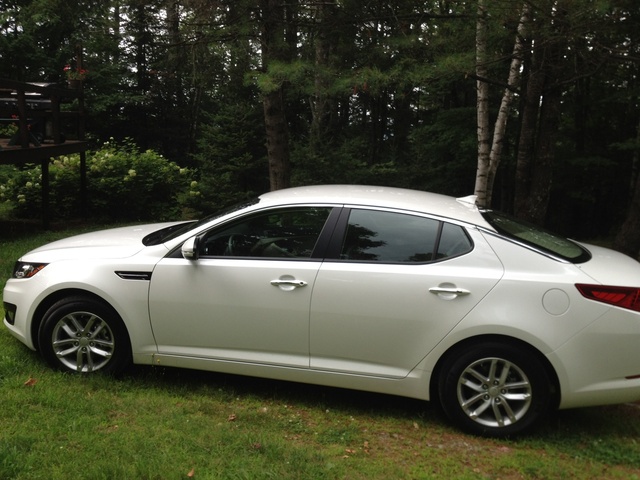
Hyundai’s premium-slanted Kia subsidiary has hit the proverbial home run with the value-laden 2012 Kia Optima. After all, what’s not to like? This midsize 5-passenger sedan boasts all kinds of techno-gizmos, offers a turbocharged 4-cylinder powerplant in higher trims, sports a roomy cabin (including surprisingly spacious rear-seat head- and legroom) and features a hefty 15.4 cubic feet of trunk space. And for a bit more money, a gas-saving, eco-friendly Hybrid version, engineered by Hyundai but inserted into the upscale Kia body, can even be had. Besides the midlevel Hybrid, trims range from the base LX and notched-up EX to the performance-oriented EX Turbo and the sporty SX. All trims are front-wheel drive and all are designed for comfort over pizzazz, though the SX, with its standard sport-tuned suspension, ought to make the drive home from work a bit more fun.
After a significant redesign for 2011, a forging that brings it from blah to ahh, the latest version of the Optima pretty much carries on unchanged, though a few slight cosmetic tweaks are alleged. Rivals, of course, abound, but a number of reviews claim the Optima is the value leader, with more than a few even stating that it’s among the best-looking and best-performing vehicles in its class. Sharing a platform with the similarly reworked Hyundai Sonata, the 2012 Optima lineup may not be at home on the raceway, but it get the job done with a measure of élan that many midsize sedans would envy, and in most cases for a lot less money.
Powering the LX and EX trims is a 200-hp 2.4-liter inline 4-cylinder (I4) engine that’s easy on gas but packs a pretty fair wallop. Mated with the standard 6-speed manual transmission in the base LX or with the 6-speed shiftable automatic in the EX (and available in the LX), look for 186 lb-ft of torque out of the normally aspirated I4, with gas mileage in the area of 24 mpg city and 35 highway.
A turbocharged 2.0-liter I4, meanwhile, graces the EX Turbo and SX trims. Combining with the standard 6-speed shiftable automatic, the I4 turbo slams down 274 hp and 269 lb-ft of torque, with mileage estimated at 22/34. As is becoming fashionable, both the manual and automatic 6-speed transmissions sport a brake hill-holder feature.
Finally, a 2.4-liter Hybrid I4 gasoline engine combines with a 40-hp electric motor to produce a total of 206 hp and 193 lb-ft of torque. Again, the 6-speed shiftable automatic is standard in the Hybrid, and fuel efficiency is estimated at 35/40.
The 2012 Optima LX boasts such standard appearance, comfort and convenience features as 16-inch steel wheels, heated power-adjustable mirrors, cloth upholstery and a rear folding armrest, just for starters. Then there are remote power door locks, driver’s side power window, telescoping tilt-wheel steering and, of course, air conditioning. An MP3-capable single-CD player and 6 speakers provide entertainment aboard the LX, bolstered by satellite radio and Bluetooth hands-free technology.
The EX and EX Turbo amp things up with 17-inch painted alloy wheels, leather upholstery, a power-adjustable driver’s seat, front power windows, dual-zone automatic climate control with its accompanying cooled storage compartment, front and rear floor mats and a universal remote garage door opener. Some extra plush is added to the midlevel EX and EX Turbo trims via a leather steering wheel and leather-trimmed shift knob. The flagship SX, meantime, adds 18-inch polished alloy wheels, steering-wheel-mounted paddle shifters and an electrochromatic rear-view mirror to the mix of standard features. Finally, the Hybrid sports unique 16-inch alloy wheels and Kia’s UVO infotainment system, which allows an interface between hands-free phone and audio functions and includes a rear-view camera.
Options for the LX with manual or automatic transmission include several items that are standard in higher trims, while the EX, EX Turbo and SX are eligible for the Premium Package with wood-grain cabin accents, a power sunroof, heated and power-adjustable front seats, memory for the driver's seat and mirror settings, as well as heated rear seats. Remote engine start is available across the lineup, while the Optima Hybrid can be delivered with Infinity audio that includes 2 additional premium speakers.
Standard safety equipment for the 2012 Optima lineup includes 4-wheel antilock braking (ABS), traction and stability control, front and rear head airbags, front side-mounted airbags and front head-restraint whiplash protection. Additionally all trims sport standard turn-signal-integrated mirrors, front fog/driving lights, xenon high-intensity-discharge (HID) headlights and a remote antitheft alarm. The Hybrid, meanwhile, also sports standard daytime running lights.
Numb steering, as well as hard, squirmy seats, significant blind spots and some curiously placed dash controls sum up the majority of issues owners have with the 2011 Optima. However, suddenly spiffy looks, a decent if not jaw-dropping ride, plenty of standard techno-features in the higher trims, hefty trunk space and a ton of value quickly lets owners forgive and forget this handsome sedan’s few shortcomings.

User reviews for 2012 Kia Optima
Write a review2012 Kia Optima Pricing
Trims & specs
Air Conditioning
Single front air conditioning zones
Airbags
Dual front airbags · Passenger airbag deactivation: occupant sensing deactivation · Front side airbags · Front side curtain airbags
Audio System
Antenna Type: mast · USB auxiliary audio input · Single disc in-Dash CD · MP3 player: CD MP3 Playback · AM/FM radio · Satellite Radio: SiriusXM · Total Number of Speakers: 6
Brakes
ABS: 4-wheel · Braking assist: hill start assist · Front brake diameter: 11.8 · Front brakes: ventilated disc · Rear brake diameter: 11.2 · Rear brakes: disc
Comfort Features
Armrests: rear center with pass-thru · Floor Material: carpet · Floor Mats: front and rear
Convenience Features
Center console: front console with armrest and storage · Cupholders: front · Dimming rearview mirror: auto-dimming · Multi-function remote: keyless entry · One-touch windows: 1 · Power outlet(s): two 12V · Power steering: electric · Reading lights: front · Steering wheel: tilt and telescopic · Steering wheel mounted controls: cruise controls · Storage: accessory hook · Universal garage door opener: Homelink · Vanity mirrors: dual illuminating
Driver Seat
Adjustable lumbar support: power · Manual adjustments: 6 · Power adjustments: 8
Drivetrain
Axle ratio: 2.89
Exterior Features
Body side moldings: body-color · Door handle color: body-color with chrome accents · Exhaust: dual exhaust tips · Exhaust tip color: chrome · Front bumper color: body-color · Grille color: chrome · Mirror color: body-color · Rear bumper color: body-color · Window trim: chrome
Headrests
Front headrests: adjustable · Number of front headrests: 2 · Number of rear headrests: 2
Instrumentation
Warnings and reminders: low fuel level
Lights
Headlights: Auto on/off
Mirrors
Exterior mirrors: power · Inside rearview mirror: manual day/night
Passenger Seat
Adjustable lumbar support: manual
Rear Seats
Type: 40-60 split bench
Safety
Active head restraints: driver · Child seat anchors: LATCH system · Crumple zones: front · Impact sensor: door unlock
Seatbelts
Front seatbelts: 3-point · Seatbelt force limiters: front · Seatbelt pretensioners: front · Second row seatbelts: 3-point
Seats
Driver seat manual adjustments: height · Front seat type: bucket · Passenger seat manual adjustments: reclining · Rear headrests: adjustable · Rear seat folding: split · Upholstery: cloth
Spare Tire
Mount Location: inside · Size: temporary
Spare Wheel
Rim Type: steel
Steering
Turns lock-to-lock: 2.90
Suspension
Front Arm Type: lower control arms · Front Shock Type: gas shock absorbers · Front Spring Type: coil springs · Front Suspension Classification: independent · Front Suspension Type: MacPherson struts · Rear Shock Type: gas shock absorbers · Rear Spring Type: coil springs · Rear Suspension Classification: independent · Rear Suspension Type: multi-link · Stabilizer bar(s): rear
Telematics
Phone wireless data link: Bluetooth
Tires
Type: all season
Tires and Rims
Wheels: steel
Windows
Front wipers: variable intermittent
Air Conditioning
Automatic climate control front air conditioning · Dual front air conditioning zones
Airbags
Dual front airbags · Passenger airbag deactivation: occupant sensing deactivation · Front side airbags · Rear side curtain airbags
Audio System
Antenna Type: mast · USB auxiliary audio input · Single disc in-Dash CD · MP3 player: CD MP3 Playback · AM/FM radio · Satellite Radio: SiriusXM · Total Number of Speakers: 6
Brakes
ABS: 4-wheel · Braking assist: hill start assist · Front brake diameter: 11.8 · Front brakes: ventilated disc · Rear brake diameter: 11.2 · Rear brakes: disc
Comfort Features
Armrests: rear center with cupholders · Floor Mat Material: carpet · Floor Material: carpet · Floor Mats: front · Shift knob trim: leather · Steering wheel trim: leather
Convenience Features
Center console: front console with armrest and storage · Cupholders: rear · Dimming rearview mirror: auto-dimming · Multi-function remote: keyless entry with panic alarm · One-touch windows: 2 · Power outlet(s): two 12V · Power steering: electric · Reading lights: front · Steering wheel: tilt and telescopic · Steering wheel mounted controls: cruise controls · Storage: accessory hook · Universal garage door opener: Homelink · Vanity mirrors: dual illuminating
Driver Seat
Adjustable lumbar support: power · Power adjustments: 8
Drivetrain
Axle ratio: 2.89
Exterior Features
Body side moldings: body-color · Door handle color: body-color with chrome accents · Exhaust: dual exhaust tips · Exhaust tip color: chrome · Front bumper color: body-color · Grille color: chrome · Mirror color: body-color · Rear bumper color: body-color · Window trim: chrome
Headrests
Front headrests: adjustable · Number of front headrests: 2 · Number of rear headrests: 2
Instrumentation
Warnings and reminders: maintenance reminder
Lights
Headlights: self-leveling · Tail and brake lights: LED
Mirrors
Exterior mirrors: integrated turn signals
Passenger Seat
Adjustable lumbar support: manual
Rear Seats
Type: 40-60 split bench
Safety
Active head restraints: driver · Child seat anchors: LATCH system · Crumple zones: rear · Impact sensor: door unlock
Seatbelts
Front seatbelts: 3-point · Seatbelt force limiters: front · Seatbelt pretensioners: front · Second row seatbelts: 3-point
Seats
Driver seat power adjustments: reclining · Front seat type: bucket · Passenger seat manual adjustments: reclining · Rear headrests: adjustable · Rear seat folding: split · Upholstery: leather
Spare Tire
Mount Location: inside · Size: temporary
Spare Wheel
Rim Type: steel
Steering
Turns lock-to-lock: 2.90
Suspension
Front Arm Type: lower control arms · Front Shock Type: gas shock absorbers · Front Spring Type: coil springs · Front Suspension Classification: independent · Front Suspension Type: MacPherson struts · Rear Shock Type: gas shock absorbers · Rear Spring Type: coil springs · Rear Suspension Classification: independent · Rear Suspension Type: multi-link · Stabilizer bar(s): front
Telematics
Phone wireless data link: Bluetooth
Tires
Type: all season
Tires and Rims
Wheel type: aluminum alloy
Windows
Front wipers: variable intermittent
Air Conditioning
Automatic climate control front air conditioning · Dual front air conditioning zones
Airbags
Dual front airbags · Passenger airbag deactivation: occupant sensing deactivation · Front side airbags · Front side curtain airbags
Audio System
Antenna Type: mast · Auxiliary audio input: jack · Single disc in-Dash CD · MP3 player: CD MP3 Playback · AM/FM radio · Satellite Radio: SiriusXM · Total Number of Speakers: 6
Brakes
ABS: 4-wheel · Braking assist: hill start assist · Front brake diameter: 12.6 · Front brakes: ventilated disc · Rear brake diameter: 11.2 · Rear brakes: disc
Comfort Features
Armrests: rear center with cupholders · Floor Mat Material: carpet · Floor Material: carpet · Floor Mats: front · Shift knob trim: leather · Steering wheel trim: leather
Convenience Features
Center console: front console with armrest and storage · Cupholders: rear · Dimming rearview mirror: auto-dimming · Multi-function remote: keyless entry · One-touch windows: 2 · Power outlet(s): two 12V · Reading lights: front · Steering wheel: tilt and telescopic · Steering wheel mounted controls: audio · Storage: door pockets · Universal garage door opener: Homelink · Vanity mirrors: dual illuminating
Driver Seat
Adjustable lumbar support: power · Power adjustments: 8
Drivetrain
Axle ratio: 2.89
Exterior Features
Body side moldings: body-color · Door handle color: body-color with chrome accents · Exhaust: dual exhaust tips · Exhaust tip color: chrome · Front bumper color: body-color · Grille color: chrome · Mirror color: body-color · Rear bumper color: body-color · Window trim: chrome
Headrests
Front headrests: adjustable · Number of front headrests: 2 · Number of rear headrests: 2
Instrumentation
Warnings and reminders: maintenance reminder
Lights
Headlights: Halogen · Tail and brake lights: LED
Mirrors
Exterior mirrors: power
Passenger Seat
Adjustable lumbar support: manual
Rear Seats
Type: 40-60 split bench
Safety
Active head restraints: driver · Child seat anchors: LATCH system · Crumple zones: rear · Impact sensor: door unlock
Seatbelts
Front seatbelts: 3-point · Seatbelt force limiters: front · Seatbelt pretensioners: front · Second row seatbelts: 3-point
Seats
Driver seat power adjustments: height · Front seat type: bucket · Passenger seat manual adjustments: reclining · Rear headrests: adjustable · Rear seat folding: split · Upholstery: leather
Spare Tire
Mount Location: inside · Size: temporary
Spare Wheel
Rim Type: steel
Steering
Turns lock-to-lock: 2.90
Suspension
Front Arm Type: lower control arms · Front Shock Type: gas shock absorbers · Front Spring Type: coil springs · Front Suspension Classification: independent · Front Suspension Type: MacPherson struts · Rear Shock Type: gas shock absorbers · Rear Spring Type: coil springs · Rear Suspension Classification: independent · Rear Suspension Type: multi-link · Stabilizer bar(s): rear
Telematics
Phone wireless data link: Bluetooth
Tires
Type: all season
Tires and Rims
Wheel type: aluminum alloy
Windows
Front wipers: variable intermittent
Air Conditioning
Automatic climate control front air conditioning · Dual front air conditioning zones
Airbags
Dual front airbags · Passenger airbag deactivation: occupant sensing deactivation · Front side airbags · Rear side curtain airbags
Audio System
Antenna Type: mast · USB auxiliary audio input · Single disc in-Dash CD · MP3 player: CD MP3 Playback · AM/FM radio · Satellite Radio: SiriusXM · Total Number of Speakers: 6
Brakes
ABS: 4-wheel · Braking assist: hill start assist · Front brake diameter: 12.6 · Front brakes: ventilated disc · Rear brake diameter: 11.2 · Rear brakes: disc
Comfort Features
Armrests: rear center with cupholders · Floor Mat Material: carpet · Floor Material: carpet · Floor Mats: front · Shift knob trim: leather · Steering wheel trim: leather
Convenience Features
Center console: front console with armrest and storage · Cupholders: front · Dimming rearview mirror: auto-dimming · Multi-function remote: keyless entry with panic alarm · One-touch windows: 2 · Power outlet(s): two 12V · Power steering: electric · Reading lights: front · Steering wheel: tilt and telescopic · Steering wheel mounted controls: phone · Storage: front seatback · Universal garage door opener: Homelink · Vanity mirrors: dual illuminating
Driver Seat
Adjustable lumbar support: power · Power adjustments: 8
Drivetrain
Axle ratio: 2.89
Exterior Features
Body side moldings: body-color · Door handle color: body-color with chrome accents · Exhaust: dual exhaust tips · Exhaust tip color: chrome · Front bumper color: body-color · Grille color: chrome · Mirror color: body-color · Rear bumper color: body-color · Rear spoiler: lip · Window trim: chrome
Headrests
Front headrests: adjustable · Number of front headrests: 2 · Number of rear headrests: 2
Instrumentation
Warnings and reminders: maintenance reminder
Lights
Headlights: HID · Tail and brake lights: LED
Mirrors
Exterior mirrors: integrated turn signals
Passenger Seat
Adjustable lumbar support: manual
Rear Seats
Type: 40-60 split bench
Safety
Active head restraints: driver · Child seat anchors: LATCH system · Crumple zones: front · Impact sensor: door unlock
Seatbelts
Front seatbelts: 3-point · Seatbelt force limiters: front · Seatbelt pretensioners: front · Second row seatbelts: 3-point
Seats
Driver seat power adjustments: height · Front seat type: bucket · Passenger seat manual adjustments: reclining · Rear headrests: adjustable · Rear seat folding: split · Upholstery: leather · Upholstery accents: cloth
Spare Tire
Mount Location: inside · Size: temporary
Spare Wheel
Rim Type: steel
Steering
Turns lock-to-lock: 2.90
Suspension
Front Arm Type: lower control arms · Front Shock Type: gas shock absorbers · Front Spring Type: coil springs · Front Suspension Classification: independent · Front Suspension Type: MacPherson struts · Rear Shock Type: gas shock absorbers · Rear Spring Type: coil springs · Rear Suspension Classification: independent · Rear Suspension Type: multi-link · Stabilizer bar(s): front
Telematics
Phone wireless data link: Bluetooth
Tires
Type: all season
Windows
Front wipers: variable intermittent

