2003 Mazda MAZDA6 Reviews, Pricing & Specs
Write a review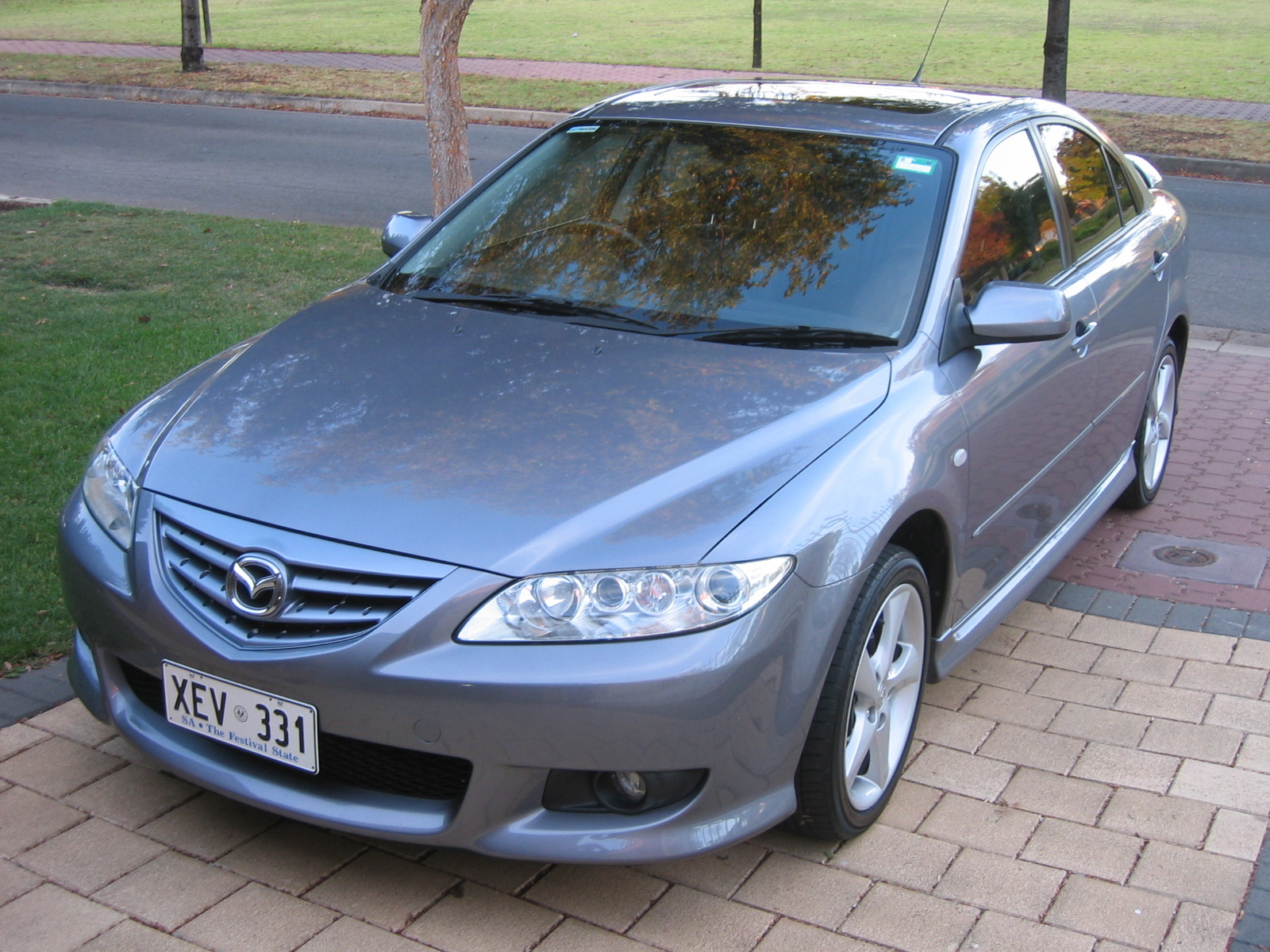
Rather than introduce another typical sedan to replace the 626 and Millenia mid-size sedans in 2003, Mazda decided to go sporty. The result was the Mazda 6, a sport sedan that was not only more powerful than the cars it replaced, but also sleeker in design and more nimble over the roads.
The four-door Mazda 6 was available in two configurations for 2003. Under the hood of the base 6i sedan was a 160-horsepower, 2.3-liter inline four-cylinder engine (offering 35 more horsepower than the four-cylinder engine in the previous year's 626 sedan). Stepping the power level up a notch was the Mazda 6s sedan, which was equipped with a 3.0-liter V6 that pumped out 220 horsepower (up 55 horsepower from the V6 in the previous year's 626).
A five-speed manual transmission was standard on both sedans, while a four-speed automatic was optional on the 6i and a five-speed manual was an option on the 6s. Both automatic transmissions had a special gate feature that enabled drivers to shift manually, similar to Porsche's Tiptronic transmissions.
Standard equipment on both 6 sedans included air conditioning, power windows, power door locks, cruise control, dual airbags, and a tilt/telescoping leather-wrapped steering wheel. The upscale 6s added a power-adjustable driver's seat, anti-lock brakes, and traction control. A sunroof and leather seats were among the options.
Generally, drivers liked the Mazda 6's handling, acceleration, sporty suspension, and styling. A few drivers reported having problems with the cars, but those drivers seemed to be the exception rather then the rule, with most reporting little or no problems with the car.

User reviews for 2003 Mazda MAZDA6
Write a review2003 Mazda MAZDA6 Pricing
Trims & specs
Airbags
Dual front airbags · Front and rear head airbags · Front side airbags
Audio System
Single disc in-Dash CD · MP3 player: CD MP3 Playback · Premium Brand: Bose · AM/FM radio
Brakes
ABS: 4-wheel
Comfort Features
Shift knob trim: leather · Steering wheel trim: leather
Convenience Features
Multi-function remote: keyless entry · Power steering: hydraulic · Steering wheel: tilt and telescopic · Steering wheel mounted controls: audio
Lights
Exterior entry lights: security approach lamps
Mirrors
Exterior mirrors: heated · Inside rearview mirror: electrochromic
Rear Seats
Type: split-bench
Roof
Moonroof: power
Seats
Front seat type: bucket · Heated: front seats · Upholstery: leather
Tires and Rims
Wheels: steel
Windows
Front wipers: intermittent
Air Conditioning
Automatic climate control front air conditioning
Airbags
Dual front airbags · Front and rear head airbags · Front side airbags
Audio System
Single disc in-Dash CD · MP3 player: CD MP3 Playback · Premium Brand: Bose · AM/FM radio
Brakes
ABS: 4-wheel
Comfort Features
Shift knob trim: leather · Steering wheel trim: leather
Convenience Features
Multi-function remote: trunk release · Power steering: hydraulic · Steering wheel: tilt and telescopic · Steering wheel mounted controls: audio
Lights
Exterior entry lights: security approach lamps
Mirrors
Exterior mirrors: heated · Inside rearview mirror: electrochromic
Rear Seats
Type: split-bench
Roof
Moonroof: power
Seats
Front seat type: bucket · Heated: front seats · Upholstery: cloth
Tires and Rims
Wheel type: aluminum alloy
Windows
Front wipers: intermittent

