Used Honda Fit for Sale nearLincoln, NE
Shop with transparent pricing.
Only show listings that include dealer fees- Year:
- 2015
- Make:
- Honda
- Model:
- Fit
- Body type:
- Hatchback
- Doors:
- 4 doors
- Drivetrain:
- Front-Wheel Drive
- Engine:
- 130 hp 1.5L I4
- Exterior color:
- Silver
- Combined gas mileage:
- 37 MPG
- Fuel type:
- Gasoline
- Interior color:
- Gray
- Transmission:
- Continuously Variable Transmission
- Mileage:
- 118,770
- Stock #:
- 760483
- VIN:
- 3HGGK5H51FM760483

2015 Honda Fit
LX
118,770 mi
$8,950
- Year:
- 2019
- Make:
- Honda
- Model:
- Fit
- Body type:
- Hatchback
- Doors:
- 4 doors
- Drivetrain:
- Front-Wheel Drive
- Engine:
- 128 hp 1.5L I4
- Exterior color:
- White
- Combined gas mileage:
- 36 MPG
- Fuel type:
- Gasoline
- Interior color:
- Gray
- Transmission:
- Automatic
- Mileage:
- 18,751
- Stock #:
- 70028844
- VIN:
- 3HGGK5H47KM741650

2019 Honda Fit
LX FWD
18,751 mi
$21,897
- Year:
- 2009
- Make:
- Honda
- Model:
- Fit
- Body type:
- Hatchback
- Doors:
- 4 doors
- Drivetrain:
- Front-Wheel Drive
- Engine:
- 117 hp 1.5L I4
- Exterior color:
- Silver
- Fuel type:
- Gasoline
- Interior color:
- Gray
- Transmission:
- 5-Speed Automatic Overdrive
- Mileage:
- 144,109
- Stock #:
- D6497
- VIN:
- JHMGE88229S064660

-$600
2009 Honda Fit
Base
144,109 mi
$7,199
$6,599
- Year:
- 2020
- Make:
- Honda
- Model:
- Fit
- Body type:
- Hatchback
- Doors:
- 4 doors
- Drivetrain:
- Front-Wheel Drive
- Exterior color:
- Blue
- Interior color:
- Black
- Transmission:
- Automatic
- Mileage:
- 41,154
- Stock #:
- 70241605
- VIN:
- 3HGGK5H43LM711336

2020 Honda Fit
LX FWD
41,154 mi
$22,297
- Year:
- 2019
- Make:
- Honda
- Model:
- Fit
- Body type:
- Hatchback
- Doors:
- 4 doors
- Drivetrain:
- Front-Wheel Drive
- Engine:
- 128 hp 1.5L I4
- Exterior color:
- Silver
- Combined gas mileage:
- 36 MPG
- Fuel type:
- Gasoline
- Interior color:
- Black
- Transmission:
- Continuously Variable Transmission
- Mileage:
- 86,133
- Stock #:
- 740784
- VIN:
- 3HGGK5H41KM740784

2019 Honda Fit
LX FWD
86,133 mi
$15,419
- Year:
- 2018
- Make:
- Honda
- Model:
- Fit
- Body type:
- Hatchback
- Doors:
- 4 doors
- Drivetrain:
- Front-Wheel Drive
- Engine:
- 130 hp 1.5L I4
- Exterior color:
- Silver
- Combined gas mileage:
- 32 MPG
- Fuel type:
- Gasoline
- Interior color:
- Black
- Transmission:
- 6-Speed Manual
- Mileage:
- 33,039
- Stock #:
- S-1154
- VIN:
- 3HGGK5G62JM711019

2018 Honda Fit
Sport
33,039 mi
$20,665
- Year:
- 2009
- Make:
- Honda
- Model:
- Fit
- Body type:
- Hatchback
- Doors:
- 4 doors
- Drivetrain:
- Front-Wheel Drive
- Engine:
- 117 hp 1.5L I4
- Exterior color:
- Silver
- Combined gas mileage:
- 31 MPG
- Fuel type:
- Gasoline
- Interior color:
- Black
- Transmission:
- 5-Speed Automatic
- Mileage:
- 112,637
- VIN:
- JHMGE88479S032143

2009 Honda Fit
Sport
112,637 mi
$7,584
- Year:
- 2016
- Make:
- Honda
- Model:
- Fit
- Body type:
- Hatchback
- Doors:
- 4 doors
- Drivetrain:
- Front-Wheel Drive
- Engine:
- 130 hp 1.5L I4
- Exterior color:
- Red
- Combined gas mileage:
- 37 MPG
- Fuel type:
- Gasoline
- Interior color:
- Black
- Transmission:
- Automatic
- Mileage:
- 47,711
- Stock #:
- 2016HONDAFIT4DR47KMILES+
- VIN:
- JHMGK5H54GS014793

2016 Honda Fit
LX
47,711 mi
$14,356
- Year:
- 2018
- Make:
- Honda
- Model:
- Fit
- Body type:
- Hatchback
- Doors:
- 4 doors
- Drivetrain:
- Front-Wheel Drive
- Engine:
- 128 hp 1.5L I4
- Exterior color:
- Gray
- Combined gas mileage:
- 33 MPG
- Fuel type:
- Gasoline
- Interior color:
- Gray
- Transmission:
- 7-Speed CVT
- Mileage:
- 101,600
- Stock #:
- 42375
- VIN:
- 3HGGK5H83JM735183

2018 Honda Fit
EX
101,600 mi
$13,753
- Year:
- 2017
- Make:
- Honda
- Model:
- Fit
- Body type:
- Hatchback
- Doors:
- 4 doors
- Drivetrain:
- Front-Wheel Drive
- Engine:
- 130 hp 1.5L I4
- Exterior color:
- Gray (Modern Steel Metallic)
- Combined gas mileage:
- 34 MPG
- Fuel type:
- Gasoline
- Interior color:
- Black
- Transmission:
- Automatic
- Mileage:
- 64,040
- Stock #:
- CSA8311
- VIN:
- JHMGK5H7XHS007348

-$400
2017 Honda Fit
EX
64,040 mi
$13,600
$16,275
- Year:
- 2020
- Make:
- Honda
- Model:
- Fit
- Body type:
- Hatchback
- Doors:
- 4 doors
- Drivetrain:
- Front-Wheel Drive
- Engine:
- 128 hp 1.5L I4
- Exterior color:
- Aegean Blue Metallic
- Combined gas mileage:
- 36 MPG
- Fuel type:
- Gasoline
- Interior color:
- Black
- Transmission:
- Automatic
- Mileage:
- 5,128
- Stock #:
- 28544C
- VIN:
- 3HGGK5H49LM705072

2020 Honda Fit
LX FWD
5,128 mi
$22,783
- Year:
- 2015
- Make:
- Honda
- Model:
- Fit
- Body type:
- Hatchback
- Doors:
- 4 doors
- Drivetrain:
- Front-Wheel Drive
- Engine:
- 130 hp 1.5L I4
- Exterior color:
- Gray
- Combined gas mileage:
- 37 MPG
- Fuel type:
- Gasoline
- Interior color:
- Black
- Transmission:
- Continuously Variable Transmission
- Mileage:
- 67,189
- Stock #:
- WB5531
- VIN:
- 3HGGK5H59FM738036

2015 Honda Fit
LX
67,189 mi
$13,567
- Year:
- 2019
- Make:
- Honda
- Model:
- Fit
- Body type:
- Hatchback
- Doors:
- 4 doors
- Drivetrain:
- Front-Wheel Drive
- Engine:
- 128 hp 1.5L I4
- Exterior color:
- Gray (Modern Steel)
- Fuel type:
- Gasoline
- Interior color:
- Black
- Mileage:
- 80,829
- Stock #:
- RM17750
- VIN:
- 3HGGK5H4XKM711705

-$1,000
2019 Honda Fit
LX FWD
80,829 mi
$16,441
$15,441
Recommended model year:
2015 Honda Fit
Shop 2015 Honda Fit »With 459 currently listed for sale and an average price of $11,519, 31.2% of 2015 Honda Fits for sale on CarGurus are rated as good or great deals.
Favorably reviewed: Owners rated the 2015 Honda Fit 4.75 / 5 stars and CarGurus experts gave it an 8.5 / 10.
56.4% of 2015 Fit models on CarGurus are accident free.
- Year:
- 2016
- Make:
- Honda
- Model:
- Fit
- Body type:
- Hatchback
- Doors:
- 4 doors
- Drivetrain:
- Front-Wheel Drive
- Engine:
- 130 hp 1.5L I4
- Exterior color:
- Black
- Combined gas mileage:
- 37 MPG
- Fuel type:
- Gasoline
- Interior color:
- Black
- Transmission:
- Automatic
- Mileage:
- 32,643
- Stock #:
- 28665322
- VIN:
- JHMGK5H57GX003337

2016 Honda Fit
LX
32,643 mi
$19,397
- Year:
- 2016
- Make:
- Honda
- Model:
- Fit
- Body type:
- Hatchback
- Doors:
- 4 doors
- Drivetrain:
- Front-Wheel Drive
- Engine:
- 130 hp 1.5L I4
- Exterior color:
- Black
- Combined gas mileage:
- 35 MPG
- Fuel type:
- Gasoline
- Interior color:
- Black
- Transmission:
- Continuously Variable Transmission
- Mileage:
- 90,300
- Stock #:
- C26031
- VIN:
- JHMGK5H99GS012184

2016 Honda Fit
EX-L with Navi
90,300 mi
$12,690
- Year:
- 2017
- Make:
- Honda
- Model:
- Fit
- Body type:
- Hatchback
- Doors:
- 4 doors
- Drivetrain:
- Front-Wheel Drive
- Engine:
- 130 hp 1.5L I4
- Exterior color:
- Crystal Black Pearl
- Combined gas mileage:
- 34 MPG
- Fuel type:
- Gasoline
- Interior color:
- Black
- Transmission:
- Automatic
- Mileage:
- 101,529
- Stock #:
- 270016A
- VIN:
- JHMGK5H71HS019100

2017 Honda Fit
EX
101,529 mi
$14,299
- Year:
- 2019
- Make:
- Honda
- Model:
- Fit
- Body type:
- Hatchback
- Doors:
- 4 doors
- Drivetrain:
- Front-Wheel Drive
- Engine:
- 128 hp 1.5L I4
- Exterior color:
- White
- Combined gas mileage:
- 33 MPG
- Fuel type:
- Gasoline
- Interior color:
- Black
- Transmission:
- Automatic
- Mileage:
- 60,225
- Stock #:
- 29137411
- VIN:
- 3HGGK5H80KM736325

2019 Honda Fit
EX FWD
60,225 mi
$21,747
- Year:
- 2020
- Make:
- Honda
- Model:
- Fit
- Body type:
- Hatchback
- Doors:
- 4 doors
- Drivetrain:
- Front-Wheel Drive
- Engine:
- 128 hp 1.5L I4
- Exterior color:
- White
- Combined gas mileage:
- 33 MPG
- Fuel type:
- Gasoline
- Interior color:
- Black
- Transmission:
- Automatic
- Mileage:
- 47,875
- Stock #:
- 28871162
- VIN:
- 3HGGK5H8XLM732817

2020 Honda Fit
EX FWD
47,875 mi
$22,147
- Year:
- 2015
- Make:
- Honda
- Model:
- Fit
- Body type:
- Hatchback
- Doors:
- 4 doors
- Drivetrain:
- Front-Wheel Drive
- Engine:
- 130 hp 1.5L I4
- Exterior color:
- Silver
- Combined gas mileage:
- 35 MPG
- Fuel type:
- Gasoline
- Interior color:
- Black
- Transmission:
- Continuously Variable Transmission
- Mileage:
- 107,639
- Stock #:
- B1249
- VIN:
- 3HGGK5H87FM755962

2015 Honda Fit
EX
107,639 mi
$10,395
- Year:
- 2016
- Make:
- Honda
- Model:
- Fit
- Body type:
- Hatchback
- Doors:
- 4 doors
- Drivetrain:
- Front-Wheel Drive
- Engine:
- 130 hp 1.5L I4
- Exterior color:
- Black
- Combined gas mileage:
- 37 MPG
- Fuel type:
- Gasoline
- Interior color:
- Black
- Transmission:
- Continuously Variable Transmission
- Mileage:
- 51,000
- Stock #:
- 17408
- VIN:
- JHMGK5H50GX038222

2016 Honda Fit
LX
51,000 mi
$16,688
- Year:
- 2016
- Make:
- Honda
- Model:
- Fit
- Body type:
- Hatchback
- Doors:
- 4 doors
- Drivetrain:
- Front-Wheel Drive
- Engine:
- 130 hp 1.5L I4
- Exterior color:
- Black
- Combined gas mileage:
- 35 MPG
- Fuel type:
- Gasoline
- Interior color:
- Black
- Transmission:
- Continuously Variable Transmission
- Mileage:
- 76,664
- Stock #:
- 252132
- VIN:
- 3HGGK5H94GM704266

2016 Honda Fit
EX-L with Navi
76,664 mi
$14,146
- Year:
- 2018
- Make:
- Honda
- Model:
- Fit
- Body type:
- Hatchback
- Doors:
- 4 doors
- Drivetrain:
- Front-Wheel Drive
- Engine:
- 128 hp 1.5L I4
- Exterior color:
- Crystal Black Pearl
- Combined gas mileage:
- 33 MPG
- Fuel type:
- Gasoline
- Interior color:
- Black
- Transmission:
- Automatic
- Mileage:
- 67,039
- Stock #:
- STK705625
- VIN:
- 3HGGK5H0XJM705625

2018 Honda Fit
EX-L with Navi
67,039 mi
$18,072
- Year:
- 2010
- Make:
- Honda
- Model:
- Fit
- Body type:
- Hatchback
- Doors:
- 4 doors
- Drivetrain:
- Front-Wheel Drive
- Engine:
- 117 hp 1.5L I4
- Exterior color:
- Black
- Fuel type:
- Gasoline
- Interior color:
- Gray
- Transmission:
- 5-Speed Automatic Overdrive
- Mileage:
- 151,630
- Stock #:
- M1222
- VIN:
- JHMGE8H43AC039959

2010 Honda Fit
Sport
151,630 mi
$7,895
How much does the Honda Fit cost in today's market?
Used Honda Fit prices span a wide range depending on model year. Here's what the market looks like right now:
| Model Year | Current Avg. Price | Year-Round Range |
|---|---|---|
| 2020 | $18,116 | $15,575 – $18,116 |
| 2019 | $16,291 | $14,943 – $16,481 |
| 2018 | $15,235 | $13,644 – $15,459 |
| 2017 | $13,600 | $12,238 – $14,386 |
| 2016 | $12,395 | $11,637 – $12,716 |
| 2015 | $11,524 | $10,203 – $11,524 |
The Honda Fit's current nationwide average price is $11,995, and its lowest point over the past year was $10,803. Recently, prices have held firm or risen year-over-year across the most recent model years.
Is the Honda Fit a good car?
Yes — the Honda Fit earns a strong all-generations user rating and stands out for the traits owners keep repeating across the years. The all-generations owner rating is 4.59/5 across every model year in the data.
Owners consistently praise the Fit for its spacious interior, impressive cargo space, and excellent fuel economy. Many also highlight its fun driving dynamics, easy maneuverability, and practical everyday usefulness.
Expert reviews rate the 2015 and 2018 models among the highest across all years.
Recent expert feedback also points to a few trade-offs, including modest engine power when the car is fully loaded, seat comfort concerns, and infotainment and visibility quirks on some years.
29.2% of listings are priced as good or great deals.
Are Honda Fit models reliable?
Owners consistently describe the Honda Fit as a practical, dependable small car with strong everyday usability. Expert feedback reinforces that impression with praise for its build quality, spacious cabin, and overall value.
- Owners rate the Honda Fit between 4.33 and 4.75 out of 5 stars across all model years in the data.
For used buyers, that combination points to a model that can be a reassuring long-term ownership choice when you verify condition and maintenance history.
What should I look for when buying a used Honda Fit?
Across all model years, at 59.4% accident-free, a meaningful share of listings has prior incidents — history verification is especially important.
| Model Year | Accident-Free % |
|---|---|
| 2020 | 62.7% |
| 2019 | 62.4% |
| 2018 | 58.8% |
| 2017 | 57.9% |
| 2016 | 56.9% |
| 2015 | 57.9% |
| 2014 | 59.6% |
Key things to evaluate:
- Safety package: Honda Sensing on the EX and EX-L trims, and available on LX and Sport with the CVT
- Infotainment: 7-inch touchscreen with Apple CarPlay and Android Auto on every model but the LX
- Fuel efficiency: 29 mpg city, 36 highway, 31 combined; with the CVT, 33, 40, 36
Which Honda Fit trim should I buy?
The 2018 Honda Fit offers these trims:
- LX: The entry trim brings power locks, power windows, air conditioning, a power moonroof, a four-speaker stereo, Bluetooth connectivity, and a USB port.
- Sport: This trim adds 16-inch alloy wheels, fog lights, an upgraded lower front spoiler, side underbody spoilers, a 6-speaker stereo, a leather-wrapped steering wheel and shift knob, and a 7-inch touchscreen. It is the best-value trim if you want the strongest mix of features and price.
- EX: This trim adds push-button start, cargo tie-downs, SiriusXM satellite radio, telescoping sun visors, and SmartLock.
- EX-L: This trim adds leather upholstery, heated front seats, heated body-color side mirrors with an expanded view on the driver’s side mirror, and integrated turn signals on both sides.
What Honda Fit do most buyers choose?
The Honda Fit years with the most listings are 2016, 2015, and 2014.
| Model Year | Total Listings | Good + Great Deals % |
|---|---|---|
| 2016 | 531 | 31.5% |
| 2015 | 458 | 31.2% |
| 2014 | 379 | 30.6% |
| 2017 | 366 | 31.1% |
| 2019 | 346 | 30.9% |
| 2018 | 320 | 32.8% |
Higher-listing years tend to be the easiest place to shop because you get more choices on price, condition, and equipment. They also tend to be the years most shoppers cross-shop first, which helps explain why they remain popular used picks.
What is the Honda Fit's resale value?
| Model Year | Current Avg. Price | Year-Over-Year Change |
|---|---|---|
| 2020 | $18,116 | +3.03% |
| 2015 | $11,524 | +3.39% |
| 2019 | $16,291 | +3.56% |
| 2016 | $12,395 | +4.68% |
| 2017 | $13,600 | +5.03% |
| 2018 | $15,235 | +5.42% |
The table shows positive year-over-year movement across every listed model year, which means used Fit prices have been rising rather than softening. The increases are modest, but they still point to steady demand and a model that continues to command solid used-market interest.
The 2018, 2017, and 2016 model years have held their value best, with prices flat to rising year-over-year.
Is the Honda Fit safe?
- 2018: 8/10
- 2015: 7/10
Honda Sensing is standard on the EX and EX-L trims, and it includes forward-collision warning and avoidance, lane-departure warning, and road-departure mitigation.
For the safest used buy, the 2018 model posts the highest confirmed score of 8/10.
Should I buy a used Honda Fit now?
Buy now if:
- Sweet-spot year: The 2016 model has the most listings at a current average price of $12,395. The Honda Fit offers a spacious cabin and clever storage that make it especially easy to live with every day.
If you're buying used today, the 2016 model year offers the best mix of value and availability.
These recommendations are based on CarGurus' proprietary market data from September 15, 2026, CarGurus experts' opinions, and generative AI.
*CarGurus meticulously monitors the prices of millions of pre-owned vehicle listings, offering users precise and up-to-date market insights. Historical pricing data excludes any additional dealer fees as of May 3, 2026.
4.6 Overall rating
Customers say
The Honda Fit has earned a loyal following over the years, with drivers consistently praising its spacious interior, impressive cargo space, and excellent fuel economy. Many appreciate its fun driving dynamics and reliability, making it an ideal option for city driving and daily commutes. However, some owners have mentioned concerns about the engine's power, particularly when fully loaded, and a desire for improved seat comfort. While the rear visibility and some safety features could be better, the Fit remains a well-liked and practical choice for those seeking an economical compact car.
AI generated from the text of customer reviews.
Filter by year
Filter by rating
What people say
Anonymous
Reviewed a 2008 Honda Sport on Aug 5, 2026
Great value, very reliable, super spacious, and still budget friendly. Can’t beat it
Ahmed I
Reviewed a 2009 Honda Fit on Jul 24, 2025
The car is fun to drive on twisty roads and has good space to comfortably fit five people. There’s also plenty of room to store things in the back, especially when the rear seats are folded down. Since the car was discontinued, it's missing newer models because it still holds up well. I would compare it to the Chevrolet Spark, Hyundai i10, Kia Picanto, and Yaris Hatchback, but I’d give the Honda Fit extra credit for its fun factor and reliability.
Shari M
Reviewed a 2016 Honda EX on Apr 6, 2025
This car is a great value with only 28k miles on it, the process was seamless and easy - excited to be an owner of this car
Jack M
Reviewed a 2012 Honda Sport on Oct 1, 2025
The Honda fit sport 2012 2013 std shift. It’s the most fun car I’ve ever had no other car compares with this car.
Honda Fit Trims
| Trim type | MSRP |
|---|---|
| EX-L FWD | $20,620 |
| Sport FWD | $17,600 |
| EX FWD | $19,060 |
| LX FWD | $16,190 |
*CarGurus meticulously monitors the prices of millions of pre-owned vehicle listings, offering users precise and up-to-date market insights. Historical pricing data excludes any additional dealer fees as of May 3, 2026.
Honda Fit Price Trends
CarGurus tracks the prices of millions of used car listings every year. See how the average price of Honda Fit prices has changed over time.
See more price trendsHonda Fit Pricing Analysis
Pricing Analysis by Model Year
Key Insights
- Steady Depreciation: The 2020 Honda Fit shows a current average price of $18,365, reflecting a +7.2% increase over its MSRP, indicating strong demand for newer models.
- Significant Value in Older Models: The 2013 Honda Fit is priced at $9,526, representing a -38.9% depreciation from its original MSRP, making it a budget-friendly option.
- Best Value Year: The 2018 Honda Fit is priced at $15,200, which is -6.1% below MSRP, offering a balance of price and features for shoppers.
Model Year Pricing
| Model Year | Original MSRP | Avg Price | Price vs MSRP |
|---|---|---|---|
| 2020 Honda Fit | $16,190 | $18,365 | +7.2% |
| 2019 Honda Fit | $16,190 | $16,863 | +4.1% |
| 2018 Honda Fit | $16,190 | $15,200 | -6.1% |
| 2017 Honda Fit | $16,090 | $13,738 | -14.6% |
| 2016 Honda Fit | $15,890 | $12,858 | -19.2% |
| 2015 Honda Fit | $15,650 | $12,038 | -23.3% |
| 2013 Honda Fit | $15,425 | $9,526 | -38.9% |
| 2012 Honda Fit | $15,325 | $8,987 | -41.3% |
| 2011 Honda Fit | $15,100 | $8,031 | -46.8% |
| 2010 Honda Fit | $14,900 | $7,818 | -47.5% |
| 2009 Honda Fit | $14,550 | $7,216 | -50.5% |
Pricing by Popular US Cities
Market Area: Nationwide
Key Insights
- Lowest Prices in New York: The New York, NY market offers the lowest average price at $9,858, indicating a potentially higher inventory or lower demand.
- Highest Prices in Philadelphia: In contrast, Philadelphia, PA has an average price of $13,541, suggesting stronger demand or lower inventory levels.
- Price Variation Across Cities: The average prices range from $9,858 in New York to $13,541 in Philadelphia, highlighting significant regional pricing differences.
City-Level Pricing
| City | Total Listings | Avg Price |
|---|---|---|
| New York, NY | 131 | $9,858 |
| Los Angeles, CA | 129 | $12,282 |
| Chicago, IL | 126 | $11,294 |
| Dallas, TX | 87 | $10,636 |
| Philadelphia, PA | 121 | $13,541 |
| Houston, TX | 84 | $12,335 |
| Miami, FL | 69 | $13,575 |
| Washington, DC | 149 | $11,843 |
| Atlanta, GA | 109 | $11,198 |
| Boston, MA | 144 | $11,146 |
Pricing by Trim Packages
Key Insights
- Most Common Trim: The LX FWD trim leads with 132 listings, making it the most accessible option for buyers.
- Price Range Across Trims: The EX-L FWD trim, priced at $20,620, is the highest MSRP, reflecting the added features and luxury.
- Consistent Drivetrain Offering: All trims are FWD, indicating a focus on fuel efficiency and urban usability.
Trim-Level Details
| Trim | Listings | MSRP | Drivetrain | Engine |
|---|---|---|---|---|
| LX FWD | 132 | $16,190 | FWD | 1.5L 130 hp I4 |
| EX FWD | 74 | $19,060 | FWD | 1.5L 128 hp I4 |
| Sport FWD | 17 | $17,600 | FWD | 1.5L 128 hp I4 |
| EX-L FWD | 10 | $20,620 | FWD | 1.5L 128 hp I4 |
These recommendations are based on CarGurus' proprietary market data from September 16, 2026, CarGurus experts' opinions, and generative AI.
*CarGurus meticulously monitors the prices of millions of pre-owned vehicle listings, offering users precise and up-to-date market insights. Historical pricing data excludes any additional dealer fees as of May 3, 2026.
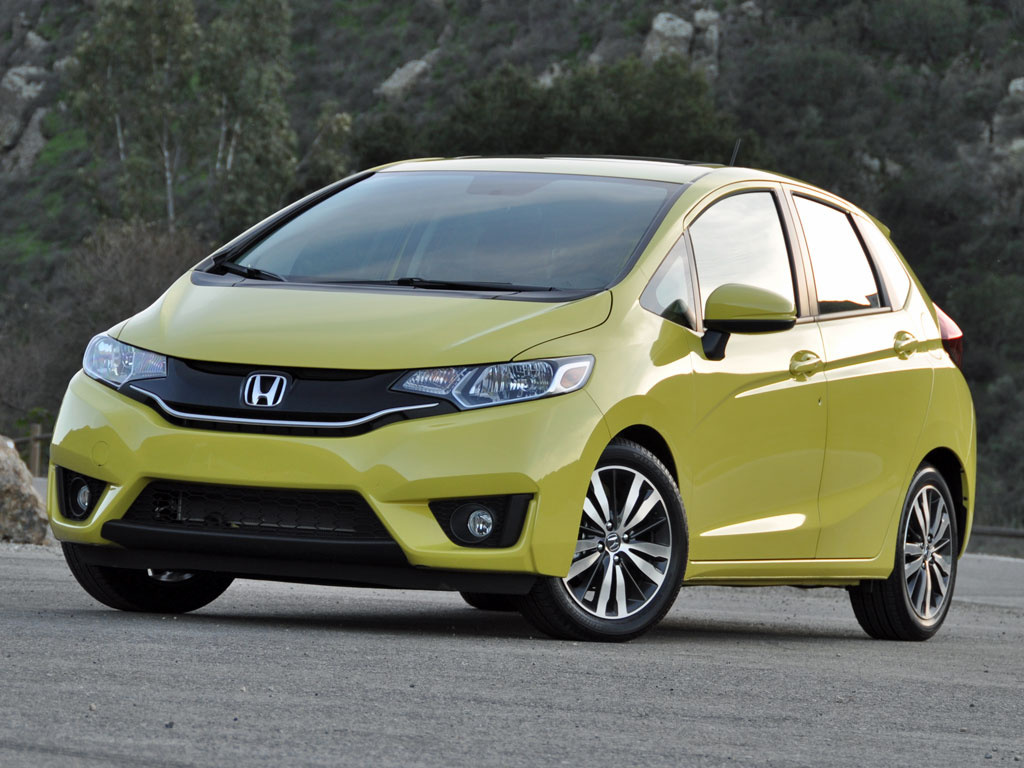
CarGurus recommends the 2015 Honda Fit
Summary
With 459 currently listed for sale and an average price of $11,519, 31.2% of 2015 Honda Fits for sale on CarGurus are rated as good or great deals.
Favorably reviewed: Owners rated the 2015 Honda Fit 4.75 / 5 stars and CarGurus experts gave it an 8.5 / 10.
56.4% of 2015 Fit models on CarGurus are accident free.
Why it stands out
The 2015 Honda Fit stands out because it blends practicality with personality in a way few small cars manage. The redesigned model is still quirky and remarkably fun to drive, yet it is also better than ever in other respects. Honda’s approach gives the Fit a grown-up, more sophisticated feel without stripping away its offbeat character, which helps make it memorable in a segment where many cars can feel interchangeable.
It is also appealing because it is one of Honda’s rare subcompacts that feels more like a reward than a penalty box to own and drive. The car’s strengths are rooted in being fun, affordable, and practical, and that combination is a big part of its appeal. Owner feedback reinforces that image, with praise for the spacious interior, excellent gas mileage, and impressive cargo space. At the same time, some drivers have found the handling less enjoyable and the engine noise a bit loud, so the Fit’s charm comes with a few compromises.
Other model years to consider
- Average price: $12,406
- Good/great deal percentage: 31.0%
- User rating: 4.6 / 5
- Total listings: 532
- Average price: $16,267
- Good/great deal percentage: 29.2%
- User rating: 4.62 / 5
- Total listings: 343
- Average price: $13,663
- Good/great deal percentage: 30.0%
- User rating: 4.33 / 5
- Total listings: 370
These recommendations are based on CarGurus' proprietary market data from September 14, 2026, CarGurus experts' opinions, and generative AI.
*CarGurus meticulously monitors the prices of millions of pre-owned vehicle listings, offering users precise and up-to-date market insights. Historical pricing data excludes any additional dealer fees as of May 3, 2026.