Used Chevrolet Impala for Sale nearRolla, MO
Shop with transparent pricing.
Only show listings that include dealer fees- Year:
- 2016
- Make:
- Chevrolet
- Model:
- Impala
- Body type:
- Sedan
- Doors:
- 4 doors
- Drivetrain:
- Front-Wheel Drive
- Engine:
- 305 hp 3.6L V6 Flex Fuel Vehicle
- Exterior color:
- Silver Ice Metallic
- Fuel type:
- Flex Fuel Vehicle
- Interior color:
- Dark Titanium/Jet Black
- Transmission:
- 6-Speed Automatic
- Mileage:
- 125,588
- Stock #:
- 13106XA
- VIN:
- 2G1145S35G9116896


Sponsored by Johnny Londoff Chevrolet
2016 Chevrolet Impala
LTZ 2LZ FWD
125,588 mi
$9,599
- Year:
- 2018
- Make:
- Chevrolet
- Model:
- Impala
- Body type:
- Sedan
- Doors:
- 4 doors
- Drivetrain:
- Front-Wheel Drive
- Engine:
- 305 hp 3.6L V6 Flex Fuel Vehicle
- Exterior color:
- Silver
- Combined gas mileage:
- 23 MPG
- Fuel type:
- Flex Fuel Vehicle
- Interior color:
- Gray
- Transmission:
- 6-Speed Automatic Overdrive
- Mileage:
- 156,084
- Stock #:
- 169987
- VIN:
- 2G1125S32J9169987

Sponsored Listing
2018 Chevrolet Impala
Premier FWD
156,084 mi
$9,194
- Year:
- 2020
- Make:
- Chevrolet
- Model:
- Impala
- Body type:
- Sedan
- Doors:
- 4 doors
- Drivetrain:
- Front-Wheel Drive
- Engine:
- 305 hp 3.6L V6 Flex Fuel Vehicle
- Exterior color:
- White
- Combined gas mileage:
- 23 MPG
- Fuel type:
- Flex Fuel Vehicle
- Interior color:
- Black
- Transmission:
- Automatic
- Mileage:
- 132,596
- Stock #:
- 6643021
- VIN:
- 2G11Z5S39L9104407

Sponsored Listing
2020 Chevrolet Impala
LT FWD
132,596 mi
$12,610
- Year:
- 2016
- Make:
- Chevrolet
- Model:
- Impala
- Body type:
- Sedan
- Doors:
- 4 doors
- Drivetrain:
- Front-Wheel Drive
- Engine:
- 196 hp 2.5L I4
- Exterior color:
- Heather Gray Metallic
- Combined gas mileage:
- 26 MPG
- Fuel type:
- Gasoline
- Interior color:
- Jet Black
- Transmission:
- 6-Speed Automatic
- Mileage:
- 81,819
- Stock #:
- T14507B
- VIN:
- 1G1105SA9GU116526

2016 Chevrolet Impala
1LT FWD
81,819 mi
$12,678
- Year:
- 2020
- Make:
- Chevrolet
- Model:
- Impala
- Body type:
- Sedan
- Doors:
- 4 doors
- Drivetrain:
- Front-Wheel Drive
- Engine:
- 305 hp 3.6L V6 Flex Fuel Vehicle
- Exterior color:
- White
- Combined gas mileage:
- 23 MPG
- Fuel type:
- Flex Fuel Vehicle
- Interior color:
- Black
- Transmission:
- Automatic
- Mileage:
- 132,596
- Stock #:
- 6643021
- VIN:
- 2G11Z5S39L9104407
2020 Chevrolet Impala
LT FWD
132,596 mi
$12,610
- Year:
- 2014
- Make:
- Chevrolet
- Model:
- Impala
- Body type:
- Sedan
- Doors:
- 4 doors
- Drivetrain:
- Front-Wheel Drive
- Engine:
- 2.5L I4
- Exterior color:
- Crystal Red Tintcoat
- Combined gas mileage:
- 26 MPG
- Fuel type:
- Gasoline
- Interior color:
- Black
- Transmission:
- 6-Speed Automatic Overdrive
- Mileage:
- 101,141
- Stock #:
- H41414A
- VIN:
- 1G1115SLXEU122069

-$350
2014 Chevrolet Impala
1LT FWD
101,141 mi
$11,570
$11,220
- Year:
- 2017
- Make:
- Chevrolet
- Model:
- Impala
- Body type:
- Sedan
- Doors:
- 4 doors
- Drivetrain:
- Front-Wheel Drive
- Engine:
- 305 hp 3.6L V6 Flex Fuel Vehicle
- Exterior color:
- Black
- Combined gas mileage:
- 23 MPG
- Fuel type:
- Flex Fuel Vehicle
- Interior color:
- Black
- Transmission:
- Automatic
- Mileage:
- 88,885
- Stock #:
- 28526571
- VIN:
- 2G1105S36H9184413

2017 Chevrolet Impala
LT FWD
88,885 mi
$17,497
- Year:
- 2018
- Make:
- Chevrolet
- Model:
- Impala
- Body type:
- Sedan
- Doors:
- 4 doors
- Drivetrain:
- Front-Wheel Drive
- Engine:
- 305 hp 3.6L V6 Flex Fuel Vehicle
- Exterior color:
- Silver
- Combined gas mileage:
- 23 MPG
- Fuel type:
- Flex Fuel Vehicle
- Interior color:
- Gray
- Transmission:
- 6-Speed Automatic Overdrive
- Mileage:
- 156,084
- Stock #:
- 169987
- VIN:
- 2G1125S32J9169987
2018 Chevrolet Impala
Premier FWD
156,084 mi
$9,194
- Year:
- 2018
- Make:
- Chevrolet
- Model:
- Impala
- Body type:
- Sedan
- Doors:
- 4 doors
- Drivetrain:
- Front-Wheel Drive
- Engine:
- 197 hp 2.5L I4
- Exterior color:
- White
- Fuel type:
- Gasoline
- Mileage:
- 105,300
- Stock #:
- 11845
- VIN:
- 2G1105SAXJ9100128

2018 Chevrolet Impala
LT FWD
105,300 mi
$12,999
- Year:
- 2012
- Make:
- Chevrolet
- Model:
- Impala
- Body type:
- Sedan
- Doors:
- 4 doors
- Drivetrain:
- Front-Wheel Drive
- Engine:
- 300 hp 3.6L V6 Flex Fuel Vehicle
- Exterior color:
- Silver
- Combined gas mileage:
- 23 MPG
- Fuel type:
- Flex Fuel Vehicle
- Mileage:
- 87,264
- Stock #:
- T43305A
- VIN:
- 2G1WB5E36C1120942

2012 Chevrolet Impala
LT FWD
87,264 mi
$9,085
- Year:
- 2019
- Make:
- Chevrolet
- Model:
- Impala
- Body type:
- Sedan
- Doors:
- 4 doors
- Drivetrain:
- Front-Wheel Drive
- Engine:
- 197 hp 2.5L I4
- Exterior color:
- Red
- Combined gas mileage:
- 25 MPG
- Fuel type:
- Gasoline
- Interior color:
- Black
- Transmission:
- 6-Speed Automatic
- Mileage:
- 69,535
- Stock #:
- 122408
- VIN:
- 1G11Z5SA2KU122408

2019 Chevrolet Impala
LT FWD
69,535 mi
$16,704
- Year:
- 2014
- Make:
- Chevrolet
- Model:
- Impala
- Body type:
- Sedan
- Doors:
- 4 doors
- Drivetrain:
- Front-Wheel Drive
- Engine:
- 2.5L I4
- Exterior color:
- Silver
- Fuel type:
- Gasoline
- Interior color:
- Gray
- Transmission:
- 6-Speed Automatic
- Mileage:
- 81,065
- Stock #:
- 11175
- VIN:
- 2G1115SL6E9291535

2014 Chevrolet Impala
1LT FWD
81,065 mi
$12,331
- Year:
- 2016
- Make:
- Chevrolet
- Model:
- Impala
- Body type:
- Sedan
- Doors:
- 4 doors
- Drivetrain:
- Front-Wheel Drive
- Engine:
- 305 hp 3.6L V6 Flex Fuel Vehicle
- Exterior color:
- Red
- Fuel type:
- Flex Fuel Vehicle
- Interior color:
- Black
- Transmission:
- 6-Speed Automatic
- Mileage:
- 155,840
- Stock #:
- 207630
- VIN:
- 2G1115S35G9207630

-$1,000
2016 Chevrolet Impala
2LT FWD
155,840 mi
$9,543
$8,543
Recommended model year:
2014 Chevrolet Impala
Shop 2014 Chevrolet Impala »With 544 currently listed for sale and an average price of $9,963, 23.2% of 2014 Chevrolet Impalas for sale on CarGurus are rated as good or great deals.
Favorably reviewed: Owners rated the 2014 Chevrolet Impala 4.85 / 5 stars and CarGurus experts gave it a 7.83 / 10.
50.6% of 2014 Impala models on CarGurus are accident free.
- Year:
- 2019
- Make:
- Chevrolet
- Model:
- Impala
- Body type:
- Sedan
- Doors:
- 4 doors
- Drivetrain:
- Front-Wheel Drive
- Engine:
- 197 hp 2.5L I4
- Exterior color:
- Black
- Combined gas mileage:
- 25 MPG
- Fuel type:
- Gasoline
- Interior color:
- Black
- Transmission:
- 6-Speed Automatic
- Mileage:
- 132,370
- Stock #:
- JYC-141584
- VIN:
- 1G11Z5SA7KU141584

2019 Chevrolet Impala
LT FWD
132,370 mi
$11,314
- Year:
- 2020
- Make:
- Chevrolet
- Model:
- Impala
- Body type:
- Sedan
- Doors:
- 4 doors
- Drivetrain:
- Front-Wheel Drive
- Engine:
- 305 hp 3.6L V6 Flex Fuel Vehicle
- Exterior color:
- Black
- Combined gas mileage:
- 23 MPG
- Fuel type:
- Flex Fuel Vehicle
- Interior color:
- Black
- Mileage:
- 117,744
- Stock #:
- P-26-0317A
- VIN:
- 1G11Z5S36LU108577

2020 Chevrolet Impala
LT FWD
117,744 mi
$14,300
- Year:
- 2018
- Make:
- Chevrolet
- Model:
- Impala
- Body type:
- Sedan
- Doors:
- 4 doors
- Drivetrain:
- Front-Wheel Drive
- Engine:
- 305 hp 3.6L V6 Flex Fuel Vehicle
- Exterior color:
- Black
- Combined gas mileage:
- 23 MPG
- Fuel type:
- Flex Fuel Vehicle
- Interior color:
- Gray
- Transmission:
- 6-Speed Automatic Overdrive
- Mileage:
- 112,155
- Stock #:
- 1373
- VIN:
- 2G1105S35J9132907

2018 Chevrolet Impala
LT FWD
112,155 mi
$13,836
- Year:
- 2015
- Make:
- Chevrolet
- Model:
- Impala
- Body type:
- Sedan
- Doors:
- 4 doors
- Drivetrain:
- Front-Wheel Drive
- Engine:
- 305 hp 3.6L V6 Flex Fuel Vehicle
- Exterior color:
- Champagne Silver Metallic
- Combined gas mileage:
- 24 MPG
- Fuel type:
- Flex Fuel Vehicle
- Interior color:
- Jet Black/Brownstone, Sueded Microfiber Seat Trim
- Transmission:
- Automatic
- Mileage:
- 48,932
- Stock #:
- 267621
- VIN:
- 2G1125S3XF9146125

2015 Chevrolet Impala
2LT FWD
48,932 mi
$18,948
- Year:
- 2017
- Make:
- Chevrolet
- Model:
- Impala
- Body type:
- Sedan
- Doors:
- 4 doors
- Drivetrain:
- Front-Wheel Drive
- Engine:
- 305 hp 3.6L V6 Flex Fuel Vehicle
- Exterior color:
- White
- Combined gas mileage:
- 23 MPG
- Fuel type:
- Flex Fuel Vehicle
- Interior color:
- Gray
- Transmission:
- Automatic
- Mileage:
- 107,346
- Stock #:
- 27757234
- VIN:
- 2G1105S35H9101201

2017 Chevrolet Impala
LT FWD
107,346 mi
$15,147
- Year:
- 2019
- Make:
- Chevrolet
- Model:
- Impala
- Body type:
- Sedan
- Doors:
- 4 doors
- Drivetrain:
- Front-Wheel Drive
- Engine:
- 305 hp 3.6L V6 Flex Fuel Vehicle
- Exterior color:
- Silver
- Combined gas mileage:
- 23 MPG
- Fuel type:
- Flex Fuel Vehicle
- Interior color:
- Black
- Transmission:
- Automatic
- Mileage:
- 156,392
- Stock #:
- 10725
- VIN:
- 2G1105S38K9142445

2019 Chevrolet Impala
Premier FWD
156,392 mi
$10,885
- Year:
- 2019
- Make:
- Chevrolet
- Model:
- Impala
- Body type:
- Sedan
- Doors:
- 4 doors
- Drivetrain:
- Front-Wheel Drive
- Engine:
- 305 hp 3.6L V6 Flex Fuel Vehicle
- Exterior color:
- Pepperdust Metallic
- Combined gas mileage:
- 23 MPG
- Fuel type:
- Flex Fuel Vehicle
- Interior color:
- Jet Black
- Transmission:
- Automatic
- Mileage:
- 82,958
- Stock #:
- 124846
- VIN:
- 1G1105S39KU124846

2019 Chevrolet Impala
Premier FWD
82,958 mi
$18,585
- Year:
- 2018
- Make:
- Chevrolet
- Model:
- Impala
- Body type:
- Sedan
- Doors:
- 4 doors
- Drivetrain:
- Front-Wheel Drive
- Engine:
- 197 hp 2.5L I4
- Exterior color:
- Silver
- Combined gas mileage:
- 26 MPG
- Fuel type:
- Gasoline
- Interior color:
- Gray
- Transmission:
- Automatic
- Mileage:
- 105,323
- Stock #:
- 112531
- VIN:
- 2G11Z5SA1J9112531

2018 Chevrolet Impala
LS FWD
105,323 mi
$12,403
- Year:
- 2017
- Make:
- Chevrolet
- Model:
- Impala
- Body type:
- Sedan
- Doors:
- 4 doors
- Drivetrain:
- Front-Wheel Drive
- Engine:
- 305 hp 3.6L V6 Flex Fuel Vehicle
- Exterior color:
- Black
- Combined gas mileage:
- 23 MPG
- Fuel type:
- Flex Fuel Vehicle
- Interior color:
- Jet Black/Dark Titanium
- Transmission:
- Automatic
- Mileage:
- 119,769
- Stock #:
- N23837
- VIN:
- 2G1145S3XH9129922

2017 Chevrolet Impala
Premier FWD
119,769 mi
$13,866
- Year:
- 2012
- Make:
- Chevrolet
- Model:
- Impala
- Body type:
- Sedan
- Doors:
- 4 doors
- Drivetrain:
- Front-Wheel Drive
- Engine:
- 300 hp 3.6L V6 Flex Fuel Vehicle
- Exterior color:
- Silver
- Combined gas mileage:
- 23 MPG
- Fuel type:
- Flex Fuel Vehicle
- Mileage:
- 87,264
- Stock #:
- T43305A
- VIN:
- 2G1WB5E36C1120942
Sponsored Listing
2012 Chevrolet Impala
LT FWD
87,264 mi
$9,085
How much does the Chevrolet Impala cost in today's market?
Used Chevrolet Impala prices span a wide range depending on model year. Here's what the market looks like right now:
| Model Year | Current Avg. Price | Year-Round Range |
|---|---|---|
| 2020 | $14,348 | $13,926 – $16,371 |
| 2019 | $14,005 | $13,857 – $15,393 |
| 2018 | $12,994 | $12,621 – $13,382 |
| 2017 | $12,339 | $11,915 – $12,799 |
| 2016 | $11,505 | $11,041 – $11,824 |
| 2015 | $10,646 | $10,523 – $11,620 |
| 2014 | $9,859 | $9,721 – $10,966 |
The Chevrolet Impala's current nationwide average price is $9,778, and its lowest point over the past year was $9,723. Recently, prices have come down for the 2018, 2019, and 2020 models, making now a good time to shop recent model years.
Is the Chevrolet Impala a good car?
Yes — the Chevrolet Impala is a strong used-car pick if you want a roomy full-size sedan with comfort and value at the center of the experience. The all-generations owner rating is 4.49/5 across every model year in the data.
Owners consistently praise the Impala for its spacious cabin, smooth ride, and comfortable long-distance driving character. Across the model years, the recurring themes are roomy interiors, strong everyday comfort, and a stylish, easy-to-live-with feel.
Expert reviews rate the 2014 and 2015 models among the highest across all years.
The main trade-offs show up in the newer expert-tested years, where the Impala’s active safety equipment often costs extra and the base four-cylinder engine is described as underpowered for the car’s size. Even so, the model’s comfort, space, and straightforward tech keep it appealing for used buyers.
23.4% of listings are priced as good or great deals.
Are Chevrolet Impala models reliable?
Owners consistently describe the Chevrolet Impala as comfortable, roomy, and dependable for everyday use. Expert commentary also points to a well-rounded full-size sedan with strong value and a calm, predictable driving character.
- Owners rate the Chevrolet Impala between 4.33 and 5.0 out of 5 stars across all model years in the data.
For used buyers, the long-term ownership picture looks encouraging, especially if you prioritize a sedan that has earned strong owner satisfaction over multiple model years.
What should I look for when buying a used Chevrolet Impala?
Across all model years, at 55.2% accident-free, a meaningful share of listings has prior incidents — history verification is especially important.
| Model Year | Accident-Free % |
|---|---|
| 2020 | 53.2% |
| 2019 | 51.7% |
| 2018 | 50% |
| 2017 | 48.6% |
| 2016 | 47.2% |
| 2015 | 52.1% |
| 2014 | 51.9% |
Key things to evaluate:
- Safety package: Advanced Safety Package
- Infotainment: MyLink infotainment system with OnStar 4G LTE Wi-Fi connection, Apple CarPlay and Android Auto, Bluetooth, USB inputs, and available navigation
- Fuel efficiency: The EPA says to expect between 18 mpg in the city and 29 mpg on the highway, depending on vehicle configuration.
Which Chevrolet Impala trim should I buy?
The 2015 Chevrolet Impala offers these trims:
- LS: The entry trim starts the lineup and gives you the Impala’s roomy full-size-sedan character at the lowest price point.
- 2LT: This is the best-value trim if you want the satisfying V6 engine and a stronger overall balance of equipment and drivability.
- 2LTZ: This loaded trim adds the most upscale equipment in the 2015 lineup and is the one to choose if you want the most premium-feeling Impala.
What Chevrolet Impala do most buyers choose?
The Chevrolet Impala years with the most listings are 2018, 2017, and 2015.
| Model Year | Total Listings | Good + Great Deals % |
|---|---|---|
| 2018 | 672 | 26.9% |
| 2017 | 593 | 27.2% |
| 2015 | 585 | 28.9% |
| 2016 | 561 | 26.4% |
| 2014 | 555 | 28.1% |
| 2019 | 524 | 27.5% |
Higher-volume years tend to be the easiest to shop because you have more listings to compare and more chances to find the right price, mileage, and condition mix. They also often become the most popular used picks because shoppers can find a broader range of deals in the same model year.
What is the Chevrolet Impala's resale value?
| Model Year | Current Avg. Price | Year-Over-Year Change |
|---|---|---|
| 2014 | $9,859 | −10.11% |
| 2019 | $14,005 | −8.91% |
| 2020 | $14,348 | −8.01% |
| 2015 | $10,646 | −7.42% |
| 2018 | $12,994 | −2.92% |
| 2016 | $11,505 | −2.08% |
| 2017 | $12,339 | −1.7% |
Most Chevrolet Impala model years are down year over year, which can work in your favor if you’re shopping used. The largest drops are concentrated in the older and newer ends of the range, while the middle years show smaller declines. That pattern suggests there are still opportunities to find value without paying peak prices.
The 2017, 2016, and 2018 model years have held their value best, with the smallest year-over-year price changes.
Is the Chevrolet Impala safe?
- 2015: 7/10
- 2014: 9/10
For the safest used buy, the 2014 model posts the highest confirmed score of 9/10.
Should I buy a used Chevrolet Impala now?
Buy now if:
- Price trend: The 2019 model is at −8.91% versus a year ago, and the 2018 model is at −2.92%.
- Deal availability: The 2019 model has 27.5% good and great deals, and the 2018 model has 26.9%.
- Sweet-spot year: The 2018 model has the most listings at a current average price of $12,994. The Chevrolet Impala offers a roomy cabin, a comfortable ride, and a straightforward full-size-sedan character.
If you're buying used today, the 2018 model year offers the best mix of value and availability.
These recommendations are based on CarGurus' proprietary market data from September 15, 2026, CarGurus experts' opinions, and generative AI.
*CarGurus meticulously monitors the prices of millions of pre-owned vehicle listings, offering users precise and up-to-date market insights. Historical pricing data excludes any additional dealer fees as of May 3, 2026.
4.5 Overall rating
Customers say
Overall, the Chevrolet Impala has been well-regarded by owners throughout its various model years, consistently praised for its spacious interiors, comfortable rides, and strong performance. Drivers particularly enjoy the reliability and comfort it offers, making it a favorite for families and long trips. On the downside, some owners have expressed disappointment with outdated features in older models, occasional performance issues, and diminished power in specific trim levels. Despite these critiques, the Impala remains a popular choice due to its value, ease of maintenance, and enjoyable driving experience.
AI generated from the text of customer reviews.
Filter by year
Filter by rating
What people say
Dave D
Reviewed a 2018 Chevrolet Premier FWD on Sep 14, 2025
I bought a 2018 Chevy Impala Premier. It is loaded. Powerful and we love it.
Harley W
Reviewed a 2014 Chevrolet Impala on Nov 1, 2024
Great value. Best car I’ve ever driven. It is extremely reliable, great on gas mileage and just a dream to drive.
Anonymous
Reviewed a 2003 Chevrolet Impala on Oct 28, 2024
Ive had my 2003 Impala since new. Excellent car. Drivetrain is as smooth as my new car. Uses no oil. Gets 34 mpg on the highway (w/AC off). 160,000 miles.
Anonymous
Reviewed a 2013 Chevrolet Impala on Jun 14, 2025
Runs well, clean car, lower mileage for the year Drives well on the highway.
Chevrolet Impala Trims
| Trim type | MSRP |
|---|---|
| LT FWD | $31,620 |
| Premier FWD | $36,720 |
| LS FWD | -- |
| LS Fleet FWD | -- |
*CarGurus meticulously monitors the prices of millions of pre-owned vehicle listings, offering users precise and up-to-date market insights. Historical pricing data excludes any additional dealer fees as of May 3, 2026.
Chevrolet Impala Price Trends
CarGurus tracks the prices of millions of used car listings every year. See how the average price of Chevrolet Impala prices has changed over time.
See more price trendsChevrolet Impala Pricing Analysis
Pricing Analysis by Model Year
Key Insights
- Significant Depreciation: The 2020 Chevrolet Impala has depreciated to an average price of $14,026, representing a -55.8% drop from its original MSRP.
- Older Models Offer Best Value: The 2013 model is priced at $6,551, indicating a steep depreciation of -74.1%, making it the most affordable option in the lineup.
- Recent Models Still High: The 2019 model retains a relatively high average price of $14,018, suggesting continued demand for newer used vehicles.
Model Year Pricing
| Model Year | Original MSRP | Avg Price | Price vs MSRP |
|---|---|---|---|
| 2020 Chevrolet Impala | $31,620 | $14,026 | -55.8% |
| 2019 Chevrolet Impala | $28,020 | $14,018 | -50.0% |
| 2018 Chevrolet Impala | $27,895 | $12,801 | -54.1% |
| 2017 Chevrolet Impala | $27,500 | $12,630 | -54.1% |
| 2016 Chevrolet Impala | $27,095 | $11,647 | -57.0% |
| 2015 Chevrolet Impala | $27,060 | $10,565 | -60.9% |
| 2014 Chevrolet Impala | $26,860 | $10,042 | -62.7% |
| 2013 Chevrolet Impala | $25,280 | $6,551 | -74.1% |
| 2012 Chevrolet Impala | $25,065 | $7,749 | -69.1% |
| 2011 Chevrolet Impala | $24,010 | $6,089 | -74.7% |
| 2010 Chevrolet Impala | $24,290 | $6,392 | -73.7% |
| 2009 Chevrolet Impala | $23,045 | $5,940 | -74.2% |
Pricing by Popular US Cities
Market Area: Nationwide
Key Insights
- Highest Prices in Dallas: The Dallas, TX market has the highest average price at $22,820, indicating strong demand or limited supply in that area.
- Lowest Prices in New York: Conversely, New York, NY offers the lowest average price at $7,999, suggesting a more competitive market or higher inventory levels.
- Price Variation Across Cities: Cities like Los Angeles and Chicago show similar pricing around $14,349 and $14,358, reflecting stable demand in urban areas.
City-Level Pricing
| City | Total Listings | Avg Price |
|---|---|---|
| Dallas, TX | 161 | $22,820 |
| Chicago, IL | 290 | $14,358 |
| Los Angeles, CA | 141 | $14,349 |
| Philadelphia, PA | 186 | $13,203 |
| Atlanta, GA | 194 | $16,581 |
| Washington, DC | 193 | $12,498 |
| Houston, TX | 167 | $11,537 |
| Miami, FL | 117 | $8,634 |
| Boston, MA | 145 | $8,958 |
| New York, NY | 183 | $7,999 |
These recommendations are based on CarGurus' proprietary market data from September 16, 2026, CarGurus experts' opinions, and generative AI.
*CarGurus meticulously monitors the prices of millions of pre-owned vehicle listings, offering users precise and up-to-date market insights. Historical pricing data excludes any additional dealer fees as of May 3, 2026.
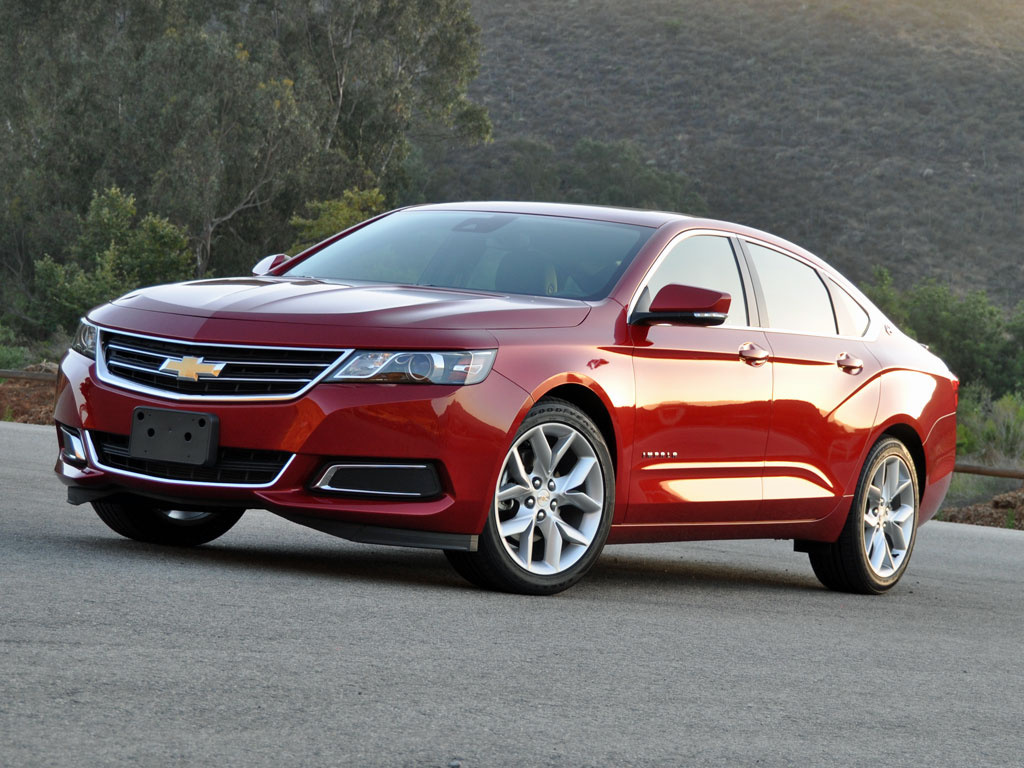
CarGurus recommends the 2014 Chevrolet Impala
Summary
With 544 currently listed for sale and an average price of $9,963, 23.2% of 2014 Chevrolet Impalas for sale on CarGurus are rated as good or great deals.
Favorably reviewed: Owners rated the 2014 Chevrolet Impala 4.85 / 5 stars and CarGurus experts gave it a 7.83 / 10.
50.6% of 2014 Impala models on CarGurus are accident free.
Why it stands out
The 2014 Chevrolet Impala stands out first for its styling. It was described as having perhaps the large-sedan segment’s most attractive styling, and it drew attention from passersby who noticed its look and stance. That visual appeal is a major part of what makes this Impala distinctive, especially given its transformation from a car once associated most strongly with rental fleets.
Beyond appearance, the 2014 Impala’s appeal comes from a combination of comfort, ride quality, and upscale-feeling features. The summary highlights a genuinely impressive ride and handling package, promises of up to 35 mpg on the highway, and materials and features typically reserved for premium-branded models. At the same time, the user review summary suggests some buyers may find the technology and sound system outdated, with no Bluetooth or touchscreen features in lower models, so the car’s strengths are not equally matched across every area.
Other model years to consider
- Average price: $12,390
- Good/great deal percentage: 27.3%
- User rating: 4.82 / 5
- Total listings: 598
- Average price: $11,430
- Good/great deal percentage: 25.9%
- Total listings: 560
- Average price: $10,693
- Good/great deal percentage: 24.0%
- User rating: 5 / 5
- Total listings: 563
These recommendations are based on CarGurus' proprietary market data from September 21, 2026, CarGurus experts' opinions, and generative AI.
*CarGurus meticulously monitors the prices of millions of pre-owned vehicle listings, offering users precise and up-to-date market insights. Historical pricing data excludes any additional dealer fees as of May 3, 2026.
Recent expert test drives


Relevant articles
The Best Muscle Cars You Can Get for Cheap in 2026
Cheap 1960s American muscle cars used to be everywhere, and they were cheap, too. Alas, those days are over, but there are lots of muscle cars from the past three decades that will light up your tires for less than $20,000, and here, we've assembled some of the best.
Chevrolet Impala Buying Guide: Cost, Reliability, and the Best Years to Buy
Discover the ultimate buying guide for purchasing a used Chevrolet Impala, covering every generation since 1958. Whether you're a first-time buyer or a Chevrolet enthusiast, this comprehensive overview will help you research your next pre-owned Chevrolet Impala.

