Buying a used Ford F-150 is one of the safer bets in the truck market—but not every F-150 is actually a safe bet. Condition, mileage, and how the previous owner treated it can make the difference between a used Ford truck that runs strong for another 100,000 miles and one that needs one costly repair after another.
This checklist walks you through exactly what to look for, listen for, and feel for before you sign off on the deal—no mechanic required (Although, you should always have a trusted mechanic do a thorough inspection when buying a used truck, just to be sure!)
- What to Check Under the Hood of a Used F-150
- What to Look Out for on a Used Ford Truck's Exterior
- What to Feel for When Test Driving a Used F-150
- F-150 Interior Tech and Electrical Systems to Pay Attention to
- F-150 Red Flags: When to Walk Away
- Buying a Used Ford F-150? Use This Checklist to Negotiate
Used Ford F-150 Buyer's Checklist at a Glance
| 5-Minute Walkaround | Frame rust, fluid condition, tire wear, warning lights, service records |
| Under the Hood | Cold-start sounds, oil and coolant condition, signs of turbo wear |
| Exterior | Body corrosion (aluminum vs. steel), frame rails, and bed condition |
| Test Drive | Transmission smoothness, 4WD engagement, brake feel |
| Interior & Electronics | Infotainment screen, sunroof, Pro Power outlets (2021+) |
| Walk Away If... | No maintenance records, smoky exhaust, poorly installed mods |

What to Check Under the Hood of a Used F-150
The engine bay is where the most expensive surprises hide. Before you pop the hood, ask the seller not to warm the truck's engine up beforehand—a cold start tells you far more about an engine's health.
These are the primary things to pay attention to:
Listen for the Cam Phaser Rattle
If the truck has a 3.5L or 2.7L EcoBoost engine, start it cold and listen carefully for the first 5 to 10 seconds. A distinct metallic rattling sound during that window is a known sign of cam phaser wear—a timing component that can cause broader engine damage if left unaddressed.
This is also a common issue on the 5.0L V8. It doesn't necessarily mean the truck is a not worth buying, but it should factor into your price negotiation.
Check the Oil and Coolant
Pull the oil dipstick and look at the oil on the end. Clean oil is amber or light brown. If it looks dark and gritty, the truck has been running on degraded oil—a red flag, particularly if it's a turbocharged engine.
If the oil looks milky or frothy, stop there: that's a sign of coolant mixing with the engine oil, which points to a serious internal issue. Similarly, check the coolant reservoir. If it looks oily or brown instead of green or orange, the same problem may be present.
EcoBoost-Specific: Look for Turbo Leaks
On any EcoBoost-equipped F-150, look along the turbocharger lines for oily residue or dried fluid streaks. During the test drive, watch for blue smoke from the exhaust when you accelerate. This is a telltale sign of a worn turbo burning oil—a repair that can run into the thousands.
Related Reading: Want to know which F-150 engines hold up best over time? See the Ford F-150 Engine Longevity Guide on CarGurus for a complete breakdown by powertrain.

What to Look Out for on a Used Ford Truck's Exterior
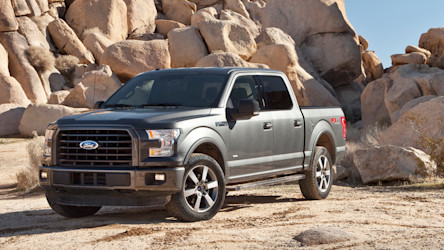
The F-150's body changed significantly in 2015, when Ford switched from its traditional steel body to a high-strength aluminum alloy. The frame remained steel on both generations, but what you're looking for on the exterior differs depending on which era you're buying.
Aluminum vs. Steel: What to Look For
| F-150 Model Year | What to Inspect |
|---|---|
| 2014 and older (steel body) | Rust at cab corners and rocker panels—these are the first places traditional rust appears. Surface rust is manageable; deep pitting or bubbling paint signals structural corrosion. |
| 2015 and newer (aluminum body) | Aluminum doesn't rust, but it can corrode. Look for white powdery buildup or bubbling paint on the hood and doors, which indicates the aluminum has been compromised, often from chips or scratches left untreated. |
Frame Inspection
Regardless of model year, the F-150's frame is steel—and it's the most important structural component on the truck. This means you're going to have to take a look underneath the truck.
Some surface rust and scaling on a high-mileage truck is normal. What you don't want to see is heavy flaking, soft spots you can poke with a finger, or evidence of prior repairs with fresh paint applied to cover damage.
Check the Bed
A well-used truck bed isn't a dealbreaker—F-150s are work vehicles, and they're designed to take a beating. But, you still want to look for evidence of heavy-duty towing history, like bolt holes or mounting hardware left over from a fifth-wheel hitch.
Deep dents, cracked bed rails, or significant rust in the bed floor typically likely mean that the truck was regularly overloaded or poorly maintained.

What to Feel for When Test Driving a Used F-150
The test drive is your best tool for finding problems that don't show up in photos or on paper. Focus on how the truck feels, not just how it drives—hesitation, vibration, and unusual sounds are all telling you something.
Transmission: Pay Attention to Shift Quality
F-150s built from 2017 onward mostly use a 10-speed automatic transmission. The 10R80 10-speed is an incredibly capable and durable transmission, but trucks built before August 2022 have a well-known history of harsh or clunky shifts—particularly between 3rd, 4th, and 5th gears.
If you feel a noticeable lurch or hesitation when accelerating from a stop, that's a known issue with earlier versions of this transmission. Trucks built after August 16, 2022 received corrected hardware from the factory.
Older F-150s with the 6-speed automatic are generally more straightforward—shifts should feel smooth and unhurried.
4WD Engagement
If the truck has four-wheel drive, take it off 2WD and shift into 4H (4-Wheel High) while moving at a low speed. You should feel a smooth, clean engagement.
If you hear grinding, clicking, or feel a vibration from the front wheels, the front hub engagement system (called the IWE system on F-150s) may have a vacuum leak—a common issue that gets worse and more expensive the longer it goes unaddressed.
Brakes
When it is safe to do so, apply the brakes firmly at highway speed. If the steering wheel vibrates or shudders when you brake, the brake rotors are likely warped and need replacement. This is a common and relatively affordable repair, but it gives you some leverage for negotiating the price.
Related Reading: Before you buy, it's worth knowing where this truck stands on safety. See the Ford F-150 Safety Guide on CarGurus for a full breakdown of crash test ratings, active recalls, and driver assistance technology by model year.

F-150 Interior Tech and Electrical Systems to Pay Attention to
Modern F-150s are loaded with screens and software, and repair costs for electronics can catch buyers off guard.
Give the interior a thorough once-over before you commit, focusing on these features:
- SYNC infotainment screen: Tap through the menus and test the backup camera. The screen should respond immediately, and the camera image should be clear. Freezing, lag, or a blank camera display are signs of a system that may need a software update—or a more costly fix.
- Sunroof (if equipped): Open and close the roof fully. Listen for grinding, hesitation, or sticking—signs the tracks are worn or cracked.
- Pro Power Onboard (2021+ models): If the truck has the bed-mounted power outlets, test each one. This generator feature is popular with contractors and outdoor users, and a non-functioning outlet can indicate electrical issues.
- Power windows and locks: Test every switch. Sticky or slow windows are usually a minor fix, but they're a sign that the truck may not have been well cared for.
- Dashboard warning lights: Once the engine is running and warmed up, there should be no warning lights on. A Check Engine light doesn't always mean a serious problem—on older, higher-mileage trucks, it's often an oxygen sensor—but any active warning light is worth a scan before you buy.
F-150 Red Flags: When to Walk Away
Most issues on a used F-150 are negotiating points, not deal-breakers. But a few things genuinely should give you pause:
- A lack of maintenance records: A used Ford truck with zero documented service history—no oil changes, no fluid records—is a higher-risk purchase, especially if it has over 80,000 miles. The cam phaser system on EcoBoost engines, in particular, depends heavily on consistent oil changes, as these are one of the Ford F-150 parts with known issues. Without records, you have no way to know if the engine has been properly cared for.
- Blue or thick white smoke from the exhaust: A small puff of white on a cold start in cool weather is normal. Sustained white smoke, or any blue smoke during acceleration, points to oil burning or coolant entering the combustion chamber—both of which typically signal a costly repair.
- Poorly installed lift kits or oversized tires: Leveling kits and larger tires aren't inherently a problem, but cheap, improperly installed modifications can throw off the alignment, accelerate suspension wear, and hurt fuel economy in ways that aren't immediately visible during a test drive.
- Fresh undercoating or new paint on the frame: A truck with recent frame work isn't automatically a problem, but fresh spray paint on the underside of an older truck is sometimes used to cover rust. Make sure to ask what was done and why.
Related Reading: Reliability can vary significantly by powertrain and model year. See the Ford F-150 Reliability Guide on CarGurus for a detailed breakdown of which configurations hold up best—and which ones to avoid.
Buying a Used Ford F-150? Use This Checklist to Negotiate
The F-150 is one of the most capable and dependable trucks on the used market—but a lot depends on how the previous owner treated it. A 120,000-mile truck with clean oil records and no warning lights is almost always a better buy than a 70,000-mile truck with a spotty history and questionable modifications.
Use this checklist as a negotiating tool, not just a pass/fail test (that's what a trusted mechanic is for.) Every issue you find—worn brakes, a cam phaser rattle, a cracked sunroof track—is a legitimate reason to ask for a lower price. Sellers who've maintained their trucks well usually have the records to prove it and are confident in the asking price. If a seller is reluctant to let you inspect the truck or dismisses your concerns, that tells you something too.
Once you've found a truck that passes the test, make sure the price is right. CarGurus' Instant Market Value (IMV) tool compares the asking price against thousands of real-world listings so you can see immediately whether you're being offered a fair deal—or have room to negotiate.
Ready to start shopping? Browse Ford F-150 listings on CarGurus and access free vehicle history and more through AutoCheck reports on most models.