While large-capacity six-cylinder or eight-cylinder gasoline engines, an automatic transmission, and rear-wheel drive (RWD) are the norm for many E-Class models, diesel versions and fuel-efficient four-cylinder engines have also been part of the model lineup and all-wheel drive (branded 4Matic) has been available for select versions from the start. E-Class sedan and E-Class wagon variants are ever-present, but coupe and convertible (Cabriolet) versions have come and gone over the years. High-performance AMG models have been a constant presence since early on, offering increasingly outrageous performance and prices to match, while a number of mild-hybrid and hybrid-powered models have been introduced in recent years.
Here's our guide to the Mercedes-Benz E-Class, covering which models are available, how much you can expect to pay and the best and worst versions for reliability.
Mercedes-Benz E-Class Buying Guide: Cost, Reliability, and the Best Years to Buy
Frequently Asked Questions
Which Mercedes-Benz E-Class years are the best?
While the latest E-Class is an incredible car, the previous 2016-2023 model is arguably the best choice as a used buy. It's still a remarkably high-tech car that looks current and is one of the best mid-size luxury models around. Its reliability record is good and, while it's far from cheap, it gives you a lot for your money – used examples of this generation range from around $15,500 for an early 2016 car to about $48,700 for a 2023 model.
What are the worst Mercedes-Benz E-Class years?
Data from carcomnplaints.com suggests that the worst year for the Mercedes E-Class is 2006, with a large number of E350 models of this era suffering from engine balance shaft issues. It's a problem specific to this engine that can affect 2005-2008 cars, but other engines aren't affected. In general, the E-Class wears high mileages well, but the third-generation model also suffered from niggles and earlier versions are prone to rust.
How much does a late-model Mercedes-Benz E-Class cost?
Late-model examples still command strong prices. A one-year-old 2025 E-Class averages around $61,000, a three-year-old 2023 model runs about $48,700, and a five-year-old 2021 example averages roughly $37,900.
Research Mercedes-Benz E-Class Price Trends on CarGurus
Is a used Mercedes-Benz E-Class a good deal?
For a long time, the E-Class has been a benchmark luxury sedan that pushes the envelope for technical innovation and offers something different to rival Audi and BMW models. Prices are on the high side and fuel economy for some of the larger-engined versions is fairly poor, but the E-Class has always been a safe, solid choice that gives you lots of comfort and prestige for your money. Values are also holding up well – used E-Class prices are up about 4.6% year over year, outpacing the roughly 2.3% rise across the broader CarGurus used-car market.
Mercedes-Benz E-Class Pros and Cons
Pros:
- Every version is comfortable and spacious
- Lots of standard safety features
- Later models feel very luxurious
Cons:
- Reliability issues with some earlier models
- Expensive, even by class standards
- Not as rewarding to drive as a BMW 5 Series
Mercedes-Benz E-Class Generations
Sixth Generation (2024-present)
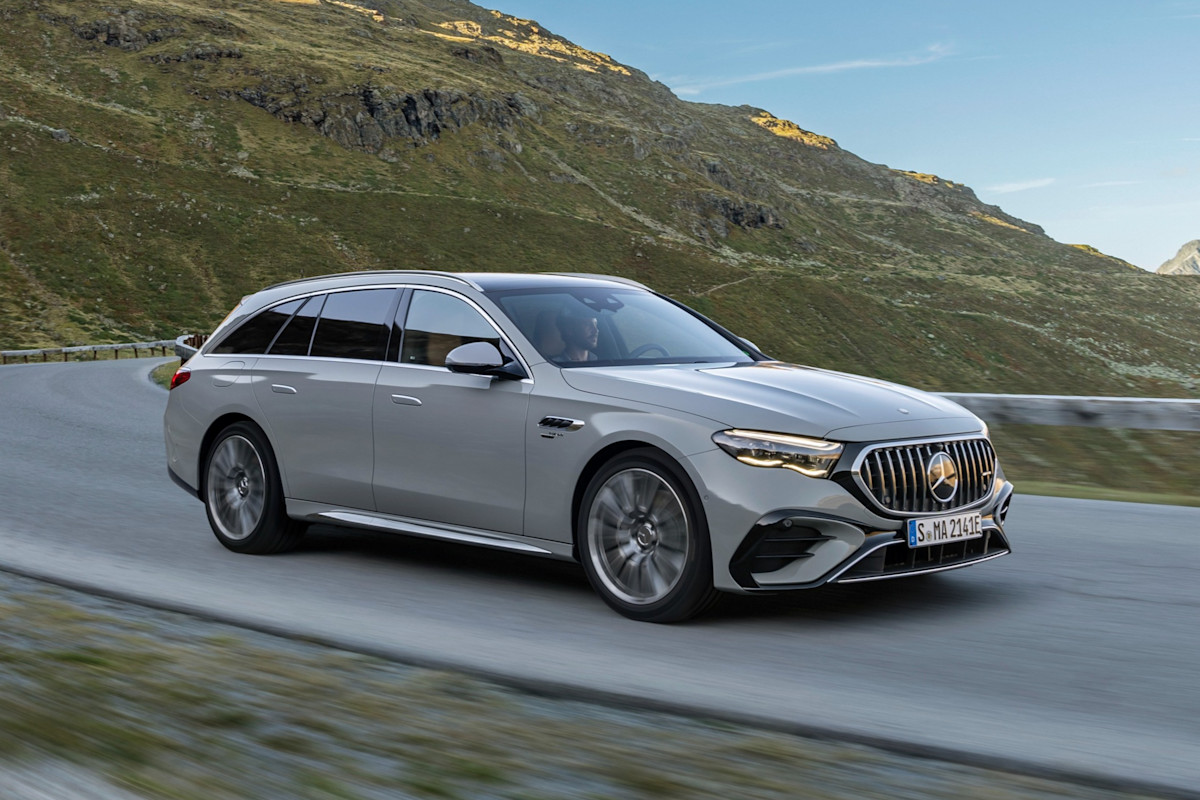
The latest Mercedes-Benz E-Class has been on sale since spring 2024 and, as you'd expect, it's the most technologically advanced version yet. Some of the features fitted as standard or available as options are, frankly, mind-boggling. How about a driver-facing camera for Zoom calls or selfies (when parked, of course), or an augmented-reality satellite navigation display? That's just the tip of the iceberg.
Although it has a similar appearance to the smaller C-Class and the larger S-Class, the current E-Class is a bit more distinct, with unusually shaped headlights and a black front grille surround. An illuminated grille is an option for those who want to make sure no one misses that huge three-pointed star in the middle of it. The interior is equally dazzling, with ambient lighting that wouldn't look out of place in a (high-end) nightclub, a large digital display behind the steering wheel, and a 14.4-inch central touchscreen. Add the optional third screen for the front passenger and there's more screen than dashboard. Wireless Apple CarPlay and Android Auto integration and a blind-spot warning system are standard, while a high-end Burmester audio system is an option. Tech apart, mega-comfortable seats, top-quality materials, and vast legroom are the order of the day.
Initially, the model lineup is fairly small – the entry-level car is the E350 sedan, which has rear-wheel drive and a 2.0-liter four-cylinder engine with 295 horsepower and mild-hybrid technology. Next up is an all-wheel drive version called the E350 4Matic sedan, while the top-spec model is – for now – the E450 4Matic sedan, which has a 3.0-liter inline-six-cylinder engine pushing out 369 horsepower. All have mild-hybrid technology for improved mpg, and a nine-speed automatic transmission. It wouldn't be an E-Class without a crazy-fast AMG model, the Mercedes-AMG E 53 Hybrid, which has a hybrid drivetrain that delivers 577 horsepower, 553 lb-ft of torque and a 0-60 mph time of less than four seconds. New for 2026, the AMG E 53 Hybrid is also offered as a wagon – a plug-in hybrid that can run on electric power alone at speeds up to 87 mph. Aside from that, the E-Class All Terrain is a wagon we (and Mercedes-Benz) class as a separate model.
Mercedes-Benz hasn't made too many updates in the years since the new generation E-Class debuted. In 2025, a new Manufaktur Patagonia Red paint became available, and for 2026, Mercedes added a biometric fingerprint scanner as standard equipment and introduced the AMG E 53 Hybrid wagon.
Because it's such a new model, you won't find many used examples of the current E-Class for sale yet. Those that are out there should give you a small saving on the MSRP of a new car, which, as of February 2026, was between about $65,000 and $91,000. It's too early to know what issues to look for, but any problems should be covered by Mercedes-Benz's four-year/50,000-mile new car warranty.
Fifth Generation (2016-2023)
In its fifth-generation guise, the Mercedes-Benz E-Class sedan never looked more like a scaled-down S-Class, and it's a similar tech-fest, available with all kinds of advanced safety and luxury features. Introduced in 2016 as a sedan, wagon versions followed later the same year, while E-Class Coupe and E-Class Cabriolet models arrived in 2017. The E-Class All Terrain – a version of the wagon with a higher ride hide and 4Matic all-wheel drive as standard – was introduced in 2021. Slightly larger and sleeker than its predecessor on the outside, this E-Class is very different on the inside, with a swoopy, curvy dashboard, punctuated by circular air vents. It has a luxurious, high-tech feel, enhanced (in most versions) by two side-by-side 12.3-inch display screens that create the appearance of one large screen.
The combination of engines and drivetrains available can be bewildering, but there are essentially three main groups. Least powerful – but plenty quick enough – are the E300 and later E350 models, which have 2.0-liter four-cylinder engines. For more pace but less impressive fuel economy there are those with 3.0-liter six-cylinder engines – the E400 and later E450 and the high-performance Mercedes-AMG E 43 and Mercedes-AMG E 53. Quickest of all (and we're talking supercar acceleration, here) are Mercedes-AMG E 63 models, which have a 4.0-liter V8. All have a turbo and a nine-speed automatic transmission (labeled 9-Gtronic for the standard range and AMG Speedshift for Mercedes-AMG models) as standard. Some versions are available with rear-wheel drive or '4Matic' all-wheel drive, but the higher-powered versions and all Mercedes-AMG models are AWD only. 'Air Body Control' – an air suspension system with selectable modes – is standard for AMG models and optional for others.
Standard equipment for all versions is lavish, making even the least expensive model feel like a true luxury car. At the very least, there's electric adjustment for the steering wheel and front seats, a rear-view camera, satellite navigation, LED headlamps, and a wealth of driver assistance safety features. A huge range of options and packages allowed buyers to tailor their car to their preferences when new – these can make a big difference to how an individual E-Class model looks and feels, and how much it costs to buy.
Prices for an E-Class of this era cover a huge range, as you'd expect of a car that had an MSRP anywhere between a shade over $52,000 to more than $112,000 when new. It's possible to find an early E300 sedan with average mileage for about $16,000, while coupe, cabriolet or wagon models are higher-specced, rarer and cost $20,000+. Mercedes-AMG versions start at about $26,000 but nearly new examples loaded with options can cost upwards of $150,000.
The fifth-generation Mercedes-Benz E-Class feels like a beautifully built car and it's proving to be generally reliable, with the caveat that even the oldest cars are still less than 10 years old. Many used examples should still have some of Mercedes-Benz's four-year/50,000-mile warranty cover remaining. Some owners have cited issues with juddering brakes and glitchy infotainment systems, but the only major problems seem to be a potential fault with early E300 models that could lead to a cracked piston. If you're buying a car with air suspension, check that it's working as it should, as repairs could be costly.
Fourth Generation (2009-2016)
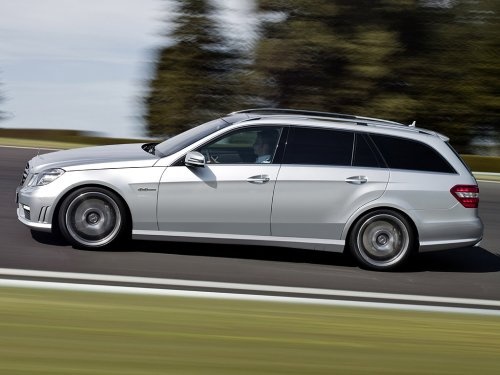
The fourth-generation Mercedes-Benz E-Class is a case of "business as usual" – slightly larger than its predecessor and with newer tech, but following a well-established and popular formula. Introduced in 2009 as a sedan, E-Class wagon, E-Class coupe and E-Class Cabriolet models followed in 2010.
The model range was wide – taking in cost-effective four-cylinder diesels at the lower end of the range and wildly powerful twin-turbo V8 AMG models at the other. The number of variations – covering rear-wheel drive (RWD), 4Matic all-wheel drive and the four body styles – over the model's lifespan is extensive, but all have a seven-speed automatic transmission as standard and none are short of power. As always, many of the innovations from the larger S-Class trickled down to the E-Class. Features available as standard or available as an option for this generation included adaptive cruise control (labeled Distronic), a night-vision system, a lane-keep-assist system, and voice control.
Even the entry-level E-Class sedan comes well equipped (for the time), with features such as Bluetooth, electric front seat adjustment, dual-zone climate control and a power sunroof as standard. Various option packs were available, while Mercedes-AMG models are as luxurious as they are fast. An update for the 2014 model year brought far-reaching changes. Most of these were cosmetic but go farther than the usual mid-life update, giving the E-Class a more modern, sleeker look. The drivetrains were updated, too, including a four-cylinder diesel option called the E250 BlueTec and the E400 Hybrid, which combines a 3.5-liter V6 gasoline engine with a 27 horsepower electric motor for marginally better mpg than the E350.
This is a generally robust car and can handle big mileages as long as it's been well looked after. There are a few issues to look out for, though – any rumbling and vibrations could suggest worn engine mounts, which are a common issue. Make sure the seven-speed automatic transmission functions smoothly, as it can be troublesome, and the interiors don't always age gracefully – listen for creaks and keep an eye open for faded wood trim.
You can find plenty of used fourth-generation E-Class sedans that have crazy mileage and are cheap to buy, but you're better off spending at least $8,000, which is the starting point for an early, sub-100,00-mile car. Better still, aim to spend at least $12,000 for a really good one or a post-2014 car. Coupe and Cabriolet models will cost more again, and you should budget more than $30,000 for a Mercedes-AMG model in good condition.
Third Generation (2002-2009)
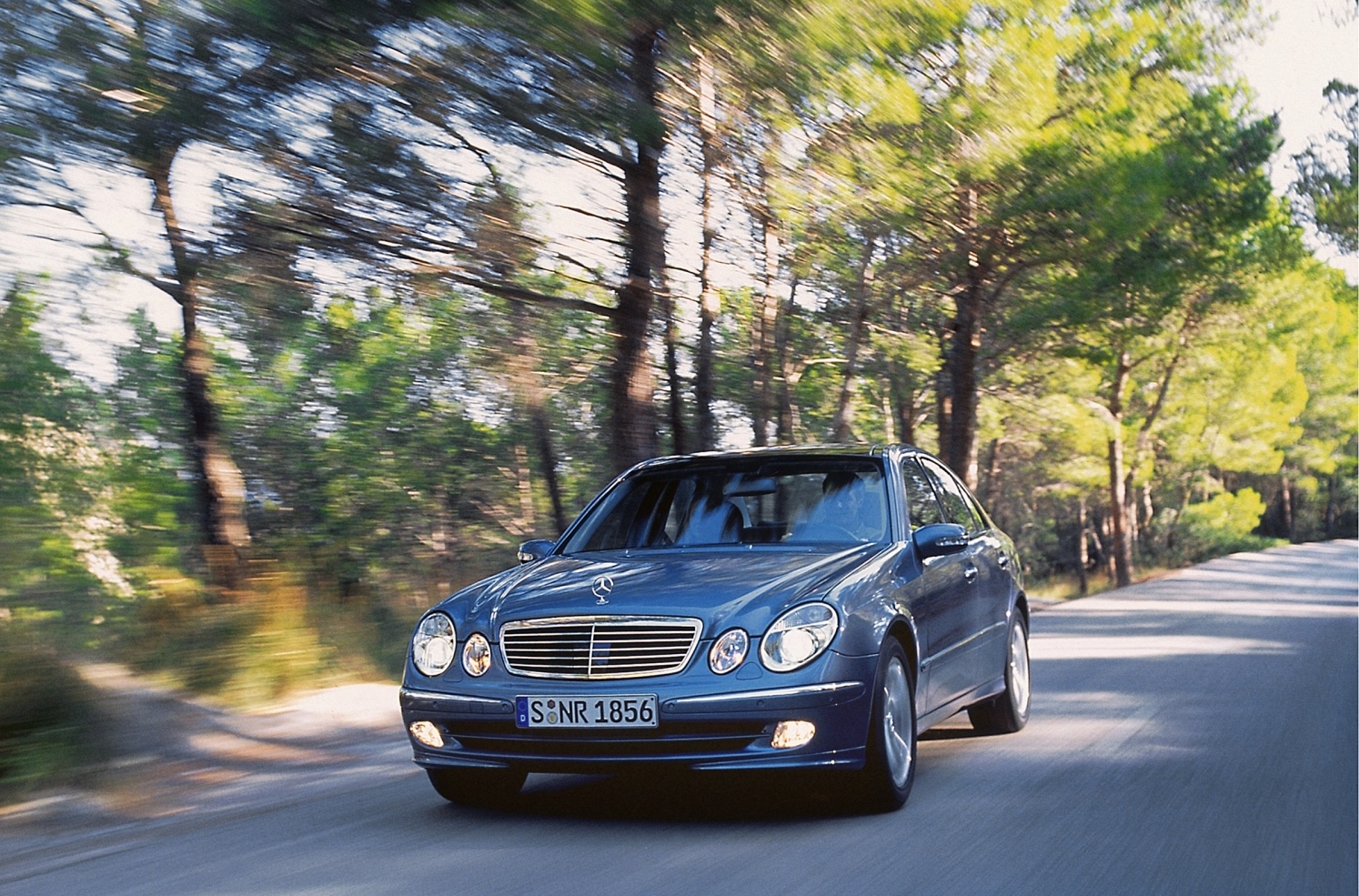
The third-generation Mercedes-Benz E-Class that arrived in 2002 showed the brand stepping bravely and confidently into the new millennium. While the basic concept was the same, it felt like an E-Class for an entirely different era, with a much more lithe look and a greater emphasis on driving dynamics and forward-looking technology. Sedans and wagons were the only body styles available, because Mercedes' mid-size coupe or convertible model of this era was the C-Class-based CLK.
The third-generation E-Class has a fraction less interior space than its predecessor (despite being slightly larger on the outside), yet it's still a very spacious car – especially as a wagon. The mass of switches betray its age somewhat, but the dashboard design has aged well and it still feels like a fairly modern car today. All models have electric steering wheel and front seat adjustment, climate control and leather or part-leather upholstery. Options included a heated steering wheel and ventilated front seats. A first for the E-Class sedan was an optional 'Panorama' roof – an entirely glass roof with an opening panel and electrically powered interior sunshades.
A range of V6 and V8 engine options were offered during the model's run. Initially there was just a 3.2-liter V6 in the E320 and a 5.0-liter V8 in the E500, both with a five-speed automatic transmission. Air suspension was standard for the E500. Over time (with many changes as part of a facelift for the 2007 model year), E350 and E550 models and seven-speed autos replaced these, while a 3.2-liter V6 diesel version called E320 Bluetec was added to the range. Rear-wheel drive (RWD) was the norm, but AWD (labeled 4Matic) was an option for the E320/E350 and the E500/E550. The hugely powerful AMG high-performance models were rear-wheel drive only. In the case of the E55 AMG, its 469 horsepower was derived from a supercharged 5.4-liter V8. The E63 AMG that replaced it had 507 horsepower but less torque, with a new 6.2-liter naturally aspirated V8.
Mercedes-Benz E-Class models of this era have a pretty good reputation for reliability, and they can run for mega-miles if they've been properly maintained, but there are a few things to look out for. Pre-2006 models can have major brake issues, while E350 models sold new between 2005 and 2008 can suffer from engine balance shaft issues that are costly to fix. Electrical gremlins and rattling or faded interior trim aren't uncommon, either, and a later, well-maintained example is worth paying for.
A healthy, sub-100,000-mile E-Class sedan of this era can be yours for little more than $5,000, while an extra $3,000 or so will get you a decent post-facelift model. You'll pay a bit more for a wagon, and upwards of $15,000 for a tidy E55 AMG model.
Second Generation (1995-2002)
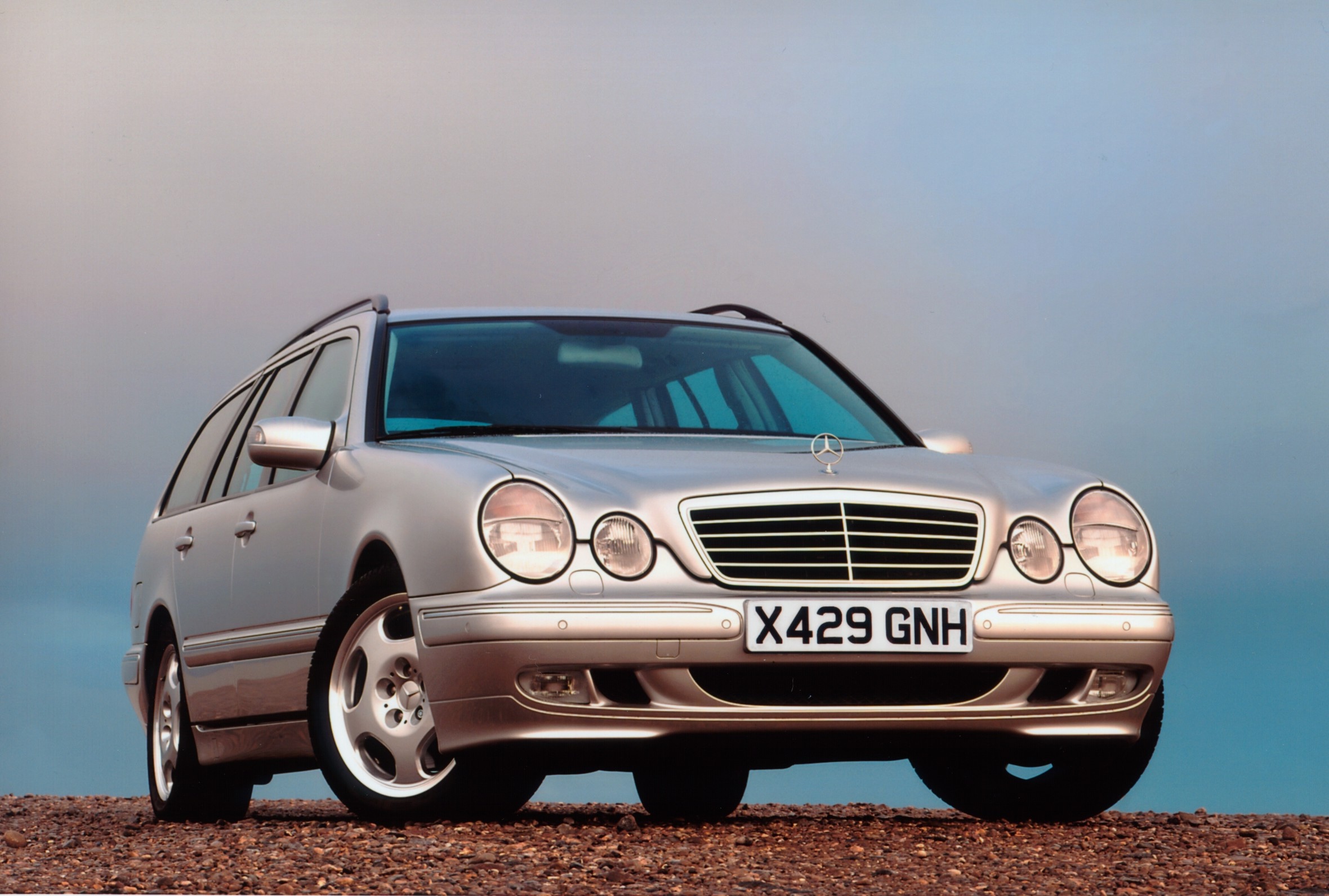
The second-generation Mercedes-Benz E-Class was the first one to wear the name from the start. Slightly longer and wider but a fraction lower than the first E-Class (a renamed version of an existing model), the second-generation model has a curvier look and four round headlights. It doesn't have the classical elegance of the car it replaced, but even today, it has presence. Despite being only slightly larger, interior space increased significantly and is one of this E-Class model's major attractions.
As ever, the E-Class was one of the most advanced mid-size models of its time. Innovations available over the course of its lifespan include side airbags, steering wheel-mounted controls, xenon headlights and an automatic transmission with a manual shift option. A number of engine and drivetrain options were available and by far the most popular was the E320. This initially had a 3.2-liter inline six-cylinder engine with 217 horsepower, but from 1997 onwards, it used a new V6 with 221 horsepower. E420 and E430 models had either a 4.2-liter or 4.3-liter V8, while there were E300D six-cylinder diesel versions with and without turbo assistance. Mercedes-Benz's 4Matic all-wheel drive system was available for the E320 and E430, while all other models had rear-wheel drive. The high-performance option is the E55 AMG, which in this incarnation has a 5.4-liter V8 pushing out 349 horsepower and 391 lb-ft of torque. Most models had either a four-speed or five-speed automatic transmission.
The general view is that this era of E-Class wasn't built to quite the same high standards as the car it replaced, but it's an impressively solid thing nonetheless. If you can find one that's in good shape, it could be good for a few more years yet. Rust is one of the main things to look out for, and it's vital to check for this under the body and around the wheel arches. Any clunks from the suspension or transmission could be a sign of potentially expensive issues, too. Prices vary wildly depending on mileage and spec. At the bottom end you'll find scruffy-looking examples for about $3,000, while really good cars can fetch $10,000 or more.
First Generation (1993-1995)
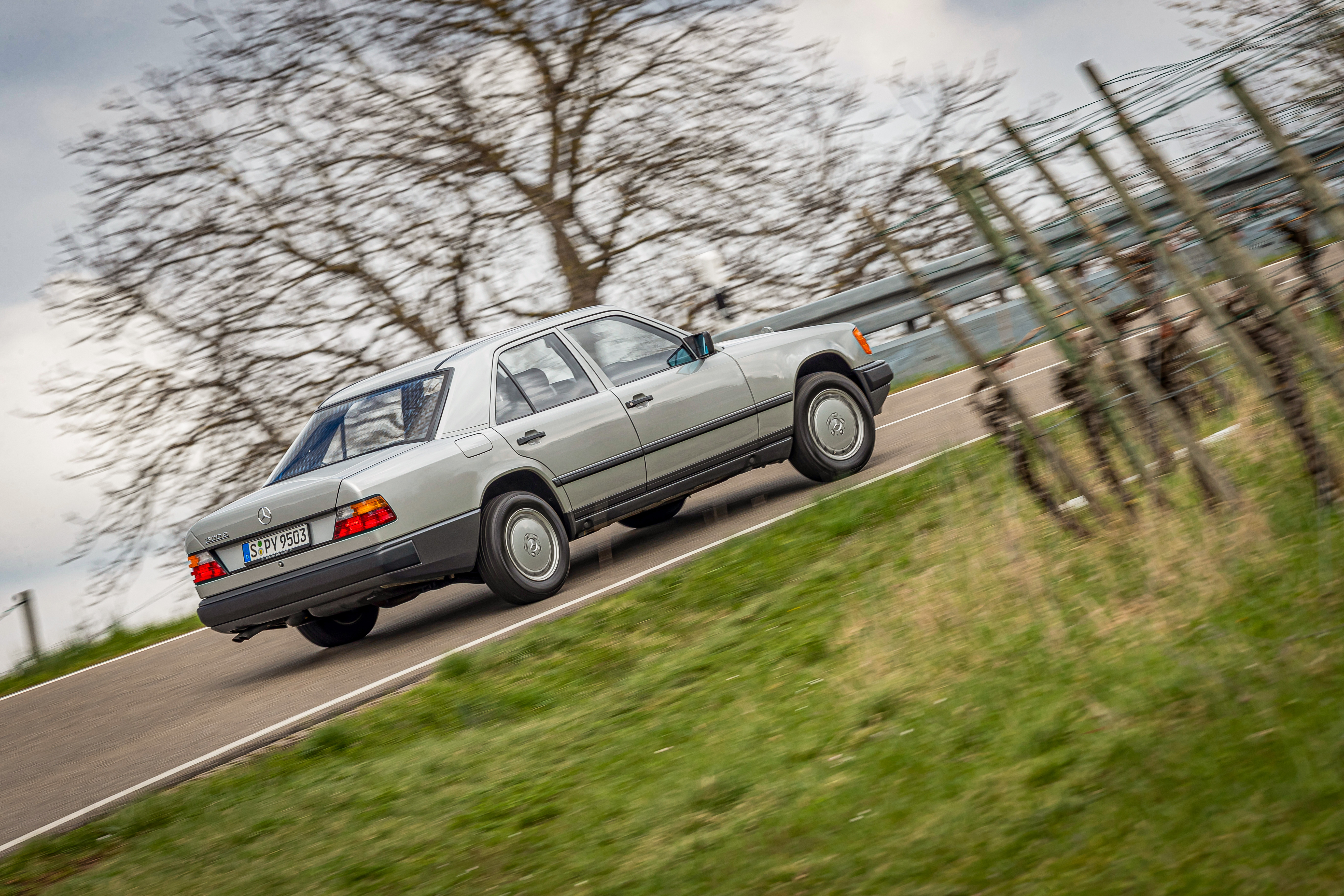
The first Mercedes-Benz E-Class was an updated existing model rather than an all-new car; this is no bad thing when the existing model in question is the Mercedes-Benz W124 generation of mid-size sedans, wagons, coupes, and convertibles. In fact, it's often referred to as one of the best-engineered Mercedes-Benz models ever. The transformation to the E-Class involved little more than new badges on the trunk lid, so the E-Class remained one of the most elegant, high-tech, mid-size cars of its time. Standard safety features included two front airbags and anti-lock brakes – things that weren't common on some mainstream cars until many years later.
Model choices are the E320, with its 3.2-liter inline six-cylinder engine, the E420 with its 4.2-liter V8, or the E300 Diesel with its 3.0-liter inline six-cylinder engine. All are RWD. The standout model is the E500 – a high-performance rival for the BMW M5 that was co-developed with Porsche and featured a 5.0-liter V8 with 315 horsepower.
Despite its reputation for tank-like solidity, this era of E-Class is prone to rust and it's one of the major issues to look out for. As with any car of this age, provenance and a record of good maintenance are key to finding one that is in good shape and ready to provide more years of service. Prices reflect the fact that this has, for many years, been a collectible car – you're unlikely to find one worth buying for less than $7,000 and could pay $30,000 or more for a top-notch example and significantly more for an E500.
Related Topics