2023 Toyota Corolla Hybrid Reviews, Pricing & Specs
Write a reviewPros
Fuel Efficient
Excellent value for money
Easy-to-use technology
Cons
Sluggish performance
Interior materials feel cheap
Noisy
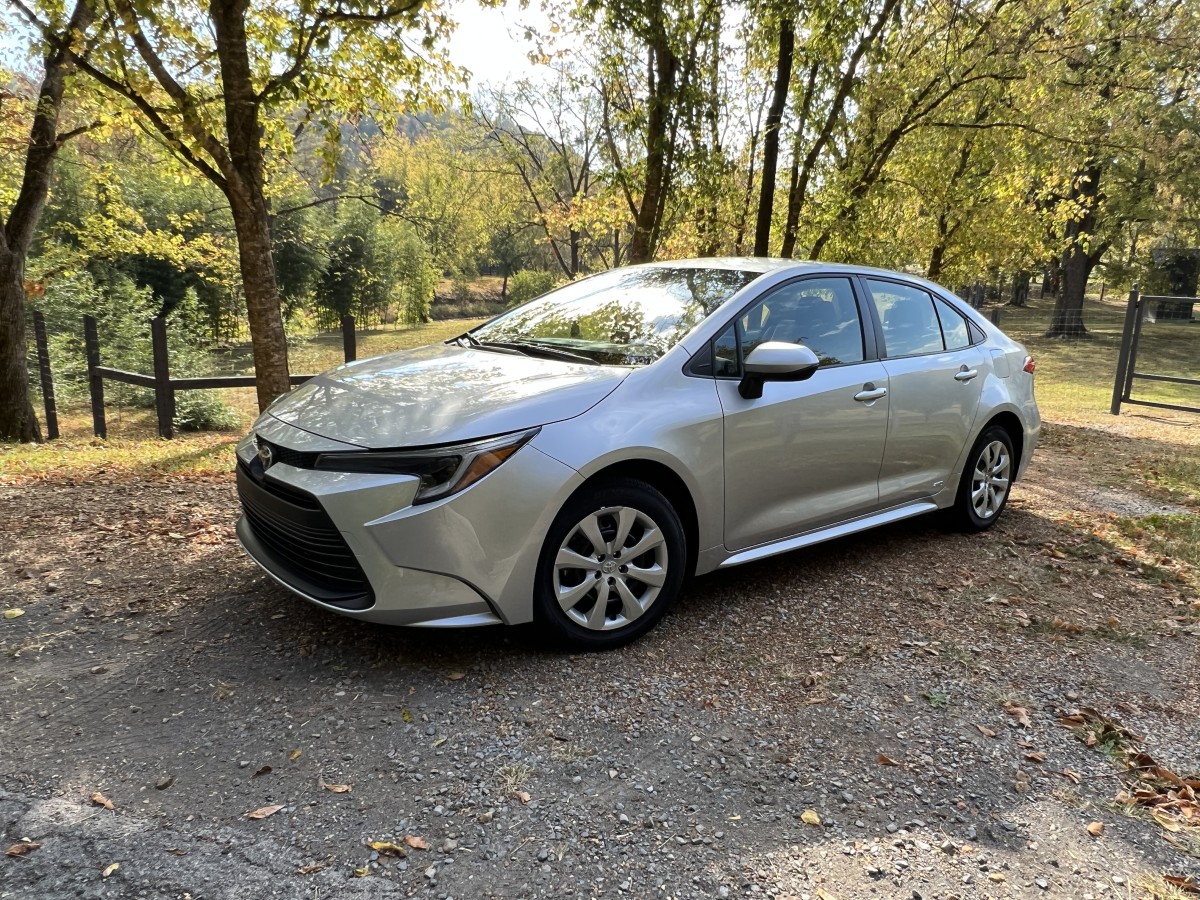
The Corolla Hybrid may be sedate, but it's the smart and shrewd choice.

For 2023, the Corolla Hybrid receives some very notable updates. The new sporty SE and more upmarket XLE trims are added to the lineup, a new all-wheel-drive (AWD) option debuts, the hybrid system gets a power increase, and all Corolla Hybrids receive a barely noticeable style refresh in their grille patterns and rear bumpers. More significantly, the Hybrid costs $1,250 less than it did in 2022.
From the outside, the Corolla Hybrid is attractively styled and is far more appealing than previous generations. The front end is sculpted with wraparound headlights framing the edge of the hood and sharp creases adding some sporty aggression. The big trapezoidal grille also adds some sporty character, whether it's warranted or not. The side and tail, on the other hand, are more conventional and perhaps a bit bland.
Inside, the Corolla Hybrid is rather minimal in design and content, but it's pleasing in its simplicity. There aren't any features or gimmicks that stand out visually. Materials quality leaves much to be desired, though. There's an abundance of hard plastics throughout the cabin, though in many cases you wouldn't know it until you touch it, and at this price point, plastics are to be expected. Still, the door and center armrests are barely padded and can get uncomfortable on longer drives, reminding you at all times that the Corolla's frugality is its core principle.
The new SE trim adds sport seats and the XLE trim upgrades to Toyota's SofTex synthetic leather and a digital instrument panel to dress up the cabin. These touches help, but the Corolla falls well short of the mark set by the Honda Civic, Kia Forte, and Mazda 3. By comparison, the Corolla feels tinny and less substantial. That's evident when you shut a door or drive over a bump, resulting in a hollow echo and shudder that rebounds throughout the interior.
In terms of overall design and execution, the Corolla Hybrid is adequate bordering on austere. While we expect better, this sedan is more focused on efficiency and the bottom line, and in that manner it's unbeatable.

Under the hood of the 2023 Corolla Hybrid is the same 1.8-liter four-cylinder hybrid engine as last year. This time around, the powertrain produces 134 horsepower and 156 pound-feet of torque. That's an increase of 13 hp and 10 lb-ft over its predecessor. A continuously variable transmission (CVT) sends power to front-wheel drive (FWD). Our LE-trim test vehicle further benefits from a new additional 40-hp electric motor between the rear wheels, providing on-demand AWD at initial acceleration or when added traction is needed.
From a standstill, the Hybrid powertrain responds quickly to pressure on the throttle, with the electric motors starting acceleration just before the gasoline engine buzzes to life. That kind of immediate response is praiseworthy, but power builds very slowly afterward. By our informal count, it takes around nine seconds to reach 60 mph. That's significantly slower than gas-powered small sedans, but about what we'd expect from a Prius. With the pedal floored for so long, the engine labors mightily with a loud engine drone and buzz that saps driver confidence. If you happen to find slower traffic, passing them will require a similar lengthy foot-to-the-floor exercise.
There is a dedicated EV drive mode that prioritizes electric propulsion for maximum efficiency, but you need a safecracker's touch to keep it in that mode. With just a bit too much pressure on the pedal, the gas engine kicks back in. It's nearly impossible to effectively use EV mode on open roads, but in heavy traffic we could see its benefits.
Braking is more akin to conventional gasoline vehicles, with a consistent pedal that is easy to modulate and with no discernable transition between energy recuperation and the physical brakes activating. Handling is adequate as the Hybrid feels confident when driven conservatively. This isn't the kind of car you'd consider fun in the curves, especially because there's not much power to draw more performance from the suspension. Mid-corner bumps also tend to unsettle the tires momentarily, further degrading driver confidence.
Larger ruts and potholes send an alarming impact into the cabin but smaller road imperfections are well smoothed over. Road noise is ever present, though even on coarse surfaces, it's kept from being intrusive. We certainly encourage Toyota to add more sound insulation to tamp down road noise as well as the engine. As it is, the Corolla Hybrid exhibits a lot of the unrefined buzz and perceived frailty found in older generations.

There's ample space up front for taller occupants, but long-limbed drivers might find the steering wheel doesn't telescope far back enough. There's a greater impression of space thanks to the large windows and excellent outward visibility. The cloth upholstery breathes well in warmer weather, as does the SofTex faux leather in higher trims. We did feel some springs through the seat cushion though, which could cause some discomfort on long drives. The SofTex isn't all that convincing as it feels thin and looks more like vinyl than genuine hides.
The cockpit's simplicity is very approachable and mostly easy to use. Steering-wheel buttons are well placed and climate controls are very basic. Finding settings for an undesirable safety feature took some time to track down in the instrument panel, though, and we'll cover that below. Interior storage is merely adequate, with a small plastic tray under the dash for your phone, two moderately sized cupholders, a medium-sized center armrest bin, and narrow door pockets. The top XLE trim is eligible for a wireless charging pad.
Rear seats can accommodate average adult passengers, though they will have to take care not to bump their heads against the low roof as they get in or out. Once seated, there's just enough headroom and plenty of legroom and space for their feet under the front seats.
Trunk capacity maxes out at 13.1 cubic-feet, which is in line with other small economical sedans. It's a deep and wide space, which should accept more cargo than that figure may suggest. The rear seats fold to provide more capacity, but they don't fold flat with the floor, so loading larger objects may require more effort than in other vehicles.

The Corolla Hybrid comes standard with an 8-inch infotainment touchscreen but it receives some upgrades for 2023. Last year's physical shortcut buttons have been removed and replaced with on-screen controls. The framing now makes it appear larger and the system is quick to responsed to inputs. Wireless Apple CarPlay and Android Auto are also standard. The new infotainment system is further enhanced with improved voice commands that can be activated by saying, "Hey Toyota". From there, you can control the navigation, audio, and even adjust the temperature. Also included are over-the-air (OTA) software updates that should keep your system up to date. It's also able to pair two Bluetooth devices at once.
A Wi-Fi hotspot is available as an option and allows for remote control and monitoring through a smartphone app. This feature also adds streaming entertainment services through Apple Music and Amazon Music. The SE and XLE trim levels are eligible for a nine-speaker JBL premium audio system, which should ably cover some of the aforementioned cabin noises.

In crash tests conducted by the National Highway Traffic Safety Administration (NHTSA), the 2023 Toyota Corolla Hybrid was awarded an overall score of five-out-of-five stars, with four stars for rollover protection. The Insurance Institute for Highway Safety (IIHS) has not published specific results for the Corolla Hybrid, but the standard 2022 Corolla sedan received its top score of "good" across the board. It also named the Corolla a Top Safety Pick+, it's highest award.
All Corolla Hybrids come standard with the Toyota Safety Sense 3.0 suite of advanced driver assistance systems (ADAS). This includes frontal collision warning with automatic emergency braking (with pedestrian and cross-traffic detection), lane-keep assist, adaptive cruise control, automatic high beams, and a traffic-sign reader. Also available is a blind-spot monitor with cross-traffic alert and a rear-seat reminder to check for passengers.
A new feature called Proactive Driving Assist is standard, but we're admittedly not fans of it. In particular, the Curve Speed Reduction feature automatically slows the vehicle heading into curves and can be jarring to an attentive driver. Then sensitivity can be adjusted deep in the settings menu or disabled altogether. However, even when disabled, the system would occasionally activate in sharper turns as though it was misidentifying objects on the roadside as obstacles in its path. We could see its efficacy with new or elderly drivers, but think it could use more fine tuning.

After some time with the 2023 Toyota Corolla Hybrid, we're left with the overall impression that it's adequate but not impressive. Driving dynamics, performance, and interior quality would likely disappoint anyone with experience with non-hybrid small sedans and hatchbacks such as the Honda Civic, Hyundai Elantra, Kia Rio, or Mazda 3. That distinction between non-hybrids is critical, though, and largely makes up for its shortcomings.
With a starting price of $23,895 (including $1,095 destination fees), the base LE is easily one of the smartest buys for those seeking ultimate value. That's only $1,250 more than the non-hybrid Corolla. The EPA estimates the front-drive Hybrid will return 50 mpg city, 43 mpg highway, and 47 mpg in combined driving. Adding all-wheel drive drops those estimates by 2 to 3 mpg.
With gas at $4.00 per gallon and driving 15,000 miles annually, you would recoup the Hybrid's price premium over the standard 35-mpg Corolla in less than three years. After that, you'd be saving $437 per year in fuel costs. As much as we like the Honda Civic and Kia Rio, they both have higher starting prices and at best will return fuel economy of 36 mpg. The Mazda 3 sedan starts about $1,000 less than the Corolla Hybrid and is only estimated to return 31 mpg.
The Honda Insight would have been the Corolla Hybrid's chief rival, but it's been discontinued after the 2022 model year. That really leaves Toyota's own Prius as its primary competition, and we’d all but bet that a hybrid version of the Toyota Corolla Cross is on its way, too. If value and efficiency surpass all other review metrics, you couldn't go wrong with either, but we'd add there's also the Prius Prime plug-in hybrid that can travel up to 25 miles on electric-only propulsion. While styling and performance preferences vary between drivers, the bottom line is consistent and undeniable.

User reviews for 2023 Toyota Corolla Hybrid
Write a review2023 Toyota Corolla Hybrid Pricing
Trims & specs
Air Conditioning
Automatic climate control front air conditioning · Single front air conditioning zones
Airbags
Dual front airbags · Driver knee airbags · Passenger airbag deactivation: occupant sensing deactivation · Front side airbags · Rear side curtain airbags
Audio System
Antenna Type: diversity · Voice recognition audio system · USB auxiliary audio input · Gracenote internet radio · AM/FM radio · Satellite Radio: SiriusXM · Total Number of Speakers: 6
Brakes
ABS: 4-wheel · Braking assist: hill start assist · Electronic parking brake: auto off · Front brake diameter: 10.8 · Front brakes: ventilated disc · Rear brake diameter: 10.2 · Rear brakes: disc
Comfort Features
Armrests: rear center with cupholders · Floor Material: carpet · Shift knob trim: urethane · Steering wheel trim: urethane
Convenience Features
Adaptive stop and go cruise control: semi-automatic · Assist handle: front · Autonomous lane guidance: lane centering · Center console: front console with armrest and storage · Cruise control: adaptive · Cupholders: front · Multi-function remote: keyless entry · One-touch windows: 4 · Power outlet(s): USB-C rear · Power steering: electric · Power windows: lockout button · Reading lights: front · Steering wheel: tilt and telescopic · Steering wheel mounted controls: phone · Storage: accessory hook · Vanity mirrors: dual illuminating
Driver Seat
Manual adjustments: 6
Engine
EV battery capacity: 0.85 kWh · Electric Motor Battery Type: lithium ion · Electric Motor HP: 94 · Electric Motor Power Output (Kilowatts): 70 · Electric Motor Torque: 136 · Hybrid Gas Engine HP: 96 · Hybrid Gas Engine HP@RPM: 5200 · Hybrid Gas Engine Torque: 105 · Hybrid gas Engine Torque@RPM: 3600
Exterior Features
Door handle color: body-color · Front bumper color: body-color · Grille color: black · Mirror color: body-color · Rear bumper color: body-color · Rocker panel color: body-color · Window trim: black
Headrests
Front headrests: adjustable · Number of front headrests: 2 · Number of rear headrests: 3
Hybrid
Starter Type: motor/generator
In Car Entertainment
Connected in-car apps: Google POIs · Infotainment: Toyota Audio Multimedia · Infotainment screen size: 8 in. · Smartphone integration: wireless Android Auto
Instrumentation
Fuel economy display: range · Instrument cluster screen size: 4.2 in. · Warnings and reminders: low fuel level
Lights
Daytime running lights: LED · Headlights: auto delay off · Tail and brake lights: LED
Mirrors
Exterior mirrors: power · Inside rearview mirror: manual day/night
Passenger Seat
Manual Adjustments: 4
Rear Seats
Type: 60-40 split bench
Safety
Automatic emergency braking: front pedestrian · Camera system: rearview · Child seat anchors: LATCH system · Crumple zones: front · Impact absorbing seats: dual front · Impact sensor: fuel cut-off · Pre-Collision Warning System: visual warning · Pre-collision warning system: pedestrian detection · Rearview monitor: in dash
Seatbelts
Emergency locking retractors: front · Front seatbelts: 3-point · Seatbelt force limiters: front · Seatbelt pretensioners: front · Seatbelt warning sensor: driver and passenger · Second row seatbelts: 3-point
Seats
Driver seat manual adjustments: height · Front seat type: bucket · Passenger seat manual adjustments: reclining · Rear seat folding: split · Upholstery: cloth
Spare Tire
Kit: inflator kit
Suspension
Front Arm Type: lower control arms · Front Shock Type: gas shock absorbers · Front Spring Type: coil springs · Front Suspension Classification: independent · Front Suspension Type: MacPherson struts · Rear Shock Type: gas shock absorbers · Rear Spring Type: coil springs · Rear Suspension Classification: independent · Rear Suspension Type: multi-link · Stabilizer bar(s): rear
Telematics
Driver assistance app: roadside assistance · Electronic messaging assistance: with read function · Phone: voice activated · Phone wireless data link: Bluetooth · Smart device app compatibility: Toyota Connected Services · Smart device app function: security event/collision alert · Wifi: hotspot
Tires
Type: all season
Tires and Rims
Wheels: steel
Wheels
Wheel covers: full
Windows
Front wipers: variable intermittent · Power windows: with safety reverse
Air Conditioning
Automatic climate control front air conditioning · Single front air conditioning zones
Airbags
Passenger seat cushion front airbags · Driver knee airbags · Passenger airbag deactivation: occupant sensing deactivation · Front side airbags · Rear side curtain airbags
Audio System
Antenna Type: diversity · Voice recognition audio system · USB auxiliary audio input · Gracenote internet radio · Touch screen display radio · Satellite Radio: SiriusXM · Total Number of Speakers: 6
Brakes
ABS: 4-wheel · Braking assist: hill start assist · Electronic parking brake: auto off · Front brake diameter: 10.8 · Front brakes: ventilated disc · Rear brake diameter: 10.2 · Rear brakes: disc
Comfort Features
Armrests: rear center with cupholders · Floor Material: carpet · Shift knob trim: urethane · Steering wheel trim: urethane
Convenience Features
Adaptive stop and go cruise control: semi-automatic · Assist handle: front · Autonomous lane guidance: lane centering · Center console: front console with armrest and storage · Cruise control: adaptive · Cupholders: rear · Multi-function remote: keyless entry · One-touch windows: 4 · Power outlet(s): USB-C rear · Power steering: electric · Power windows: lockout button · Reading lights: front · Steering wheel: tilt and telescopic · Steering wheel mounted controls: voice recognition controls · Storage: accessory hook · Vanity mirrors: dual illuminating
Driver Seat
Manual adjustments: 6
Drivetrain
4WD Type: on demand
Engine
EV battery capacity: 0.85 kWh · Electric Motor Battery Type: lithium ion · Electric Motor HP: 94 · Electric Motor Power Output (Kilowatts): 70 · Electric Motor Torque: 136 · Hybrid Gas Engine HP: 96 · Hybrid Gas Engine HP@RPM: 5200 · Hybrid Gas Engine Torque: 105 · Hybrid gas Engine Torque@RPM: 3600
Exterior Features
Door handle color: body-color · Front bumper color: body-color · Grille color: black · Mirror color: body-color · Rear bumper color: body-color · Rocker panel color: body-color · Window trim: black
Headrests
Front headrests: adjustable · Number of front headrests: 2 · Number of rear headrests: 3
Hybrid
Starter Type: motor/generator
In Car Entertainment
Connected in-car apps: Amazon Alexa · Infotainment: Toyota Audio Multimedia · Infotainment screen size: 8 in. · Smartphone integration: wireless Android Auto
Instrumentation
Fuel economy display: MPG · Instrument cluster screen size: 4.2 in. · Warnings and reminders: maintenance reminder
Lights
Daytime running lights: LED · Headlights: auto delay off · Tail and brake lights: LED
Mirrors
Exterior mirrors: manual folding · Inside rearview mirror: manual day/night
Passenger Seat
Manual Adjustments: 4
Rear Seats
Type: 60-40 split bench
Safety
Automatic emergency braking: intersection/junction cross · Camera system: rearview · Child seat anchors: LATCH system · Crumple zones: rear · Impact absorbing seats: dual front · Impact sensor: fuel cut-off · Pre-Collision Warning System: visual warning · Pre-collision warning system: intersection/junction cross · Rearview monitor: in dash
Seatbelts
Emergency locking retractors: front and rear · Front seatbelts: 3-point · Seatbelt force limiters: front · Seatbelt pretensioners: front · Seatbelt warning sensor: driver and passenger · Second row seatbelts: 3-point
Seats
Driver seat manual adjustments: height · Front seat type: bucket · Passenger seat manual adjustments: reclining · Rear seat folding: split · Upholstery: cloth
Spare Tire
Kit: inflator kit
Suspension
Front Arm Type: lower control arms · Front Shock Type: gas shock absorbers · Front Spring Type: coil springs · Front Suspension Classification: independent · Front Suspension Type: MacPherson struts · Rear Shock Type: gas shock absorbers · Rear Spring Type: coil springs · Rear Suspension Classification: independent · Rear Suspension Type: multi-link · Stabilizer bar(s): rear
Telematics
Driver assistance app: roadside assistance · Electronic messaging assistance: with read function · Phone: voice activated · Phone wireless data link: Bluetooth · Smart device app compatibility: Toyota Connected Services · Smart device app function: vehicle location · Wifi: hotspot
Tires
Type: all season
Tires and Rims
Wheels: steel
Wheels
Wheel covers: full
Windows
Front wipers: variable intermittent · Power windows: with safety reverse
Air Conditioning
Automatic climate control front air conditioning · Single front air conditioning zones
Airbags
Dual front airbags · Driver knee airbags · Passenger airbag deactivation: occupant sensing deactivation · Rear side airbags · Rear side curtain airbags
Audio System
Antenna Type: diversity · Voice recognition audio system · Bluetooth auxiliary audio input · Gracenote internet radio · AM/FM radio · Satellite Radio: SiriusXM · Total Number of Speakers: 6
Brakes
ABS: 4-wheel · Braking assist: hill start assist · Electronic parking brake: auto off · Front brake diameter: 10.8 · Front brakes: ventilated disc · Rear brake diameter: 10.2 · Rear brakes: disc
Comfort Features
Armrests: rear center with cupholders · Floor Material: carpet · Shift knob trim: urethane · Steering wheel trim: leather
Convenience Features
Adaptive stop and go cruise control: semi-automatic · Assist handle: front · Autonomous lane guidance: lane centering · Center console: front console with armrest and storage · Cruise control: adaptive · Cupholders: front · Multi-function remote: trunk release · One-touch windows: 4 · Power outlet(s): USB-C rear · Power steering: electric · Power windows: lockout button · Reading lights: front · Steering wheel: tilt and telescopic · Steering wheel mounted controls: phone · Storage: door pockets · Vanity mirrors: dual illuminating
Driver Seat
Manual adjustments: 6
Engine
EV battery capacity: 0.85 kWh · Electric Motor Battery Type: lithium ion · Electric Motor HP: 94 · Electric Motor Power Output (Kilowatts): 70 · Electric Motor Torque: 136 · Hybrid Gas Engine HP: 96 · Hybrid Gas Engine HP@RPM: 5200 · Hybrid Gas Engine Torque: 105 · Hybrid gas Engine Torque@RPM: 3600
Exterior Features
Door handle color: body-color · Exhaust: dual exhaust tips · Exhaust tip color: chrome · Front bumper color: body-color · Grille color: black · Mirror color: body-color · Rear bumper color: body-color · Rear spoiler: lip · Rear spoiler color: body-color · Rocker panel color: black · Window trim: black
Headrests
Front headrests: adjustable · Number of front headrests: 2 · Number of rear headrests: 3
Hybrid
Starter Type: motor/generator
In Car Entertainment
Connected in-car apps: Google POIs · Infotainment: Toyota Audio Multimedia · Infotainment screen size: 8 in. · Smartphone integration: wireless Apple CarPlay
Instrumentation
Fuel economy display: range · Instrument cluster screen size: 4.2 in. · Warnings and reminders: low fuel level
Lights
Daytime running lights: LED · Headlights: Auto on/off · Tail and brake lights: LED
Mirrors
Exterior mirrors: power · Inside rearview mirror: manual day/night
Passenger Seat
Manual Adjustments: 4
Rear Seats
Type: 60-40 split bench
Safety
Automatic emergency braking: intersection/junction cross · Camera system: rearview · Child seat anchors: LATCH system · Crumple zones: rear · Impact absorbing seats: dual front · Impact sensor: post-collision safety system · Pre-Collision Warning System: audible warning · Pre-collision warning system: intersection/junction cross · Rearview monitor: in dash
Seatbelts
Emergency locking retractors: front · Front seatbelts: 3-point · Seatbelt force limiters: front and rear · Seatbelt pretensioners: front · Seatbelt warning sensor: driver and passenger · Second row seatbelts: 3-point
Seats
Driver seat manual adjustments: reclining · Front seat type: sport bucket · Passenger seat manual adjustments: reclining · Rear seat folding: split · Upholstery: premium cloth
Security
Power door locks: anti-lockout
Spare Tire
Kit: inflator kit
Suspension
Front Arm Type: lower control arms · Front Shock Type: gas shock absorbers · Front Spring Type: coil springs · Front Suspension Classification: independent · Front Suspension Type: MacPherson struts · Rear Shock Type: gas shock absorbers · Rear Spring Type: coil springs · Rear Suspension Classification: independent · Rear Suspension Type: multi-link · Stabilizer bar(s): rear
Telematics
Driver assistance app: roadside assistance · Electronic messaging assistance: with voice recognition · Phone: voice activated · Phone wireless data link: Bluetooth · Smart device app compatibility: Toyota Connected Services · Smart device app function: security event/collision alert · Wifi: hotspot
Tires
Type: all season
Tires and Rims
Wheels: painted aluminum
Windows
Front wipers: variable intermittent · Power windows: with safety reverse
Air Conditioning
Automatic climate control front air conditioning · Single front air conditioning zones
Airbags
Dual front airbags · Driver knee airbags · Passenger airbag deactivation: occupant sensing deactivation · Front side airbags · Front side curtain airbags
Audio System
Antenna Type: mast · Voice recognition audio system · Bluetooth auxiliary audio input · Gracenote internet radio · Touch screen display radio · Satellite Radio: SiriusXM · Total Number of Speakers: 6
Brakes
ABS: 4-wheel · Braking assist: hill start assist · Electronic parking brake: auto off · Front brake diameter: 10.8 · Front brakes: ventilated disc · Rear brake diameter: 10.2 · Rear brakes: disc
Comfort Features
Armrests: rear center with cupholders · Floor Material: carpet · Shift knob trim: urethane · Steering wheel trim: leather
Convenience Features
Adaptive stop and go cruise control: semi-automatic · Assist handle: front · Autonomous lane guidance: lane centering · Center console: front console with armrest and storage · Cruise control: adaptive · Cupholders: rear · Multi-function remote: proximity entry system · One-touch windows: 4 · Power outlet(s): USB-C front · Power steering: electric · Power windows: lockout button · Reading lights: front · Steering wheel: tilt and telescopic · Steering wheel mounted controls: voice recognition controls · Storage: front seatback · Vanity mirrors: dual illuminating
Driver Seat
Manual adjustments: 6
Engine
EV battery capacity: 0.85 kWh · Electric Motor Battery Type: lithium ion · Electric Motor HP: 94 · Electric Motor Power Output (Kilowatts): 70 · Electric Motor Torque: 136 · Hybrid Gas Engine HP: 96 · Hybrid Gas Engine HP@RPM: 5200 · Hybrid Gas Engine Torque: 105 · Hybrid gas Engine Torque@RPM: 3600
Exterior Features
Door handle color: body-color · Exhaust: dual exhaust tips · Exhaust tip color: chrome · Front bumper color: body-color · Grille color: black · Mirror color: body-color · Rear bumper color: body-color · Rear spoiler: lip · Rear spoiler color: body-color · Rocker panel color: black · Window trim: black
Headrests
Front headrests: adjustable · Number of front headrests: 2 · Number of rear headrests: 3
Hybrid
Starter Type: motor/generator
In Car Entertainment
Connected in-car apps: Amazon Alexa · Infotainment: Toyota Audio Multimedia · Infotainment screen size: 8 in. · Smartphone integration: wireless Android Auto
Instrumentation
Fuel economy display: MPG · Instrument cluster screen size: 4.2 in. · Warnings and reminders: low fuel level
Lights
Daytime running lights: LED · Headlights: auto delay off · Tail and brake lights: LED
Mirrors
Exterior mirrors: manual folding · Inside rearview mirror: manual day/night
Passenger Seat
Manual Adjustments: 4
Rear Seats
Type: 60-40 split bench
Safety
Automatic emergency braking: front · Camera system: rearview · Child seat anchors: LATCH system · Crumple zones: rear · Impact absorbing seats: dual front · Impact sensor: alert system · Pre-Collision Warning System: visual warning · Pre-collision warning system: intersection/junction turn · Rearview monitor: in dash
Seatbelts
Emergency locking retractors: front and rear · Front seatbelts: 3-point · Seatbelt force limiters: front · Seatbelt pretensioners: front and rear · Seatbelt warning sensor: driver and passenger · Second row seatbelts: 3-point
Seats
Driver seat manual adjustments: height · Front seat type: sport bucket · Passenger seat manual adjustments: reclining · Rear seat folding: split · Upholstery: premium cloth
Security
Power door locks: anti-lockout
Spare Tire
Kit: inflator kit
Suspension
Front Arm Type: lower control arms · Front Shock Type: gas shock absorbers · Front Spring Type: coil springs · Front Suspension Classification: independent · Front Suspension Type: MacPherson struts · Rear Shock Type: gas shock absorbers · Rear Spring Type: coil springs · Rear Suspension Classification: independent · Rear Suspension Type: multi-link · Stabilizer bar(s): front
Telematics
Driver assistance app: roadside assistance · Electronic messaging assistance: with read function · Phone: voice activated · Phone wireless data link: Bluetooth · Smart device app compatibility: Toyota Connected Services · Smart device app function: maintenance status · Wifi: hotspot
Tires
Type: all season
Tires and Rims
Wheels: painted aluminum
Windows
Front wipers: variable intermittent · Power windows: with safety reverse
Air Conditioning
Automatic climate control front air conditioning · Single front air conditioning zones
Airbags
Dual front airbags · Driver knee airbags · Passenger airbag deactivation: occupant sensing deactivation · Front side airbags · Rear side curtain airbags
Audio System
Antenna Type: diversity · Voice recognition audio system · Bluetooth auxiliary audio input · Gracenote internet radio · HD radio · Satellite Radio: SiriusXM · Total Number of Speakers: 6
Brakes
ABS: 4-wheel · Braking assist: hill start assist · Electronic parking brake: auto off · Front brake diameter: 10.8 · Front brakes: ventilated disc · Rear brake diameter: 10.2 · Rear brakes: disc
Comfort Features
Armrests: rear center with cupholders · Floor Material: carpet · Shift knob trim: urethane · Steering wheel trim: leather
Convenience Features
Adaptive stop and go cruise control: semi-automatic · Assist handle: front · Autonomous lane guidance: lane centering · Center console: front console with armrest and storage · Cruise control: adaptive · Cupholders: rear · Multi-function remote: keyless entry with panic alarm · One-touch windows: 4 · Power outlet(s): USB-C front · Power steering: electric · Power windows: lockout button · Reading lights: front · Steering wheel: tilt and telescopic · Steering wheel mounted controls: multi-function screen controls · Storage: accessory hook · Vanity mirrors: dual illuminating
Driver Seat
Adjustable lumbar support: power · Power adjustments: 8
Engine
EV battery capacity: 0.85 kWh · Electric Motor Battery Type: lithium ion · Electric Motor HP: 94 · Electric Motor Power Output (Kilowatts): 70 · Electric Motor Torque: 136 · Hybrid Gas Engine HP: 96 · Hybrid Gas Engine HP@RPM: 5200 · Hybrid Gas Engine Torque: 105 · Hybrid gas Engine Torque@RPM: 3600
Exterior Features
Door handle color: body-color · Front bumper color: body-color · Grille color: black · Mirror color: body-color · Rear bumper color: body-color · Rocker panel color: body-color · Window trim: black
Headrests
Front headrests: adjustable · Number of front headrests: 2 · Number of rear headrests: 3
Hybrid
Starter Type: motor/generator
In Car Entertainment
Connected in-car apps: Amazon Alexa · Infotainment: Toyota Audio Multimedia · Infotainment screen size: 8 in. · Smartphone integration: wireless Android Auto
Instrumentation
Fuel economy display: range · Instrument cluster screen size: 7 in. · Warnings and reminders: lamp failure
Lights
Daytime running lights: LED · Headlights: automatic high beam dimmer · Tail and brake lights: LED
Mirrors
Exterior mirrors: heated · Inside rearview mirror: manual day/night
Passenger Seat
Manual Adjustments: 4
Rear Seats
Type: 60-40 split bench
Roof
Moonroof: tilt/slide
Safety
Automatic emergency braking: front · Camera system: rearview · Child seat anchors: LATCH system · Cross Traffic Alert: rear · Crumple zones: rear · Impact absorbing seats: dual front · Impact sensor: alert system · Pre-Collision Warning System: visual warning · Pre-collision warning system: intersection/junction cross · Rearview monitor: in dash
Seatbelts
Emergency locking retractors: front · Front seatbelts: 3-point · Seatbelt force limiters: front · Seatbelt pretensioners: front and rear · Seatbelt warning sensor: driver and passenger · Second row seatbelts: 3-point
Seats
Driver seat power adjustments: height · Front seat type: bucket · Passenger seat manual adjustments: reclining · Rear seat folding: split · Upholstery: leatherette
Security
Power door locks: anti-lockout
Spare Tire
Kit: inflator kit
Suspension
Front Arm Type: lower control arms · Front Shock Type: gas shock absorbers · Front Spring Type: coil springs · Front Suspension Classification: independent · Front Suspension Type: MacPherson struts · Rear Shock Type: gas shock absorbers · Rear Spring Type: coil springs · Rear Suspension Classification: independent · Rear Suspension Type: multi-link · Stabilizer bar(s): rear
Telematics
Driver assistance app: roadside assistance · Electronic messaging assistance: with voice recognition · Phone: voice activated · Phone wireless data link: Bluetooth · Smart device app compatibility: Toyota Connected Services · Smart device app function: maintenance scheduling · Wifi: hotspot
Tires
Type: all season
Tires and Rims
Wheel type: aluminum alloy
Windows
Front wipers: variable intermittent · Power windows: with safety reverse
Air Conditioning
Automatic climate control front air conditioning · Single front air conditioning zones
Airbags
Dual front airbags · Driver knee airbags · Passenger airbag deactivation: occupant sensing deactivation · Rear side airbags · Rear side curtain airbags
Audio System
Antenna Type: mast · Voice recognition audio system · USB auxiliary audio input · Gracenote internet radio · AM/FM radio · Satellite Radio: SiriusXM · Total Number of Speakers: 6
Brakes
ABS: 4-wheel · Braking assist: hill start assist · Electronic parking brake: auto off · Front brake diameter: 10.8 · Front brakes: ventilated disc · Rear brake diameter: 10.2 · Rear brakes: disc
Comfort Features
Armrests: rear center with cupholders · Floor Material: carpet · Shift knob trim: urethane · Steering wheel trim: leather
Convenience Features
Adaptive stop and go cruise control: semi-automatic · Assist handle: front · Autonomous lane guidance: lane centering · Center console: front console with armrest and storage · Cruise control: adaptive · Cupholders: rear · Multi-function remote: proximity entry system · One-touch windows: 4 · Power outlet(s): 12V front · Power steering: electric · Power windows: lockout button · Reading lights: front · Steering wheel: tilt and telescopic · Steering wheel mounted controls: multi-function screen controls · Storage: accessory hook · Vanity mirrors: dual illuminating
Driver Seat
Manual adjustments: 6
Drivetrain
4WD Type: on demand
Engine
EV battery capacity: 0.85 kWh · Electric Motor Battery Type: lithium ion · Electric Motor HP: 94 · Electric Motor Power Output (Kilowatts): 70 · Electric Motor Torque: 136 · Hybrid Gas Engine HP: 96 · Hybrid Gas Engine HP@RPM: 5200 · Hybrid Gas Engine Torque: 105 · Hybrid gas Engine Torque@RPM: 3600
Exterior Features
Door handle color: body-color · Exhaust: dual exhaust tips · Exhaust tip color: chrome · Front bumper color: body-color · Grille color: black · Mirror color: body-color · Rear bumper color: body-color · Rear spoiler: lip · Rear spoiler color: body-color · Rocker panel color: black · Window trim: black
Headrests
Front headrests: adjustable · Number of front headrests: 2 · Number of rear headrests: 3
Hybrid
Starter Type: motor/generator
In Car Entertainment
Connected in-car apps: Google search · Infotainment: Toyota Audio Multimedia · Infotainment screen size: 8 in. · Smartphone integration: wireless Android Auto
Instrumentation
Fuel economy display: MPG · Instrument cluster screen size: 4.2 in. · Warnings and reminders: lamp failure
Lights
Daytime running lights: LED · Headlights: Auto on/off · Tail and brake lights: LED
Mirrors
Exterior mirrors: integrated turn signals · Inside rearview mirror: manual day/night
Passenger Seat
Manual Adjustments: 4
Rear Seats
Type: 60-40 split bench
Safety
Automatic emergency braking: front · Camera system: rearview · Child seat anchors: LATCH system · Crumple zones: rear · Impact absorbing seats: dual front · Impact sensor: alert system · Pre-Collision Warning System: visual warning · Pre-collision warning system: pedestrian detection · Rearview monitor: in dash
Seatbelts
Emergency locking retractors: front and rear · Front seatbelts: 3-point · Seatbelt force limiters: front · Seatbelt pretensioners: front · Seatbelt warning sensor: driver and passenger · Second row seatbelts: 3-point
Seats
Driver seat manual adjustments: reclining · Front seat type: sport bucket · Passenger seat manual adjustments: reclining · Rear seat folding: split · Upholstery: premium cloth
Security
Power door locks: anti-lockout
Spare Tire
Kit: inflator kit
Suspension
Front Arm Type: lower control arms · Front Shock Type: gas shock absorbers · Front Spring Type: coil springs · Front Suspension Classification: independent · Front Suspension Type: MacPherson struts · Rear Shock Type: gas shock absorbers · Rear Spring Type: coil springs · Rear Suspension Classification: independent · Rear Suspension Type: multi-link · Stabilizer bar(s): front
Telematics
Driver assistance app: roadside assistance · Electronic messaging assistance: with voice recognition · Phone: voice activated · Phone wireless data link: Bluetooth · Smart device app compatibility: Toyota Connected Services · Smart device app function: vehicle location · Wifi: hotspot
Tires
Type: all season
Tires and Rims
Wheels: painted aluminum
Windows
Front wipers: variable intermittent · Power windows: with safety reverse
Air Conditioning
Automatic climate control front air conditioning · Single front air conditioning zones
Airbags
Passenger seat cushion front airbags · Driver knee airbags · Passenger airbag deactivation: occupant sensing deactivation · Front side airbags · Front side curtain airbags
Audio System
Antenna Type: mast · Voice recognition audio system · USB auxiliary audio input · Gracenote internet radio · AM/FM radio · Satellite Radio: SiriusXM · Total Number of Speakers: 6
Brakes
ABS: 4-wheel · Braking assist: hill start assist · Electronic parking brake: auto off · Front brake diameter: 10.8 · Front brakes: ventilated disc · Rear brake diameter: 10.2 · Rear brakes: disc
Comfort Features
Armrests: rear center with cupholders · Floor Material: carpet · Shift knob trim: urethane · Steering wheel trim: leather
Convenience Features
Adaptive stop and go cruise control: semi-automatic · Assist handle: rear · Autonomous lane guidance: lane centering · Center console: front console with armrest and storage · Cruise control: adaptive · Cupholders: front · Multi-function remote: trunk release · One-touch windows: 4 · Power outlet(s): 12V front · Power steering: electric · Power windows: lockout button · Reading lights: front · Steering wheel: tilt and telescopic · Steering wheel mounted controls: voice recognition controls · Storage: door pockets · Vanity mirrors: dual illuminating
Driver Seat
Manual adjustments: 6
Drivetrain
4WD Type: on demand
Engine
EV battery capacity: 0.85 kWh · Electric Motor Battery Type: lithium ion · Electric Motor HP: 94 · Electric Motor Power Output (Kilowatts): 70 · Electric Motor Torque: 136 · Hybrid Gas Engine HP: 96 · Hybrid Gas Engine HP@RPM: 5200 · Hybrid Gas Engine Torque: 105 · Hybrid gas Engine Torque@RPM: 3600
Exterior Features
Door handle color: body-color · Exhaust: dual exhaust tips · Exhaust tip color: chrome · Front bumper color: body-color · Grille color: black · Mirror color: body-color · Rear bumper color: body-color · Rear spoiler: lip · Rear spoiler color: body-color · Rocker panel color: black · Window trim: black
Headrests
Front headrests: adjustable · Number of front headrests: 2 · Number of rear headrests: 3
Hybrid
Starter Type: motor/generator
In Car Entertainment
Connected in-car apps: Amazon Alexa · Infotainment: Toyota Audio Multimedia · Infotainment screen size: 8 in. · Smartphone integration: wireless Apple CarPlay
Instrumentation
Fuel economy display: MPG · Instrument cluster screen size: 4.2 in. · Warnings and reminders: maintenance reminder
Lights
Daytime running lights: LED · Headlights: auto delay off · Tail and brake lights: LED
Mirrors
Exterior mirrors: manual folding · Inside rearview mirror: manual day/night
Passenger Seat
Manual Adjustments: 4
Rear Seats
Type: 60-40 split bench
Safety
Automatic emergency braking: intersection/junction turn · Camera system: rearview · Child seat anchors: LATCH system · Crumple zones: front · Impact absorbing seats: dual front · Impact sensor: alert system · Pre-Collision Warning System: visual warning · Pre-collision warning system: intersection/junction cross · Rearview monitor: in dash
Seatbelts
Emergency locking retractors: front · Front seatbelts: 3-point · Seatbelt force limiters: front · Seatbelt pretensioners: front · Seatbelt warning sensor: driver and passenger · Second row seatbelts: 3-point
Seats
Driver seat manual adjustments: reclining · Front seat type: sport bucket · Passenger seat manual adjustments: reclining · Rear seat folding: split · Upholstery: premium cloth
Security
Power door locks: anti-lockout
Spare Tire
Kit: tire sealant
Suspension
Front Arm Type: lower control arms · Front Shock Type: gas shock absorbers · Front Spring Type: coil springs · Front Suspension Classification: independent · Front Suspension Type: MacPherson struts · Rear Shock Type: gas shock absorbers · Rear Spring Type: coil springs · Rear Suspension Classification: independent · Rear Suspension Type: multi-link · Stabilizer bar(s): front
Telematics
Driver assistance app: roadside assistance · Electronic messaging assistance: with voice recognition · Phone: voice activated · Phone wireless data link: Bluetooth · Smart device app compatibility: Toyota Connected Services · Smart device app function: maintenance scheduling · Wifi: hotspot
Tires
Type: all season
Tires and Rims
Wheels: painted aluminum
Windows
Front wipers: variable intermittent · Power windows: with safety reverse

