What is a Good Price for a Used Toyota Camry in Pittsburgh?
Used Camrys in Pittsburgh average $21,083 — a 5.9% discount versus the national average of $22,405. Combined with lower-than-average mileage across the board, Pittsburgh offers solid value for Camry shoppers.
Price by Model Year in Pittsburgh
The Camry spans several generations in the used market. The ninth-generation hybrid-only model (2025+) is just entering resale, while eighth-generation models (2018–2024) dominate inventory. Seventh-generation models (2012–2017) offer the most affordable entry point, and sixth-generation models (2006–2011) should be approached with caution due to reliability concerns.
| Model Year |
Pittsburgh Avg. Price |
National Avg. Price |
Pittsburgh Avg. Mileage |
Inventory Share |
| 2026 |
N/A |
$33,098 |
N/A |
17% |
| 2025 |
$30,440 |
$30,156 |
25,943 miles |
28% |
| 2024 |
$25,031 |
$26,618 |
48,911 miles |
37% |
| 2023 |
$27,711 |
$25,387 |
46,059 miles |
31% |
| 2022 |
$26,140 |
$23,545 |
48,813 miles |
27% |
| 2021 |
$21,614 |
$22,161 |
78,172 miles |
20% |
| 2020 |
$12,981 |
$20,627 |
172,782 miles |
18% |
| 2019 |
$21,336 |
$18,953 |
55,030 miles |
17% |
| 2018 |
$19,528 |
$17,908 |
64,644 miles |
15% |
| 2017 |
$20,195 |
$14,976 |
106,421 miles |
13% |
| 2016 |
$12,442 |
$13,997 |
107,746 miles |
10% |
| 2015 |
$14,781 |
$12,974 |
84,908 miles |
8% |
| 2014 |
$12,950 |
$11,800 |
103,691 miles |
8% |
Ninth Generation Hybrid-Only (2025-2026): $30,440–$33,098
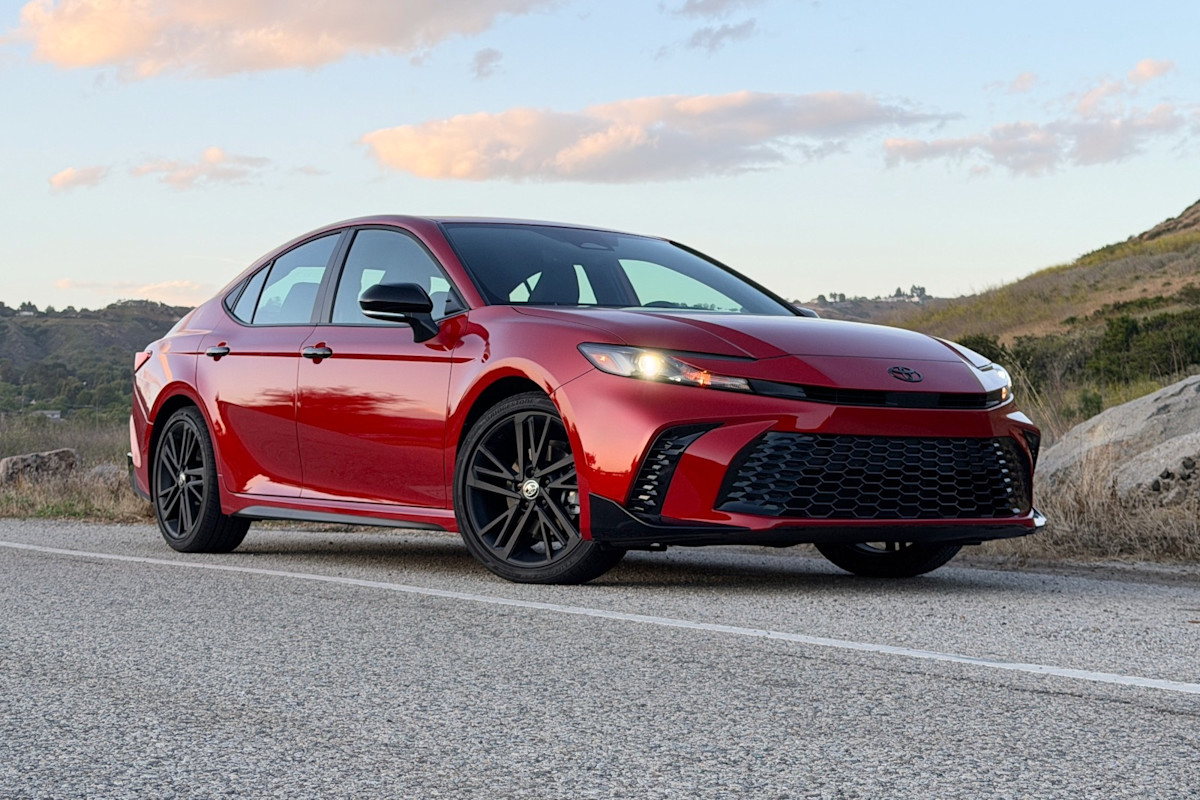
The newest Camry is hybrid-only, pairing a 2.5-liter four-cylinder with an electric motor for 225 hp (FWD) or 232 hp (AWD) and up to 51 mpg combined. Pittsburgh's 2025 pricing sits marginally above the national average at +0.9%, reflecting strong demand for these fuel-efficient models. With 2025 models accounting for 28% and 2026 models for 17% of local inventory, ninth-gen models are well-represented at a combined 45% share.
Eighth Generation (2018–2024): $12,981–$27,711
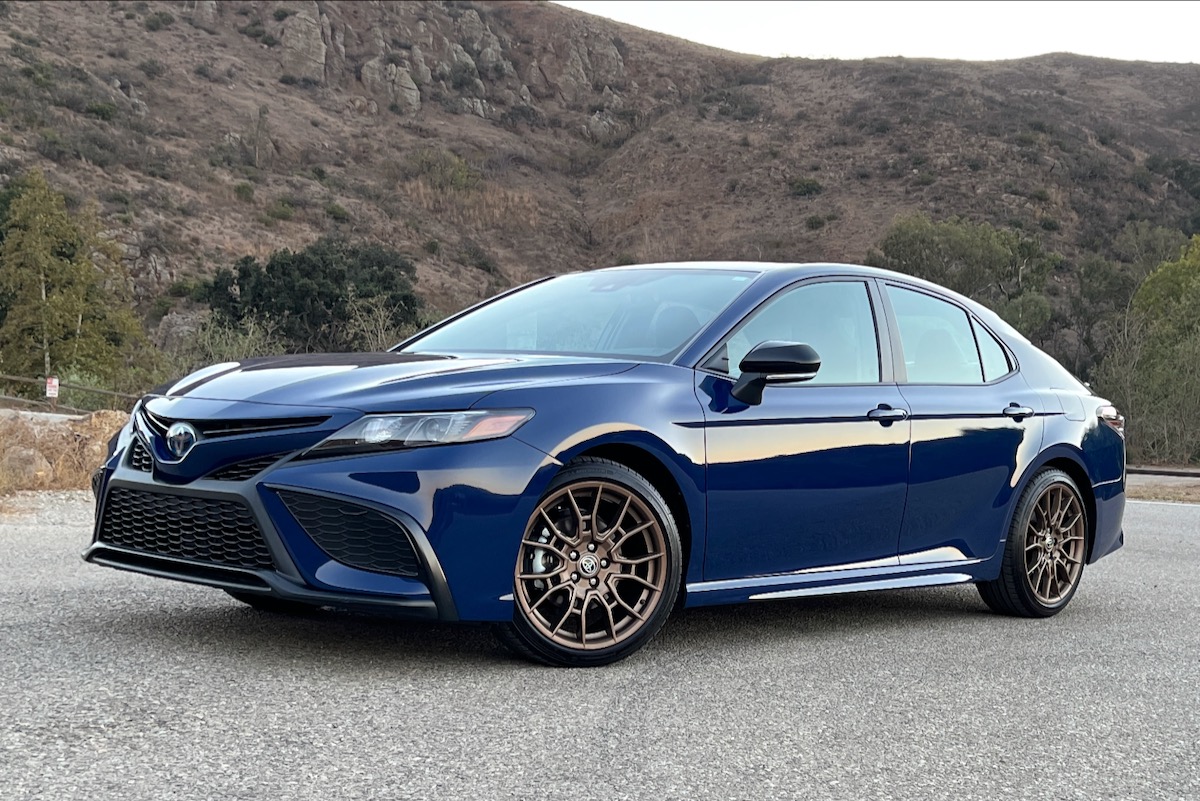
The sweet spot for most Pittsburgh buyers. The 2018 redesign brought sportier styling, improved driving dynamics, and a more upscale interior on Toyota's TNGA platform. The 2024 model year shows a strong Pittsburgh discount at 6.0% below national pricing ($25,031 vs. $26,618) with 48,911 average miles. The 2021 also offers a modest discount at 2.5% below national ($21,614 vs. $22,161) with 78,172 average miles. The 2020 stands out with a dramatic 37.1% local discount ($12,981 vs. $20,627), though the 172,782-mile average suggests these are high-mileage fleet vehicles.
Seventh Generation (2014–2017): $12,442–$20,195
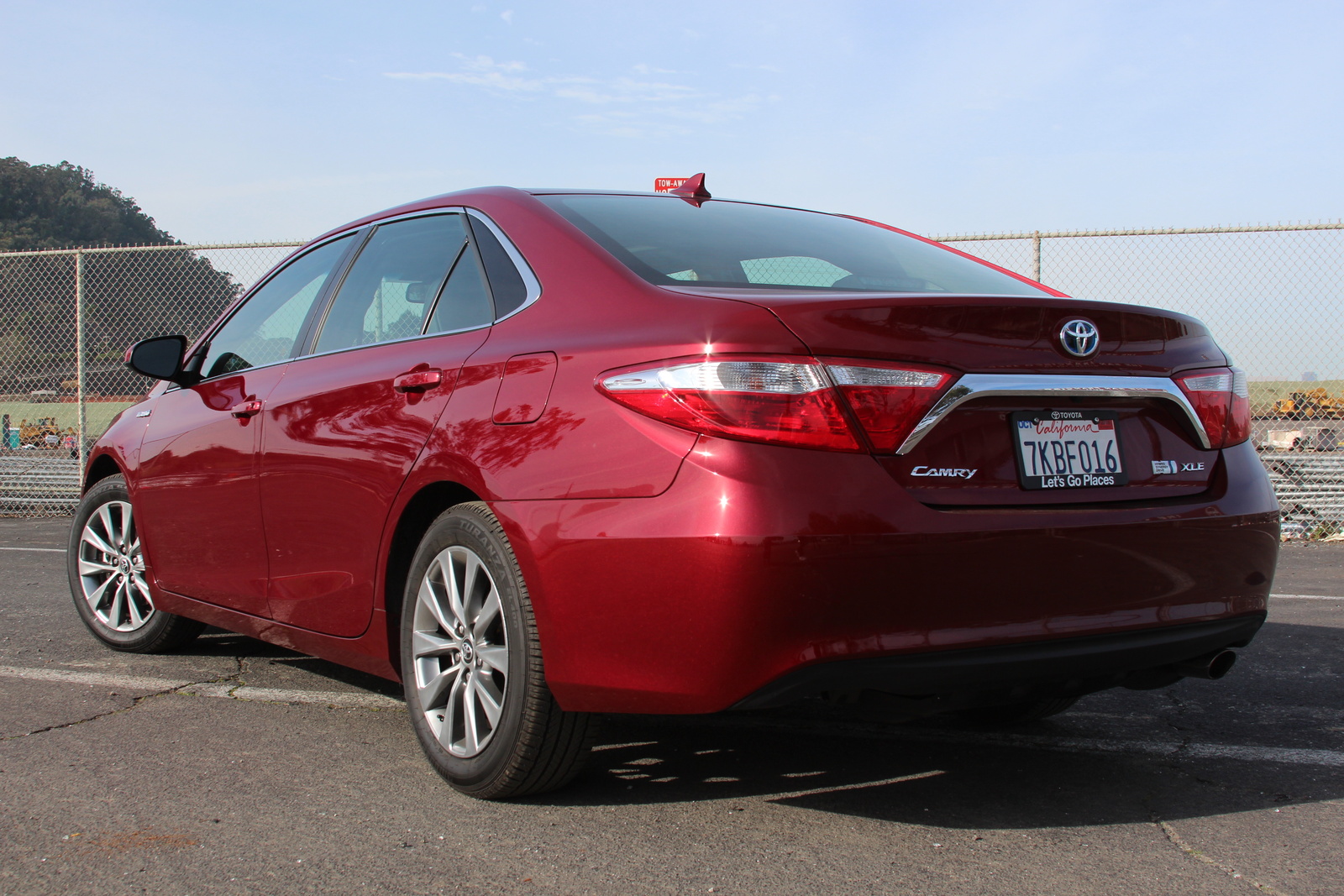
Budget-friendly entry into reliable Camry ownership. The 2014 mid-cycle refresh brought a redesigned exterior and improved interior materials, and this generation earned top honors in the J.D. Power Vehicle Dependability Study. The 2016 model at $12,442 represents the strongest local value at 11.1% below national pricing, with 107,746 average miles.
Understanding the Pittsburgh Price Advantage
The 5.9% discount over national pricing reflects Pittsburgh's market dynamics. Lower average mileage is the standout advantage — Pittsburgh listings average 70,514 miles versus 78,648 nationally, a 10.3% difference that means you're getting fresher vehicles at the lower price point.
Pittsburgh's winters add a consideration that Southern and Western markets don't face. Road salt is a reality in Western Pennsylvania, and while Camrys are mechanically robust, undercarriage rust can be an issue on older models. This makes the lower-mileage local inventory particularly valuable — newer vehicles have had less exposure.
Strong inventory keeps pricing competitive. With 1,168 local listings, Pittsburgh buyers have meaningful selection. The 2024 model year commands the largest share at 37% of local inventory, followed by 2023 at 31% and 2025 at 28%, giving buyers plenty of late-model options.
Good and Great Deals in Pittsburgh
32% of Pittsburgh Camry listings qualify as Good or Great Deals — matching the national average. The Great Deal rate tells a more interesting story: 11% of Pittsburgh listings are Great Deals versus just 7% nationally, meaning the best-priced vehicles in Pittsburgh offer outsized value.
| Deal Rating |
Pittsburgh Percentage |
National Percentage |
| Great Deals |
11% |
7% |
| Good Deals |
22% |
24% |
Pittsburgh's 11% Great Deal rate significantly exceeds the national 7%. The 2024 and 2021 model years show particularly strong local discounts worth targeting.
What is the Most Reliable Used Toyota Camry in Pittsburgh?
The Toyota Camry’s reliability reputation is well-earned — but not every generation is equal. Pittsburgh’s four-season climate adds an extra consideration: road salt and freeze-thaw cycles can accelerate undercarriage wear, making generation choice and pre-purchase inspection even more important here.
Most Reliable by Era
Eighth Generation (2018–2024)
The most refined and reliable Camry generation to date. Built on Toyota’s TNGA platform, these models offer improved driving dynamics, better fuel economy, and excellent build quality. Complaint data on carcomplaints.com is minimal, with no recurring serious issues. Pittsburgh listings for this generation average 84,938 miles (2018) down to 53,340 miles (2024) — well within the range where these proven powertrains have years of life remaining. All three engine options are thoroughly proven:
| Powertrain |
Output |
Fuel Economy |
Notes |
| 2.5L Four-Cylinder |
203–206 hp |
28–34 mpg |
Base engine, excellent reliability, adequate power |
| 3.5L V6 |
301 hp |
22–32 mpg |
Strong performance, smooth delivery, proven durability |
| 2.5L Hybrid |
208 hp |
46–52 mpg |
Best efficiency, Toyota’s proven hybrid system |
Complaint data for 2018–2024 models is minimal, with no recurring serious issues. These Camrys regularly appear at or near the top of reliability surveys.
Seventh Generation (2012–2017)
The second-most reliable modern Camry generation. The 2014 refresh improved interior quality and refined the driving experience. This generation took top honors in the J.D. Power 2017 Vehicle Dependability Study for midsize cars. Issues are minor — infotainment glitches, occasional brake noise — not fundamental mechanical problems. Pittsburgh’s seventh-gen inventory averages 48,787–129,498 miles depending on year, with the 2016 standing out for its remarkably low local mileage.
Ninth Generation (2025–Present)
Too new for long-term reliability data, but the hybrid-only powertrain draws heavily from components proven in the eighth generation. Many parts carry over directly, and early indicators are positive. Pittsburgh’s 2025 inventory averages 32,203 miles — early enough in the ownership cycle that any emerging issues would likely be covered under warranty.
Sixth Generation (2006–2011): The Exception
This is the Camry generation to approach carefully. The 2007–2009 model years suffered from excessive oil consumption, especially in V6 models. Carcomplaints.com cites 2008 as the worst year for reliability, with 2007 having the highest complaint count overall. The 2010–2011 years are somewhat better — a new six-speed automatic and stability control came standard in 2010, and a new 2.5-liter engine arrived for 2011 — but this generation doesn’t match the reliability of what came before or after. In Pittsburgh, road salt exposure compounds any existing mechanical vulnerabilities.
Key Model Year Improvements — Eighth Generation
Key Improvements by Model Year — Eighth Generation (2018–2024)
| Model Year |
Key Improvements |
| 2018 |
All-new TNGA platform, sportier design, 8-speed automatic, improved driving dynamics |
| 2020 |
Apple CarPlay/Android Auto standard, new front grille design, TRD sporty trim added |
Camry-Specific Reliability Considerations
Oil Consumption (2007–2009): The most significant Camry reliability issue. V6 models from these years are particularly affected. If considering a sixth-generation Camry, check oil levels carefully and ask about consumption history. The seventh generation at similar prices is a fundamentally safer bet.
Hybrid Battery Health: Toyota hybrid batteries are robust, but check for warning lights or reduced fuel economy that might indicate degradation. Pittsburgh’s cold winters can temporarily reduce hybrid efficiency but don’t typically cause long-term battery damage — Toyota’s thermal management systems handle temperature extremes well.
Transmission Performance: The eight-speed automatic (2018+) and six-speed (earlier years) are both reliable units. Test for smooth shifts during your test drive. These transmissions are durable but should shift cleanly — hesitation or harshness suggests deferred maintenance.
Rust and Undercarriage (Pittsburgh-Specific): Road salt is a reality of Pittsburgh winters. Inspect the undercarriage, wheel wells, and brake lines carefully on any used car. Eighth-generation models with AWD are particularly desirable locally for winter capability, but ensure the AWD system engages smoothly during your test drive.
What to Check When Buying
- Service records: Even reliable cars need maintenance. Look for documented oil changes at manufacturer-recommended intervals and evidence of scheduled service.
- Oil consumption (2007–2011): If considering a sixth-generation model, check oil levels between dipstick marks. Any consumption beyond one quart per 1,000 miles warrants concern.
- Undercarriage corrosion: Pittsburgh’s road salt makes this essential. Look for rust on frame rails, brake lines, and suspension components. A clean undercarriage on a Pittsburgh car is a strong positive sign.
- Hybrid battery condition: Check for dashboard warning lights, note the fuel economy readout during your test drive, and confirm the hybrid system transitions smoothly between electric and gas power.
- Transmission behavior: Run through all gears during your test drive. The eight-speed (2018+) should shift imperceptibly; the six-speed (earlier years) should be smooth and decisive.
Best and Worst Toyota Camry Years in Pittsburgh
Choosing the right model year matters — especially when Pittsburgh’s pricing doesn’t offer a blanket discount. The value differences between individual years are significant, with some offering genuine local advantages and others carrying premiums. For more information on the Camry by generation and model year, check out our Toyota Camry Buying Guide.
Best Toyota Camry Years for Pittsburgh
| Category |
Best Years |
Pittsburgh Avg. Price |
Why They’re Best |
| Best Overall |
2021–2024 |
$21,614–$27,711 |
Refined eighth-gen with Apple CarPlay/Android Auto standard, proven reliability, local discounts on 2021 and 2024 |
| Best Value |
2024 |
$25,031 |
6.0% Pittsburgh discount, 48,911 avg miles, final eighth-gen year with all refinements |
| Best Budget Option |
2016 |
$12,442 |
11.1% Pittsburgh discount, post-refresh seventh-gen, excellent reliability under $13k |
| Best Local Discount |
2020 |
$12,981 |
37.1% below national ($20,627), though high mileage at 172,782 avg miles |
Best Overall: 2021-2024
These model years hit the sweet spot of modern features, proven reliability, and meaningful depreciation. Apple CarPlay and Android Auto are standard, and these years benefit from several years of eighth-generation refinement. The 2024 shows a 6.0% Pittsburgh discount ($25,031 vs. $26,618 nationally) with 48,911 average miles, while the 2021 offers a 2.5% discount ($21,614 vs. $22,161) with 78,172 average miles.
Best Value: 2024
The final year of the eighth generation, available at $25,031 in Pittsburgh — 6.0% below the national average of $26,618. As the last model year before the hybrid-only transition, the 2024 offers buyers a choice of three proven powertrains including the V6 that was discontinued for the ninth generation. Average mileage of 48,911 is moderate, and this year benefits from all the cumulative improvements Toyota made across the eighth generation's run.
Best Budget Option: 2016
The post-refresh seventh generation at $12,442 in Pittsburgh — 11.1% below the national average of $13,997. The 2014 facelift brought significant exterior and interior improvements, and these years earned top reliability marks from J.D. Power. Average mileage of 107,746 is higher, but these Camrys are built to handle it, and sub-$13,000 pricing makes them accessible for budget-conscious Pittsburgh commuters.
Best Local Discount: 2020
The standout value anomaly in Pittsburgh's market. At $12,981, the 2020 Camry is 37.1% below the national average of $20,627. The catch is the 172,782-mile average, which suggests these are largely high-mileage fleet or rideshare vehicles. For buyers comfortable with higher mileage on a proven eighth-generation platform, this represents exceptional pricing — but a pre-purchase inspection is essential.
Worst Toyota Camry Years for Pittsburgh
| Years |
Concerns |
| 2007–2009 |
Excessive oil consumption, highest complaint rates of any Camry generation, especially V6 models |
| 2010–2011 |
Improved from 2007–2009 but still less reliable than seventh-gen models at similar prices |
Avoid: 2007–2009
The 2008 model year is widely cited as the worst Camry for reliability by carcomplaints.com, with 2007 having the highest overall complaint count. The 2009 model year shares the same oil consumption concerns affecting the entire 2007–2009 range. Excessive oil consumption — particularly in V6 models — is the primary concern. While no current Pittsburgh inventory appears for these years, they may surface at independent lots. In Pittsburgh's climate, where cold starts are frequent and road salt accelerates undercarriage wear, these already-problematic engines face additional stress. More reliable 2014–2016 seventh-generation models are available for similar money and are the better choice.
Approach Carefully: 2010–2011
Toyota improved the sixth generation in its final years, including stability control as standard for 2010 and a new 2.5-liter engine for 2011. These are better than 2007–2009, but still don't match the reliability of the seventh generation. If any appear in the Pittsburgh market at seemingly attractive prices, step up to seventh-generation models that offer better long-term dependability — particularly important for surviving Pittsburgh's demanding driving conditions.
Toyota Camry Pros and Cons
Pittsburgh’s driving conditions — hilly terrain, four distinct seasons, and a mix of highway commuting and city driving — play to many of the Camry’s strengths while exposing a few of its limitations.
Pros
Exceptional Reliability (Most Generations)
The Camry’s reputation is earned. Seventh and eighth-generation models consistently top reliability surveys, and Toyota’s conservative engineering means these cars last. The eighth generation has minimal complaints on carcomplaints.com despite massive sales volumes. For Pittsburgh drivers who need a car that starts reliably through winter mornings and handles daily wear without drama, the Camry delivers.
Favorable Pittsburgh Pricing
The numbers support the case: Pittsburgh Camry prices average $21,083, 5.9% below the national average of $22,405, with lower average mileage at 70,514 versus 78,648 nationally. The 11% Great Deal rate nearly doubles the national 7%, giving patient shoppers outsized opportunities.
Excellent Fuel Economy
For Pittsburgh commuters, fuel costs add up across hilly terrain and stop-and-go traffic. The eighth-generation hybrid achieves 46–52 mpg combined; even non-hybrid four-cylinders manage 28–34 mpg. The ninth-generation hybrid-only model pushes combined efficiency to 51 mpg — meaningful savings for daily drivers covering I-376 or Route 28 corridors.
AWD Availability for Winter Capability
Pittsburgh’s hilly streets and snowy winters make all-wheel drive a genuine asset. The eighth-generation Camry offers AWD on non-hybrid models, providing confidence on Penn Avenue’s slopes and Mt. Washington’s inclines. It’s a practical feature that many competing sedans lack.
Low Ownership Costs
Beyond fuel economy, Camrys are affordable to maintain. Parts are plentiful and reasonably priced, any shop can service them, and they don’t require premium fuel. Insurance costs are moderate for the class. For a market where Pittsburgh’s average Camry price matches national norms at $22,201, the low ongoing costs keep total cost of ownership competitive.
Comfortable and Practical
The Camry seats five adults comfortably with a generous trunk. The eighth-generation interior is well-appointed with quality materials and intuitive controls. For daily commuting across Pittsburgh’s bridges and tunnels, the Camry handles everything competently without fatigue.
Cons
Not Exciting to Drive
The Camry prioritizes comfort over sportiness. While the eighth generation improved driving dynamics with the TNGA platform, it’s still not a driver’s car — light steering, comfort-tuned suspension, and transmissions calibrated for smoothness rather than engagement. Pittsburgh’s winding roads through Squirrel Hill and along the river won’t feel any more engaging in a Camry than on a highway.
Sixth Generation Reliability Issues
The 2006–2011 Camry is the exception to the reliability rule. The 2007–2009 years have well-documented oil consumption problems, and Pittsburgh’s cold starts can exacerbate engine stress. With reliable seventh-generation models available from $12,000 in Pittsburgh, there’s no reason to gamble on a sixth-gen car.
Lower Accident-Free Rate Locally
63% of Pittsburgh Camry listings have accident-free histories versus 73% nationally. This 10-percentage-point gap means buyers should be more diligent about running vehicle history reports and inspecting for prior repair work. It’s not a reason to avoid the market, but it is a reason to do your homework.
Some Years Priced Above National Average
Not every model year offers a Pittsburgh discount. The 2022 ($26,140 vs. $23,545 nationally, +11.0%), 2023 ($27,711 vs. $25,387, +9.2%), and 2019 ($21,336 vs. $18,953, +12.6%) are priced above national averages locally. Smart shoppers should focus on the years where Pittsburgh's pricing advantage is strongest.
Who Should Buy a Toyota Camry in Pittsburgh?
Ideal buyers based on data patterns:
- Commuters covering daily miles on I-376, Route 28, or the Parkway who value fuel efficiency and long-term dependability
- Budget-conscious buyers targeting the 2016 model year at $12,442 with low local mileage — the strongest value play in this market
- Families needing a comfortable, practical sedan with low ownership costs and available AWD for Pittsburgh winters
- Buyers prioritizing vehicle condition over price discounts — Pittsburgh’s lower-mileage inventory rewards those focused on long-term value
Consider alternatives if:
- You prioritize driving excitement — the Camry’s comfort-focused character won’t change on Pittsburgh’s hilly roads
- You need deep below-market pricing — Pittsburgh’s 0.0% price delta and 24% Good/Great Deal rate mean this isn’t a discount market
- You’re considering a 2007–2009 model — the oil consumption risk is higher in Pittsburgh’s cold-start climate, and better options exist at similar prices
- Maximum cargo space is essential — the Camry’s trunk is adequate but not class-leading, and hybrid models sacrifice some space to the battery
Final Verdict for Pittsburgh Buyers
The Toyota Camry remains one of the smartest used car purchases you can make, and Pittsburgh's market conditions reinforce that case. A 5.9% price discount, 10.3% lower average mileage, and an 11% Great Deal rate that nearly doubles the national figure make this a genuinely favorable market for Camry shoppers. Target the 2021–2024 eighth-generation models for the best blend of features, reliability, and value, or drop to the 2016 for proven dependability under $13,000. Just steer clear of the sixth generation (2006–2011) and always inspect for road salt damage — Pittsburgh winters are harder on cars than most. The Camry won't thrill you behind the wheel, but it will get you across the Fort Pitt Bridge and back every day without complaint, and that's exactly the point.