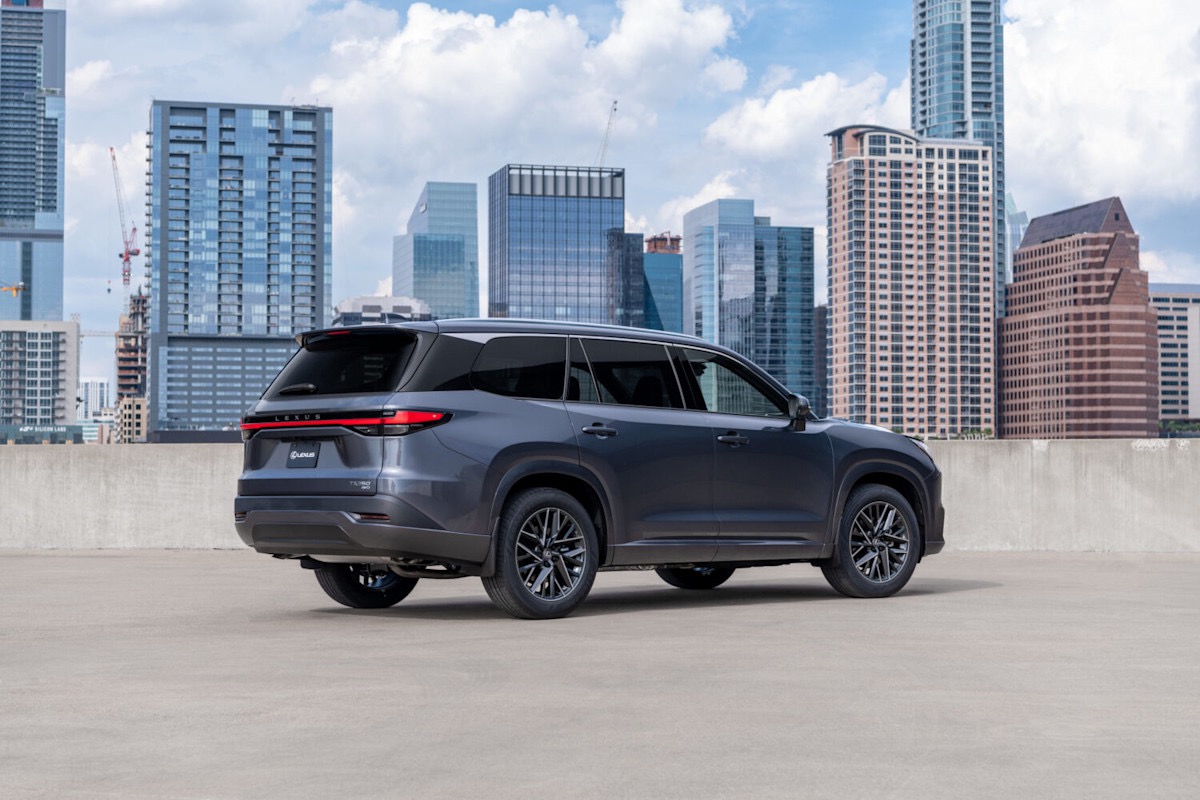
Toyota Avalon Fifth Generation (2019-2022)
The final Avalon rides on Toyota's New Global Architecture (TNGA), a stiffer platform that improved handling and crash protection, with a wheelbase 2 inches longer than the previous generation's. The styling followed Toyota's then-new look, resulting in an even bigger grill. Even with a new platform, the Avalon is still a comfortable cruiser first and foremost. There were a couple of surprises, though, including a new all-wheel-drive option and a slightly absurd TRD sport model.
A new 3.5-liter V6 made 301 horsepower and 267 pound-feet of torque and was paired to an eight-speed automatic driving the front wheels. The Avalon Hybrid paired a 2.5-liter four-cylinder with two electric motors for a combined output of 215 horsepower. Its Auto Glide Control feature, active in Eco mode, allowed the car to coast more freely when drivers lifted off the accelerator instead of slowing it with regenerative braking, improving efficiency on the highway. For 2021, the hybrid battery was upgraded from a nickel-metal hydride composition to a lithium-ion pack, and earned an EPA rating of 44 mpg combined.
Also for the 2021 model year, all-wheel drive became an available option on the XLE and Limited trims. It was paired only to a 2.5-liter four-cylinder and an eight-speed automatic, borrowed from the Toyota Camry. It is important to note that Toyota fitted the system without taking away any passenger or trunk space.
The core lineup of the fifth generation Avalon is XLE, XSE, Touring, and Limited, with the hybrid offered in XLE, XSE, and Limited. The XSE and Touring are the sporty trims, and the Touring and Limited get adaptive dampers, which can firm up or soften accordingly. For 2022, Toyota added a limited-run Nightshade edition with blacked-out trim.
The TRD trim arrived for 2020, and it was gloriously unnecessary. It kept the 301-hp V6 but added a performance suspension with a lower ride height, stiffer springs and shocks, extra bracing to stiffen the body, lightweight 19-inch wheels, bigger brakes, a sportier exhaust, and an even larger grille. Inside, red seatbelts and red stitching rounded out the changes. It inherently contradicted the Avalon's mission of quiet comfort, but there is nothing else quite like it on the used marketplace.
Inside, the cabin has a flowing center console with clever storage and, for added funk, asymmetric cupholders. A 9-inch touchscreen was standard on all trims with Apple CarPlay, a Wi-Fi hotspot, Amazon Alexa compatibility, and smartphone-based navigation. Android Auto arrived for 2020, so Android users should look for 2020 and later model years. Options include a 14-speaker JBL audio system, built-in navigation, and wireless phone charging. For 2021, a heated steering wheel became standard on the XLE and Limited.
Toyota Safety Sense P is standard and includes automatic emergency braking with pedestrian detection, adaptive cruise control, lane departure warning with steering assist, and high-beam assist. The 2019 Avalon earned the Insurance Institute for Highway Safety's (IIHS) Top Safety Pick+ award with the LED projector headlights on the Limited and Touring. The XLE and XSE use LED reflector headlights that the IIHS rated Poor for visibility. The 2022 model year earned a Top Safety Pick thanks to a new standard front crash prevention system that earned Superior ratings in both IIHS evaluations.
This generation has the fewest owner complaints of any Avalon. The biggest issue is a large Toyota and Lexus recall covering the 2019 model, later expanded to some 2020 cars; the low-pressure fuel pump can fail and stall the engine while driving. Dealers replace the pump for free. Toyota also recalled a small batch of 2019 Avalon Hybrids, because workers might not have properly reconnected the fuel filler pipe after a factory inspection. Buyers should confirm that both recalls have been completed on any 2019 or 2020 car.
At the time of writing, 2019 model years averaged about $24,000 on CarGurus, well below 2020 through 2022 cars, which average around $28,000. That makes the 2019 model the best value of the generation, assuming the dealer has done its fuel pump recall. The Avalon Hybrid costs about the same, averaging about $24,900 for a 2019, $27,600 for a 2020, and $29,000 for a 2021. The TRD and AWD trims command a premium due to limited availability.
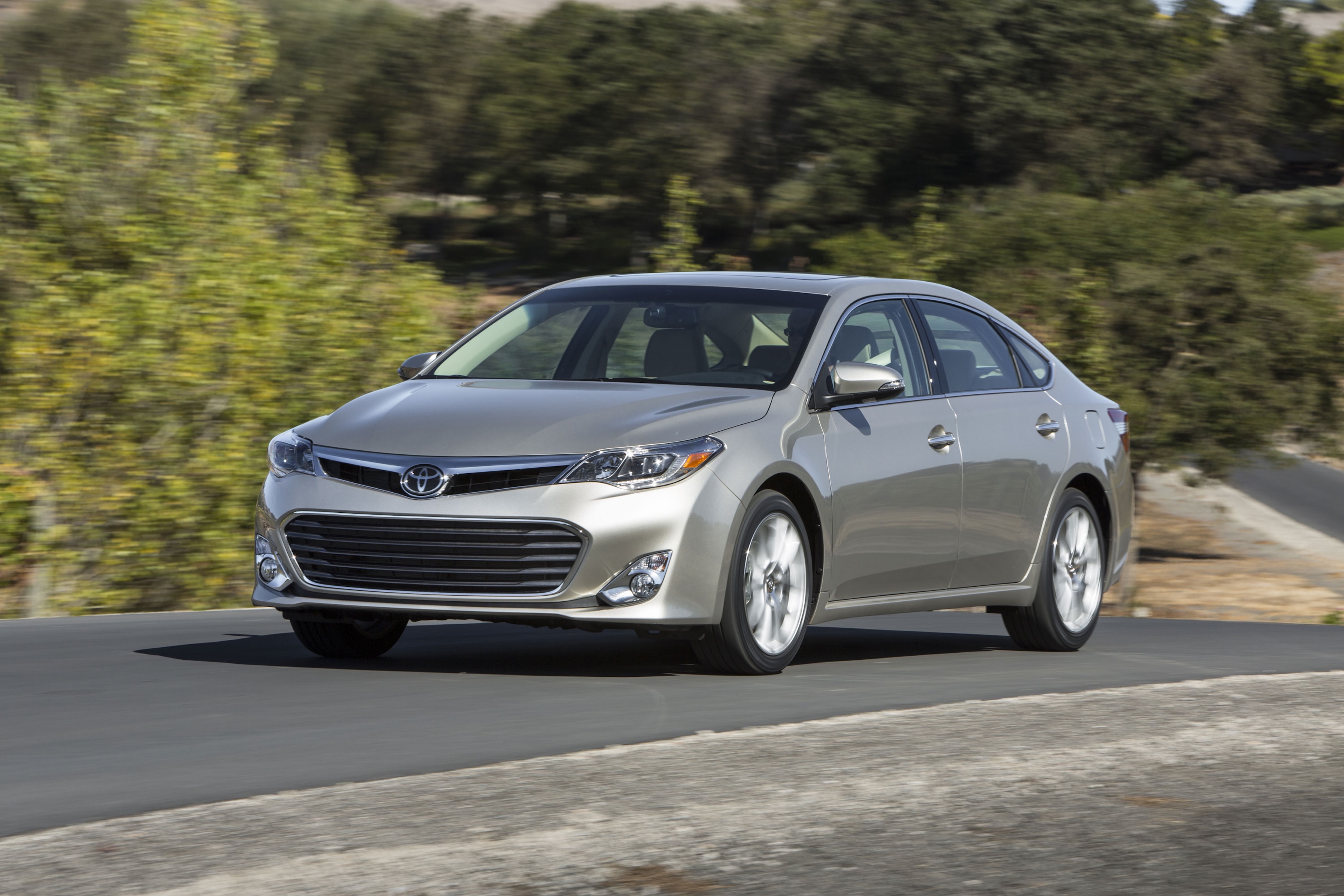
Toyota Avalon Fourth Generation (2013-2018)
The fourth generation dropped the conservative styling for sculpted sides and a sleek, sloping roofline. It looked genuinely modern and was one of the most aerodynamic sedans of its day. It's a bit shorter and narrower than the third generation it replaced, yet the cabin stayed roomy and the trunk grew. Underneath, it shares its platform with the Lexus ES. This generation also introduced the Avalon Hybrid.
The familiar 2GR-FE 3.5-liter V6 engine returned with 268 hp and 248 lb-ft, paired with a six-speed automatic driving the front wheels. The new Avalon Hybrid used Toyota's Hybrid Synergy Drive system, pairing a 2.5-liter four-cylinder shared with the Camry Hybrid with two electric motors for a combined total of 200 hp, and the EPA rated it at 40 mpg city and 39 mpg highway. The trade-off is in the trunk; the hybrid battery sits between the rear seat and the trunk, cutting cargo space from 16 cubic feet to 14.
At launch, the V6 was offered in XLE, XLE Premium, XLE Touring, and Limited trims, and the hybrid in XLE Premium, XLE Touring, and Limited trims. The 2016 refresh updated the styling, retuned the suspension for a smoother ride, and reshuffled the lineup to XLE, XLE Plus, XLE Premium, Touring, and Limited. The Touring returned as the sporty option, and the XLE Plus added a standard sunroof. For the most luxury, find a Limited trim. Early cars offered automatic emergency braking as an option. With the 2016 refresh, every Avalon got the Toyota Safety Sense P suite of driver aids.
Reviewers praised the cabin's design, with plenty of real and simulated leather and intuitive controls. The center stack uses capacitive-touch buttons, which respond to a touch instead of a press. Some drivers like the clean look, while others find them hard to use while driving. The Entune infotainment system could run smartphone apps for music and other services, which was quite modern at the time. The Avalon was also one of the first production cars available with a built-in Qi wireless phone charger.
There are some important recalls to look out for. On cars with Toyota's optional Pre-Collision System, the radar could mistake a steel joint or plate in the road for an obstacle and brake unexpectedly. Next, about 5,650 Camry and Avalon models from the 2014 model year with 16- or 17-inch wheels had a left front lower arm with a badly made bolt hole. A hard impact could separate it from the ball joint and cause a loss of steering control. Finally, in some crashes, the airbag control unit could fail and prevent the airbags or seatbelt pretensioners (which tighten the belts in a crash) from working.
Fourth-generation cars make up much of the used Avalon market, and at the time of writing, the 2014 model had more listings on CarGurus than any other year. Average prices climb from about $12,500 for a 2013 and $14,200 for a 2014 to $15,400 for a 2015 model. The facelifted cars cost more—about $17,100 for a 2016, $18,500 for a 2017, and $19,400 for a 2018. The Hybrid costs about the same as the V6, from about $12,000 for a 2013 to $19,600 for a 2018.
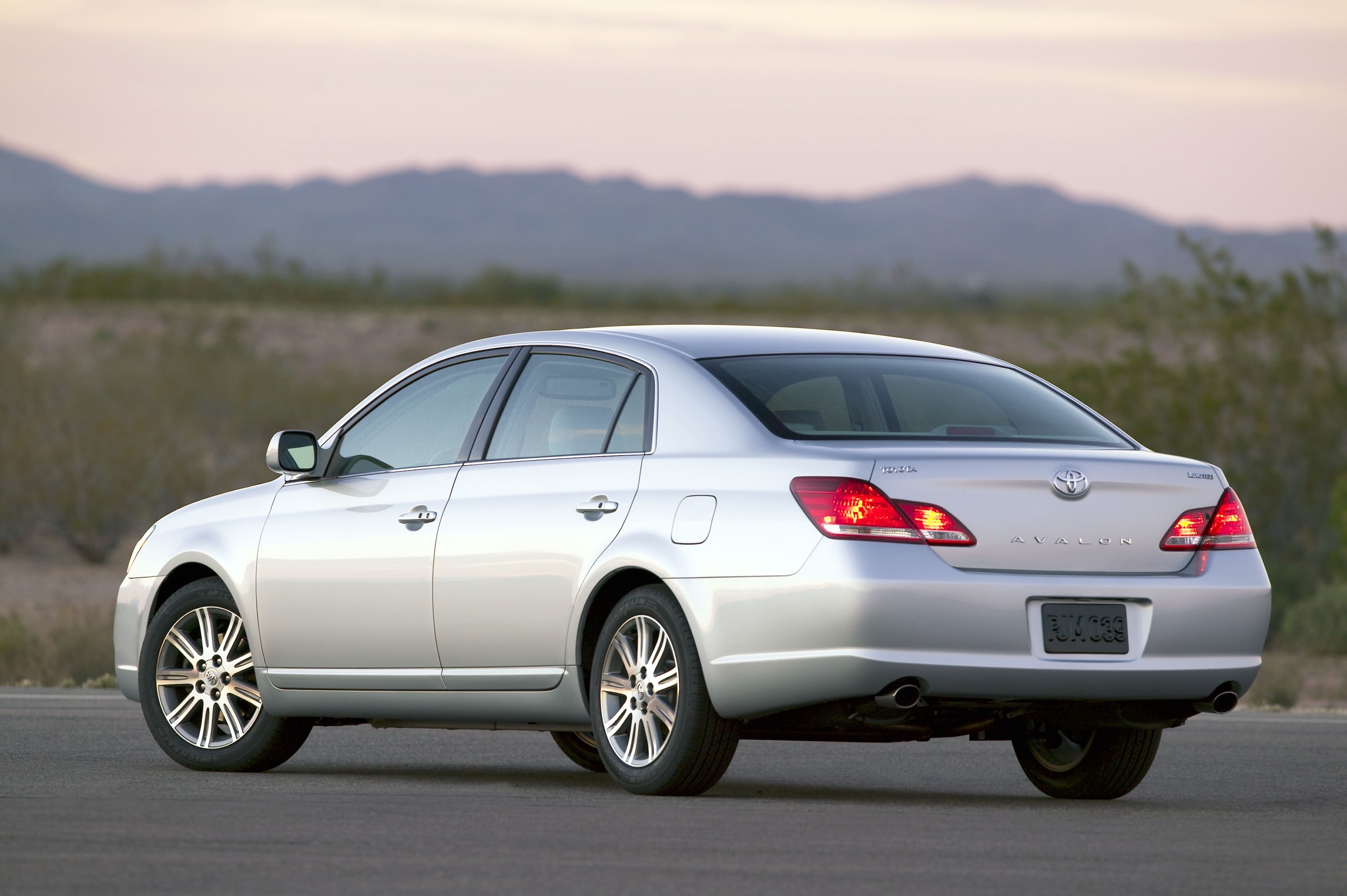
Toyota Avalon Third Generation (2005-2012)
By 2005, the Avalon had established a reputation as a great alternative to the large, full-size American sedans popular with older demographics. So, Toyota went after younger buyers with sleeker styling and a much more powerful engine. The result was one of the best highway cruisers of its era, and period reviews praised its smooth, quiet ride and upscale cabin on long freeway drives. Toyota dropped the front bench seat, but rear passengers gained reclining rear seats.
This generation debuted Toyota's 2GR-FE 3.5-liter V6, an engine that went on to power the Camry, Highlander, Sienna, RAV4, and the Lexus ES. The Avalon was the first to use dual VVT-i, which adjusted valve timing on both the intake and exhaust sides for better power and efficiency. It was rated at 280 hp at launch, but that dropped to 268 hp from 2006 on because of a change in industry testing standards, rather than a change to the engine. A five-speed automatic ran through 2007; the 2008 facelift brought a six-speed automatic. All third-generation Avalons are only available with front-wheel drive.
To widen its appeal, Toyota offered four trims at launch—XL, Touring, XLS, and Limited. The XL rode on 16-inch wheels, while the others had 17s. The Touring was the sporty version, with firmer suspension and grippier tires. The 2008 facelift updated the front and rear styling, and the 2011 facelift revised the styling again for better aerodynamics and cut the lineup to two trims—base and Limited.
Beyond the reclining rear seats, upper trims offered leather, a JBL audio system, and on the Limited, adaptive cruise control. The roomy, quiet cabin is the main reason these cars remain popular as affordable used cruisers.
There are a few issues to watch for in this generation, particularly the 2005 to 2009 model years. The first has to do with the VVT-i system. The rubber section of the oil supply hose to the variable valve timing system can degrade and leak, causing engine noise and a lit oil pressure warning. Owners report sudden, near-total oil loss, and engine damage if the car keeps running. Toyota replaced the hose for free on some cars during a service campaign that ended in 2021. From 2010, all 2GR-FE engines used an all-metal line. Buyers should check whether the hose was replaced, ideally with the metal part. In some climates, the dashboard could crack or turn sticky and melt from heat and humidity. Toyota did cover some replacements under warranty, but that program has now ended. The safest picks in this third generation are the 2010 and 2012 models, which combine the metal oil line with low complaint counts.
Third-generation Avalons are budget buys. At the time of writing, a 2008 averaged roughly $7,500 to $8,200 on CarGurushttps://www.cargurus.com/research/price-trends/Toyota-Avalon-d291, depending on the market, while the facelifted 2011 and 2012 models averaged about $10,700 and $11,500. At this age, condition, mileage, and service records matter more than model year, and many cars have high mileages.
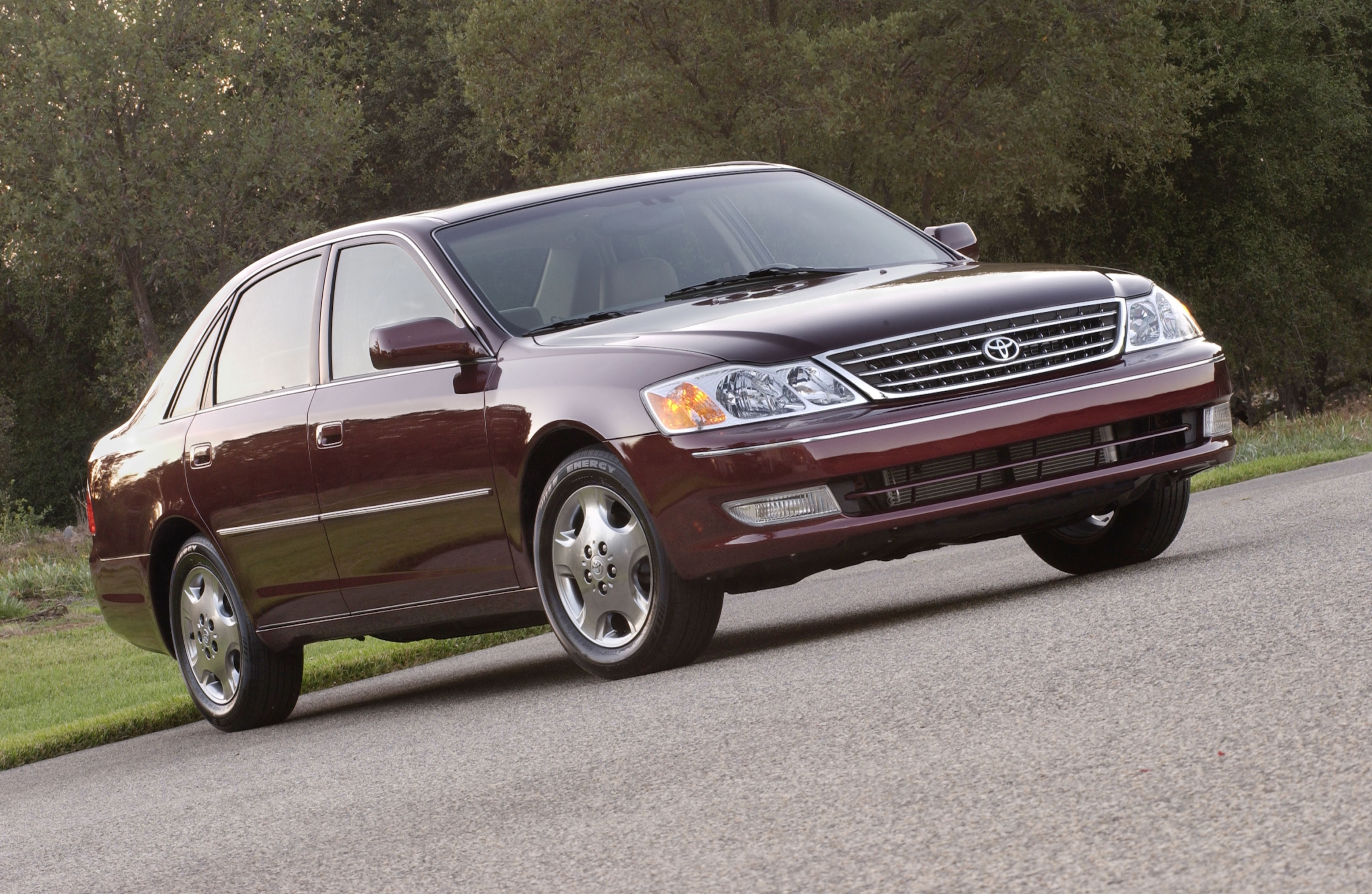
Toyota Avalon Second Generation (2000-2004)
With the second generation, the Avalon started to become its own model instead of a stretched Camry. It still sat on a Camry platform but grew wider, and reviewers at the time found it more solid, spacious, refined, and powerful than before. Comfortable seats, a big trunk, a soft suspension, and a huge back seat make it a great long-distance cruiser, with Lexus-like quality. A front bench seat was available for those who needed room for six.
The Avalon was only available with a 3.0-liter V6, shared with the Lexus ES300. Compared with the first generation, it gained variable valve timing to increase output to 210 hp. Power was routed to the front wheels through a four-speed automatic transmission.
Toyota offered the Avalon in two trims: the XL and the top XLS, and the bench seat was only available on the XL. Upgrades included dual-zone automatic climate control, an improved trip computer display, and a JBL premium audio system (standard on the XLS). The Avalon was also one of the first production cars with a household-style 115-volt power outlet. The 2003 facelift brought new headlights, a new grille, and new taillights.
The second-generation Avalon is widely considered one of the best Toyotas ever made, but there are a few issues to watch out for. The first is a steering lock recall; because of a manufacturing flaw, the steering lock bar could crack over years of use and eventually break, which could lock the steering wheel while driving. Toyota recalled about 373,000 Avalons and replaced the steering interlock device for free. The second is an oil sludge issue, which can block oil passages and ruin an engine. Toyota blamed owners who went too long between oil changes, and its support program has long expired. Regular oil changes are key to preventing this issue.
Pricing for the second generation is heavily dependent on mileage and condition. At the time of writing, this generation of Avalon officially qualified as a classic car. Collector quality examples with very low mileage can reach over $15,000. Good examples with low mileage can reach about $10,000, with facelifted 2003 and 2004 model years commanding a premium. Higher mileage examples can be found for as low as $2,500. Look for maintenance records and watch out for rust, especially on examples in the rust belt.
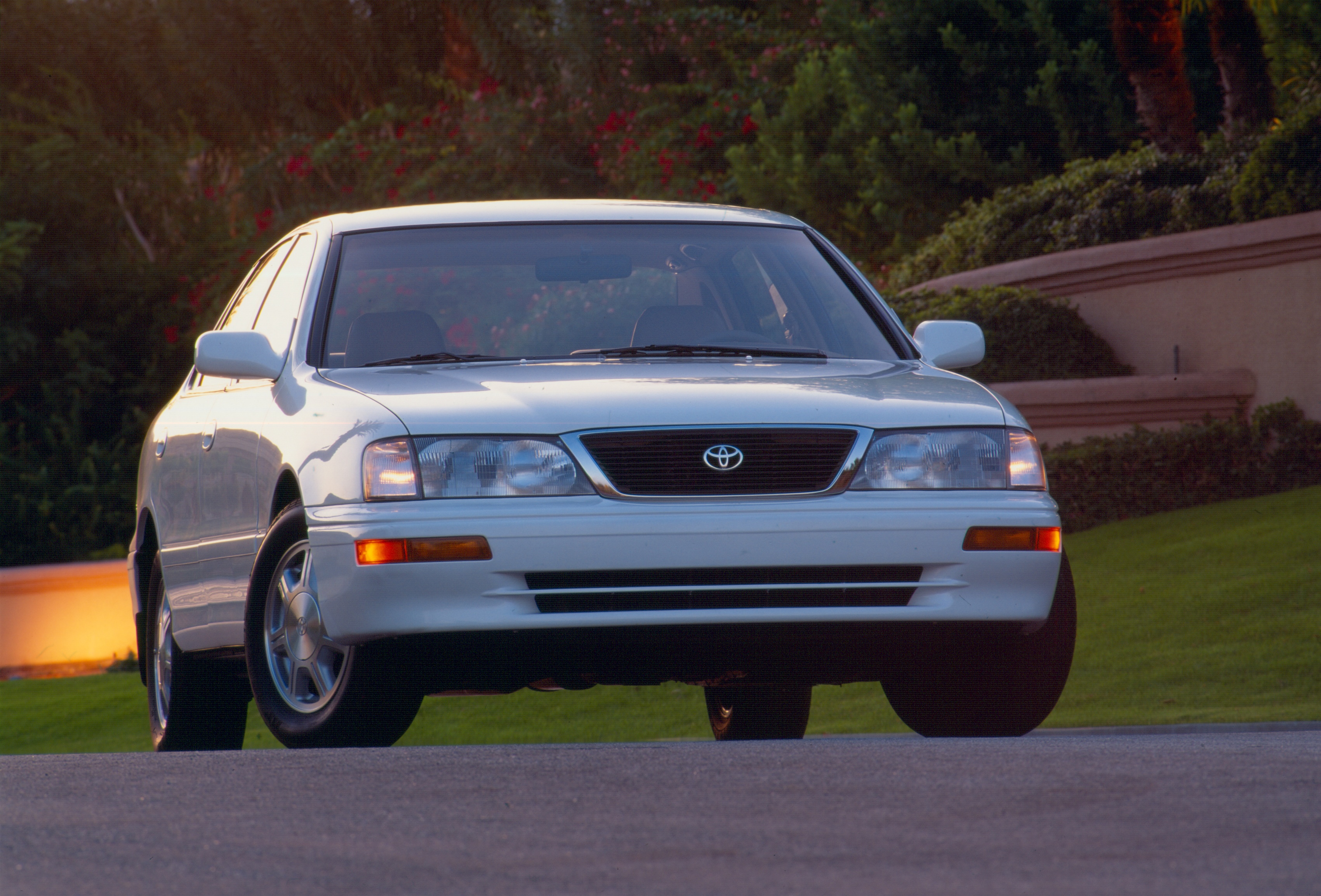
Toyota Avalon First Generation (1995-1999)
The original Avalon replaced the Cressida as Toyota's full-size sedan and went after large sedans such as the Nissan Maxima and the Acura Legend, along with domestic favorites such as the Buick LeSabre. It slotted between the Camry and the Lexus LS 400 but was more Camry than Lexus (it rides on a stretched and widened Camry platform). What it offered was space, as it was the roomiest of the large Japanese sedans, with a back seat big enough for tall passengers to cross their legs comfortably. An optional front bench seat made room for six.
A 3.0-liter V6, tuned to make a little more power than the Camry's, made 192 hp and 210 lb-ft, and was paired with a four-speed automatic and front-wheel drive. Critics liked the Avalon's comfort and refinement but questioned whether it was worth the premium over a Camry, and many found the styling bland. A mild facelift for 1998 updated the front and rear bumpers. Thanks to its Camry parts, it was easy to maintain and cheap to own.
There's little complaint data for this generation, since few remain on the road. The main risk is engine oil sludge on 1997–1999 cars, covered in the second-generation section. Buyers should check oil change records and the condition beneath the oil filler cap before buying.
Availability is quite limited on CarGurus at the time of writing. Higher mileage examples can be found for as low as $2,000, while lower mileage examples in good condition can be found for about $6,000. Like the second generation, shoppers should look for an example with maintenance records and check for rust if they're in an area that sees snow.
Related Topics