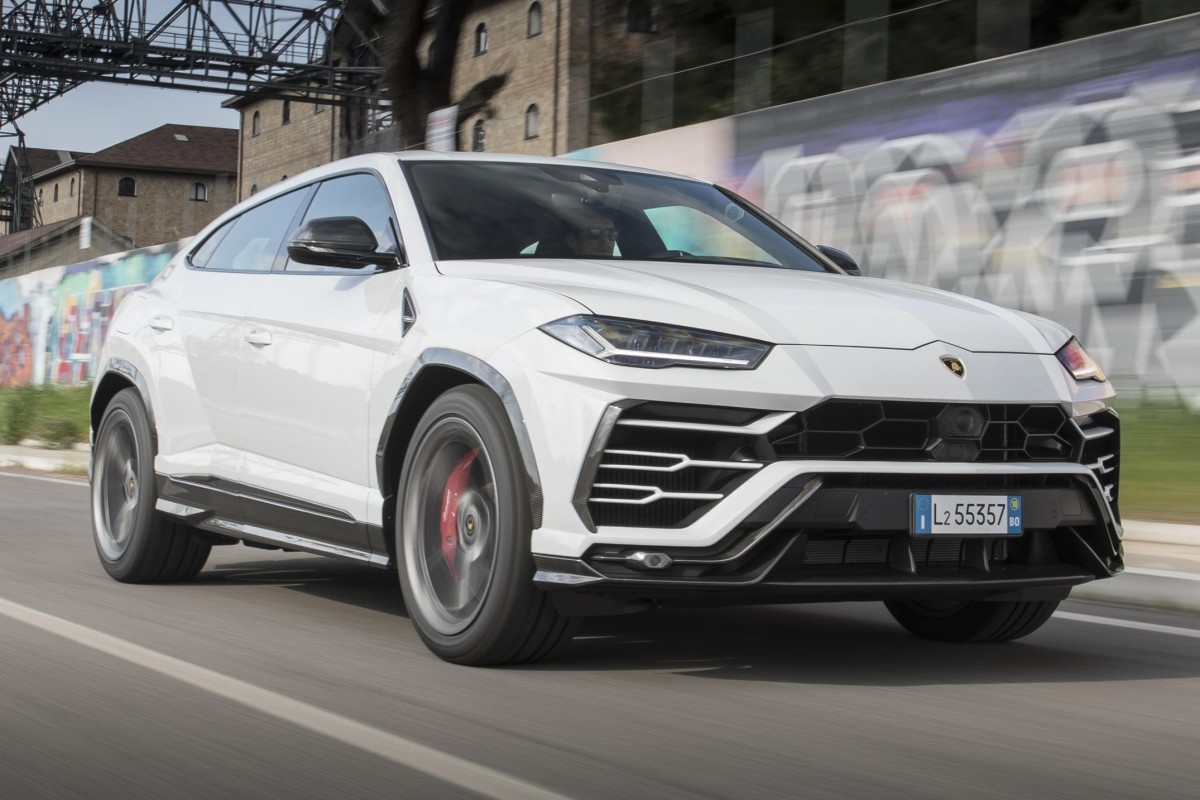
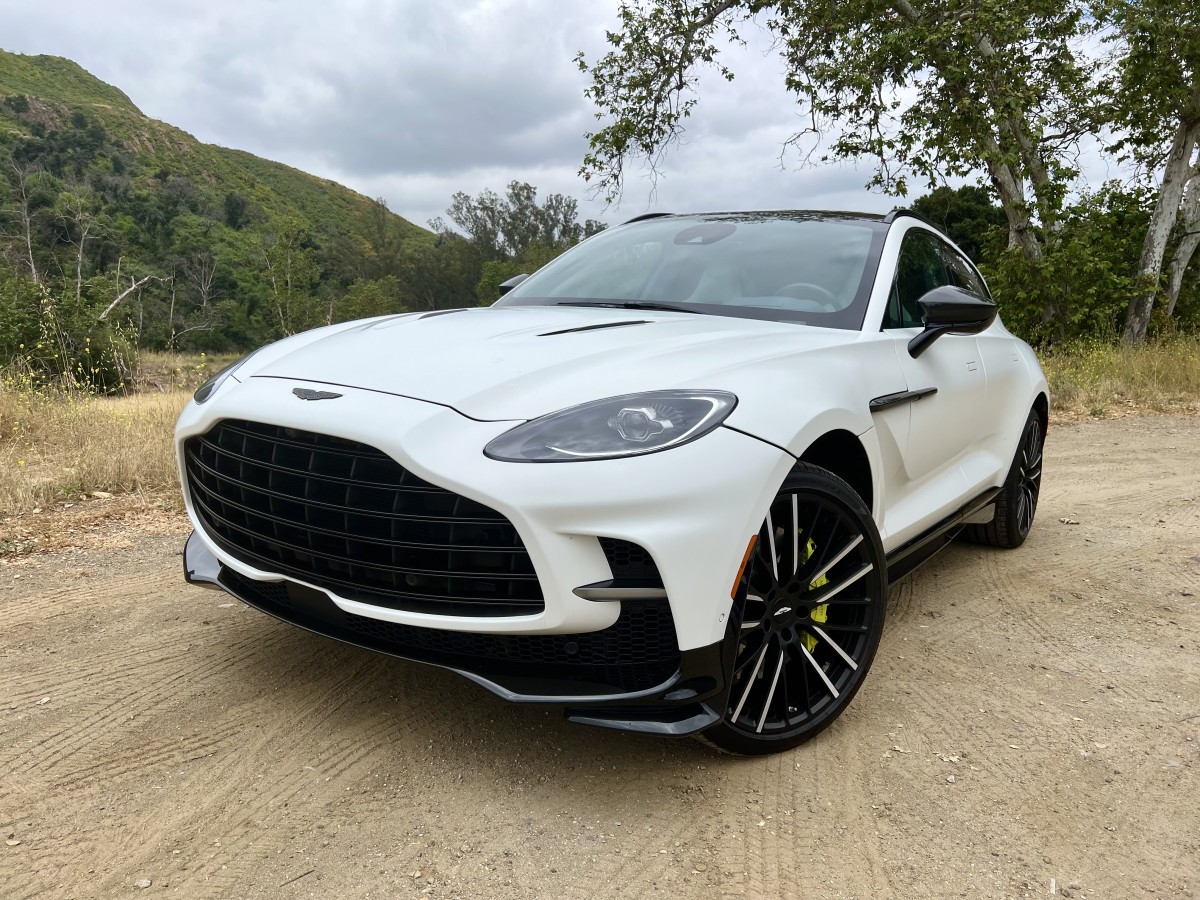
The Lamborghini Urus is the Italian brand’s first modern SUV: a wild-looking four-seater that blends outrageous performance and styling with the amenities and practicality of a family car. A rival to models such as the Aston Martin DBX, the Bentley Bentayga, the Porsche Cayenne, and high-performance Audi, BMW and Mercedes-Benz SUVs, the Urus is big, brash, and not a car for shy, retiring types.
The Urus is notably flamboyant next to the competition. It’s available in some extremely bold colors, and even in more subtle shades, it’s the kind of car that sparks a reaction. With powerful turbocharged V8 engines, all-wheel drive (AWD) and some high-tech chassis technology, it offers the kind of performance and handling buyers would expect of a Lamborghini. The interior has the brand's trademark quality and distinctive style, too.
All of this comes at a price, and it’s a high one. New examples start at almost $250,000 before options, and used prices aren’t far off those levels.
Our Lamborghini Urus buying guide looks at the history of the single model generation available, what to look out for and how much shoppers can expect to pay for one.
Lamborghini Urus Buying Guide: Cost, Reliability, and the Best Years to Buy
Frequently Asked Questions
Which Lamborghini Urus years are the best?
There have been no significant changes to the Lamborghini since it was introduced in 2019, and there’s no data to suggest any model year is better than another, so there’s no “best year” as such.
Which Lamborghini Urus years are the worst?
The Urus is generally reliable across all model years. The worst that has happened is a recall for a faulty rear-view camera, so there are no particular years to avoid. Overall, there isn't much to worry about so long as the vehicle was maintained according to the factory schedule.
Is a used Lamborghini Urus a good deal?
It's difficult to describe the Lamborghini Urus as a good deal. For total performance and luxury, used, late-model Audi RS Q8s or Porsche Cayennes offer similar levels of refinement, speed, and quality but cost a lot less. For those who want to make a statement, the Urus fits the bill, but better value options exist.
Pros and Cons
Pros:
- Extreme performance
- Lavish interior
- Extravagant style and customization
Cons:
- Brash looks
- Not for serious off-roading
- Too similar to Audi and Porsche SUVs
Lamborghini Urus Generations
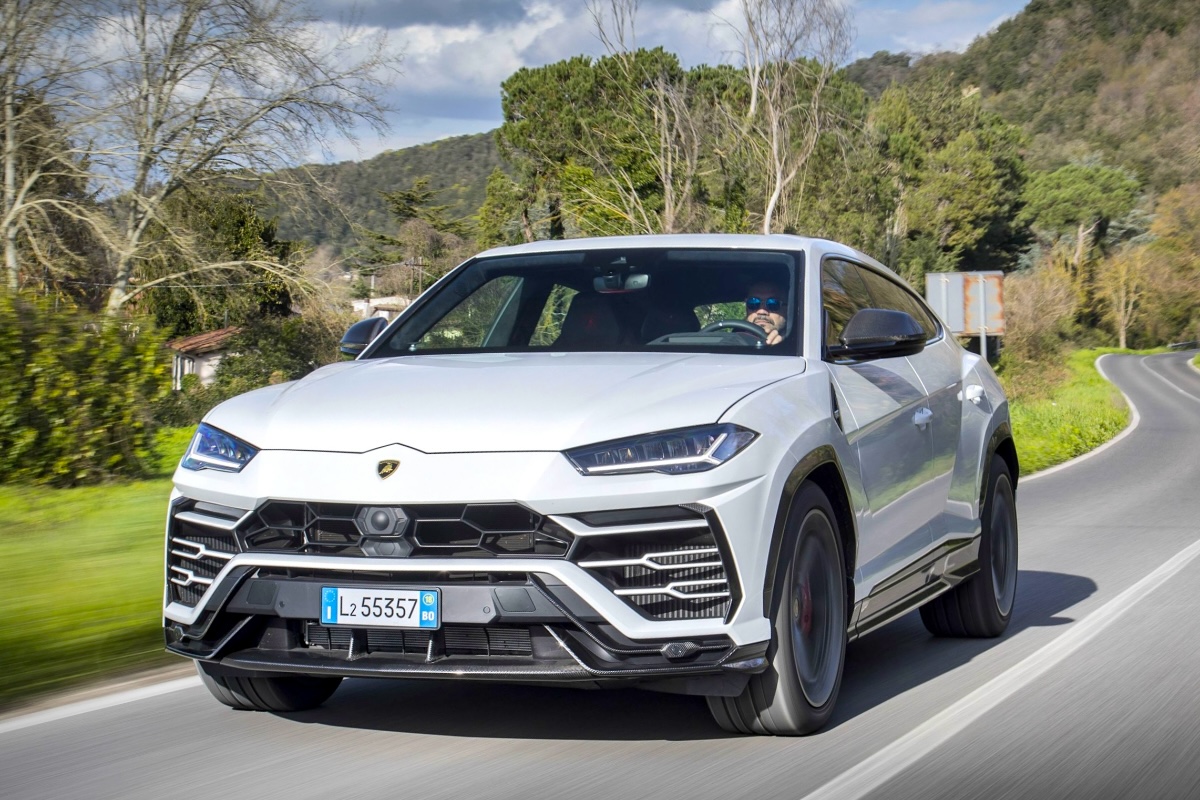
Lamborghini Urus First Generation (2019–Present)
The Urus has been sold in one generation since the 2019 model year. It was primarily engineered by Audi and Porsche, using the chassis shared with the Audi Q7 and Audi Q8, the Porsche Cayenne, and the Bentley Bentayga. The twin-turbo V8 and all-wheel-drive powertrain are related to those of the Audi RSQ8 and the Porsche Cayenne Turbo.
The Urus manages to look smaller than it is, thanks to a comparatively low roofline and an exterior design that transplants Lamborghini’s angular lines onto SUV proportions. It’s actually longer and wider than the related Porsche Cayenne. There are hundreds of possible combinations of colors and finishes, some extremely bold and attention-grabbing. Inside, the interior is reminiscent of a fighter jet, with parts such as the flip-up red ignition button and the large, aircraft-style levers for the transmission and driving mode selectors.
At launch, the Urus was powered by a 4.0-liter twin-turbo V8 that made 641 horsepower and 627 pound-feet of torque, routed through an eight-speed automatic transmission. All-wheel drive (AWD) was standard, while the chassis specs included air suspension with active anti-roll bars and rear-wheel steering. Carbon-ceramic brakes (they resist fading for longer than standard steel discs) were standard and, at 17.3 inches in the front, were the largest ever fitted to a road car until recently. Giant, staggered-size tires of 21, 22, or 23 inches in diameter were available in all-season or summer performance tread. Six driving modes changed the engine, transmission, suspension, powertrain, and traction/stability control for varying surfaces.
Capable of launching to 60 mph in just over three seconds and achieving more than 1 g of lateral grip, the Urus had no equal for many years after its debut. Towing capacity was a healthy 7,000 pounds, while EPA-estimated fuel economy was only 12 mpg city, 17 mpg highway, and 14 mpg combined. Cargo space was acceptable for the midsize SUV class, with 21.8 cubic feet behind the back seat and 56.4 cubic feet when folded.
Heated front seats, the finest Italian leather, and the usual amenities were standard, but everything else—from upgrading the no-name eight-speaker stereo to driver-assistance features—was optional. And they were not cheap. Base Urus prices started at $204,000 before a required gas-guzzler tax. Given the extreme level of customization and options, most Urus models retailed for between $250,000 and $350,000. There were no crash-test ratings available.
For 2021, Lamborghini added more standard paint colors, redesigned the ignition key, and added standard driver-assistance features including adaptive cruise control and blind-spot monitors. It also offered a Pearl Capsule package that color-matched the interior trim, brake calipers, the outer edge of the wheels, and the paint (available in an orange, lime green, and yellow). The 2023 Urus split into two trims—S and Performante. The S was a carryover from previous years, while the Performante rode nearly an inch lower on steel springs, produced up to 657 hp, wore Pirelli P Zero Trofeo R tires, and used carbon-fiber body panels. It also featured exterior design changes including resculpted bumpers and grilles.
For 2025, the Urus S became the Urus SE, which featured Lamborghini's first plug-in hybrid powertrain (also developed by Audi and Porsche). The SE paired a slightly detuned V8 (620 hp) with a 192-hp electric motor for a combined 789 hp and 701 lb-ft of torque. On the EPA test cycle, the numbers were impressive: 20 mpg combined, 48 MPGe in electric mode (about the same as the Jeep Wrangler 4xe), and up to 35 miles of electric-only driving. Straight-line performance and grip were not compromised by the added weight. The Urus SE also featured revised front and rear styling with a softer look at the front and rear. The Performante was discontinued for 2026 but reappeared for 2027 as the SE Performante, which increased output to 801 hp and 737 lb-ft of torque. Additional tweaks to the brakes, suspension, and aerodynamics made the SE Performante even more aggressive. An Akrapovic exhaust was also newly standard.
At the time of writing, the starting price for a new 2026 Urus was just under $250,000. According to CarGurus pricing data, the average price of a used Urus was $244,000. Prices ranged from about $150,000 for a 2019 model to $309,000 for a high-spec 2025 example.
Related Topics