The Fit was a small hatchback sold by Honda in the United States from 2007 through the 2020 model year. Through three generations, the little Fit was known for its enjoyable driving dynamics, excellent use of space, reasonable pricing, and good reliability. It competed with subcompact cars such as the Chevrolet Spark, the Fiat 500, the Ford Fiesta, the Hyundai Accent, the Kia Rio, the Mini Cooper, and multiple Toyota models including the Prius C and the Yaris.
The first-generation Fit was only sold in the United States in 2007 and 2008, though it had been available in markets outside the U.S. prior to that. A second-generation Fit was launched for the 2009 model year with larger dimensions for a roomier interior and a stiffer structure that improved handling and safety. Honda released the third-generation Fit in 2015, again increasing interior space. A refresh in 2018 brought upgraded technology and additional safety features.
Although the Fit was discontinued following the 2020 model year as buyers shifted away from hatchbacks toward small crossovers such as Honda’s own HR-V, many Fits remain available on the used market. Considering its comparatively spacious interior when judged against its primary rivals and Honda’s reputation for dependability, a used Fit may be an attractive option for buyers looking for an affordable used car.
Honda Fit Buying Guide: Cost, Reliability, and the Best Years to Buy
Frequently Asked Questions
Which Honda Fit years are the best?
The latest third-generation Honda Fit models from 2018 through 2020 have more advanced safety features and improved technology compared to first- or second-generation models, which makes them the best choice overall. There aren’t many fun-to-drive vehicles with manual transmissions these days, so buyers looking to shift for themselves may want to limit their search to the 2018 and 2019 model years. Shoppers looking for a small car with solid reliability scores and a low purchase price could do much worse than a second-generation Honda Fit. Consider sticking to 2011-2013 models for standard cruise control, stability control, and keyless entry, or 2012 and 2013 models only if Bluetooth connectivity is necessary.
Which Honda Fit years are the worst?
The 2015 model, which was the first year of the third-generation Fit in the United States, has more complaints than any other year, some of which are serious enough to leave a driver stranded. While the 2016 Fit had fewer complaints overall, electrical issues and failed starters were still being reported.
Is a used Honda Fit a good deal?
Yes, a used Honda Fit is a good deal for shoppers considering a small, fuel-efficient car. The Fit tends to carry higher pricing on the used market than competitors such as the Hyundai Accent, the Kia Rio or the Toyota Yaris, but none of those hatchbacks can match the Fit's interior space, particularly for rear-seat passengers. What’s more, the Fit’s strong resale values will benefit buyers when they decide to sell.
Pros and Cons
Pros:
- Spacious interior
- Fuel-efficient powertrain
- Manual transmission available
Cons:
- Sluggish performance with automatic
- Noisy at highway speeds
- Outdated technology
Honda Fit Generations
Honda Fit Third Generation (2015-2020)
After skipping the 2014 model year, Honda launched an all-new third-generation Fit for 2015. The hatchback’s wedge-shaped styling was again updated with a blocky new grille and slimmer headlights, a distinctive bodyside crease, and more grown-up appearance. Though the Fit’s length was reduced by 1.6 inches, its wheelbase grew by 1.2 inches.
Interior space remained a high point. Honda’s Magic Seat system returned, and rear legroom was increased by an impressive 4.9 inches over the already spacious second-generation Fit. Overall interior space was up just shy of five cubic feet. With the rear seat up, there were 16.6 cubic feet of space available. With the rear seat folded, cargo space was a solid 52.7 cubic feet.
A new version of Honda’s 1.5-liter four-cylinder engine with variable valve and timing control along with direct injection pushed horsepower to 130 (an 11% increase) and torque to 114 pound feet (a 7.5% increase). A new six-speed manual that replaced the previous Fit’s five-speed unit was standard and a continuously variable automatic transmission was optional. The old five-speed automatic was gone, but paddle shifters with seven virtual gear ratios were available on high-end Fit models. Fuel efficiency was improved, with EPA ratings of 29 mpg in the city, 37 on the highway, and 32 combined with the manual transmission or up to 33 city, 41 highway, and 36 combined with the CVT.
The 2015 Honda Fit was offered in LX, EX, and EX-L trim levels. Automatic headlights, LED brake lights, and Bluetooth connectivity were standard. Push-button start, a power moonroof, and a 7-inch touchscreen display were available. The Fit LX rode on 15-inch wheels, while EX and EX-L models got 16-inch wheels.
The 2015 Fit came standard with dual front, driver and passenger side, and side curtain airbags. Honda’s Vehicle Stability Assist (an electronic stability control system), hill-start assist, tire-pressure monitoring, and a rearview camera were all standard. EX and EX-L models featured Honda LaneWatch—a camera-based system that was activated by the right turn signal and that displayed a wide-angle view of the car’s passenger side on the center display.
The 2015 Honda Fit earned a Top Safety Pick award from the Insurance Institute for Highway Safety (IIHS), and the third-generation Fit also received the top five-star overall safety rating from the National Highway Traffic Safety Administration (NHTSA).
There weren’t any major changes to the Fit for the 2016 or 2017 model years, but a significant update in 2018 brought updated exterior styling, improved sound deadening for a quieter ride, updated suspension settings, and the launch of an available Sport trim level that included sporty exterior styling and gloss-black 16-inch wheels. The 2018 Fit’s infotainment system was updated and now compatible with Apple CarPlay and Android Auto. Additional Honda Sensing driver-assistance features also appeared on the options list in 2018. Adaptive cruise control, lane-departure warning, forward-collision warning, and automatic emergency braking were all available on LX and Sport models equipped with an automatic transmission and standard on EX and EX-L models.
The Fit got optional high-beam assist in 2019. For 2020, its final year on sale in the United States, Honda dropped the manual transmission from EX models and removed navigation from the options list.
When the 2015 Honda Fit was new, it carried a starting MSRP of $16,315 (including destination) in LX trim with its standard manual transmission, and the CVT added $800. In its top EX-L trim, the Fit started at $20,590 and navigation was a $1,000 option. By the time production ended in 2020, the Fit’s base price had risen to $17,120 and the top-shelf EX-L model started at $21,550.
The third-generation Honda Fit has earned a good overall reputation for reliability. The Fit earned reliability scores of either Average or Great from J.D. Power from 2015 through its final model year. It’s not uncommon for new cars to have teething issues in their first model year, and that was true with the third-generation Fit. CarComplaints shows the 2015 model received the most complaints from owners, and some issues—such as premature starter or automatic transmission failure—can be serious. The Fit’s reliability steadily improved as the years went on, with very few complaints recorded from 2017–2020.
According to CarGurus used pricing data, pricing for a third-generation Honda Fit ranges from less than $12,000 to around $19,000, depending on the model year, the trim level, and options. Those prices are generally higher than competitors such as the Hyundai Accent, the Kia Rio, and the Toyota Yaris, and closer to premium competitors such as the Mini Cooper. Considering the Fit’s reasonably good reliability, its roomy interior, and its fun-to-drive nature, a used model from 2017–2019 could be an attractive option.
Honda Fit Second Generation (2009-2013)
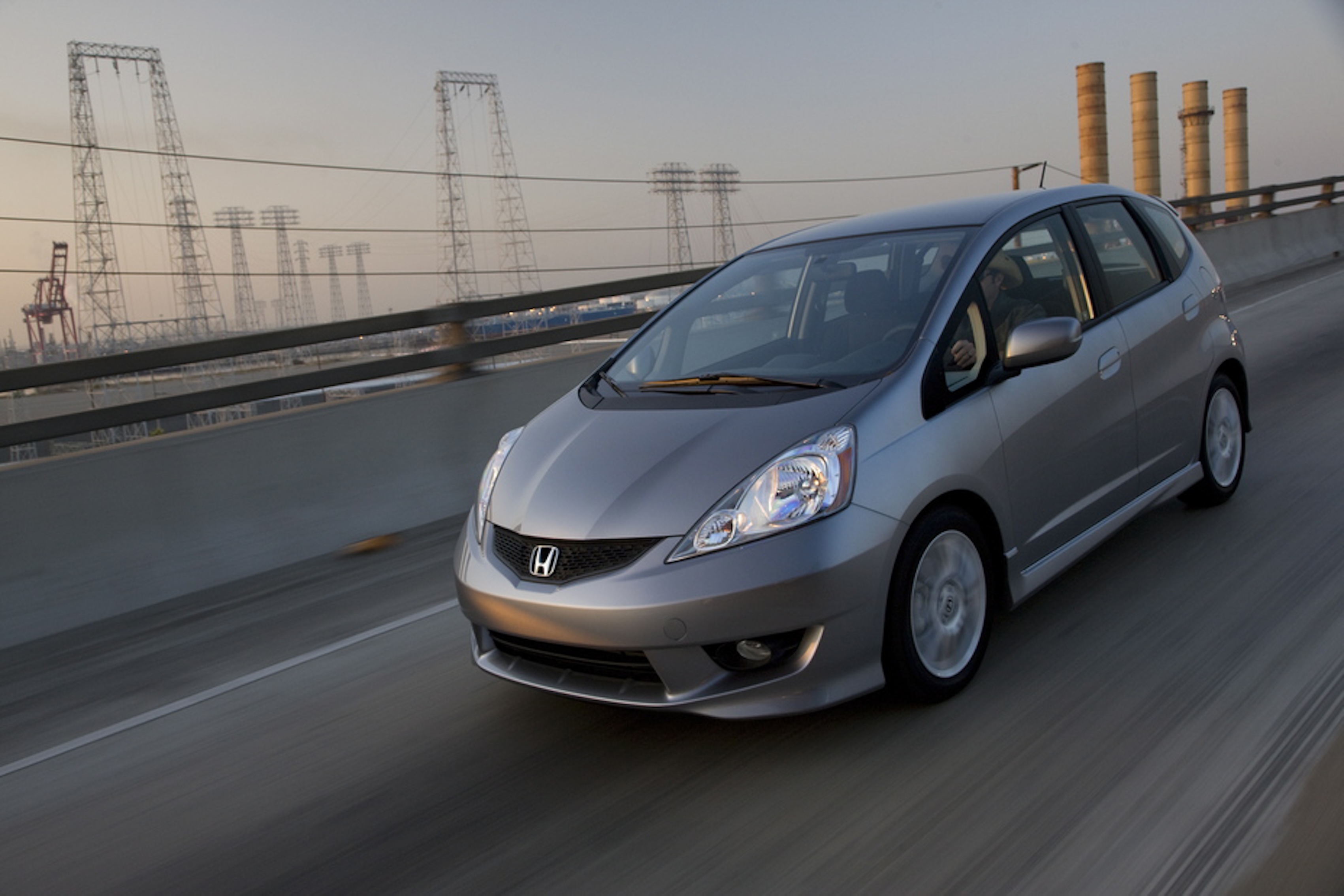
In only its third year on the market in the United States, Honda launched an all-new Fit for the 2009 model year. The second-generation Fit was built atop a new structure that Honda named Advanced Compatibility Engineering, or ACE. The ACE chassis was 164% stiffer than the previous version, improving safety for occupants in the event of a collision. Also new for 2009 was a tilt-and-telescopic steering wheel that made it easier for drivers of all shapes and sizes to find a comfortable position.
The new Fit kept its predecessor's unique mid-mounted gas tank, along with the unique 60/40 split Magic Seat system that could now be folded down with a single lever. With the seat folded flat, the 2009 Fit offered 57.3 cubic feet of cargo capacity, which was up significantly from the previous version’s 41.9 cubic feet. Honda boasted that a 7-foot-9-inch surfboard could be stowed inside the Fit.
A 1.5-liter four-cylinder engine again powered the Fit, but the addition of Honda’s intelligent Variable Valve Timing and Lift Electronic Control (i-VTEC) valvetrain technology improved power and efficiency. With 117 hp and 106 lb-ft of torque, the second-generation Fit was up eight horsepower and one lb-ft over the previous version. As before, a five-speed manual transmission came standard and a five-speed automatic was available. Fuel economy ratings came in at 28 mpg in the city and 35 mpg on the highway with the automatic or 27 city, 33 highway with the manual transmission.
The 2009 Honda Fit was offered in base and Sport trim levels. The Sport model gained 16-inch alloy wheels that replaced the base car’s 15-inch steel units, upgraded exterior trim, a leather-wrapped steering wheel, cruise control, and a USB port for connecting audio players. Fit Sport models with the optional automatic transmission also got steering-wheel-mounted paddle shifters. Navigation and Vehicle Stability Control were available as a package on the 2009 Fit Sport.
Cruise control became standard in all versions of the Fit for the 2011 model year along with stability control, keyless entry, and a USB port on the audio system. The audio system was again upgraded in 2012 with Bluetooth streaming capabilities and controls on the steering wheel. The 2013 model would mark the end of the second-generation Fit’s availability in the United States, as the 2014 model year was skipped ahead of the third-generation Fit’s introduction in 2015.
The Honda Fit earned Top Safety Pick awards from the IIHS in 2009 and 2013, though the entirety of the second-generation model’s run received a Poor rating in the driver-side small overlap front crash test. The second-generation Fit earned Good or Acceptable ratings in all other IIHS crash tests. The Fit received a four-star score from the NHTSA in 2012.
J.D. Power gave the second-generation Fit Great scores for quality and reliability with the exception of the 2010 model year that received an Average rating. Fit models from 2009–2013 received complaints from owners that mostly concerned interior and exterior trim, fading paint and clearcoat, and rodents chewing through soy-based wiring harnesses.
At the time of writing, prices for used second-generation Honda Fit models averaged between $7,000 and $9,000, according to CarGurus used pricing data. Fit models with low mileage, as expected, sell for higher prices but still represent good value in the $12,000–$15,000 range.
Honda Fit First Generation (2007-2008)
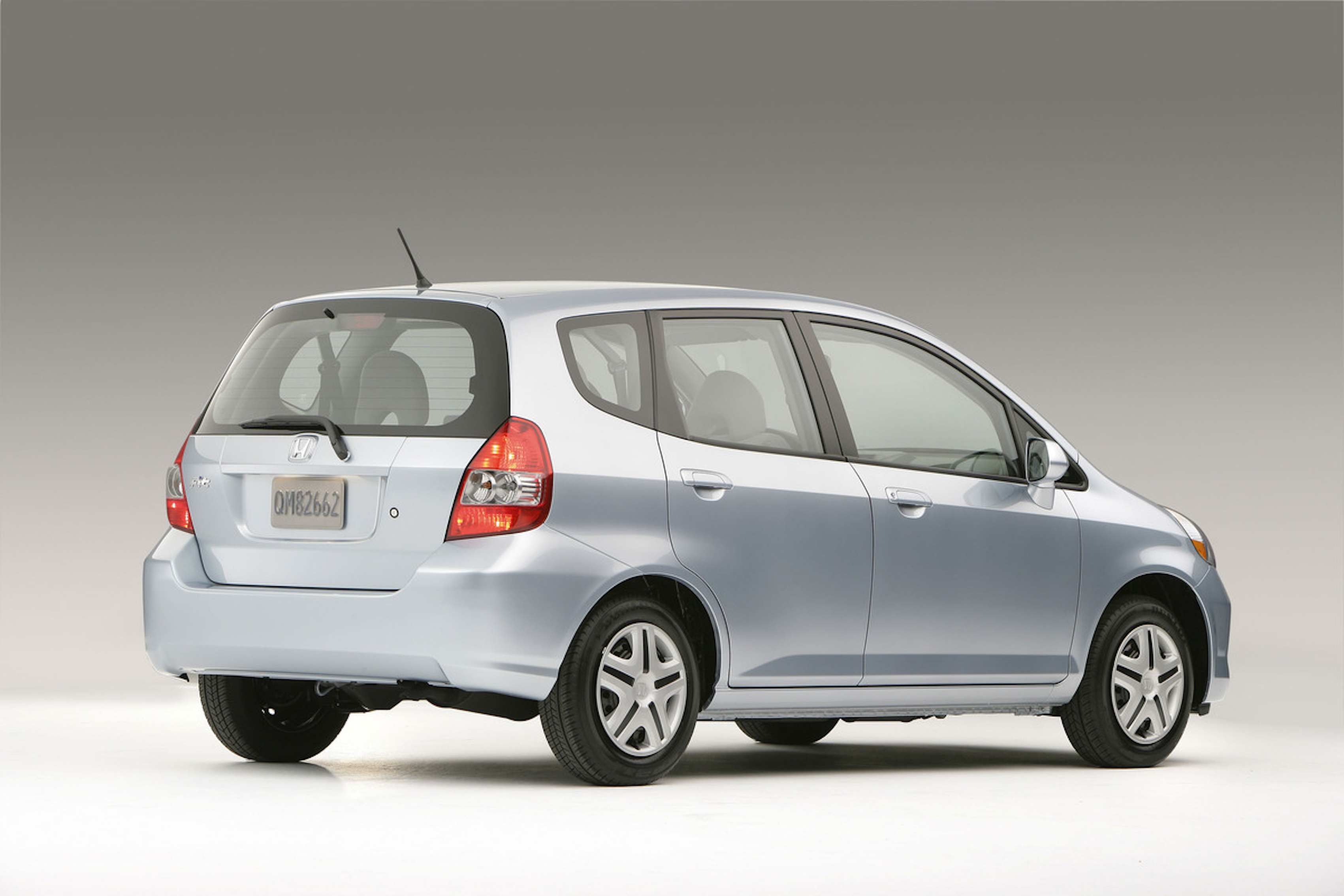
Honda introduced Americans to the Fit in 2007, but the small hatchback had been sold in other markets for years wearing the Jazz nameplate. Although the first-generation Fit was more than a 1.5 feet shorter than a Civic sedan, its passenger volume, which measured over 90 cubic feet in total, was quite spacious when compared to other subcompact hatchbacks.
A large part of the Fit’s appeal was due to its so-called rear Magic Seat system, a Honda innovation that could be moved and folded flat into the floor. With the rear seat in place, the 2007 Fit offered more than 21 cubic feet of cargo capacity. Folded flat, the cargo space measured in at nearly 42 cubic feet.
Power for the first-generation Fit was provided by a 1.5-liter four-cylinder engine that sent 109 hp and 105 lb-ft of torque to the front wheels through the buyer’s choice of a five-speed manual or automatic transmission. The EPA estimated that the Fit would return up to 33 mpg city and 38 on the highway. Despite its miserly nature, the first-generation Fit was fun to drive, with an eager and peppy feel from the little engine.
The 2007 and 2008 Honda Fit hatchbacks were sold in base and upgraded Sport trim levels. Standard equipment included 14-inch wheels, air conditioning, power windows and locks, and a CD player. The Fit Sport got 15-inch wheels, keyless entry, cruise control, and an upgraded audio system with an auxiliary input jack. When equipped with the optional automatic transmission, the Fit Sport also got steering wheel-mounted paddle shifters.
The first-generation Fit received Good ratings from the IIHS in its original moderate overlap front and original side crash tests, but got a Poor rating for its head restraints and seats. It also received a five-star rating from the NHTSA for frontal crash performance.
Both first-generation Honda Fit model years boast Great reliability scores from J.D. Power. That said, they are getting older and many have racked up lots of miles. CarComplaints cites power steering failures, rough-running engines, and slipping transmissions as problems reported by owners of 2007 and 2008 Fit hatchbacks.
At the time of this writing, CarGurus used pricing data suggested that a first-generation Honda Fit averaged less than $7,000 on the used market. While that may be an attractive price point, it’s worth considering that a few thousand dollars more could bag a reasonably nice second-generation Fit with even more interior space and improved safety features.
Related Topics