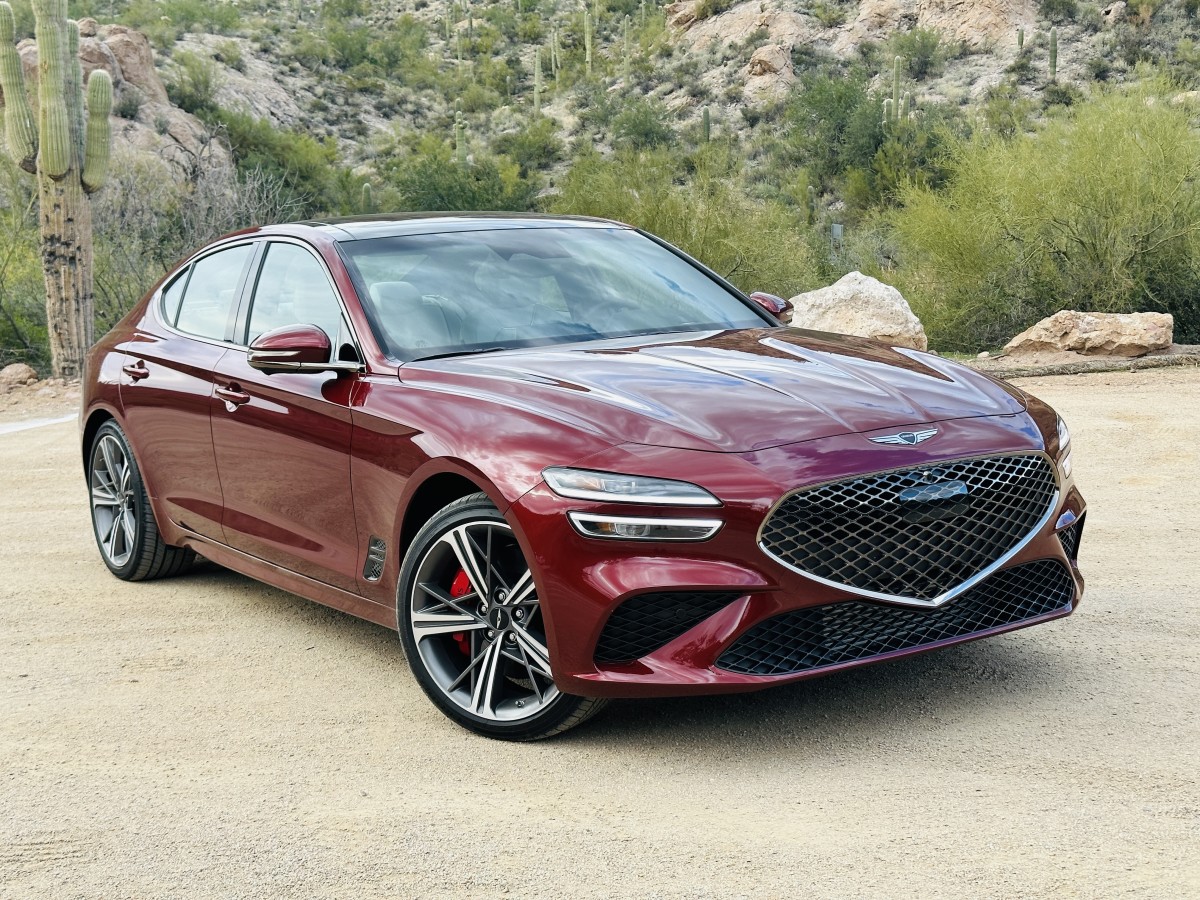
The Genesis G70 sport sedan was introduced in 2019 to compete with respected nameplates such as the Audi A4 and A5, the BMW 3 Series, and the Mercedes-Benz C-Class. Genesis (Hyundai's premium brand) had shown that it could mix it with the major players with its larger G80 and G90 sedans, but while it seemed unlikely that an upstart could produce a worthy contender for those European rivals with its first try, that’s exactly what happened.
The 2019 Genesis G70 earned praise for its sporty driving dynamics, stylish design, and attractive pricing, so it's an appealing alternative to the usual suspects. The first-generation model remains on sale today and hasn’t changed significantly over the years. Early versions offered a choice between a turbocharged 2.0-liter four-cylinder engine or a 365-hp twin-turbo 3.3-liter V6.
Over time, the G70 gained fresh styling, upgraded technology, and a new four-cylinder engine. The model lineup has been simplified in recent years but the G70 continues to major on luxury features, advanced safety tech, and sporty driving dynamics. New and used prices generally undercut the G70's main rivals, which makes the Genesis G70 a premium sport sedan worth considering.
Genesis G70 Buying Guide: Cost, Reliability, and the Best Years to Buy
Frequently Asked Questions
Which Genesis G70 years are the best?
There aren’t any bad years for the Genesis G70, which means that, on the whole, newer is better. Those who want a manual transmission will have to choose an older model, though, since the six-speed gearbox was dropped in 2022.
Which Genesis G70 years are the worst?
J.D. Power gave the G70 an average reliability score of 79/100 in 2022, a great score of 84/100 in 2023, and a great score of 87/100 in 2025 and 2026 (no other years had enough data to rate). CarComplaints.com says the 2023 model was the worst overall for issues, but the actual number of consumer complaints was very low, and those that were raised were fairly minor. In other words, there aren’t any G70 model years that should be avoided outright based on the car’s reliability history. The Genesis G70 has been recalled a few times, most significantly for a faulty anti-lock brake (ABS) module on some 2019-2021 cars that could lead to an electrical short and even an engine bay fire. Another recall affected 2019-2022 G70 models with the 3.3T engine due to an oil leak that could also lead to a fire.
Is a used Genesis G70 a good deal?
Yes, a used Genesis G70 can be a good deal. According to CarGurus used pricing data, a used Genesis G70 is likely to cost less than a used BMW 3 Series or Mercedes-Benz C-Class of similar vintage. While the Genesis badge may not carry quite as much cachet as BMW's propeller or Mercedes' three-pointed star, the G70 is a great sport sedan that’s fun to drive, reliable, and can save a savvy buyer several thousand dollars.
Pros and Cons
Pros:
- Stylish design
- Fun to drive
- Easy-to-use technology
Cons:
- Poor fuel economy (V6)
- Cramped back seat
- Not much cargo space
Genesis G70 Generations
Genesis G70 First Generation (2019-Present)
Two years after producing its first car, Korean automaker Genesis introduced the G70 to go toe-to-toe with some of the most respected luxury sedans in the world. In addition to premium Japanese brands such as Acura, Infiniti, and Lexus, Genesis had the likes of Audi, BMW, and Mercedes-Benz in its sights.
Led by styling chief Luc Donckerwolke, who previously worked for Bentley, Lamborghini, and Audi, among others, Genesis designed a premium sedan that looked luxurious and wholly different from its competitors. A cross-hatch chrome grille was the 2019 G70’s most significant styling flourish, and the sedan’s traditional proportions were an outward display of Genesis’ front-engine, rear-wheel-drive chassis. Inside, Genesis did a solid job of crafting a premium cabin with lots of attractive detailing. Some parts are shared with lower-cost Hyundai products, however, and rear-seat space and trunk capacity are below average.
Genesis offered the 2019 G70 with two engines. When mated to an eight-speed automatic, the G70 2.0T’s 2.0-liter turbocharged four-cylinder engine generated 252 horsepower, while models with the available six-speed manual gearbox had 255 hp. A twin-turbo 3.3-liter V6 engine with 365 hp and 376 pound-feet of torque in 3.3T models offered much greater acceleration and was mated solely to an eight-speed automatic. Most models were offered with rear- or all-wheel drive (AWD), but G70 models with the manual transmission were strictly RWD.
The base trim in 2019 was the G70 2.0T Advanced, and standard features included 18-inch alloy wheels, push-button start, faux leather upholstery, power front seats, and dual-zone climate control. A 7-inch display in the gauge cluster joined an 8-inch screen that handled infotainment duties, and both Apple CarPlay and Android Auto were supported. Standard safety tech included automatic emergency braking with pedestrian detection, high-beam assist, blind-spot monitors with rear cross-traffic alert, adaptive cruise control with stop-and-go and lane-keep assist.
The 2019 Genesis G70 2.0T Elite trim level added LED headlights, front and rear parking sensors, a Lexicon 15-speaker audio system, real leather seats, heated and ventilated front seats, a sunroof, and more. Stepping up to the Prestige trim level brought fancier seats with greater adjustability, Nappa leather seating surfaces, heated rear seats, a head-up display, wireless phone charging, and a surround-view monitor. The G70 2.0T Dynamic added a limited-slip differential (only with RWD models), and 19-inch wheels wearing sticky summer tires.
At the top of the 2.0T lineup was the G70 Sport. In addition to the limited-slip rear differential and 19-inch wheels, the Sport gained quilted Nappa leather and unique exterior trim that included copper headlight bezels, dark-tinted taillights, and a dark chrome grille. Buyers who opted for a 2.0T Sport with the optional manual transmission got an upgraded limited-slip differential, a Brembo brake package, and an upgraded sport exhaust system that added three horsepower.
That’s already a lot of trim levels, but Genesis separated out its 3.3T models with their own unique content packages, starting with the 3.3T Advanced. These featured similar specs to the 2.0T models, with the range topped by a 3.3T Sport, which featured an electronically controlled suspension system and all of the 2.0T Sport’s exterior upgrades.
Genesis made a few minor trim changes for the 2020 model year and dropped the 2.0T Sport trim level for 2021. The 2022 G70 was refreshed with revised styling that included new front fenders, an angular ‘Grest’ grille and the brand’s latest split headlight and taillight designs. Inside, a larger 10.25-inch infotainment screen dressed up the cabin. All 2022 and newer G70 sedans were fitted with automatic transmissions, and the manual option was dropped. Genesis made a few small tweaks to the G70’s packaging for 2023, but bigger news came the following year. For 2024, it replaced the G70’s 2.0-liter four-cylinder engine with a larger and more powerful 2.5-liter unit and changed the name to 2.5T name. Output jumped from 252 hp to 300 hp and Brembo brakes were standardized for 2024. No major changes were made in 2025. For 2026, Genesis dropped some options while simplifying the model lineup.
As of mid-2026, prices (including delivery) for a new Genesis G70 2.5T started at $44,845 and stretched to $60,295 for the top-line model. CarGurus pricing data suggests early, high-mileage examples start at about $15,000. Buyers will only pay another $2,000 or so for one with fewer than 70,000 miles, while the more attractive post-2022 models with the same mileage start at about $19,500.
Related Topics