Ford Focus Buying Guide: Cost, Reliability, and the Best Years to Buy
Frequently Asked Questions
Which Ford Focus years are the best?
The Focus is not without its problems, and the usual mantra of “the later, the better,” applies. Reported problems on Carcomplaints.com really tail off from 2015, but the final three model years—2017 to 2019—are by far the safest bets, for reasons we explain below. They’re at the more expensive end of things with average prices of around $9–$10,000 at the time of writing, but that’s hardly bonkers. For older, cheaper models, the 2004-2011 model years have significantly fewer complaints than those listed below, with average CarGurus prices of between $4,300 and $5,200.
Which Ford Focus years are the worst?
Carcomplaints.com says there are two clusters of complaints across successive model years. The earliest span 2000-2003—the model’s first four years—and relate primarily to engine failures and a key that won’t turn in the ignition. Given how old these cars now are and that the earliest Focus models listed on CarGurus at the time of writing were from 2007 with an average price of less than $4,400, we’d start there. The second big batch of complaints concerns the 2012, 2013, and 2014 model years, with transmission problems figuring very highly. Our section below on the third generation Focus goes into more detail.
Is a used Ford Focus a good deal?
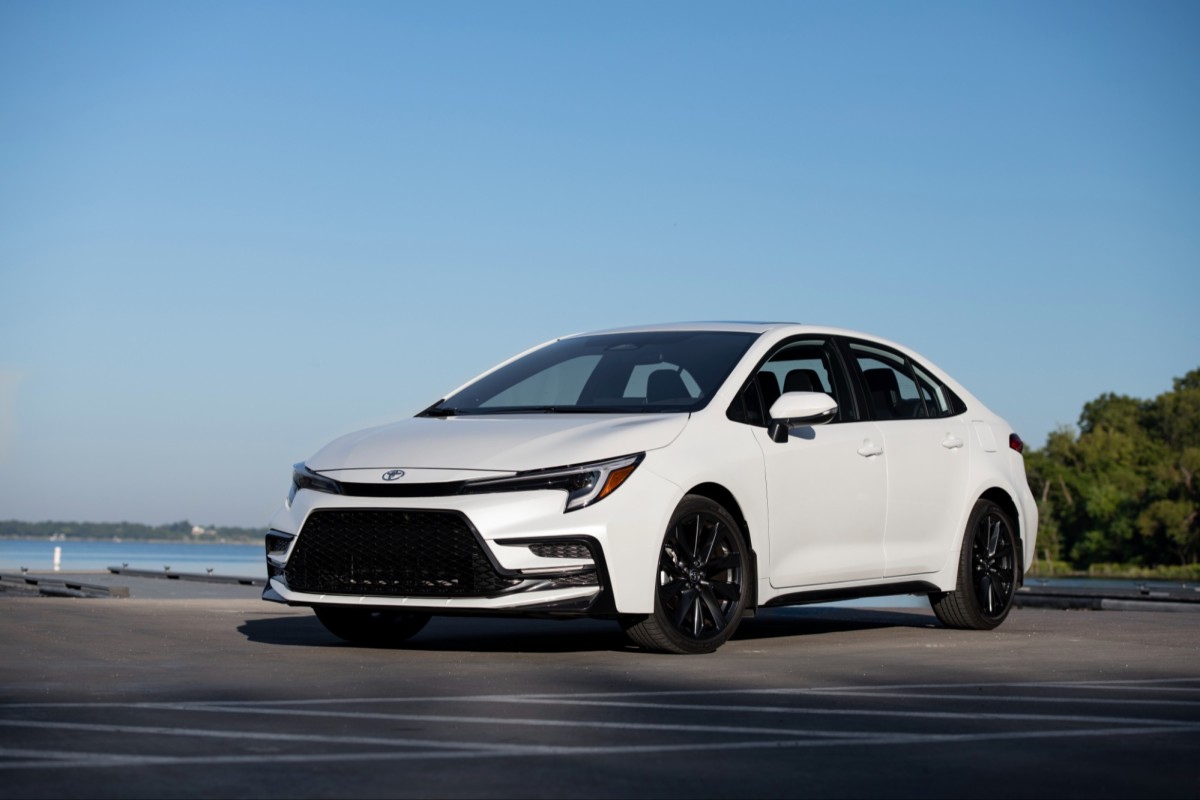
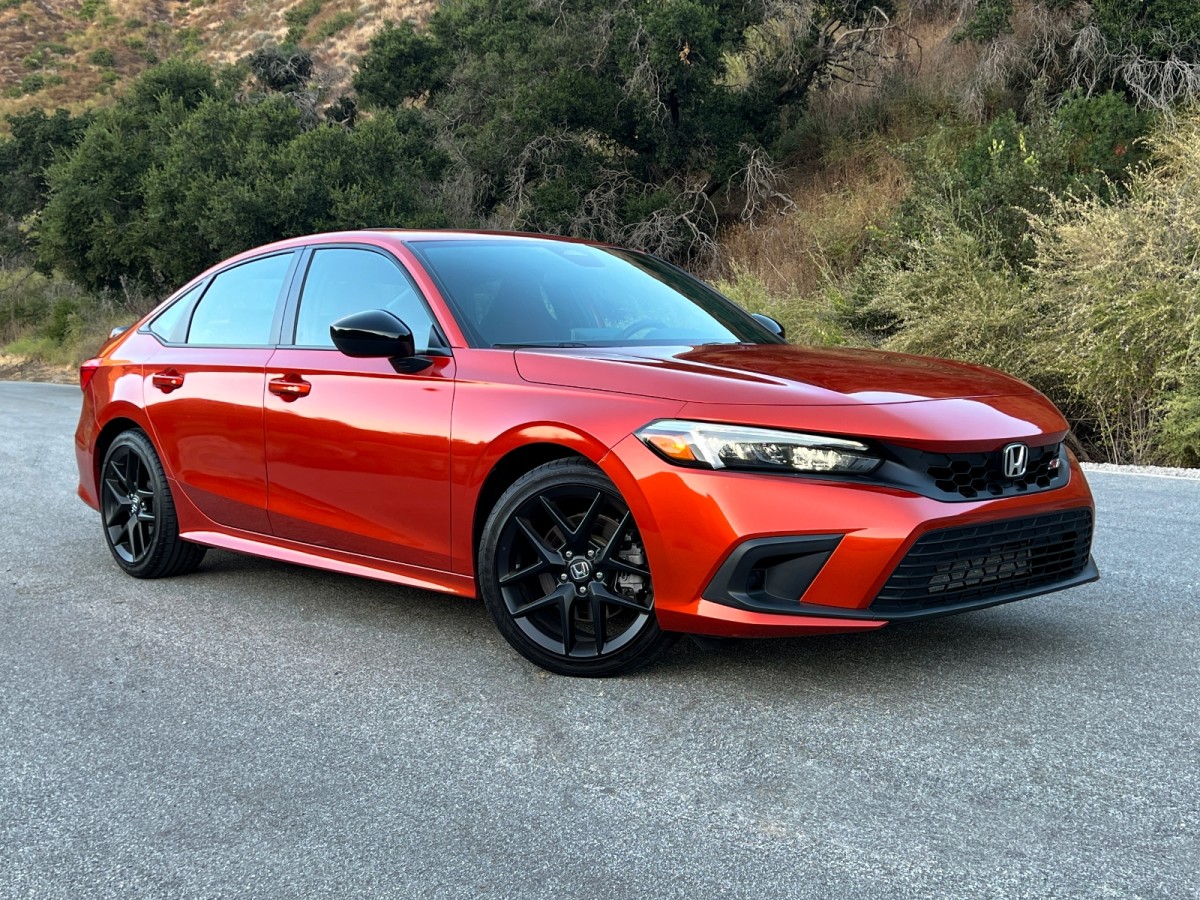
An equivalent Toyota Corolla or Honda Civic will almost certainly be more reliable, but the Focus is far better to drive than the Toyota and arguably superior to the Civic—and even its other chief rival, the Volkswagen Golf—in the same respect. If buyers dodge the worst model years and pay a little more for a Focus in good condition and with a solid service history, then it is hard to argue with the value it represents. It is available for rock-bottom prices, the sheer numbers in which it sold mean it is not hard to find, and most shoppers won’t live too far from a Ford garage.
Pros and Cons
Pros:
- Very low prices
- Wide variety of trims and bodystyles
- Fun to drive
Cons:
- Reliability issues
- Aging profile
- Interiors come bigger
Ford Focus Generations
Ford Focus Third Generation (2012-2019)
The third and (for the U.S.) final Focus was, on paper at least, a happy medium between its two predecessors. The hatchback bodystyle returned, the trim lineup was relatively simple, and the performance models were back, which made it a lot more interesting than the second generation.
It launched as a sedan and a hatchback with a single 160 horsepower 2.0-liter GDI gas engine. A five-speed manual transmission was standard, a six-speed Powershift automatic was available, and as always, the Focus was front-wheel drive (FWD). EPA-estimated fuel economy was 26 mpg city and 36 mpg highway for the manual and 28/38 mpg for the automatic.
There were four trim levels, starting with S, which had manual air conditioning, a CD stereo, power front windows, and a tilt-telescopic steering wheel. SE added body-colored door handles and mirrors, fog lamps, automatic headlights, steering wheel audio controls, power rear windows, and Ford’s MyKey programmable second key. SEL included four-wheel disc brakes, 16-inch alloy wheels, body-colored exterior mirrors with integrated turn signals, a six-speaker audio system, the MyFord infotainment system, SYNC voice-activated controls, ambient interior lighting, a leather-wrapped steering wheel with cruise and audio controls, and dual-zone climate control. Titanium threw in 17-inch alloy wheels, an 8-inch touchscreen, a rear spoiler, keyless entry with push-button start, SiriusXM satellite radio, a 10-speaker Sony audio system with HD radio, and sports seats.
The Ford Focus Electric debuted with the third generation, initially with a 23 kWh battery pack and a 76-mile range then, for the 2017 model, a 33.5 kWh battery pack with a 115-mile range. Annual sales never exceeded 2,000 units, though, so it’s a rare sight.
The ST returned in 2013, reviving the Focus’s performance heritage and bringing a 252 hp 2.0-liter EcoBoost engine, a six-speed manual transmission, 18-inch alloys, and Recaro sports seats. Again in the name of simplicity, Ford ditched the SEL for this model year, so there were only four trim levels.
A facelifted model arrived for the 2015 model year, bringing neater headlights and a new grille, among other tweaks. This year was also the debut for Ford’s tiny 123 hp 1.0-liter three-cylinder EcoBoost engine, promising EPA fuel economy of 32 mpg city, 42 mpg highway, and 35 mpg combined, although it could be difficult to hit those figures in the real world.
The big news for 2016 was the high-performance Focus RS. The RS was previously sold in other markets, but this was a first for the U.S. and it seriously upped the ante over the ST. It was fitted with a screaming 350 hp 2.3-liter EcoBoost engine, four-wheel drive (4WD), upgraded suspension and brakes, a swath of RS styling features, and bonkers features such as launch control and a drift mode.
Safety ratings are generally good for the time. The Focus sedan was named a Top Safety Pick Plus by the Insurance Institute for Highway Safety (IIHS) in 2012, 2014, and 2015 and a Top Safety Pick Plus in 2013, although cars built from 2016 onward did not receive any such awards.
Reliability can be a major issue for the third-generation Focus, particularly with early examples. The 2012-2014 models have the most reported problems of any Focus on Carcomplaints.com and, though the transmission is not the only issue (problems with steering, electrical components, and interior accessories have also been reported), it is the elephant in the room.
The 2012-2016 models with Powershift dual-clutch automatic transmissions were subject to a now-settled class-action lawsuit against Ford due to the frequency and severity of issues. Anyone considering buying a Focus from those model years should immediately establish, with evidence, whether this has been rectified. If there is any doubt, then buyers should take their business elsewhere.
Reported issues on Carcomplaints.com tail off from 2015, and 2017-2019 examples have the fewest reported problems of any Focus across all three generations. They’re also the most expensive because they’re the final versions, and average prices on CarGurus for 2017 and 2018 models (2019 run-out examples are rare) were $9,200 and $10,300 at the time of writing. Older third-generation models are better value and worth considering if shoppers can verify that the worst of the problems have been fixed, with 2012-2016 examples averaging between $5,400 and $8,400. The Focus RS is a law unto itself, as prices can range from around $20–$40,000.
Ford Focus Second Generation (2008-2011)
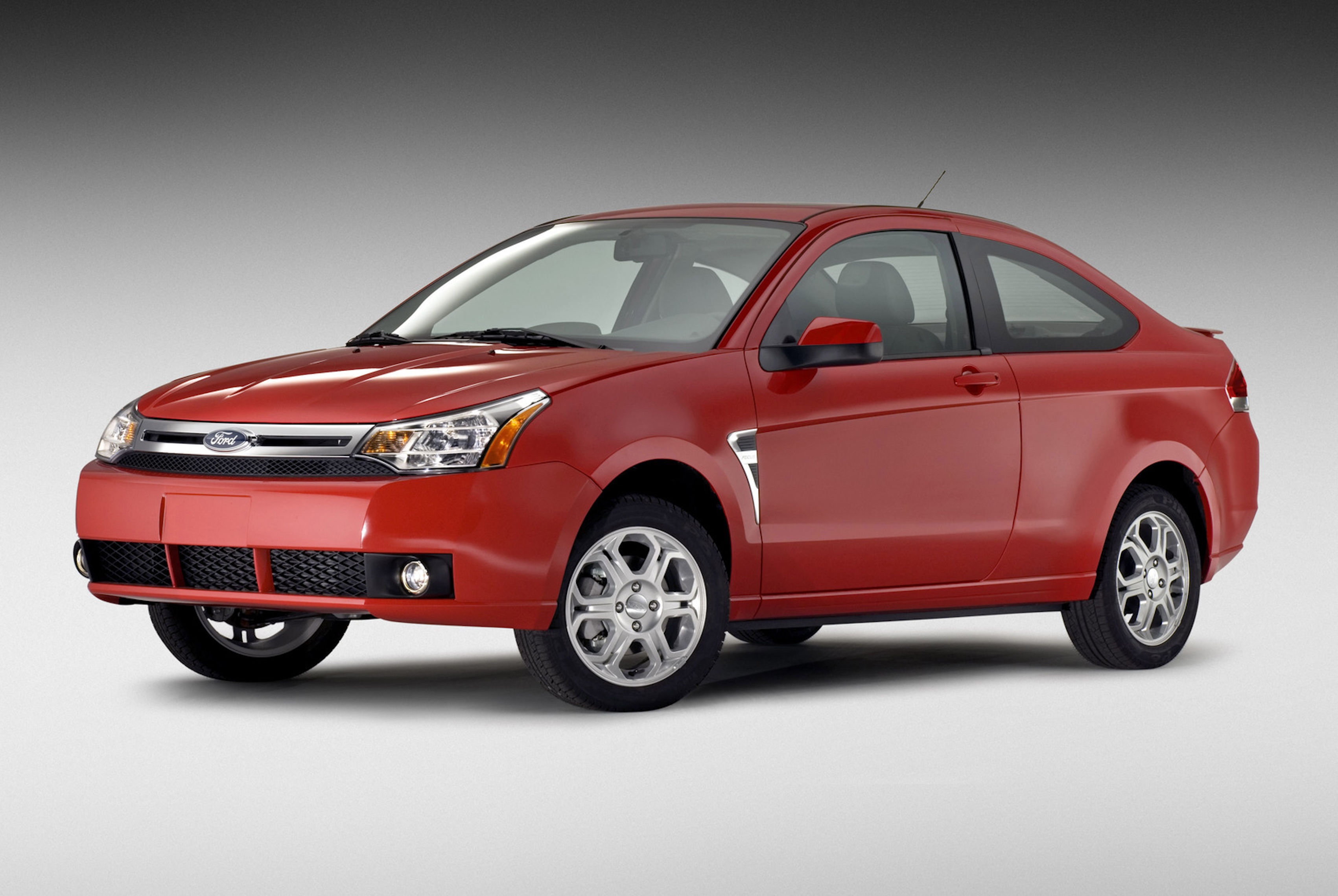
Ford simplified things for the short-lived second-generation Focus. It morphed from three bodystyles (four counting the three- and five-door hatchbacks) to two—a four-door sedan and a two-door coupe—and adopted more sober styling. And more sober everything, really.
Ford made much of this version's fuel efficiency. The Focus ditched its predecessor’s 2.3-liter engine, leaving two versions of the 2.0-liter Duratec engine with either 132 or 140hp, each offering 24 mpg city and 35 mpg highway with the five-speed manual transmission, and 24/33 mpg with the four-speed automatic, according to the EPA. As before, the Focus was FWD.
Mercifully, Ford also kept the trim levels simple after the moving target that was the first generation’s. They comprised S, SE, SES, and from 2009 and only for the sedan, SEL—that was it. S was very basic, while SE included 15-inch alloy wheels, power windows and mirrors, and remote keyless entry. SES added 16-inch alloys, a four-way manually adjustable driver’s seat, cruise control, Ford’s SYNC infotainment system, fog lamps, heated mirrors, a rear spoiler, “European-inspired” suspension, and the Driver Group package, comprising a leather-wrapped steering wheel with cruise and audio controls, and an auto-dimming rearview mirror.
The SE got standard SiriusXM satellite radio in 2009, the SES gained ambient lighting, and a new SEL trim level was available with the sedan, adding new 16-inch alloy wheels, heated leather front seats, power and heated chrome-capped mirrors, and chrome door handles.
The second-generation Focus performed relatively well in safety tests of the time, with the IIHS awarding the 2008 sedan Good scores for both the moderate overlap front test and the head restraints and seats test, and Acceptable in the side test. The 2010 coupe received Good ratings in all three tests.
It isn’t going to rival a Toyota Corolla for reliability, but there are significantly fewer reported problems for the second Focus on Carcomplaints.com than for the first and third generations. Suspension issues, such as rear end noise and abnormal tire wear, and ignition switch failures feature the highest, which is an improvement on the blown engines and failed transmissions associated with its predecessor and successor.
As with the first Focus, the second-generation is very cheap. Average prices on CarGurus ranged from around $4,300 for a 2008 model to around $5,200 for a 2011 example.
Ford Focus First Generation (2000-2007)
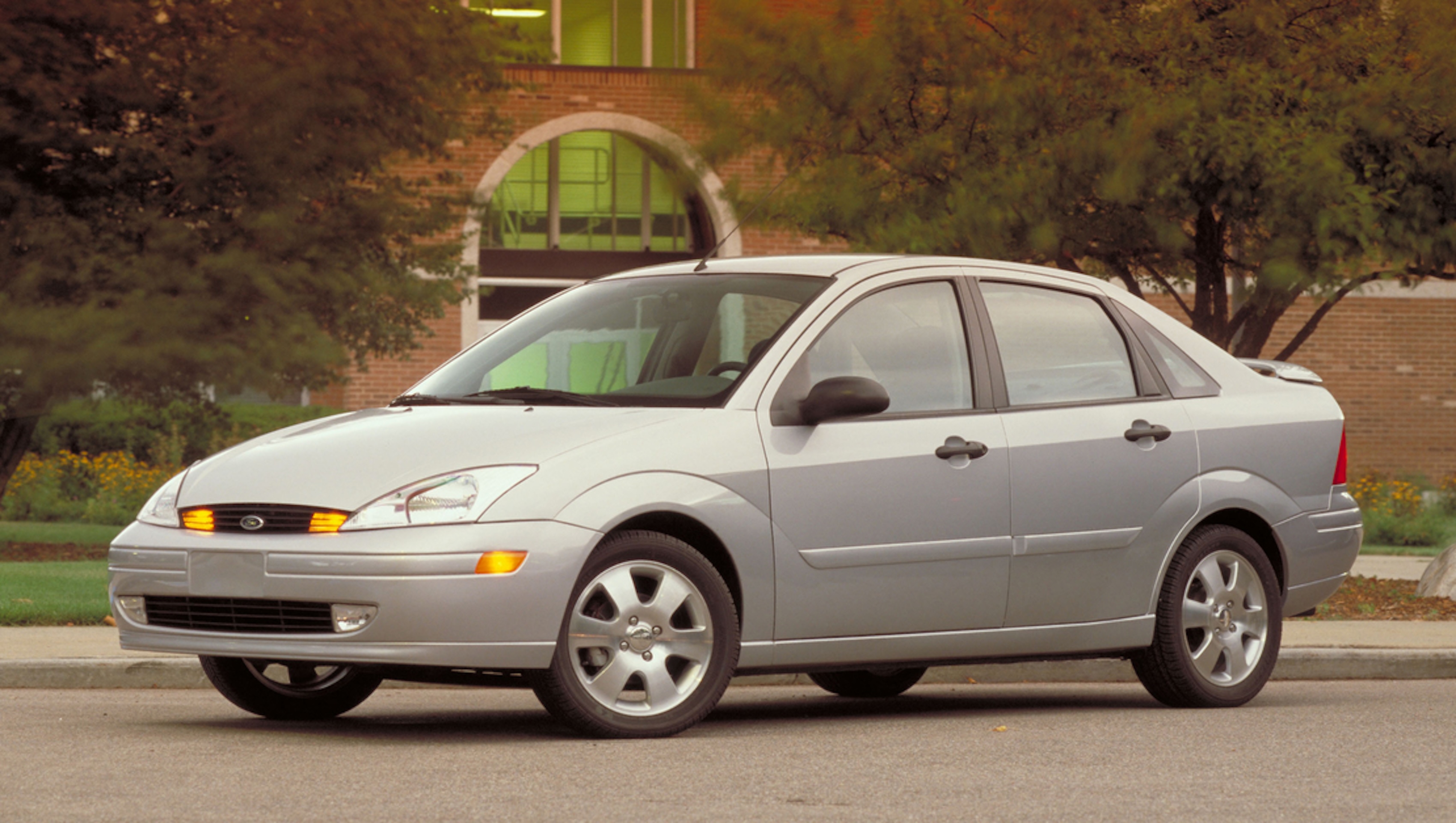
It is difficult to overstate how important the original Focus was to Ford. This was the era that preceded the SUV-crossover boom, when compact cars were the default choice for buyers who wanted a do-everything model for a reasonable price, and the Focus absolutely met that brief. It was great to drive, much of which was down to its clever independent rear suspension, and the geometry set styling was extremely novel for the time.
Initially available as a three-door hatchback, a sedan, or a wagon, the 2000 Focus was launched with a pair of 2.0-liter gas engines—the 110hp SPI and the 130hp Zetec—with five-speed manual and four-speed automatic transmissions and FWD. We’ll avoid getting into trim level names for this generation, because Ford messed around with them a lot, they’re monstrously complicated, and with the exception of the performance specials (which we will mention) they make little difference to the value of a car of this age. Condition is far more important.
More equipment arrived for the 2001 model year but 2002 was a big one. It introduced a safety package for all models, a five-door hatchback, and the performance SVT model with a chunkier body, 17-inch alloys, and a 170hp version of the 2.0-liter Zetec engine with a six-speed manual transmission. More equipment arrived for the 2003 model year, while 2004 saw the addition of a 145hp 2.3-liter Duratec engine across the board (it had previously been available but only in certain states due to emissions regulations).
A facelifted model arrived in 2005 with stubbier headlights in place of the original’s long, triangular ones, and new engines—a 136hp 2.0-liter Duratec unit replacing the SPI and Zetec engines, and a 151hp 2.3-liter Duratec engine. Equipment upgrades followed in 2006 and 2007.
Blown engines and keys that won’t fit or turn in the ignition are the two most commonly reported problems with the first-generation Focus according to Carcomplaints.com. While no model year is free of complaints, 2000-2003 are by far the worst affected, so they’re best avoided—and given their age, they’re pretty rare as it is.
The good news is that, if buyers can find one, the first-generation Focus is very cheap. Only 2007 models were listed on CarGurus at the time of writing, but they had an average price of around $4,300. Performance specials are the exception to the rule, as the pair of 2003 Focus SVTs listed on CarGurus at the time of writing were priced at $9,100 and $13,100 respectively.
Related Topics