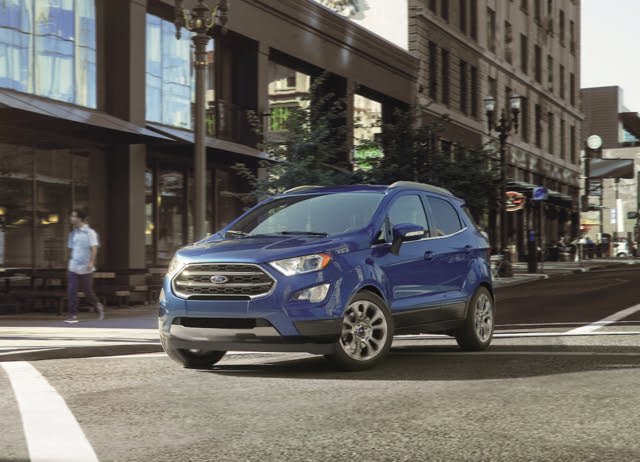
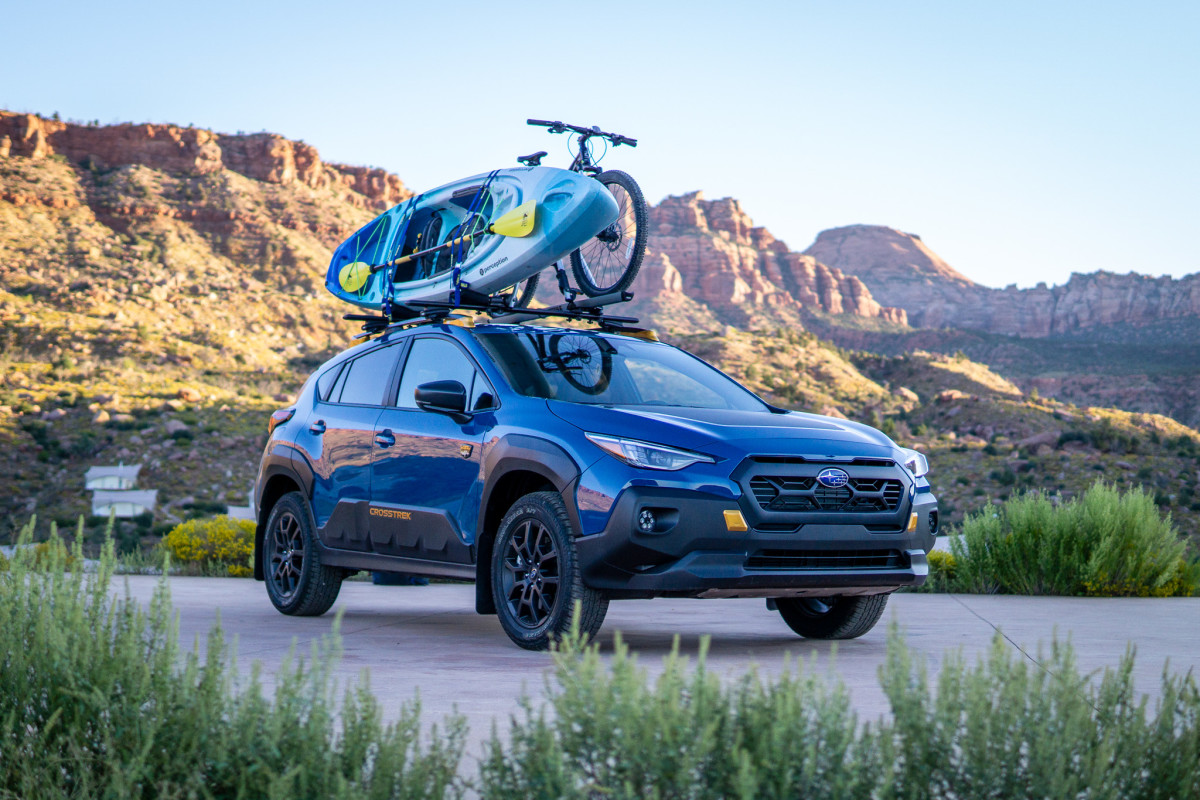
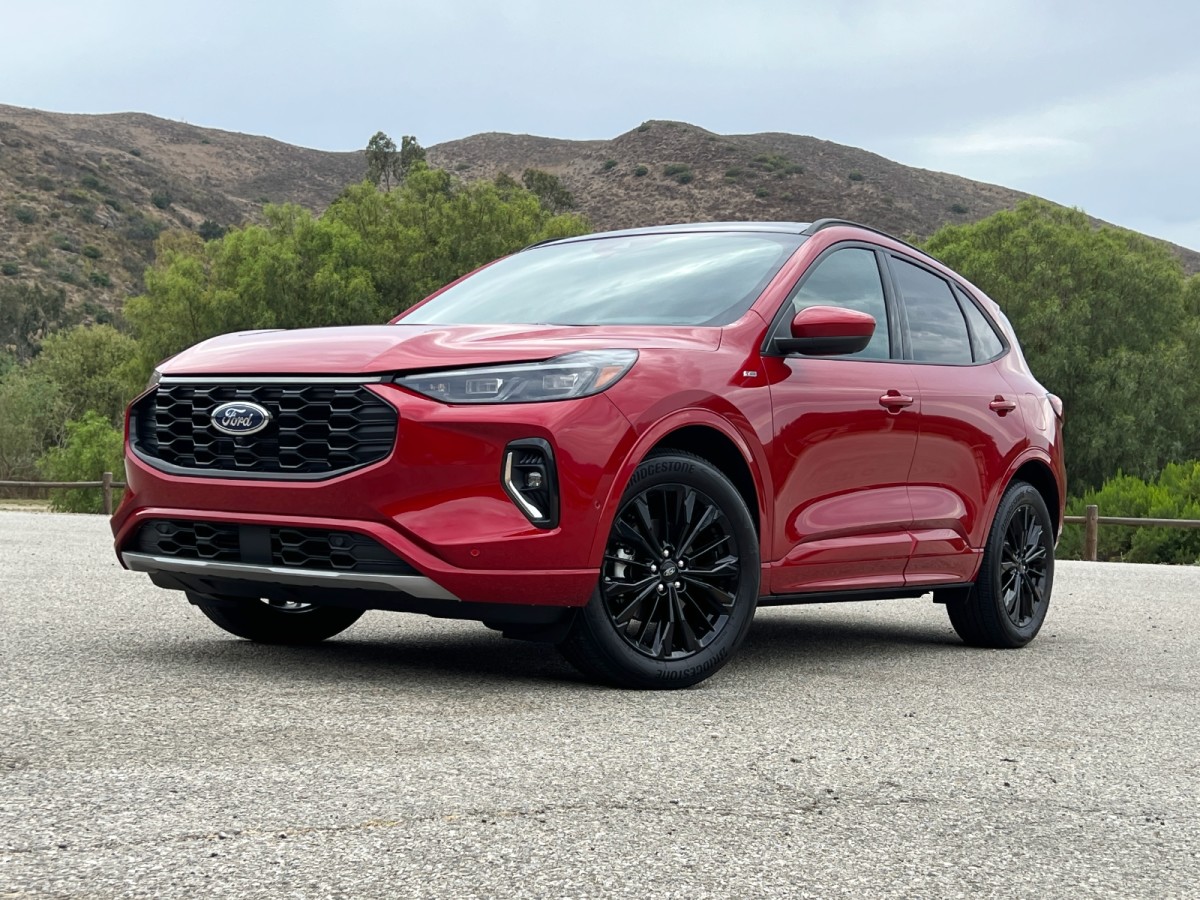
Ford introduced the EcoSport in 2018 as a budget-friendly option in the popular subcompact SUV segment, aiming to outdo rivals such as the Honda HR-V, the Kia Soul, the Mazda CX-30, and the Subaru Crosstrek by being smaller and generally cheaper than them. The Kia Soul was the one rival that regularly undercut it on price, though the EcoSport countered it with an available all-wheel drive system.
Originally developed for emerging markets, the EcoSport debuted in Brazil in 2003 and the second generation arrived in 2012. That later model was the version introduced to the U.S. in 2018, so although it was new to American buyers it had already been around for six years. The EcoSport was built on the same subcompact car platform as the outgoing Fiesta, which it replaced in Ford’s U.S. lineup.
Despite the name, the EcoSport isn't especially economical and it’s definitely not sporty. What it offers are compact proportions that make it easy to park and maneuver in city traffic, generous cargo space for its size, and a best-in-class towing rating. It is an unglamorous but honest choice for buyers who want affordable, no-fuss transportation with available all-wheel-drive (AWD).
Our Ford EcoSport buying guide covers the history and specs of the single model generation available in the U.S., with advice on how much buyers can expect to pay for one and which are the best and worst versions to buy.
Ford EcoSport Buying Guide: Cost, Reliability, and the Best Years to Buy
Frequently Asked Questions
Which Ford EcoSport years are the best?
The EcoSport 2021 and 2022 model years are the best to own, particularly the 2022 model year that had the four-cylinder engine and all-wheel-drive as its only option. This final model year has the more reliable powertrain, and better standard features compared to earlier model years.
Which Ford EcoSport years are the worst?
The worst model years are the early 2018 and 2019 examples equipped with the EcoBoost engine. CarComplaints.com cites 2018 as the worst year outright, with engine problems accounting for the majority of issues that year. There are recalls for the problem, and customer reports indicate that the issue can happen with little warning, causing a complete lack of power and even engine seizures.
Is a used Ford EcoSport a good deal?
No, a used Ford EcoSport is not a good deal. Although some versions are very cheap and city dwellers may appreciate its compact dimensions, the EcoSport doesn’t have a good record for reliability and its weak engines and dated feel make it hard to recommend.
Pros and Cons
Pros:
- Pleasant in-town manners
- Available all-wheel drive
- Chilled glovebox
Cons:
- 1.0-liter engine issues
- Slowest in class
- Cramped interior
Ford EcoSport Generations
Ford EcoSport First Generation (2018–2022)
The EcoSport subcompact SUV was only available for a single generation in the U.S. and remained essentially unchanged from the 2018 model year through 2022. It signaled a shift for Ford in America, replacing the Fiesta subcompact hatchback and sedan as Ford narrowed its U.S. lineup to trucks and SUVs.
There were two engine choices for most of the production run, both paired with a six-speed automatic transmission. The 1.0-liter turbocharged three-cylinder EcoBoost engine made 123 horsepower and 125 pound-feet of torque and sent power only to the front wheels (FWD). The 2.0-liter naturally aspirated four-cylinder made 166 hp and 149 lb-ft and was only available with all-wheel drive (AWD). Neither can be described as quick, and the EcoSport was among the slowest vehicles in its class regardless of engine choice. Despite the EcoBoost name, the turbocharged three-cylinder is not an especially frugal option, and the larger naturally aspirated four-cylinder returns better real-world fuel economy.
Ford gave the EcoSport lineup a light refresh for 2021, with reshuffled features and mildly updated styling. For the final 2022 model year, it dropped the 1.0-liter three-cylinder engine, leaving just the 2.0-liter four-cylinder with AWD.
The EcoSport was offered in four trims, ranging from the base S to the top-end Titanium. Entry-level S trim included cloth seats, a basic infotainment display, and few extras. SE added heated front seats, a power moonroof, an upgraded touchscreen with Apple CarPlay and Android Auto, and available blind-spot monitors. SES came closest to a performance trim, pairing the more powerful four-cylinder engine and all-wheel drive with a sport-tuned suspension, unique wheels, a heated steering wheel, and heated front seats in synthetic leather. Titanium took the luxury route, featuring most of the SES's comfort features but not its sport suspension, plus leather seats and a Bang & Olufsen audio system.
SES and Titanium trims are worth seeking out for their extra comfort features, but we’d argue that powertrains matter more than trim level. Look for the four-cylinder engine and all-wheel drive, which is standard for SES trim. The base three-cylinder engine, available for S, SE, or Titanium trim, is the one to approach with caution.
Cargo space is a strength for the class, with roughly 21 cubic feet behind the rear seats and up to 50 cubic feet with the second row folded. Worth noting: the side-hinged rear cargo door can be inconvenient in tight parking spots. Another quirky feature is a sealable vent that connects the glovebox to the air conditioning system, turning it into a cooled compartment.
The National Highway Traffic Safety Administration (NHTSA) gave the EcoSport a four-star overall safety rating out of five, with five stars in the side-impact test, four stars in the frontal crash test, and three stars in the rollover test. The EcoSport didn't offer modern driver-assistance technology such as automatic emergency braking or adaptive cruise control, which are increasingly common elsewhere in the class, but available features included blind-spot monitors, rear cross-traffic alert, and rear parking sensors, in common with most rivals.
The EcoSport’s biggest problems involve the 1.0-liter three-cylinder EcoBoost engine. Ford issued multiple service bulletins beginning in 2019 for a failing oil pump drive belt and tensioner, which could cause a sudden loss of oil pressure and, in some cases, require a full engine replacement. The NHTSA's Office of Defects Investigation opened a probe and there was a formal recall in December 2023, covering 2018 to 2022 model year EcoSports with the 1.0-liter engine. This is the most important thing to check before buying. Buyers should request service records showing regular oil changes, and run the VIN through NHTSA's recall lookup to confirm the repair has been completed.
Because that issue is specific to the three-cylinder engine, the AWD model (which comes only with the naturally aspirated four-cylinder) is the one to buy. That said, AWD models have a recall of their own; the front axle half shafts can disconnect from the transmission on 2021-2022 model-year EcoSports, causing a loss of drive power or a rollaway risk. Like the oil pump issue, this is a free dealer repair but it's best to confirm that the recall has already been taken care of before buying.
According to CarGurus pricing data, used EcoSport prices run as low as $5,000 and up at around $22,000. The widest selection and the lowest prices sit with 2018 and 2019 models, while 2022 models with the four-cylinder command the top of that range. CarGurus lists the average price of a 2022 EcoSport at just under $18,000. Given the three-cylinder's reliability concerns, we’d suggest the four-cylinder AWD models are worth the extra cost.
Related Topics