2027 BMW i7 Reviews, Pricing & Specs


Pros & cons
What we like
Great handling
Comfortable
Increased range for 2027
What to consider
Potentially polarizing design
Complex tech
Still catching up with other EVs
The CarGurus verdict
The all-electric version of BMW’s 7 Series sedan gets the same updates as its gasoline counterpart for 2027.
The i7 was introduced for the 2023 model year as an EV counterpart to the BMW 7 Series, the automaker’s flagship sedan. For 2027, it gets a series of updates shared with the gasoline 7 Series, including improved styling and a new infotainment system and panoramic dashboard display. But it also benefits from the latest EV hardware that BMW debuted in the iX3 crossover SUV.
Verdict: More range and faster charging make the i7 a better EV, while updated styling and tech features keep it from getting stale. It might be the best BMW 7 Series model, but its unorthodox design and complexity make it otherwise hard to love.
out of 10 expert review
Look & feel
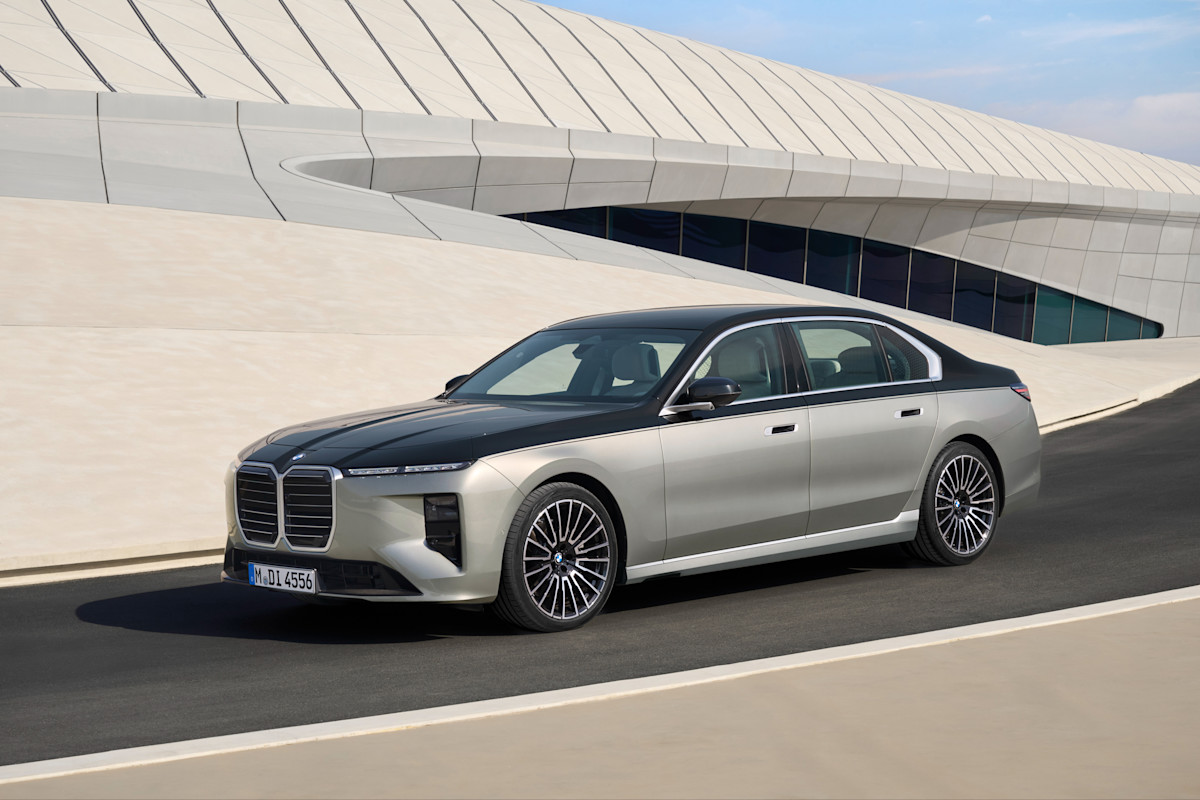
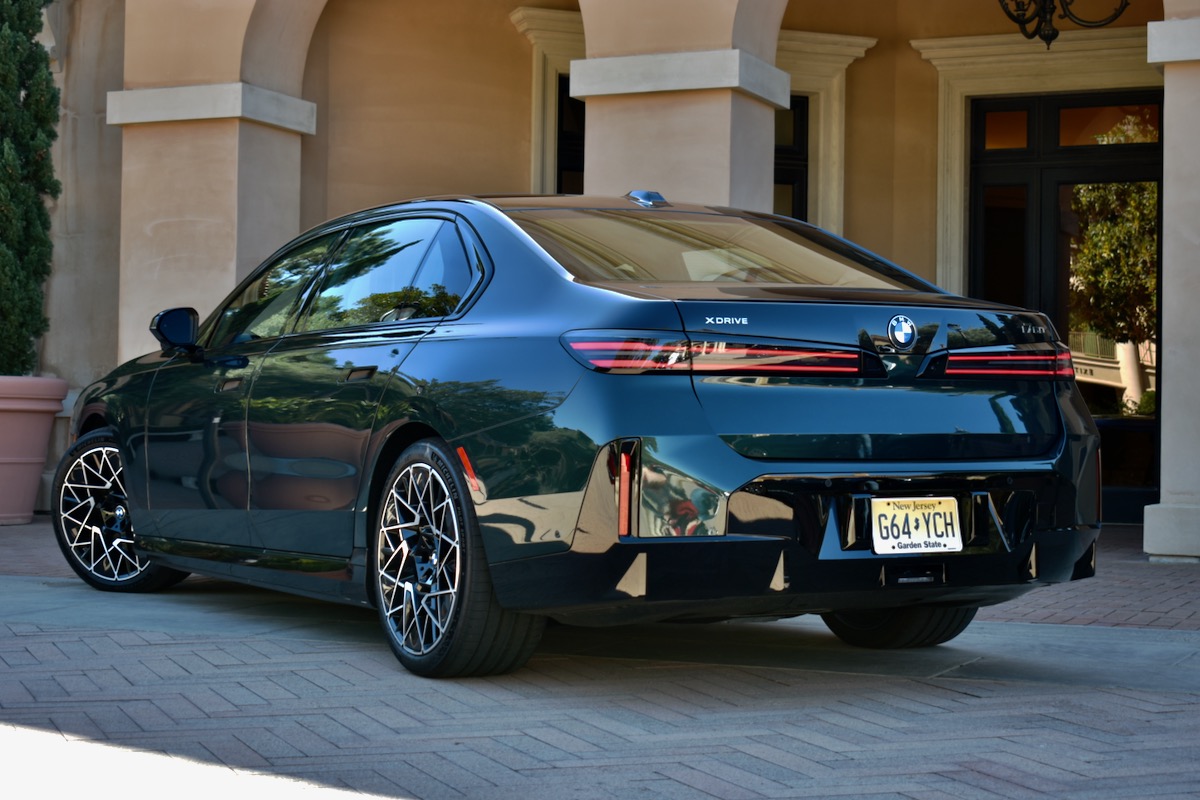
In its original form, the BMW i7 was not a good-looking car. The refreshed 2027 model is much improved, but it will likely still have trouble winning fans.
As before, the i7 shares its styling with gasoline 7 Series models. A big problem with both gasoline and electric models was the fussiness of their styling, with lots of extraneous details that distracted from the overall design. The 2027 i7 is much more cohesive, with more confident design elements that work better with each other. The enormous grille remains, but it’s now better framed by the hood and headlights. Those lights can be equipped with crystal elements, while the grille can be illuminated to make the i7 as difficult to ignore at night as it is during the day.
Other problems remain. Despite larger taillights, the rear is still a bit messy, as designers apparently had trouble hiding the i7’s tall body height from this angle. That height also leaves little of visual interest in profile view and makes the standard 20-inch wheels look tiny. Our test car had the $4,550 M Sport Package Professional that adds 21-inch wheels, darkened exterior trim, and sportier interior design elements. A $3,900 M Sport Package is also available with 20-inch wheels. Two-tone and matte-finish (“frozen,” as BMW calls it) are also available for $12,000 or $5,000, respectively.
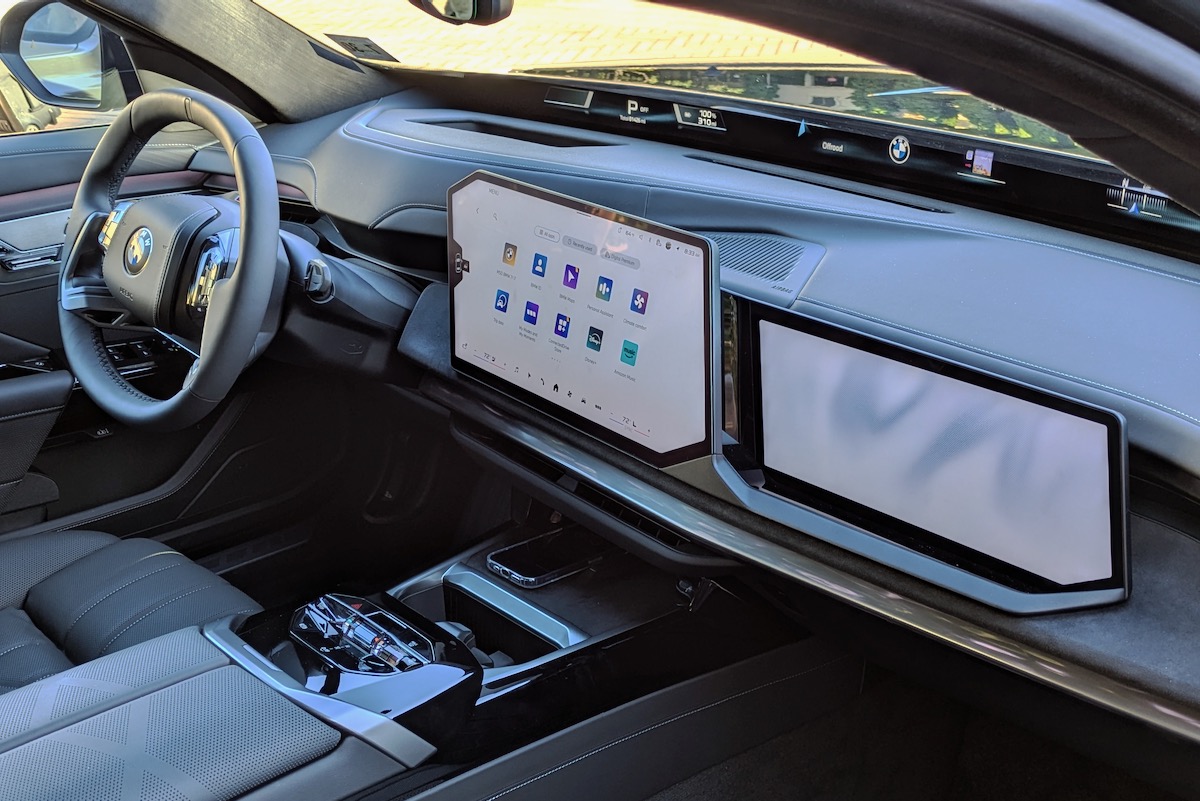
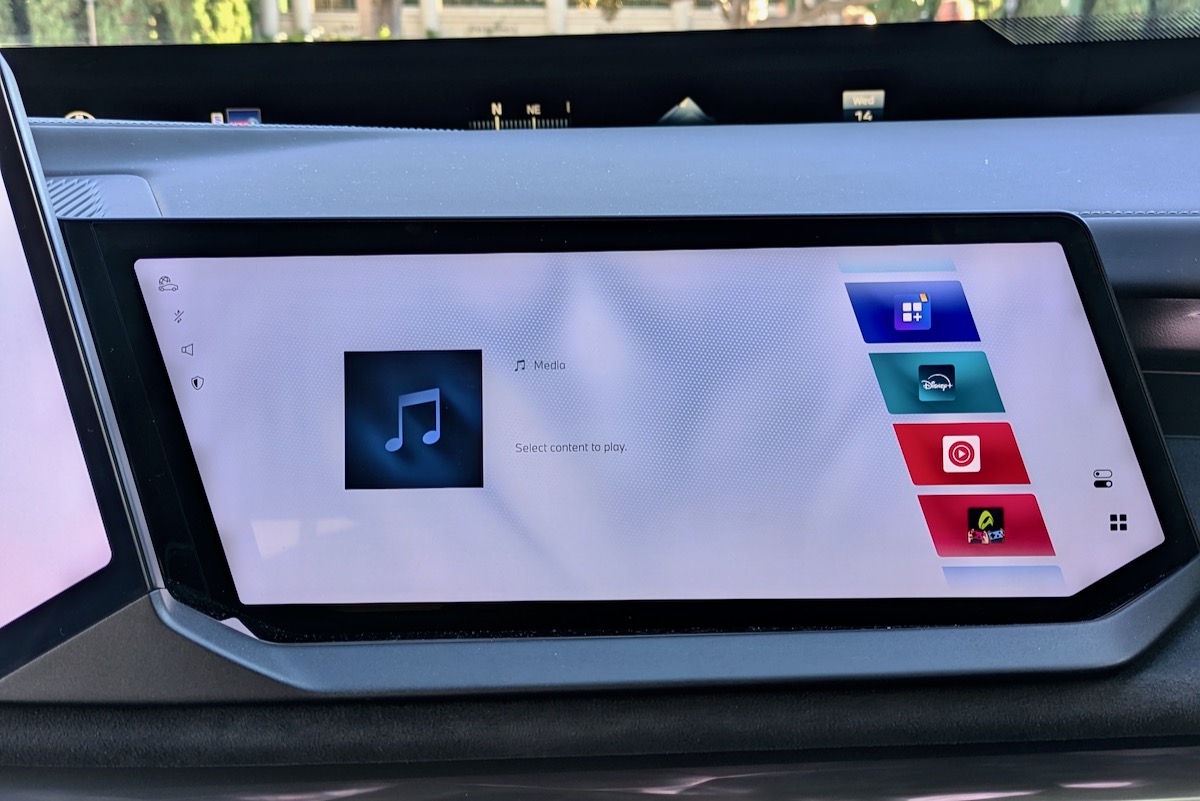
Interior updates for 2027 are all up front, where the dashboard now incorporates BMW’s Panoramic Vision display, as well as new central and front-passenger touchscreens. BMW also redesigned the steering wheels (there are five options to choose from) so they don't block the view of the screen. The squared-off wheels, some with two vertical spokes, complement the futuristic look, and still work just as well as conventional wheels. High-end materials such as open-pore wood and crystal give the interior an appropriate level of classiness, although Veganza artificial leather is standard rather than the real thing.
Performance
The 2027 BMW i7 is available in two specs, both with dual-motor all-wheel drive (AWD) powertrains and 112.5-kilowatt-hour battery packs. The i7 50 xDrive has 449 horsepower and 487 pound-feet of torque, does 0–60 mph in 5.3 seconds, and has a top speed of 130 mph, according to BMW. The i7 60 xDrive ups things to 536 hp and 549 lb-ft of torque, 4.6 seconds to 60 mph, and a 149-mph top speed.
For those who want a big, comfortable electric sedan, even the base single-motor Lucid Air Pure is about as quick as the i7 60 xDrive. So is the Mercedes-Benz EQS 500 4Matic, which has AWD like the BMW. And BMW itself previously offered the i7 M70 xDrive, which had 650 hp and 811 lb-ft of torque and could do 0–60 mph in 3.5 seconds. Given that the M70 arrived a bit later when the i7 first launched, we wouldn’t be surprised to see a return of this model, or something like it, in the near future.
For now, the i7 gets updated motors with silicon-carbide inverters, as well as cylindrical battery cells, both of which should improve efficiency. They don’t make the car feel different from behind the wheel, but that’s okay because the i7 was already pretty good to drive. It’s a big, comfortable luxury car, but one that takes BMW’s famous Ultimate Driving Machine tagline seriously. The steering is very communicative, and the chassis has a taut, confident feel that doesn’t compromise ride quality. A silent, torque-rich electric powertrain is also perfect for a car like this, and we didn’t miss the gasoline 7 Series’ internal-combustion engine at all.
BMW EVs feature adaptive regenerative braking that automatically increases the level of regeneration when the need to slow down is more urgent, such as when approaching a slower car or a traffic light. To drivers who frequently use adaptive cruise control, it won’t feel unusual, but otherwise it can be a bit jarring. For greater efficiency, regeneration is reduced at highway speeds to allow the car to coast when possible. And the driver can still adjust the regen level manually by shifting between “D” (normal) and “B” (maximum regeneration). D made the i7 feel like a normal car, while B provided the one-pedal driving that’s great to experience in an EV.
Form & function
The i7 has plenty of interior space thanks to its large footprint. And thanks to its traditional styling, it also feels more open and airy inside than competitors such as the Lucid Air and Mercedes-Benz EQS sedan, which have more streamlined shapes designed to maximize aerodynamics. That said, we had trouble finding a comfortable driving position. We felt as though we either had to stretch our legs to reach the pedals or sit right up against the dashboard. Heated, ventilated, and massaging front seats with lumbar support are standard, though.
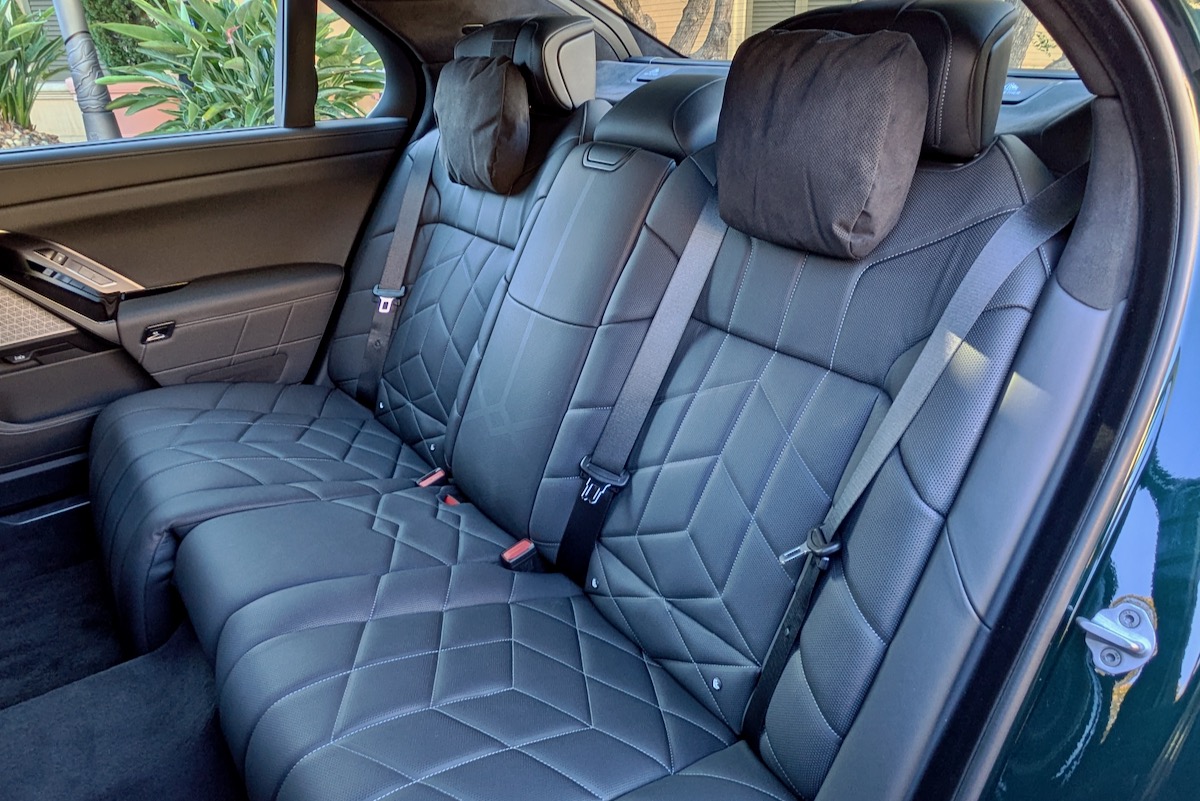
This is a traditional luxury flagship, after all, so rear-seat passengers are the priority. As with the gasoline 7 Series, the i7 has no shortage of rear-seat legroom. It can also be equipped with the Executive Lounge option, which includes a reclining seat and an integrated leg rest on the right side (the front passenger’s seat needs to be folded to make room for it). Further adding to the luxurious ambience are a heated center armrest with a smartphone charging tray and automatic soft-close doors.
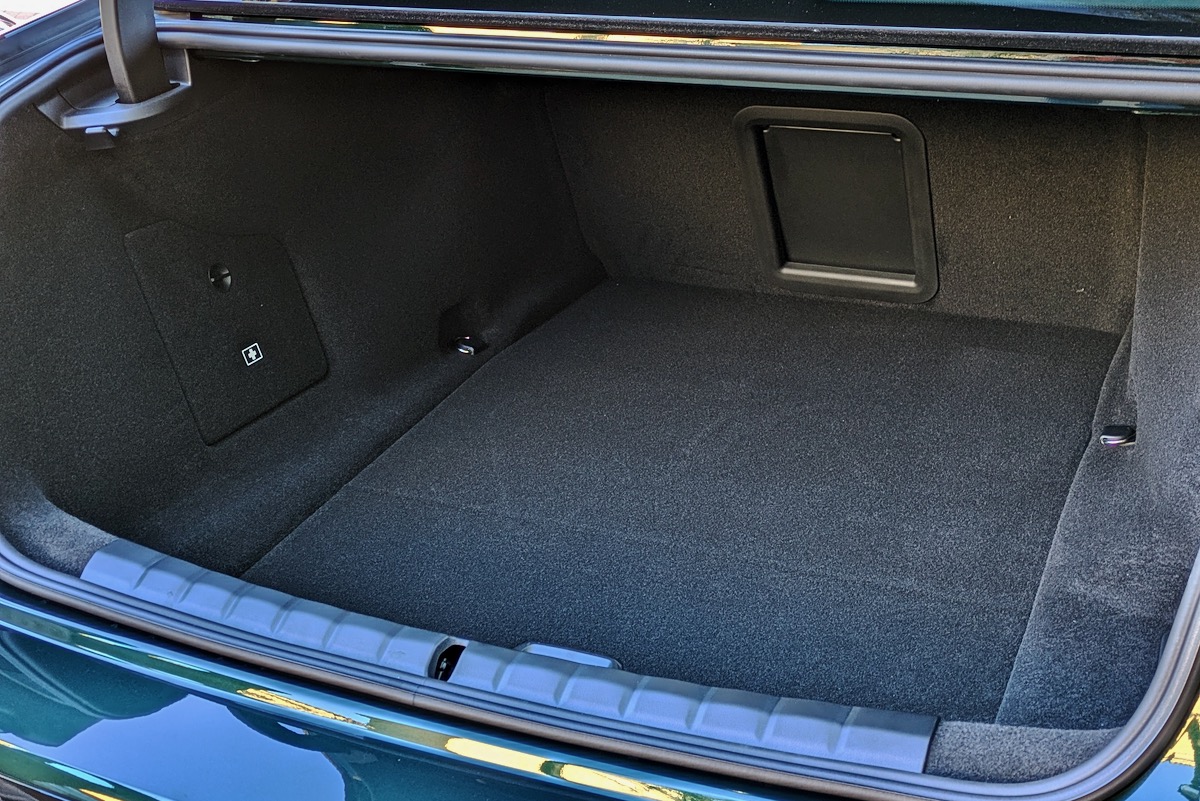
The i7’s 17.7 cubic feet of total cargo space is a little less than in the gasoline 7 Series, the EQS, and the Air. The Lucid also has a front trunk with 10 cubic feet of space.
Technology
As noted above, the Panoramic Vision display is new for 2027. It sits at the base of the windshield, runs across the full width of the dashboard, and replaces the conventional instrument cluster. Information is placed closer to the driver’s eye level, and secondary information is located on the right side of the display to declutter the view directly ahead. That makes it easier to parse everything since it’s not all being crammed together.
A 17.9-inch touchscreen sits in the usual spot on the center console and handles all infotainment functions. A 14.6-inch front-passenger touchscreen is newly standard, too. The i7 also upgrades to BMW’s latest Operating System X, which keeps wireless Apple CarPlay and Android Auto but revamps the native apps with a new look and menu layout. It’s a lot more stylish than previous BMW infotainment systems, and easy to use for the most part.
Even with a well-sorted interface, the sheer number of features in this car can get overwhelming at times. The standard voice-recognition system cuts through some of the confusion, and it’s based on Amazon Alexa+ so it can interface with Alexa home devices. The AI integration this brings is of questionable utility, though, as is the front-passenger screen. Yes, a passenger can watch TV while on the move, but if the driver so much as glances in their direction, the video automatically pauses.
Rear-seat passengers can still enjoy the Theater Screen, a 31.3-inch monitor that folds down from the roof. The $4,750 option can stream movies and TV shows in 8K, although its ultra-wide shape isn’t ideal. The screen doesn’t interfere with the available glass roof, but may interfere with the legroom of taller front-seat occupants, as those seats can’t be too far back. An integrated Zoom app is new for 2027, along with a digital rearview mirror so the driver can see what’s behind when the screen is deployed.
An 18-speaker Bowers & Wilkins audio system is standard, while a 36-speaker version with 4D audio is optional. Dolby Atmos integration is new for 2027, including on the dedicated speaker for the Theater Screen.
Safety
Like the gasoline 7 Series, the i7 comes standard with expected driver-assistance features such as forward-collision warning, automatic emergency braking, lane-keep assist, blind-spot monitors, and adaptive cruise control. For 2027, new Symbiotic Drive software aims to make the operation of these features less intrusive. The software is designed to read a driver’s intentions and avoid unnecessary interventions. We indeed felt that the driver aids weren’t heavy-handed.
However, the driver-attention monitor was a bit too strict for our liking. And while we didn’t experience any problems in the i7, in an iX5 we had just driven, the system had trouble tracking us in harsh, late-afternoon sunlight. Driver monitoring is necessary for the Highway Assistant hands-free driving system, which can handle steering, acceleration, and braking on certain highways, as well as execute automated lane changes. Drivers can flick the turn signal or just glance at an exterior mirror.
The standard Parking Assistance Package includes a surround-view camera system (with curb, 3D, and carwash views), parking sensors, a semi-automated parking system, and Maneuver Assistant, which can remember the path the car takes into a tight driveway and parking space and retrace it to back out.
The Insurance Institute for Highway Safety and National Highway Traffic Safety Administration had not released crash-test ratings for the 2027 i7 at the time of writing.
Cost-effectiveness
The new battery cells and other efficiency-related improvements give the 2027 BMW i7 a maximum 373 miles of range in EPA testing. That’s 59 miles more than the highest-rated 2026 model. The maximum rating applies only to the i7 50 xDrive model with 20-inch wheels and summer tires. Range decreases if buyers opt for a different wheel or tire spec, or for the more powerful 60 xDrive model. But even the lowest-range 2027 models are rated at 344 miles, or 30 miles more than the longest-range 2026 model.
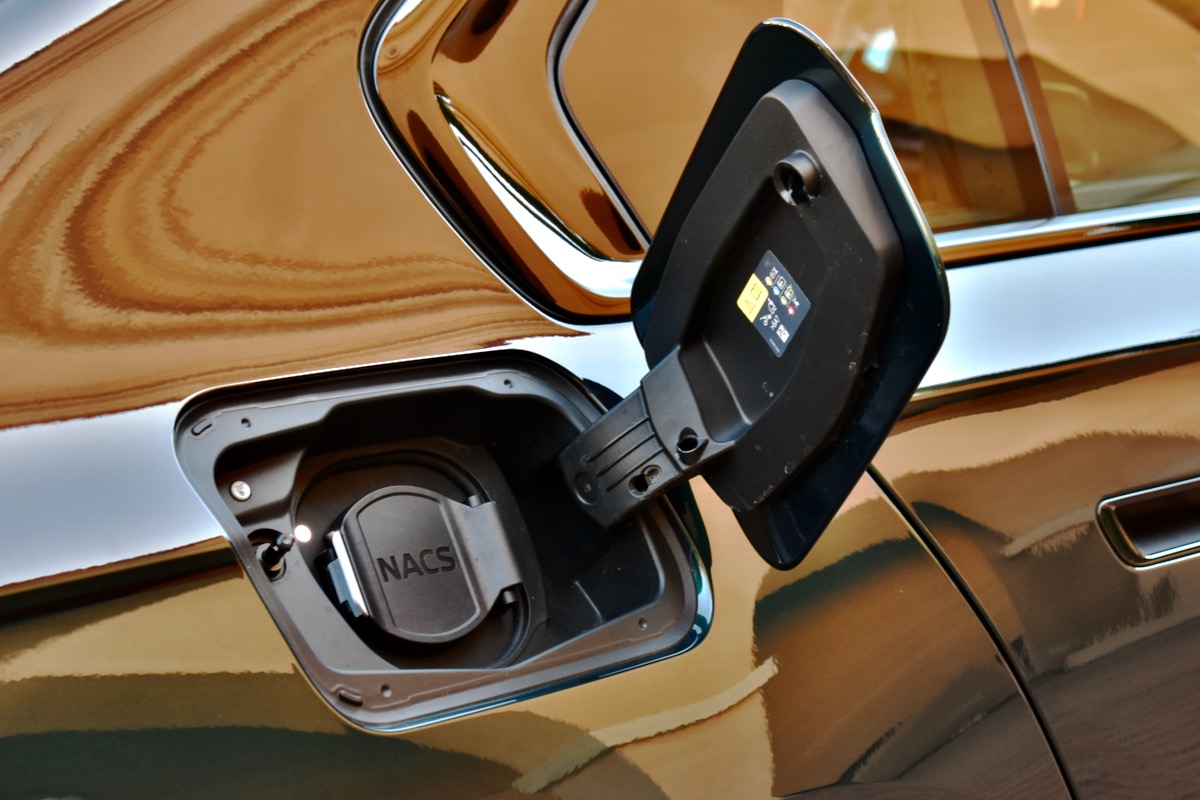
The i7 switches to a North American Charging Standard (NACS) port for 2027, and its maximum DC fast-charging power rate increases from 195 kW to 250 kW. That lowers the time for a 10% to 80% charge from 34 minutes to 28 minutes, according to BMW. Level 2 AC charging performance stays about the same, with a maximum power rate of 11 kW and an estimated 11 hours for a full recharge.
Pricing starts at $107,750 for the i7 50 xDrive. The i7 60 xDrive starts at $126,250. Both prices include a mandatory $1,550 destination charge. That makes an i7 $3,400 pricier than an AWD gasoline 7 Series, but that isn’t a lot of money when buyers are already spending six figures. A gasoline 740 xDrive might also be slightly quicker on paper than the i7 50 xDrive, but in all other respects the EV is the better car to drive. Its smooth, quiet powertrain is perfect for a luxury car, and the gasoline 7’s turbocharged inline-six lacks the personality to make up for that. Like the gasoline 7 Series, shoppers should expect to pay considerably more for a well-optioned car, and our i7 60 xDrive test car cost approximately $160,250.
Brand-agnostic EV shoppers should note that the Lucid Air can be had for less, with more range, faster charging, and an even more engaging driving experience. The updated 2027 Mercedes-Benz EQS starts a bit lower than the BMW and is expected to offer more range in at least some configurations. But the i7 offers a traditional big-car look and feel that the avant-garde Lucid and Mercedes can’t match.
What owners say
Trims & specs
Base MSRP $124,700 | Seating 5 |
Engine N/A | Cargo Capacity 17.7 cu ft |
Combined MPG N/A | Drivetrain N/A |
Base MSRP $106,200 | Seating 5 |
Engine N/A | Cargo Capacity 17.7 cu ft |
Combined MPG N/A | Drivetrain N/A |